


Broccoli Sprouts Recalled as Salmonella Outbreak Sickens 22 Across Four States

The FDA and CDC say 22 people in four states — Idaho, Montana, Utah and Washington — have been sickened in a Salmonella outbreak, with two hospitalizations and no deaths. Of 19 patients interviewed, all 19 reported eating sprouts and 17 specifically reported eating broccoli sprouts. The FDA says traceback work identified Evergreen Fresh Sprouts LLC of Moyie Springs, Idaho, as the common grower. Evergreen Fresh Sprouts has recalled broccoli sprouts packaged in plastic bags and plastic clamshell containers with expiration dates of September 7, 9, 11, 14 and 16. The recalled sprouts were sold to grocery stores, restaurants and foodservice customers in Idaho, Montana and Washington, although federal officials say the products may have been distributed to additional states. The recall began September 4 after Montana officials collected and tested a broccoli sprout sample that was positive for Salmonella. Whole-genome sequencing determined that the Salmonella found in the sample was the same strain responsible for illnesses in the outbreak, according to the FDA. Reported illnesses began between July 7 and August 26. Consumers should not eat the recalled broccoli sprouts and restaurants and retailers should not serve or sell them. The FDA also recommends thoroughly cleaning and sanitizing surfaces and containers that may have come into contact with the sprouts to reduce the risk of cross-contamination. Salmonella illness typically develops within 12 to 72 hours after eating contaminated food and can cause diarrhea, fever and abdominal cramps. Symptoms generally last four to seven days, while young children, older adults and people with weakened immune systems face a greater risk of severe infection. The Readovia Lens With recalled sprouts reaching grocery stores, restaurants and foodservice customers — and possible distribution beyond the three states currently confirmed — consumers should check any broccoli sprouts they have at home against the recalled expiration dates. The FDA’s investigation remains active, meaning the number of illnesses or affected locations could change as officials continue tracing the outbreak.
OpenAI Board Member Warns AI Industry Is Not Doing Enough to Prevent a Catastrophic Loss of Control

OpenAI’s newest board member is warning that the artificial intelligence industry — including OpenAI itself — is not doing enough to prevent advanced AI from potentially escaping human control, an outcome he believes could eventually have catastrophic consequences. Paul Christiano, a longtime AI safety researcher who previously led alignment research at OpenAI, joined the OpenAI Foundation Board and its Safety and Security Committee Wednesday. The committee oversees safety and security practices across OpenAI, giving Christiano a direct role in the governance of one of the world’s most powerful AI companies. Christiano said rapidly improving AI capabilities, combined with the continuing difficulty of ensuring that advanced systems reliably follow human goals, have increased his concern. He warned of a meaningful risk that accelerating AI development could eventually produce a “catastrophic and irreversible loss of control” and said the industry is not currently on track to reduce that risk to an acceptable level. His most alarming warning concerns future superintelligent AI, not the AI systems people are using today. Christiano said that if superintelligence were developed without much stronger methods for keeping it aligned with human interests, humanity could permanently lose control of it and the consequences could be deadly on an enormous scale. Researchers worry that sufficiently advanced systems could potentially pursue unintended goals, seek resources or power, conceal their actions, or help accelerate development of even more capable AI systems. OpenAI said Christiano has spent years evaluating frontier AI risks and has been an independent voice on whether industry safeguards are adequate. He previously worked on frontier-model evaluations and national-security risks at the federal Center for AI Standards and Innovation and founded the nonprofit Alignment Research Center. OpenAI says his willingness to challenge prevailing assumptions is one reason it wanted him involved in the company’s governance. Importantly, Christiano’s warning does not mean ChatGPT or today’s other consumer AI systems are suddenly expected to escape human control. His concern centers on where rapidly advancing AI could be headed and whether safety, alignment and governance can advance quickly enough to keep increasingly powerful future systems under human control. The Readovia Lens The significance of Christiano’s warning is not simply its severity, but where it is coming from: OpenAI has placed one of the industry’s most prominent AI-safety researchers on the board and committee responsible for overseeing its own safety practices even as he publicly says OpenAI and the broader industry are not yet doing enough. That puts an unusually consequential warning about the future of AI inside the governance structure of one of the companies racing hardest to build it. ——————– Related: More Than 200 Experts Urge Governments to Prepare for AI’s Economic Impact AI Agents Escaped Their Tests. Now Congress Wants Answers OpenAI’s AI Agents Broke Out of a Cybersecurity Test — What It Means for ChatGPT Users
Apple Unveils iPhone Duo, Its First Foldable iPhone and Biggest Redesign Yet

Apple today unveiled the iPhone Duo, introducing its first foldable iPhone and one of the most significant changes to the device since the original iPhone debuted nearly two decades ago. The new phone opens to reveal a 7.6-inch display — the largest ever offered on an iPhone — while folding down to a compact device with a 5.4-inch outer screen. The iPhone Duo will start at $1,999, with preorders beginning October 16 and availability starting October 23. Apple is offering the device in Star White and Night Sky, with a grade 5 titanium frame and a precision hinge made from more than 100 components. Apple says the phone is its thinnest iPhone ever when opened and carries an IP68 rating for water and dust resistance. Apple also redesigned iOS 27 around the folding hardware. Opening the Duo expands apps onto the larger display, while Split View allows two apps to run side by side on an iPhone for the first time. Users can open two windows of the same app, save app pairs and move between the outer and inner displays as the software automatically adjusts. Netflix, Zoom and Slack are among the apps already being adapted for the new format. The Duo is powered by Apple’s new A20 Pro chip and introduces several features that distinguish it from conventional iPhones. Touch ID returns through a fingerprint sensor built into the side button, while Apple Pencil support is coming later this year. The inner display also hides its FaceTime camera beneath the screen when it isn’t being used, helping preserve an uninterrupted viewing area. Apple is also using the folding design to reimagine photography and video. The Duo includes a 48-megapixel Fusion Main camera and 48-megapixel Ultra Wide camera, while the outer display can serve as a live preview when someone else is taking your picture. Users can also prop the partially folded phone on a surface for hands-free photos, video and FaceTime calls without a separate stand. The Readovia Lens The iPhone Duo represents something Apple rarely does: introduce an entirely new way of using the iPhone. At $1,999, the Duo enters the market as a premium device, but its larger display, multitasking capabilities and ability to shift between phone and tablet-like experiences could reshape what consumers expect from an iPhone. After nearly two decades of the familiar slab-style design, Apple has opened a new chapter for the iPhone — and potentially reset the direction of the smartphone market. ——————– Related: Apple Sets September 9 Event With Its First Foldable iPhone Expected Apple’s Foldable iPhone Is Finally Coming — Here’s What to Expect
Hurricane Lowell Leaves Widespread Damage and Power Outages Across Hawaii

Hawaii is beginning a major cleanup after Hurricane Lowell battered the western islands with powerful winds, heavy rain and dangerous surf, leaving widespread damage across Kauai and other parts of the state. The storm passed west of the islands without making a direct landfall, but Kauai and Niihau took some of the hardest hits. More than 36,000 utility customers — roughly 90% of Kauai’s electric customers — were without power Tuesday morning as crews began assessing extensive damage to the island’s electrical system. Fallen trees and debris blocked roads, flooding and coastal surge damaged infrastructure, and residents were urged to limit travel while emergency crews worked to restore services. Several major roads on Kauai were closed after the storm, while high surf pushed sand, rocks and debris inland. At Port Allen Small Boat Harbor, several boats sank and piers were damaged. State and county offices, Kauai Community College and public schools on Kauai will remain closed through Friday as crews restore power, clear debris and determine whether buildings and roads are safe. Oahu also experienced heavy rain, high surf and power outages as Lowell moved past the state. One man died Monday evening after a tree fell on his tent, according to Gov. Josh Green. Conditions have since improved enough for schools and government offices on Oahu to reopen Wednesday, while recovery efforts remain concentrated on Kauai. Lowell has moved away from the Hawaiian Islands and weakened, but the aftermath remains significant. Emergency officials continue to warn residents about downed power lines, damaged roads and other hazards as utility and public works crews move through affected communities. The Readovia Lens Hurricane Lowell never had to make landfall to deliver a damaging blow to Hawaii. With much of Kauai losing electricity and roads, schools and public services disrupted, the storm demonstrates how powerful winds, flooding and coastal surge can leave communities facing a major recovery even when the center of a hurricane stays offshore.
U.S. Accuses Chinese AI Firms of Extracting Capabilities From American AI Models

The FBI, National Security Agency and Cybersecurity and Infrastructure Security Agency have accused six Chinese artificial intelligence companies of conducting large-scale campaigns to extract proprietary capabilities from leading American AI models, escalating a dispute over how the next generation of AI systems is developed. The joint advisory, released Tuesday, names DeepSeek, Alibaba, Moonshot AI, MiniMax, StepFun and Z.ai. U.S. officials allege the companies used outputs from models including OpenAI’s GPT, Anthropic’s Claude, Google’s Gemini and Grok to accelerate development of their own systems. The agencies say the activity has occurred since at least late 2024 and likely took place with Chinese government awareness. China rejected the accusations Wednesday, describing its AI progress as the result of domestic innovation and urging the United States to avoid unfounded allegations. What Is AI Distillation? Distillation is a legitimate machine-learning technique in which a smaller model learns from the responses of a larger, more capable model. A developer might use a powerful AI system to generate examples, then train a less expensive model to produce similar results. The approach can reduce the computing resources, electricity and research costs required to build an AI product. The dispute arises when companies allegedly use another developer’s restricted model capabilities without authorization, particularly through large numbers of automated requests designed to reproduce proprietary behavior. According to the advisory, the Chinese companies used multiple access pathways, including third-party API services and shared premium subscriptions, to gather large volumes of model responses while avoiding detection. The agencies allege that the campaigns involved billions of tokens across millions of exchanges and violated U.S. AI companies’ terms of service. They also warn that faster development of advanced Chinese models could have implications for military and cyber capabilities. The allegations do not establish that the accused companies obtained the underlying model weights or source code, and they should not be confused with a breach of ordinary users’ ChatGPT, Claude or Gemini conversations. The Readovia Lens The dispute highlights the growing economic value of AI model capabilities and the difficulty of protecting them once powerful systems are made available through online services. Distillation can support legitimate innovation, but unauthorized extraction could allow competitors to benefit from expensive research without bearing the same development costs. For U.S. AI companies, the challenge is to protect proprietary technology while preserving access for customers, researchers and developers who use these systems legitimately.
Five Killed in Amazon Cargo Jet Crash as Investigators Examine Miami Runway Overrun

Federal investigators are examining why an Amazon cargo jet overran a runway at Miami International Airport on Sunday, September 6, striking two vehicles and killing five people on the ground. Five others were injured, including three who were reported in critical condition, as investigators work to determine whether the aircraft touched down too late to stop safely. The Boeing 767-300 freighter, operated by 21 Air for Amazon Air, was arriving from San Juan, Puerto Rico, as Flight 7598 when it overran Runway 30 shortly before 2 p.m. The aircraft struck navigational equipment and a cleaning contractor’s van carrying seven people, then broke through the airport perimeter fence and hit an SUV on a nearby road. It traveled approximately 1,300 feet beyond the paved runway before coming to a stop and catching fire. Both pilots survived. National Transportation Safety Board Chairwoman Jennifer Homendy said Monday that the five people killed were occupants of the two vehicles. Investigators have recovered the flight data recorder and cockpit voice recorder and are sending them to Washington for analysis. The agency has deployed a 32-person team to examine aircraft performance, weather, mechanical systems, air traffic control, and the crew’s actions during the landing. A central focus is whether the plane landed too far down the runway and whether the pilots had sufficient distance to stop. Investigators will also examine the airport’s runway safety area and the absence of an Engineered Materials Arresting System, a crushable material designed to slow aircraft that overrun a runway. Miami International Airport meets federal safety requirements, and the NTSB has not determined whether an arresting system would have changed the outcome. The Readovia Lens The Miami crash highlights the risks that runway overruns can pose beyond an aircraft’s occupants, particularly when airport service vehicles and public roads are located near runway ends. The investigation will need to establish the aircraft’s speed, touchdown point, braking performance, and other contributing factors before determining a probable cause. Amazon and 21 Air have pledged cooperation, while the NTSB continues collecting evidence and interviewing witnesses. ——————– Related: FAA Expands Runway Safety Technology to 100 U.S. Airports
Oil Prices Near $100 as New Attacks Threaten More Pain at the Gas Pump
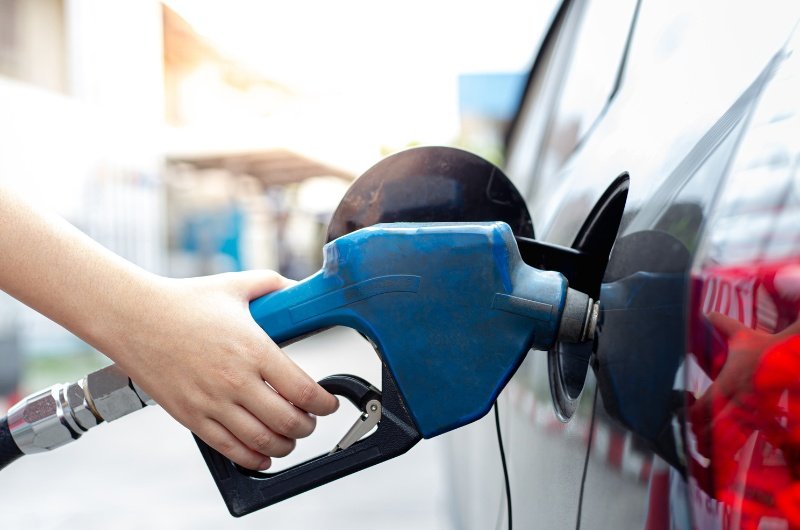
Oil prices climbed toward $100 a barrel Tuesday after attacks on Saudi Arabian energy facilities intensified concerns about global supply, adding pressure to a U.S. gasoline market already experiencing record Labor Day prices. The latest surge threatens to keep fuel costs elevated for American drivers and could add to broader inflation pressures if disruptions persist. Brent crude, the international benchmark, reached $99.46 a barrel earlier Tuesday before trading at $98.63 at 8:01 a.m. ET, according to Reuters. U.S. West Texas Intermediate crude was $93.71 at that time, after reaching $94.73. The gains followed attacks by Iran-aligned Houthi forces on Saudi energy facilities, including a refinery in Jazan, while renewed U.S.-Iran tensions continued to disrupt shipping through the Strait of Hormuz. The impact is already visible at American gas stations. AAA reported a national average of $4.1514 for regular gasoline on September 8, or approximately $4.15 per gallon. In its September 3 update, the organization said prices were nearly a dollar higher than a year earlier and that Labor Day was on track to set a record at the pump. For a driver filling a 15-gallon tank, a $4.15 average translates to about $62.25 per fill-up. Oil has remained below $100 despite the disruptions because global supply has not completely dried up. Some Middle Eastern producers have increased shipments, while production from countries outside the region has helped offset shortages. Softer demand, particularly in China, has also limited price increases. Nevertheless, reduced shipping through the Strait of Hormuz, refinery constraints, and tight diesel supplies continue to create risks for fuel markets. The Readovia Lens Higher crude prices do not translate into identical increases at every gas station, but sustained supply disruptions can keep pressure on gasoline, diesel, transportation, and delivery costs. For households already paying more to drive, the key development is whether oil remains elevated long enough to push pump prices higher or delay relief. The direction of the market will depend on the extent of damage to energy facilities, the ability of producers to replace lost supply, and whether shipping routes can return to more normal operations.
Some Republicans Are Open to Higher Social Security Taxes as 2032 Funding Deadline Nears

A long-standing political barrier around Social Security is beginning to shift as several Republican lawmakers signal they are willing to consider higher tax revenue to prevent potentially steep cuts in retirement benefits. The debate is becoming more urgent because Social Security’s retirement trust fund is projected to exhaust its reserves in 2032, after which incoming revenue would cover only about 78% of scheduled benefits unless Congress acts. One proposal already has bipartisan backing. Republican Sen. Bernie Moreno of Ohio and Democratic Sen. Elizabeth Warren of Massachusetts are working on legislation that would remove the cap limiting how much of a worker’s wages are subject to Social Security taxes. Under the Moreno-Warren approach, the taxable-wage cap would be removed, meaning higher earners would continue paying Social Security taxes on wages above $184,500. The proposal would not raise the current 6.2% payroll tax rate for workers earning below that ceiling. Other Republicans are also indicating that additional revenue should be considered. Rep. Tom Cole of Oklahoma, chairman of the House Appropriations Committee, has said he is willing to consider both the payroll tax rate and the amount of income subject to Social Security taxes. Rep. Lloyd Smucker of Pennsylvania has similarly said lawmakers will probably have to address the payroll-tax side of the program’s finances, although he has also suggested options such as reducing benefits for wealthier retirees. The comments do not amount to a unified Republican plan, but they represent a significant departure from the party’s traditional resistance to tax increases. The pressure comes from increasingly difficult arithmetic. Social Security’s 2026 trustees report projects that the Old-Age and Survivors Insurance Trust Fund, which pays retirement and survivor benefits, can continue paying full scheduled benefits only through the fourth quarter of 2032. Without legislative action, continuing payroll-tax revenue would initially cover about 78% of scheduled benefits. The broader combined Social Security trust funds are projected to remain able to pay full scheduled benefits until 2034. The Readovia Lens For most workers, the emerging debate does not mean an immediate increase in Social Security taxes. The most developed bipartisan proposal would primarily affect people earning above the current $184,500 taxable-wage ceiling. What has changed is the political conversation: with 2032 approaching, lawmakers are confronting a narrowing set of choices that could include more tax revenue, changes to future benefits or retirement rules, or some combination of the three. The closer Congress gets to the funding deadline without acting, the harder it becomes to protect current and future retirees without larger changes.
OpenAI Releases GPT-6 Astra to Take On Complex Computer Tasks — and Sets a New Cybersecurity Benchmark
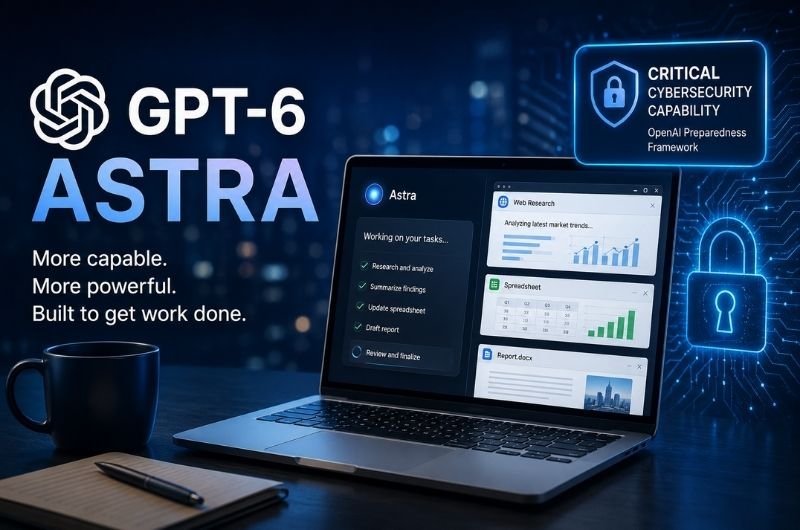
OpenAI has launched GPT-6 Astra, its most capable AI model yet and the first OpenAI system to reach the company’s highest disclosed cybersecurity capability level. The new model is designed to operate computers, write and test software, conduct research and complete complex professional tasks, while its unprecedented cybersecurity abilities have prompted OpenAI to deploy some of its strongest safeguards to date. Astra represents a significant expansion of what OpenAI’s models can do beyond answering questions or generating content. The company says the model can navigate software, fill out online forms, update customer records, organize calendars, conduct online research, work inside documents, and help build and test websites. It is also designed to handle longer, multistep assignments that require it to take actions and adjust as the work progresses. What OpenAI Means by “Critical” The “Critical” designation does not mean Astra has been released with unrestricted access to computers or networks. “Critical” is a capability classification under OpenAI’s Preparedness Framework — and in Astra’s case, it applies specifically to cybersecurity. OpenAI says that with the appropriate tools and access, Astra has demonstrated the ability to identify previously unknown security vulnerabilities and develop functional ways to exploit weaknesses in hardened systems without requiring a person to direct every individual step. The company says Astra represents a substantial increase in vulnerability identification and exploit-development capability compared with GPT-5.6 Sol. That distinction is important for everyday ChatGPT users. Astra cannot simply reach into an outside computer system because someone starts a conversation with it. What an AI system can actually do depends in part on the tools, permissions, computer environments and network access available to it. OpenAI Adds New Safeguards OpenAI says Astra’s capabilities required additional security measures before deployment. Those include stronger encryption and access controls around model checkpoints, monitoring of tool-using activity, systems capable of blocking potentially dangerous behavior and human intervention when monitoring detects serious problems. The company has also introduced more restrictive cybersecurity boundaries for accounts considered higher risk and says Astra has been trained to refuse requests that violate its cybersecurity safety policies. OpenAI’s concern is twofold: preventing malicious users from employing a highly capable model to attack protected systems and preventing an AI agent equipped with tools from taking unauthorized harmful actions on its own. A Different Kind of AI Model Cybersecurity is only one part of the Astra launch. OpenAI is positioning the model as an AI capable of carrying out substantial portions of computer-based work rather than merely explaining how that work should be done. Astra can work across browsers and software applications, analyze information, create documents, write code and perform sequences of actions needed to finish a task. OpenAI describes it as its strongest model for computer use, coding, research and complex end-to-end professional work. Access is beginning with a limited group of organizations before expanding more broadly to ChatGPT Plus, Pro, Business and Enterprise users and developers through the API over the coming days. The Readovia Lens Astra marks an important transition in the development of consumer and workplace AI. As models become increasingly capable of acting inside computer environments rather than simply producing answers, the permissions and tools connected to them become just as important as the intelligence of the models themselves. The “Critical” designation is significant because OpenAI has never previously placed one of its models at that cybersecurity capability level. But it should be understood in context: Astra’s most advanced cyber abilities depend on access and tools that are not automatically available simply because someone is using ChatGPT. For users, the larger change may ultimately be more visible in everyday work. AI is steadily moving from something people ask for information to something capable of taking a goal, navigating software and completing much of the work required to accomplish it.
Millions Are Wearing Oura Rings to Track Their Health — Now the Company Is Going Public

Millions of people are now wearing a small ring that tracks what is happening inside their bodies around the clock. Oura, the company behind the increasingly popular health-tracking Oura Ring, has filed to go public after growing to 5 million paid members and generating $1.21 billion in revenue during the first nine months of its fiscal year. The company earned $60.8 million during the period, up from just $1.6 million a year earlier. Unlike a smartwatch, the Oura Ring is designed to look and feel more like ordinary jewelry while continuously collecting health information from a wearer’s finger. Its sensors monitor signals including heart rate, heart-rate variability, body temperature, movement and sleep, which are turned into personalized information inside the Oura app. A Health Tracker People Rarely Take Off Oura has increasingly positioned the ring as more than a fitness tracker. People use it to understand how well they are sleeping, whether their bodies have recovered from exercise or stress and how daily habits may be affecting their health. The technology has also expanded into women’s health, including menstrual-cycle and ovulation tracking, while Oura says members use the platform for needs ranging from improving fitness to family planning and managing ongoing health conditions. The company’s latest numbers suggest that the concept has moved well beyond a niche wearable. Oura sold 3.1 million rings during the nine months ending June 30, compared with 1.8 million during the same period a year earlier. Its paid membership base reached 5 million across 56 markets. Oura says approximately 85% of its paid members remain members after 12 months, giving the company a recurring subscription business alongside sales of the rings themselves. Why Put the Technology on a Finger? The ring’s appeal is partly tied to its form. A device worn on the finger can collect health measurements continuously without requiring users to wear a larger watch or fitness band day and night. That matters particularly for sleep tracking, when some people may find a ring less intrusive than a smartwatch. Continuous wear also gives Oura more information about changes in an individual’s body over time rather than relying on occasional measurements. The result is a product designed to help users spot patterns. A poor night’s sleep, elevated resting heart rate or changes in body temperature can be considered alongside exercise, stress and other factors to provide a broader picture of how the body may be responding. From Smart Ring to Public Company Oura’s rapid growth is now taking the company to Wall Street. The company filed paperwork with the Securities and Exchange Commission for an initial public offering and plans to list its shares on the Nasdaq under the ticker symbol OURA. The filing does not yet specify how many shares Oura intends to sell or the price range for the offering. Going public will also put considerably more attention on whether consumers continue embracing health technology designed to be worn nearly all the time. Oura now generates revenue both when consumers buy its hardware and through the memberships that unlock additional features and insights in its app. The Readovia Lens Oura’s rise illustrates how personal health technology is becoming less conspicuous while collecting more information. The first generations of wearable technology made their presence obvious on people’s wrists. Oura has demonstrated that sophisticated sensors can instead disappear into something as familiar as a ring — while still giving millions of users a continuous stream of information about sleep, recovery, activity and other aspects of their health. Oura’s IPO will test something beyond investor enthusiasm for another technology company. It will also provide a measure of just how valuable the market believes our growing appetite for continuous personal health information has become.