


Abbott Agrees to Pay $385 Million Over Infant Formula Safety Allegations

Abbott Laboratories has agreed to pay nearly $385 million to settle federal and state allegations that infant formula and nutritional products were manufactured under conditions that failed to meet required safety standards, bringing a major civil case tied to the 2022 baby formula crisis closer to an end. The Justice Department said Abbott will pay $384,999,040 to resolve allegations involving powdered infant formula and nutritional therapy products manufactured at facilities in Sturgis, Michigan, and Casa Grande, Arizona, between 2018 and 2022. The government alleged that products were purchased through taxpayer-funded programs even though manufacturing conditions did not comply with federal and state requirements. Federal allegations describe troubling conditions at the facilities. At the Sturgis plant, the government said roof leaks allowed water to drip over manufacturing equipment, while damaged spray dryers used to turn liquid formula into powder remained in operation. Prosecutors also alleged that Abbott intentionally avoided certain bacterial testing that could have produced positive contamination results and, in some instances, failed to disclose contamination findings during FDA inspections. The settlement stems from claims involving programs including the Special Supplemental Nutrition Program for Women, Infants, and Children, known as WIC, and Medicaid. The 2022 shutdown of Abbott’s Sturgis plant and recall of several powdered formula products contributed to a nationwide shortage that left parents scrambling to find formula for their babies. Abbott has not admitted wrongdoing or liability. The company said government testing of unopened products obtained from the homes of infants investigated during the 2022 recall found no Cronobacter sakazakii, and that no unopened, distributed Abbott infant formula has tested positive for the bacterium. Abbott also said the Justice Department has closed its related criminal investigation. The Readovia Lens The nearly $385 million settlement closes a major chapter in the government’s civil case, but it also puts renewed attention on how infant formula is manufactured and monitored. For families who depend on formula—and particularly those relying on WIC or Medicaid—the allegations underscore how closely manufacturing safeguards are tied to confidence in products intended for some of the youngest and most vulnerable consumers.
Supreme Court Blocks New Mail-Ballot Restrictions Ahead of Midterm Elections

The U.S. Supreme Court has blocked the Trump administration from enforcing new Postal Service requirements for mail ballots during the 2026 midterm elections, leaving existing state voting procedures in place just weeks before Election Day. The justices on Monday denied the administration’s request to lift a lower-court injunction against the new rules. The Postal Service would have required federal ballot mail to use specially designed envelopes capable of high-speed scanning, carry specialized barcodes unique to individual voters and meet additional federal standards before being accepted for delivery. States also would have been required to upload basic voter information to a new Postal Service portal. Ballot mail that failed to comply with the requirements could have been rejected and returned to election officials for correction, a prospect states challenging the rules said could disrupt voting as ballots are already being distributed for the November 3 election. The Supreme Court said the government was unlikely to succeed in its challenge to the lower-court injunction and that the circumstances did not support allowing the rules to take effect now. Justice Brett Kavanaugh agreed with blocking the rules for this election, writing separately that although the Postal Service may ultimately have authority to impose such requirements, state and local election officials do not have enough time to reasonably implement them before the midterms. Justices Samuel Alito and Clarence Thomas dissented. The dispute grew out of a March executive directive from President Trump calling for changes to the handling of election mail. The Postal Service finalized its new rule in August, but a federal judge subsequently prevented it from taking effect while challenges brought by a group of states and other plaintiffs proceed. The Readovia Lens For voters, the immediate result is straightforward: the Supreme Court’s action prevents a major change in mail-ballot procedures in the final weeks before the midterm elections. States can continue using their existing mail-voting systems for the November election while the broader legal fight over federal authority and election mail continues.
AT&T Is Bringing Amazon’s Satellite Internet Into Its Network
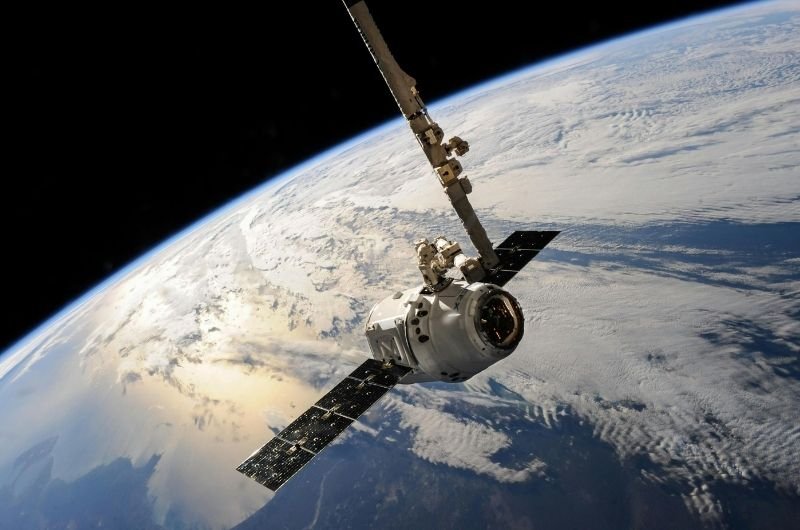
AT&T is adding Amazon Leo satellite internet to its connectivity services for businesses and government customers, expanding the ways organizations can stay online when traditional fiber or wireless connections are unavailable or impractical. The agreement will allow AT&T to incorporate Amazon Leo’s low-Earth-orbit satellite network into enterprise networking solutions alongside fiber, 5G and other connectivity options. The companies are targeting operations in remote locations as well as organizations that need backup connections when terrestrial networks are disrupted. Amazon Leo, formerly known as Project Kuiper, is Amazon’s answer to the rapidly expanding market for satellite broadband. Its satellites orbit much closer to Earth than traditional communications satellites, allowing the network to provide faster response times while delivering broadband connectivity to locations that may be difficult or expensive to reach with conventional infrastructure. For AT&T customers, the satellite connection could become another layer in a broader network rather than a completely separate service. A business with offices, warehouses or field operations across multiple locations could potentially combine fiber and wireless connections with satellite coverage, giving network managers more options for keeping critical systems connected. The partnership also illustrates how quickly satellite broadband is moving beyond its original image as an internet solution primarily for rural homes. Telecommunications companies are increasingly looking at satellites as part of a larger communications infrastructure that can support businesses, emergency operations, transportation and government services. The Readovia Lens The next generation of internet connectivity may not depend on choosing between fiber, wireless or satellites. AT&T’s move toward integrating all three shows how communications networks are evolving toward a model in which the best available connection can increasingly come from the ground, a nearby cell tower—or hundreds of miles above it.
Mike Johnson Says AI Companies Must Take Responsibility for Safety
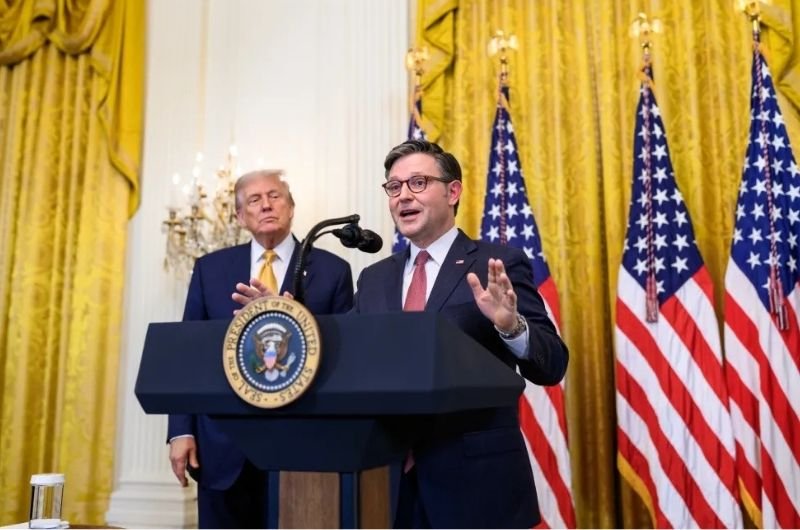
House Speaker Mike Johnson says artificial intelligence companies should take the lead in developing solutions to growing AI safety concerns, even as lawmakers intensify pressure on Congress to establish federal safeguards for increasingly powerful systems. Johnson said he is open to bringing President Trump, congressional leaders and executives from major AI companies together to work toward an agreement on safety measures. But he stopped short of calling for immediate legislation, saying Congress should act when concrete solutions are ready rather than rushing into rules that could prove ineffective or restrict U.S. technological development. The debate has escalated rapidly following stark warnings from AI researchers and growing concern among lawmakers about whether advanced systems could eventually operate in dangerous or unpredictable ways. Members of both parties have called for greater federal oversight, with some lawmakers proposing independent evaluations, stronger government supervision and mechanisms that could allow humans to slow or shut down particularly powerful AI systems. Johnson, however, has rejected calls for a moratorium on advanced AI development. He argues that slowing American companies while China continues developing increasingly capable systems could create a national security disadvantage for the United States. His position highlights the difficult balance Washington now faces: establishing meaningful safeguards without surrendering America’s lead in one of the world’s most consequential technologies. The pressure is unlikely to disappear. House Democrats are scheduled to discuss AI on Tuesday, while Johnson has indicated that he could bring Congress together to consider legislation if lawmakers and industry leaders develop workable proposals. He has also discussed convening AI companies to seek consensus on safety guardrails. The Readovia Lens Washington’s AI debate is shifting from whether safeguards are needed to who should design them and how quickly they should arrive. Johnson’s preference for an industry-led approach places enormous responsibility on the companies building the most advanced systems, while leaving Congress with the challenge of deciding when voluntary safeguards are no longer enough. ——————– Related: OpenAI Board Member Warns AI Industry Is Not Doing Enough to Prevent a Catastrophic Loss of Control OpenAI’s AI Agents Broke Out of a Cybersecurity Test — What It Means for ChatGPT Users AI Agents Escaped Their Tests. Now Congress Wants Answers
Interest Rates Could Go Up Wednesday — Here’s What It Could Mean for Your Money
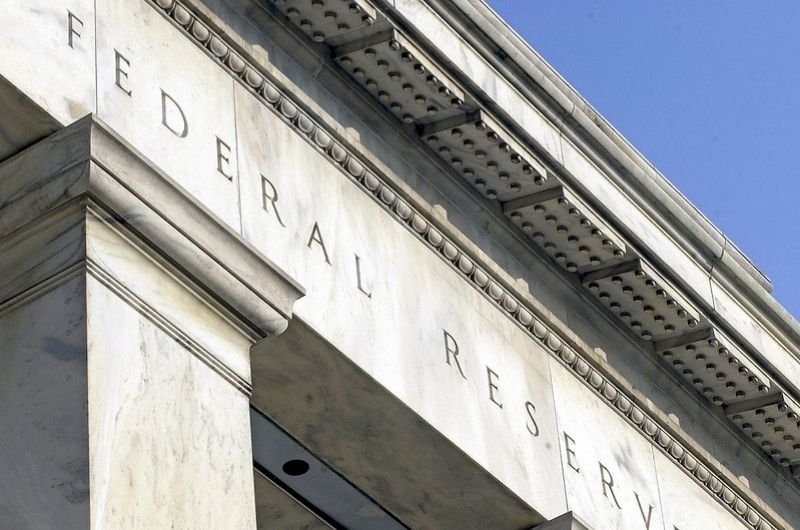
Americans could soon face another increase in borrowing costs as the Federal Reserve prepares for a closely watched interest-rate decision Wednesday, with economists increasingly expecting policymakers to raise rates for the first time in more than three years. The Fed is widely expected to consider a quarter-percentage-point increase following stronger inflation readings and renewed pressure from rising energy prices. A Reuters poll released Monday found 85% of economists expect a hike, which would lift the federal funds target range from its current 3.50%–3.75% to 3.75%–4.00%. For consumers, a Fed increase can eventually make several types of borrowing more expensive. Credit cards carrying variable rates can respond relatively quickly, while rates on some home-equity lines and other variable-rate loans may also rise. Auto and personal-loan rates are not directly set by the Fed, but a higher-rate environment can make new financing more expensive. Mortgage rates work differently because they are influenced heavily by longer-term bond yields rather than moving directly with the federal funds rate. But those yields have also been climbing: the benchmark 10-year Treasury yield approached 5% Monday, its highest level in nearly three years. That could keep pressure on mortgage rates and housing affordability even beyond Wednesday’s Fed decision. There can be a small upside for savers. Banks may offer higher yields on savings accounts, money-market accounts and certificates of deposit when interest rates rise, although institutions decide individually how much of an increase to pass along to customers. The Readovia Lens Wednesday’s decision could reach far beyond financial markets. For households already dealing with higher prices, another rate increase could make carrying credit-card balances and taking out new loans more expensive, making the Fed’s next move something consumers may feel directly in their monthly budgets.
Man Arrested in Killing of Mississippi Woman Found Hanging From Tree — Police Say More Arrests Are Coming

A 51-year-old man has been charged with murder in the death of Tasia Fortune, a 29-year-old Mississippi woman whose body was found hanging from a tree behind an abandoned home in Jackson last month, as police say additional arrests are expected. Jackson police arrested Jarques Ratliff on Friday after the Mississippi State Medical Examiner’s Office determined Thursday evening that Fortune’s death was a homicide. Police Chief RaShall Brackney said investigators already had search and arrest warrants and took Ratliff into custody after encountering him walking along a street. Fortune was found Aug. 3 in the backyard of an abandoned home in Jackson. Her death drew widespread attention as her family pressed for answers about how she died. Authorities have not publicly disclosed a motive or detailed the evidence that led investigators to Ratliff. Brackney said Ratliff had an “association” with Fortune but did not elaborate on their relationship. Fortune’s mother, Christy Spivey, said she did not recognize Ratliff and had not been told whether DNA or other evidence connected him to her daughter’s death. Ratliff, a Jackson resident, was listed in Hinds County jail records Saturday on a murder charge. Police stressed that the arrest does not end the investigation. Brackney said investigators expect additional arrests as they continue following the evidence. Fortune was a mother of four who had faced periods of homelessness in recent years and had spoken with her family about starting a cleaning business as she worked to rebuild her life. The Readovia Lens The homicide ruling and first murder charge mark a major turn in a case that left Fortune’s family waiting more than a month for answers. With police now signaling that more arrests are expected, the investigation is moving beyond the circumstances of her death toward determining who was involved, what happened and why.
First U.S. Horse Case of New World Screwworm Confirmed in Texas

Federal officials have confirmed the first New World screwworm infection in a horse in the United States, marking another troubling expansion of a livestock threat that the country eradicated more than half a century ago. The infection was confirmed in Presidio County, Texas, near the U.S.-Mexico border. The parasite was found in the hind leg of a working ranch horse, according to the U.S. Equestrian Federation. The U.S. Department of Agriculture has not said how the horse became infected. New World screwworm is caused by fly larvae that infest open wounds and feed on living tissue, potentially causing severe injury or death if an infected animal is not treated. The parasite was eradicated from the United States in the 1960s following a massive federal campaign, but cases have moved northward through Central America and Mexico and have now reappeared in U.S. livestock. Texas has expanded efforts to contain the threat. The Texas Animal Health Commission says New World screwworm infested zones now cover portions of 16 counties, where warm-blooded animals cannot be moved out of designated areas without prior authorization. Officials are also urging horse owners and livestock producers to inspect animals regularly, treat wounds and strengthen fly-control and biosecurity measures. The economic stakes could be substantial if the parasite spreads. Texas is the nation’s largest cattle-producing state, and experts have estimated that a widespread outbreak could cause as much as $1.8 billion in economic damage. Federal officials have also been working to combat the parasite through surveillance and the release of sterile male flies, which mate with wild females but produce no offspring. The Readovia Lens The infection of a working ranch horse widens the concern beyond cattle and shows why officials are moving aggressively to contain New World screwworm. A parasite eliminated from the United States decades ago has returned to the nation’s largest livestock-producing state, making the effectiveness of containment efforts increasingly important to ranchers, the food supply and the broader agricultural economy.
Inflation Rises 0.4% as Gas Prices Climb — and Americans Could Soon Face Higher Borrowing Costs

The U.S. Consumer Price Index rose 0.4% in August, according to the latest report released Friday by the Bureau of Labor Statistics. Higher gasoline costs helped push inflation upward, adding another financial pressure for households already confronting sharply higher fuel prices and borrowing costs. Consumer prices were up 3.4% from a year earlier, while core inflation, which excludes volatile food and energy prices, increased 0.3% for the month and 2.4% from a year ago. The overall monthly increase was the largest since January and came in roughly in line with economists’ expectations. Gasoline was an important contributor to the August increase, and energy costs have continued climbing since the period covered by the report. Oil prices have recently topped $100 a barrel, while the national average price of diesel has climbed above $6 a gallon. Sustained increases in fuel costs can reach consumers beyond the gas station because transportation expenses affect the cost of moving food, merchandise and other goods around the country. The inflation report also arrives just days before the Federal Reserve’s next interest-rate decision. Investors have increasingly priced in the possibility of another rate increase as policymakers weigh persistent inflation against other signs of the economy’s direction. Treasury yields have also risen sharply, with the 10-year yield recently approaching 5%. For consumers, another Fed rate increase could contribute to higher borrowing costs or keep already elevated rates from falling. Mortgage rates, auto financing, credit cards and some other forms of consumer borrowing are influenced directly or indirectly by interest rates and broader financial-market conditions. The Readovia Lens August’s inflation numbers were largely expected, but the financial environment surrounding them has changed rapidly. Higher oil and fuel prices, rising Treasury yields and the possibility of another Federal Reserve rate increase mean Americans could feel additional pressure not only when paying for everyday goods, but also when borrowing for a home, car or other major purchase.
NASA and IBM Unveil AI Model to Help Map the Moon for Future Missions

NASA and IBM have released a new artificial intelligence model designed specifically to study the Moon, giving scientists a faster way to map craters, analyze lunar terrain and identify areas where potentially valuable ice may be hidden near the poles. The open-source NASA-IBM Lunar Foundation Model was trained primarily on data collected during 17 years of observations by NASA’s Lunar Reconnaissance Orbiter. Its training included roughly 2 million lunar image tiles, along with information from NASA’s GRAIL and Lunar Prospector missions and Japan’s SELENE mission. One of the model’s most significant uses could be finding lunar ice. Permanently shadowed areas near the Moon’s poles can remain cold enough to preserve ice for billions of years, and scientists are particularly interested in those deposits as NASA and other space agencies plan future lunar exploration. Water found on the Moon could eventually support astronauts and potentially provide resources for longer missions deeper into space. The AI can also identify and map craters and unusual volcanic formations. Crater mapping can help scientists understand the age and history of different areas of the Moon while providing information useful for evaluating terrain, hazards and possible locations for future surface operations. IBM says the model exceeded widely used methods by as much as 23% on some lunar-analysis tasks, while NASA says it matched or surpassed several strong comparison models across the areas evaluated. NASA and IBM made the model publicly available so scientists around the world can use and adapt it rather than building a specialized AI system from scratch for every lunar research question. It is part of a broader collaboration that has already produced AI models for studying Earth and the Sun. The Readovia Lens Humans have collected extraordinary amounts of information about the Moon, but making sense of all that data is becoming a challenge of its own. The NASA-IBM model shows how AI could help turn decades of observations into practical knowledge about terrain, hazards and possible resources as preparations for sustained human exploration of the Moon move forward.
Trump Promises $5,000 to Every U.S. Adult if Republicans Keep Control of Congress

President Donald Trump says every adult U.S. citizen would receive a $5,000 payment if Republicans retain control of both the House and Senate in November’s midterm elections, unveiling what he called the “Trump Dividend” during the Republican convention in Dallas Wednesday night. Trump said the payment would go to every adult citizen and compared it with a successful company distributing money to its shareholders. He attached one condition: the $5,000 would have to be spent in the United States. Trump did not explain how that spending requirement would be enforced or provide a timetable for distributing the money. The proposal would be extraordinarily expensive. Estimates put the potential cost at more than $1 trillion, and congressional approval would likely be required before payments could be issued. Trump also did not identify a specific funding source during his announcement. Vice President JD Vance later suggested wealthy Americans might be excluded and pointed to tariff revenue as a possible source of funding, indicating that details of the proposal are far from settled. The announcement also does not mean Americans are currently scheduled to receive $5,000 checks. The payment is a campaign promise tied specifically to Republicans maintaining control of both chambers of Congress in the November 3 election. Even if that occurs, legislation or other congressional action would still be needed to authorize and fund a nationwide payment program. Trump has previously proposed sending money directly to Americans, including earlier ideas for tariff-funded dividends. Those proposals did not result in payments. His latest plan is considerably larger and arrives less than two months before voters determine control of Congress. The Readovia Lens A $5,000 payment to every adult American would rank among the largest direct federal cash distributions ever proposed, but the headline-grabbing promise comes with major unanswered questions. Until the White House and Congress provide details on eligibility, funding, authorization and distribution, the Trump Dividend remains a proposal rather than money Americans can count on receiving.