

Explore Readovia

A Blueprint for the Next Generation: What Zohran Mamdani’s Victory Reveals

Mamdani wins New York City mayor's election

How a grassroots movement, social media mastery, and unapologetic perseverance carried a young progressive to City Hall — and reshaped New York politics in the process. A New Kind of Campaign Zohran Mamdani’s path to the New York City mayor’s office wasn’t paved with establishment backing or old-school political machinery. At 34, the former state assemblyman built a following that looked less like a campaign and more like a cultural movement. His rallies were live-streamed, his social content was strategic, and his message was unmistakable: that New York’s next era of leadership should look and sound like its people. He cultivated energy across boroughs through community meet-ups, neighborhood drives, and social-media organizing that reached younger and first-time voters. What traditional candidates viewed as distractions — TikTok, grassroots parties, community DJ events — Mamdani used as voter outreach. From Assembly to City Hall Born to Ugandan-Indian parents and raised in Queens, Mamdani entered politics as a housing-rights advocate and quickly earned recognition for his activism. His tenure in the New York State Assembly marked him as a sharp, articulate voice for working-class New Yorkers. When he announced his mayoral bid against former governor Andrew Cuomo, few believed he could win. Even President Trump reportedly pressured party leaders to push him out of the race — a move that only galvanized his base. Mamdani’s persistence became a symbol of generational defiance against establishment politics. The Digital Blueprint Mamdani’s campaign functioned like a start-up — agile, data-driven, and community-sourced. His team used analytics to identify under-represented precincts and micro-target them with localized messaging. His live Q&A streams routinely drew tens of thousands of viewers, translating online momentum into physical turnout. He turned nightlife into networking, appearing at community clubs and cultural spaces to meet voters where they were. What began as a niche strategy evolved into a viral playbook for modern campaigning — one that blended digital authenticity with on-the-ground connection. A Symbol Beyond New York For Democrats nationally, Mamdani’s win is more than a mayoral victory — it’s proof that charisma, relatability, and cultural fluency can mobilize the next generation of voters. His rise reflects a shift in how political power is built: less through money and legacy, and more through trust and accessibility. He now stands as one of the youngest mayors in New York City’s history, embodying a new progressive wave that favors empathy over elitism, connection over calculation. The Takeaway Zohran Mamdani has rewritten the rules of political engagement. His victory revealed that political influence today is earned in conversations, not corridors. As parties across the nation study his campaign, the question is whether others can replicate his authenticity.

Trump Defends ICE Raids, Says They ‘Haven’t Gone Far Enough’

President Donald Trump interview with 60 Minutes

On Friday, President Trump sat down with Norah O’Donnell for a primetime 60 Minutes interview that quickly drew national attention. The wide-ranging conversation covered immigration enforcement, the government shutdown, and foreign affairs — but it was Trump’s remarks about the use of force in recent ICE raids that became the most talked-about moment. According to 60 Minutes, the interview took place exactly one year to the day since Trump sued Paramount, alleging that 60 Minutes had deceptively edited an interview with his former opponent, Kamala Harris. Paramount settled the lawsuit, though the agreement did not include an apology or any admission of wrongdoing. During the interview, Trump defended the recent series of aggressive Immigration and Customs Enforcement (ICE) operations, saying the raids “haven’t gone far enough.” His comments came after O’Donnell cited viral videos showing ICE agents tackling a young mother, deploying tear gas in a Chicago neighborhood, and smashing car windows during arrests. When asked whether those tactics had gone too far, Trump replied, “No, I think they haven’t gone far enough because we’ve been held back by the liberal judges that were put in by Biden and by Obama.” Pressed again on whether he approved of the methods seen in those videos, he said, “Yeah, because you have to get the people out.” The remarks quickly drew sharp reactions online, with immigrant-rights advocates condemning the statement as an endorsement of excessive force, while supporters argued it reflected a tougher stance on border enforcement long promised by his administration. Legal experts say the President’s comments could deepen tension between the executive branch and the judiciary, which has already issued multiple rulings limiting federal enforcement actions. As footage of the raids continues circulating nationwide, Trump’s defense underscores the administration’s determination to escalate immigration operations — even at the risk of renewed constitutional and moral debate.

Weakness in the Real Economy: Fewer Shoppers, Fewer Hours, Growing Concern

ChatGPT said: A grocery store employee clocks out near the staff hallway as aisles stand quiet behind her — a small moment reflecting a broader slowdown in retail activity.

As economic pressures rise, fewer shoppers and shorter shifts reveal growing weakness in the real economy — from local retail stores to household budgets across America. At a suburban grocery store outside Washington, D.C., a cashier told Readovia Saturday that her hours had been cut back. When asked why, she shrugged: “There aren’t as many people buying groceries right now. On a day like today, our store would usually be packed. But there’s only a few people here shopping.” Her story mirrors a broader national shift that’s beginning to show up in economic data — and in checkout lines across the country. The U.S. economy enters a fragile phase as rising costs and uncertainty begin to pinch lower- and middle-income households, threatening what has until now been a durable engine of growth. A report by Reuters highlights that families are absorbing heavier burdens from health-care expenses, reduced food-benefit certainty, and inconsistent job-market signals — just as the holiday-spending season looms. Traditionally, November marks the kickoff of consumer spending on travel, gifts, and dining — but this year many households appear less able to ramp up. The ongoing federal government shutdown, which has halted processing of certain assistance programs, adds to the strain. Financial cushions are thinner, and the buffer for unexpected job loss or medical costs is shrinking. For business leaders and strategists, the implications are significant. A slowdown in discretionary spending by lower-income consumers could ripple into sectors like retail, dining, and travel — areas that depend on broad-based consumer resilience rather than affluent spending alone. The question now is how broadly the economic weakness will spread.

Federal Judges Order Trump Administration to Keep SNAP Benefits Flowing Amid Shutdown

Woman shopping in grocery store with her son

In a major legal rebuke to the Trump administration, two federal judges have ordered the Agriculture Department to continue funding the Supplemental Nutrition Assistance Program (SNAP) despite the ongoing government shutdown — a ruling that spares millions of families from an abrupt loss of food aid. Regular SNAP funding was set to expire November 1, with the U.S. Department of Agriculture warning that “the well has run dry.” But back-to-back rulings Friday by U.S. District Judge John McConnell Jr. in Rhode Island and U.S. District Judge Indira Talwani in Massachusetts require the department to draw on $5.25 billion in contingency funds to keep benefits flowing. “There is no doubt, and it is beyond argument, that irreparable harm will begin to occur if it hasn’t already occurred in the terror it has caused some people about the availability of funding for food, for their family,” McConnell said during a virtual hearing. The orders came after a coalition of 25 Democratic-led states, joined by nonprofit organizations and faith groups, sued to prevent the Trump administration from halting food assistance to the 42 million low-income Americans who depend on SNAP each month. Talwani’s ruling goes further, directing the government to decide by November 3 whether to issue reduced benefits using the contingency fund or reallocate other discretionary funds to close the gap. Shutdown at Day 31 The 31-day shutdown, now the longest in decades, continues to ripple across the country. Flight disruptions are mounting, even affecting senators trying to leave Washington. Families have spent the week fearing their SNAP and WIC (Women, Infants and Children) benefits would lapse. Food banks and pantries warned they could not meet the surge in demand if federal benefits stopped. “For now, these families can continue putting food on their tables, and thousands of nonprofit food banks, pantries, and other organizations across the country can avoid the impossible burden that would have resulted if SNAP benefits had been halted,” said Diane Yentel, CEO of the National Council of Nonprofits. The Justice Department had argued that it was “not possible” to issue partial benefits because the contingency fund covers only about half of SNAP’s roughly $9 billion in monthly costs. Judges rejected that argument, saying the administration must use the money already authorized by Congress. Follow Up Orders Both courts have ordered federal officials to submit written updates on funding plans by noon Monday. The Trump administration has not yet commented on the rulings. Between the Lines The dual rulings underscore the limits of executive power during a funding lapse and highlight how federal courts can act as a backstop when core safety-net programs are threatened. While Friday’s decisions avert a humanitarian crisis for now, they do not resolve the central issue: without a congressional deal, contingency funds may soon be exhausted, leaving millions of Americans once again uncertain about where their next meal will come from.

Federal Judge Blocks Trump Administration from Proceeding with Shutdown Layoffs

Judge makes ruling in courtroom.

A federal judge has indefinitely blocked the Trump administration from carrying out planned layoffs of federal employees during the ongoing government shutdown, delivering another major setback to the administration’s approach to the crisis. The ruling, issued late Thursday by U.S. District Judge Susan Illston in California, stops the administration from executing or issuing new “reduction in force” notices — effectively freezing the layoff process while the shutdown continues. The decision came in response to lawsuits from federal employee unions arguing that the White House was using the shutdown to sidestep labor protections and reorganize agencies without congressional approval. Judge Illston first intervened on October 15, issuing a temporary order to halt the administration’s planned layoffs while the court reviewed the case. Nearly two weeks later, on October 28, she expanded that order into a preliminary injunction, indefinitely barring the White House from carrying out permanent terminations or issuing new layoff notices while the broader lawsuit moves forward. The back-to-back rulings ensure that no federal employee can be fired under the administration’s shutdown plan until the courts make a final determination. Judge Illston said the government could not treat a lapse in funding as permission to rewrite the law. In her words, the administration had acted as if “the laws don’t apply anymore” and that it could reshape the government at will — a view she firmly rejected. A Major Restraint on Executive Power The injunction applies across key federal departments and agencies that were preparing to furlough or lay off employees amid the funding freeze. It also halts layoffs already in progress, preventing what could have been one of the largest coordinated reductions in the federal workforce in decades. The decision reinforces a simple principle: even in a shutdown, the executive branch must follow established laws and due-process protections for government workers. Union Challenge Sparks Broader Legal Showdown Labor unions had already taken the administration to court before the shutdown began, warning that its plan to replace temporary furloughs with permanent terminations was both unprecedented and illegal. Under standard practice, furloughed employees are later reinstated with back pay once federal funding resumes. But the administration’s proposal sought to eliminate that safety net entirely — a move unions argued would amount to mass firing without due process. Attorneys representing federal workers said the effort was designed to bypass Congress and reshape the civil service through the back door. By preemptively suing, they positioned Friday’s ruling as part of a larger fight over worker protections, executive overreach, and the future of the federal workforce itself. Relief for Thousands of Workers For tens of thousands of federal employees facing uncertainty, the ruling offers a temporary reprieve. Many workers have now gone more than a month without pay, while agencies have struggled to maintain basic operations. By barring the layoffs, the court has given agencies time — and Congress additional pressure — to resolve the funding stalemate. “This restores a sense of order in a time of chaos,” said one federal workers’ representative following the ruling. The Takeaway The injunction is the latest in a growing series of legal challenges constraining the Trump administration’s shutdown strategy. Coming just hours after federal courts ordered the continuation of SNAP food benefits, it highlights a deepening pattern of judicial intervention as the shutdown drags into its 31st day. While the order prevents mass terminations for now, it does not solve the broader problem. Without a budget deal, the government remains paralyzed — and workers remain in limbo, waiting for Washington to act.

Prince Andrew Evicted as King Charles Ends His Royal Life at Windsor

The Royal Lodge at Windsor in Berkshire, England

In an historic royal decision, King Charles III has stripped Prince Andrew of all titles and privileges and ordered him to vacate the Royal Lodge at Windsor. Buckingham Palace confirmed that the Duke of York will now be known simply as Andrew Mountbatten-Windsor, marking a decisive end to his official royal life. The late Queen Elizabeth II had granted Andrew long-term residence at the Royal Lodge under a private lease arrangement with the Crown Estate. In 2003, he reportedly paid £1 million to secure the 75-year lease, which was set to run until 2078 and required him to personally fund renovations and maintain the surrounding grounds. Once viewed as a lasting symbol of royal privilege, that agreement has now been rescinded. The eviction follows years of scandal and public backlash over Andrew’s association with convicted financier Jeffrey Epstein. Palace insiders describe the move as “final and necessary,” reflecting King Charles’s effort to modernize the monarchy and reinforce accountability. The message is clear: even among royals, legacy no longer shields from consequence.

Senate Fights Back: Voting to Terminate Global Tariffs

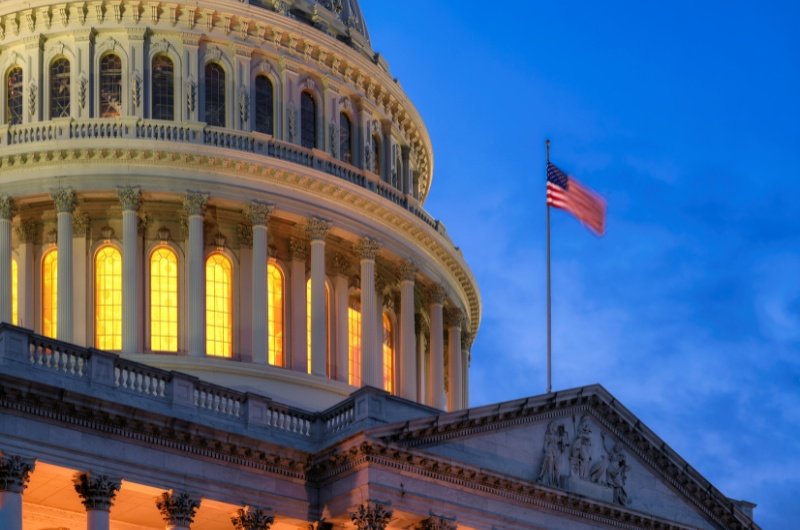
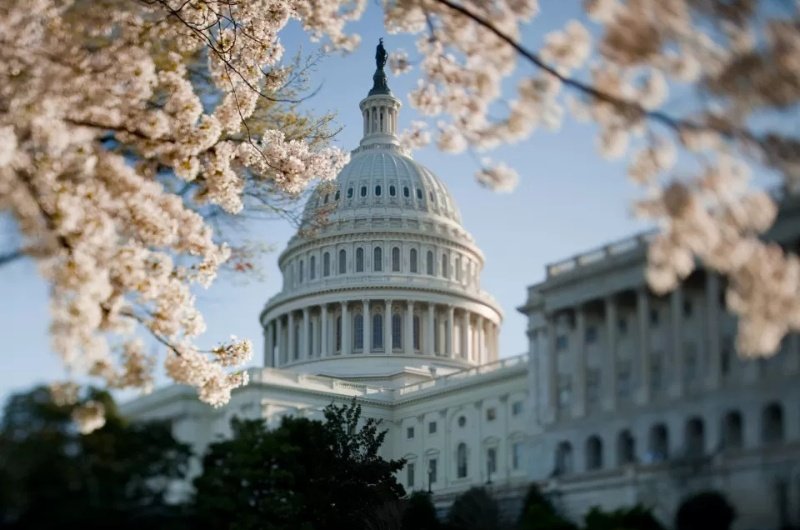
The US Capitol building at dusk.

In a rare act of defiance, the United States Senate has voted to terminate President Donald Trump’s sweeping global tariffs — a move that challenges the administration’s grip on trade policy and tests the limits of executive power. The 51–47 vote marks a sharp bipartisan rebuke of a system that has levied tariffs on more than 100 countries, raising costs for American industries and consumers alike. While the measure faces steep odds in the Republican-controlled House, it underscores a growing unease in Congress over what many lawmakers view as a “one-man trade war.” The Vote Heard Around the World The Senate resolution seeks to end the so-called “Liberation Day” tariff plan — an initiative the Trump administration implemented under emergency economic authority. The tariffs, framed as a tool to pressure trading partners and protect U.S. manufacturing, have since drawn criticism for disrupting global supply chains and straining relationships with allies. Four Republican senators — Susan Collins, Mitch McConnell, Rand Paul, and Lisa Murkowski — joined Democrats to advance the measure. Their support was enough to send a symbolic message: trade policy belongs to Congress, not the Oval Office. Cracks in the Trade Wall The Senate’s vote follows earlier challenges to tariffs targeting Brazil and Canada, signaling an organized pushback rather than isolated dissent. For many legislators, this moment represents an inflection point — a bid to reclaim oversight authority long eroded by decades of executive expansion. Even conservative lawmakers who once supported Trump’s protectionist stance now argue that the costs are outweighing the benefits. Farmers, manufacturers, and importers have reported steep price increases, delayed shipments, and shrinking export opportunities. “The tariffs were supposed to make America stronger,” one senator remarked privately, “but they’re starting to make America smaller.” A Global Ripple International markets reacted cautiously to the Senate’s vote, viewing it as both a political statement and a potential precursor to policy recalibration. Countries targeted under the tariff plan — including Canada, Germany, and Japan — welcomed the move as a sign that Washington’s trade posture may be softening. Still, the measure faces a procedural blockade in the House, where Republican leadership has implemented new rules preventing tariff-related resolutions from reaching the floor until next spring. That delay effectively shields the administration’s trade program from immediate reversal. The Bigger Picture At stake is precedent. The battle over tariffs reflects a broader question about how much power presidents should wield over global economics. For decades, Congress has ceded portions of its constitutional trade authority in the name of efficiency and diplomacy. But the Senate’s action suggests an appetite to rebalance that equation — even at the risk of political fallout. Economists warn that instability in tariff policy can rattle markets and complicate corporate planning, particularly for industries dependent on long-term supply agreements. Yet for lawmakers, the immediate concern is not just economic, but institutional: restoring checks and balances in the era of economic nationalism. Between the Lines For investors and executives, the Senate’s defiance signals a potential shift in how trade and governance intersect. It may not dismantle the tariffs overnight — but it does mark the beginning of a larger recalibration of U.S. economic strategy. When politics and global commerce collide, it’s rarely about the numbers. It’s about who gets to write the rules.

Beyond the Threshold: OpenAI’s Path to a Trillion-Dollar IPO

OpenAI offices - San Francisco, CA

OpenAI — the powerhouse behind ChatGPT — is setting the stage for what could become the most consequential initial public offering (IPO) of the decade. Reports indicate the company is preparing to go public with a target valuation of up to $1 trillion (USD), a figure that would place it among the most valuable firms ever to debut on a stock exchange. Setting the Stage OpenAI’s potential IPO would mark a new era — not only for artificial intelligence but for the modern technology market itself. Sources familiar with the company’s plans told Reuters that OpenAI is quietly assembling the financial and structural framework for a listing as early as 2027, following a likely filing period in late 2026. If executed as envisioned, the offering could raise at least $60 billion, providing OpenAI with the capital to expand its computing infrastructure and accelerate development toward artificial general intelligence (AGI). Why Now? This move comes as OpenAI transitions from a capped-profit hybrid into a more conventional corporate structure — one designed to invite public investors while maintaining its original mission under a redefined governance model. Microsoft remains OpenAI’s largest strategic backer, holding roughly 27 percent after several funding rounds. Yet the company has worked to lessen its dependency on the tech giant, both to preserve autonomy and to position itself as an independent leader ready for Wall Street scrutiny. At the same time, the artificial intelligence sector is maturing. Capital requirements are skyrocketing as model training costs soar into the billions, data-center construction becomes mission-critical, and global competition from Anthropic, Google DeepMind, and Meta intensifies. Going public could be the most direct path for OpenAI to sustain its ambitions without relying solely on private funding. The Pillars of the Deal Valuation target: Up to $1 trillion. Estimated raise: At least $60 billion. Expected filing: Second half of 2026. Possible listing: 2027. Corporate model: Transitioned from capped-profit to open for-profit structure. While no specific exchange has been named, the New York Stock Exchange (NYSE) and NASDAQ are both reportedly contenders. Insiders expect a dual-class share structure, giving OpenAI’s leadership — including CEO Sam Altman — greater long-term control. Implications for the Market A successful OpenAI IPO could reshape how the world values artificial intelligence. Beyond its staggering valuation, it would symbolize AI’s transition from private innovation to a publicly traded industrial force. For investors, the move provides a direct route to participate in AI’s long-term growth rather than relying on indirect exposure through Microsoft. For markets, it would set a new precedent — likely drawing comparisons to the historic public debuts of Apple, Google, and Meta, each of which defined a generation of technology investing. For competitors, it may trigger a race to revalue, merge, or go public themselves as the industry realigns around scale, data, and computational capacity. The Broader View While the valuation headlines capture attention, the real story lies in what this means for accountability, governance, and long-term direction. Once public, OpenAI will face quarterly reporting, regulatory oversight, and institutional investor expectations — conditions that can test even the strongest corporate missions. Will OpenAI balance its lofty AGI vision with the demands of shareholders? Will transparency and profit expectations alter its trajectory? Those are the questions defining this next chapter. What to Watch Filing confirmation: when OpenAI submits its S-1 filing to the U.S. Securities and Exchange Commission (SEC) Lead underwriters: which investment banks take the deal Revenue transparency: what financial disclosures reveal about real monetization of ChatGPT and enterprise licensing Governance balance: how OpenAI aligns investor returns with its original “benefit of humanity” clause Regulatory climate: how evolving AI legislation in the U.S. and Europe may affect market appetite The Wallet Perspective For entrepreneurs, executives, and investors alike, this IPO represents the market’s declaration that artificial intelligence has become a core industry shaping global economics. When OpenAI rings the opening bell, it will officially mark the dawn of a new economic era powered by intelligence itself.

Unemployment Shock: How the U.S. Is Facing a Perfect Storm of Layoffs, Shutdowns, and Stalled Hiring

People wait in line outside a U.S. food bank, including a man in military fatigues, as economic strain deepens nationwide.

The convergence of a prolonged government shutdown, sweeping corporate layoffs, and an AI-driven labor shift is redefining America’s economic stability. 1. The Perfect Labor Storm Three converging forces are reshaping the U.S. job market into a crisis unlike any in recent memory. The federal government shutdown, now stretching through October, has left hundreds of thousands of federal employees furloughed or working without pay. In the private sector, major corporations are cutting deep—especially in technology, retail, and logistics—while hiring has largely frozen. Although the national unemployment rate remains just above 4%, the broader picture tells a different story: slower hiring, longer job searches, and shrinking opportunities for mid-level professionals displaced by automation. Many economists warn that even as companies tout “efficiency,” the human cost of this recalibration is becoming harder to ignore. 2. Unpaid Federal Workers and the Strain on Savings As the shutdown lingers, more federal workers are now missing entire pay cycles. Some are tapping emergency savings, while others are resorting to hardship withdrawals from retirement accounts such as 401(k) plans. Unlike past shutdowns, the current one coincides with higher consumer costs and interest rates, leaving even those with modest savings unable to stretch their pay gaps for long. Federal contractors, many of whom are not eligible for back pay, face even greater uncertainty about how long their jobs—and their benefits—will remain intact. 3. Low-Income Families and Food Bank Demand Low-income families are among the first to feel the strain of economic shocks. With layoffs mounting and the shutdown halting public assistance programs in some areas, demand at food banks is climbing. Organizations across the country are reporting longer lines, reduced inventories, and increased reliance on donations that can’t keep pace with need. The combination of job losses, rising rents, and stalled benefits has pushed more working families into food insecurity than at any point since the pandemic. 4. The Economic Ripple Effect The ripple effects of this crisis reach far beyond the unemployment line. Each additional week of the government shutdown is expected to cost the United States economy roughly 15 billion dollars in lost Gross Domestic Product (GDP), with a month-long impasse potentially adding tens of thousands of new unemployed workers. Corporate hiring freezes and AI-driven job consolidation compound the problem. Businesses that once relied on human labor for operations, logistics, and administration are increasingly replacing those roles with automation and generative AI systems. The result is an economy that looks stable on paper but feels increasingly brittle on the ground—one where growth depends less on people and more on productivity algorithms. 5. The Human Equation What’s unfolding is more than a fiscal issue—it’s a human one. Families juggling missed paychecks, rising food costs, and uncertain futures are confronting a form of economic fatigue that defies statistics. Workers who once viewed their jobs as secure are now reevaluating their place in a shifting labor landscape that values automation over longevity. The Wallet Perspective For millions of Americans, this moment feels less like an economic cycle and more like a reckoning. Paychecks have stopped, jobs are vanishing, and savings accounts are shrinking at the very moment people need them most. The numbers may read like policy statistics, but behind every data point is a grocery bill, a mortgage payment, or a family standing in a food-bank line. The question now is how many Americans will be financially standing when the economy recovers.

Hurricane Melissa Slams Cuba After Devastating Jamaica

Residents wade through flooded streets in eastern Cuba after Hurricane Melissa made landfall, leaving homes damaged and power lines down under gray storm skies.

Hurricane Melissa made landfall in eastern Cuba early Wednesday, striking the island’s southern coast with maximum sustained winds of about 120 mph (195 kph), just hours after devastating Jamaica with record-breaking intensity. Cuban authorities said more than 735,000 people were evacuated from coastal towns and flood-prone areas before the storm came ashore near Guamá in Santiago de Cuba province. State media reported widespread flooding, power outages, and landslides across eastern provinces, while communications were disrupted in several areas. On Tuesday, Melissa pummeled Jamaica with winds up to 185 mph, flattening homes, uprooting trees, and cutting power to more than half a million residents. Officials described the hurricane as the strongest ever to hit the island, and rescue teams are still searching for people missing in the aftermath. In Cuba, early images showed flooded streets, damaged roofs, and debris strewn across neighborhoods already coping with chronic shortages of fuel, food, and electricity. Emergency crews worked through the morning to clear blocked roads and restore communication lines as torrential rain continued to fall. The U.S. National Hurricane Center warned that Melissa will continue moving north across the Caribbean Sea on Wednesday, bringing life-threatening storm surge, flash flooding, and landslides to parts of Cuba and the Bahamas before gradually weakening later in the week. Meteorologists say unusually warm ocean temperatures helped intensify the storm, making it one of the most powerful late-season hurricanes on record in the region. Readovia Insights Hurricane Melissa’s back-to-back strike on Jamaica and Cuba highlights the escalating force of tropical systems fueled by warming seas. The twin disasters have left tens of thousands displaced and both nations facing a long recovery, as the wider Caribbean braces for what could become one of its costliest hurricane seasons in recent years.