


Government Reopens Homeland Security — Leaving Immigration Fight Unresolved
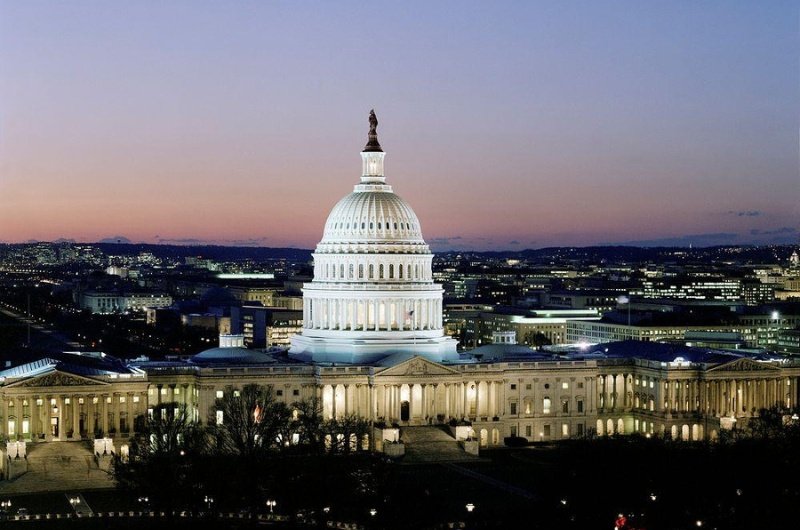
A 75-day partial shutdown of the Department of Homeland Security has come to an end after lawmakers approved a bipartisan funding measure restoring operations across most of the agency. One of the most contentious issues, however, remains unresolved. The legislation, signed into law by President Trump, funds core DHS functions including airport security, disaster response, and infrastructure protection. However, immigration enforcement agencies were not included in the agreement, effectively separating routine operations from the broader policy battle that has defined the standoff. The shutdown — the longest in the agency’s history — had already begun to strain critical systems. Airports experienced staffing disruptions, and the loss of personnel within the Transportation Security Administration (TSA) raised concerns about delays and operational stability, highlighting the real-world impact of prolonged funding gaps. The compromise underscores a deeper divide in Washington. Lawmakers were able to agree on keeping essential services running, but not on the scope and funding of immigration enforcement. That issue now moves forward on a separate track, where competing priorities are expected to drive a more direct political confrontation. For now, federal operations tied to homeland security have resumed. But the broader conflict over immigration policy remains unresolved, setting the stage for a continued battle that could shape the direction of enforcement, funding, and federal priorities in the months ahead.
Thousands Skip Work, School, and Spending in Nationwide May Day ‘Economic Blackout’
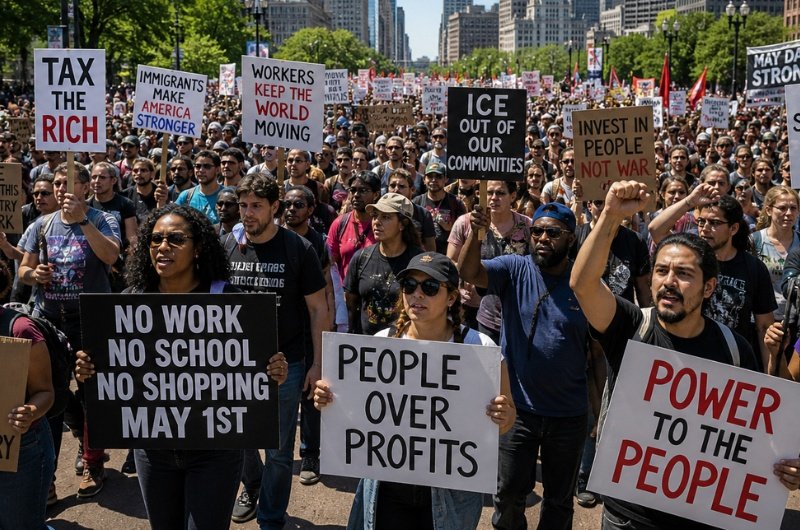
A coordinated nationwide protest is unfolding across the United States today as thousands of Americans take part in a May Day “economic blackout,” stepping away from work, school, and spending in a collective show of economic resistance. Organized by the May Day Strong coalition, the movement spans more than 3,500 events across cities and communities, with participation from labor unions, educators, students, and advocacy groups. Instead of traditional demonstrations alone, the strategy centers on absence — urging people not to show up, not to spend, and not to participate in the systems they say rely on their labor. The demands behind the movement are broad, ranging from higher taxes on the wealthy to changes in immigration enforcement and increased protections for workers and public institutions. But the underlying message is more focused: the economy depends on participation, and participation can be withheld. For organizers, today’s action is being framed as a test — a way to measure whether coordinated economic withdrawal can create visible disruption and build momentum toward larger-scale actions in the years ahead. Some groups involved have already pointed to the possibility of a wider general strike later this decade. The Readovia Lens What unfolds today may ultimately be less about immediate outcomes and more about signal. At a time of rising economic pressure and shifting public sentiment, the question is whether people’s frustration can translate into sustained, collective action capable of reshaping the balance of power.
The AI Boom Has a Quiet Winner — And Its Stock Is Exploding

You ever notice how the biggest moves in the market don’t always come from the names everyone is talking about? Bandwidth Inc. stock has surged more than 100% in the past month, including a sharp jump in just the last week. It’s the kind of move that makes people stop and ask: what exactly is this company, and what does it do? Bandwidth isn’t building flashy AI tools or consumer apps. Instead, it operates in the background — powering voice, messaging, and communication systems that businesses rely on every day. Think customer service lines, automated calls, verification texts. The infrastructure most people never think about, but interact with constantly. Advertisement That quiet positioning is exactly why the stock is moving. The company recently delivered a strong earnings report, with revenue growth and profitability coming in ahead of expectations. More importantly, it leaned into something investors are paying very close attention to right now: AI. Bandwidth is increasingly tied to the systems enabling AI-driven communication, including voice automation and next-generation contact centers. Partnerships in this space are reinforcing that narrative. Here’s the shift. For the past couple of years, most of the attention has been on AI applications — chatbots, tools, platforms. But behind all of that is a layer of infrastructure that has to handle the actual communication. Voice, messaging, connectivity. It’s a point we’ve been highlighting for months now, and the market appears to be catching up. At the same time, it’s worth keeping perspective. Moves like this don’t happen in a straight line forever. Some of the surge is driven by momentum, renewed attention, and a reset in expectations after the company flew under the radar for a while. That doesn’t invalidate the opportunity — it just means investors are no longer the only ones noticing. The bigger takeaway is less about one stock and more about where the market is looking next. If the first wave of AI winners was about what people can see, the next wave may be about what makes it all work behind the scenes. Even with it’s recent run, Bandwidth’s stock (BAND) is still trading around $40 per share as of today — a level that remains relatively affordable compared to many of the headline AI stocks. For some investors, that adds to the appeal, especially if the shift toward infrastructure continues to gain momentum. I expect it will. ——————– Related: Up 1,000% in One Year: The Stock That’s Turning Heads on Wall Street Why AI Infrastructure Stocks Are Surging
Supreme Court Weakens Voting Rights Protections, Sparks New Map Battles Nationwide

The Supreme Court of the United States has issued a 6–3 ruling that makes it harder to challenge voting maps under the Voting Rights Act—and states are already moving quickly to redraw districts in response. At the center of the decision is a higher legal standard for proving discrimination. Instead of showing that a map unfairly impacts minority voters, challengers may now need to demonstrate intentional discrimination, making these cases significantly harder to win. That shift is already changing the landscape. Several states, particularly in the South, are preparing new congressional maps, with some pushing for changes that could reshape political control ahead of upcoming elections. The speed of the response highlights what’s at stake. Redistricting is unfolding in real time, as lawmakers move to take advantage of a narrower interpretation of federal protections. Reactions remain sharply divided. Civil rights groups warn the decision could weaken representation for minority communities, while supporters say it limits the role of courts and returns more control to states. With future elections approaching, the ruling is expected to influence not just how districts are drawn, but how power is distributed across the country in the years ahead.
Fed Holds Rates Steady as High Mortgage Costs Continue to Weigh on Homebuyers

The Federal Reserve held interest rates steady Wednesday at a range of 3.50% to 3.75%, marking a third straight meeting without a change. But for many Americans hoping to buy a home, the pause isn’t translating into progress. Mortgage rates remain elevated, with recent averages still sitting in the mid-6% range for 30-year loans. That’s keeping monthly payments high and affordability out of reach for many first-time buyers, even as the pace of rate increases has slowed. Advertisement The decision inside the Fed was also far from unified. In one of the most divided votes in decades, four officials dissented—some pushing to remove signals of future rate cuts, while another supported lowering rates immediately. The split highlights growing uncertainty about what comes next. The timing adds another layer of complexity. The meeting is expected to be among the final ones led by Chair Jerome Powell before his term ends in May, with Kevin Warsh viewed as a potential successor. For prospective buyers, the reality is simple: even without new rate hikes, borrowing costs remain high enough to reshape decisions. Some are delaying purchases, others are downsizing expectations, and many are waiting for clearer signals before making a move. For now, the Fed is holding steady. But for the housing market, the question isn’t whether rates are rising—it’s how long they’ll stay high enough to keep buyers on the sidelines.
The Atmosphere Is Changing—and Tornado Season Is Showing It

Across the Midwest and Great Plains, the past several days have unfolded in a grim, repeating pattern: sirens and communities bracing for impact—again and again. The late-April severe weather outbreak has produced dozens of tornadoes, including multiple high-intensity systems powerful enough to flatten homes, uproot infrastructure, and leave entire neighborhoods unrecognizable. This wasn’t a single catastrophic strike. It was a sequence—wave after wave of storms tracking across state lines, giving emergency crews little time to recover before the next rotation touched down. In some areas, residents sought shelter multiple times in the span of 48 hours. The scale and persistence have made this one of the most taxing severe weather stretches in recent memory. Meteorologists classify the strongest of these storms as EF4 tornadoes—violent systems with winds exceeding 160 miles per hour. At that intensity, the distinction between “damage” and “erasure” becomes thin. Buildings don’t just lose roofs; they lose structure. Streets don’t just flood; they disappear under debris fields stretching for miles. But the deeper story is about frequency—and the growing sense that these events are no longer rare. Scientists continue to study how shifting atmospheric conditions, influenced in part by climate change, are contributing to more volatile storm environments: warmer air holding more moisture, clashing with unstable systems to produce longer and more intense outbreaks. For the communities in the storm paths, the consequences are immediate and tangible. Power grids fail. Hospitals switch to emergency protocols. Insurance claims pile up even as some insurers quietly scale back exposure in high-risk regions. Recovery, once measured in weeks, increasingly stretches into months—sometimes overlapping with the next disaster. There’s also a psychological toll that doesn’t show up in damage estimates. The unpredictability, the repetition, the constant readiness to drop everything and take cover—it reshapes how people live. When warnings come this often, the question isn’t just how to rebuild, but how to sustain a sense of normalcy at all. The United States has always had a tornado season. What’s changing is its character. Outbreaks like this are testing the assumption that these events are isolated interruptions rather than recurring features of daily life. In that sense, this week’s storms are a signal: the sirens may be temporary, but the conditions behind them are not.
Supreme Court Weighs Trump Bid to End Protections for Haitian and Syrian Immigrants
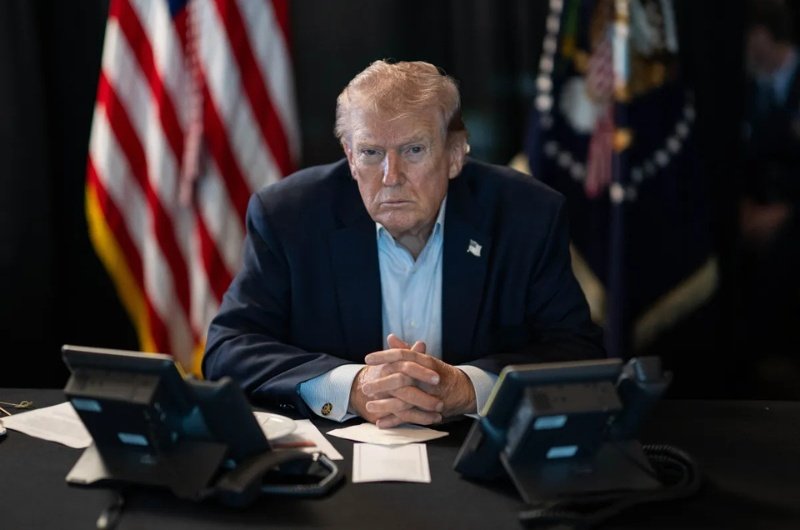
President Trump’s immigration agenda returned to the Supreme Court on Wednesday as justices weighed whether the administration can end Temporary Protected Status for hundreds of thousands of Haitian and Syrian immigrants. The case could carry consequences far beyond one policy, potentially redefining how much authority presidents have over humanitarian immigration programs. Temporary Protected Status, or TPS, allows people from countries facing war, natural disaster, or severe instability to live and work legally in the United States for designated periods of time. Lower courts previously blocked efforts to cancel those protections, ruling that judges can review whether the government acted lawfully. The administration has argued those decisions should rest largely with the executive branch. The dispute is also a broader test of executive power and judicial oversight. At the center of the case is whether a president can reverse protections with limited court review, even when conditions in the affected countries remain dangerous or unstable. Haiti continues to face deep unrest and widespread insecurity, while Syria is still recovering from years of war and displacement. For many families, the ruling will determine whether legal stability in the United States can continue or disappear with a policy change in Washington. A decision is expected by June. The outcome could influence not only the future of TPS, but how far any administration can go when reshaping immigration policy through executive authority.
Pentagon Turns to Google as AI Expands Into National Security

Google has reportedly signed a classified artificial intelligence agreement with the Pentagon that would allow the U.S. military to use the company’s AI models in secure government environments, marking a major expansion of AI into national defense operations. Reports indicate the agreement includes restrictions on uses such as domestic mass surveillance and fully autonomous weapons without human oversight. Even so, critics argue those guardrails may be difficult to measure once systems operate inside classified networks. That tension highlights a larger reality: AI governance is now being tested in real national-security environments, not just in public debate. For Google, the deal represents both opportunity and risk. Defense contracts can bring long-term revenue and strategic influence, but they also reopen ethical questions that many tech companies once tried to avoid. For Washington, it reflects a growing belief that future military strength may depend as much on software and intelligence systems as traditional weapons. The next chapter of artificial intelligence may be driven less by consumer buzz and more by institutional adoption behind closed doors. As governments, militaries, and major enterprises choose their AI partners, influence could shift toward the companies trusted to power critical systems.
Mexico Captures Top Cartel Commander in Major Blow to Jalisco Crime Network

Mexican special forces have captured Audias Flores, known as “El Jardinero,” one of the top commanders of the powerful Jalisco New Generation Cartel in a major security operation in western Mexico. Authorities said Flores was arrested in the state of Nayarit after a lengthy intelligence effort. Flores was considered one of the cartel’s most influential regional leaders and had been viewed by analysts as a possible successor after the death of longtime cartel boss “El Mencho” earlier this year. U.S. authorities had previously offered a $5 million reward for information leading to his capture. Officials said the operation involved hundreds of troops and ended without a reported firefight. According to reports, Flores was found hiding in a drainage ditch after armed escorts attempted to create a diversion near Puerto Vallarta. The arrest is likely to be watched closely in both Mexico and the United States, where cartel trafficking networks remain tied to drug smuggling, organized crime, and the flow of fentanyl across the border. High-level captures can disrupt operations, but criminal groups often move quickly to reorganize. For now, the capture marks another significant test of whether sustained pressure can weaken one of the most powerful criminal organizations in the hemisphere.
King Charles III Visits White House as Washington Showcases U.S.-UK Alliance
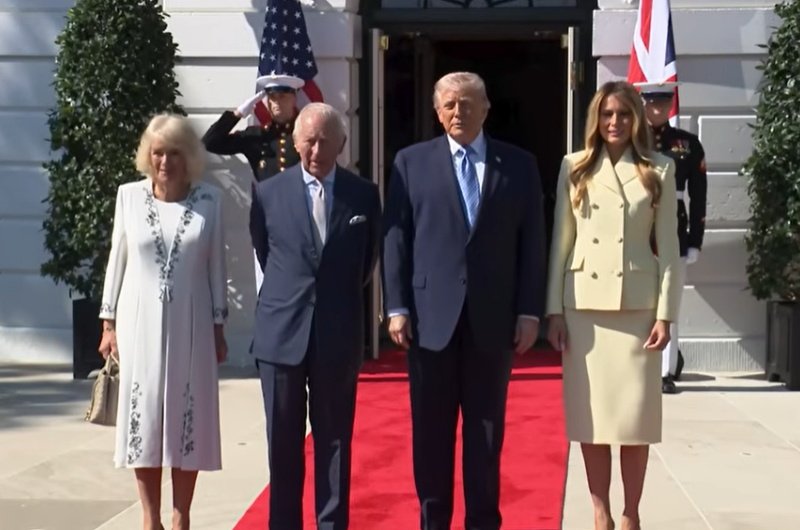
King Charles III arrived at the White House on Monday for a high-profile meeting with President Donald Trump, marking one of the most symbolic diplomatic visits to Washington this year. Joined by Queen Camilla, the British monarch was welcomed with formal ceremony as both nations sought to highlight the enduring alliance between the United States and the United Kingdom. The visit comes at a moment of global uncertainty, with conflicts abroad, economic pressures, and shifting geopolitical alliances placing renewed value on long-standing partnerships. Public displays of unity between Washington and London often carry significance far beyond the ceremonial setting. While royal visits are steeped in tradition, they also serve practical purposes. Meetings between heads of state can help reinforce cooperation on trade, defense, intelligence sharing, and broader strategic priorities that affect both countries. For Washington, the moment offered a pause from the usual pace of domestic political battles and campaign headlines. For Britain, it was an opportunity to project stability and diplomatic relevance on one of the world’s most visible stages. Though much of the day centered on pageantry, the larger message was clear: in an increasingly unsettled world, trusted alliances still matter.