


Trump and Xi Prepare for High-Stakes Summit as the Global AI Race Intensifies
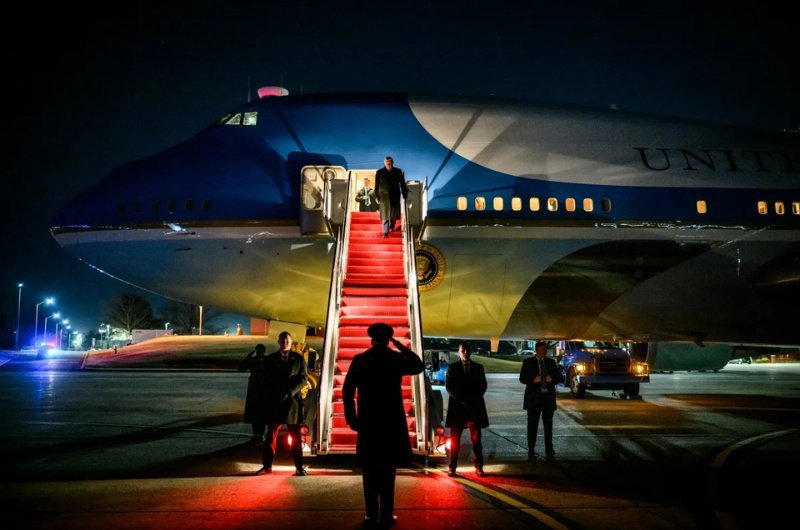
President Donald Trump and Chinese President Xi Jinping are preparing for a high-stakes summit in Beijing scheduled for May 14-15, 2026, to address intense competition regarding AI, semiconductor manufacturing, trade, and global economic influence. The summit comes at a pivotal moment for the global economy. While both countries are attempting to stabilize relations after years of tariff battles and supply chain disruption, tensions remain elevated over advanced chip exports, manufacturing independence, cybersecurity, and the race to control the infrastructure powering the next era of AI. Markets are also closely watching the talks for signals about future trade policy, rare earth mineral access, and the broader direction of the global economy. The meeting also arrives as geopolitical pressure continues to build in other regions, including renewed instability involving Iran and rising concerns about global energy prices. Analysts say the combination of economic uncertainty, military tensions abroad, and the accelerating AI race has placed extraordinary pressure on both Washington and Beijing to avoid further disruption to global markets and manufacturing networks. Artificial intelligence is expected to remain one of the defining issues behind closed doors. The United States has continued tightening restrictions on advanced semiconductor exports to China, while Beijing has accelerated efforts to strengthen domestic chip production and reduce dependence on Western technology. At the same time, both countries are investing heavily in AI infrastructure, cloud computing, robotics, and advanced manufacturing as they compete for long-term technological leadership. For investors and global businesses, the summit represents far more than a diplomatic meeting. The outcome could influence everything from inflation and supply chains to energy markets, manufacturing costs, technology investment, and the future balance of economic power between the world’s two largest economies.
As AI Accelerates, Washington Faces a New Fight Over Control
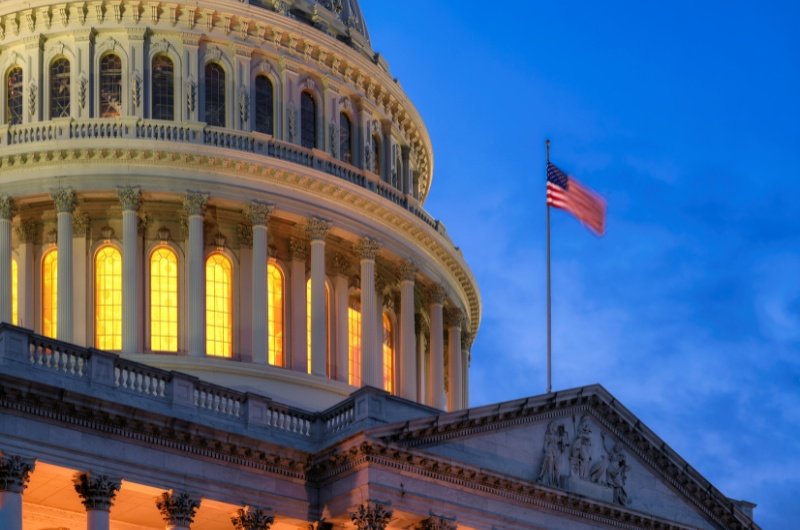
Artificial intelligence is rapidly evolving from a technology race into a national security priority. Inside Washington, a growing debate is emerging over who should oversee increasingly powerful AI systems tied to cybersecurity, intelligence operations, and America’s global position against China. According to reports, tensions have surfaced inside the Trump administration over whether intelligence agencies or the Commerce Department should take the lead on evaluating advanced AI systems. Officials are reportedly concerned about cybersecurity risks, misinformation, infrastructure vulnerability, and the speed at which AI capabilities are advancing. The debate reflects a much larger shift taking place in Washington. Artificial intelligence is no longer being viewed as just another technology sector. Governments are increasingly treating AI as strategic infrastructure connected to national security, economic power, cyber warfare, and global influence. The timing is especially significant as the United States and China continue competing aggressively in AI, semiconductor manufacturing, cloud infrastructure, and advanced computing. Officials across multiple agencies are becoming increasingly concerned about how AI could shape military operations, economic decision-making, communications, and cybersecurity in the years ahead. For years, AI discussions mostly focused on innovation and consumer technology. That conversation is now changing. In Washington and other world capitals, artificial intelligence is increasingly being viewed as one of the most important power shifts of the modern era.
Oil Prices Climb as U.S.-Iran Tensions Escalate Near Strait of Hormuz

Oil prices climbed Thursday as military tensions between the United States and Iran put global energy markets back on edge near the Strait of Hormuz. The latest escalation follows reports of increased military activity and confrontations involving vessels operating near the strategic waterway, where a significant portion of the world’s oil supply passes each day. Investors and energy markets are closely watching the situation for signs that disruptions could intensify in the days ahead. The rise in oil prices also renewed concerns about gasoline costs and inflation pressure at a time when many Americans are already facing elevated prices across key household expenses. Analysts say even temporary instability in the region can quickly ripple through global energy markets. The Strait of Hormuz has long been considered one of the most sensitive geopolitical choke points in the world, with tensions between Iran and the United States historically capable of triggering sharp reactions across financial and commodity markets. While officials have not indicated that major supply routes are currently blocked, the growing uncertainty surrounding the region is once again putting global energy security and market stability in focus.
Court Strikes Down Trump’s 10% Global Tariff Plan
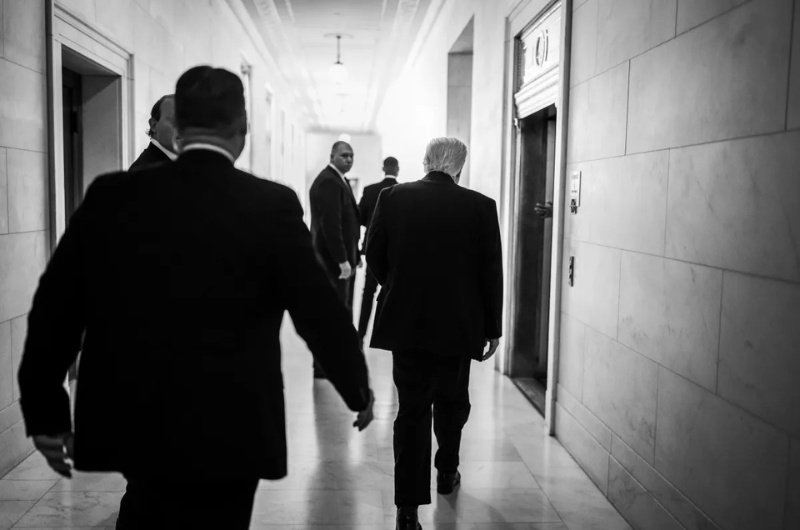
A New York federal trade court has ruled against key parts of President Donald Trump’s new 10% global tariff plan, delivering a major legal setback to one of the administration’s most aggressive economic strategies. The court determined that the White House exceeded its authority in attempting to impose sweeping import tariffs under emergency trade powers. The ruling immediately injects new uncertainty into U.S. trade policy and global markets, particularly for industries already navigating higher costs and supply chain pressure. The tariffs were designed to apply broadly across imported goods and were framed by the administration as a way to protect American manufacturing and reduce dependence on foreign products. The decision is also expected to intensify debate over how much power a president should have to reshape trade policy without direct approval from Congress. Legal experts say the case could carry long-term implications for future administrations seeking to use emergency economic authority to impose broad trade restrictions. Markets reacted cautiously following the ruling, while business groups and import-reliant industries welcomed the decision as a potential relief from rising operational costs. Supporters of the tariff strategy, however, argue the administration was taking necessary steps to strengthen domestic industry and counter foreign economic influence. The White House is expected to challenge the ruling, setting the stage for what could become another closely watched legal and political battle over executive power, trade policy, and the direction of the U.S. economy.
Federal Investigators Examine Billions in Suspicious Oil Trades Linked to Iran War Developments

Federal investigators are examining billions of dollars in unusually timed oil trades placed shortly before major U.S. announcements tied to the Iran conflict, raising new questions about whether politically sensitive information may have been used to generate massive profits in energy markets. According to reports, the Department of Justice and federal regulators are reviewing more than $2.6 billion in oil futures activity that occurred ahead of key developments involving Iran, including military escalations and subsequent diplomatic signals that sent global oil prices swinging sharply. The timing of the trades has drawn scrutiny from officials monitoring potential insider activity connected to geopolitical events. Oil markets have remained highly sensitive to developments involving Iran, one of the world’s major energy producers. Even small shifts in military posture, sanctions policy, or ceasefire expectations can trigger rapid price movements capable of generating enormous gains for traders positioned correctly ahead of the news. Authorities have not publicly accused any individuals or firms of wrongdoing, and the investigation remains in its early stages. Still, the scale of the trades and their proximity to market-moving announcements have intensified attention on how sensitive geopolitical information can ripple through global financial systems before the public fully understands what is unfolding. The investigation comes at a time of heightened concern over the growing intersection of politics, conflict, and financial markets, where information itself can quickly become one of the world’s most valuable commodities.
The Visibility Era, Part I: The Internet Enters an Age of Visibility Scarcity

For decades, the internet operated on a simple promise: if something was valuable, people would eventually find it. Search engines expanded access to information, social media amplified voices, and digital publishing created the illusion that visibility was becoming more democratic over time. But quietly, the architecture of the internet has begun to change. The modern web is no longer driven primarily by open discovery. Increasingly, information is filtered before it reaches the public at all. AI summaries, recommendation engines, algorithmic feeds, machine-generated answers, and emerging AI agents are beginning to decide what gets surfaced, referenced, summarized, or ignored — often before a person clicks a single link. Advertisement This is clearly a visibility shift. The next era of the internet may not be defined by who creates the most content, but by what becomes the most retrievable. In a world increasingly shaped by machine-mediated discovery, being online is no longer enough. The real challenge is being selected by systems that are rapidly becoming the gatekeepers of digital attention. That changes the equation for everyone: publishers, businesses, creators, brands, educators, analysts, and even ordinary professionals building an online presence. For years, the internet rewarded scale. More pages. More posts. More keywords. More updates. But as AI systems compress information into summaries and direct answers, the value of sheer volume may begin to weaken. Visibility itself is becoming scarcer. At the same time, trust is consolidating. Machines increasingly favor recognizable entities, established authority signals, structured knowledge, and sources that can be confidently interpreted and retrieved. In many cases, the future winners of the internet may not be the loudest voices, but the clearest and most consistently understood ones. That distinction matters, because the Visibility Era is not simply about traffic declines or changing search behavior. It represents a deeper transformation in how information is organized, surfaced, and remembered. The web is shifting from an environment where humans actively search for information to one where systems increasingly decide what information deserves attention first. And most people still do not fully see it happening. The implications reach far beyond publishing. Entire industries were built on the assumption that discoverability would continue expanding indefinitely. But if visibility becomes concentrated inside recommendation systems, AI interfaces, and machine-curated experiences, digital strategy itself begins to change. Archives matter differently. Authority matters differently. Recognition matters differently. Even language itself begins to matter differently. The companies and creators that adapt earliest may not necessarily be the ones producing the most content. They may be the ones building the strongest signals of clarity, identity, trust, and retrievability across the digital ecosystem. That may ultimately become the defining challenge of the next internet era: not whether something exists online — but whether it can still be meaningfully found. And for the first time in modern internet history, those may no longer be the same thing. ——————– Related: The Visibility Era, Part II: The New Gatekeepers The Visibility Era, Part III: Mastering the New Visibility Economy
Commerce Secretary Howard Lutnick to Be Questioned by Lawmakers as Epstein File Fallout Expands

Commerce Secretary Howard Lutnick is expected to face questions from lawmakers as political fallout surrounding the Justice Department’s ongoing Jeffrey Epstein document releases continues to spread across Washington. The renewed scrutiny comes amid growing pressure on federal officials and public figures whose names or connections have surfaced during the expanding review of Epstein-related records. The latest developments come after the Department of Justice released additional materials tied to the Epstein investigation, part of a broader transparency effort that has reignited public attention surrounding the disgraced financier’s network of associates and contacts. While inclusion in the records does not imply criminal wrongdoing, lawmakers on Capitol Hill are increasingly demanding answers from individuals whose past interactions with Epstein are now receiving renewed examination. Lutnick, who has previously denied any inappropriate conduct or close personal relationship with Epstein, is expected to face questions regarding prior social and professional connections referenced in documents and public reporting. The hearings are likely to add another layer of political tension to an already volatile election-year environment, with both parties continuing to accuse each other of selective outrage and inconsistent accountability. The Epstein case has remained one of the most politically and culturally explosive stories in America years after Epstein’s death in federal custody in 2019. Each new document release has fueled another wave of public speculation, online investigation, and renewed calls for transparency from the Justice Department and Congress. Some lawmakers have argued that the public still does not have a complete picture of the relationships, communications, and institutions tied to Epstein’s broader circle. For Washington, the issue is becoming more than a legal or investigative matter. It is increasingly turning into a test of public trust, transparency, and political credibility at a time when confidence in major institutions remains deeply fractured.
Trump Administration Pursues New Import Taxes After Supreme Court Tariff Defeat
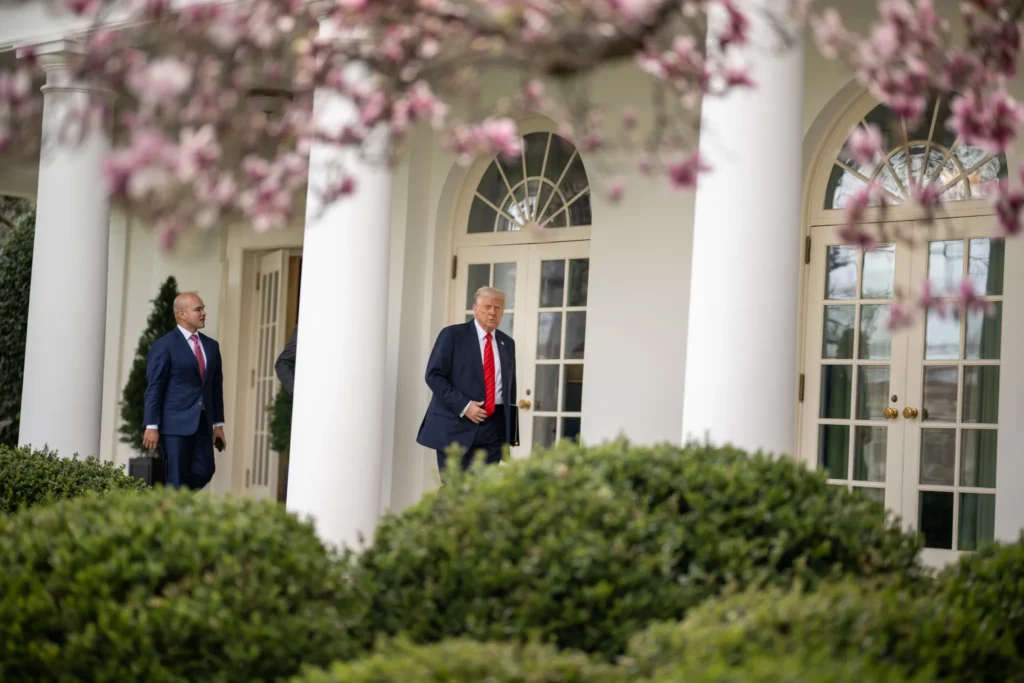
The Trump administration is exploring new ways to impose import taxes on foreign goods after the Supreme Court dealt a major blow to its earlier tariff strategy, reopening a high-stakes battle over trade, executive power, and the future cost of imported products in the United States. The renewed push comes months after the Supreme Court ruled that the administration could not use broad emergency powers to justify sweeping global tariffs under the legal framework originally cited by the White House. The decision forced officials to reconsider how future trade penalties could be implemented while preserving the administration’s aggressive America-first economic agenda. Now, administration officials are reportedly examining alternative legal pathways that could allow new import taxes or targeted trade penalties to move forward under different statutes. The effort is already drawing sharp reactions from business groups, legal analysts, and lawmakers concerned about how another wave of tariffs could affect consumer prices, supply chains, and market stability. For many American companies, the uncertainty surrounding tariffs has become nearly as disruptive as the tariffs themselves. Businesses that rely on imported materials or overseas manufacturing continue to face questions about future pricing, sourcing, and long-term planning. Some importers are also preparing for possible refund distributions tied to earlier tariff collections that were challenged in court. The broader fight is shaping into more than a trade dispute. It has become a test of presidential authority and how far future administrations can go in reshaping global commerce without direct approval from Congress. With the 2026 election cycle accelerating, trade policy is once again emerging as one of Washington’s most politically charged battlegrounds.
Deadly Hantavirus Outbreak Reported on Cruise Ship With Three Deaths

The World Health Organization is investigating a cluster of severe respiratory illness linked to a Dutch-flagged cruise ship after multiple deaths were reported in connection with hantavirus infections. According to a Disease Outbreak News report, seven cases have been identified among passengers and crew aboard the vessel, including two laboratory-confirmed infections and five suspected cases. Three individuals have died, while one patient remains critically ill. Health authorities were first alerted on May 2 through international reporting channels, when the United Kingdom notified WHO of a cluster of severe illness aboard a Dutch-flagged cruise ship. Laboratory testing conducted in South Africa later confirmed hantavirus infection in one critically ill patient, with additional cases identified in the days that followed. The vessel, identified in multiple reports as the MV Hondius, departed Ushuaia, Argentina, in early April and traveled across remote regions of the South Atlantic, including Antarctica and several isolated island territories. The extent of potential exposure — whether prior to boarding or during excursions — remains under investigation. Hantavirus is typically spread through contact with infected rodents or their droppings, and human-to-human transmission is considered rare. However, officials are assessing whether limited transmission may have occurred among close contacts on board. The ship, carrying 147 passengers and crew from more than 20 countries, is currently moored off the coast of Cabo Verde as response efforts continue. Despite the severity of the cases, global health officials say the risk to the broader public remains low.
New ‘Trump IRA’ Platform Aims to Connect Workers to $1,000 Federal Retirement Match
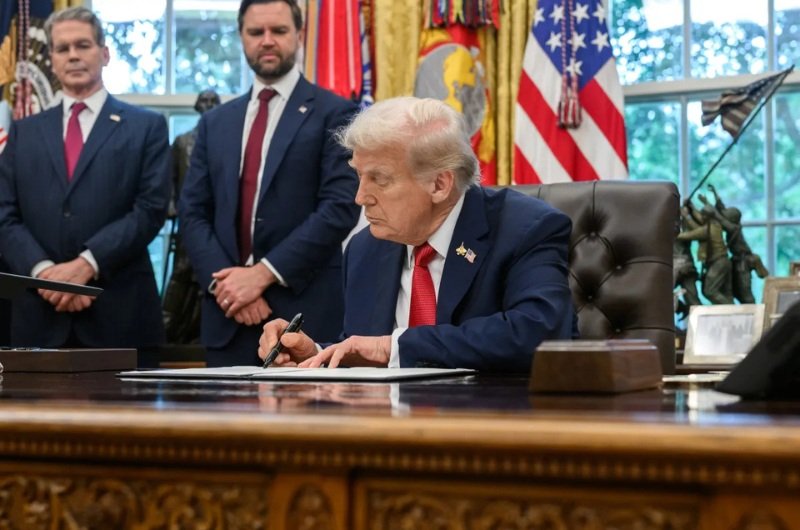
The Trump administration has signed an executive order establishing a new retirement savings platform, TrumpIRA.gov, as part of a broader effort to expand access to long-term investment tools for American workers. The website, expected to launch in January 2027, will function as a marketplace for private-sector individual retirement accounts, allowing users to compare and select options designed to meet their financial goals. According to the White House, the platform will highlight differences in cost, quality, and available investment options. The initiative is aimed particularly at workers who do not currently have access to employer-sponsored retirement plans. Alongside the platform, the federal government is set to provide an annual matching contribution of up to $1,000 beginning in 2027 for eligible workers, primarily those with lower incomes. Known as the “Saver’s Match,” the program will replace an existing tax credit and was originally established under the SECURE 2.0 Act to strengthen retirement savings among low- and moderate-income Americans. The new platform is expected to serve as a centralized access point for that benefit, addressing a longstanding gap in awareness and participation among eligible workers. By connecting individuals directly to qualifying retirement accounts, the administration is positioning the program as both a savings incentive and an accessibility solution. While the framework is now in place, additional details surrounding enrollment, participation rates, and long-term impact are still emerging as the 2027 rollout approaches.