


White House Expands TrumpRx.gov to Include More Everyday Medications

The White House announced this week that TrumpRx.gov has expanded to include hundreds of additional generic medications, giving Americans more tools to compare prescription drug prices and explore lower-cost options online. The administration said the updated platform is designed to improve transparency around everyday medicines as pressure over healthcare affordability continues across the country. According to the White House, the expanded TrumpRx.gov database now includes more than 600 generic prescription drugs commonly used to treat conditions such as high blood pressure, diabetes, infections, and chronic pain. The platform allows consumers to search medications, compare pricing information, and review pharmacy options directly through the website. The administration described the expansion as part of President Donald Trump’s broader effort to reduce prescription drug costs and increase consumer access to pricing information that has traditionally been difficult for many Americans to navigate. Healthcare pricing has long been criticized for lacking transparency, with patients often discovering major price differences between pharmacies for the same medication. The move also reflects a growing national focus on direct-to-consumer healthcare tools, including online pharmacy services and digital pricing platforms that allow patients to compare medication costs before filling prescriptions. In recent years, companies such as Amazon and Cost Plus Drugs have helped popularize consumer-facing prescription pricing models aimed at lowering costs and increasing visibility into medication pricing. While supporters argue the expansion could help Americans save money on routine prescriptions, critics continue to debate how much influence pricing platforms alone can have on the broader cost of healthcare in the United States. Even so, the issue of prescription affordability remains one of the most closely watched economic and healthcare concerns facing millions of Americans.
FBI Report Points to Major Drop in Violent Crime Nationwide

Violent crime across the United States dropped significantly in 2025, according to newly released FBI data showing one of the sharpest nationwide declines in decades. The preliminary report found violent crime fell 9.3% compared to the previous year, with major decreases reported in murder, robbery, aggravated assault, and rape. The numbers arrive as crime and public safety continue to dominate political debate heading into the election cycle. The White House pointed to the report as evidence that the administration’s pro-law enforcement policies are helping improve safety in American communities, while supporters of local reform efforts argue that multiple factors are contributing to the decline. According to the FBI’s early data, murders dropped by more than 14%, while robberies and aggravated assaults also posted notable declines nationwide. The agency said the findings are based on information submitted by thousands of law enforcement agencies across the country and represent one of the earliest comprehensive looks at national crime trends for the year. Crime analysts caution that national numbers often tell only part of the story. While many major cities have reported improving conditions, some communities continue to struggle with violent offenses, property crime, and repeat offender issues. Researchers also note that crime trends are influenced by a wide range of factors, including policing strategies, economic conditions, community programs, and post-pandemic social stabilization. Even so, the latest FBI figures suggest the United States may be experiencing a broader cooling of the violent crime surge that followed the pandemic era. Whether the decline continues into next year could become one of the most closely watched public safety stories in the country.
China Agrees to Major Boeing Purchase During Trump-Xi Diplomatic Push
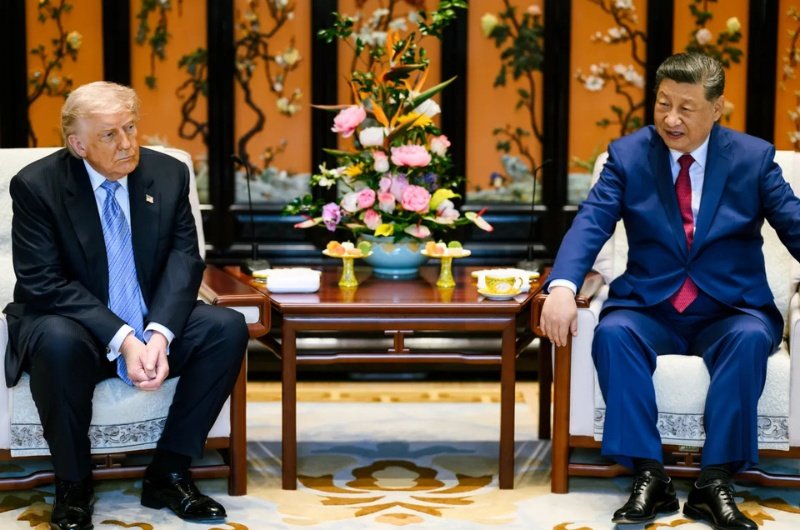
President Trump’s high-level summit with Chinese President Xi Jinping produced a series of major economic and geopolitical developments this week, including a massive Boeing aircraft agreement that could become one of the largest aviation deals in modern history. According to the White House, China agreed to purchase 200 Boeing aircraft, with discussions underway that could eventually expand the order to as many as 750 jets — a move expected to deliver a significant boost to American manufacturing and aerospace jobs. Advertisement The summit also produced broader diplomatic signals beyond aviation. Treasury Secretary Scott Bessent said the United States and China are now discussing the creation of a joint Board of Investment, a proposal that could open the door to deeper economic coordination between the world’s two largest economies after years of trade friction and strategic distrust. At the same time, both nations reportedly agreed that Iran must not control the Strait of Hormuz, one of the world’s most important energy shipping corridors. The agreement reflects growing concern over global energy stability as tensions continue to simmer across the Middle East. The summit concluded with President Trump inviting President Xi to visit the White House later this year, signaling what could become a broader effort to stabilize one of the most consequential relationships in global politics.
Inside the High-Stakes Clash Between Elon Musk and OpenAI
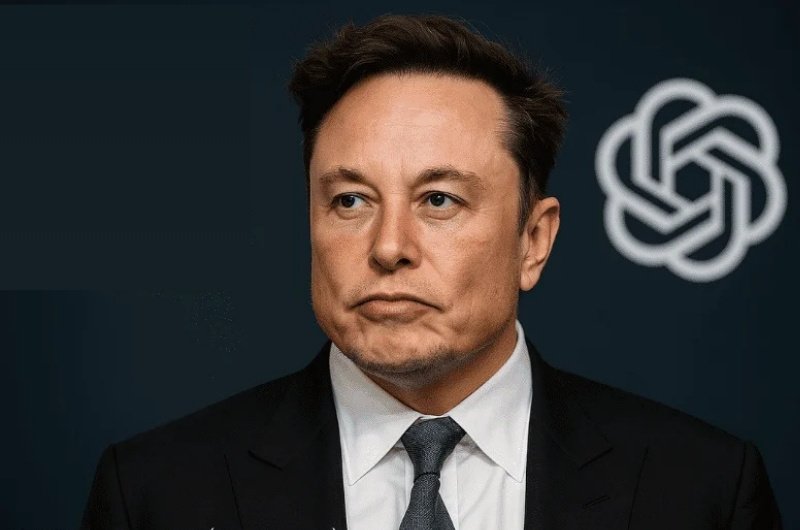
Elon Musk and OpenAI returned to court this week as closing arguments intensified in a high-profile legal battle over the future direction, governance, and commercialization of artificial intelligence. The increasingly public conflict between the billionaire entrepreneur and the company he once helped launch is evolving into far more than a courtroom dispute between former allies. Closing arguments in the latest phase of the legal fight have drawn renewed attention to Musk’s accusations that OpenAI abandoned its original nonprofit mission in pursuit of commercial dominance and massive corporate influence. OpenAI, meanwhile, has defended its evolution as necessary to compete in an AI race that now requires enormous computing power, infrastructure investment, and global-scale deployment. What began years ago as a research-focused effort to develop artificial intelligence responsibly has since transformed into one of the most influential technology companies in the world. OpenAI’s rapid rise — fueled in part by its partnership with Microsoft and the explosive adoption of ChatGPT — helped ignite a global AI arms race that is reshaping industries, governments, education, media, and the broader economy. For Musk, the dispute appears to center on whether artificial intelligence should remain open, transparent, and aligned with humanity’s interests rather than concentrated inside a handful of powerful corporations. But the broader implications now extend well beyond the individuals involved. The case has become symbolic of a much larger question facing the tech industry: whether AI will ultimately evolve as a public-serving technology ecosystem or become controlled primarily by a small number of companies with unprecedented influence over information, automation, and digital infrastructure. The stakes are enormous because artificial intelligence is no longer viewed as a niche technology sector. AI is increasingly becoming foundational infrastructure — comparable to electricity, the internet, or cloud computing — with the potential to shape economic power, military capability, scientific advancement, and global competitiveness for decades to come. The legal fight also arrives during a period of extraordinary investment across the AI economy. Companies are pouring billions into data centers, advanced semiconductors, cloud infrastructure, robotics, and large-scale AI systems as competition intensifies between the United States, China, and other global powers seeking leadership in the field. While the courtroom battle itself may take months or years to fully resolve, the public confrontation between Musk and OpenAI is already exposing the deeper tensions now emerging across the artificial intelligence industry: speed versus safety, openness versus control, and innovation versus concentration of power. The Readovia Lens The most important part of the Musk-OpenAI conflict may not be who wins the case. It may be what the battle reveals about the next era of technology itself. Artificial intelligence is rapidly becoming a new layer of global infrastructure — and the companies controlling it could hold extraordinary influence over how modern society functions in the years ahead.
White House Launches Moms.gov as Trump Honors Mothers at Rose Garden Event

The White House this week launched Moms.gov, a new federal resource platform designed to give expecting and new mothers centralized access to health information, benefits, and family support programs across the federal government. The rollout came as President Trump hosted a Mother’s Day Rose Garden luncheon honoring Angel Moms and Gold Star Mothers in what the administration described as a tribute to families who have experienced profound loss and sacrifice. According to the White House, Moms.gov is intended to simplify access to government services for mothers navigating pregnancy, early childhood care, and family assistance programs by bringing multiple federal resources together in a single online hub. First Lady Melania Trump also used the week to highlight progress tied to the “Fostering the Future” executive initiative, marking 180 days since the order was introduced. The White House says the initiative has already produced 10 measurable achievements aimed at improving support systems and long-term outcomes for foster youth across the country. The announcements reflect a broader effort by the administration to place family policy and motherhood initiatives more visibly at the center of its domestic messaging heading deeper into the election cycle.
The Immigration Debate Is Expanding Into State Health Systems

Several Republican-led states are moving beyond federal immigration reporting requirements by directing public health agencies to assist more directly with deportation-related enforcement efforts, adding a new layer to the national immigration debate. North Carolina recently became the latest state to require health agencies to flag Medicaid recipients to the Department of Homeland Security if questions arise about their immigration status, while similar measures are advancing in states including Tennessee and Oklahoma. The moves come as the Trump administration continues expanding its immigration crackdown through broader government data-sharing efforts. The controversy centers on Medicaid administrative and enrollment information — including names, addresses, phone numbers, birth dates, and immigration-status indicators — not detailed medical records. Earlier this year, a federal judge allowed limited sharing of certain Medicaid enrollee data with Immigration and Customs Enforcement to resume while ongoing legal challenges continue. Supporters of the policy argue the measures help identify people who may be receiving benefits unlawfully and strengthen coordination between federal and state agencies. Critics warn the growing use of health-related systems for immigration enforcement could discourage vulnerable communities from seeking emergency medical care or cooperating with healthcare providers. The broader legal battle is still unfolding. More than 20 states have challenged the federal government’s Medicaid data-sharing practices in court, arguing the information was originally collected for healthcare administration — not immigration enforcement. While courts have allowed limited sharing of basic biographical information to continue, judges have blocked broader access to sensitive medical data as litigation proceeds.
Musk’s Court Fight With OpenAI Exposes a Bigger Battle Over AI’s Future

The courtroom battle between Elon Musk and OpenAI reached a critical stage this week as closing arguments wrapped in one of the most closely watched technology cases in the world. At the center of the dispute is Musk’s claim that OpenAI abandoned the nonprofit mission it was originally founded upon and transformed itself into a profit-driven artificial intelligence powerhouse fueled by corporate partnerships and billions of dollars in investment. OpenAI and CEO Sam Altman have denied wrongdoing, arguing the company evolved in response to the extraordinary cost and complexity of developing advanced AI systems. But beneath the legal arguments and Silicon Valley drama, the trial has opened a much larger public debate — one that stretches far beyond the courtroom itself. What began nearly a decade ago as a research-focused organization built around the idea of developing artificial intelligence safely and openly has since become one of the most strategically important technology companies on Earth. OpenAI now sits at the center of a global race involving governments, cloud infrastructure giants, chipmakers, investors, and competing AI labs all pushing toward increasingly powerful systems. The transformation has been staggering. Artificial intelligence is no longer viewed simply as experimental software or futuristic consumer technology. It is increasingly becoming infrastructure — economic infrastructure, workplace infrastructure, information infrastructure, and potentially even geopolitical infrastructure. The companies building the most advanced models are now shaping how people search for information, write software, conduct business, create media, and interact with digital systems. That evolution helps explain why the Musk-OpenAI conflict has attracted such intense attention. The case is no longer just about whether promises were broken between former collaborators. It has become a public argument over what happens when organizations founded around idealism collide with the enormous financial and strategic pressures surrounding artificial intelligence. OpenAI was originally launched with a mission centered on benefiting humanity and openly sharing research. But the modern AI race quickly became extraordinarily expensive. Training frontier AI systems now requires massive computing infrastructure, specialized chips, vast data resources, and billions of dollars in investment. As competition intensified with rivals including Google, Anthropic, Meta, and Musk’s own xAI venture, the economics of AI development changed dramatically. Microsoft’s multibillion-dollar partnership with OpenAI became one of the defining examples of that shift. The relationship helped propel OpenAI into the center of the commercial AI boom while also raising new questions about influence, governance, and corporate control. Musk’s legal team has argued the company drifted far from its original nonprofit vision. OpenAI maintains that its current structure was necessary to continue competing and scaling safely. The broader implications extend far beyond Silicon Valley personalities. The trial is unfolding during a moment when governments worldwide are racing to regulate AI while simultaneously investing heavily in its development. Businesses are restructuring around AI tools, investors are pouring unprecedented capital into AI infrastructure, and nations increasingly view advanced AI systems as matters of economic and national security. In many ways, the courtroom fight reflects a deeper reality emerging across the technology industry: artificial intelligence is becoming too important, too expensive, and too powerful to remain insulated from corporate influence and geopolitical competition. The idealistic early vision of open collaboration around AI now collides with a marketplace driven by scale, speed, infrastructure dominance, and global strategic advantage. The case has also exposed a growing philosophical divide inside the AI world itself. One side argues that advanced artificial intelligence should remain closely controlled and carefully governed due to the risks associated with increasingly capable systems. Others believe concentrating AI power inside a small number of companies may create an entirely different set of dangers involving influence, access, transparency, and accountability. As the trial moves closer to a verdict, the legal outcome may ultimately matter less than the larger conversation now unfolding around it. The public is beginning to see that the future of artificial intelligence may not be shaped solely by engineering breakthroughs, but also by power struggles over who controls the systems, who funds them, and whose interests they ultimately serve. The Musk-OpenAI battle may have started as a dispute between former allies. It is increasingly becoming something much larger: a defining argument over the future governance of artificial intelligence itself.
Presidents Trump and Jinping Meet in Beijing as the World Watches a New Power Struggle Unfold
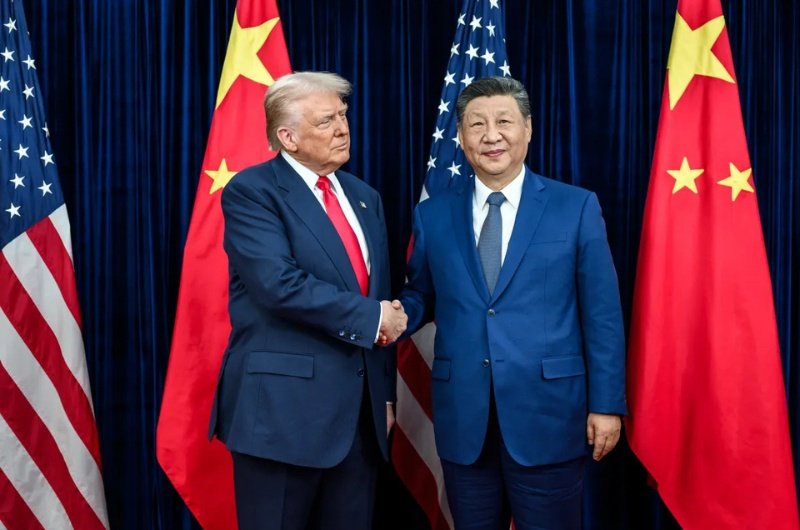
President Donald Trump arrived in Beijing Thursday for a high-stakes summit with Chinese President Xi Jinping, as tensions surrounding trade, artificial intelligence, Taiwan, and global influence converge during one of the most closely watched diplomatic meetings of the year. The summit opened with elaborate ceremony inside Beijing’s Great Hall of the People, where Trump received a red-carpet welcome and full military honors in a carefully staged display of cooperation between the world’s two largest economies. Behind the symbolism, however, both nations entered the talks facing growing pressure over economic competition, military positioning, and the future balance of technological power. Artificial intelligence quickly emerged as one of the defining themes surrounding the visit. Technology leaders and executives connected to the rapidly expanding AI sector traveled alongside the U.S. delegation as Washington and Beijing continue competing for dominance in semiconductors, advanced computing systems, and next-generation infrastructure. The discussions reflect a growing reality that AI is increasingly becoming a matter of national strategy and geopolitical leverage. The summit comes amid rising tensions over Taiwan, ongoing economic uncertainty, and a growing effort by both nations to reduce dependence on one another while still preserving critical trade ties. Although both leaders publicly emphasized cooperation, the meetings highlighted how competitive and increasingly fragile the relationship between the United States and China has become. For governments, investors, and global technology companies, the talks represent more than a diplomatic event. They offer an early glimpse into how the next era of global influence may be shaped — not only through military strength or trade agreements, but through control of AI systems, semiconductor supply chains, and the digital infrastructure powering the modern economy.
Google Is Quietly Building the AI Brain for the World’s Robots

While much of the AI race has focused on chatbots and consumer tools, Google is now making a major push into something potentially far larger: giving industrial robots the ability to think, adapt, and operate more like humans inside real-world manufacturing environments. The company is expanding its robotics ambitions by integrating its Gemini AI models into industrial automation systems through a growing network of partnerships with some of the biggest names in robotics and manufacturing. Rather than building robots itself at scale, Google appears increasingly focused on becoming the intelligence layer powering the next generation of machines. One of the most significant developments came through a partnership with FANUC, the world’s largest industrial robot manufacturer. The collaboration allows FANUC systems to use Gemini Enterprise AI to process natural language instructions and better understand unpredictable environments — a major shift from the rigid, pre-programmed behavior that has traditionally defined factory robotics. Google is also working alongside Boston Dynamics to integrate Gemini models into the company’s Atlas humanoid robot platform, while DeepMind has partnered with Agile Robots to explore advanced AI-driven manufacturing systems. At the center of Google’s strategy is a growing focus on what the company calls “Physical AI” — systems designed not just to generate text or images, but to interact with and understand the physical world. Its Gemini Robotics-ER models are being developed to improve spatial reasoning, motion planning, safety awareness, and real-time decision-making inside industrial settings. Combined with emerging vision-language-action systems, the technology could allow robots to see, understand, and respond to their surroundings with far greater flexibility than traditional automation systems. The broader shift may fundamentally reshape manufacturing itself. Instead of relying on expensive hardware redesigns every time a factory changes processes, companies are increasingly moving toward software-defined robotics — machines that can adapt through AI updates rather than mechanical rebuilding. Google’s Intrinsic platform is also developing systems that allow multiple robots to coordinate tasks together using AI-optimized motion planning, potentially opening the door to smarter, more autonomous production lines. For years, robotics has struggled to move beyond repetitive factory work performed inside carefully controlled environments. Google’s growing push into AI-powered automation signals a much larger ambition: creating machines capable of handling dynamic, unpredictable tasks across industries ranging from electronics manufacturing to logistics and advanced assembly. If successful, the next major AI revolution may not happen on screens — but on factory floors.
Kash Patel Faces Explosive Senate Questioning Over Conduct Allegations
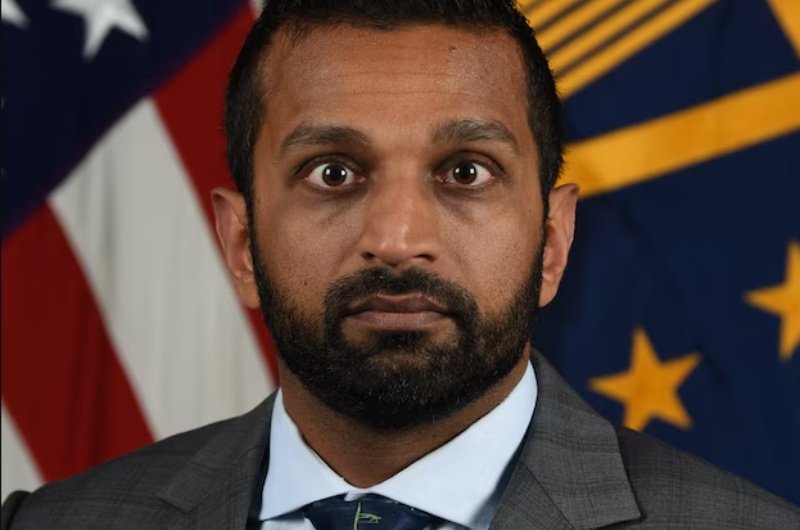
FBI Director Kash Patel faced intense questioning on Capitol Hill Tuesday as Senate Democrats pressed him over allegations involving excessive drinking, unexplained absences, and concerns about his conduct while leading the nation’s top federal law enforcement agency. The heated exchange unfolded during a Senate budget hearing in which Patel appeared before lawmakers to defend the FBI’s funding request. Instead, much of the hearing quickly shifted toward recent allegations published in media reports claiming Patel’s behavior had raised concern among officials inside the FBI and Justice Department. Patel forcefully denied the accusations, calling them “unequivocally” false and accusing critics of attempting to damage his reputation for political reasons. The FBI director has already filed a major defamation lawsuit connected to the allegations and repeatedly pushed back against lawmakers during several tense moments throughout the hearing. One of the sharpest exchanges came when Democratic Sen. Chris Van Hollen questioned Patel about reports alleging excessive drinking and concerns about his availability while serving as FBI director. Patel responded aggressively, accusing the senator of hypocrisy and firing back with allegations of his own, turning the hearing into a combative political confrontation. The hearing highlighted the increasingly volatile political environment surrounding federal law enforcement leadership in Washington. While supporters view Patel as a disruptor willing to challenge entrenched institutions, critics argue the controversy surrounding his leadership risks undermining public trust in the FBI during a period of growing political division across the country. Despite the controversy, Patel defended his leadership of the bureau and pointed to recent FBI enforcement statistics and violent crime reductions as evidence that the agency remains focused on its mission. But Tuesday’s hearing also underscored a larger reality in Washington: in today’s political climate, even congressional budget hearings are increasingly becoming high-stakes public battles over credibility, perception, and institutional trust.