


More Than 200 Experts Urge Governments to Prepare for AI’s Economic Impact

More than 200 economists, researchers, and technology leaders—including 15 Nobel Prize winners—are calling on governments around the world to begin preparing for the economic impact of artificial intelligence, warning that the technology could reshape society far more quickly than previous industrial revolutions. In a public statement released Monday, the group urged policymakers to take a proactive approach to understanding how AI could affect jobs, productivity, wages, education, and economic growth. Rather than waiting for major disruptions to occur, the signatories said governments should begin developing strategies now to help workers and businesses adapt. The statement emphasizes that artificial intelligence has the potential to deliver enormous economic benefits while also creating significant challenges if the transition is poorly managed. Unlike past technological revolutions that unfolded over decades, the experts argue that AI could transform industries and labor markets within just a few years. “Steam, electricity, and computers each gave societies decades to adapt. AI may give us only a few years,” the statement says, underscoring the need for governments, businesses, and researchers to work together on policies that support long-term economic stability. While experts continue to debate exactly how AI will affect employment, the group agreed that preparation should begin immediately. They argue that thoughtful planning today could help societies capture AI’s benefits while reducing the economic disruption that often accompanies major technological change.
Sen. Lindsey Graham Dies at 71 After Decades of Public Service

Sen. Lindsey Graham, the longtime Republican lawmaker from South Carolina and one of the Senate’s most influential voices on national security and foreign policy, has died at the age of 71 following what his office initially described as a brief and sudden illness. Preliminary findings from the medical examiner indicate Graham died from an aortic dissection. Graham represented South Carolina in the U.S. Senate for more than two decades after first being elected in 2002. Before that, he served four terms in the U.S. House of Representatives and spent more than 30 years in the U.S. Air Force and Air Force Reserve, retiring with the rank of colonel. Throughout his career, he became known for his work on national defense, the judiciary, and international affairs. Although he was an outspoken critic of Donald Trump during the 2016 Republican presidential primary, Graham later became one of the president’s closest allies and a key adviser on foreign policy. He also played a prominent role in judicial confirmations, military policy, and legislation involving Ukraine, Israel, Iran, and Russia. Tributes poured in from political leaders in the United States and abroad, reflecting Graham’s influence on both domestic and international affairs. His death creates a vacancy in the Senate, with South Carolina’s governor expected to appoint an interim successor until voters choose a permanent replacement in a special election. For more than three decades, Graham remained one of the Republican Party’s most recognizable figures. Whether admired or criticized for his outspoken positions and evolving political alliances, he leaves behind a lasting legacy that shaped debates on national security, the federal judiciary, and America’s role on the world stage.
Cyclospora Cases Surge as Health Officials Search for Source of Growing Outbreak

Health officials are investigating a growing outbreak of cyclosporiasis, a parasitic intestinal illness that has sickened more than 1,000 people in Michigan and neighboring Ohio. The outbreak is the largest ever recorded in Michigan, and investigators have not yet identified the contaminated food or water source responsible for the illnesses. Michigan has reported more than 1,500 confirmed cases and dozens of hospitalizations, while additional cases have been reported in Ohio and several other states. Public health officials are continuing to investigate whether the illnesses are connected, but no single food item, grower, supplier or distributor has been identified. Cyclosporiasis is caused by the microscopic parasite Cyclospora cayetanensis, which is typically spread through contaminated food or water. Symptoms often begin about a week after exposure and may include watery diarrhea, stomach cramps, nausea, fatigue, loss of appetite and weight loss. Without treatment, symptoms can persist for weeks and may come and go over time. Although previous U.S. outbreaks have been linked to fresh produce such as leafy greens, herbs and berries, health officials emphasize that no specific food has been connected to the current outbreak. They recommend thoroughly washing fresh produce, practicing good hand hygiene and seeking medical attention if persistent gastrointestinal symptoms develop. Doctors say cyclosporiasis can usually be treated with prescription antibiotics once it is diagnosed. Older adults, young children and people with weakened immune systems may face a greater risk of complications from dehydration, making early medical evaluation especially important for anyone experiencing prolonged symptoms.
Drone Food Delivery Is Coming to Texas as Zipline and Wonder Announce Expansion

Ordering dinner could soon include looking to the sky as Zipline and food technology company Wonder plan to launch commercial drone food delivery in the Dallas–Fort Worth area in early 2027. The partnership is expected to expand across much of Texas later in the year using Zipline’s autonomous aircraft. The deliveries will be powered by Zipline’s Platform 2 drone system, which is designed to transport meals and other small items quickly and efficiently. Rather than landing, the aircraft hovers above the delivery location and lowers each order to the ground using a tether, allowing deliveries to be completed without the drone ever touching down. The announcement reflects the continued growth of drone delivery technology in the United States. While drones have already been used to transport medical supplies and other essential items in several regions, companies are increasingly expanding their focus to consumer deliveries, including prepared meals, groceries, and everyday household purchases. Texas has become an important testing ground for commercial drone operations thanks to its rapidly growing metropolitan areas and continued investment in transportation and technology innovation. If the rollout proves successful, it could help accelerate broader adoption of drone delivery services in other parts of the country. For consumers, the partnership offers another glimpse into how aerospace innovation is reshaping everyday life. What once seemed like a futuristic concept is steadily becoming a practical transportation solution, with autonomous aircraft poised to play a growing role in how people receive everything from restaurant meals to retail purchases. ——————– Related: Drone Food Delivery Is Coming to Texas as Zipline and Wonder Announce Expansion
U.S. and Iran Exchange New Strikes as Interim Peace Deal Comes Under Threat

The United States and Iran exchanged new strikes across the Gulf on Thursday, signaling that a fragile interim peace agreement may be unraveling. U.S. forces launched new airstrikes against Iranian targets after Washington accused Tehran of renewed attacks on commercial shipping in the Strait of Hormuz. Iran responded with missile and drone attacks aimed at U.S.-linked military sites in Bahrain, Kuwait and Qatar. The latest exchange marks one of the sharpest escalations since the interim agreement was reached, raising new questions about whether the deal can still hold. President Trump has said the ceasefire is effectively over, though U.S. officials have indicated that diplomatic talks may continue. The conflict also carries major economic risks. The Strait of Hormuz remains one of the world’s most important oil shipping routes, and renewed fighting has already drawn close attention from energy markets, investors and governments across the region. For now, the situation remains volatile. Both sides are signaling that they are prepared to respond to further attacks, while diplomats face a shrinking window to keep the interim peace effort from collapsing altogether.
Ukrainian Drone Strikes Target Russian Oil Facilities as War Intensifies
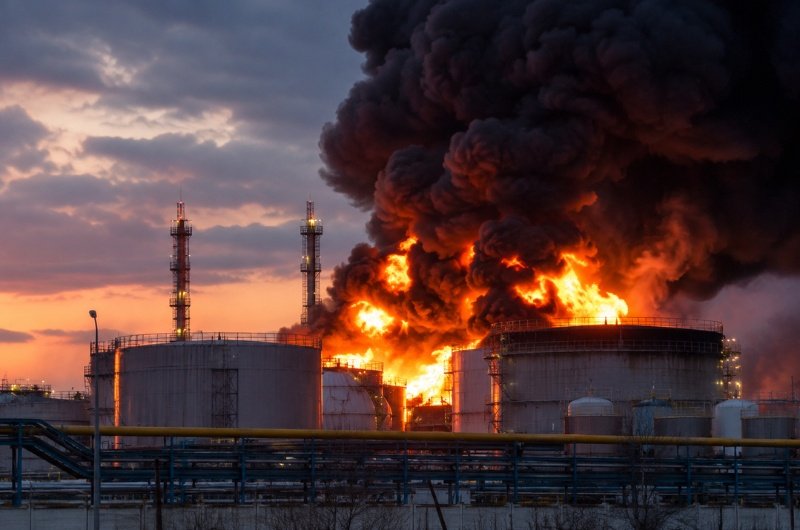
Ukraine launched a new wave of long-range drone attacks targeting Russian oil facilities overnight, as both sides continue to escalate military operations more than four years into the war. Russian officials said several energy sites were struck across multiple regions, while Ukrainian authorities described the attacks as part of an ongoing effort to weaken Russia’s military logistics and fuel supply. Moscow reported intercepting many of the drones, though damage to some facilities was confirmed. The latest strikes come as fighting continues along the front lines and diplomatic efforts to end the conflict remain stalled. Ukrainian President Volodymyr Zelenskyy has continued to press Western allies for additional military support, while Russia has maintained pressure through missile and drone attacks across Ukraine. The attacks underscore the growing role of energy infrastructure in the conflict. Oil refineries, fuel depots and storage facilities have become increasingly frequent targets as both sides seek to disrupt supply chains and reduce each other’s operational capabilities. With neither side showing signs of backing down, analysts say the conflict is likely to remain defined by long-range drone warfare, attacks on critical infrastructure and continued uncertainty over when meaningful peace negotiations might resume.
The New Business of Cleaning Up Earth’s Orbit

A new commercial space industry is emerging with an ambitious goal: removing aging satellites and dangerous debris from Earth’s orbit before they threaten future space missions. Thousands of inactive satellites, rocket fragments and other objects now circle the planet, creating growing risks for spacecraft, astronauts and the expanding network of communications satellites that support everything from GPS navigation to global internet service. As more launches take place each year, experts say keeping Earth’s orbit safe has become an increasingly urgent challenge. In response, aerospace companies are developing robotic spacecraft capable of inspecting, servicing and eventually removing defunct satellites from orbit. Some vehicles are being designed to capture aging spacecraft and guide them into Earth’s atmosphere, where they can safely burn up, while others aim to extend the operational lives of satellites through in-orbit servicing. The growing demand is creating new business opportunities across the space economy. Governments, commercial satellite operators and private investors are increasingly supporting technologies that could help reduce orbital congestion while protecting the infrastructure that modern life increasingly depends upon. As space activity accelerates, cleaning up Earth’s orbit is evolving into one of the newest frontiers of the commercial space industry, where innovation, sustainability and long-term access to space are beginning to converge.
End of Iran Ceasefire Sends Oil Higher, Stocks Lower

Oil prices jumped and U.S. stock futures fell Wednesday after President Donald Trump said the Iran ceasefire was “over,” fueling concerns that rising tensions in the Middle East could disrupt global energy supplies. The market reaction was immediate. Brent crude rose above $78 a barrel, while U.S. benchmark oil climbed above $74, according to the Associated Press. Stock futures also moved lower, with the S&P 500, Dow Jones Industrial Average, and Nasdaq all pointing to a weaker open as investors reacted to the growing uncertainty. The main concern is the Strait of Hormuz, one of the world’s most important oil transit routes. Any threat to shipping through the narrow waterway can quickly affect global oil prices because so much of the world’s crude supply moves through the region. Higher oil prices can ripple through the economy by raising gasoline costs, increasing transportation expenses, and renewing inflation concerns. Energy companies may benefit from higher crude prices, but airlines, consumers, and interest-rate-sensitive parts of the market often face pressure when oil spikes. The next question is whether the latest escalation remains limited or grows into a broader disruption for energy markets. For American consumers and investors, the issue is how quickly developments in the Middle East can show up in fuel prices, market volatility, and the cost of everyday life.
AI’s Next Big Challenge Isn’t Chips—It’s Power
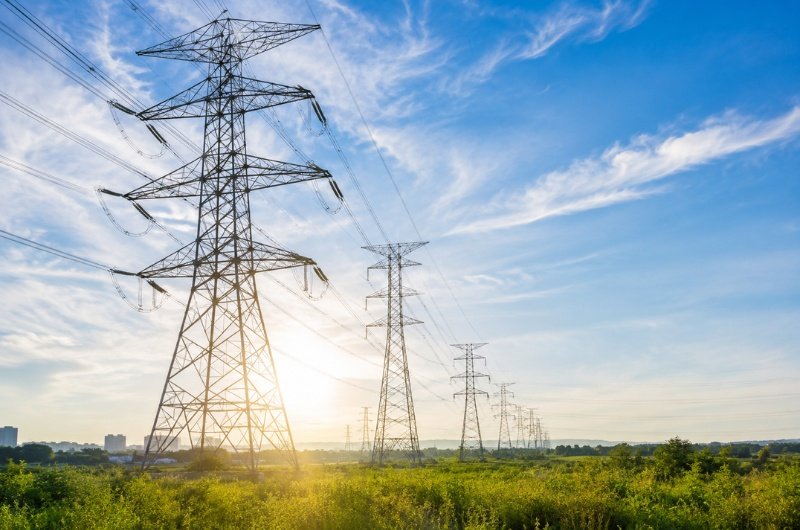
Artificial intelligence is creating a new challenge that extends far beyond faster computer chips. As companies race to build larger AI data centers, demand for electricity is rising so quickly that utilities, governments, and technology companies are being forced to rethink how the power grid will support the next generation of AI infrastructure. Industry reports show growing concern that electricity availability—not computing power—could become one of AI’s biggest constraints over the next decade. The rapid expansion of AI is driving unprecedented investment in data centers, many of which require enormous amounts of electricity to power advanced processors and cooling systems around the clock. At the same time, utilities are struggling to forecast future demand as technology companies announce new projects faster than power infrastructure can be expanded. Energy executives increasingly view grid capacity, transmission upgrades, and new generation as critical pieces of the AI economy. Rather than viewing AI solely as a technology story, energy companies now see it as an infrastructure story. A recent industry report found that 90% of respondents consider AI’s growing energy consumption a moderate to primary challenge, although nearly two-thirds also believe AI will ultimately improve the energy sector by helping utilities optimize grid operations, forecast demand, and strengthen cybersecurity. The shift is already influencing investment decisions. Electric utilities are expanding transmission networks, power producers are accelerating new generation projects, and technology companies are exploring everything from nuclear energy to on-site power generation to secure reliable electricity for future AI facilities. The growing partnership between the technology and energy sectors reflects a simple reality: AI cannot scale without dependable power. For businesses, investors, and policymakers, the message is becoming increasingly clear. Artificial intelligence depends on far more than advanced software and powerful computer chips. As AI adoption accelerates, the electrical grid is emerging as one of the most important foundations supporting the technology’s continued growth, making energy infrastructure a defining investment of the AI era. ——————– Related: America’s Electricity Grid Is Stepping Into the AI Economy
Family Seeks Release of Video After Fatal Tennessee National Guard Shooting

The family of a 20-year-old man who was fatally shot by members of the Tennessee National Guard during a law enforcement operation in Memphis is calling for the public release of video footage as state investigators continue examining the circumstances surrounding the incident. The shooting occurred early Sunday after Memphis police responded to reports of gunfire in the downtown area. Authorities said officers encountered an armed man, later identified by the Tennessee Bureau of Investigation (TBI) as Tyrin Johnson, who fled on foot. According to police, two Tennessee National Guard members joined the pursuit as part of the Memphis Safe Task Force, a joint crime-fighting initiative operating in the city. Law enforcement officials said Johnson turned toward the pursuing Guard members while holding a handgun, prompting the soldiers to open fire. Johnson was pronounced dead at the scene. No law enforcement personnel were injured. The TBI has opened an independent investigation into the shooting. Johnson’s grandfather, Evaniel Johnson, has disputed the official account and is urging authorities to release any available body-camera or surveillance footage. He said the family wants to understand exactly what happened and believes the video could help clarify the sequence of events. Several Tennessee Democratic lawmakers have also called for the prompt release of any available video evidence, saying transparency is important for both the Johnson family and the public while the investigation proceeds. The Memphis Safe Task Force was established to help address violent crime through cooperation between local, state, and federal agencies, including Tennessee National Guard personnel. The deployment has generated both support and criticism since its launch, with supporters citing public safety concerns and critics raising questions about the use of military personnel in civilian law enforcement operations. Investigators have not indicated when video footage, if any exists, may be released. The Tennessee Bureau of Investigation said its review of the shooting remains ongoing. The Readovia Lens As investigations involving the use of deadly force continue to draw national attention, transparency remains an important part of maintaining public confidence. The release of evidence, when appropriate and consistent with investigative requirements, can help establish the facts while supporting accountability for everyone involved.