


Trump’s ‘Really Big News’ Primetime Address Centers on Election Security Claims
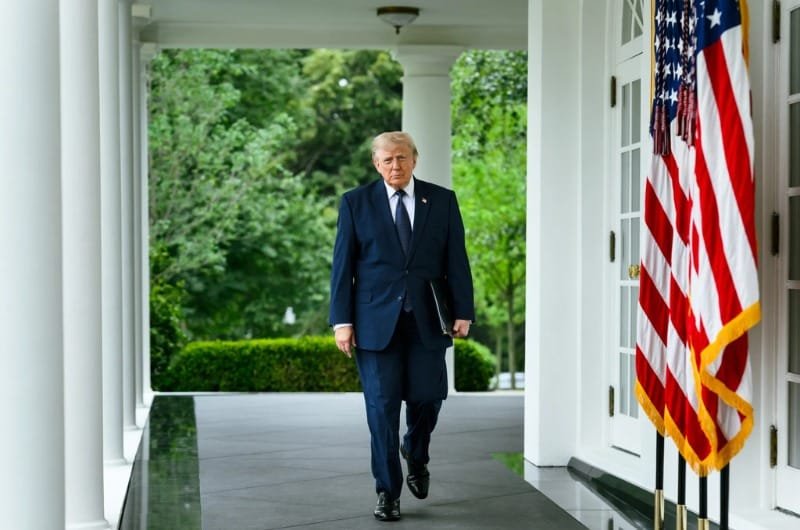
President Donald Trump used a nationally televised primetime address Thursday night to focus on election security, announcing the declassification of intelligence documents that he said reveal foreign efforts to target U.S. election systems and expose vulnerabilities in the nation’s voting infrastructure. During the nearly 30-minute address, Trump alleged that China obtained millions of U.S. voter records and argued that intelligence officials withheld critical information from both his administration and the public. He also called on Congress to advance election security legislation and said the Justice Department should investigate those involved if wrongdoing is found. The White House described the declassified records as evidence of significant foreign election threats and said the documents highlight the need for stronger safeguards to protect future elections. Administration officials said the release is intended to improve transparency and restore public confidence in the electoral process. Election experts and several news organizations, however, said the newly released documents do not provide evidence that votes were altered or that the outcome of the 2020 presidential election was changed. They noted that while the documents discuss foreign interest in U.S. election systems and cybersecurity concerns, many of the broader claims made during the address remain disputed. The speech, which Trump had previewed earlier this week as containing “really big news,” quickly became one of the day’s most closely watched political events and is expected to keep election security at the center of national debate as the country moves toward the 2026 midterm elections.
Trump Promises ‘Really Big News’ in Primetime Address Tonight
President Donald Trump is scheduled to deliver a nationally televised primetime address Thursday evening, promising what he has described as “really big news” in a speech that is expected to focus on election security and voting systems ahead of this year’s midterm elections. The White House has provided few details about the announcement, but officials have indicated the president plans to discuss election integrity, the 2020 election, and what the administration describes as vulnerabilities in the nation’s voting infrastructure. The address is scheduled to begin at 9 p.m. Eastern. The speech comes as election policy continues to be a major political issue in Washington, with lawmakers, state officials, and advocacy groups debating voting rules, election security, and public confidence in the electoral process. Because the White House has not released the full contents of the address, it remains unclear whether the president will announce new executive actions, propose legislation, or outline additional election initiatives.
U.S. Airstrikes Move Closer to Iran’s Capital
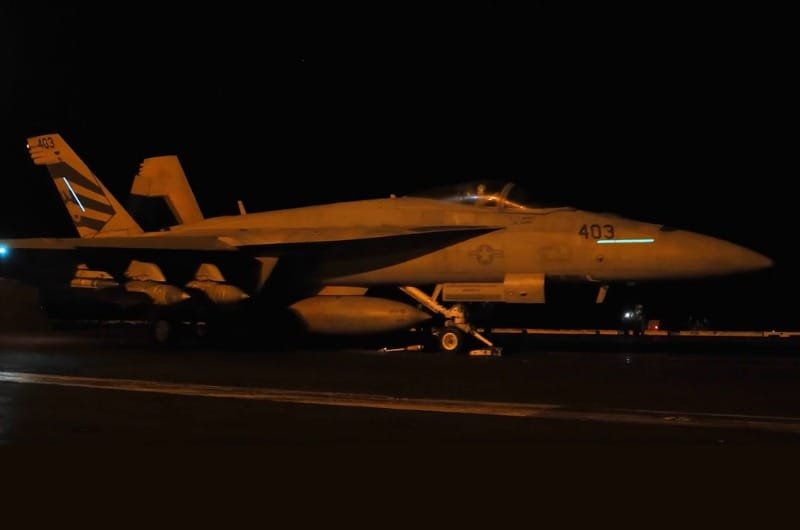
The U.S. military carried out another round of strikes against Iran early Thursday, reaching targets farther north and near Tehran for the first time in the latest phase of the conflict. The movement toward the Iranian capital marks a notable expansion of the American campaign. Tehran serves as the country’s political center, making attacks in surrounding areas especially significant as the fighting continues. U.S. Central Command said American forces struck several military sites and assets connected to Iran’s operations in the Strait of Hormuz. CENTCOM said the mission was intended to weaken Iran’s ability to threaten civilian mariners traveling through the strategically important waterway. The command also reported disabling an oil tanker in the strait. The passage remains central to the conflict because of its importance to international shipping and global energy supplies. The latest strikes show that the U.S. campaign is reaching deeper into Iranian territory, further increasing pressure on Tehran as the conflict continues without a clear path toward de-escalation.
Darline Graham Sworn In to Complete Late Brother Lindsey Graham’s Senate Term
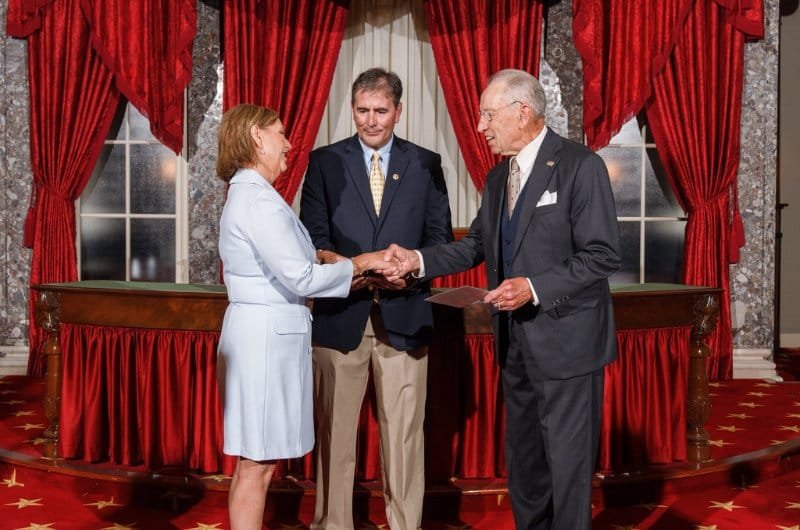
Darline Graham was sworn in Tuesday to complete the Senate term of her late brother, Lindsey Graham, becoming the first woman to represent South Carolina in the U.S. Senate after his sudden death over the weekend. President Trump endorsed Graham for the appointment before South Carolina Gov. Henry McMaster officially named her to complete the remainder of her late brother’s Senate term on Monday. Sen. Chuck Grassley administered the oath of office Tuesday as senators from both parties stood in attendance. Although she has never held elected office, Graham has served since 2019 as a commissioner on the South Carolina Commission for the Blind and previously worked at Clemson University and in South Carolina state government. After their parents died when she was a child, Lindsey Graham became her legal guardian and helped raise her. Speaking after taking the oath, Graham called it an “honor” to succeed her older brother in the Senate. She said he had always been there for her and vowed, “Now, I will be there for him,” adding that she plans to honor his legacy during the remainder of his term. Lindsey Graham died Saturday at age 71 after what officials said was an aortic dissection caused by cardiovascular disease. South Carolina Republicans are expected to choose a nominee in a special primary next month ahead of the November election, while Darline Graham will serve in the Senate until a successor is elected. ——————– Related: Sen. Lindsey Graham Dies at 71 After Decades of Public Service
Supreme Court Justices Seek More Security Funding Amid Rising Threats
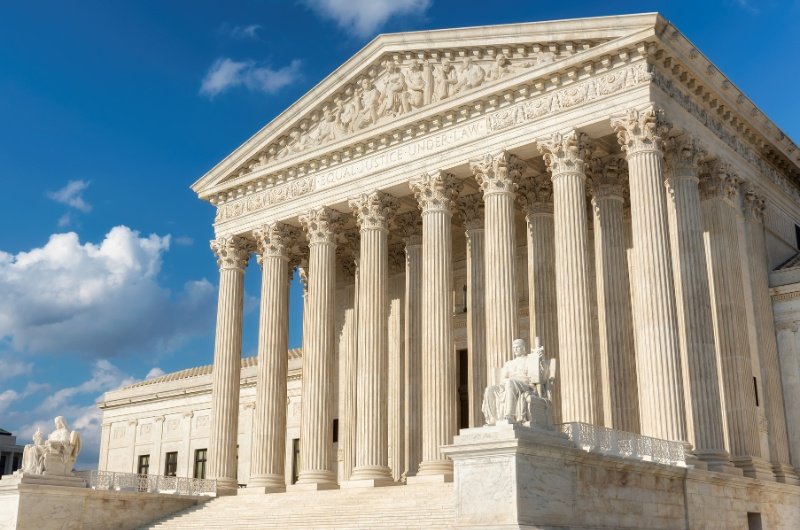
Two U.S. Supreme Court justices urged Congress on Tuesday to approve additional funding for court security, warning that threats against members of the nation’s highest court have increased in recent years. Justices Amy Coney Barrett and Elena Kagan appeared together before a congressional panel to discuss growing security concerns, saying additional resources are needed to better protect the justices, their families and court personnel. The request comes amid heightened concerns following several high-profile threats against members of the federal judiciary. Barrett told lawmakers the security risks have become so serious that she has worn a bulletproof vest while traveling home from public appearances. She said the additional funding would help ensure the safety of the Court as threats continue to evolve. The justices’ request focuses on strengthening protective measures rather than expanding the Court’s authority, with lawmakers expected to consider the funding proposal as part of the federal budget process.
SpaceX Set for Next Starship Test Flight Following FAA Approval
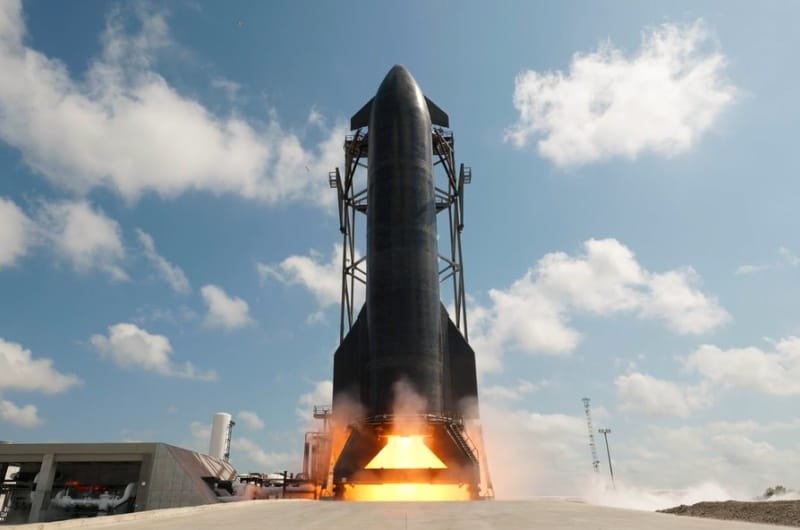
SpaceX is preparing for its next Starship test flight on Thursday after receiving approval from the Federal Aviation Administration (FAA), clearing the way for another milestone in the company’s effort to develop a fully reusable spacecraft for missions to the Moon and Mars. The mission, known as Starship Flight 13, is scheduled to launch from SpaceX’s Starbase facility near Brownsville, Texas, during a 90-minute launch window that opens at 5:30 p.m. CDT (6:30 p.m. EDT), although launch schedules remain subject to change. The mission is also expected to carry a new batch of Starlink satellites, supporting the continued expansion of SpaceX’s global satellite internet network. Starship is expected to play an increasingly important role in deploying larger next-generation satellites and supporting future commercial space operations. NASA has selected a version of Starship as the lunar lander for its Artemis program, making the rocket a key part of future missions intended to return astronauts to the Moon. Each successful test flight brings SpaceX closer to supporting both commercial launches and long-term human exploration beyond Earth.
Trump Reinstates Blockade of Iranian Ports, Imposes 20% Strait of Hormuz Security Fee

President Donald Trump has ordered the United States to reinstate its naval blockade of Iranian ports and announced plans to charge a 20% security fee on cargo shipments passing through the Strait of Hormuz. U.S. Central Command said the blockade will resume Tuesday at 4 p.m. Eastern, restricting maritime traffic entering and leaving Iranian ports. The military said it will continue supporting passage for non-Iranian-linked vessels traveling through the region. Trump said the cargo fee would reimburse the United States for providing security in the strait, a critical shipping route that normally carries about one-fifth of the world’s oil. The administration has not yet detailed how the fee will be collected or enforced. The proposed charge is already drawing opposition. The International Maritime Organization said there is no legal basis for imposing mandatory tolls on vessels simply passing through an international strait, while shipping company Hapag-Lloyd called the proposal fundamentally wrong. Oil prices climbed following Trump’s announcement and the latest exchange of attacks between the United States and Iran. Brent crude rose above $86 per barrel Tuesday, increasing the possibility of higher energy and transportation costs worldwide.
U.S. Consumer Prices Fall for First Time Since 2020 as Inflation Cools to 3.5%

U.S. consumer prices declined in June for the first time in more than six years, offering Americans some relief after months of rapidly rising energy costs. The Consumer Price Index fell 0.4% from May, the largest monthly decline since April 2020, according to new data released Tuesday by the Bureau of Labor Statistics. Annual inflation slowed to 3.5%, down sharply from 4.2% in May. Falling energy costs drove much of the improvement. Gasoline prices dropped 9.7% during the month, while the broader energy index declined 5.7%. Food prices continued to rise, however, increasing 0.2% both at grocery stores and restaurants. Core inflation, which excludes volatile food and energy prices, was unchanged in June and increased 2.6% over the past year. Shelter costs rose just 0.1%, their smallest monthly increase since January 2021, while motor vehicle insurance, apparel and medical care prices declined. The cooler report may reduce pressure on the Federal Reserve to raise interest rates at its July meeting. However, ongoing conflict in the Middle East and rising oil prices could make June’s relief temporary, leaving inflation and household affordability central concerns heading into the second half of the year.
Iran Strikes Back After Latest U.S. Military Attack
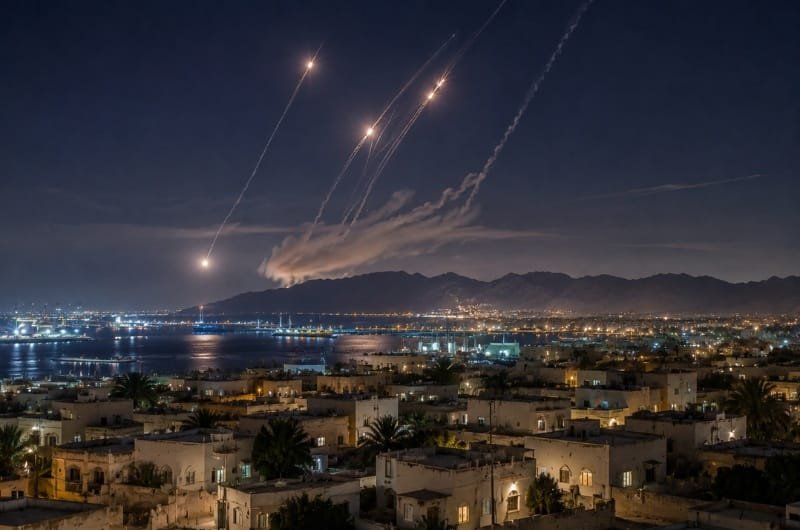
Iran launched missile and drone attacks against American military targets across the Gulf region Monday following a new round of U.S. strikes on Iranian missile systems, air defenses and naval assets near the Strait of Hormuz. The exchange marked another sharp escalation in the months-long conflict between the United States and Iran. Iran’s Revolutionary Guards said the retaliatory operation targeted U.S. military facilities in Bahrain, Kuwait, Jordan and Oman. Reports of explosions and air-defense activity emerged across several Gulf states, although the full extent of any casualties or damage was not immediately clear. The latest U.S. operation targeted Iranian coastal radar sites, air-defense systems, missile and drone facilities, small military boats and other assets around the strategically important Strait of Hormuz. Explosions were also reported near Bandar Abbas and Qeshm Island along Iran’s southern coast. The renewed attacks have further weakened hopes for diplomacy after a temporary pause in fighting and discussions aimed at preventing a wider regional war. Iranian officials said continued U.S. military action had made negotiations increasingly difficult, while Washington maintained that its strikes were intended to protect American forces and maritime traffic. With both countries continuing to exchange fire, the danger now extends beyond Iran and the United States. American bases, regional governments and commercial ships throughout the Gulf remain exposed as the conflict moves into another uncertain and potentially more dangerous phase.
More Than 200 Experts Urge Governments to Prepare for AI’s Economic Impact

More than 200 economists, researchers, and technology leaders—including 15 Nobel Prize winners—are calling on governments around the world to begin preparing for the economic impact of artificial intelligence, warning that the technology could reshape society far more quickly than previous industrial revolutions. In a public statement released Monday, the group urged policymakers to take a proactive approach to understanding how AI could affect jobs, productivity, wages, education, and economic growth. Rather than waiting for major disruptions to occur, the signatories said governments should begin developing strategies now to help workers and businesses adapt. The statement emphasizes that artificial intelligence has the potential to deliver enormous economic benefits while also creating significant challenges if the transition is poorly managed. Unlike past technological revolutions that unfolded over decades, the experts argue that AI could transform industries and labor markets within just a few years. “Steam, electricity, and computers each gave societies decades to adapt. AI may give us only a few years,” the statement says, underscoring the need for governments, businesses, and researchers to work together on policies that support long-term economic stability. While experts continue to debate exactly how AI will affect employment, the group agreed that preparation should begin immediately. They argue that thoughtful planning today could help societies capture AI’s benefits while reducing the economic disruption that often accompanies major technological change.