


Family Seeks Release of Video After Fatal Tennessee National Guard Shooting

The family of a 20-year-old man who was fatally shot by members of the Tennessee National Guard during a law enforcement operation in Memphis is calling for the public release of video footage as state investigators continue examining the circumstances surrounding the incident. The shooting occurred early Sunday after Memphis police responded to reports of gunfire in the downtown area. Authorities said officers encountered an armed man, later identified by the Tennessee Bureau of Investigation (TBI) as Tyrin Johnson, who fled on foot. According to police, two Tennessee National Guard members joined the pursuit as part of the Memphis Safe Task Force, a joint crime-fighting initiative operating in the city. Law enforcement officials said Johnson turned toward the pursuing Guard members while holding a handgun, prompting the soldiers to open fire. Johnson was pronounced dead at the scene. No law enforcement personnel were injured. The TBI has opened an independent investigation into the shooting. Johnson’s grandfather, Evaniel Johnson, has disputed the official account and is urging authorities to release any available body-camera or surveillance footage. He said the family wants to understand exactly what happened and believes the video could help clarify the sequence of events. Several Tennessee Democratic lawmakers have also called for the prompt release of any available video evidence, saying transparency is important for both the Johnson family and the public while the investigation proceeds. The Memphis Safe Task Force was established to help address violent crime through cooperation between local, state, and federal agencies, including Tennessee National Guard personnel. The deployment has generated both support and criticism since its launch, with supporters citing public safety concerns and critics raising questions about the use of military personnel in civilian law enforcement operations. Investigators have not indicated when video footage, if any exists, may be released. The Tennessee Bureau of Investigation said its review of the shooting remains ongoing. The Readovia Lens As investigations involving the use of deadly force continue to draw national attention, transparency remains an important part of maintaining public confidence. The release of evidence, when appropriate and consistent with investigative requirements, can help establish the facts while supporting accountability for everyone involved.
SpaceX Set to Join the Nasdaq-100 in Latest Milestone for Aerospace Giant
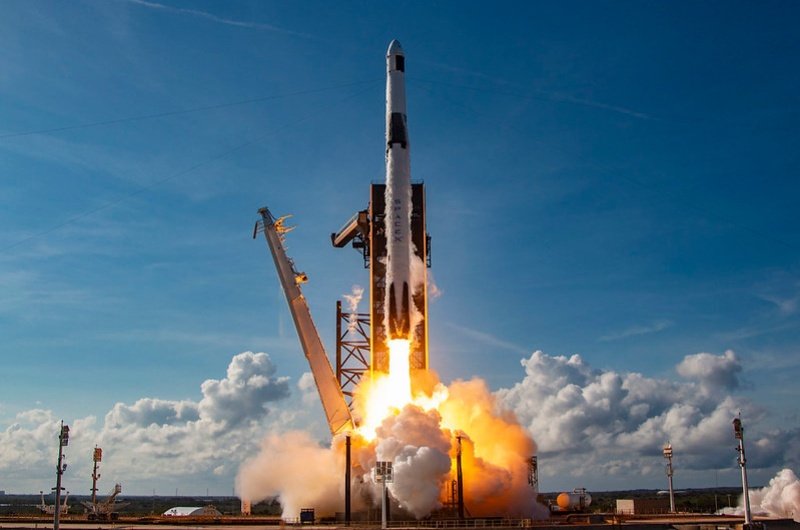
SpaceX is preparing to reach another major milestone just weeks after its historic public debut, with the aerospace company scheduled to join the Nasdaq-100 Index on July 7. The move places the company alongside many of the world’s largest technology businesses and is expected to trigger significant buying from index funds and exchange-traded funds that track the benchmark. Unlike investors who choose individual stocks, many index funds are designed to mirror the Nasdaq-100. When a company is added to the index, those funds typically purchase shares to match the updated holdings, creating additional demand for the stock. Analysts expect billions of dollars in passive investment money could flow into SpaceX as a result of its inclusion. Advertisement SpaceX’s addition comes unusually quickly following its June initial public offering, reflecting both its massive market value and updated Nasdaq rules that allow certain qualifying companies to join the index sooner than in the past. Although the company is one of the market’s most valuable businesses, its initial weighting in the Nasdaq-100 is expected to remain relatively modest because only a portion of its shares are currently available for public trading. For long-term investors, however, the significance extends beyond a single day of trading. Joining the Nasdaq-100 increases a company’s visibility among institutional investors and places it in one of the world’s most widely followed stock indexes. While index inclusion does not guarantee future gains, it often represents another step in a company’s transition from a newly public stock to a mainstream investment held in millions of retirement accounts and investment portfolios. SpaceX has attracted widespread attention since completing the largest initial public offering in history, fueled by its leadership in commercial spaceflight, the continued growth of its Starlink satellite internet business, and investor optimism surrounding the expanding space economy. As the company enters the Nasdaq-100, investors will be watching closely to see whether its long-term business performance continues to support the excitement surrounding one of Wall Street’s most closely watched new stocks. ——————– Related: SpaceX Goes Public in Record-Breaking Debut, Opening a New Era for the Space Economy SpaceX Is Coming to Wall Street—and Could Become the Largest IPO in History Space Stocks Are Surging Again as Investors Chase the Next Big Boom
Microsoft Bets $2.5 Billion That Businesses Are Ready for AI

Artificial intelligence may be entering a new phase—not one defined by bigger models or faster chatbots, but by helping businesses turn AI into measurable results. Microsoft is making that case with a $2.5 billion investment in Microsoft Frontier Company, a newly launched business designed to help organizations integrate artificial intelligence into their operations at scale. Rather than simply offering AI software, the new venture combines engineering expertise, industry specialists, and AI technologies to help companies build practical solutions that improve productivity, streamline workflows, and deliver measurable business outcomes. The announcement reflects a broader shift taking place across the AI industry. For the past two years, the conversation has largely focused on increasingly powerful AI models and rapid technological breakthroughs. Today, many organizations are asking a different question: how can artificial intelligence create meaningful value for our business? Microsoft believes the answer lies in implementation. According to the company, Microsoft Frontier Company will work directly with customers by embedding multidisciplinary teams of engineers and industry experts within organizations to help design, deploy, and continuously improve AI systems. Rather than offering a one-size-fits-all approach, the company plans to tailor solutions around each customer’s business goals, existing technology, and operational challenges. The initiative also reflects Microsoft’s recognition that many businesses are moving beyond experimentation. While generative AI has demonstrated impressive capabilities, organizations are increasingly looking for ways to integrate the technology into everyday operations, automate repetitive work, improve decision-making, and help employees focus on higher-value tasks. Microsoft says Frontier Company is intended to bridge the gap between AI’s potential and its practical application. Another notable aspect of the new venture is its flexibility. Rather than limiting customers to Microsoft’s own AI models, Frontier Company will support a variety of commercial and open-source technologies, allowing organizations to build solutions using the tools that best fit their needs. Microsoft says customers will also retain ownership of the systems and customizations developed for their businesses, an important consideration as companies seek greater control over their AI strategies. The company plans to launch with approximately 6,000 engineers, consultants, and industry specialists who will work with organizations across multiple sectors. Early customers include several large global companies that will collaborate with Microsoft to accelerate AI adoption and develop new operating models built around artificial intelligence. Microsoft’s latest investment highlights a growing trend across the technology industry. As AI models become increasingly capable, competitive advantage may depend less on access to the technology itself and more on an organization’s ability to implement it successfully. For businesses still exploring artificial intelligence, Microsoft’s new venture sends a clear message: the next chapter of AI may not be about building smarter chatbots, but about helping organizations transform the way they work. If that vision proves successful, AI’s greatest impact could come not from the technology alone, but from how effectively businesses put it into practice. The Readovia Lens Artificial intelligence is moving from invention to implementation. As AI technology continues to mature, competitive advantage may increasingly come from successful implementation within real-world organizations. Microsoft’s latest investment reflects that shift, signaling that the next wave of AI innovation may be driven by organizations that transform powerful technology into measurable business results.
Millions of Student Loan Borrowers Face New Repayment Rules Under Federal Overhaul

Millions of Americans with federal student loans are facing one of the most significant changes to the student loan system in years as a sweeping federal overhaul takes effect. The new rules, which became effective on July 1, introduce new repayment options, phase out existing programs, and establish new borrowing limits for many future students and parents. For many borrowers, the biggest immediate change involves the end of the Biden-era Saving on a Valuable Education (SAVE) repayment plan. Borrowers enrolled in SAVE will receive notifications from their loan servicers and generally have about 90 days to select a new repayment option before being transitioned to another plan. New Repayment Options Under the new system, most borrowers taking out new federal student loans on or after July 1 will have two primary repayment choices: Repayment Assistance Plan (RAP), a new income-based repayment program that calculates monthly payments using adjusted gross income. Tiered Standard Repayment Plan, which spreads payments over different repayment periods based on the amount borrowed. Existing borrowers with older federal loans may continue using certain repayment plans for a limited time, although several current income-driven repayment options are expected to be phased out over the next few years. Borrowing Limits Also Change The overhaul also introduces new borrowing limits for certain federal student loans. Graduate and professional students will face new lifetime borrowing caps, while Parent PLUS loans will now have annual and lifetime limits for new borrowers. The legislation also phases out new Grad PLUS loans, although some current borrowers may continue borrowing under transitional provisions while completing existing degree programs. Supporters say the changes simplify a complex repayment system and promote long-term financial responsibility. Critics argue some borrowers could face higher monthly payments and fewer repayment options than were previously available. What Borrowers Should Do Financial aid experts recommend that borrowers review any correspondence from their loan servicer carefully over the coming weeks. Borrowers affected by the changes should: Watch for repayment notices from their loan servicer. Review available repayment options before any deadlines. Verify that their contact information is up to date. Understand how the new rules may affect future borrowing decisions. Final Thoughts As millions of Americans adjust to the new rules, understanding available repayment options early may help borrowers avoid unnecessary payment increases and choose a plan that better fits their financial situation. ——————– Related: Federal Student Loan Rules Are Changing in 2026 — What Borrowers Need to Know Student Loans Move to Treasury in Major Federal Power Shift
Trump Accounts Launch July 4: What Parents Need to Know

A new federal savings and investment program known as Trump Accounts officially launches on July 4, giving many families a new way to begin building long-term financial assets for their children. Created under legislation signed in 2025, the program allows parents and guardians to open tax-advantaged investment accounts for eligible children. For qualifying newborns, the federal government also provides a one-time $1,000 contribution to help jump-start long-term savings. Advertisement What Is a Trump Account? A Trump Account is a long-term investment account established for a child and designed to encourage saving and investing from an early age. The accounts are invested in diversified, low-cost U.S. stock index funds approved by the Treasury Department. Parents or another authorized adult manage the account during childhood, while the beneficiary gains control after reaching adulthood under rules established by the program. Who Is Eligible? Children who are U.S. citizens, have a valid Social Security number, and were born between Jan. 1, 2025, and Dec. 31, 2028, qualify for the federal government’s $1,000 seed contribution. Parents may also open Trump Accounts for many other children under age 18, although those children generally are not eligible for the federal $1,000 deposit. How Do Parents Open an Account? Families must actively enroll by submitting IRS Form 4547, which establishes the account and, when applicable, requests the federal contribution. The Treasury Department has also said additional online enrollment options will become available as the program rolls out. How Much Can Families Contribute? Beginning July 4, parents, grandparents, relatives, employers and other eligible contributors may begin adding money to a child’s account. General annual contributions are limited to $5,000, while certain employer contributions have separate limits established under federal law. The accounts may also receive qualifying contributions from governments and charitable organizations under specific program rules. How Can the Money Be Used? The accounts are intended as long-term savings vehicles rather than short-term spending accounts. Funds generally remain invested until the child reaches adulthood, after which withdrawals may be used for purposes permitted under the program, including education expenses, purchasing a first home, starting a business, or other qualifying uses established under federal law. What Parents Should Know Financial planners note that Trump Accounts are designed to complement—not necessarily replace—other savings options such as 529 college savings plans or retirement accounts. For families with eligible children, however, the combination of a government-funded $1,000 contribution and years of potential investment growth could provide a meaningful financial head start if the money remains invested over the long term.
Dangerous Heat Wave Grips U.S. as El Niño Signals a Sizzling Summer Ahead

Millions of Americans are facing dangerous heat as a widespread heat wave settles across much of the United States ahead of the Independence Day holiday, while forecasters continue monitoring a strengthening El Niño that is expected to influence weather patterns in the months ahead. The intense stretch of hot weather is expected to affect more than 100 million people across parts of the Midwest, South, Mid-Atlantic, and Northeast. In many communities, temperatures are forecast to climb into the upper 90s and low 100s, with humidity pushing heat index values as high as 110 to 115 degrees in some locations. The National Weather Service has warned that prolonged exposure to the heat could increase the risk of heat exhaustion and heat stroke, particularly for older adults, young children, outdoor workers, and people without access to air conditioning. Officials are encouraging residents to stay hydrated, limit strenuous outdoor activity during the hottest part of the day, and check on neighbors who may be more vulnerable. The heat arrives as millions of Americans prepare to travel and celebrate the nation’s 250th Independence Day, prompting some cities to open cooling centers and activate heat emergency plans. Utility providers are also monitoring electricity demand as air conditioners work overtime across large portions of the country. El Niño Expected to Shape the Months Ahead Beyond this week’s heat, climate experts are closely watching El Niño, a naturally occurring climate pattern that develops when sea surface temperatures in the central and eastern Pacific Ocean become warmer than average. According to the National Oceanic and Atmospheric Administration (NOAA), El Niño conditions are now present and are expected to strengthen into late 2026. While El Niño does not determine day-to-day weather, it can influence seasonal temperature and precipitation patterns across different regions of the United States and around the world. Forecasters caution that individual heat waves are driven by a variety of atmospheric conditions. However, a strengthening El Niño is one of several large-scale climate factors that could contribute to unusual weather patterns during the remainder of the summer and into the fall. Staying Safe in Extreme Heat Health officials recommend drinking plenty of water, wearing lightweight clothing, avoiding prolonged outdoor activity during peak afternoon hours, and never leaving children or pets inside parked vehicles. People attending Independence Day events are encouraged to seek shade whenever possible and pay close attention to local weather advisories. As Americans prepare to celebrate the holiday weekend, forecasters say the combination of extreme heat and a strengthening El Niño serves as a reminder that this summer could bring more periods of unusually hot weather across parts of the country.
Trump Administration Sends Billions in Tariff Refunds to U.S. Businesses Ahead of Deadline

The Trump administration has begun sending billions of dollars in tariff refunds to U.S. businesses as a key refund deadline approaches, marking the next phase of a sweeping effort to return duties collected under tariffs that were later ruled unlawful. The refunds are being processed by the U.S. Customs and Border Protection (CBP) through its Consolidated Administration and Processing of Entries (CAPE) portal, which was created to handle the unprecedented volume of claims. According to CBP, approximately 330,000 companies are eligible to receive refunds covering qualifying tariff payments. Trade law experts have reported that more than $95 billion in approved refunds had already entered the CAPE processing system, with CBP planning a major wave of payments before the end of June. The refunds stem from tariffs imposed under the International Emergency Economic Powers Act (IEEPA) that were later challenged in court. Since then, federal agencies have worked to establish a process for returning eligible duties to importers. Major retailers, manufacturers, and logistics companies—including Walmart, Costco, Home Depot, Target, General Motors, Ford, FedEx, UPS, and DHL—are among the companies expected to benefit from the refund process, according to published reports. While the payments are being made to businesses rather than individual consumers, economists say the refunds could strengthen corporate balance sheets, support new investments, improve cash flow, and help offset some of the costs businesses absorbed while the tariffs were in effect. CBP has said refund payments are being issued in phases as claims are verified and processed through the CAPE system. Businesses with approved claims generally receive payments electronically after their refund requests have been accepted. The Readovia Lens The tariff refund program represents one of the largest customs repayment efforts in U.S. history. As billions of dollars flow back into the private sector, the refunds could provide an additional financial boost for companies ranging from national retailers to manufacturers and logistics providers, while bringing closure to one of the most significant trade disputes in recent years. ——————– Related: Trump Administration to Launch Tariff Refund Portal as Billions Could Flow Back to Businesses $166 Billion Tariff Refund Expected as New U.S. System Prepares to Launch
Supreme Court Upholds Birthright Citizenship in Landmark Constitutional Ruling

The U.S. Supreme Court on Tuesday upheld birthright citizenship, rejecting President Donald Trump’s effort to limit automatic citizenship for certain children born in the United States and reaffirming a constitutional principle that has stood for more than a century. The decision centered on an executive order issued by President Trump shortly after returning to office in 2025. The order sought to deny automatic U.S. citizenship to children born in the United States if their parents were in the country illegally or were present only temporarily, such as on student or tourist visas. In its ruling, the Court concluded that the Fourteenth Amendment’s Citizenship Clause continues to guarantee citizenship to nearly everyone born on U.S. soil, preserving a constitutional interpretation that has guided American law for generations. The decision leaves only the narrow, long-recognized exceptions that have historically existed, such as children born to foreign diplomats. The case represented one of the most closely watched legal battles of the Court’s term because it tested the scope of presidential authority as well as the meaning of the Constitution’s citizenship protections. The ruling also reinforces the Court’s longstanding interpretation of the Fourteenth Amendment, first established in the landmark 1898 case involving Wong Kim Ark. Supporters of the executive order argued that the Constitution does not require automatic citizenship for children born to parents who are unlawfully or temporarily present in the United States. Opponents countered that the Citizenship Clause has consistently been understood to apply to virtually everyone born within the country’s borders, regardless of their parents’ immigration status. The ruling marks a significant setback for one of the Trump administration’s highest-profile immigration initiatives. While the decision preserves the current constitutional understanding of birthright citizenship, debates over immigration policy are expected to continue in Congress and throughout the 2026 election season. ——————– Related: Birthright Citizenship Fight Returns to Supreme Court in High-Stakes Legal Clash Supreme Court Issues Landmark Ruling on Transgender Athletes in School Sports
America’s 250th Anniversary Celebrations Begin With Great American State Fair in Washington

The United States officially kicked off celebrations marking the nation’s 250th anniversary this weekend as thousands gathered on the National Mall for the opening of the Great American State Fair, launching a series of events leading up to Independence Day and the country’s historic semiquincentennial. The celebration transforms the National Mall into a showcase of American history, culture, innovation, and traditions, with exhibits representing all 50 states, family-friendly activities, live entertainment, military displays, and opportunities for visitors to explore the nation’s diverse heritage. President Trump helped launch the festivities, calling attention to the country’s upcoming 250th birthday and outlining additional commemorative events planned for the days ahead. Among the highlights is a July 3 celebration at Mount Rushmore, where Trump is scheduled to participate in a fireworks event honoring the nation’s founding. On July 4, Washington will host a “Tribute to America” celebration centered around the Lincoln Memorial and Washington Monument, bringing together patriotic performances, military tributes, and festivities marking Independence Day. The broader America 250 initiative will continue beyond this week’s events, with celebrations planned across the country as communities commemorate two and a half centuries since the signing of the Declaration of Independence on July 4, 1776. Organizers say the anniversary offers an opportunity for Americans to reflect on the nation’s history, celebrate its achievements, and look ahead to the future as preparations continue for next year’s official 250th anniversary observances. The Readovia Lens While the nation’s official 250th anniversary falls on July 4, 2026, celebrations are already underway as federal, state, and local organizations prepare for what is expected to be one of the largest nationwide commemorations in U.S. history. Events throughout the coming year are expected to highlight American history, civic engagement, innovation, culture, and the people and places that have shaped the country over the past two and a half centuries.
Massive Venezuela Earthquakes Leave More Than 500 Dead as Search for Survivors Continues

Rescue crews from Venezuela and around the world are racing against time to find survivors after two powerful earthquakes devastated parts of the country, leaving hundreds dead and thousands injured in one of the nation’s worst natural disasters in decades. Officials said the death toll had risen to at least **589 people** by Friday, with nearly 3,000 others injured. Tens of thousands of people have also been reported missing or remain unaccounted for as emergency teams continue searching collapsed buildings in the hardest-hit communities. Rescue efforts are expected to continue around the clock as families wait for news of loved ones. The twin earthquakes, measuring 7.2 and 7.5 magnitude, struck Wednesday evening west of Caracas before powerful shaking spread across the capital and nearby coastal regions. Entire apartment buildings collapsed, roads were damaged, and critical infrastructure suffered extensive damage, complicating rescue operations. The coastal state of La Guaira has emerged as one of the areas hardest hit by the disaster. Search-and-rescue teams equipped with heavy machinery, rescue dogs, and specialized equipment have joined local emergency workers in digging through mountains of concrete and twisted steel in hopes of finding survivors. International assistance has begun arriving from several countries as humanitarian organizations mobilize food, medical supplies, temporary shelter, and emergency personnel. The United States is among the nations providing assistance, while the United Nations is helping coordinate the broader international response. The earthquakes struck a country already facing significant economic and infrastructure challenges, making recovery especially difficult for many communities. Officials warned that the death toll could continue to rise as rescue crews gain access to heavily damaged buildings and isolated neighborhoods. Authorities continue urging residents to remain alert for aftershocks while emergency operations remain focused on saving lives and providing aid to thousands of displaced families.