


Target Warns of Weak Holiday Season, Cuts Full-Year Guidance
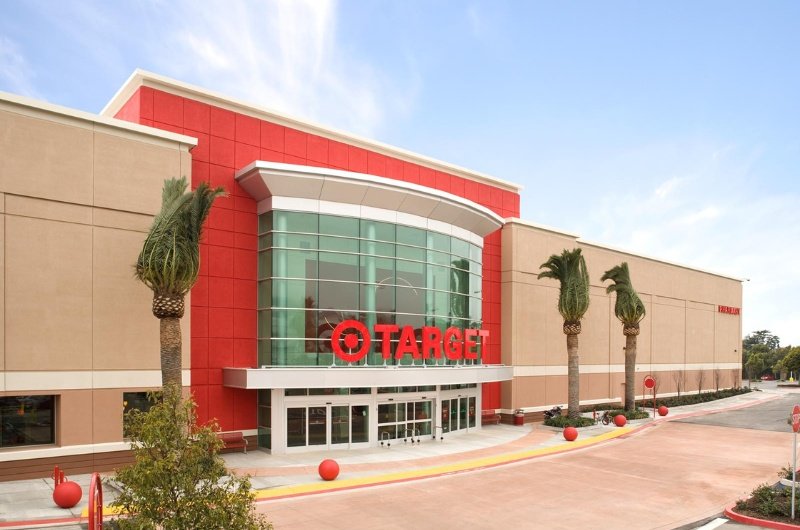
Target has lowered its full-year earnings outlook and issued a cautious warning about the upcoming holiday shopping period, signaling continued pressure on household budgets nationwide. The retailer reported third-quarter revenue slightly below last year and a decline in comparable store sales that reflects a noticeable shift in consumer behavior. Shoppers are prioritizing essentials and value, cutting back on discretionary categories such as home goods, apparel and seasonal extras. Executives say consumers are stretching dollars more carefully, focusing spending where it matters most and delaying non-urgent purchases. Despite beating expectations on earnings per share, the company trimmed its annual profit forecast and acknowledged that demand remains uneven and unpredictable. Looking ahead, Target expects comparable sales to decline modestly in the fourth quarter, a rare soft outlook entering peak retail season. The company is planning significant investment next year, including store remodels, technology upgrades and improvements to fulfillment operations, in an effort to stabilize growth and improve efficiency. For many Americans, the message is clear. Inflation and higher everyday prices are reshaping household priorities, and impulse or feel-good spending is losing ground to disciplined budgeting. Retailers long considered bellwethers for economic sentiment are now adjusting expectations as spending patterns fundamentally shift. The broader question is how much more pressure consumers can absorb before recovery momentum slows. As Target braces for a weaker holiday season, the outlook for the retail sector may depend on whether cautious shoppers feel confident enough to return to discretionary buying or continue to hold the line on spending through 2026.
Global Law Firms Announce Merger to Form Top-20 Powerhouse

Two major international law firms have announced a merger that will create one of the largest legal organizations in the world, combining more than 3,000 lawyers across 52 offices in 23 countries. The partnership between London-based Ashurst and U.S. firm Perkins Coie positions the newly unified entity among the world’s top 20 legal operations by revenue and geographic reach. The combined firm brings together core practices in corporate law, complex litigation, technology, energy, and financial services. With offices spanning North America, Europe, Asia, and Australia, the group is structured to support global clients facing cross-border regulatory and commercial challenges, including rapid changes in artificial intelligence governance, cybersecurity, and international trade. The merger reflects a growing consolidation trend across the legal industry as firms compete for multinational clients and navigate rising costs associated with talent, technology, and compliance. By pooling resources, Ashurst and Perkins Coie aim to increase operational efficiency, expand advisory services, and accelerate investments in digital systems and advanced legal-tech tools. For partners and clients, the integration is expected to reshape competitive positioning in high-value practice areas such as M&A, data privacy, and large-scale infrastructure projects. Industry analysts say the move could prompt additional consolidation among rival firms seeking similar global scale, especially those with limited footprint in the United States or Asia. The merger still requires regulatory and internal approvals, with full integration expected by late 2026. Leadership teams from both firms say they will prioritize culture alignment, technology migration, and unified branding over the next year. The legal sector will be watching closely to see how smoothly the transition unfolds — and how quickly the firm leverages its expanded platform to win market share.
AI Boom: Breakthrough or Bubble? What Investors and Businesses Should Know

The artificial intelligence revolution has minted fortunes, fueled record-high valuations, and driven billions into companies promising to reshape entire industries. But as investment flows reach fever pitch, a growing chorus of economists is asking a harder question: is this sustainable — or the next tech bubble in disguise? According to the 2025 AI Index from Stanford’s Human-Centered AI Institute, private AI investment in the United States surged past $109 billion in 2024 — up nearly 40 percent from the year before. Venture capital, corporate R&D, and public-market bets have all poured into the sector, from cloud infrastructure to chip design and generative-AI startups. Yet the fundamentals are uneven. Some firms are reporting explosive adoption; others are struggling with high compute costs, thin profit margins, and regulatory uncertainty. MoneyWeek recently called the current wave of AI funding “the ultimate bubble,” warning that investor optimism may be outrunning real-world deployment. For businesses, the implications are complex. On one hand, AI is unlocking automation, analytics, and creative tools that cut costs and open new markets. On the other, over-valued entrants could distort pricing and expectations across entire sectors — from cloud computing to marketing. Investors are watching for three early warning signs: runaway valuations in companies with little revenue, slowing user adoption, and over-dependence on a handful of infrastructure providers. But even if a correction comes, analysts say AI’s long-term trajectory remains clear — the technology is not a fad, even if some of its valuations are. For now, AI’s boom looks like both a breakthrough and a bubble — a dual reality that rewards smart positioning over hype.
Maryland Sues Trump Administration Over Cancellation of New $1 Billion FBI Headquarters Project

The state of Maryland has filed a federal lawsuit against the Trump administration for canceling plans to build a new FBI headquarters in Greenbelt, alleging the move violates congressional law and undermines billions in expected economic investment. Governor Wes Moore announced the suit Friday, arguing that the administration’s decision to abandon the long-approved suburban site and redirect funds toward renovating the FBI’s aging Washington, D.C. headquarters was made “without transparency, justification, or legal authority.” The state says the reversal jeopardizes more than 7,000 construction and support jobs tied to the project. Maryland officials contend the Greenbelt location was chosen through a years-long bipartisan process led by the General Services Administration (GSA), which had already allocated land and infrastructure funds. Canceling that plan, they argue, effectively nullifies federal commitments and breaches appropriations law by redirecting earmarked funds. The administration maintains that keeping the FBI in the District is a matter of national security and cost efficiency, citing concerns about “mission continuity” and proximity to federal partners. However, state leaders and business groups say the reversal sets a troubling precedent for federal-state investment agreements. The lawsuit, filed in U.S. District Court in Greenbelt, seeks to reinstate the project and compel the government to honor the original contract. The case could become a defining test of how far states can go to protect large-scale federal projects — and the jobs that depend on them.
The Rise of the AI Reporter: How Business Insider Is Testing the Next Era of Journalism

In a move certain to redefine newsroom workflows, Business Insider has introduced a new byline — “Business Insider AI” — to publish articles generated by artificial intelligence and refined by human editors. The shift marks one of the first large-scale adoptions of AI-assisted authorship by a major media outlet, sparking both intrigue and unease across the journalism industry. Introducing the AI Byline For years, automation in newsrooms has quietly supported journalists through data analysis, earnings reports, and sports summaries. But a visible AI byline — publicly credited on published stories — signals a turning point. According to The New York Post, the company confirmed that “Business Insider AI” is now producing content that blends machine-generated drafts with human editorial oversight. These stories undergo fact-checking and stylistic refinement before publication, ensuring that while AI handles structure and speed, humans preserve tone, accuracy, and editorial integrity. It’s a hybrid workflow — one where machine efficiency meets human judgment — and it could reshape how media companies scale content amid rising demand and shrinking budgets. Zooming In News organizations have long faced a paradox: audiences want more content, but trust in media is fragile. Introducing AI into the byline raises new questions — not just about authenticity, but accountability. Who’s responsible when an error occurs? How transparent should publications be about the role of automation in what readers consume? For Business Insider, the move appears both pragmatic and strategic. By openly crediting its AI system, it’s pre-empting future criticism of hidden automation while testing reader tolerance for machine-assisted journalism. If successful, it could encourage other outlets to follow — especially those struggling with high output expectations in an era of fewer human writers. The Industry Context The timing isn’t coincidental. As generative AI becomes more sophisticated, newsroom experiments are multiplying: The Associated Press uses AI to automate financial summaries. Bloomberg employs AI to speed up data-driven reporting. Gizmodo and others faced backlash for running unreviewed AI content earlier this year. By branding the AI author as a transparent collaborator rather than a ghostwriter, Business Insider aims to rebuild what earlier missteps damaged: public trust. It’s also a test of market acceptance. Can audiences embrace AI-authored journalism if they know it’s still human-guided? The Bigger Picture This is about identity. Newsrooms once defined themselves by their voices — the blend of reporter instincts, editor polish, and organizational ethos. Introducing a synthetic author challenges that definition. But for digital publishers under relentless pressure to scale, the economics are undeniable. AI can produce a first draft in seconds, freeing journalists to focus on deeper analysis, sourcing, and storytelling — the elements that algorithms still can’t convincingly replicate. The real question is how transparently AI will write stories — and how well editors can manage that collaboration. Between the Lines The “AI byline” may become the new intern. It can’t break news, build relationships, or sense tone — but it can structure, summarize, and draft faster than any reporter. What remains uniquely human is judgment, empathy, and voice. For now, Business Insider’s experiment is more about augmentation than automation. Yet it reveals an industry inching closer to a future where editorial desks are hybrid — powered equally by creativity and computation.
Gucci Rethinks Luxury with a Faster Fashion Strategy

With a faster creative cycle and runway-to-store model, Gucci’s new leadership is reinventing how luxury responds to cultural momentum. After years of fluctuating growth, Gucci is finding fresh traction under its new creative direction led by Demna Gvasalia (known as “Demna”), whose approach blends bold immediacy with disciplined execution. Early data suggests the strategy — emphasizing quicker turnarounds from runway to retail — is delivering encouraging results in both sales and social engagement. Rather than relying solely on long lead times and seasonal drops, Gucci’s new model prioritizes speed-to-market and tighter integration between design, production, and marketing. The shift allows the brand to capitalize on viral runway moments while maintaining the craftsmanship expected of a legacy house. Industry analysts note that this hybrid model mirrors tactics more common in streetwear and fast luxury, where the line between aspiration and accessibility is becoming increasingly fluid. By compressing the creative cycle, Gucci is positioning itself to respond to consumer demand with precision — and to stay culturally relevant in a fast-moving market. Demna’s influence is already evident in early collections: sleek tailoring, sharper silhouettes, and a renewed focus on minimalist design — a marked contrast to the maximalism of the Alessandro Michele years. Retail partners have reported improved sell-through rates, particularly for capsule releases tied to social media-driven campaigns. Final Word Gucci’s accelerated strategy signals a new era in luxury — one where creativity and commerce move in sync, and relevance is measured not by tradition, but by timing.
Gucci’s New Chapter: Demna Steps In to Reignite Style

In March 2025, Gucci made a bold move: it tapped Demna (formerly the creative force behind Balenciaga) to become its new Artistic Director, effective July. This high-stakes appointment arrives during a turbulent period for the storied luxury house, as it seeks to reclaim relevance, energy, and cultural edge under a fresh vision. A Fresh Direction — and a High-Risk Assignment Gucci’s recent creative turnover has been swift and dramatic. Sabato De Sarno’s brief tenure ended amid weaker-than-expected sales and internal pressure. Demna arrives with both a reputation for provocation and a design language deeply rooted in streetwear, archive recontextualization, and cultural commentary. His challenge: to both honor Gucci’s heritage and push it into new visual territory — not an easy balance, especially for a brand as iconic and scrutinized as this. September Debut & Unconventional Reveal Instead of a runway show, Gucci rolled out Demna’s debut via a cinematic event. On September 23, 2025, during Milan Fashion Week, the brand premiered The Tiger—a short film co-directed by Spike Jonze and Halina Reijn, starring Demi Moore. Concurrently, Gucci dropped the La Famiglia lookbook and portrait capsule campaign. The film’s red carpet premiere functioned as a de facto fashion show, with guests wearing pieces from Demna’s first collection. The Stakes Are High Gucci is operating under significant pressure: Sales slump & brand fatigue: Gucci’s revenue has slipped, with critics arguing that the brand had grown too safe and repetitive under its last direction. Expectations for reinvention: Demna’s track record at Balenciaga — injecting relevance and cultural resonance — marks him as a provocative choice to shake up Gucci’s aesthetic. Audience and market alignment: Luxury consumers now expect storytelling, identity, and “why” as much as couture. A visual reboot is only part of Demna’s assignment — he must restore emotional connection. Risk of alienation: In leaning too hard into provocation, a legacy house can lose longtime customers. Balancing boldness with coherence will be critical. What to Watch Going Forward Next runway season: Will Demna stick with film and stories, or return to traditional formats? Retail execution & capsule drops: The limited-release La Famiglia items and boutique experiences will test demand. Archive reinvention: How deeply will earlier Gucci motifs be reinterpreted — Flora, monogram, horsebit — and will they feel renewed or recycled? Brand messaging: Will the narrative of Gucci’s identity (the family, the codes, the heritage) align consistently across marketing, campaigns, and collections?
Fashion Week 2025: COS takes center stage, Paltrow rebrands, and quiet luxury moves forward
On Day 4 of New York Fashion Week, COS surprised the industry with an elevated runway show that redefined its minimalist roots, signaling a shift toward pared-back sophistication. New York Fashion Week reached a turning point when COS — long considered a high street staple — claimed its space alongside major luxury houses. Staging its Autumn/Winter 2025 show in a Brooklyn factory, the brand leaned into brutalist aesthetics, sharp tailoring, and sculptural knitwear that pushed its minimalist DNA into a new era. Editors and buyers praised the label for its oversized silhouettes, metallic tailoring, and knitwear reimagined as architectural layers. The presentation suggested that “quiet luxury” isn’t fading — it’s being reinvented in forms that feel bold yet wearable, blending restraint with authority. The COS show also underscored Fashion Week’s shifting energy. While spectacle has long defined the runway season, this year the focus is increasingly on clothes that signal longevity and understated power. That doesn’t mean glamour is gone — it’s simply evolving, reframed through proportion, texture, and subtle innovation. Must-see Looks from COS’s A/W 2025 Show The Oversized Grey Coat Monochrome, but not monotone — COS’s oversized grey coat redefined runway minimalism. COS opened with a sweeping oversized coat in slate grey, paired with sharply tailored trousers. It’s a statement of scale and simplicity — proof that minimalism can still command attention. With more shows still to come in New York and across Europe, COS’s breakthrough raises the stakes for what high street fashion can mean on the runway. It was a reminder that Fashion Week isn’t just about legacy houses — it’s about who can capture the cultural mood and set the tone for what’s next.
Jonathan Anderson at Dior: A New Era for Luxury Fashion
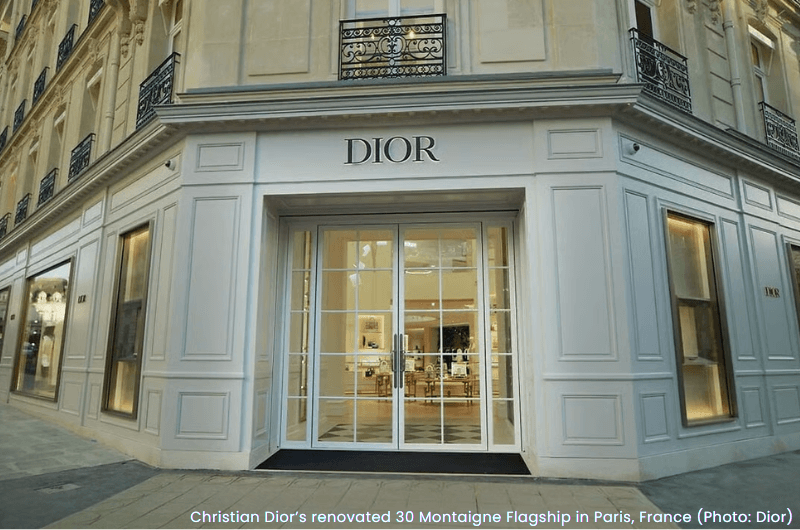
Luxury fashion just got its next big plot twist. In a historic move, Dior has tapped Jonathan Anderson to oversee all creative direction across its men’s, women’s, and couture divisions — a bold, sweeping appointment that hasn’t been seen since the legendary Christian Dior himself. Fashion insiders are calling it the biggest shakeup in high fashion since Phoebe Philo’s comeback — and perhaps the most ambitious creative consolidation in decades. Anderson, already hailed for his boundary-pushing tenure at Loewe and the cult-classic status of his namesake label JW Anderson, is known for challenging expectations while respecting heritage. At Dior, he inherits one of the most powerful fashion houses in the world — with the task of making it feel not just relevant, but revolutionary. Industry whispers suggest that Dior’s parent company, Moët Hennessy Louis Vuitton (commonly known as LVMH), is playing a bigger game than just a creative refresh. It’s a statement: that in an age where luxury needs to be fast-moving, future-focused, and editorially potent, a singular vision might just be the edge needed to lead. Anderson’s first full collection is already generating buzz, with rumors of experimental tailoring, dramatic silhouettes, and a reinvention of Dior’s classic codes. But beyond the runway, his leadership could set the tone for a new kind of creative power structure — one where fashion houses operate less like committees and more like auteur-driven film studios. For now, all eyes are on Paris — and one very sharp British designer who just became the most powerful man in fashion. The Author
Ulta Hits the Brakes on Target Store Expansion — Here’s What’s Really Going On

After a fast-paced rollout that brought Ulta Beauty to more than 600 Target locations across the U.S., the beauty giant is putting a pause on opening any new in-store shops — at least for now. Instead of chasing more square footage, Ulta says it’s going back to the drawing board to strengthen what’s already in place. Translation? The focus is shifting to boosting performance, refining customer experience, and making each location count. Why the Slowdown Matters This isn’t just a pause — it’s a pivot. In an era where brick-and-mortar retail is being redefined by smarter tech and evolving customer habits, Ulta’s move signals a shift in strategy: quality over quantity. With competitors like Sephora ramping up their own shop-in-shop experiences (hello, Kohl’s), it’s clear the beauty wars are still on — just playing out differently. For Ulta, the slowdown gives them time to analyze what’s working and what’s not in their partnership with Target, while avoiding overextending at a time when efficiency and experience matter more than ever. Zooming Out: The Bigger Retail Picture Retail experts see this as part of a larger trend. After several years of aggressive expansion across sectors, brands are being forced to fine-tune — tightening operations, improving margins, and doubling down on locations that actually drive results. In other words, this isn’t a retreat. It’s a recalibration. And in today’s hyper-competitive beauty space, slowing down might be the smartest power move of all. The Author