

NASA Is Sending Artificial Retinas, Heart Cells and Brain Tissue Into Space
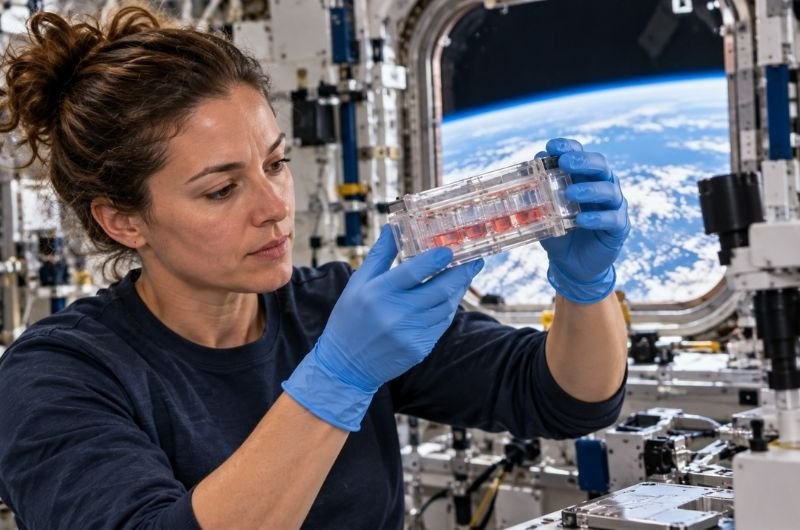
NASA is preparing to send artificial-retina manufacturing equipment, 3D heart-cell models and tiny laboratory-grown brain structures to the International Space Station in a new round of experiments that could eventually help scientists develop treatments for serious diseases on Earth. The research will travel aboard a SpaceX Dragon spacecraft during the company’s 35th commercial resupply mission for NASA, targeted for launch no earlier than October from Cape Canaveral Space Force Station in Florida. The mission will also carry supplies, equipment and additional scientific experiments to the orbiting laboratory. Among the most intriguing experiments is hardware designed to manufacture artificial retinas in microgravity. Researchers have been exploring whether the near-weightless environment of space can produce more stable, higher-quality artificial-retina films than manufacturing methods on Earth, where gravity can interfere with the process. The technology could eventually contribute to treatments intended to restore vision for people with degenerative retinal diseases. Dragon will also carry 3D heart-cell models intended to advance large-scale drug testing during future space missions, along with brain organoids — tiny three-dimensional structures grown from human cells that mimic certain features of brain tissue. NASA says the organoids could help researchers identify potential treatment targets for neurodegenerative diseases including Alzheimer’s, Parkinson’s and multiple sclerosis. The mission will carry another major piece of hardware: the final sets of International Space Station Roll-Out Solar Arrays. Astronauts will install the arrays during future spacewalks, completing an upgrade designed to provide additional electricity for station operations and eventually help support the ISS through its planned controlled deorbit. The Readovia Lens Some of the most consequential work happening in space may ultimately have little to do with exploring distant worlds. Microgravity gives researchers an environment that cannot easily be reproduced on Earth, allowing them to study how cells, tissues and materials behave when gravity is largely removed from the equation. If experiments involving artificial retinas, heart cells and brain organoids translate into better treatments on Earth, the International Space Station’s scientific legacy could extend well beyond spaceflight.
America Is Rebuilding Its Aging Air Traffic Control System — and It’s Already $574 Million Short
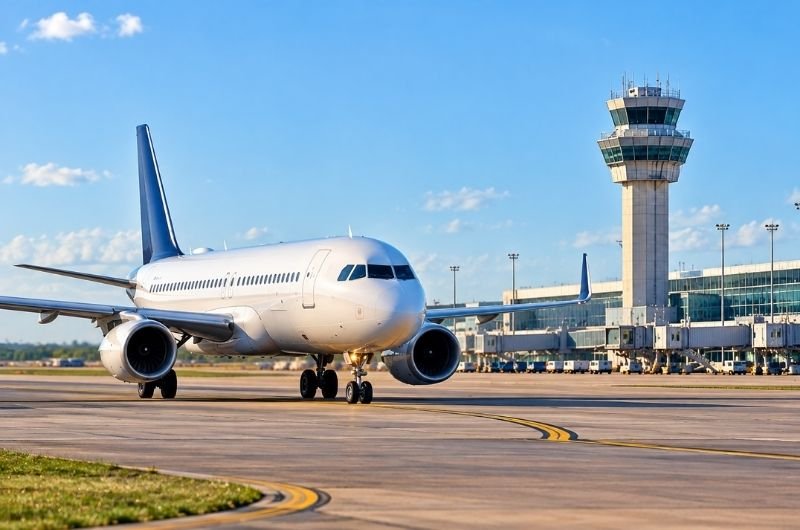
The United States is undertaking a massive effort to replace aging air traffic control technology used to manage tens of thousands of flights every day, but the first phase of the modernization is already facing a $574 million funding shortfall. Congress has provided $9 billion toward the first phase of the Federal Aviation Administration’s overhaul, while the FAA plans to contribute another $1 billion from its existing budget. But the Government Accountability Office estimates the work will cost about $10.6 billion, leaving hundreds of millions of dollars still unfunded. The modernization is intended to replace or upgrade aging telecommunications, radar, surveillance and other equipment that air traffic controllers rely on to keep aircraft moving safely through U.S. airspace. The problem has been building for years. An earlier GAO review found that the FAA considered 51 of its 138 air traffic control systems unsustainable, with some critical systems facing lengthy waits for replacement. Money isn’t the GAO’s only concern. The watchdog says the FAA has not developed a sufficiently detailed implementation schedule for the new program and underestimated some operational costs. It warned that emphasizing speed without stronger planning could expose the overhaul to cost increases, delays and performance problems similar to those that have affected previous FAA modernization projects. The stakes extend well beyond government technology. Air traffic control systems support communications with pilots, aircraft tracking, weather monitoring, navigation and the management of increasingly crowded airspace. Failures can contribute to delays and disruptions, while the FAA must continue operating existing equipment as replacements are developed and installed. The Readovia Lens Modernizing America’s air traffic control system has become increasingly urgent as aging equipment meets growing demands on U.S. airspace. But a $574 million shortfall this early in the overhaul underscores the challenge ahead: replacing critical aviation infrastructure quickly while avoiding the delays and cost overruns that have complicated previous modernization efforts.
NASA and IBM Unveil AI Model to Help Map the Moon for Future Missions
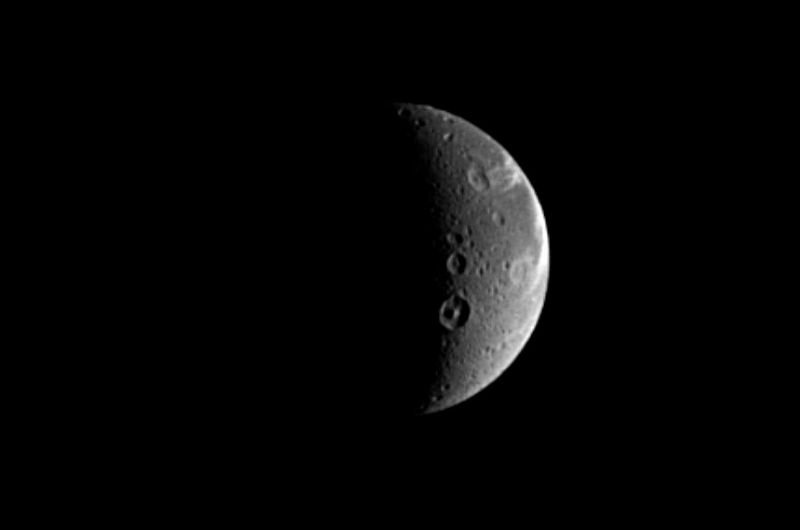
NASA and IBM have released a new artificial intelligence model designed specifically to study the Moon, giving scientists a faster way to map craters, analyze lunar terrain and identify areas where potentially valuable ice may be hidden near the poles. The open-source NASA-IBM Lunar Foundation Model was trained primarily on data collected during 17 years of observations by NASA’s Lunar Reconnaissance Orbiter. Its training included roughly 2 million lunar image tiles, along with information from NASA’s GRAIL and Lunar Prospector missions and Japan’s SELENE mission. One of the model’s most significant uses could be finding lunar ice. Permanently shadowed areas near the Moon’s poles can remain cold enough to preserve ice for billions of years, and scientists are particularly interested in those deposits as NASA and other space agencies plan future lunar exploration. Water found on the Moon could eventually support astronauts and potentially provide resources for longer missions deeper into space. The AI can also identify and map craters and unusual volcanic formations. Crater mapping can help scientists understand the age and history of different areas of the Moon while providing information useful for evaluating terrain, hazards and possible locations for future surface operations. IBM says the model exceeded widely used methods by as much as 23% on some lunar-analysis tasks, while NASA says it matched or surpassed several strong comparison models across the areas evaluated. NASA and IBM made the model publicly available so scientists around the world can use and adapt it rather than building a specialized AI system from scratch for every lunar research question. It is part of a broader collaboration that has already produced AI models for studying Earth and the Sun. The Readovia Lens Humans have collected extraordinary amounts of information about the Moon, but making sense of all that data is becoming a challenge of its own. The NASA-IBM model shows how AI could help turn decades of observations into practical knowledge about terrain, hazards and possible resources as preparations for sustained human exploration of the Moon move forward.
SpaceX Is Moving Starlink Launches to Starship as Its Next Test Approaches
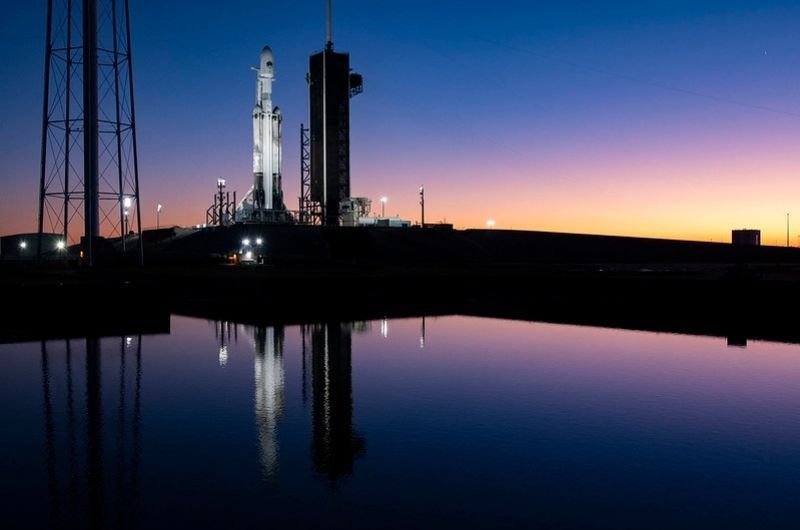
SpaceX is preparing to shift its Florida Starlink launches from Falcon 9 to Starship, marking a major change in how the company plans to expand its satellite internet network. The transition follows SpaceX’s 80th Starlink mission of 2026, launched September 6 from California, and comes as the company prepares for its next Starship flight test later this month. SpaceX Vice President of Launch Kiko Dontchev announced on August 25 that the company had completed its final planned Falcon 9 Starlink launch from Florida. Future Starlink missions from the state will use Starship, while Falcon 9 will continue launching Starlink satellites from Vandenberg Space Force Base in California. The September 6 mission carried 27 satellites into low Earth orbit and marked the 103rd Falcon 9 launch of the year. The change reflects SpaceX’s plans to use Starship’s much greater payload capacity to deploy larger, more capable Starlink satellites. The next-generation Starlink V3 spacecraft are designed to support increased network capacity and improved service as demand for satellite broadband grows. Starship is intended to be fully reusable, potentially allowing SpaceX to launch heavier payloads at lower cost once the vehicle reaches routine operational service. Falcon 9, meanwhile, will continue carrying customer missions from Florida, including government and commercial payloads. SpaceX is also preparing Starship Flight 14 at Starbase, Texas. The company has completed engine tests involving Ship 41 and Booster 21, and aviation and maritime hazard notices indicate a possible launch no earlier than September 15. SpaceX has not announced a firm launch date. The company is developing three Starship launch towers in Florida and has said it aims to conduct its first Starship mission from the state before the end of the year, although the timing remains dependent on testing, infrastructure, and regulatory readiness. The Readovia Lens The transition represents a significant step in SpaceX’s effort to connect Starship development with the commercial expansion of Starlink. Falcon 9 has enabled the company to build the world’s largest satellite constellation through frequent, reusable launches, but Starship is designed to carry substantially more capacity per mission. If SpaceX can achieve reliable, rapid reuse, the larger rocket could change the economics of satellite deployment and support more ambitious missions beyond Earth orbit. Until then, the company’s launch strategy depends on maintaining Falcon 9 operations while Starship completes the testing required for regular commercial service.
NASA’s Roman Space Telescope Is Finally on Its Way to Unlock the Dark Universe
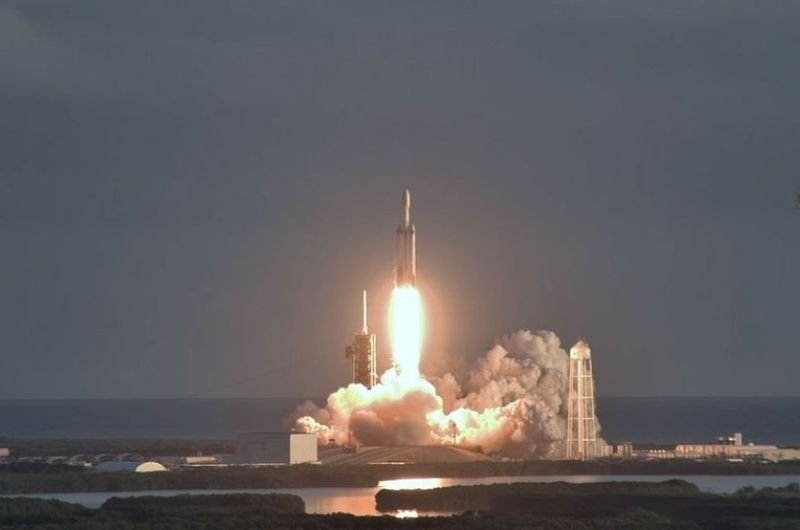
NASA’s Nancy Grace Roman Space Telescope is officially on its way, beginning a million-mile journey that could transform scientists’ understanding of dark energy, dark matter and planets beyond our solar system. Roman lifted off Sunday at 7:26 a.m. EDT aboard a SpaceX Falcon Heavy rocket from Launch Complex 39A at NASA’s Kennedy Space Center in Florida. The telescope separated from the rocket about 31 minutes later and began flying on its own, while ground controllers successfully established communications with the observatory. The telescope is now traveling toward the second Sun-Earth Lagrange point, known as L2, about one million miles from Earth. The journey will take roughly three months as NASA powers up and calibrates Roman’s instruments. Its solar panels and lower instrument sunshade have already deployed successfully, marking two of the first major post-launch milestones. Once science operations begin, Roman will survey enormous portions of the universe using a 300-megapixel infrared camera equipped with 18 detectors. Its combination of a wide field of view and rapid scanning will allow it to survey the sky as much as 1,000 times faster than the Hubble Space Telescope, helping scientists map galaxies across cosmic history and investigate how dark matter and dark energy have shaped the universe. Roman will also search for thousands of exoplanets and test technology designed to directly image worlds orbiting other stars. Roman’s origins are nearly as unusual as its mission. The telescope’s primary mirror traces back to hardware donated to NASA by the National Reconnaissance Office in 2012, giving technology originally developed for reconnaissance a new purpose looking outward into deep space. The observatory ultimately launched ahead of schedule, and NASA says it will transmit about 1.4 terabytes of data every day — the highest data rate yet for a NASA astrophysics mission. Scientists, artificial intelligence systems and citizen scientists will help sift through that enormous stream of observations. NASA expects Roman’s first images in early 2027. If everything proceeds as planned, those images will mark the beginning of a five-year primary mission designed not simply to look deeper into individual corners of space, but to give astronomers a sweeping new view of the universe — including some of the parts we still understand the least.
NASA’s New Space Telescope Will See 100 Times More Sky Than Its Famous Hubble Telescope
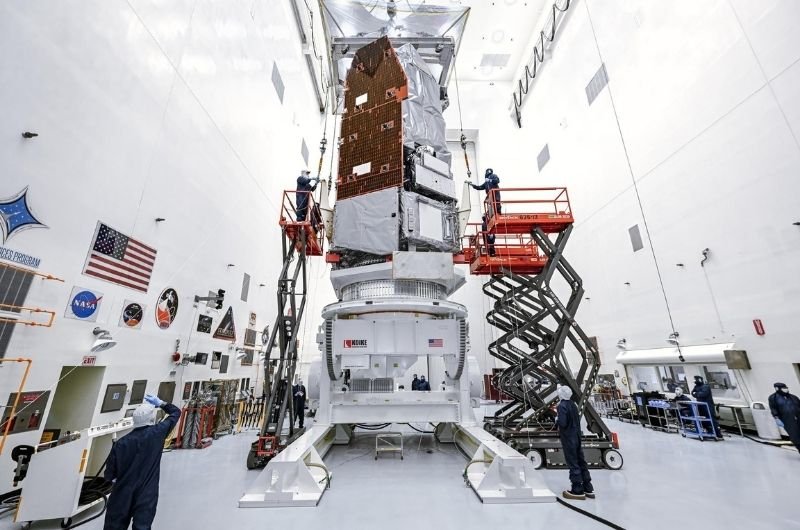
NASA is preparing to launch a new space telescope capable of surveying enormous stretches of the universe far faster than Hubble, giving astronomers a powerful new tool for studying everything from distant galaxies to planets beyond our solar system. The Nancy Grace Roman Space Telescope is scheduled to launch Sunday, August 30, aboard a SpaceX Falcon Heavy from Kennedy Space Center in Florida. NASA, SpaceX and the Roman mission team completed their Flight Readiness Review Friday, clearing one of the final major hurdles before liftoff. The mission is arriving remarkably early: NASA says Roman’s August launch date is eight months ahead of its original schedule. What makes Roman different is its view. Its primary camera can capture an area of the sky at least 100 times larger than Hubble can in a comparable observation while maintaining similar infrared sensitivity and resolution. That will allow Roman to survey the sky up to 1,000 times faster than Hubble, potentially observing billions of cosmic objects and measuring light from as many as a billion galaxies during its mission. Scientists plan to use that enormous view to investigate some of astronomy’s biggest mysteries, including dark energy — the still poorly understood phenomenon associated with the accelerating expansion of the universe. Roman will also conduct a massive search for worlds beyond our solar system. NASA scientists say its observations could reveal as many as 100,000 new exoplanets, while an experimental coronagraph aboard the telescope will test technology for directly imaging some large planets orbiting other stars. Roman isn’t being sent into orbit around Earth. After launch, it will travel roughly a million miles away to a region of space known as the Sun-Earth L2 point, where it can maintain a stable view of the cosmos. Once there, Roman will work alongside Hubble and the James Webb Space Telescope rather than replace them. Hubble and Webb can examine relatively narrow regions of space in extraordinary detail; Roman’s advantage will be its ability to find and map interesting objects across vast areas of the universe — effectively giving astronomers a much bigger cosmic picture to explore.
America Is Preparing for 1,000 Space Launches a Year
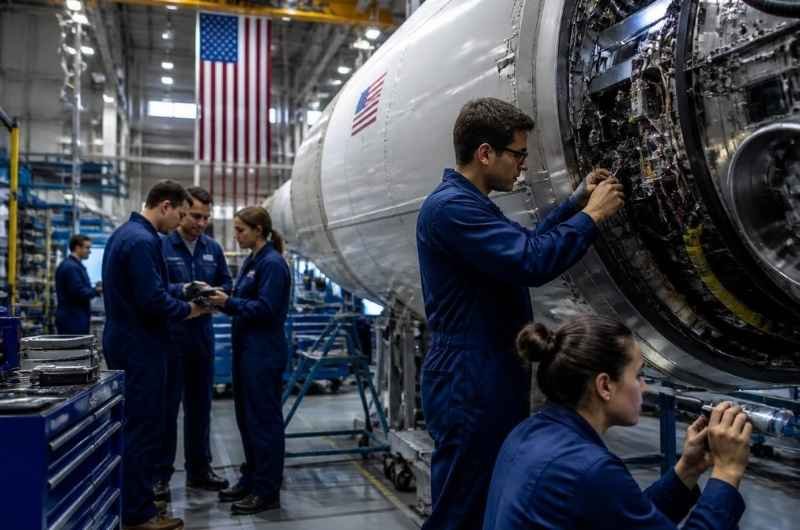
The United States is preparing for a future in which rockets launch and spacecraft return to Earth at a pace that would have seemed extraordinary only a few years ago. A new federal space transportation policy calls for American launch and reentry ranges to support more than 1,000 launches and reentries every year by 2030 — and directs the government to begin building the infrastructure needed to make that possible. The National Space Transportation Policy, signed Thursday by President Donald Trump, treats access to space as both an economic and national-security priority. Federal agencies are being directed to expand launch capacity, identify locations for additional launch facilities, improve existing infrastructure and make government launch ranges more accessible to commercial operators. That expansion will require considerably more than additional launch pads. Within 180 days, the Transportation Department is directed to identify potential locations for new or improved launch infrastructure and develop a plan for integrating launches and spacecraft reentries into the country’s modernized air-traffic-control system. The government also plans to establish priority airspace for critical launch corridors, improve access to communications spectrum and develop more transparent scheduling at federal launch ranges. Private investment is expected to play a major role. The policy encourages leases, commercial investment and public-private partnerships to improve launch and reentry facilities on federal property, while directing agencies to accelerate permitting and environmental reviews. A separate federal strategy will focus on strengthening the U.S. space transportation industry, its supply chains and the workforce needed to support its expansion. The policy reaches well beyond launches from Earth. NASA is directed to develop a commercial transportation architecture for moving people and cargo to and from the lunar surface, explore commercial robotic transportation to Mars and examine commercial systems capable of eventually carrying humans to Mars and returning them to Earth. Taken together, the directives point toward something larger than an increase in rocket launches: the beginnings of a national transportation infrastructure built around routine access to space.
The FAA Is Testing a New Way to Connect Small Airports to America’s Biggest Hubs
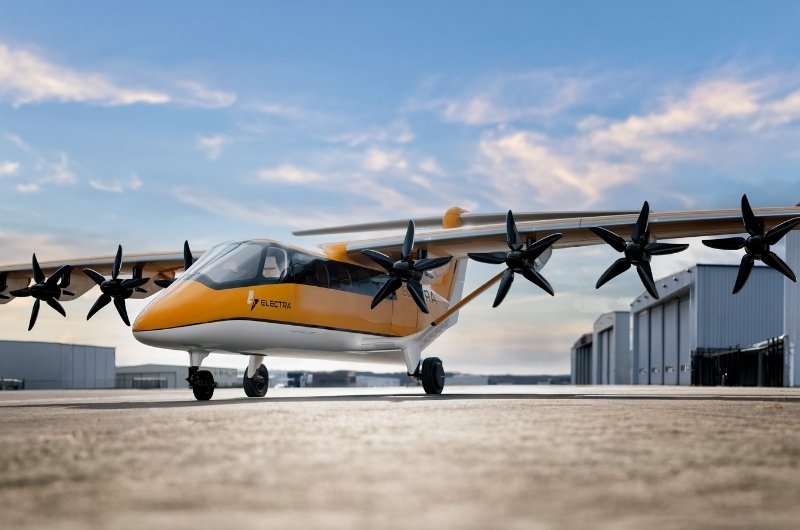
A new kind of regional air network is being tested in the Northeast, where hybrid-electric aircraft could eventually allow travelers from smaller communities to reach major airline hubs without first making a long drive to a large airport. The FAA announced Tuesday that Electra and transportation agencies in Pennsylvania and New Jersey completed demonstration flights between Manassas, Virginia, and Philadelphia. The route included stops at smaller airports in New Jersey and Pennsylvania before reaching Philadelphia International Airport, giving regulators a real-world look at how advanced aircraft could operate between local airports and major commercial hubs. The technology behind the idea is unusual. Electra is developing the EL9, a nine-passenger hybrid-electric airplane designed to take off and land in about 150 feet. Instead of relying on a conventional runway, the aircraft uses multiple electric motors to blow air across its wings, generating enough lift to operate at very low speeds. The company says the production aircraft is being designed for trips of up to 330 nautical miles while carrying nine passengers. That short-runway capability could dramatically expand the number of places capable of supporting regional flights. Small general-aviation airports that see relatively little passenger service today could potentially become feeder points for larger hubs, while other compact aviation sites could eventually support some operations. The FAA is using the demonstrations to identify regulatory and operational gaps before advanced-air-mobility aircraft are integrated more broadly into the national airspace system. The Readovia Lens The most interesting part of this experiment may not be the hybrid-electric aircraft itself. It is the possibility of changing where an airline journey begins. Instead of driving an hour or more to a major airport, some travelers could eventually start at a small airport much closer to home and connect by air to a larger hub. The technology is still moving through certification and testing, but the FAA is now examining what the network around these aircraft could actually look like.
Elon Musk Owns 48.4% of SpaceX — but Controls More Than 82% of the Vote
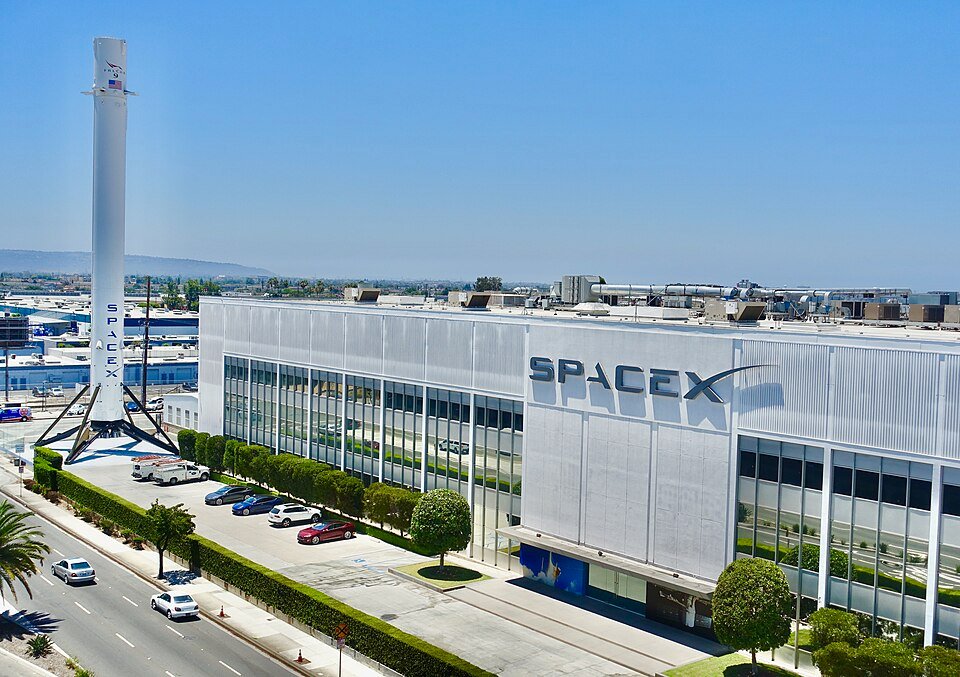
Elon Musk owns nearly half of SpaceX but maintains overwhelming control of the company, according to a new regulatory disclosure detailing his holdings following SpaceX’s historic public offering. Musk beneficially owned approximately 6.42 billion shares as of June 30, representing 48.4% of the company on an as-converted basis and a position now valued at more than $900 billion. His influence is even greater than that ownership figure suggests. SpaceX’s dual-class share structure gives Musk more than 82% of the company’s voting power, allowing him to maintain decisive control over major corporate decisions despite owning less than half of the company’s economic equity. How Musk Maintains Control The difference comes largely from SpaceX’s Class B shares, which carry substantially more voting power than the Class A shares available to public investors. Dual-class structures are designed to allow founders to raise outside capital without surrendering control of the companies they created, and SpaceX’s structure leaves Musk with an unusually commanding position. The 48.4% figure also requires some context. Musk said following the disclosure that a portion of the shares included in the calculation remain tied to performance conditions and have not fully vested. That means his currently vested ownership is lower than the regulatory figure, although his voting control remains substantial. The disclosure offers investors one of the clearest pictures yet of who controls SpaceX after its June public-market debut. Outside investors now own a meaningful portion of one of the world’s most valuable companies, but the balance of power remains firmly with its founder. For shareholders betting on SpaceX’s future in rockets, Starlink, artificial intelligence and other emerging businesses, they are also making a long-term bet on Musk’s continued control of the company.
FAA Taps AI Startup for $875 Million Overhaul of US Airspace
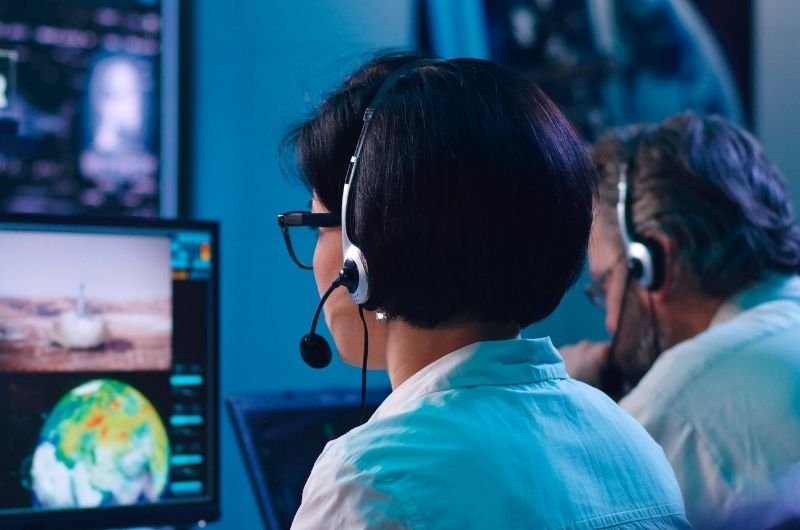
The Federal Aviation Administration has awarded an $875 million contract to Air Space Intelligence, a small startup already known for helping Alaska Airlines manage its daily flight operations. The company will build what the FAA calls the SMART system, short for Strategic Management of Airspace, Routes, and Trajectories. The deal marks one of the most ambitious steps yet in the effort to modernize how America’s skies are managed. How the Technology Works Air Space Intelligence built its reputation through a tool called Flyways, which Alaska Airlines has used since 2021. The system doesn’t choose a flight’s route or waypoints on its own — instead, it offers suggestions that can help a dispatcher find a more efficient path. Alaska Airlines currently runs roughly 1,500 flights a day, coordinated by a team of dispatchers working from a operations hub near Seattle-Tacoma International Airport. The FAA hopes a version of this same approach can scale up to guide traffic across the entire country. Dispatchers Warmed Up Slowly Trust in the system didn’t come immediately at Alaska. Bret Peyton, who works with the airline’s dispatch team, said it took time to convince staff that the tool functions as “a decision-making aid” rather than something that operates unpredictably on its own. That kind of hesitation is worth watching as the technology moves from one airline’s operations center to the busiest, most complex airspace in the world — a jump that has left some skeptics questioning whether the approach can truly scale. Part of a Bigger Push The contract fits into the Trump administration’s push for a new air traffic control system, with FAA officials stressing the goal is to support air traffic controllers, not replace them. Given ongoing public attention on air traffic safety and staffing, how this technology performs in real-world testing will likely shape the public conversation around AI’s role in aviation. The Readovia Lens This story is really about trust moving in stages — from a single airline’s dispatch floor to the entire national airspace. The FAA’s own framing, that this tool assists rather than replaces controllers, suggests officials are aware that public confidence, not just software performance, will determine whether this modernization effort succeeds.