

SpaceX Set for Next Starship Test Flight Following FAA Approval
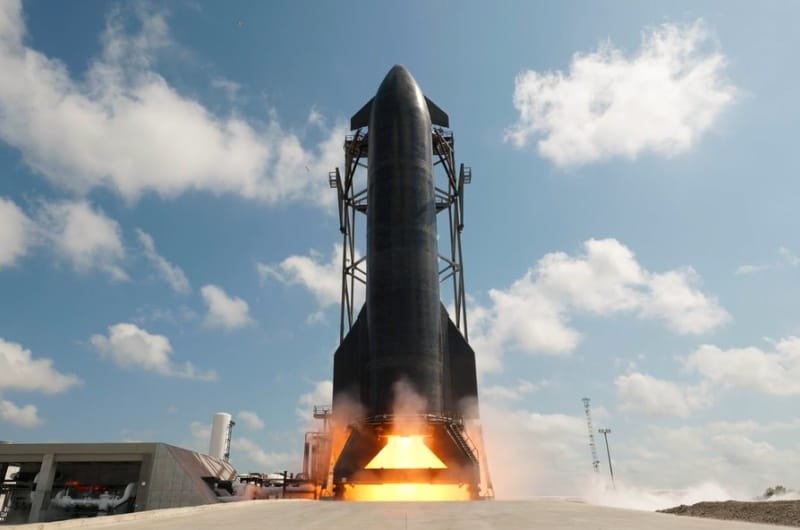
SpaceX is preparing for its next Starship test flight on Thursday after receiving approval from the Federal Aviation Administration (FAA), clearing the way for another milestone in the company’s effort to develop a fully reusable spacecraft for missions to the Moon and Mars. The mission, known as Starship Flight 13, is scheduled to launch from SpaceX’s Starbase facility near Brownsville, Texas, during a 90-minute launch window that opens at 5:30 p.m. CDT (6:30 p.m. EDT), although launch schedules remain subject to change. The mission is also expected to carry a new batch of Starlink satellites, supporting the continued expansion of SpaceX’s global satellite internet network. Starship is expected to play an increasingly important role in deploying larger next-generation satellites and supporting future commercial space operations. NASA has selected a version of Starship as the lunar lander for its Artemis program, making the rocket a key part of future missions intended to return astronauts to the Moon. Each successful test flight brings SpaceX closer to supporting both commercial launches and long-term human exploration beyond Earth.
The New Business of Cleaning Up Earth’s Orbit
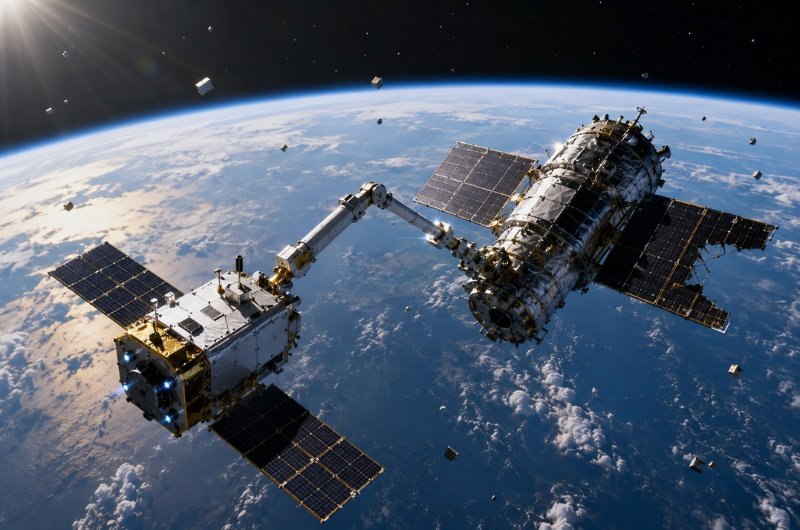
A new commercial space industry is emerging with an ambitious goal: removing aging satellites and dangerous debris from Earth’s orbit before they threaten future space missions. Thousands of inactive satellites, rocket fragments and other objects now circle the planet, creating growing risks for spacecraft, astronauts and the expanding network of communications satellites that support everything from GPS navigation to global internet service. As more launches take place each year, experts say keeping Earth’s orbit safe has become an increasingly urgent challenge. In response, aerospace companies are developing robotic spacecraft capable of inspecting, servicing and eventually removing defunct satellites from orbit. Some vehicles are being designed to capture aging spacecraft and guide them into Earth’s atmosphere, where they can safely burn up, while others aim to extend the operational lives of satellites through in-orbit servicing. The growing demand is creating new business opportunities across the space economy. Governments, commercial satellite operators and private investors are increasingly supporting technologies that could help reduce orbital congestion while protecting the infrastructure that modern life increasingly depends upon. As space activity accelerates, cleaning up Earth’s orbit is evolving into one of the newest frontiers of the commercial space industry, where innovation, sustainability and long-term access to space are beginning to converge.
German Space Manufacturer Chooses Texas for First U.S. Factory
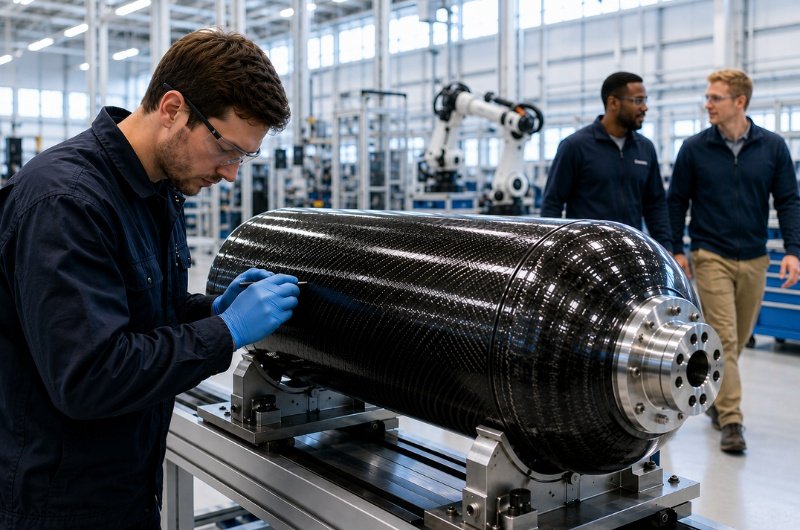
German aerospace manufacturer Blackwave is expanding into the United States with plans to open its first American manufacturing facility in Texas, underscoring the continued growth of the nation’s commercial space industry. The company will establish operations at Port San Antonio, where it plans to invest approximately $2.5 million to renovate a 35,000-square-foot facility that will serve as its U.S. production hub. The Texas facility will manufacture composite overwrapped pressure vessels, or COPVs. These lightweight, high-strength tanks are designed to safely store pressurized gases and are widely used in launch vehicles, satellites, and other spacecraft where reducing weight is critical. Advertisement Blackwave expects to hire more than 30 employees during its first year of operations, with long-term plans to grow its workforce to approximately 250 people as production expands. Company officials said establishing a manufacturing presence in the United States will allow Blackwave to better serve North American customers while reducing shipping times and navigating an increasingly complex global trade environment. The company also sees opportunities to supply components to leading commercial space companies. While no customer agreements have been announced, executives said businesses such as SpaceX represent the type of growing launch providers that could benefit from the larger pressure vessels produced at the Texas facility. The Readovia Lens The announcement is another sign that the U.S. space economy continues to attract international investment. As demand for rockets, satellites, and advanced spacecraft grows, manufacturers from around the world are expanding their presence in the United States to support the next generation of space exploration and commercial launch services. For Texas, the investment further strengthens the state’s position as one of America’s leading aerospace and advanced manufacturing hubs, joining a growing network of companies helping build the technologies that power the modern space industry.
Could This Mission Change the Future of Satellites? NASA Is About to Find Out
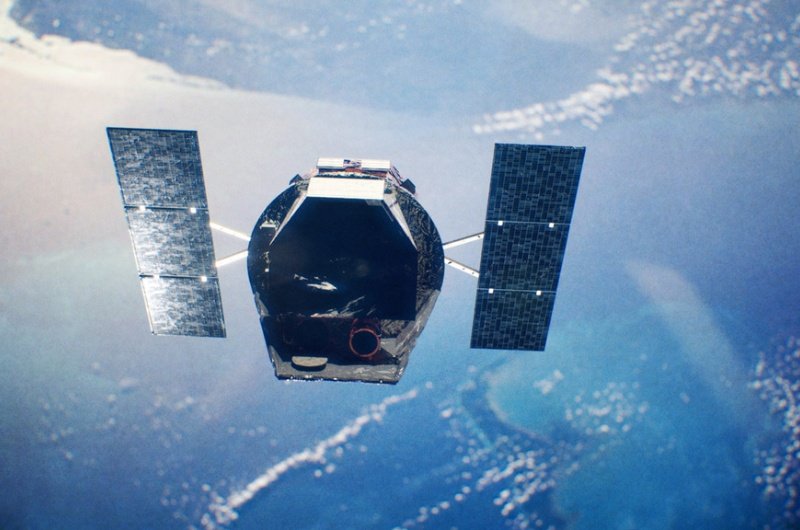
NASA is preparing for a mission that could help reshape how spacecraft are managed in orbit, potentially extending the lives of valuable satellites instead of retiring them when their missions end. The agency has awarded a contract to aerospace company Katalyst Space Technologies to raise the orbit of NASA’s Neil Gehrels Swift Observatory, a space telescope that has spent more than two decades studying some of the universe’s most powerful events, including gamma-ray bursts, black holes, and neutron stars. The effort, known as Swift Boost, aims to demonstrate whether commercial spacecraft can successfully rendezvous with and reposition satellites already operating in orbit. If successful, the mission could provide a glimpse into a future where spacecraft are serviced, upgraded, or repositioned rather than replaced. NASA officials say Swift’s orbit has gradually declined as increased solar activity has expanded Earth’s upper atmosphere, creating additional drag on the spacecraft. While the observatory remains operational and continues to produce scientific data, the changing orbital conditions have prompted NASA to explore ways to extend its mission. To accomplish that goal, Katalyst Space has developed a spacecraft known as LINK, which is designed to locate Swift in orbit, rendezvous with the observatory, and raise it to a higher altitude. Preparations for the mission have already advanced significantly. According to NASA, a Northrop Grumman Stargazer aircraft recently departed NASA’s Wallops Flight Facility carrying a Pegasus XL launch vehicle integrated with the LINK spacecraft as teams move closer to launch. The mission represents more than an effort to support a single observatory. Aerospace experts view orbital servicing as one of the industry’s most promising emerging capabilities. A successful demonstration could help satellite operators extend mission lifespans, reduce costs, and make better use of spacecraft already deployed in orbit. For decades, most satellites have been designed with a limited operational lifespan. Once fuel runs low or orbital conditions change, many are retired even if their instruments remain functional. Missions such as Swift Boost seek to challenge that model by proving that spacecraft can receive a second life through on-orbit servicing. For NASA, the mission could preserve the scientific contributions of one of its most successful observatories. For the broader aerospace industry, it could provide an early look at a future where maintaining spacecraft becomes as important as launching them. The Readovia Lens The commercial space industry is increasingly moving beyond launches and satellite deployment into a new phase focused on servicing, maintenance, and sustainability in orbit. If Swift Boost succeeds, it could help demonstrate that satellites and space telescopes no longer need to be discarded simply because their original missions are nearing an end. Instead, they may become part of a new generation of spacecraft designed to be maintained, repositioned, and kept in service for years beyond their original expectations.
Life Beyond Earth? Inside SpaceX’s Mars Vision

For most of human history, the idea of living on another planet belonged to the realm of science fiction. Today, one of the world’s most ambitious companies is openly discussing a future in which millions of people could one day call Mars home. According to SpaceX, the company’s long-term goal is to help create a self-sustaining city on the Red Planet. The vision would require transporting enormous amounts of cargo, infrastructure, equipment, and eventually people to Mars over many years. SpaceX has suggested that a fully developed Martian settlement could one day support more than one million residents. While that goal remains decades away, the idea raises a fascinating question: what would life on Mars actually look like? Advertisement Unlike Earth, Mars has no breathable atmosphere, experiences extreme temperature swings, and receives significantly less sunlight. Any permanent settlement would require advanced habitats, reliable energy systems, food production, water recycling, medical facilities, and transportation networks. Future residents would likely live inside protected structures designed to shield them from radiation and the harsh Martian environment. The challenges extend beyond engineering. A city on Mars would also require schools, workplaces, laws, governance, healthcare, and community life. Families would need places to live. Children would need opportunities to learn and grow. In many ways, building a city on Mars may be as much a social challenge as a technological one. Supporters argue that becoming a multi-planet species could help ensure humanity’s long-term survival by reducing the risk of civilization existing on a single world. Critics counter that the technological and financial obstacles remain enormous and that many problems on Earth deserve greater attention. Even among experts who support human exploration of Mars, there is significant debate about how quickly such a vision could become reality. The Readovia Lens Whether a city on Mars arrives in 20 years, 50 years, or much later, the concept forces us to think differently about humanity’s future. For thousands of years, every nation, city, culture, and civilization has existed on a single planet. SpaceX’s vision challenges that assumption. It asks us to imagine a future in which human beings are no longer confined to Earth, but instead begin expanding into the broader solar system. So, we know we can get to Mars. Perhaps the most interesting question is what kind of civilization we would choose to build once we get to there.
Virgin Galactic Says New Spacecraft Remains on Track for First Flight This Year
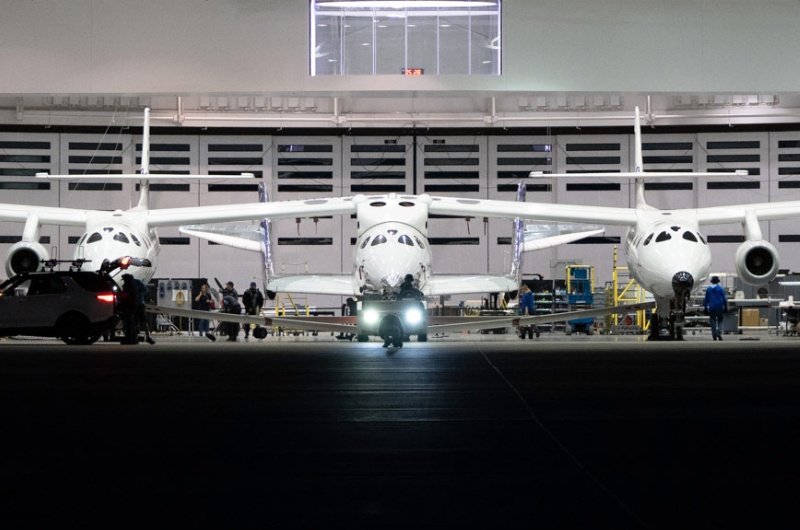
Virgin Galactic says its next-generation Delta-class spacecraft remains on track for its first flight later this year, marking a major milestone in the company’s effort to return to commercial space operations after pausing flights to focus on building a new fleet. The update came as part of the company’s first-quarter 2026 earnings report and arrives amid renewed attention on the commercial space industry. According to Virgin Galactic, its first Delta-class spacecraft has been delivered to Phoenix for ground testing, with glide-flight testing expected to begin in the third quarter and rocket-powered spaceflights targeted for the fourth quarter of 2026. A second Delta-class spacecraft is already under construction. The Delta program sits at the center of Virgin Galactic’s long-term strategy. Unlike previous spacecraft, the new vehicles are designed to fly more frequently, allowing the company to increase flight capacity and improve the economics of commercial spaceflight. Virgin Galactic also reported progress on infrastructure projects supporting future operations, including rocket motor production capabilities in Arizona. Advertisement The company is also broadening its ambitions beyond space tourism. Recently, Virgin Galactic announced Operation Period-01 (OP-01), a dedicated research mission that will study menstruation in microgravity. The mission, expected to fly in 2027, highlights the growing role commercial spacecraft could play in scientific research and human spaceflight studies. While significant challenges remain before regular commercial operations resume, Virgin Galactic appears to be entering one of the most important phases in its history. After years of development, testing, and delays, the next several months could determine whether the company can transform its vision of private spaceflight into a sustainable commercial business. The Bigger Picture For years, commercial spaceflight has largely been viewed through the lens of tourism. Increasingly, however, companies such as Virgin Galactic are positioning themselves as platforms for research, technology development, and future commercial activity beyond Earth. If the Delta program remains on schedule, 2026 could mark a turning point not only for Virgin Galactic, but for the broader commercial space industry as well. ——————– Related: Virgin Galactic Stock Soars 36% as Investors Double Down on the Space Economy Space Stocks Are Surging Again as Investors Chase the Next Big Boom
NASA Sends Astronauts Back to Deep Space in Historic Artemis Moon Mission
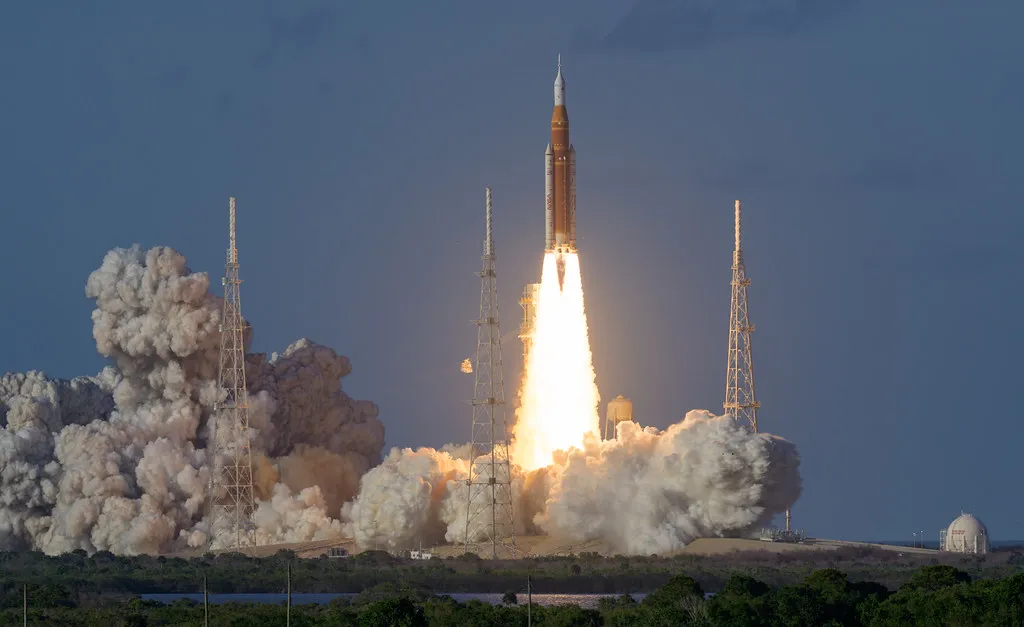
For the first time in more than 50 years, humans are heading back beyond Earth’s orbit—and this time, it’s not just about planting a flag. NASA’s Artemis II mission has officially launched, sending four astronauts on a journey around the Moon that signals a new phase of space exploration, one focused on staying power rather than symbolic return. NASA’s Artemis II mission has officially launched, sending four astronauts on a journey around the Moon and back aboard the Orion spacecraft. The roughly 10-day mission will carry Reid Wiseman, Victor Glover, Christina Koch, and Canadian astronaut Jeremy Hansen thousands of miles past the Moon before looping back to Earth, testing every critical system needed for deep space travel. From life support to navigation and communication, the mission is designed to answer one central question: are we truly ready to operate beyond Earth for longer, more complex missions? Advertisement What makes this mission different isn’t just the destination—it’s the intent. Artemis II is not a standalone achievement. It is a proving ground for what comes next: human landings, lunar infrastructure, and eventually, missions that push even farther into the solar system. NASA is treating this flight as a systems check for an entirely new era of exploration. There is also a quiet but meaningful shift in who gets to go. This crew reflects a broader vision of space travel—one that includes international collaboration and a more representative group of astronauts stepping into deep space for the first time. It’s a signal that the future of exploration will look different from the past. The bigger story, though, is what Artemis represents on Earth. Governments and private companies are already positioning themselves for what many see as the next economic frontier—resources, technology, and strategic presence beyond our planet. This mission isn’t just about reaching the Moon again. It’s about laying the groundwork for humanity’s next chapter beyond Earth.