

Jonathan Anderson at Dior: A New Era for Luxury Fashion

Luxury fashion just got its next big plot twist. In a historic move, Dior has tapped Jonathan Anderson to oversee all creative direction across its men’s, women’s, and couture divisions — a bold, sweeping appointment that hasn’t been seen since the legendary Christian Dior himself. Fashion insiders are calling it the biggest shakeup in high fashion since Phoebe Philo’s comeback — and perhaps the most ambitious creative consolidation in decades. Anderson, already hailed for his boundary-pushing tenure at Loewe and the cult-classic status of his namesake label JW Anderson, is known for challenging expectations while respecting heritage. At Dior, he inherits one of the most powerful fashion houses in the world — with the task of making it feel not just relevant, but revolutionary. Industry whispers suggest that Dior’s parent company, Moët Hennessy Louis Vuitton (commonly known as LVMH), is playing a bigger game than just a creative refresh. It’s a statement: that in an age where luxury needs to be fast-moving, future-focused, and editorially potent, a singular vision might just be the edge needed to lead. Anderson’s first full collection is already generating buzz, with rumors of experimental tailoring, dramatic silhouettes, and a reinvention of Dior’s classic codes. But beyond the runway, his leadership could set the tone for a new kind of creative power structure — one where fashion houses operate less like committees and more like auteur-driven film studios. For now, all eyes are on Paris — and one very sharp British designer who just became the most powerful man in fashion. The Author
GPT-5 Whispers Are Growing Louder — And You’ll Want to Pay Attention

The AI world is holding its breath — again. Whispers of GPT-5 are no longer just speculation. From industry chatter to subtle signals from insiders, there’s a growing sense that OpenAI’s next big leap could be closer than we think. And if even half the rumors are true, it could be a seismic shift. What’s the Word? Here’s what’s fueling the fire: Early testers are allegedly already interacting with a more advanced system. Enterprise insiders in healthcare, education, and finance are prepping for “major rollout updates” this fall. And OpenAI itself? Quiet. Which only adds fuel to the fire. Many believe GPT-5 won’t just be smarter — it’ll be sharper, faster, and more capable of real-time, nuanced reasoning across text, visuals, and voice. If GPT-4 turbocharged productivity, GPT-5 could rewire it. Why It Matters Let’s be clear: this isn’t just another upgrade.This could be the model that brings true multi-modal intelligence into the mainstream. Think: Smarter virtual tutors Sharper legal assistants Seamless creative partners And real-time, multi-language customer service that actually feels human We’re talking massive disruption — again. And the early adopters? They’re already positioning themselves. What You Can Do Now You don’t have to be a developer or tech CEO to prepare for what’s coming. But you should be: Experimenting with current AI tools (ChatGPT, Claude, Perplexity) Following key trends in AI and automation Learning how to prompt — the new power skill in content, business, and education And keeping your eyes peeled for real announcements, not just social media noise The Takeaway If you thought the AI boom was leveling off, think again. GPT-5 could mark the beginning of AI’s second wave — and this one might be even bigger than the first. Readovia will be watching. The Author
Ukraine and Russia Exchange Peace Proposals Amid Escalating Conflict

In a pivotal yet tense meeting in Istanbul on June 2, 2025, Ukrainian and Russian delegations convened for a second round of peace talks aimed at ending the ongoing war. Despite the exchange of peace memorandums, the discussions concluded after just over an hour, highlighting the deep divisions that persist between the two nations. Starkly Contrasting Proposals Ukraine’s delegation, led by Defense Minister Rustem Umerov, presented a comprehensive plan advocating for: A full and unconditional 30-day ceasefire The release of all prisoners of war The return of Ukrainian children taken to Russia A high-level summit involving Presidents Zelenskyy, Putin, and potentially U.S. President Donald Trump Russia, represented by former culture minister Vladimir Medinsky, withheld its memorandum until the talks began and maintained demands including: Ukraine’s withdrawal from four contested regions A pledge to abstain from joining NATO Recognition of Russia’s annexation of Crimea These conditions were deemed unacceptable by Ukraine, which views them as undermining its sovereignty and territorial integrity. Escalation on the Battlefield The talks were overshadowed by recent military escalations. On the eve of the meeting, Ukraine launched a significant drone operation targeting Russian airbases, reportedly damaging over 40 aircraft. In response, Russia conducted its largest drone assault since 2022, deploying hundreds of drones across Ukrainian cities including Kyiv and Kharkiv. Limited Progress and Continued Tensions While the talks did result in an agreement on a new prisoner exchange, substantial progress toward a broader peace deal remains elusive. Ukrainian officials expressed frustration over Russia’s firm demands, and the U.S., which has been supporting the discussions, signaled potential disengagement due to the lack of movement. As both sides prepare for what may be another round of negotiations, the world watches closely — hopeful for a breakthrough, but wary of another stalemate. The Author
Can You Really Make Money Selling Your Own Products Online?

In an era where a pack of bathroom tissue can cost more than a latte, the idea of earning extra income isn’t just appealing—it feels essential. The good news? You don’t have to launch the next big startup or invent something revolutionary to bring in real money. One increasingly popular side hustle is creating and selling your own products online—particularly digital products like eBooks, guides, and journals. Platforms like Amazon Kindle Direct Publishing (KDP), Gumroad, and Etsy make it easier than ever to become a published author or digital seller. Whether you want to share your personal expertise, write fiction, or compile a how-to guide, the barrier to entry is low and the upside is real. Some creators make a few hundred extra dollars a month, while others scale into full-time income territory. But let’s be real: success doesn’t just happen. Marketing is the make-or-break factor. Paid ads can be a smart play to boost visibility. Google Ads, in particular, can drive serious traffic. You can set a modest budget—say $10 or $20 per day—but here’s the key: always set a stop date. Without one, your ad could run a full 30 days and cost you far more than you intended. If you’re on a tighter budget, free promotional methods like SEO-rich blog posts, social media marketing, email newsletters, and word-of-mouth can still generate meaningful traction. Consistency, creativity, and a basic understanding of your target audience go a long way. Bottom line: selling your own product online is more than a dream. It’s a real, viable side hustle—especially when paired with smart marketing strategies and some hustle. The Author
Tesla Smashes Q2 Delivery Records With Over 466,000 Vehicles Shipped

Tesla just blew past Wall Street’s expectations, posting its strongest delivery numbers to date. In a performance that signals renewed momentum for the EV giant, the company reported 466,140 vehicles delivered in Q2, setting an all-time quarterly record. But that’s not all. Tesla’s production also hit new highs, with 479,700 vehicles rolling off assembly lines — a figure that reaffirms the brand’s supply chain strength and global demand. Here’s how the numbers break down: Model 3 and Model Y dominated, as expected, accounting for 446,915 of the deliveries. The Model S and Model X pulled in a combined 19,225 units — a modest but steady showing in the luxury tier. Tesla credits a portion of this growth to recent strategic price cuts, which have made their EVs more accessible — and more attractive — in an increasingly competitive market. This Q2 surge comes at a time when rivals are ramping up their own electric ambitions, making Tesla’s record even more significant. With rising production, aggressive pricing, and continued consumer interest, all eyes are now on how Q3 will shape up — and whether Tesla can sustain this electric momentum. The Author
Journal Prompts to Start Your Week with Clarity and Focus

Mondays often come with a mix of anticipation and overwhelm. To navigate the week with intention, journaling can be a powerful tool. Here are curated prompts to help you reflect, set goals, and align your mindset for the days ahead. Setting Intentions What is one word that will define my week?Choose a word that encapsulates your desired focus or energy. How do I want to feel by Friday?Visualize your desired emotional state at the week’s end. What is a personal goal I want to achieve this week?Identify a specific, attainable objective to work towards. Prioritizing Tasks What is my top priority for this week?Determine the most important task that requires your attention. What is one small action I can take today to ease the week ahead?Identify a simple step to set a positive tone for the week. What task have I been postponing that I can start now?Confront procrastination by initiating a delayed task. Self-Care and Mindfulness How can I incorporate self-care into my routine this week?Plan activities that nurture your well-being. What boundaries do I need to set to protect my energy?Recognize limits to maintain balance and prevent burnout. What is one thing I can let go of to reduce stress?Identify and release a source of unnecessary tension. Gratitude and Positivity What am I grateful for this Monday morning?Acknowledge positive aspects to cultivate a thankful mindset. What is something I’m looking forward to this week?Anticipate events or moments that bring joy. What positive affirmation can guide me today?Select a phrase that reinforces confidence and optimism. Integrating some or all of these prompts into your Monday routine can provide clarity and direction, setting a constructive tone for the week. Whether you journal daily or weekly, these reflections can enhance focus, productivity, and well-being. Give it a try. The Author
Trump’s Legal Losing Streak: Five Federal Defeats in a Week
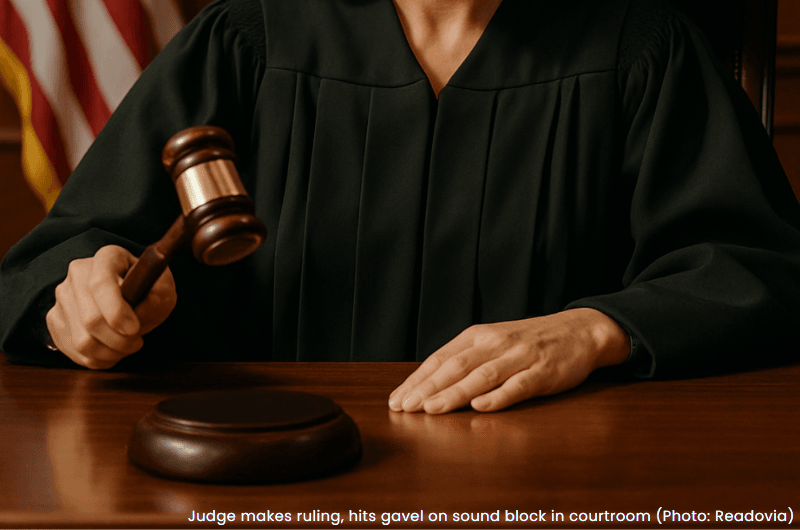
President Donald Trump is no stranger to legal drama, but this past week delivered a fresh string of defeats — five, to be exact — all from federal judges, all in under seven days. From tariffs to immigration to political retaliation, the courts have been busy issuing firm reminders that executive power has its limits, even when wielded from the Oval Office. A Flurry of Federal Smackdowns It began with a ruling that struck down Trump’s attempt to reinstate sweeping “Liberation Day” tariffs — a move the court called an overreach of executive authority. The U.S. Court of International Trade said the tariffs, imposed under the International Emergency Economic Powers Act, lacked sufficient legal foundation and violated the separation of powers. On the same day, another federal court rejected Trump’s executive order that targeted the powerhouse law firm WilmerHale. The administration had accused the firm of “undermining American interests” — a charge the court dismissed as unconstitutional political retribution. And in yet another case, a judge blocked Trump’s suspension of key Biden-era immigration parole programs. The court ruled that the administration lacked the legal authority to make such sweeping changes to immigration policy without due process or a clear congressional mandate. By week’s end, the tally of courtroom losses stood at five — each handed down by a federal judge. The cumulative effect? A growing legal wall around some of Trump’s most aggressive policy efforts. What It All Means While Trump’s supporters are likely to brush off the decisions as partisan overreach, the rulings signal a broader pattern: the judiciary is pushing back — hard — on executive actions that blur the lines of legality. For legal analysts, the message is clear. Trump’s second term may be defined not only by his political ambitions but by the courts’ increasing willingness to draw sharp boundaries around presidential authority. Whether the President views this losing streak as temporary turbulence or something more serious remains to be seen. But one thing is certain: it’s been a week of legal whiplash — and the gavel isn’t done dropping. The Author Related stories:Harvard Wins Round One: Judge Blocks Trump Crackdown on International Student Enrollment Back to Class: Federal Judge Blocks Trump’s Attempt to Dismantle Department of Education, Orders Reinstatement of Fired Employees
How China Quietly Took the Lead in the Global Electric Vehicle Race
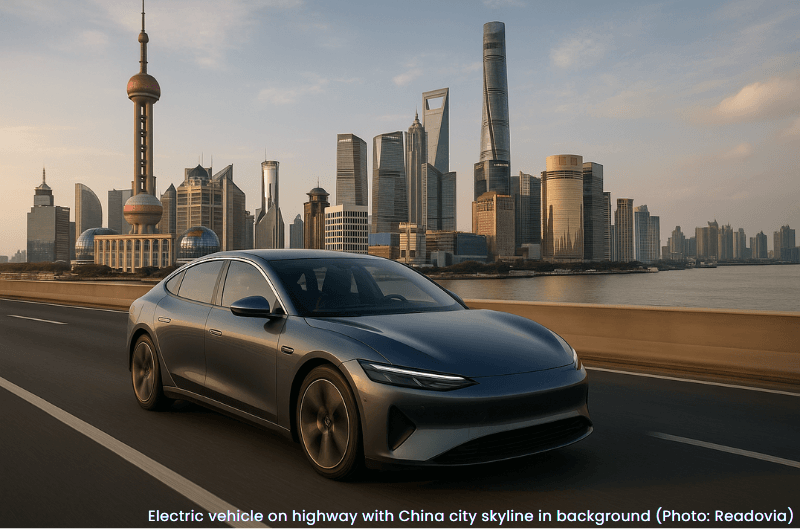
If you still think Tesla is the only name worth knowing in the electric vehicle (EV) game, you haven’t been watching China. Led by tech-forward companies like BYD, NIO, and XPeng, China’s EV market isn’t just booming — it’s shifting the global center of gravity for next-generation transportation. These homegrown manufacturers are rolling out sleek, high-performance electric vehicles with price tags and innovation pipelines that are making Western automakers nervous. Really nervous. More Than a Trend — It’s a Strategy China’s dominance in the EV space isn’t accidental. It’s the result of a strategic, long-term play: generous government subsidies, fast-tracked infrastructure development, and mastery of the battery supply chain. Together, these moves have fueled an EV ecosystem that’s nimble, competitive, and increasingly export-ready. And while countries like the U.S. are still building charging stations, Chinese EV companies are out here perfecting battery-swapping technology — where you change your battery faster than you can fill a tank of gas. The Numbers Tell the Story BYD alone sold over three million electric vehicles in 2023, surpassing Tesla in Q4 global deliveries. And NIO’s recent rollout of its ET7 — a luxury electric sedan with autonomous driving capabilities and up to 620 miles of range — signals that innovation, not imitation, is driving this market forward. It’s not just about cars, either. It’s about national influence. China’s EV rise coincides with geopolitical shifts in trade, manufacturing, and climate commitments. The West’s answer? Tariffs, subsidies of its own, and a scramble to keep up. What This Means for the Rest of the World For American, Japanese, and European automakers — it’s a wake-up call. Legacy players now face competition from Chinese startups that move faster, iterate quicker, and are no longer content staying inside their borders. For consumers, it means the future of electric mobility may be shaped by companies whose names you haven’t even learned to pronounce yet — but whose vehicles you’ll probably be driving (or riding in) soon enough. And for everyone else? It’s a sign of where innovation is heading: eastward. The Author
AI Could Wipe Out Half of Entry-Level White-Collar Jobs, Warns Anthropic CEO
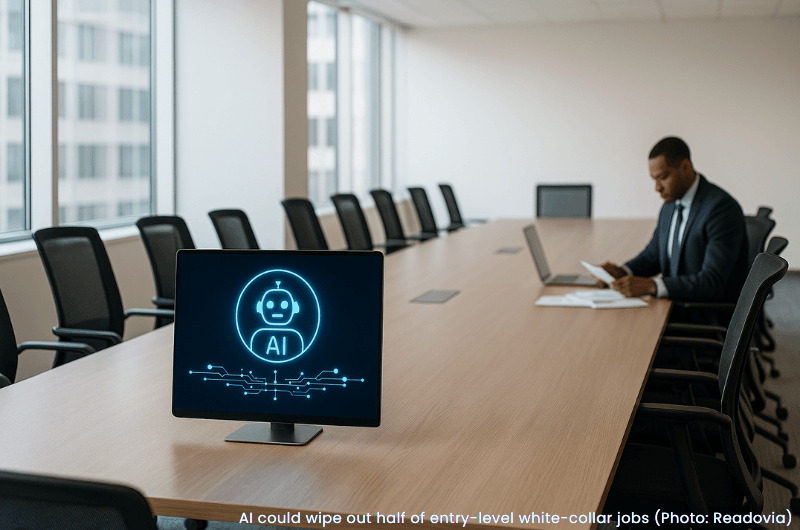
The robots aren’t coming — they’re already filling out your spreadsheets. Artificial intelligence could eliminate as much as 50% of entry-level white-collar jobs within five years, according to Dario Amodei, CEO of leading AI company Anthropic. The stark warning comes as businesses across finance, tech, legal, and consulting sectors accelerate the adoption of generative AI tools — tools capable of drafting contracts, analyzing financial reports, and summarizing massive data sets in seconds. Speaking at a recent conference, Amodei cautioned that the shift could spike the national unemployment rate from 4.2% to as high as 20%, marking what he called a “white-collar bloodbath.” This isn’t the alarmism of futurists — it’s a reality already playing out. Entry-level jobs once viewed as stepping stones — paralegals, junior analysts, content coordinators, financial associates — are being quietly phased out or redefined, often replaced by AI systems that don’t take breaks or draw salaries. Companies argue that AI is enhancing efficiency and reducing redundancy. But critics warn that we’re watching the ladder to the middle class collapse in real time. Amodei’s message wasn’t all doom. He emphasized the potential for AI to create new job categories and transform the workplace in positive ways — if government, education systems, and the private sector act quickly to reskill workers and manage the disruption. Still, the sense of urgency is clear. The AI revolution isn’t just about innovation anymore. It’s about survival in the shifting landscape of work. The Author
Can AI Help You Pay the Bills? How People Are Actually Making Money with Artificial Intelligence

American Wallet: “The New Hustle” Series If it feels like AI is everywhere right now — it is. But between the headlines, hype, and hot takes, one question is quietly pulsing through the inboxes, group chats, and kitchen tables of working Americans: Can this tech actually help me make money? For some, the answer is already yes. Not in a “get rich in 30 days” kind of way — but in a real, steady, supplemental income kind of way. In this edition of American Wallet, we look at how people are using AI tools to generate side income, build new businesses, and occasionally reinvent their careers altogether. What’s Actually Earning? Let’s move beyond headlines and into actual income-building strategies — where AI isn’t the business, but the engine behind it. Here’s how people are turning artificial intelligence into real-world dollars: 1. Building Niche BlogsContent writers and entrepreneurs are using ChatGPT and other writing tools to build blog sites around niche topics (think “eco-friendly pet care” or “remote productivity for ADHD”). With AI assistance, they’re able to write and publish 10–15 well-optimized articles in a week, rather than one or two manually. Once traffic trickles in, the blog gets monetized via: Affiliate links (Amazon, ShareASale, digital product referrals) Google AdSense or Mediavine ads Sponsorships and brand deals It’s not instant cash, but over time, it becomes passive(ish) income — and some creators are building entire portfolios of niche sites using this model. For many willing to roll up their sleeves and put the time in, it’s working. 2. Freelancing at Scale with AI SupportCopywriters, social media managers, and editors are using ChatGPT and Grammarly to boost quality and output — allowing them to take on more clients without burning out. Video freelancers use InVideo to produce more branded content. Artists use Midjourney to generate styleboards or product mockups in minutes. The AI isn’t replacing them — it’s multiplying their capacity. 3. Micro-Creation Studios for Small BusinessesUsing free or low-cost tools, one freelancer can now manage everything from blog content and Instagram captions to AI-powered chatbots and email campaigns for small business clients. They’re charging $500–$2,000/month for what used to take a full team. 4. Selling AI-Created Digital ProductsPrompt packs, resume templates, books, journals, visual planners, and more — creators are building products with AI help and listing them on Etsy, Amazon, Gumroad, or Shopify. Most sell for $9–$39 — but volume adds up. 5. Launching AI-Enhanced YouTube ChannelsSome creators are using AI to script short-form explainers or tutorials, convert them into video with InVideo or Pictory, and then publish regularly on YouTube. Once they hit monetization thresholds, ad revenue kicks in — and some are also using affiliate links under each video to double dip. 6. Self-Publishing Ebooks and GuidesAI helps structure and format ebooks, saving hours on editing and layout. Creators are self-publishing how-to guides, niche knowledgebooks, and digital workbooks — either as lead magnets or for profit — on platforms like Amazon KDP, Payhip, social media, and personal websites. What’s Overhyped or Already Over? Here’s what’s not working (at least not sustainably): “Make thousands a week with ChatGPT!” social media posts Affiliate blogs spun with ChatGPT and no SEO strategy AI prompt resale schemes that sound like MLM with pixels Any offer that says “no effort required” in the first paragraph The truth? AI can boost good ideas — but it can’t fix bad business models. What’s Next The next wave of income opportunities won’t be about novelty — it’ll be about depth and integration. Here’s what to watch: AI-savvy remote freelancers getting picked over those without the skills White-label AI tools for niche business types (think dentists, lawyers, etc.) AI ghostwriting for professionals, especially in consulting and education B2B AI consultants for small- and medium-sized businesses AI-enhanced creators — artists and writers who use tools without losing their voice The Gimmy AI isn’t a lottery ticket. But it is a lever — and right now, it’s lifting people into smarter, faster, and more flexible ways to earn. Not everyone wants to build a business. But plenty of people need a financial boost. And while the algorithms are still evolving, one thing’s already clear: the people winning with AI aren’t chasing trends — they’re using the tools to do more of what they’re already good at. In other words: don’t try to beat the machine. Learn how to drive it. The Author