


Sunday Thunderstorm: Oklahoma City Captures First-Ever NBA Championship

Oklahoma City erupted in celebration Sunday night as the Thunder delivered the franchise’s first NBA championship since relocating from Seattle in 2008. In a decisive Game 7 performance, the Thunder defeated the Indiana Pacers 103–91, completing a historic playoff run and bringing the Larry O’Brien Trophy to Oklahoma for the first time in city history. Led by MVP Shai Gilgeous-Alexander, who poured in 29 points and steered the team with his signature poise, the Thunder showcased the kind of control and maturity that defined their 2024–25 season. Gilgeous-Alexander’s Finals performance—including a record-setting 72 points over Games 1 and 2—set the tone for a team that refused to blink under pressure. Jalen Williams emerged as another star in the making, dropping 40 points in a pivotal Game 5 win that put OKC within striking distance of the title. The Finals weren’t a walkover. Indiana, led by Tyrese Haliburton and Pascal Siakam, pushed the series to the limit. Haliburton’s Game 1 buzzer-beater stunned Oklahoma City and gave the Pacers early momentum. But injuries and OKC’s swarming defense eventually tilted the series. The Thunder’s dominance in the paint and ability to close out games silenced doubters and proved this team wasn’t just talented—they were ready. The title caps off a record-setting season for Oklahoma City, who finished with a league-best 68–14 record and the highest point differential in franchise history. It also adds their name to a growing list of champions in what has become one of the most competitively diverse eras in NBA history—seven different franchises have won the title in the last seven seasons. For Oklahoma City fans, the win is more than a championship—it’s validation. More than a decade removed from losing the Seattle SuperSonics, and years removed from the Durant-Westbrook-Harden era that nearly was, the Thunder have finally completed the journey. This isn’t just the franchise’s first title since 1979 (as the Sonics). It’s the first time Oklahoma City itself can claim basketball’s biggest prize. And in the heart of the Great Plains, the thunder has never sounded sweeter.
U.S. Cities on Alert as Global Tensions Boil Over

You don’t need to be in the Middle East to feel the pressure. After the U.S. launched airstrikes on Iran’s nuclear sites, cities across America are quietly shifting into high alert. In New York City, Washington, D.C., Los Angeles, and Chicago, local authorities have increased security around synagogues, mosques, government buildings, and major transportation hubs. Homeland Security has issued a domestic threat bulletin citing the potential for “inspired retaliation” following the U.S. military action overseas. In simple terms: America just stepped into a war, and the ripple effect is making its way to our streets, airports, and inboxes. Subways, Sidewalks, and Silent Precautions You won’t see tanks in the streets—but you might notice a few things: more patrol cars parked outside houses of worship. TSA pulling more bags for inspection. Metal detectors where there weren’t any last week. These are the early layers of preparedness—the kind of things cities do when global tension turns personal. For some Americans, it stirs memories of 2003. For others, it raises new questions about how much protection feels like too much. Public Pulse: Cautious, But Not Panicked While cable news is locked on missiles and airbases, regular people are talking about safety. Parents are checking school updates. Social feeds are filling up with commentary, concern, and confusion. And for many, the question isn’t just “Are we safe?”—it’s “What’s next?” The Author
Oil Prices Surge After U.S. Strikes Iran — What It Means for You

The markets didn’t waste a second. After U.S. bombers hit three of Iran’s major nuclear sites overnight, oil prices jumped fast. Brent crude literally surged overnight past $95 a barrel, and West Texas Intermediate followed right behind. Traders call it a “risk premium”—but let’s be real: this is what happens when a superpower steps directly into a regional war. And this isn’t just oil. Defense stocks made an early climb too. Lockheed Martin, Raytheon, and Northrop Grumman (maker of the B-2 bomber used in the strike) all saw gains. It’s a reminder that war moves money—sometimes quickly, sometimes quietly, but always in big ways. What This Means for You Here’s the part that hits closer to home: if things escalate further, gas prices are going up. Iran has a habit of using the Strait of Hormuz as a pressure point—and about 1 in every 5 barrels of oil in the world passes through there. If they disrupt traffic or threaten tankers, supply tightens, and prices spike. We’ve seen it before. With summer travel in full swing, that could mean higher prices at the pump, just as people are hitting the road. Keep Your Eye On It Markets are still sorting through it all, but here’s what to watch: Whether Iran retaliates by hitting oil infrastructure or shipping lanes How global inventories hold up Whether energy traders start betting on $100 oil (again) Uncertainty Rising For now, energy and defense stocks are up, and uncertainty is on the rise. Whether you’re watching the markets or just filling up your tank, this one’s going to hit close to home. The Author
Did Trump Just Start a War Without Congress?
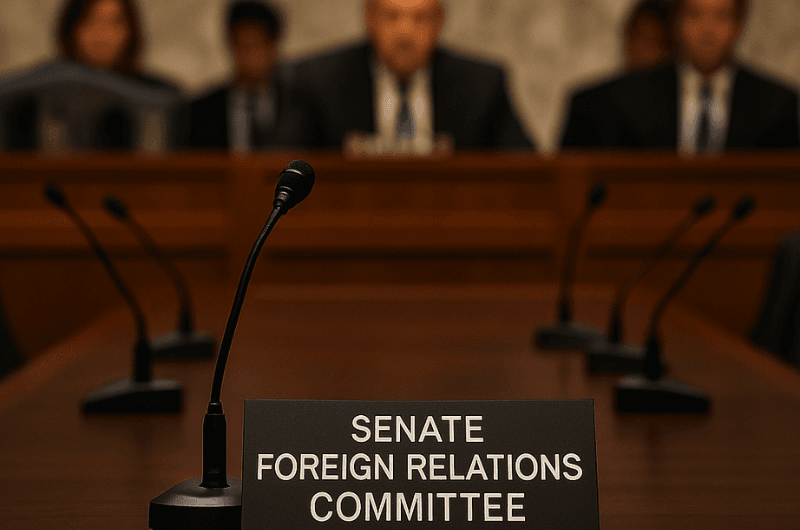
The stealth bombers may have left Iran’s skies, but the political fallout is just beginning to hit Washington. President Trump’s overnight strike on three of Iran’s nuclear sites has thrown the U.S. into the heart of the Middle East’s most volatile conflict in decades—and he did it without Congressional approval. That fact is already lighting a fire on Capitol Hill, with lawmakers from both parties demanding to know: is America at war, and if so, who exactly gave the green light? Trump defended the decision this morning, calling it a “limited strategic operation” necessary to “neutralize imminent nuclear threats.” But critics argue the president sidestepped the War Powers Resolution, raising constitutional alarms and triggering calls for immediate hearings. House Minority Leader Jim Harlan (D-NY) warned, “No president gets to start a war on his own.” Even some Republicans are cautious, calling the strike “bold, but legally shaky.” The timing couldn’t be more politically charged. With just over a year until the 2026 elections, Trump’s show of force may energize his base—but it also revives long-simmering questions about unchecked executive power and the thin line between military action and war. Lawmakers Left in the Dark—Again Several members of the Senate Foreign Relations Committee admitted they weren’t briefed beforehand. That silence, critics say, signals not just secrecy—but possibly an erosion of civilian oversight in matters of war. Meanwhile, Democratic leaders are demanding a closed-door intelligence briefing and a formal War Powers notification, as required by law. Whether they get it — or whether the White House doubles down on secrecy — could set the tone for the next legislative standoff. Both the House and Senate play a constitutional role when it comes to military action. The War Powers Resolution requires the president to notify Congress within 48 hours of deploying U.S. forces, and gives lawmakers the authority to weigh in, call for briefings, or limit continued involvement. While the Senate often leads public discussions on foreign policy, the House shares in the responsibility to ensure proper oversight. What’s Really at Stake This isn’t just about Iran. It’s about the limits of presidential power, the role of Congress, and the uneasy truth that the United States may now be at war—without ever voting for one. Related: U.S. Enters Iran-Israel War with Direct Strike on Nuclear Sites The Author
U.S. Enters Iran-Israel War with Direct Strike on Nuclear Sites

🕒 Last updated: June 23 at 2:19 PM ET In a stunning overnight escalation, the United States has launched airstrikes on multiple Iranian nuclear sites, formally entering the conflict between Iran and Israel. The strike—authorized by President Trump—targeted Iran’s most heavily fortified facilities, including Fordow, Natanz, and Isfahan, marking the most direct U.S. military intervention in the region in over a decade. According to U.S. defense officials, B‑2 stealth bombers and submarine-launched cruise missiles were used in a mission dubbed Operation Midnight Hammer. Massive Ordnance Penetrators—also known as “bunker busters”—were deployed to breach Iran’s underground enrichment facilities. Early assessments claim the sites were “completely and totally obliterated,” in the president’s words. While the administration insists the operation was a “limited strategic strike” designed to dismantle nuclear capabilities, Iran has called it a “savage and unprovoked assault,” vowing that the U.S. will face “everlasting consequences.” Retaliatory strikes by Iran on Israeli territory have already been reported. https://readovia.com/wp-content/uploads/2025/06/us-strikes-iran-nuclear-facilities-enters-war.mp4 A Regional War Just Went Global For weeks, the Israel–Iran war has raged across borders and battlefronts. But today, the U.S. made its involvement unmistakable. Israeli Prime Minister Benjamin Netanyahu welcomed the U.S. action, calling it a “historic turning point.” Meanwhile, world leaders from London to New Delhi are calling for de-escalation. Emergency meetings at the United Nations and IAEA are underway, and several nations—Russia, China, Turkey, and Saudi Arabia among them—have sharply condemned the attack. Security alerts have been raised across U.S. embassies worldwide, and cities like New York and Washington, D.C., have quietly ramped up protective measures at synagogues, mosques, and key infrastructure sites. What Comes Next It’s not yet clear whether the U.S. intends to conduct additional strikes or if this is a one-time show of force. But one thing is certain: this is no longer Israel’s war alone. As Congress demands briefings and global markets brace for shockwaves, the American public is now facing a new chapter—one that may reshape the nation’s foreign policy, energy costs, and electoral conversation in a matter of days. Live Updates 🕒 6/23 12:38 PM ET — U.S. officials confirm no casualties at Al Udeid Air Base in Qatar following Iran’s missile strike. Defense analysts say damage was “minimal,” though satellite imagery suggests one support structure may have been hit. 🕒 6/23 11:52 AM ET — Qatar’s Ministry of Foreign Affairs condemns the Iranian strike as a “violation of its sovereignty.” No retaliatory military action is planned, but all public events in Doha have been suspended for 48 hours. 🕒 6/23 11:25 AM ET — Airspace closures now affect five Gulf countries: Qatar, Bahrain, Kuwait, UAE, and Oman have restricted commercial flights amid security alerts. International carriers rerouting around the Persian Gulf. 🕒 6/23 10:47 AM ET — Iran’s state-run IRIB broadcasts footage of missile launches said to be targeting U.S. forces in the Gulf. The announcer calls it “Phase Two of the Resistance Storm.” 🕒 6/23 10:15 AM ET — Israeli airstrikes resume in southern Lebanon. Early reports indicate the strikes hit warehouses used by Hezbollah, with secondary explosions visible from the northern border. The Author Related: Iran Strikes U.S. Military Base in Qatar as Israel Conflict Escalates Did Trump Just Start A War without Congress?
AI Helps Couple Conceive After 20 Years of Failed Fertility Treatments

In a breakthrough moment for reproductive medicine, a New York couple finally achieved pregnancy after 20 years—and 15 unsuccessful IVF cycles—thanks to an innovative AI tool called STAR, developed at Columbia University. Why It Matters AI meets fertility STAR diagnoses and treats male infertility (specifically azoospermia), pinpointing issues often missed by conventional tests. Unprecedented success After two decades of emotional and physical trials, STAR’s algorithm led to a successful conception, marking a milestone in AI-assisted reproductive health Hope on the horizon This landmark case could redefine fertility treatments, offering new solutions for countless couples facing similar challenges. What’s Next Scaling the solution Columbia researchers are preparing broader clinical studies to determine STAR’s effectiveness across diverse demographics. Personalized reproductive medicine STAR exemplifies the increasing overlap between AI and precision healthcare—tailoring diagnoses and treatments like never before. Ethical Discussion Ahead With AI venturing into sensitive spaces like fertility, ongoing conversations are needed around accessibility, affordability, and data privacy. The Author
Tyler Perry Sued for $260 Million by Actor Alleging Sexual Assault and Retaliation

BET actor Derek Dixon has filed a $260 million lawsuit against Tyler Perry, accusing the media mogul of repeated sexual harassment, assault, and retaliation tied to roles in Perry’s TV productions. The lawsuit, filed in Los Angeles County on June 13, 2025, outlines a series of allegations that span from 2020 to 2024. Dixon, known for roles in The Oval and Ruthless, claims he was coerced into sexual situations in exchange for promised career opportunities. The suit alleges a pattern of unwanted sexual advances, physical assault, and threats to derail his acting career if he did not comply. Among the most disturbing claims are text messages allegedly sent by Perry, including one that read, “What’s it going to take for you to have guiltless sex?” Dixon says he was invited to Perry’s home in Georgia where the media executive allegedly groped him, forcibly undressed him, and later committed sexual battery. Dixon contends that after resisting Perry’s advances, he was retaliated against—losing his role on The Oval and missing out on other opportunities promised to him. He claims nearly $400,000 in lost income and says the experience has left him with emotional distress and a PTSD diagnosis. The lawsuit seeks $260 million in punitive damages and names Tyler Perry, Tyler Perry Studios, and TPS Production Services. Dixon is requesting a jury trial. Perry, through his attorney, has denied the claims and called the lawsuit “a scam,” asserting that the accusations are completely false and will be disproven. This high-profile case comes amid ongoing conversations about abuse of power in Hollywood and raises broader questions about the influence wielded by entertainment executives over aspiring talent.
When Oil Gets Political: What Israel–Iran Tensions Mean for Your Wallet

Oil prices are wobbling again — and no, it’s not just market drama. Tensions between Israel and Iran are shaking global energy markets, and the ripple effects could hit a lot closer to home than you’d think. This week, Brent crude dipped below $85 a barrel and U.S. oil held steady near $81. Not exactly panic territory, but here’s the thing: just days ago, prices were climbing fast on fears the conflict could spill into a broader regional war. That kind of uncertainty creates what traders call a geopolitical premium — basically, prices rising not because of supply issues, but because of the threat of them. So far, nothing has actually disrupted the flow of oil. But markets are twitchy. The Strait of Hormuz — a key shipping route for about 20% of the world’s oil — is in the spotlight. If that gets blocked, even briefly, we’re talking major price spikes across the board. Here’s where it hits your wallet: higher crude prices can mean higher prices at the pump. If you’re road-tripping this summer or filling up weekly, that extra 20 or 30 cents per gallon adds up fast. And it’s not just gas. Rising oil costs can impact airline tickets, shipping fees, and — yep — groceries. Meanwhile, Wall Street’s watching, too. The oil volatility index has surged nearly 26% this month, showing just how nervous investors are. If things escalate overseas, the market could lurch, and with it, your portfolio or 401(k). So while oil isn’t breaking records just yet, this moment is a reminder: foreign policy can shake up your finances just as much as inflation or interest rates. And sometimes, a distant headline becomes tomorrow’s bottom-line story. The Author
Nearly 600 Killed in Israeli Strikes on Iran, as Regional Crisis Deepens

Iranian officials report massive casualties as Israeli airstrikes hit military and nuclear facilities. Civilian toll mounts. Global powers urge restraint—but escalation continues. Israel’s military campaign inside Iranian territory has taken a devastating human toll, with nearly 600 people killed in a wave of airstrikes targeting Tehran and other major cities. Iranian officials say at least 585 people are dead, including 239 civilians, and more than 1,300 others wounded, making it the deadliest assault between the two countries in decades. The strikes, which reportedly targeted Iran’s nuclear and military infrastructure, mark a major escalation in the long-simmering hostility between the two nations. Explosions rocked key sites across Tehran, prompting mass evacuations and emergency blackouts across multiple provinces. In response, Iran has launched ballistic and hypersonic missiles at Israeli military installations, raising alarm in the region and drawing international condemnation. Meanwhile, in Gaza, humanitarian agencies report that at least 59 people were killed and hundreds more injured when Israeli tanks opened fire on a crowd waiting for food aid in Khan Younis. Similar incidents in Rafah and other parts of southern Gaza point to a deepening crisis there, even as global attention shifts to the Israel–Iran front. International leaders—including members of the G7 and the European Union—have called for immediate de-escalation. Yet, former President Donald Trump, who remains a dominant voice in U.S. foreign policy circles, stirred controversy Tuesday by demanding Iran’s “unconditional surrender.” Israel has defended its actions as “necessary preemptive defense” against Iranian aggression and its support for Hamas. Tehran, meanwhile, accused Israel of war crimes and vowed continued retaliation. As the conflict expands across borders and draws in regional powers, the death toll rises—not only on military targets, but in civilian neighborhoods and aid lines. With no ceasefire in sight, the risk of a full-blown regional war grows by the day.
Gunman Targets Minnesota Politicians: Lawmaker and Spouse Killed, Senator Wounded in Separate Assault

In a devastating act of political violence, former Minnesota House Speaker Melissa Hortman and her husband, Mark, were fatally shot in their Brooklyn Park home early Saturday morning. State Senator John Hoffman and his wife, Yvette, were also targeted and seriously wounded in a separate attack at their Champlin residence. The assailant, 57-year-old Vance Luther Boelter, was arrested Sunday evening in Sibley County, concluding a two-day statewide manhunt described by authorities as the largest in Minnesota’s history. Details of the Attacks Boelter allegedly posed as a police officer, wearing a full uniform and latex mask to gain access to the victims’ homes. At the Hoffmans’ residence, he shot John nine times and Yvette eight times; their daughter, who called 911, is credited with saving their lives. Approximately an hour later, Boelter arrived at the Hortman home, where he shot Mark through the front door before entering and killing Melissa. Security footage captured him in a police-style SUV, further indicating the premeditated nature of the attacks. Investigation and Arrest Following the shootings, law enforcement launched an extensive search for Boelter. He was found hiding in the woods near his Green Isle property and taken into custody without incident. Authorities discovered a manifesto and a list of approximately 70 potential targets, including abortion rights activists and Democratic lawmakers, in his vehicle. Boelter faces two counts of second-degree murder and two counts of attempted second-degree murder. Prosecutors are considering additional charges, including first-degree murder, which carries a life sentence without parole. Motive and Background Boelter, a former political appointee who served on a state workforce development board alongside Senator Hoffman, has expressed anti-abortion and far-right views. He previously operated a private security firm and has been linked to evangelical ministries. A manifesto found in his vehicle suggests the attacks were politically motivated, though authorities are continuing to investigate the full extent of his intentions. Community and Political Reactions Governor Tim Walz condemned the attacks as “political assassinations” and ordered flags to fly at half-staff in honor of the victims. He expressed hope for Senator Hoffman’s recovery, describing him as “closer every hour to being out of the woods.” The shootings have prompted national concern over political violence, with officials across the country expressing solidarity and calling for a recommitment to peaceful political discourse. As investigations continue, authorities are urging the public to remain vigilant and report any information that may assist in understanding the full scope of Boelter’s actions and affiliations.