


Walking vs. Running: Which One Is Actually Better for Your Health?

If you’re trying to get in shape, one of the most common questions is also one of the simplest: should you walk or run? The answer depends on your goals — but research makes one thing clear: both can improve your health in meaningful ways. The difference comes down to time, intensity, and impact on the body. Running is the more time-efficient option. Studies show it can burn roughly 43% more calories per minute than walking, making it a stronger choice for weight loss and cardiovascular improvement. In fact, a short run can deliver similar benefits to a much longer walk — meaning if your schedule is tight, running gives you more return in less time. Advertisement Long-term research also shows that runners tend to see greater reductions in body mass index (BMI) and waist circumference, along with a lower risk of conditions like high blood pressure, high cholesterol, and diabetes. In simple terms, running pushes the body harder — and often produces faster results. But walking holds its own, especially when it comes to accessibility and sustainability. As a low-impact exercise, it’s easier on the joints and better suited for beginners, older adults, or anyone recovering from injury. And while it may take longer to achieve the same calorie burn as running, walking still delivers strong, evidence-based benefits for heart health, blood pressure, and blood sugar control. The trade-off is time. A brisk walk may need to last longer to match the effects of a shorter run — but for many people, that trade-off is worth it if it means staying consistent and avoiding injury. That’s really the deciding factor. The best workout isn’t just about intensity — it’s about what you can maintain. A daily walk you stick with will outperform an ambitious running plan that fades after a few weeks. For those who want the best of both worlds, combining the two can be highly effective. Walking on recovery days and running on others allows you to build endurance while reducing strain on the body.
Democrats Flip Seat in Trump’s Backyard, Signaling Potential Shift Ahead of Midterms

A closely watched special election in Florida is drawing national attention after Democrats flipped a state House seat in a district that includes former President Donald Trump’s Mar-a-Lago residence. Democratic candidate Emily Gregory, a first-time contender and small business owner, defeated Republican Jon Maples, who had been endorsed by Trump. The result marks a notable shift in a district that had previously been considered reliably Republican, with the GOP winning the seat by a wide margin just two years ago. While the outcome does not change the balance of power in Florida’s legislature, it carries symbolic weight. The district’s connection to Trump — both politically and geographically — has made the result a focal point for early signals ahead of the 2026 midterm elections. The race also highlights a broader trend. Democrats have now flipped multiple seats in special elections since Trump returned to office, suggesting that local races may be becoming more competitive in areas once viewed as politically settled. At the same time, Republicans have downplayed the significance of the result, pointing to the state’s overall political landscape, where the party still maintains strong control. The Readovia Lens Special elections rarely change power overnight — but they often reveal where momentum is building. A shift in a high-profile district signals that voter sentiment may be more fluid than expected, even in areas closely associated with national political figures. As the midterms approach, results like this are likely to be watched closely because they hint at where the political ground may be moving next.
What Financial Stability Really Looks Like for Americans Right Now

Financial stability used to follow a familiar formula: a steady job, manageable bills, a growing savings account, and maybe a home. For decades, that definition held. But today, for many Americans, the concept has quietly shifted. A person can have a stable job, consistent income, and still feel financially stretched. Rising housing costs, higher interest rates, and everyday expenses have reshaped what it means to “be okay” financially. Stability is no longer about getting ahead. For many, it’s about keeping up. Advertisement In today’s economy, financial stability often looks like maintaining cash flow rather than building wealth. It means paying bills on time, managing debt carefully, and having just enough flexibility to handle unexpected expenses. Savings may exist, but they’re often smaller or more fragile than in previous generations. Another key shift is psychological. Even those who are technically stable may not feel secure. Economic uncertainty, fluctuating costs, and long-term financial pressures have created a mindset where stability feels temporary rather than permanent. For some households, stability now includes side income streams, stricter budgeting, and more intentional spending. The goal isn’t necessarily growth — it’s resilience. And in many ways, that may be the clearest sign of how the definition has evolved. The Readovia Lens Financial stability has been redefined, at least for now. In this economic environment, stability is less about accumulation and more about control. Those who can manage their cash flow, adapt to changing costs, and avoid financial shocks are, by modern standards, stable — even if their balance sheet looks different from the past.
Access Risk: What Happens to Your Business If No One Can Log In?

There was a time when managing your life meant organizing a few key documents — a will, a bank account, an insurance policy, and maybe a safe deposit box. Today, life is digital. And for entrepreneurs and small business owners, that digital footprint is vast, complex, and often invisible to everyone else. But what happens if no one else can access it? It’s a growing issue that more professionals are beginning to recognize as access risk — the danger of critical accounts becoming unreachable when they’re needed most. From website hosting and payment processors to email platforms, social media accounts, and financial dashboards, the average business owner manages dozens of logins tied directly to their income and operations. But in the event of an emergency, many of those accounts could become inaccessible overnight — leaving loved ones locked out of critical systems with no clear path forward. The reality is simple: if no one else can access your accounts, your business can stall, your customers’ services can be disrupted, your income can stop, and your digital assets can be lost or mishandled. That’s why more professionals are beginning to treat their digital presence like any other asset — something that must be organized, documented, and responsibly shared. A secure list of accounts, usernames, and access instructions can make all the difference in a crisis, allowing a trusted person to step in, maintain operations, or properly close accounts if needed. This doesn’t mean writing passwords on a sticky note or leaving sensitive data exposed. Instead, it’s about creating a structured, secure system — whether through a password manager with emergency access features or a protected document stored in a safe location — that ensures continuity without compromising security. For entrepreneurs, this is a responsibility. The Readovia Lens The rise of digital life has quietly created a new category of risk: access risk. Businesses are still physical operations — but they are also networks of accounts, platforms, and credentials. Without a clear access plan, even a temporary disruption can create lasting damage. Smart, forward-thinking business operators are building systems that can continue without them — or be responsibly closed down in the case of an unexpected emergency. ——————– Related: The One Emergency Tool Every Family Should Have
Instagram Locks Teen Accounts by Default — Parents Now Play a Bigger Role

Instagram is rolling out stricter protections for teens — and this time, they’re built in by default. The platform’s new “Teen Account” system automatically applies privacy and safety settings to users under 18, marking a shift away from optional safeguards. Younger teens must get parental approval before loosening these protections, while older teens can adjust certain settings on their own unless supervision is enabled. Under the new system, teen accounts are set to private by default, giving users control over who can follow them. Messaging is also limited, allowing contact only from people they follow or are already connected to. Sensitive content is filtered automatically, and built-in tools encourage healthier usage habits, including reminders to take breaks and optional nighttime restrictions. Parents now have the option to supervise their teen’s account through a linked dashboard. From there, they can view activity insights, set screen time limits, and approve changes that would reduce built-in protections. Rather than requiring constant monitoring, the system is designed to act as a guardrail — allowing teens to use the platform while limiting exposure to potential risks. The update reflects a broader shift in how social media platforms approach younger users. Instead of relying on families to discover and activate safety tools, Instagram is making those protections the default experience — adding friction only when users attempt to remove them. The Readovia Lens This teen account system is a strategic shift. Social media companies are facing increasing pressure from lawmakers, parents, and regulators to better protect younger audiences. By embedding restrictions directly into the platform and requiring parental involvement to override them, Instagram is reducing both user risk and corporate exposure. More importantly, this Instagram move signals a new era of platform design — one where behavior is guided by default settings, not just user choice. And for advertisers, it opens the door to something the industry has been chasing for years: a digital environment that feels stable, predictable, and brand-safe — the kind of environment emerging across a new generation of premium publishers…such as Readovia.
Trump Signals Openness to DHS Deal as Shutdown Pressure Mounts
After weeks of gridlock, there are early signs that a deal to fund the Department of Homeland Security (DHS) may be within reach. Lawmakers familiar with ongoing negotiations say President Trump is now open to a compromise that could reopen the agency, marking a notable shift from his earlier stance. The potential breakthrough comes as the shutdown enters a critical phase, with mounting pressure from both parties to restore normal operations. Behind the scenes, negotiators are exploring a path forward that would fund DHS in the short term while allowing more contentious immigration measures to be addressed separately in future legislation. At the center of the dispute are disagreements over immigration enforcement policies, which have stalled funding for weeks. Democrats have pushed for reforms tied to enforcement practices, while Republicans have sought to preserve broader authority and funding structures. The standoff has exposed deep divisions in Washington, with both sides facing increasing pressure to deliver a resolution. The impact of the shutdown is becoming harder to ignore. Key federal functions tied to homeland security have been strained, and workforce disruptions are beginning to ripple across critical systems. Lawmakers now face growing urgency to act as operational challenges continue to build.
ICE Agents Deployed to U.S. Airports as Security Lines Stretch for Hours
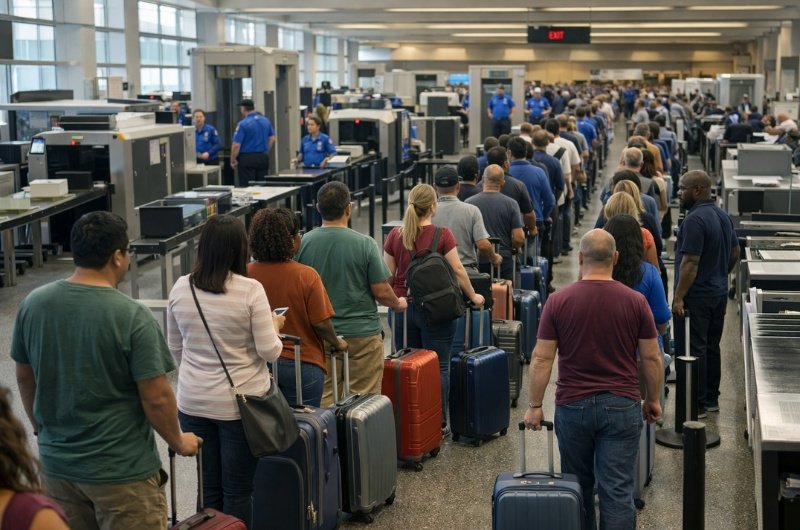
Air travelers across the United States are facing hours-long security delays as federal authorities deploy Immigration and Customs Enforcement (ICE) agents to assist overwhelmed airport operations. The move comes as Transportation Security Administration (TSA) staffing shortages—driven by a Department of Homeland Security funding lapse—push wait times at major airports like Houston’s Bush Intercontinental to as long as four hours, disrupting travel nationwide. At several major hubs, travelers are being urged to arrive at least three to four hours before departure as standard screening operations struggle to keep pace. Reports from affected airports describe missed flights, long lines spilling through terminals, and limited access to expedited services such as TSA PreCheck and CLEAR in certain locations. Federal officials say ICE personnel are being used to support logistical and operational functions rather than traditional immigration enforcement. The deployment is intended to stabilize airport throughput as TSA staffing levels remain strained, with increased callouts and reduced workforce availability compounding delays. The situation highlights growing pressure on critical travel infrastructure, where even short-term staffing disruptions can ripple quickly into nationwide delays. With spring travel demand rising, the timing has intensified the impact, leaving airlines and passengers navigating an increasingly unpredictable airport experience. For travelers, the message is simple but urgent: arrive earlier than usual, expect delays, and prepare for longer security processing times as federal agencies work to stabilize operations across the country.
Elon Musk’s ‘Terafab’ Signals a New AI Power Play — And a Break From Big Tech’s Supply Chain

Elon Musk’s push into artificial intelligence just took a dramatic turn — and it’s not about software. It’s about control. Tesla is preparing to launch what Musk calls the “Terafab” project, an ambitious effort to build its own artificial intelligence chips and reduce reliance on traditional semiconductor giants. The move signals a deeper shift in how the world’s most influential tech companies are approaching AI: not just building smarter systems, but owning the infrastructure that powers them. At its core, Terafab is about scale. Musk has repeatedly warned that existing chip manufacturers cannot produce enough advanced processors to support the growing demands of autonomous vehicles, robotics, and large-scale AI systems. Instead of waiting for suppliers to catch up, Tesla is moving to build its own pipeline from design to production, bringing one of the most critical layers of the AI stack in-house. The implications extend far beyond Tesla’s self-driving ambitions. These chips are expected to power everything from next-generation vehicle intelligence to humanoid robotics and large-scale AI training systems. In Musk’s broader vision, they could even support future computing infrastructure that operates beyond traditional limits. But the move also reflects a growing tension across the tech industry. As demand for AI accelerates, reliance on a small group of chipmakers has become a strategic vulnerability. By investing in its own fabrication capabilities, Tesla is positioning itself not just as an AI user, but as a potential AI infrastructure player. The question now is whether Musk can deliver. Semiconductor manufacturing remains one of the most complex and capital-intensive industries in the world. Even with Tesla’s resources and Musk’s history of bold execution, Terafab stands as one of the company’s most ambitious and uncertain bets yet. Between The Lines – The Readovia Lens This “Terafab” move is about independence and leverage. Chips, data centers, and energy are quickly becoming a battleground. The next phase of the AI economy won’t be defined by who builds the smartest models, but by who controls the systems that make them possible. Tesla is positioning itself to operate without constraints — in a world where access to compute may determine who leads and who falls behind.
Breaking News: Two Killed After Air Canada Plane Collides With Fire Truck at LaGuardia, Airport Shuts Down

A deadly collision at New York’s LaGuardia Airport has left two people dead and forced a complete shutdown of one of the nation’s busiest travel hubs. The incident occurred when an Air Canada Express aircraft struck a fire truck on the runway, triggering an immediate emergency response and halting all airport operations. Authorities confirmed that two crew members were killed in the crash, while additional personnel on the ground were evaluated for injuries. Emergency crews quickly secured the area as investigators began assessing how the aircraft and emergency vehicle ended up in the same active runway zone. In the aftermath, officials ordered a full closure of LaGuardia Airport, disrupting flights across the country. Departures and arrivals were suspended as airlines scrambled to reroute passengers and manage delays, with ripple effects expected throughout the national air travel system. The crash has raised urgent questions about runway safety and coordination between aircraft and ground operations. Federal investigators are expected to examine communication protocols, visibility conditions, and emergency response procedures as part of a comprehensive review. For travelers, the shutdown serves as a stark reminder of how quickly a single incident can impact the broader aviation network. As the investigation unfolds, attention will remain focused on both the cause of the crash and how long it will take for normal operations to resume. 🖼️ Caption An Air Canada Express aircraft collided with a fire truck on the runway at LaGuardia Airport, prompting a full shutdown and nationwide travel disruptions.
Trump Issues Iran Ultimatum, Then Delays Strikes as Conflict Nears Breaking Point
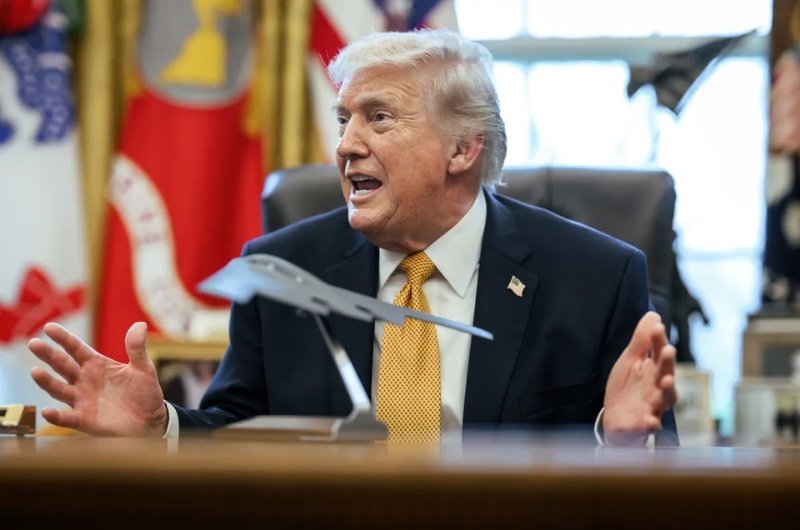
The United States and Iran have moved to the brink of a major escalation, as a 48-hour U.S. ultimatum quickly gave way to a sudden and unexpected pause in military action. President Donald Trump had warned Iran to reopen the Strait of Hormuz or face strikes targeting its power and energy infrastructure. Instead, just hours before the deadline, the White House announced a five-day delay, citing what Trump described as “very good and productive” conversations aimed at de-escalation. The reversal follows days of intensifying threats on both sides. Iran had responded to the ultimatum with warnings that any attack on its infrastructure would trigger widespread retaliation across the Middle East, including strikes on energy facilities and critical systems in neighboring countries. The Strait of Hormuz, one of the world’s most vital oil corridors, remains heavily restricted, amplifying global economic concerns and raising the stakes of the standoff. Despite the announcement of “productive” discussions, Iranian officials have publicly denied that any direct talks with the United States have taken place. Instead, Tehran has suggested the delay reflects the seriousness of its counter-threats rather than any diplomatic breakthrough. Regional tensions remain high, with ongoing military activity and continued warnings of broader conflict. The conflict, now entering its fourth week, has already resulted in significant casualties and widespread instability across the region. Israeli air operations have continued, while Iran has signaled its willingness to expand retaliation, including potential disruptions to water and energy systems across Gulf nations. For now, the five-day pause offers a narrow window for diplomacy — but with both sides holding firm and the global economy already feeling the impact, the situation remains volatile. What happens next may determine whether this conflict moves toward resolution or escalates into a broader regional crisis.