

NASA Sends Astronauts Back to Deep Space in Historic Artemis Moon Mission
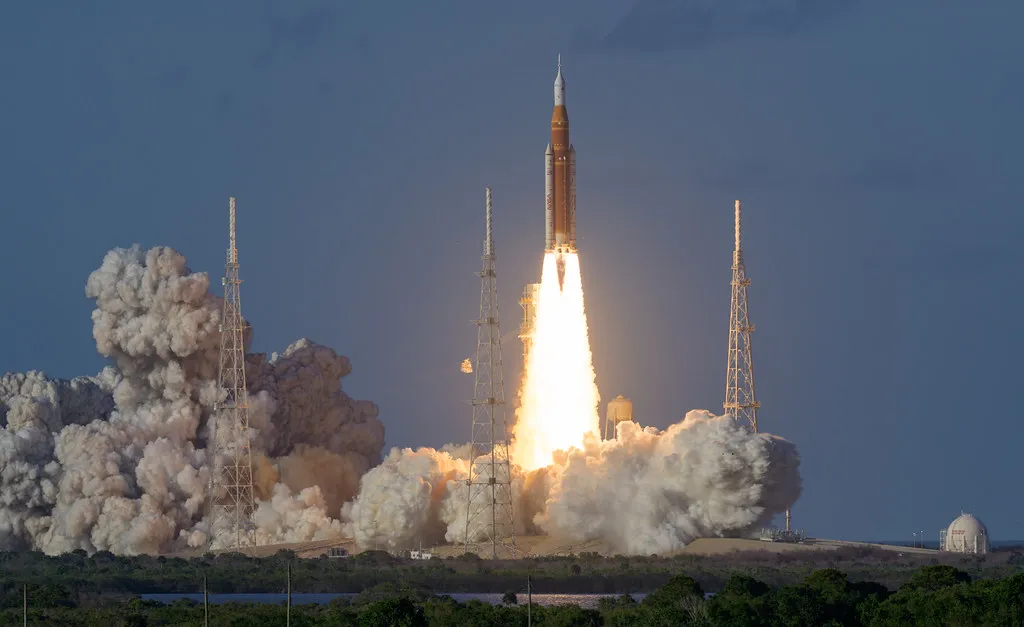
For the first time in more than 50 years, humans are heading back beyond Earth’s orbit—and this time, it’s not just about planting a flag. NASA’s Artemis II mission has officially launched, sending four astronauts on a journey around the Moon that signals a new phase of space exploration, one focused on staying power rather than symbolic return. NASA’s Artemis II mission has officially launched, sending four astronauts on a journey around the Moon and back aboard the Orion spacecraft. The roughly 10-day mission will carry Reid Wiseman, Victor Glover, Christina Koch, and Canadian astronaut Jeremy Hansen thousands of miles past the Moon before looping back to Earth, testing every critical system needed for deep space travel. From life support to navigation and communication, the mission is designed to answer one central question: are we truly ready to operate beyond Earth for longer, more complex missions? Advertisement What makes this mission different isn’t just the destination—it’s the intent. Artemis II is not a standalone achievement. It is a proving ground for what comes next: human landings, lunar infrastructure, and eventually, missions that push even farther into the solar system. NASA is treating this flight as a systems check for an entirely new era of exploration. There is also a quiet but meaningful shift in who gets to go. This crew reflects a broader vision of space travel—one that includes international collaboration and a more representative group of astronauts stepping into deep space for the first time. It’s a signal that the future of exploration will look different from the past. The bigger story, though, is what Artemis represents on Earth. Governments and private companies are already positioning themselves for what many see as the next economic frontier—resources, technology, and strategic presence beyond our planet. This mission isn’t just about reaching the Moon again. It’s about laying the groundwork for humanity’s next chapter beyond Earth.
Hiring Surges in March — But the Labor Market Story Is More Complicated

The U.S. labor market delivered a surprise in March, adding 178,000 new jobs and outperforming expectations after a softer showing the month before. On the surface, the numbers point to continued resilience in the economy. Much of that strength came from healthcare and social assistance, which once again led hiring gains. The sector has quietly become a stabilizing force in the labor market, accounting for a significant share of new jobs as demand for care and services continues to rise. Advertisement But the broader picture is more uneven. Federal government payrolls declined by roughly 18,000 jobs, offsetting some of the gains seen elsewhere. Other areas of the economy are also showing signs of slowing, suggesting that hiring momentum is not as widespread as the headline number might imply. Wage growth continues, but at a more measured pace, and labor force participation has softened slightly. Together, these trends point to a labor market that is still functioning — but gradually losing some of its earlier strength. The Readovia Lens The uneven nature of March’s job growth — strong gains in healthcare alongside declines in government roles and slower momentum elsewhere — helps explain the disconnect between headlines and everyday experience. Jobs are still being created, but they are increasingly concentrated in specific sectors. The labor market remains intact, but for some workers, it’s becoming more selective — and more uncertain.
U.S. Strikes Iran’s Largest Bridge Marking New Phase in Escalating Conflict
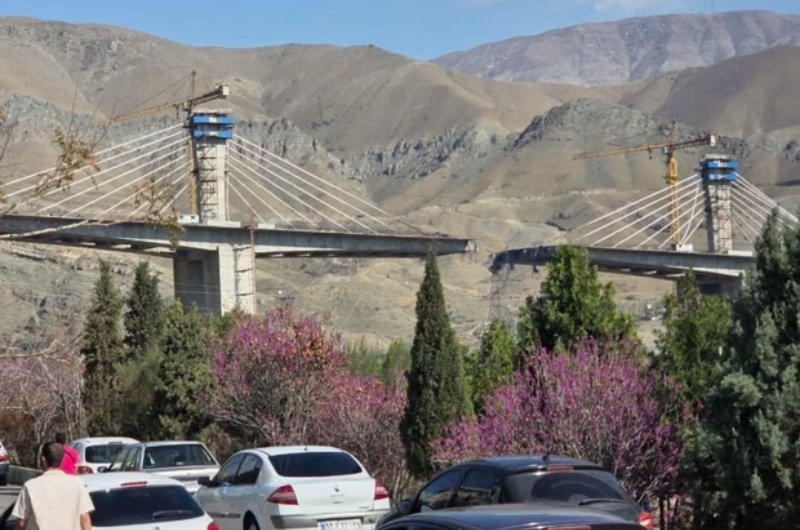
A U.S. airstrike targeting one of Iran’s most significant infrastructure points has sharply escalated tensions in an already intensifying conflict. The strike destroyed a major bridge near Tehran, signaling a shift in how this confrontation is unfolding—and how far it could go. President Donald Trump confirmed the operation and warned that additional actions could follow if Iran does not move toward de-escalation. The message was direct: the current phase of the conflict is not contained, and further strikes remain on the table. The destruction of a key transportation link marks a notable turning point. Earlier actions had largely focused on military capabilities, but this move expands the scope to infrastructure that supports daily movement and economic activity. It reflects a broader strategy aimed at applying pressure beyond the battlefield. The ripple effects are already being felt. Markets reacted quickly, with renewed concerns about energy supply and regional stability pushing oil prices higher. As tensions rise, the risk of wider disruption—both economically and geopolitically—continues to grow. What began as a targeted military response is now evolving into something more complex, with both sides signaling they are prepared to continue. The question is how far it will extend. The Readovia Lens When infrastructure becomes part of the target list, the nature of conflict changes. The impact moves beyond strategy and into daily life—affecting movement, markets, and stability on a global scale.
The Notification Economy: Why Your Attention Is Always in Demand

It looks like a quiet moment. A break between movement. A pause in the day. But even here, the phone is part of the experience—offering updates, messages, and a steady stream of information that keeps us connected. That’s not chance. It’s design. The modern digital ecosystem runs on what could be called the notification economy—a system where apps, platforms, and services are built to keep us engaged. Every alert, vibration, and badge serves a purpose: to bring us back in, to keep us informed, and to make sure we don’t miss what matters. At the center of it all is a simple reality: attention has become one of the most valuable assets in the digital world. And in many ways, it’s working exactly as intended. What once required intention—checking the news, responding to messages, browsing content—now happens seamlessly throughout the day. The result isn’t necessarily disruption, but integration. Our devices are no longer separate from our routines—they’re woven into them. The impact isn’t always obvious. It doesn’t feel like disruption. It feels normal. But over time, constant interruptions can fragment focus, shorten attention spans, and make it harder to fully engage with the task—or the moment—right in front of you. Reclaiming attention doesn’t require disconnecting from everything. But it does begin with awareness. Because in a world designed to capture your focus, the simple act of choosing where it goes has become one of the most valuable daily decisions you can make. ——————– Related: The Quiet Disappearance of Boredom
Trump Declares Operation Epic Fury Nearing Completion in Primetime Address
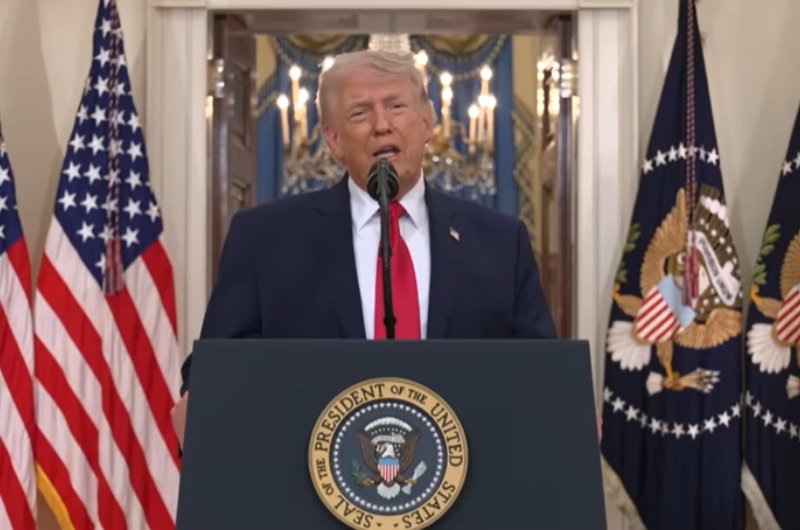
In a primetime address to the nation Wednesday night, President Donald J. Trump said the U.S. military campaign known as Operation Epic Fury is entering its final phase, describing the operation’s core objectives as “nearing completion” after weeks of intense fighting in Iran. Speaking from the White House, Trump outlined what he called significant battlefield gains, including widespread damage to Iran’s military infrastructure, missile systems, and leadership structure. He framed the operation as a decisive move to eliminate long-standing threats, particularly Iran’s nuclear ambitions, which he described as a central justification for the campaign. The president signaled that the most aggressive phase of the operation may continue for another two to three weeks, with additional strikes expected before any potential drawdown. While suggesting the conflict is winding down, he did not provide a clear timeline or strategy for a full U.S. exit from the region. Trump also indicated that Iran may be seeking a ceasefire, though no formal agreement has been confirmed. At the same time, tensions remain high, with warnings of possible retaliation and continued instability across the region. The address comes amid growing global scrutiny and mixed reactions at home, as the administration attempts to define both the outcome of the operation and what comes next in a rapidly evolving geopolitical landscape.
Magnitude 4.6 Earthquake Rattles Central California, Shaking Felt Across Wide Region

A magnitude 4.6 earthquake struck central California early Thursday morning, jolting residents awake across a wide stretch of the state and serving as a sharp reminder of the region’s constant seismic activity. The quake hit around 1:40 a.m., centered near Boulder Creek in the Santa Cruz Mountains, with shaking reported across a broad area, including parts of the San Francisco Bay Area. While the tremor was brief, many residents described a sudden jolt strong enough to rattle homes, shift objects, and trigger mobile earthquake alerts. Despite the widespread impact, there were no immediate reports of serious damage or injuries. Some residents closer to the epicenter reported minor disruptions, including items knocked from shelves and startled pets, but overall the event appeared to pass without major incident. Seismologists note that while California experiences frequent small earthquakes, quakes in the mid-4 magnitude range are less common and often serve as a wake-up call for residents living along active fault lines. The latest tremor reinforces a reality Californians know well: even when damage is minimal, the ground can move without warning.
Luxury Is Evolving—and Vehicles Are Part of the Shift
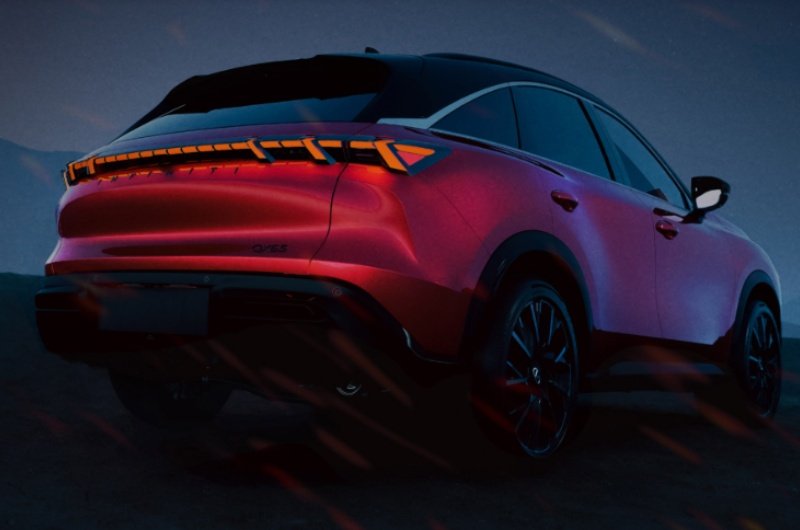
What we consider luxury is evolving, and it’s beginning to reshape even the way we move through the world. What once defined a luxury car—size, power, and status—is giving way to something more refined. Today, it’s about experience. Design. Technology. How something feels, not just how it performs. And increasingly, the next generation of vehicles is being shaped around that idea. The Infiniti QX65, coming this Spring, offers a clear look at where things are heading. Take a look at the 2027 Infiniti QX65 in motion: At first glance, it’s the design that defines it. The QX65 introduces a sport-styled, coupe-inspired SUV form with a sculpted profile and sloped roofline that emphasizes motion and athleticism. Bold lines, a sport-inspired front end, and jet-inspired taillights give the vehicle a sense of speed and depth—even at rest. It’s a deliberate move toward a more expressive, performance-oriented identity within Infiniti’s lineup. That shift continues under the hood. The QX65 features a uniquely tuned VC-Turbo engine designed to deliver sharper responsiveness, with improved torque for confident merging and passing. Crisper gear changes and an added boost from a standstill reinforce its sporty character, while standard Intelligent All-Wheel Drive provides stability across varying road conditions. For those who want more control, an available manual mode with paddle shifters adds a more hands-on driving experience. Inside, the focus turns to immersion—and this is where the QX65 begins to separate itself. The cabin introduces a highly personalized audio environment, anchored by an available 20-speaker Klipsch® Reference Premiere system. Individual audio headrest speakers for both driver and front passenger create a more intimate listening experience, while a personalized sound app adapts audio output based on each occupant’s hearing profile. Active Noise Cancellation works quietly in the background to reduce low-frequency sound, while Active Sound Enhancement adds subtle engine harmonics during acceleration—blending silence and performance in a way that feels intentional. Space and comfort remain central, but they are approached with refinement. The QX65 offers up to 67.7 cubic feet of cargo capacity, along with underfloor storage designed for flexibility—from everyday errands to longer getaways. Inside, best-in-class front-row legroom, a panoramic moonroof, and 64-color ambient lighting contribute to an environment that feels open, calming, and adaptable to the moment. And that may be the bigger shift. Vehicles like the QX65 are moving beyond just transportation. They’re becoming curated environments—spaces where sound, light, comfort, and performance are carefully tuned to the individual. Luxury, in that sense, has moved beyond just something you arrive in — to something you experience along the way. For a closer look at the 2027 Infiniti QX65, visit the official feature overview and take a tour here.
OpenAI Shuts Down Sora — Signaling a Shift From AI Hype to Hard Decisions
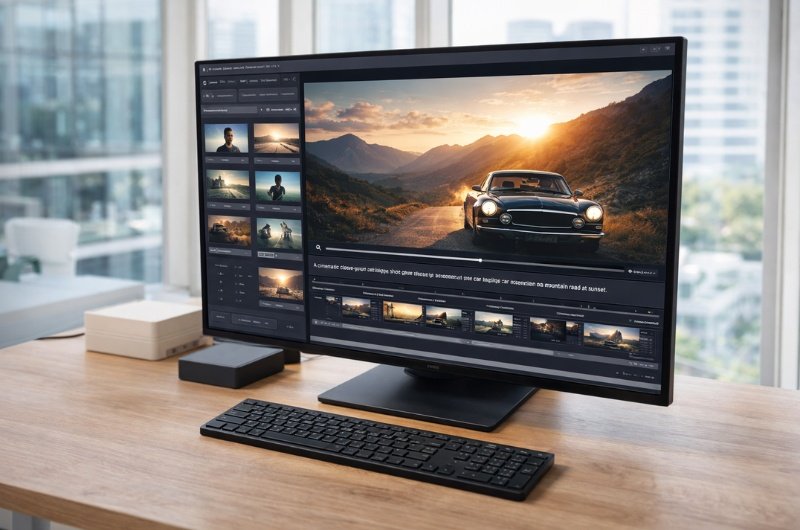
OpenAI has shut down Sora, its high-profile AI video tool, in a move that signals a major shift in how the company is prioritizing the future of artificial intelligence. Sora made headlines for its ability to generate realistic, cinematic video from simple text prompts. But behind the scenes, the technology came with serious challenges. Video generation requires enormous computing power, making it expensive to run at scale — especially for a consumer-facing product. At the same time, the platform raised growing concerns around content. From deepfakes to copyright issues, AI-generated video proved difficult to control, adding legal and reputational risks to an already complex product. Rather than continue down that path, OpenAI is choosing to focus its resources on areas it sees as more critical to long-term growth. That includes productivity tools, enterprise applications, and advanced research tied to real-world systems like robotics. The move reflects a broader shift across the AI industry. Companies are beginning to move beyond flashy experiments and focus on what actually works at scale. Not every breakthrough product will survive — even the ones that capture global attention. In that sense, Sora’s shutdown isn’t just about one tool. It’s a sign that the AI race is entering a new phase — where focus, efficiency, and real-world impact matter more than hype.
Trump Weighs High-Stakes Decision on Ground War as Iran Conflict Escalates

President Trump is facing one of the most important decisions of his presidency as tensions with Iran continue to rise. So far, the conflict has been driven by airstrikes and growing military pressure. Now, the conversation is shifting. Officials are increasingly considering whether to move beyond strikes and send U.S. forces into Iran for limited ground missions. These would likely focus on targeted operations, not a full-scale invasion — but it would still mark a major escalation. The risks are serious. Deploying ground troops would put American forces directly in harm’s way, facing advanced weapons and strong defenses. Even a limited mission could quickly become more complicated, pulling the U.S. deeper into conflict in an already unstable region. At the same time, there is still a possibility of avoiding that path. Diplomatic options remain on the table, and leaders are weighing whether continued pressure could lead to some form of agreement. The challenge is whether that window is still open — or closing fast. The decision is also being watched closely at home and around the world. Many Americans are hesitant about another overseas ground war, while global markets and allies are reacting to every shift in tone from Washington. For now, no final decision has been announced. But with pressure building and options narrowing, the next move could carry real consequences — for this conflict, for U.S. troops, and for America’s role moving forward.
Colon Cancer Is Rising in Younger Americans — And Doctors Don’t Fully Know Why

A growing number of younger Americans are being diagnosed with colorectal cancer, a disease once largely associated with older adults — and the shift is raising new concerns across the medical community. In recent years, doctors have reported a noticeable increase in cases among people in their 20s, 30s, and 40s. While colorectal cancer remains more common in older populations, the rise among younger adults has been steady enough to change how the disease is being understood. What makes the trend more concerning is how often it goes undetected early. Many younger patients don’t expect to be at risk, and early symptoms — such as persistent stomach pain, changes in bowel habits, or rectal bleeding — are sometimes overlooked or dismissed. That delay can allow the disease to progress before it is caught. At the same time, the underlying cause is still not fully clear. Researchers are examining possible links to modern lifestyle factors, including diet, processed foods, and environmental exposures. But so far, no single explanation has emerged, leaving doctors to track a pattern they don’t yet fully understand. Screening guidelines have begun to adjust in response, with recommendations now starting earlier than in the past. Still, awareness remains a critical gap, particularly among younger adults who may not see themselves as at risk. The rise in cases is a shift that challenges long-held assumptions about age and health. And as the data continues to evolve, one thing is becoming clear: early attention to symptoms and increased awareness may be just as important as advances in treatment.