


Trump Seeks $230 Million From DOJ Over Russia Probe and Mar-a-Lago Raid
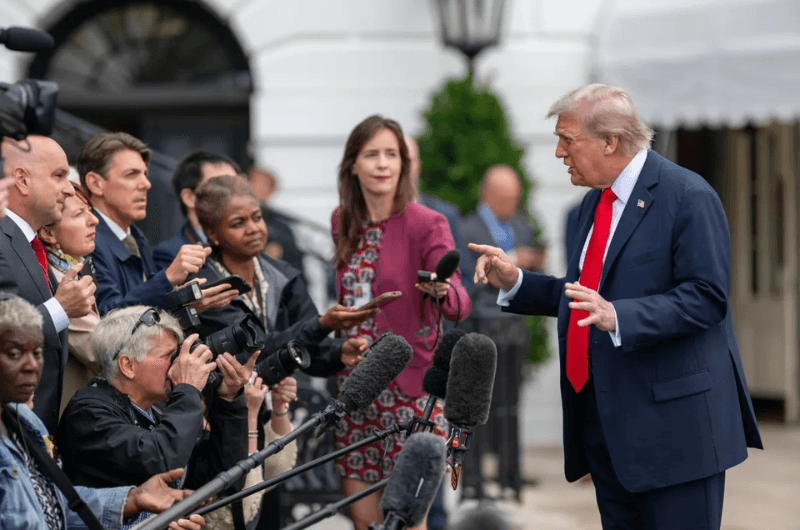
President Donald Trump has filed claims seeking up to $230 million from the U.S. Department of Justice (DOJ), accusing the agency of political retaliation in two of the most high-profile federal actions ever taken against him. According to reports first confirmed Tuesday, the filings — administrative claims known as Form 95s — seek compensation for alleged violations of Trump’s rights during the 2016 Russia investigation and the 2022 FBI search of Mar-a-Lago. Both actions, his lawyers argue, caused “immeasurable reputational and financial harm.” The claims, submitted in 2023 and 2024, precede any formal lawsuit but are required under the Federal Tort Claims Act before suing the government. They accuse the DOJ and FBI of “malicious prosecution” and “abuse of process,” echoing Trump’s long-standing claim that the justice system has been “weaponized” against him. A DOJ spokesperson declined to discuss specifics but said all department officials “follow the guidance of career ethics professionals.” If the claims are approved, any settlement above $4 million would require sign-off by the Deputy Attorney General — a role now held by Todd Blanche, a former Trump defense attorney, raising potential conflict-of-interest questions. Legal experts note that while administrative claims are routine in federal litigation, one of this magnitude is unprecedented for a president. The filings underscore Trump’s effort to recast years of investigation as an injury rather than a liability — and to turn his defense into a financial counteroffensive against the federal government itself. Between the Lines If the DOJ entertains the claim, even briefly, it could open a new political front: one where former presidents pursue damages from their own government. But if it’s dismissed outright, Trump could still transform the rejection into campaign fuel — proof, he’d argue, that the system remains rigged against him. Either outcome keeps the spotlight exactly where he wants it: on Trump versus Washington.
The Fall Immunity Fix: 7 Natural Supplements to Strengthen Your Defenses

As the air turns crisp and the days grow shorter, our immune systems can use a little extra support. Between heavier foods, less sunlight, and more time indoors, fall and winter bring the perfect storm for seasonal sluggishness — and the occasional sniffle. The good news? Nature offers plenty of help. Here are five natural supplements and herbs that can help you stay balanced, boost immunity, and keep your system running strong all season long. 1. Vitamin C — The Classic Defender Vitamin C remains the go-to for immune support — and for good reason. It fuels white blood cells, helps your body fight infections faster, and reduces inflammation. Best sources: Citrus fruits, bell peppers, kiwi, and acerola cherry. For supplements, choose whole-food or liposomal forms for better absorption. 2. Vitamin D — The Sunshine Shield When sunlight fades, so do our vitamin D levels. This “sunshine vitamin” helps regulate the immune system and mood. Tip: Choose D3 (cholecalciferol) with vitamin K2 for optimal absorption and balance. 3. Zinc — The Repair Mineral Zinc supports the production of immune cells and helps shorten the duration of colds. Deficiency can make you more vulnerable to infections. Natural sources: Pumpkin seeds, lentils, and shellfish. Supplement with zinc gluconate or citrate for best results. 4. Elderberry — Nature’s Flu Fighter A potent antioxidant, elderberry has long been used to reduce the severity and length of cold and flu symptoms. How to take it: Syrups, lozenges, or capsules — but make sure they’re free from added sugars and artificial flavors. 5. Detox Herbs — The Gentle Cleanse When your liver and lymphatic system work efficiently, your body fights illness more effectively. Together, these herbs form your body’s natural cleanup crew — perfect for the seasonal reset: Milk Thistle — supports liver detoxification, purifies the blood, and even brightens the whites of your eyes as it cleanses — something I’ve experienced firsthand. Burdock Root — helps remove impurities from the blood Ginger & Turmeric — calm inflammation while boosting circulation 6. Black Tea — The Everyday Immune Ally Sometimes, the simplest rituals are the most powerful. A good old-fashioned cup of black tea provides a daily dose of immune-boosting antioxidants. Compounds in black tea, such as theaflavins and catechins, support the body’s ability to neutralize free radicals and strengthen overall immune function. Make it part of your morning or afternoon routine — a soothing, flavorful way to help your immune system stay alert year-round. 7. Flaxseed Oil — The Immune System’s Drill Sergeant Packed with omega-3 fatty acids, flaxseed oil does more than support heart health — it helps rally your immune system. Scientists have found that its unique compounds act almost as a drill sergeant, signaling the immune system to mobilize and attack toxins and harmful pathogens. Whether in capsule, smoothies, salads, or on its own — flaxseed oil can help the body maintain balance, resilience, and optimal inflammatory response through the colder months. The Takeaway Fall is the time to fortify your body’s natural defenses. With consistent support from some of nature’s most trusted nutrients, you can strengthen your immunity, clear out toxins, and keep your energy steady from autumn through spring. Prevention, after all, is the most elegant form of wellness. ———- Disclaimer: This article is for informational purposes only and is not intended as medical advice. Always consult your physician or a qualified healthcare professional before starting any new supplement or herbal regimen.
Family’s Quick Action Stops Planned Airport Shooting in Atlanta

A Georgia family’s courage to speak up prevented what could have been a mass tragedy at one of the world’s busiest airports. Police arrested 49-year-old Billy Joe Cagle at Hartsfield-Jackson Atlanta International Airport after relatives reported he was livestreaming threats to “shoot it up.” Officers found an AR-15 rifle and 27 rounds of ammunition in his truck parked just outside the terminal. Atlanta’s police chief credited the family’s intervention for saving lives, calling the incident “a success, not a tragedy.” Cagle faces multiple felony charges, including making terroristic threats and illegal firearm possession. Authorities confirmed he had a prior felony record and was not legally permitted to own a gun. The case underscores a crucial truth: when families and communities speak up, lives can be saved. Atlanta’s mayor praised both vigilance and divine grace, saying, “We’re thankful to God and to good people for this crisis being averted.” Cagle’s longtime friend said he suffered from schizophrenia and had been taking medication, raising broader questions about mental health and firearm access. Final Thoughts Security technology is vital, but human awareness remains the strongest defense. One family’s quick decision to “say something” transformed a potential national tragedy into a case study in prevention — proof that when people speak up, danger can be stopped before it starts.
Trump Presses Zelenskyy to Accept Putin’s Demands in Heated Meeting, Tossing Maps and Warnings

In a tense Oval Office meeting on Sunday, President Donald Trump reportedly urged Ukrainian President Volodymyr Zelenskyy to accept Russian territorial terms to end the war — warning that President Putin would “destroy” Kyiv otherwise. According to multiple accounts, Trump’s tone was explosive, at one point shouting, cursing, and tossing maps across the room as he outlined areas he claimed Ukraine should concede. The confrontation — first reported by The Times of India — underscores how sharply Trump’s diplomatic approach departs from Washington’s previous bipartisan backing of Ukraine’s resistance. Witnesses said Trump appeared fixated on “ending the war fast,” even if that meant forcing Kyiv to surrender portions of the Donbas region to Moscow. European officials reacted with alarm. EU foreign policy chief Kaja Kallas called any move to pressure Ukraine “deeply inappropriate,” warning it would reward aggression and destabilize Europe further. The EU, France, and Germany have reiterated their support for Kyiv’s sovereignty, with several diplomats privately expressing fears that U.S. policy may be shifting toward appeasement. Adding to the tension, Hungary has proposed hosting a Trump-Putin summit that could include Ukraine “if invited.” The prospect of such a meeting — and who might attend — has raised eyebrows across NATO capitals. “It’s one thing to pursue peace,” said one European envoy, “it’s another to dictate it.” For Zelenskyy, who has vowed not to trade territory for peace, the moment marks one of his most precarious diplomatic crossroads since the invasion began. For Trump, it represents an attempt to reassert his image as the ultimate deal-maker — one who believes he alone can end the war. Between the Lines Trump’s outburst may play well with voters who crave decisive action, but it risks alienating allies and emboldening Putin. The larger question now is whether peace will come at the cost of Ukraine’s independence.
The Quiet Takeover: AI Steps In to Manage Email, Meeting Scheduling, and More

It started with “smart replies.” Then came calendar assistants. Now, AI agents are quietly running entire chunks of office life — answering emails, accepting meetings, and sending follow-ups — often without the employee lifting a finger. Across major corporations and startups alike, autonomous AI agents are becoming the invisible middle managers of modern productivity. Tools like OpenAI’s o1-series assistants, Anthropic’s Claude Workflows, and Microsoft’s Copilot Teams integrations are being trained to anticipate next steps and act on them. Analysts say what used to be “assistive AI” is fast evolving into delegated decision-making. Recent studies show a sharp rise in the use of AI for workplace automation, with some professionals now allowing intelligent systems to sort and prioritize their inboxes. The shift is raising fresh ethical questions about data privacy and accountability — especially as these bots begin responding on behalf of human managers. Experts warn that while AI delegation boosts output, it also risks blurring authorship and responsibility. “We’re entering an age where an email that looks human may not be,” notes tech ethicist Leah Ortiz. “The bigger concern isn’t that AI’s doing the work — it’s that no one notices.” Between the Lines For employees embracing email automation, the trade-off feels worth it — less inbox stress, fewer scheduling conflicts, and more focus on meaningful work. As companies chase higher productivity targets, invisible AI labor is quickly shifting from novelty to necessity.
Trump Plans to Shift Billions in Anti-Terror Funds from Democratic to Republican States

The Trump administration’s new homeland security plan would cut anti-terror grants to Democratic states by up to 70%, redirecting funds to Trump-voting states. The plan is igniting political and legal controversy, with Democratic-led states accusing the White House of using national security dollars as a political weapon. A Radical Funding Shift The administration has unveiled a plan to restructure the federal anti-terrorism grant program, which was created after the September 11 attacks to strengthen homeland security at the state and local levels. The new formula would divert billions away from Democratic-controlled states — including California, Illinois, New Jersey, and Washington, D.C. — and funnel much of that funding toward Republican-led states that supported Trump in the 2024 election. Some states could lose as much as 70 percent of their current allocations under the revised framework, according to federal budget documents reviewed by The Guardian. The Department of Homeland Security has defended the overhaul as a “risk-informed adjustment” aimed at addressing modern threats such as border violence and transnational crime. Critics Say It’s Political Retaliation Democratic officials and national security experts have blasted the move as partisan punishment masquerading as reform. “This isn’t about risk,” one state security director said. “It’s about retribution.” Twelve Democratic-led states have already filed a joint lawsuit seeking to block the rule, arguing it violates both the Constitution and long-standing federal statutes governing the use of national security funds. A federal judge in Rhode Island has temporarily halted the redistribution while the case moves forward. The Bigger Picture The proposal comes at a time when federal-state tensions are already high over shutdown politics, immigration enforcement, and federal law enforcement priorities. Analysts warn that this funding shift could deepen partisan divides within America’s security apparatus — and set a dangerous precedent where **“who you vote for” determines **how much federal protection you get.
The Beauty Secret Insiders Call a “Facelift in a Bottle”

What if one supplement could visibly tighten, lift, and brighten your skin? Meet Alpha-Lipoic Acid (ALA), the powerful antioxidant quietly gaining a following among beauty insiders. The Science Behind the Glow ALA is a naturally occurring antioxidant found in every cell of your body. Unlike most antioxidants, it’s both water- and fat-soluble — meaning it can work everywhere, from the skin’s surface to deeper cellular layers. Dermatologists love it for its ability to neutralize free radicals, smooth fine lines, and even out texture. Why Our Chemist Calls It a “Facelift in a Bottle” A respected chemist I personally have followed for years — whose supplements I use, whose book I own, and whose insights I reads regularly — once called ALA a “facelift in a bottle.” And honestly, he’s right. In before-and-after photos taken after just one week of daily supplementation, users (including myself) report noticeably tighter skin around the chin, mouth, and cheeks. Some also describe a subtle lifting effect, giving the face a fresher, more youthful look. The Bonus Benefit: Sharper Vision Here’s an unexpected perk: ALA also supports eye health and visual clarity. Research shows it helps protect retinal cells from oxidative stress, which may help with eye fatigue and age-related changes. So while it’s rejuvenating your skin, it’s giving your eyes a boost too — beauty and wellness in one capsule. In my personal experience during an eye exam, my optometrist reported that my eyesight had improved – something I had never experienced. A Word of Caution While most users tolerate ALA well, it can occasionally cause mild skin rashes or irritation. If that happens, discontinue use immediately. ———- Disclaimer: This article is for informational purposes only and is not intended as medical advice. Always consult your physician or a qualified healthcare professional before starting any new supplement or herbal regimen.
Brown University Rejects Trumps Proposed “Compact for Academic Excellence”

Brown University has declined the Trump administration’s offer to sign onto a highly controversial “Compact for Academic Excellence in Higher Education,” becoming the second Ivy League institution to reject it. What the Compact Would Require Issued to nine leading universities, the compact would tie preferential access to federal funding to sweeping conditions. Among the terms: Capping international undergraduate enrollment at 15% Prohibiting consideration of race or sex in hiring and admissions Defining gender strictly on a biological basis Applying new “merits” criteria for research funding beyond traditional scientific merit Rights & Ramifications Our course, institutions have the right to refuse the compact. But the administration has warned that institutions that refuse could lose access to certain federal benefits, while those that comply would be prioritized for new programs and grants. Brown’s Rejection and Its Reasoning In a letter to Education Secretary Linda McMahon, Brown University President Christina Paxson stated that accepting the compact’s terms would “restrict academic freedom and undermine the autonomy of Brown’s governance” — values she described as central to the university’s mission. She noted that Brown already has a prior agreement with the administration that reaffirms the federal government’s lack of authority to dictate academic content or governance, and said the new compact fails to include those same protections. Broader Context & Reactions MIT recently became the first institution to publicly reject the compact, citing similar concerns about independence and free inquiry. Brown’s decision follows that example, signaling growing resistance among top-tier universities. The proposed compact has drawn criticism from higher-education advocates and constitutional scholars, who argue it represents ideological coercion packaged as reform. They warn that linking academic funding to compliance with political mandates could redefine the boundaries between education and government influence for decades to come.
Shifting Focus Series (Part 2): Beyond SEO — Thriving in the Age of AI Agents

In the first part of this series we looked at how the old traffic-paradigm is dying: keywords, rankings, organic hits. Now we pivot. This article explores how brands, publishers and creators can move beyond SEO to win in an era where AI agents govern discovery, not humans slogging through SERPs (search engine results pages). The Algorithm Is Dead — Long Live the Agent For decades, SEO looked like this: “Here’s a query → search engine indexes pages → you optimize for those keywords → you get traffic.” That system is still alive, but increasingly it’s becoming the second channel, not the first. The real story today: intelligent agents—bots acting on behalf of users—are doing the discovery work. These agents don’t simply list links. They curate, summarize, select one answer, and deliver it directly to the user. That means your content isn’t just fighting for page 1 anymore—it’s fighting for inclusion in an agent’s answer set. The implication: don’t just think about “ranking” — think about “being selected”. Context Is the New Keyword In the old model, we obsessed over keywords (“best hiking boots size 11”). In the new model, we need to obsess over context: entities, relationships, trust, metadata, structured data. Because agents don’t just look for matching keywords—they try to understand meaning and infer intent. What this means in practice: Your content should use clean schema markup, entity tagging, and semantic structure so that agents can “read” what you are. (You are not simply “page about X” but “authoritative site about X with trust signals, structured as …”). The writing should reflect depth of context, not just keyword frequency. (Example: “As a brand of waterproof hiking boots founded in 1998, from the Pacific NW, we integrate proprietary Gore-Tex fabric tested in these conditions…”). You need to anticipate agent-level queries. For instance: “Which size-11 waterproof hiking boot under $200 has the best durability review by independent lab in 2025?” If agents can access your data (e.g., test results, durability scores, independent reviews) you become selectable. Your internal data and knowledge base become more important: your site’s internal architecture, topic clusters, update frequency, content freshness—all feed the context signal. The Answer As one SEO veteran put it: instead of “manipulate ranking”, you must “increase the odds of being the answer that an agent chooses.” (symphonicdigital.com) The Rise of “Discoverability Design” Think of “discoverability design” as the next frontier. It’s the discipline of structuring your content, assets, metadata, and domain authority with the explicit purpose of being discoverable by AI agents—while still being readable and trusted by humans. Elements of discoverability design: Machine-readability: well-implemented schema.org markup, clear entity definitions, hierarchical content relationships. Chunkable modules: breaking content into pieces that can be reused by agents (charts, FAQs, bullet-lists, answer-snippets) which fit into larger knowledge graphs or embeddings. Transparent sourcing & authoring: agents tend to favor content from known authors, with citations, references, update logs. Trust signals matter more. Multi-format assets: structured data is not just text. Tables, JSON-LD, bullet lists, transcripts, downloadable attachments—all increase the chance an agent can parse your content and extract the “answer”. Lifecycle updating: in this world, a static page posted once may fall by the wayside. Agents favor freshness, signal decay matters. Updating or refreshing content becomes integral to strategy. When done well, you move from “optimize for the search engine” to “engineer for discovery systems”. Trust > Traffic Here’s a truth many are still wrestling with: as agent-driven discovery rises, raw traffic metrics (page views, keyword rank) will matter less than *whether you are chosen by the agent*. That means trust—credibility, authoritativeness, reliability—becomes the differentiator. Key considerations: Authorship & credentials: who wrote this? Is the site clearly connected with a domain of trust? Does your content link to sources and is it itself cited by other trusted entities? Transparency & version history: when content is updated; where statements come from; whether there’s a “last-updated” timestamp—all matter. Verification & data integrity: agents may increasingly use signals like “Was this data verified by an independent authority?” or “Does the domain have a history of accurate answers?” Ethical & bias awareness: agents will increasingly model trust not just on correctness but on how balanced/transparent the answer is. Sites that cut corners may be penalized by exclusion rather than demotion. In short: Don’t just chase clicks—build **credibility** so that when an agent asks “What’s the best answer for X?”, you come out ahead. From Search Optimization to Strategy Optimization Pivot time. Given all the above, the tasks that used to define SEO must be reframed. Here are actionable pivots: Optimize for agents and audiences Your audience still matters—humans read, engage, convert. But now you must layer in agent-optimization: ask “Would a conversational model pick this page when answering the user question?” Test content via that lens. Diversify traffic & discovery Don’t depend solely on organic Google traffic. Agents, app ecosystems, voice assistants, in-platform discovery will become major sources. Build for them. Social, podcast, video – all feed content that an agent may use or reference. Build “answer-ready” assets Create FAQ modules, data tables, white-papers, definitions, glossaries, code snippets—content formats that map well to AI-agent workflows. Use structured data. Make your content ingestible. For example, your brand might publish a “Durability Test Results 2026” white-paper with downloadable data. That resource positions you as the source. Develop internal knowledge bases If you’re a brand, publisher or creator, structure your internal data (product specs, case studies, review archives) so that when agents pull knowledge, you’re ready. Don’t hide content behind complex navigation—make it sharable and extractable. Continuously monitor agent-signals Your analytics need to evolve. Instead of just “SERP rank”, monitor “Was my content used by an external agent?”, “Did I get cited in answer snippets?”, “What fraction of my audience comes via recommendation-engine discovery?” Tools will emerge; until then build your own proxies. The Takeaway The shift from search-centric to agent-centric discovery is real—and it’s accelerating. This isn’t about tweaking keywords or chasing backlinks. It’s about designing for context, structure, and trust. If you
Feature: When Appetite Fades — Weight Loss Drugs and the Shift in Social Dining

The New Appetite Landscape At restaurants across the country, chefs are noticing a subtle but unmistakable change. Tables still fill up, the glasses still clink — but plates come back with more left behind. Diners are skipping the bread basket, ordering lighter entrées, and leaving dessert untouched. This quiet transformation is being fueled not by a new diet craze but by a new class of medication. Weight-loss drugs such as Ozempic, Wegovy, and Mounjaro — originally designed for diabetes — are reshaping how people think about food, fullness, and even social connection. A Biological Recalibration These drugs work by mimicking GLP-1, a hormone that regulates blood sugar and appetite. The result is a biological recalibration of hunger itself. Users often report smaller cravings, an early sense of fullness, and a fading interest in rich or high-calorie meals. That internal shift is spilling outward into society. Restaurant spending patterns are evolving, grocery sales are dipping, and even alcohol consumption is down among regular users. What was once a personal health decision is now a cultural force with real economic impact — one that’s beginning to rewrite the rhythms of modern dining. Dining Less, Differently Early signs of change are showing up everywhere. Industry reports point to smaller average checks in urban restaurants, lighter lunch traffic, and lower sales of desserts and cocktails. In food-centric cities like New York, Austin, and Los Angeles, restaurateurs say the change is subtle but noticeable — a new kind of restraint at the table. Instead of ordering a three-course meal, diners may choose one high-quality entrée. Some restaurants have started quietly introducing “half-portion” or “light tasting” options to appeal to guests whose appetites are now smaller but more discerning. It’s not just about eating less — it’s about eating differently. Meals are becoming more curated, with focus shifting from indulgence to experience, and from quantity to connection. Social Dining Redefined For decades, dining out has served as a social anchor — the universal backdrop for celebrations, business deals, and daily catch-ups. But when appetite diminishes, so does one of life’s most reliable social scripts. Some professionals are already trading the classic business lunch for coffee meetings or virtual chats. Couples share fewer appetizers and split entrées. Friends meet up but opt for “drinks only,” sipping sparkling water or tea instead of ordering dinner. Sociologists call it a behavioral echo effect — when individual choices ripple outward to reshape group norms. In this case, the appetite-suppressing effect of GLP-1 medications may be changing how people gather, celebrate, and maintain social bonds. The Restaurant Response In the face of shifting habits, restaurants are adapting. Many are redesigning menus to feature smaller plates, protein-forward dishes, or customizable portions. Others are emphasizing storytelling, presentation, and atmosphere — creating a reason to dine that extends beyond the food itself. High-end establishments have an advantage: they already focus on sensory experience, where flavor, art, and service blend into an immersive event. Casual dining, however, may face tougher challenges. Fewer impulse desserts and cocktail orders translate directly into lower margins. Some restaurateurs are responding creatively — experimenting with wellness-oriented menus, portion-controlled tasting flights, or upscale mocktail programs. The goal isn’t to fight the trend, but to meet it gracefully. The Appetite Divide Not everyone is on these drugs, and accessibility remains unequal. Monthly costs can exceed $1,000 without insurance, and not all patients qualify. That means this appetite revolution is playing out primarily among higher-income consumers — the same demographic that drives much of the restaurant economy. This raises a question of cultural contrast: will America’s dining culture begin to split along appetite lines? For some, dining out may become more about design and conversation. For others, it remains rooted in abundance and flavor. Both experiences may coexist — but the balance is shifting. Economic Ripples Beyond the Table The effects extend beyond restaurants. Food manufacturers, grocery chains, and beverage companies are bracing for an era of moderated consumption. Some analysts project a decline in snack and soda sales as GLP-1 usage rises. Alcohol producers are watching closely too, as drink orders fall in parallel. Investors have already begun treating appetite suppression as a market signal — influencing not just the weight-loss industry but the broader food economy. What we eat, how much we eat, and why we eat are becoming powerful indicators of societal change. Appetite, Identity, and Ritual Food has always been more than sustenance. It’s ritual, reward, identity, and expression. Weight-loss medications complicate that relationship — not by removing enjoyment, but by rewriting the biological cues that fuel it. For some, that change feels liberating: freedom from cravings and diet cycles. For others, it can create a strange distance between desire and pleasure, especially in social settings where food plays an emotional role. This subtle tension — between biology and culture, health and ritual — may define the next phase of modern dining. Adapting the Culture of Eating The future of dining may look lighter, smaller, and more intentional. Restaurants could pivot toward “experience-first” models — combining art, community, and wellness under one roof. Coffee shops and wine bars may absorb more of the social energy once reserved for long meals. Meanwhile, technology will continue to shape new food experiences — from personalized nutrition tracking to immersive dining concepts where digital storytelling replaces the indulgence once found in abundance. Eating out may never vanish, but it’s evolving — from a ritual of excess to a reflection of balance. A New Kind of Fullness If appetite is no longer the centerpiece of dining, what takes its place? Connection, conversation, and curation. The new social meal may be less about what’s on the plate and more about who’s at the table — and why. Weight-loss drugs may be shrinking portions, but they’re also expanding a conversation about what we value in food, health, and community. The result isn’t the end of dining culture — its the next course.