

Mexico Captures Top Cartel Commander in Major Blow to Jalisco Crime Network

Mexican special forces have captured Audias Flores, known as “El Jardinero,” one of the top commanders of the powerful Jalisco New Generation Cartel in a major security operation in western Mexico. Authorities said Flores was arrested in the state of Nayarit after a lengthy intelligence effort. Flores was considered one of the cartel’s most influential regional leaders and had been viewed by analysts as a possible successor after the death of longtime cartel boss “El Mencho” earlier this year. U.S. authorities had previously offered a $5 million reward for information leading to his capture. Officials said the operation involved hundreds of troops and ended without a reported firefight. According to reports, Flores was found hiding in a drainage ditch after armed escorts attempted to create a diversion near Puerto Vallarta. The arrest is likely to be watched closely in both Mexico and the United States, where cartel trafficking networks remain tied to drug smuggling, organized crime, and the flow of fentanyl across the border. High-level captures can disrupt operations, but criminal groups often move quickly to reorganize. For now, the capture marks another significant test of whether sustained pressure can weaken one of the most powerful criminal organizations in the hemisphere.
King Charles III Visits White House as Washington Showcases U.S.-UK Alliance
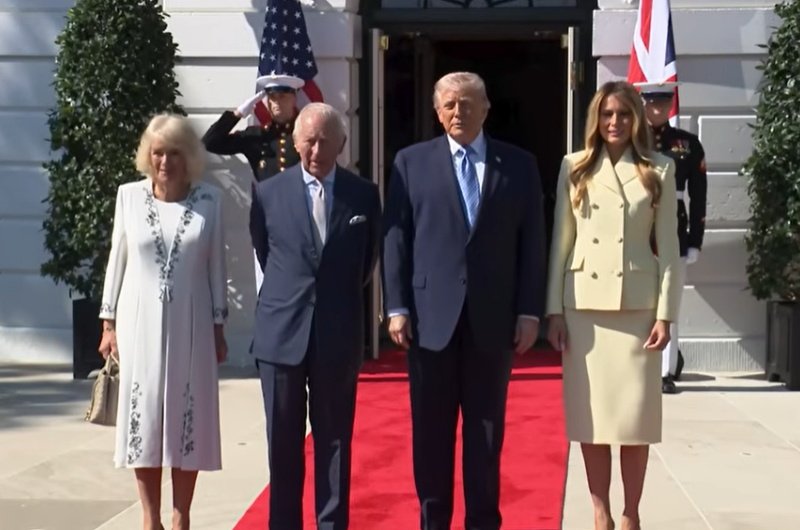
King Charles III arrived at the White House on Monday for a high-profile meeting with President Donald Trump, marking one of the most symbolic diplomatic visits to Washington this year. Joined by Queen Camilla, the British monarch was welcomed with formal ceremony as both nations sought to highlight the enduring alliance between the United States and the United Kingdom. The visit comes at a moment of global uncertainty, with conflicts abroad, economic pressures, and shifting geopolitical alliances placing renewed value on long-standing partnerships. Public displays of unity between Washington and London often carry significance far beyond the ceremonial setting. While royal visits are steeped in tradition, they also serve practical purposes. Meetings between heads of state can help reinforce cooperation on trade, defense, intelligence sharing, and broader strategic priorities that affect both countries. For Washington, the moment offered a pause from the usual pace of domestic political battles and campaign headlines. For Britain, it was an opportunity to project stability and diplomatic relevance on one of the world’s most visible stages. Though much of the day centered on pageantry, the larger message was clear: in an increasingly unsettled world, trusted alliances still matter.
Gunman Charged After Attempted Assassination Plot Targets Trump at Washington Dinner
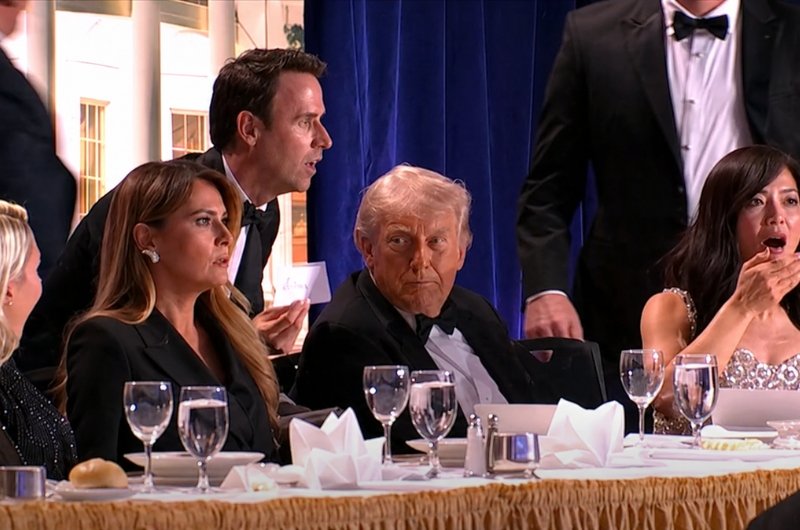
A man identified by authorities as Cole Tomas Allen has been charged after an attempted assassination plot targeting President Donald Trump during the White House Correspondents’ Association dinner at the Washington Hilton hotel. Several shots were fired during the event on April 25, prompting an immediate security response while the dinner was underway Within seconds, Secret Service agents surrounded the president and rushed him from the stage. Vice President JD Vance and other senior officials were also moved to safety as guests inside the ballroom took cover under tables and waited for instructions. Trump, members of the Cabinet, and other dignitaries were not injured. According to a CNN video timeline, several gunshots were heard at 8:34 p.m.. The suspected shooter was then stopped on the floor above the ballroom where the dinner was taking place. By 8:52 p.m., the suspect was seen lying face down on the ground shirtless and in handcuffs as law enforcement secured the scene. Investigators said the suspect remains in custody and faces serious federal charges. The incident has renewed scrutiny of presidential security at large public events, especially when multiple top government officials are gathered in one location. The incident also underscored the complex challenge of protecting national leaders at large public gatherings, where even layered security operations can be tested in seconds by a determined threat.
Why Free Time Is Starting to Look Like Success

For years, packed calendars and nonstop busyness were often treated as signs of ambition. A full schedule could look like proof that someone was in demand, productive, or moving ahead. But for many people, that definition of success is beginning to change. More workers are paying closer attention to burnout, stress, and the cost of always being “on.” Instead of admiring exhaustion, many now value something simpler: time to think, rest, enjoy family, or move through the day without constant pressure. That shift is showing up in small but meaningful ways. Flexible schedules, fewer unnecessary commitments, quieter weekends, boundaries around work, and even silencing phones at night before bed are becoming more attractive than a life that looks impressive but feels draining. Free time does not mean a lack of ambition. In many cases, it can reflect better priorities, stronger systems, or the ability to say no to what no longer matters. In a culture that once celebrated overload, having margin in your life may be emerging as a smarter kind of success. ——————– Related: The Notification Economy: Why Your Attention Is Always in Demand The Quiet Disappearance of Boredom
Powerful Tornado Slams Oklahoma, Damaging Homes and Closing Roads

A forceful tornado struck parts of Oklahoma on Thursday evening, damaging homes and forcing road closures as severe weather swept across the region. The storm moved through Enid, where authorities issued a rare tornado emergency, the highest level of tornado warning used for life-threatening situations. Across the affected area, debris was scattered through neighborhoods and onto nearby roads as crews began assessing the damage. Officials urged drivers to avoid impacted areas while emergency teams worked to clear wreckage and restore access. The storm is part of a broader stretch of volatile weather affecting portions of the central United States, where forecasters have warned of additional threats including strong winds, hail, and possible tornadoes. For many families, the focus now turns from the storm itself to cleanup, recovery, and the uncertainty of what may come next if conditions remain active. Spring storm season often brings sudden and dangerous changes, and officials continue urging residents to stay alert as new warnings develop.
Amazon Lands Major Meta Deal in New Race for AI Power

Meta has signed a major new agreement with Amazon Web Services, giving Amazon a high-profile win in the escalating fight to power the artificial intelligence era. The multiyear deal centers on Amazon’s custom Graviton chips and signals that, in the race for AI dominance, the spotlight is now on the infrastructure running behind it. The agreement calls for Meta to use tens of millions of Graviton processor cores over time, a massive scale that underscores how much computing power modern AI systems now require. For Amazon, the deal strengthens its position as both a cloud giant and a serious hardware player in a market long associated with specialized chipmakers. The broader significance goes beyond two companies. As AI demand surges, control of data centers, chips, and cloud capacity is becoming one of the most important power shifts in the global economy. The companies that provide the digital backbone may prove just as influential as the ones building consumer-facing AI products. The move also reflects a larger U.S. advantage in the worldwide AI contest. Many of the most important players in cloud computing, advanced chips, and frontier AI development remain American companies, giving the United States an outsized role in shaping how the next wave of technology unfolds. The Readovia Lens For readers and investors alike, the signal is clear: as the AI economy grows, the builders behind the scenes may become some of its biggest winners. Amazon may have just claimed a lion’s share of that future.
Google Debuts New TPU Chips Built for the Agentic AI Era

Google has unveiled two new custom AI chips designed to handle the growing demands of advanced artificial intelligence, marking one of the company’s biggest infrastructure announcements of the year. The new processors, called TPU 8t and TPU 8i, were introduced during Google Cloud Next and are aimed at powering the next generation of AI systems. The company says the chips were built for what it calls the “agentic era” — a shift toward AI tools that can reason, make decisions, and complete tasks with less human input. One chip is optimized for training large AI models, while the other is focused on inference, the real-time work of responding to prompts and serving AI applications at scale. The move strengthens Google’s long-running effort to reduce dependence on outside suppliers such as Nvidia, whose graphics processors have become the gold standard for AI workloads. Rather than replacing those partnerships entirely, Google appears to be building a hybrid strategy that combines in-house chips with access to third-party hardware through its cloud platform. For businesses, the announcement signals that the race to build AI is increasingly about who controls the computing power behind the scenes — and who can deliver that power fastest, cheapest, and at global scale. ——————– Related: Broadcom Gains Fresh Attention as AI Infrastructure Demand Grows and Meta Deal Adds Momentum
Trump Administration Reclassifies Some Cannabis Products as Less Dangerous

The Trump administration on Thursday officially reclassified certain cannabis products as less dangerous, marking one of the most significant federal drug policy changes in years. The move lowers qualifying marijuana products from Schedule I to Schedule III, a category used for substances considered to have accepted medical use and lower abuse potential. According to the Justice Department, the change applies to marijuana-related products that are approved by the Food and Drug Administration or licensed under state medical marijuana programs. Acting Attorney General Todd Blanche also called for a broader hearing to consider whether all marijuana should be reclassified. The shift could expand medical research, ease some regulatory barriers, and renew debate over how cannabis is treated under federal law. Marijuana has long remained federally illegal even as many states legalized medical or recreational use. The announcement also highlights the growing gap between federal policy and state-level reality. Across much of the country, cannabis can already be purchased legally under local law, while federal rules have lagged behind public opinion and state legislation. Thursday’s move may signal a larger realignment still to come.
Nervous System Wellness Is Trending as Stress and Burnout Reshape Health Habits

A growing number of people are focusing on “neurowellness” in 2026 as stress, burnout, and digital overload continue to shape daily life. What was once a niche wellness concept is moving into the mainstream, with more attention on habits designed to help the body shift out of constant fight-or-flight mode, including naps, breathwork, walking, and calmer daily routines. The trend includes both simple routines and higher-tech tools. Breathwork, walking, yoga, better sleep habits, and mindfulness practices remain popular, while interest is also rising in wearables and recovery devices aimed at relaxation and resilience. Advertisement Health experts increasingly point to chronic stress as more than a mental burden. It can affect sleep, focus, mood, energy, and long-term physical health. That has helped make nervous system regulation one of the more practical wellness conversations of the moment. The Takeaway For readers, the takeaway may be refreshingly simple: wellness does not always have to mean extreme routines or expensive upgrades. Sometimes it starts with calmer mornings, less screen time, deeper breathing, and giving the body a chance to decompress and recover.
Overnight Senate Vote Moves $70 Billion ICE Funding Plan Forward
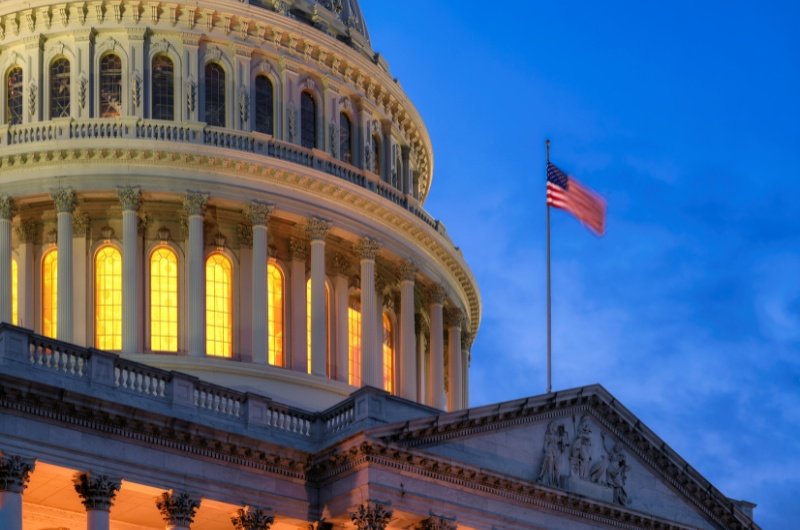
The Senate voted early Thursday to advance a budget framework that would direct roughly $70 billion toward Immigration and Customs Enforcement and Border Patrol over the next three years, pushing one of Washington’s most contentious funding fights into a new phase. The move followed an overnight “vote-a-rama,” where senators considered a rapid series of amendments before the final vote. Republicans used the budget reconciliation process to move the measure forward with a simple majority, avoiding the 60-vote threshold that often stalls major legislation in the Senate. The strategy gives GOP lawmakers a clearer path to pursue immigration enforcement priorities without needing Democratic support. The proposal arrives during a broader dispute over homeland security funding, with immigration policy again emerging as a central dividing line between the two parties. Supporters argue stronger enforcement resources are urgently needed, while critics warn the plan could expand spending without resolving deeper policy disagreements. The measure now shifts to the House, where lawmakers must decide whether to adopt the Senate framework or reshape it before any final package can move closer to becoming law. For now, the overnight vote underscores how border security remains one of the most politically powerful issues in the country.