


The AI Boom Has a Quiet Winner — And Its Stock Is Exploding

You ever notice how the biggest moves in the market don’t always come from the names everyone is talking about? Bandwidth Inc. stock has surged more than 100% in the past month, including a sharp jump in just the last week. It’s the kind of move that makes people stop and ask: what exactly is this company, and what does it do? Bandwidth isn’t building flashy AI tools or consumer apps. Instead, it operates in the background — powering voice, messaging, and communication systems that businesses rely on every day. Think customer service lines, automated calls, verification texts. The infrastructure most people never think about, but interact with constantly. Advertisement That quiet positioning is exactly why the stock is moving. The company recently delivered a strong earnings report, with revenue growth and profitability coming in ahead of expectations. More importantly, it leaned into something investors are paying very close attention to right now: AI. Bandwidth is increasingly tied to the systems enabling AI-driven communication, including voice automation and next-generation contact centers. Partnerships in this space are reinforcing that narrative. Here’s the shift. For the past couple of years, most of the attention has been on AI applications — chatbots, tools, platforms. But behind all of that is a layer of infrastructure that has to handle the actual communication. Voice, messaging, connectivity. It’s a point we’ve been highlighting for months now, and the market appears to be catching up. At the same time, it’s worth keeping perspective. Moves like this don’t happen in a straight line forever. Some of the surge is driven by momentum, renewed attention, and a reset in expectations after the company flew under the radar for a while. That doesn’t invalidate the opportunity — it just means investors are no longer the only ones noticing. The bigger takeaway is less about one stock and more about where the market is looking next. If the first wave of AI winners was about what people can see, the next wave may be about what makes it all work behind the scenes. Even with it’s recent run, Bandwidth’s stock (BAND) is still trading around $40 per share as of today — a level that remains relatively affordable compared to many of the headline AI stocks. For some investors, that adds to the appeal, especially if the shift toward infrastructure continues to gain momentum. I expect it will. ——————– Related: Up 1,000% in One Year: The Stock That’s Turning Heads on Wall Street Why AI Infrastructure Stocks Are Surging
CDC Signals Ongoing Measles Risk as Cases Approach 1,800 Nationwide

As of April 23, 2026, 1,792 confirmed measles cases have been reported across the United States, according to the Centers for Disease Control and Prevention, as health officials warn that additional infections are likely in the months ahead. The agency says the virus—one of the most contagious in the world—continues to circulate in multiple states, with most cases linked to individuals who are unvaccinated or whose vaccination status is unknown. The CDC is urging state and local health departments to remain vigilant, with a focus on early detection, contact tracing, and outreach to communities with lower vaccination rates. Travelers returning from affected areas are also being advised to monitor for symptoms for up to three weeks and seek medical care if concerns arise. For families, the guidance is straightforward. Vaccination remains the most effective protection, and in some cases, infants traveling to higher-risk areas may be eligible for an early dose ahead of the standard immunization schedule. While most people in the U.S. are protected through routine vaccination, the rise in cases serves as a reminder of how quickly preventable diseases can reemerge when coverage declines. With infections continuing to surface, public health officials say awareness and timely response will be key to limiting further spread.
Supreme Court Weakens Voting Rights Protections, Sparks New Map Battles Nationwide

The Supreme Court of the United States has issued a 6–3 ruling that makes it harder to challenge voting maps under the Voting Rights Act—and states are already moving quickly to redraw districts in response. At the center of the decision is a higher legal standard for proving discrimination. Instead of showing that a map unfairly impacts minority voters, challengers may now need to demonstrate intentional discrimination, making these cases significantly harder to win. That shift is already changing the landscape. Several states, particularly in the South, are preparing new congressional maps, with some pushing for changes that could reshape political control ahead of upcoming elections. The speed of the response highlights what’s at stake. Redistricting is unfolding in real time, as lawmakers move to take advantage of a narrower interpretation of federal protections. Reactions remain sharply divided. Civil rights groups warn the decision could weaken representation for minority communities, while supporters say it limits the role of courts and returns more control to states. With future elections approaching, the ruling is expected to influence not just how districts are drawn, but how power is distributed across the country in the years ahead.
Powerball Drawing Produces Rare Surge of Million-Dollar Winners Across the U.S.
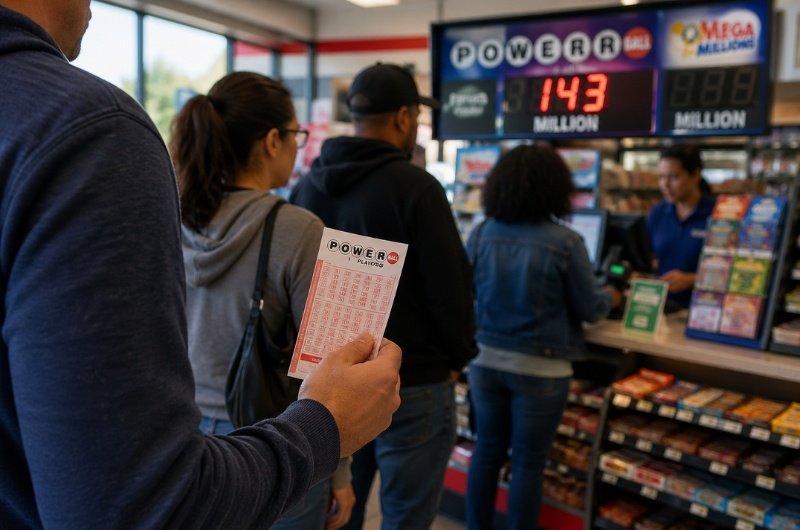
Two winning tickets from Kansas and Indiana split a $143 million Powerball jackpot in the April 29 drawing—but the real surprise was how many other players walked away with life-changing money. The same drawing produced more than 90 high-tier winners across the country, including 62 tickets worth $1 million and 27 tickets worth $2 million with the Power Play option. That’s an unusually large number of big winners for a single drawing, turning what might have been a typical jackpot story into something far more notable. Advertisement When multiple players match all six numbers, the jackpot is split evenly. In this case, the two winning tickets will divide the top prize, while dozens of others came within one number of claiming it all. It’s a reminder of how the game works—and how rare these outcomes still are. The odds of winning any Powerball prize sit at about 1 in 24.87, but the chance of hitting the jackpot remains steep at roughly 1 in 292 million. For most players, it’s about the possibility. For a select group this week, that possibility turned into a seven-figure reality.
Fed Holds Rates Steady as High Mortgage Costs Continue to Weigh on Homebuyers

The Federal Reserve held interest rates steady Wednesday at a range of 3.50% to 3.75%, marking a third straight meeting without a change. But for many Americans hoping to buy a home, the pause isn’t translating into progress. Mortgage rates remain elevated, with recent averages still sitting in the mid-6% range for 30-year loans. That’s keeping monthly payments high and affordability out of reach for many first-time buyers, even as the pace of rate increases has slowed. Advertisement The decision inside the Fed was also far from unified. In one of the most divided votes in decades, four officials dissented—some pushing to remove signals of future rate cuts, while another supported lowering rates immediately. The split highlights growing uncertainty about what comes next. The timing adds another layer of complexity. The meeting is expected to be among the final ones led by Chair Jerome Powell before his term ends in May, with Kevin Warsh viewed as a potential successor. For prospective buyers, the reality is simple: even without new rate hikes, borrowing costs remain high enough to reshape decisions. Some are delaying purchases, others are downsizing expectations, and many are waiting for clearer signals before making a move. For now, the Fed is holding steady. But for the housing market, the question isn’t whether rates are rising—it’s how long they’ll stay high enough to keep buyers on the sidelines.
Why Your Devices Feel Smarter Than Ever—and What That Actually Means for You

Across the U.S., AI-powered devices are increasingly anticipating user behavior, reshaping everyday technology experiences in subtle but powerful ways. Apps appear before they’re searched. Maps suggest routes before departure. Inboxes draft replies that were never fully written. The shift is subtle, but constant—devices are beginning to think ahead. For those who haven’t noticed it yet, it’s likely just a matter of time. This shift isn’t coming from one breakthrough feature. It’s the result of layers of artificial intelligence working quietly in the background, learning your habits, predicting your next move, and removing steps you used to take manually. What once required a search, a click, or a decision is now often handled automatically. In many ways, it’s a clear upgrade. Tasks take less time. Friction disappears. The experience feels smoother, faster, and more intuitive. For busy users, that kind of efficiency is convenient and welcome. But there’s a quieter side to the shift. As devices take on more of the thinking, users are doing less of it. Recommendations replace exploration. Automation replaces small decisions. Over time, that can subtly change how people interact with technology—and how much control they feel they have over it. The bigger story is that devices are beginning to shape the flow of everyday life in ways most people don’t actively notice. The next phase of technology may not be defined by what we ask our devices to do—but by what they start doing on their own.
The Atmosphere Is Changing—and Tornado Season Is Showing It

Across the Midwest and Great Plains, the past several days have unfolded in a grim, repeating pattern: sirens and communities bracing for impact—again and again. The late-April severe weather outbreak has produced dozens of tornadoes, including multiple high-intensity systems powerful enough to flatten homes, uproot infrastructure, and leave entire neighborhoods unrecognizable. This wasn’t a single catastrophic strike. It was a sequence—wave after wave of storms tracking across state lines, giving emergency crews little time to recover before the next rotation touched down. In some areas, residents sought shelter multiple times in the span of 48 hours. The scale and persistence have made this one of the most taxing severe weather stretches in recent memory. Meteorologists classify the strongest of these storms as EF4 tornadoes—violent systems with winds exceeding 160 miles per hour. At that intensity, the distinction between “damage” and “erasure” becomes thin. Buildings don’t just lose roofs; they lose structure. Streets don’t just flood; they disappear under debris fields stretching for miles. But the deeper story is about frequency—and the growing sense that these events are no longer rare. Scientists continue to study how shifting atmospheric conditions, influenced in part by climate change, are contributing to more volatile storm environments: warmer air holding more moisture, clashing with unstable systems to produce longer and more intense outbreaks. For the communities in the storm paths, the consequences are immediate and tangible. Power grids fail. Hospitals switch to emergency protocols. Insurance claims pile up even as some insurers quietly scale back exposure in high-risk regions. Recovery, once measured in weeks, increasingly stretches into months—sometimes overlapping with the next disaster. There’s also a psychological toll that doesn’t show up in damage estimates. The unpredictability, the repetition, the constant readiness to drop everything and take cover—it reshapes how people live. When warnings come this often, the question isn’t just how to rebuild, but how to sustain a sense of normalcy at all. The United States has always had a tornado season. What’s changing is its character. Outbreaks like this are testing the assumption that these events are isolated interruptions rather than recurring features of daily life. In that sense, this week’s storms are a signal: the sirens may be temporary, but the conditions behind them are not.
The Solo Traveler: Adventure on Your Own Terms

Solo travel is no longer a fringe pursuit — it’s becoming one of the defining trends of modern exploration. From luxury resorts to boutique city stays, the travel industry is adapting to a new generation of travelers who prefer setting out on their own. Airlines and hotels report increasing numbers of single bookings, while tour operators are launching solo-friendly packages designed to attract this growing demographic. The appeal is as much about freedom as it is about discovery. Traveling solo means following your own schedule, indulging personal curiosities, and connecting with new people along the way. For many, it’s an empowering experience that fosters confidence, independence, and a deeper sense of cultural immersion. Destinations like Bali, Lisbon, and Tokyo have become magnets for solo adventurers, offering both safety and vibrant social scenes. Luxury travel brands are also recognizing the opportunity. Upscale hotels and resorts are introducing curated experiences for individuals — from guided tastings to one-on-one adventure excursions. Solo travelers are often highly engaged spenders, eager to invest in meaningful activities and personalized services rather than compromise for group preferences. But going it alone isn’t without challenges. Traveling alone can sometimes be more expensive, with hotels and cruises charging nearly the same rates as if two people were staying. Safety concerns and occasional loneliness also remain real considerations. Savvy travelers overcome these obstacles with thoughtful planning, leaning on online communities, curated itineraries, and flexible accommodations like co-living spaces that balance solitude with social connection. As more travelers embrace the idea of taking flight alone, the solo journey is being redefined not as a fallback option, but as a deliberate choice — a chance to design an adventure on your own terms. For many, it’s not just travel — it’s transformation.
Supreme Court Weighs Trump Bid to End Protections for Haitian and Syrian Immigrants

President Trump’s immigration agenda returned to the Supreme Court on Wednesday as justices weighed whether the administration can end Temporary Protected Status for hundreds of thousands of Haitian and Syrian immigrants. The case could carry consequences far beyond one policy, potentially redefining how much authority presidents have over humanitarian immigration programs. Temporary Protected Status, or TPS, allows people from countries facing war, natural disaster, or severe instability to live and work legally in the United States for designated periods of time. Lower courts previously blocked efforts to cancel those protections, ruling that judges can review whether the government acted lawfully. The administration has argued those decisions should rest largely with the executive branch. The dispute is also a broader test of executive power and judicial oversight. At the center of the case is whether a president can reverse protections with limited court review, even when conditions in the affected countries remain dangerous or unstable. Haiti continues to face deep unrest and widespread insecurity, while Syria is still recovering from years of war and displacement. For many families, the ruling will determine whether legal stability in the United States can continue or disappear with a policy change in Washington. A decision is expected by June. The outcome could influence not only the future of TPS, but how far any administration can go when reshaping immigration policy through executive authority.
Pentagon Turns to Google as AI Expands Into National Security
Google has reportedly signed a classified artificial intelligence agreement with the Pentagon that would allow the U.S. military to use the company’s AI models in secure government environments, marking a major expansion of AI into national defense operations. Reports indicate the agreement includes restrictions on uses such as domestic mass surveillance and fully autonomous weapons without human oversight. Even so, critics argue those guardrails may be difficult to measure once systems operate inside classified networks. That tension highlights a larger reality: AI governance is now being tested in real national-security environments, not just in public debate. For Google, the deal represents both opportunity and risk. Defense contracts can bring long-term revenue and strategic influence, but they also reopen ethical questions that many tech companies once tried to avoid. For Washington, it reflects a growing belief that future military strength may depend as much on software and intelligence systems as traditional weapons. The next chapter of artificial intelligence may be driven less by consumer buzz and more by institutional adoption behind closed doors. As governments, militaries, and major enterprises choose their AI partners, influence could shift toward the companies trusted to power critical systems.