

Democrats & Republicans Pitch Competing Plans to Tackle America’s Affordability Crisis

As the cost of living continues to stretch household budgets, lawmakers on Capitol Hill are rolling out competing proposals aimed at lowering expenses for millions of Americans. With affordability emerging as one of the dominant political issues heading into 2026, both parties are trying to claim the mantle of economic relief — but with sharply different approaches. Democrats are pushing a plan centered on reducing out-of-pocket costs for everyday essentials, including efforts to lower prescription drug prices, expand housing assistance and boost subsidies for child care. They argue that household budgets have endured years of inflation-driven pressure and need immediate, direct support. Republicans, meanwhile, are prioritizing tax relief and deregulation. Their proposal focuses on easing federal rules they argue drive up prices, while offering targeted tax credits aimed at working families and small businesses. GOP leaders say the fastest way to bring down costs is to reduce the government’s footprint and spur private-sector growth. Households Still Feeling the Strain Despite slowing inflation and brighter economic indicators in some areas, many Americans say their financial stress hasn’t eased. Rising rents, higher insurance premiums, lingering food costs, and elevated interest rates continue to weigh heavily on families — especially lower-income consumers who face the steepest trade-offs. A Political Battle With Real Stakes With both chambers looking ahead to a contentious 2026 election season, lawmakers are racing to present solutions that resonate with voters. While the two plans share the same goal — improving affordability — the divide over how to get there has set the stage for months of negotiations. For now, Americans are watching closely, hoping the gridlock breaks and real relief finally reaches their wallets.
Record Holiday Travel Surge Expected to Pack Airports and Crowd Highways This Week

A record 122 million Americans are expected to travel this Christmas and New Year’s period, marking one of the busiest holiday travel seasons ever recorded. New AAA forecasts show that more than 109 million people will hit the road, while over 8 million are expected to fly — levels that rival and, in some cases, surpass pre-pandemic highs. Airlines are reporting near-full flights throughout the week, and transportation officials warn that airport passenger volumes will place heavy strain on security checkpoints and terminal operations. Families heading home for the holidays are being urged to arrive early and expect longer-than-usual wait times. Airports Prepare for the Rush Carriers have added aircraft on popular routes and reassigned crews to accommodate demand, but the sheer volume of travelers means major airports will remain crowded through Christmas Eve. Any winter weather system — even a minor one — has the potential to create ripple effects nationwide during such a tightly packed travel window. Congested Roads Ahead Drivers will make up the majority of holiday travelers. With 109 million people driving at least 50 miles from home, traffic analysts project heavy congestion on interstates across the Midwest, Northeast, and South. Lower gas prices are helping make road trips more affordable, but major delays are still expected, particularly during late afternoons and early evenings leading into the holiday. A Nation on the Move Despite higher household costs and a busy December news cycle, Americans are not staying home this season. The travel surge reflects a strong drive to reconnect with loved ones — and it’s creating one of the most spirited, high-movement holiday periods in years.
The Rise of “Second Christmas”: Why More Families Are Embracing an Extended Holiday Tradition

While Christmas Day often carries the weight of expectation — family schedules, long drives, crowded homes, and carefully choreographed moments — a quieter holiday tradition is gaining fresh attention in the United States: Second Christmas. Long celebrated across Europe and observed in some American communities, including Amish households, Second Christmas (traditionally December 26th) offers something rare in modern life: a built-in pause. It’s a day meant for slower gatherings, relaxed meals, casual visits, winter walks, and time with extended friends and family who didn’t fit into the intensity of Christmas Day. A Softer Follow-Up to a Busy Holiday Unlike the high-pressure rhythm of December 25th, Second Christmas shifts the focus away from gifts, travel, and time slots — and toward connection. Families who observe it describe it as the “exhale” of the holiday season, a day where no one rushes, the meal is simple, and the goal is to enjoy the moments that didn’t fit into the first celebration. For many, it’s a way to stretch the meaning of Christmas rather than the commercial side of it. Instead of repeating the intensity of the holiday, the day is used for something gentler: leftovers, card games, calling old friends, or hosting another round of family who couldn’t make the main event. A Tradition Rooted in History Second Christmas has deep cultural roots. In countries such as Germany, the Netherlands, and the Nordic region, the “Second Day of Christmas” is a national holiday built into the calendar. In the U.K., it aligns with Boxing Day, and in parts of the Christian world, it coincides with St. Stephen’s Day. While practices differ, the central idea is the same: one day isn’t enough to fully celebrate or fully rest. Why It’s Resonating in America Today Modern family life is more complex than ever — blended households, long-distance relatives, competing schedules, and the rise of remote work have all stretched the traditional holiday calendar. Second Christmas is emerging as a natural solution. Instead of packing every obligation into a single 24-hour window, families are spreading the holiday over two days, making room for: Multiple households Easier travel Reduced stress More meaningful time with loved ones Less pressure on Christmas Day itself For some, it simply means waking up on the 26th with nowhere they have to be — a rare gift in itself. A Tradition Finding New Momentum Whether celebrated formally or improvised out of necessity, Second Christmas offers something undeniably modern: permission to slow down. At a time when the holidays can feel busy, loud, and overstuffed, the idea of an intentional, peaceful follow-up day is resonating with more families each year. In a world that rarely pauses, Second Christmas is becoming a small but meaningful way to reclaim a bit of rest — and a bit of joy — before the year ends.
Paramount Ups the Pressure With $40B Guarantee in Bid for Warner Bros. Discovery
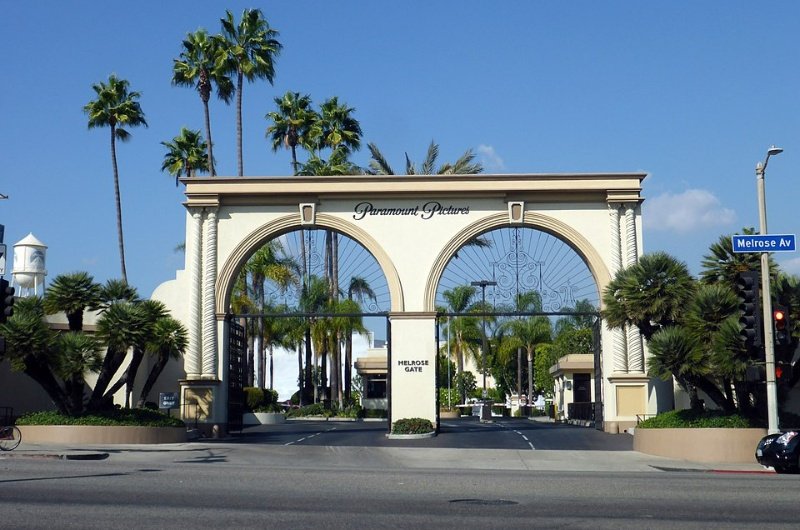
Paramount Skydance has escalated its aggressive push to acquire Warner Bros. Discovery, unveiling a dramatically revised offer that includes a $40.4 billion personal financial guarantee from Oracle co-founder Larry Ellison. The updated move is designed to reinforce the strength of Paramount’s financing and counter concerns raised by Warner Bros.’ board about the certainty of the deal. The company’s hostile bid seeks to acquire all outstanding shares of Warner Bros. Discovery at $30 per share in cash, valuing the studio at roughly $108.4 billion — significantly higher than the competing offer already accepted from Netflix. Paramount is positioning its bid as the stronger choice for shareholders, emphasizing its all-cash certainty and its intention to acquire the full company rather than a partial stake. A Takeover Battle Intensifies Warner Bros. Discovery’s board, however, has urged shareholders to reject the hostile offer, calling it risky and inferior to its existing merger agreement with Netflix. That deal combines Warner Bros.’ film and TV assets — including HBO and HBO Max — with Netflix’s global streaming infrastructure in a stock-and-cash transaction the board says offers greater stability. In a clear sign that Paramount intends to continue the fight, its revised bid also raises the reverse termination fee to match Netflix’s terms and extends its tender offer deadline into January, keeping the pressure on as the industry heads into the new year. The Stakes for Hollywood Whoever prevails in this battle will shape the future of the entertainment landscape. A Paramount-led takeover would unite two major studios under one roof, potentially altering the balance of power in film, television, and streaming. Both proposals will likely face intense regulatory scrutiny in the United States and abroad, and analysts expect a prolonged review process before any path forward becomes clear. For now, Paramount and Netflix are locked in a high-stakes competition — and Warner Bros. Discovery shareholders hold the next decisive move. ——————– Related: Netflix’s Epic Power Move to Acquire Warner Bros. Studios and HBO for $82 Billion Paramount Attempts to Outbid Netflix to Acquire Warner Bros. Discovery Warner Bros. Discovery Rejects Paramount’s $108.4 Billion Bid
Nvidia Prepares to Ship Advanced H200 AI Chips to China by February

Nvidia is preparing to begin shipments of its next-generation H200 AI accelerators to China as early as mid-February, marking a significant development in the global competition for advanced semiconductor hardware. The move comes as companies across Asia search for high-performance chips that comply with U.S. export restrictions while still offering powerful AI training capabilities. The H200 — a successor to the industry-leading H100 — delivers faster memory, improved efficiency and higher throughput, making it one of the most sought-after chips for AI development. While the company cannot sell its most powerful models under the current U.S. export rules, the China-compliant H200 variant is designed to remain within regulatory limits while still giving Chinese firms a substantial performance lift. A Shift in the AI Hardware Balance Analysts say the carefully calibrated H200 rollout highlights the delicate balance Nvidia must strike: sustaining revenue from a major global market while remaining aligned with Washington’s national security constraints. The company has already developed multiple tailored chips for China following increasingly strict rules on AI hardware exports. The planned February timeline signals that Nvidia has completed technical and regulatory adjustments needed to resume broader sales in the region — a development being watched closely by both industry competitors and U.S. policymakers. The Wider Lens China remains one of the world’s largest consumers of AI-specific hardware, and even scaled-back chips tend to sell at high volumes. Nvidia’s ability to maintain presence in the market could influence everything from global supply chains to the pace of AI development in Asia. Meanwhile, U.S. officials continue monitoring how much computing power exported chips provide, arguing that limiting access to cutting-edge hardware is essential to prevent military-grade AI systems from being built abroad.
Suspect in Brown University Shooting Found Dead in New Hampshire Storage Facility

The suspect wanted in connection with the deadly shooting at Brown University — an attack that left two students dead and nine others wounded — was found dead late Thursday night inside a storage unit in Salem, New Hampshire, authorities confirmed. The discovery ends a multi-day manhunt that spanned multiple states following the Saturday afternoon massacre on campus. Police said an unexpected tip came from a homeless man who spotted a suspicious vehicle near campus in the hours after the Brown University shooting. He posted what he saw in a Reddit thread, and the details quickly caught investigators’ attention, ultimately helping police identify the suspect’s car and move the case forward. Officials identified the suspect as Claudio Manuel Neves Valente, 48, a former Brown University graduate student. Investigators say he died from an apparent self-inflicted gunshot wound. His body was discovered in a storage unit he rented, where authorities had tracked him after days of coordinated surveillance and investigative leads. Valente is also believed to be responsible for the fatal shooting of an MIT professor earlier in the week. According to investigators, the professor was found dead in his Brookline, Massachusetts home on December 15, and evidence recovered from both scenes suggested the same gunman. Police say there is no indication that anyone else was involved in either attack. The motive remains under investigation, and authorities are now turning their attention to reconstructing the suspect’s movements in the hours and days following both shootings. The Brown University attack unfolded inside the Barus & Holley engineering building, where students had gathered for a review session ahead of finals. Two students were killed and nine others were wounded before the shooter fled, prompting an urgent, widespread search that concluded with Thursday’s discovery. Officials are expected to release additional details as the investigation progresses.
Australia Launches Gun Buyback After Sydney Beach Attack

Australia’s prime minister Anthony Albanese has announced a sweeping national gun buyback program, marking the country’s most significant firearms reform effort in nearly three decades. The move comes after the deadly Bondi Beach attack earlier this month, where a gunman opened fire during a Hanukkah celebration, killing 15 people and reigniting urgent calls for stronger gun control. Albanese said the government will introduce legislation early next year to launch a coordinated national buyback that will target newly banned weapons, illegal firearms, and surplus guns already in circulation. Officials expect it to become the largest such effort since the landmark reforms that followed the 1996 Port Arthur massacre. The prime minister highlighted that Australia now has more than four million firearms in private hands — more than at the time of the Port Arthur attack — and warned that the nation cannot “assume past success guarantees future safety.” He called the buyback and new restrictions essential steps to reduce the risk of mass violence. In addition to the buyback, the government plans to tighten gun laws by capping how many firearms an individual can own, speeding up development of a national firearms register, and strengthening eligibility requirements for gun licenses. State and territory leaders have agreed to work with the federal government on rollout and enforcement details. The announcement reflects a growing national consensus that Australia must update its gun laws to meet modern threats. Full legislative details are expected to be released in the coming weeks.
Trump Announces $1,776 ‘Warrior Dividend’ Payout for U.S. Troops

President Donald Trump announced Wednesday night that roughly 1.45 million U.S. service members will receive a one-time bonus of $1,776 before Christmas — a symbolic nod to the nation’s founding year. The White House is calling the payment a “warrior dividend,” describing it as a holiday boost for active-duty troops and certain reservists. According to the administration, the payout will go to service members up to the rank of O-6, including those deployed overseas. Trump said the money would be funded through tariff revenues and a reallocation of existing Pentagon resources — a move that is already prompting questions from lawmakers about whether the executive branch can redirect those funds without congressional approval. The announcement comes at a politically charged moment, with Trump using the primetime address to argue that his economic agenda is strengthening the country and supporting those “who serve on the front lines of America’s defense.” The White House framed the bonus as both a thank-you to the military and a preview of broader policy plans heading into 2026. Critics, however, warn that redirecting money originally intended for military housing and infrastructure could create long-term challenges for a force already grappling with aging barracks, maintenance backlogs, and quality-of-life concerns. Military advocacy groups say they welcome the extra support for troops but worry about what might be sacrificed in exchange. For service members, the payments are expected to arrive as part of year-end processing — providing a symbolic and financial lift during the holiday season. Whether the “warrior dividend” becomes a recurring benefit or remains a one-time gesture will likely depend on political negotiations in the months ahead.
Blue Origin to Launch First Wheelchair User Into Space on Historic Flight
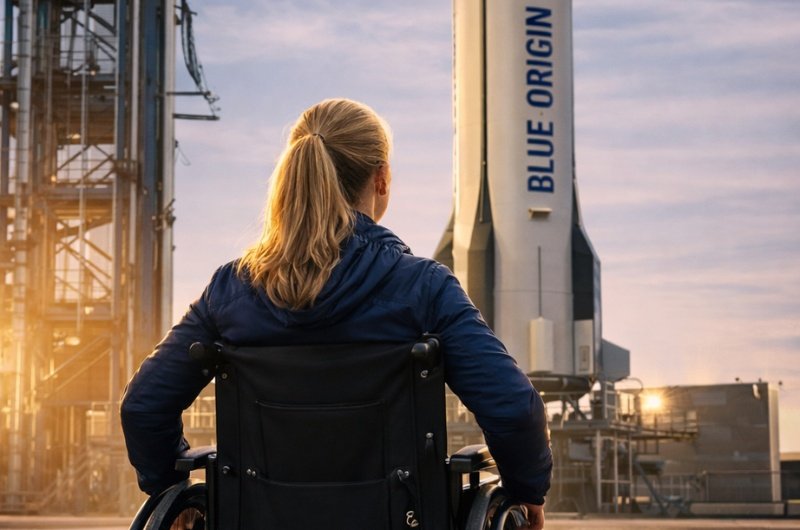
Blue Origin is preparing to make spaceflight history this week as aerospace engineer Michaela “Michi” Benthaus becomes the first person who uses a wheelchair to travel into space. The milestone mission is scheduled to lift off from West Texas aboard the company’s New Shepard vehicle, marking a major step toward accessible space tourism. Benthaus, an accomplished engineer with deep experience in spacecraft design, has used a wheelchair since a 2018 spinal cord injury. Despite the physical challenges that followed, she continued pushing forward in her field — and will now join a crew of six on a brief suborbital journey that lasts approximately ten minutes from launch to landing. To accommodate her needs, Blue Origin designed several modifications to the cabin environment, including specialized seating and additional assistive harnessing to ensure she can safely experience weightlessness. Engineers involved with the flight say the adjustments were minor compared to the symbolic impact of the mission itself. Blue Origin calls the launch a “breakthrough moment” for the future of civilian space travel. Advocates for accessibility say it represents a powerful shift in who gets to participate in humanity’s next era of exploration. For decades, spaceflight was reserved for elite, physically screened astronauts; now, commercial space companies are pushing to broaden the definition of who belongs among the stars. If successful, Benthaus’ journey could pave the way for more inclusive participation in future missions — and expand the possibilities of space travel far beyond traditional limits.
Disney Strikes Three-Year AI Deal With OpenAI Covering Hundreds of Characters
Walt Disney has entered a three-year partnership with OpenAI that will allow more than 200 of its iconic characters to be used in AI-generated images and video, marking one of the most expansive licensing agreements yet between a major entertainment company and an artificial intelligence platform. Under the agreement, characters from across Disney’s portfolio — including Mickey Mouse, figures from Inside Out and Frozen, and Marvel superheroes — will be available for photo generation within ChatGPT and video creation through OpenAI’s Sora platform. The content will be created by users of those tools, rather than by Disney directly. Disney will retain the right to showcase select user-generated videos on Disney+, integrating AI-created content into its streaming ecosystem while maintaining control over how its intellectual property is presented. The arrangement positions Disney to benefit from the growing popularity of generative AI without surrendering ownership of its characters. The deal reflects a broader shift in how entertainment companies are approaching artificial intelligence, moving from defensive postures around copyright to structured partnerships that monetize access while setting boundaries. It also gives OpenAI one of the most recognizable character libraries ever licensed for generative use. The partnership was announced Dec. 11 and comes as studios across Hollywood explore how AI tools can coexist with traditional content creation, licensing models, and distribution platforms.