


Nvidia has dominated the artificial intelligence boom, but some analysts are increasingly asking a different question: what companies positioned deeper in the AI supply chain could grow even faster in 2026?
While Nvidia designs the GPUs powering advanced AI systems, other firms are building the infrastructure, memory, data services, and cloud capacity that make those systems possible. As AI demand expands beyond model training into large-scale deployment, several lesser-known names are drawing attention.
Innodata (NASDAQ: INOD) operates in a niche but essential corner of the AI ecosystem: data annotation and engineering. Large language models require massive volumes of structured, labeled data, and demand for high-quality datasets has surged as companies move AI tools into production environments. Analysts point to rapid revenue growth projections as a key reason the company has gained attention.
Nebius Group (NASDAQ: NBIS) focuses on AI-optimized cloud infrastructure. Rather than designing chips, it provides dense GPU clusters and specialized software environments for AI workloads. With AI compute capacity in high demand globally, companies offering ready-to-deploy infrastructure are seeing strong utilization rates and aggressive expansion plans.
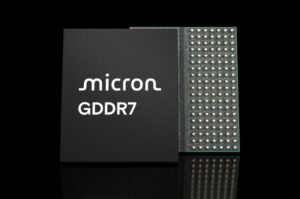
Micron Technology (NASDAQ: MU) plays a different role. The semiconductor manufacturer produces high-bandwidth memory, a critical component for advanced AI chips. As AI systems grow more complex, memory demand is increasing alongside processing power, creating supply constraints that have benefited memory producers.
Finally, several former cryptocurrency mining firms are pivoting toward AI cloud hosting. With existing data center footprints and energy contracts in place, these companies are repurposing infrastructure to support AI workloads, seeking to capitalize on the surge in compute demand.
Still, investors should recognize that higher growth potential often comes with higher volatility. Many of these companies are smaller, less diversified, and more sensitive to shifts in AI spending cycles. Nvidia remains the dominant player, and betting against an established market leader carries risk.
For investors in 2026, the bigger story may not be replacing Nvidia — but understanding the broader AI supply chain. From memory to data engineering to cloud infrastructure, the AI boom is creating opportunity well beyond a single stock.