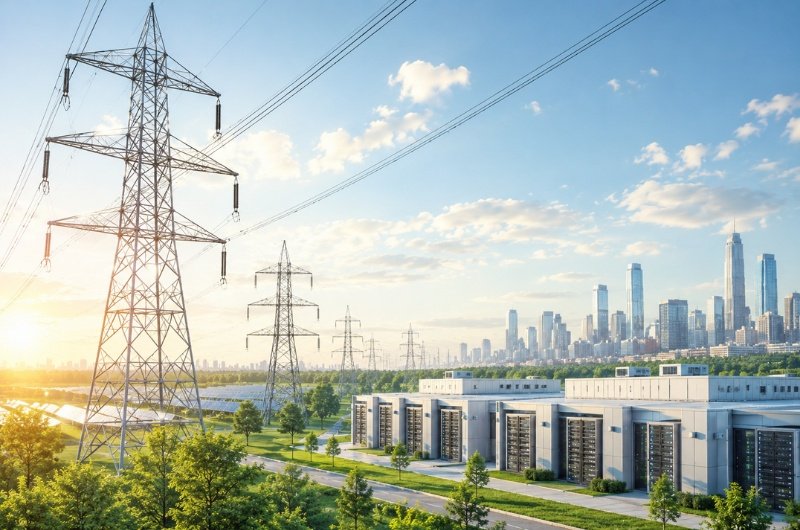
The artificial intelligence boom is beginning to reshape a part of the economy few investors expected: America’s power industry.
A massive proposed merger involving two of the nation’s largest energy companies is drawing new attention to how quickly electricity demand is becoming one of the defining forces behind the next phase of the AI economy. The deal would create one of the most powerful utility operators in the United States at a time when artificial intelligence is driving an unprecedented expansion of data centers across the country.
For years, AI was largely viewed as a software revolution unfolding through chatbots, algorithms, and digital platforms. But behind the scenes, the technology depends on something far more physical: enormous amounts of electricity.
Training and operating advanced AI systems now requires sprawling data centers filled with high-performance chips running around the clock. Those facilities consume massive amounts of energy for computing, cooling, and infrastructure support — and demand is rising rapidly as AI adoption accelerates across business, government, healthcare, finance, and consumer technology.
The shift is beginning to change how Wall Street views utility companies and energy infrastructure. Investors who once treated power companies as slow-moving defensive plays are increasingly recognizing them as critical participants in the AI economy itself. In some regions, utility providers are already racing to expand grid capacity to support a growing wave of AI-related construction projects.
Virginia has emerged as one of the clearest examples of the transformation underway. Already home to one of the world’s largest concentrations of data centers, the state has become a major hub for the infrastructure powering artificial intelligence. Similar expansions are beginning to spread into other parts of the country as technology firms compete to secure long-term energy access for future AI growth.
The implications could stretch well beyond the technology sector. As AI infrastructure expands, energy demand is expected to fuel new investment in grid modernization, transmission systems, battery storage, renewable energy, and nuclear power. Some analysts now believe electricity availability itself could become one of the most important competitive factors in the global AI race.
At the same time, the rapid growth of AI infrastructure is raising broader economic questions. Building and powering massive data centers requires billions of dollars in long-term investment, and some experts believe the growing strain on regional grids could eventually place upward pressure on electricity costs in heavily concentrated markets.
The emerging reality is becoming harder to ignore: artificial intelligence may be digital, but the economy supporting it is deeply physical.
For investors, the shift is becoming increasingly difficult to ignore. As artificial intelligence expands beyond software into full-scale infrastructure, utilities, grid operators, energy producers, and data center companies are beginning to attract renewed attention from Wall Street. The AI economy may ultimately create winners far beyond traditional technology firms.
The Readovia Lens
We’ve said it before – the next phase of the AI boom may depend less on apps and more on infrastructure. Behind every intelligent system is a growing network of power plants, transmission lines, cooling systems, and data centers consuming extraordinary amounts of electricity. In the years ahead, the companies supplying that energy may quietly become some of the most important players in the modern economy.