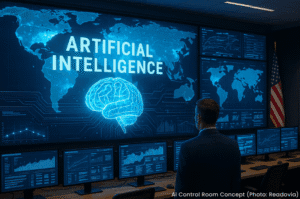
Artificial intelligence is entering a new phase — one that moves beyond tools that assist humans and toward systems that act on their behalf. AI agents, designed to carry out multi-step tasks with limited human oversight, are increasingly being tested across enterprise workflows. But as their capabilities grow, so do questions about trust, accountability, and control.
According to research published by the Capgemini Research Institute, many organizations are eager to deploy AI agents but remain uneasy about how much autonomy these systems should have. The research highlights a growing tension: companies want the efficiency and scale AI agents promise, yet struggle with concerns over reliability, transparency, and decision ownership once humans are no longer directly in the loop.
This tension is becoming more visible in 2026 as AI agents move out of pilot programs and into real operational roles. Unlike earlier AI systems that supported analysis or recommendations, agentic AI can initiate actions, coordinate across systems, and make decisions that have immediate business consequences. That shift forces leaders to confront a difficult question: when an AI agent makes a mistake, who is responsible?
Trust has emerged as the central constraint. The Capgemini analysis suggests that while executives recognize the productivity gains AI agents could deliver, many remain cautious about granting them authority over critical processes. Concerns range from data integrity and bias to regulatory exposure and reputational risk. In highly regulated industries, even small errors can carry outsized consequences, making unchecked autonomy a risk few are willing to take.
As a result, many organizations are experimenting with hybrid models that keep humans firmly in supervisory roles. Rather than fully autonomous systems, companies are opting for AI agents that operate within defined guardrails, with escalation paths and human approval built into key decision points. This approach reflects a broader realization that governance, not capability, will determine how fast AI agents can scale.
The rise of AI agents is no longer a question of if, but how. As businesses weigh efficiency against control, trust is becoming the currency that determines adoption. In 2026, the companies that succeed with AI agents are unlikely to be the fastest adopters, but those that establish clear accountability, transparency, and human oversight from the start.