

Walking vs. Running: Which One Is Actually Better for Your Health?

If you’re trying to get in shape, one of the most common questions is also one of the simplest: should you walk or run? The answer depends on your goals — but research makes one thing clear: both can improve your health in meaningful ways. The difference comes down to time, intensity, and impact on the body. Running is the more time-efficient option. Studies show it can burn roughly 43% more calories per minute than walking, making it a stronger choice for weight loss and cardiovascular improvement. In fact, a short run can deliver similar benefits to a much longer walk — meaning if your schedule is tight, running gives you more return in less time. Advertisement Long-term research also shows that runners tend to see greater reductions in body mass index (BMI) and waist circumference, along with a lower risk of conditions like high blood pressure, high cholesterol, and diabetes. In simple terms, running pushes the body harder — and often produces faster results. But walking holds its own, especially when it comes to accessibility and sustainability. As a low-impact exercise, it’s easier on the joints and better suited for beginners, older adults, or anyone recovering from injury. And while it may take longer to achieve the same calorie burn as running, walking still delivers strong, evidence-based benefits for heart health, blood pressure, and blood sugar control. The trade-off is time. A brisk walk may need to last longer to match the effects of a shorter run — but for many people, that trade-off is worth it if it means staying consistent and avoiding injury. That’s really the deciding factor. The best workout isn’t just about intensity — it’s about what you can maintain. A daily walk you stick with will outperform an ambitious running plan that fades after a few weeks. For those who want the best of both worlds, combining the two can be highly effective. Walking on recovery days and running on others allows you to build endurance while reducing strain on the body.
What Financial Stability Really Looks Like for Americans Right Now

Financial stability used to follow a familiar formula: a steady job, manageable bills, a growing savings account, and maybe a home. For decades, that definition held. But today, for many Americans, the concept has quietly shifted. A person can have a stable job, consistent income, and still feel financially stretched. Rising housing costs, higher interest rates, and everyday expenses have reshaped what it means to “be okay” financially. Stability is no longer about getting ahead. For many, it’s about keeping up. Advertisement In today’s economy, financial stability often looks like maintaining cash flow rather than building wealth. It means paying bills on time, managing debt carefully, and having just enough flexibility to handle unexpected expenses. Savings may exist, but they’re often smaller or more fragile than in previous generations. Another key shift is psychological. Even those who are technically stable may not feel secure. Economic uncertainty, fluctuating costs, and long-term financial pressures have created a mindset where stability feels temporary rather than permanent. For some households, stability now includes side income streams, stricter budgeting, and more intentional spending. The goal isn’t necessarily growth — it’s resilience. And in many ways, that may be the clearest sign of how the definition has evolved. The Readovia Lens Financial stability has been redefined, at least for now. In this economic environment, stability is less about accumulation and more about control. Those who can manage their cash flow, adapt to changing costs, and avoid financial shocks are, by modern standards, stable — even if their balance sheet looks different from the past.
Elon Musk’s ‘Terafab’ Signals a New AI Power Play — And a Break From Big Tech’s Supply Chain
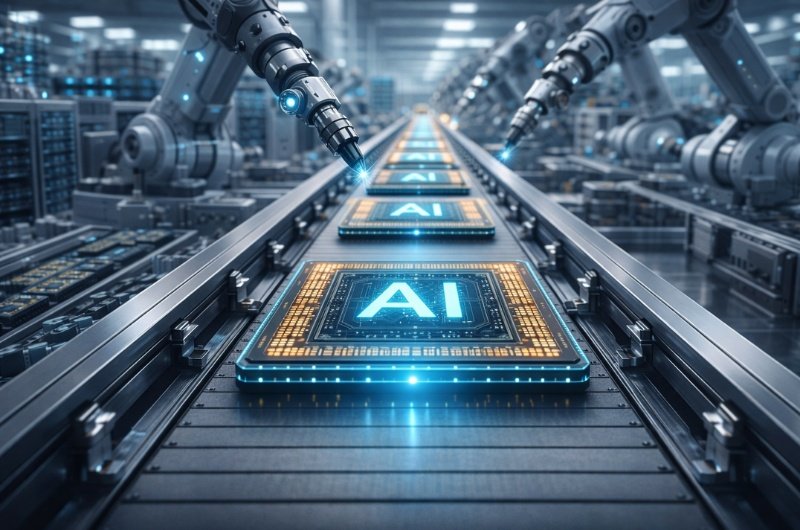
Elon Musk’s push into artificial intelligence just took a dramatic turn — and it’s not about software. It’s about control. Tesla is preparing to launch what Musk calls the “Terafab” project, an ambitious effort to build its own artificial intelligence chips and reduce reliance on traditional semiconductor giants. The move signals a deeper shift in how the world’s most influential tech companies are approaching AI: not just building smarter systems, but owning the infrastructure that powers them. At its core, Terafab is about scale. Musk has repeatedly warned that existing chip manufacturers cannot produce enough advanced processors to support the growing demands of autonomous vehicles, robotics, and large-scale AI systems. Instead of waiting for suppliers to catch up, Tesla is moving to build its own pipeline from design to production, bringing one of the most critical layers of the AI stack in-house. The implications extend far beyond Tesla’s self-driving ambitions. These chips are expected to power everything from next-generation vehicle intelligence to humanoid robotics and large-scale AI training systems. In Musk’s broader vision, they could even support future computing infrastructure that operates beyond traditional limits. But the move also reflects a growing tension across the tech industry. As demand for AI accelerates, reliance on a small group of chipmakers has become a strategic vulnerability. By investing in its own fabrication capabilities, Tesla is positioning itself not just as an AI user, but as a potential AI infrastructure player. The question now is whether Musk can deliver. Semiconductor manufacturing remains one of the most complex and capital-intensive industries in the world. Even with Tesla’s resources and Musk’s history of bold execution, Terafab stands as one of the company’s most ambitious and uncertain bets yet. Between The Lines – The Readovia Lens This “Terafab” move is about independence and leverage. Chips, data centers, and energy are quickly becoming a battleground. The next phase of the AI economy won’t be defined by who builds the smartest models, but by who controls the systems that make them possible. Tesla is positioning itself to operate without constraints — in a world where access to compute may determine who leads and who falls behind.
Atlantis Paradise Island: Inside the Caribbean’s Most Iconic All-In-One Resort Escape

There are beach resorts—and then there is Atlantis Paradise Island, a destination that feels less like a hotel and more like a self-contained world. Set along miles of white sand and turquoise water in the Bahamas, the resort blends luxury, entertainment, and natural beauty into a single, expansive experience designed for both relaxation and adventure. At the heart of Atlantis is Aquaventure, a 141-acre water playground featuring high-speed slides, river rides, and dozens of swimming areas woven through lush tropical landscapes. Guests also have access to more than 14 pools and over 20 swimmable spots, along with five miles of pristine beaches that stretch across the island. But Atlantis is more than just water. The resort spans five distinct hotel properties, each offering a different level of experience—from family-friendly stays to elevated, adults-focused luxury. Across the property, guests can explore more than 40 restaurants, bars, and lounges, ranging from casual beachfront dining to fine culinary experiences, making it one of the most expansive dining destinations in the Caribbean. The resort is also home to one of the largest open-air marine habitats in the world, where thousands of sea creatures—from sharks to stingrays—move through lagoons and aquariums designed to immerse visitors in ocean life. Dining, shopping, and entertainment extend into a lively marina village, creating a seamless blend of resort living and island exploration. In the end, Atlantis Paradise Island delivers something few destinations can: variety at scale. Whether you’re spending the day poolside, drifting through a mile-long river, or stepping onto powder-soft sand at sunset, the experience feels curated, immersive, and unmistakably unforgettable.
A Simple Blood Test Could Detect Alzheimer’s Years Earlier — And It’s Getting Closer to Reality

Detecting Alzheimer’s disease has long required expensive brain scans or invasive procedures, often after symptoms have already begun to appear. But new research suggests that may soon change, with scientists developing blood tests capable of identifying early signs of the disease years in advance. These tests focus on specific biomarkers in the blood, including proteins linked to the buildup of amyloid plaques and tau tangles in the brain — hallmarks of Alzheimer’s. In recent studies, some of these tests have shown promising accuracy, raising the possibility of earlier and more accessible diagnosis. Advertisement The potential impact is significant. Earlier detection could allow patients to begin treatments sooner, participate in clinical trials, and make more informed decisions about their long-term care. It may also give researchers a better opportunity to study the disease before it progresses. While the science is advancing quickly, experts caution that these tests are still being refined and are not yet widely available for routine use. Questions remain around standardization, accessibility, and how results should be interpreted in clinical settings. Even so, momentum is building. As research continues, a simple blood test could become one of the most important tools in the fight against Alzheimer’s — shifting the focus from late-stage diagnosis to early detection and prevention.
Foldable Phones Are Back — Signaling the Next Shift in Mobile Design

Foldable smartphones are making a return, and this time, the technology appears far more practical. After years of durability concerns and high price tags, manufacturers are delivering devices that are thinner, stronger, and better suited for everyday use. Recent models feature improved hinge designs, reduced screen creasing, and longer battery life. These upgrades address many of the early issues that made foldable phones feel more experimental than essential. The appeal is simple: one device that functions as both a compact phone and a larger, tablet-like screen. For users who multitask, stream content, or work on the go, that added flexibility is becoming increasingly attractive. Prices remain on the higher end, but competition is beginning to push the category forward. As more brands enter the space, innovation is accelerating and costs are slowly becoming more approachable. Foldable phones are evolving into a serious category — and could represent the next shift in how we think about and use mobile devices. Expect major brands to roll out new foldable models later this year as the category gains momentum.
Millions of Americans Are Winning with Side Hustles — And the Trend Is Growing

For millions of Americans, a single paycheck is no longer enough. Across the country, workers are increasingly turning to side hustles and second income streams to keep up with rising living costs and economic uncertainty. Recent surveys show the trend is widespread. Roughly 27% of U.S. adults earned income from a side hustle in 2025, while other estimates suggest that as many as 40% of Americans have taken on some form of side work in recent years. Advertisement The reasons are largely practical. Rising costs for housing, groceries, insurance, and everyday essentials have pushed many households to find additional income. In one survey, 61% of Americans with a side hustle said life would be unaffordable without the extra income, highlighting how important secondary earnings have become for many families. Technology has also made it easier than ever to earn money outside a traditional job. Freelancing platforms, online marketplaces, and digital tools now allow people to launch small businesses, sell digital products, or offer services from home with relatively low startup costs. As a result, the idea of relying on a single job for financial security is gradually fading. For many Americans, building multiple streams of income is becoming a new model for financial stability in an unpredictable economy.
Why the Future of AI May Depend on Data Centers, Not Just Algorithms

Artificial intelligence may grab headlines for what it can do, but the real battle powering the AI revolution is happening behind the scenes. Technology companies are now racing to build the massive infrastructure needed to support the next generation of AI systems. Training modern AI models requires enormous computing power. Thousands of specialized chips must work together while moving huge amounts of data between machines in real time. To make that possible, companies are investing billions of dollars in new data centers, faster networking systems, and advanced semiconductor technology. This rapid expansion has sparked what many experts now describe as a global AI infrastructure race. Tech giants are building new data centers across the United States, Europe, and Asia while competing for access to the powerful chips required to run advanced AI models. Unlike earlier waves of software innovation, artificial intelligence is increasingly limited by computing power. The companies that can build and operate the largest and fastest AI systems may gain a major advantage in the next phase of the technology revolution. In the end, the future of artificial intelligence may depend not only on who creates the smartest algorithms, but on who controls the machines powerful enough to run them.
Entry-Level Jobs Are Becoming the First Casualty of the AI Shift

Artificial intelligence is beginning to reshape the workforce in ways that are most visible at the entry level, where many of the tasks traditionally assigned to junior employees can now be handled by AI systems. Across industries such as marketing, finance, customer support, and software development, companies are increasingly using AI tools to summarize documents, generate reports, analyze data, and respond to routine inquiries. Work that once helped early-career employees gain experience is now being completed in seconds by automated systems. Some labor analysts say the shift is beginning to show up in hiring patterns. While demand for experienced professionals remains strong in many sectors, companies are becoming more cautious about expanding junior roles that focus primarily on repetitive or administrative tasks. The change does not necessarily mean fewer jobs overall, but it could alter how careers begin. As automation expands, entry-level positions may increasingly require higher-level skills such as critical thinking, strategy, and oversight of AI systems rather than basic task execution. For workers entering the job market, the message is becoming clear: understanding how to work alongside AI may soon be as important as traditional professional experience.
The Return of Rail: Why Trains Are Gaining Ground in 2026

Airports remain busy, but a quieter shift is underway across global travel: rail is making a comeback. In both Europe and parts of the United States, rail travel is attracting renewed interest from leisure and business travelers alike. High-speed routes abroad and expanded regional corridors domestically are offering an alternative to congested airports, fluctuating airfare, and unpredictable delays. For many travelers, the appeal is simple — fewer security lines, city-center arrivals, and a more relaxed journey. Advertisement The resurgence is not purely nostalgic. Sustainability concerns are influencing booking decisions, particularly among younger travelers and corporate clients with emissions targets. Rail often carries a smaller carbon footprint than short-haul flights, making it an attractive option for environmentally conscious travel. There is also a psychological shift at play. After years of rushed itineraries and packed schedules, travelers are showing greater appreciation for the journey itself. Rail travel encourages a slower rhythm — scenic views, uninterrupted work time, and fewer logistical disruptions. The experience feels less transactional and more immersive. Airlines are unlikely to lose dominance in long-distance travel, but rail is carving out a stronger role in regional and intercity routes. As infrastructure investments continue and traveler preferences evolve, the rails may prove to be one of the more understated winners of the 2026 travel landscape.