


Why AI Infrastructure Stocks Are Surging
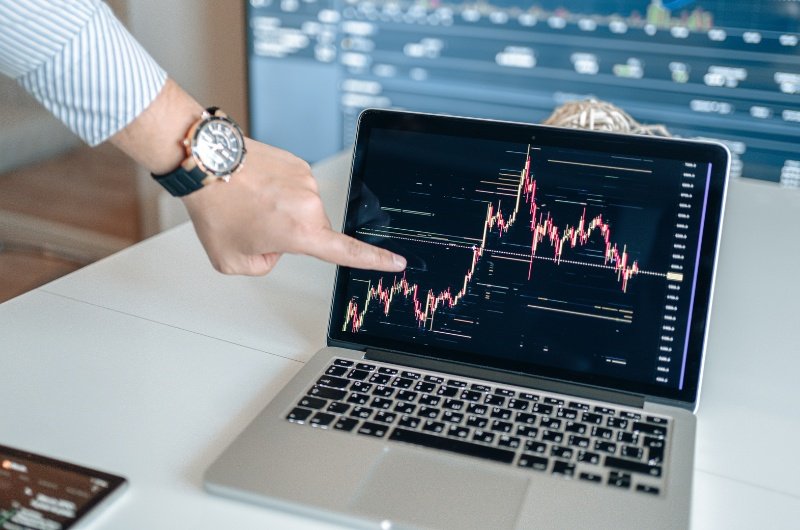
Artificial intelligence is driving one of the most significant shifts in modern markets, but the biggest gains are not always coming from the most visible companies. Behind the scenes, a different layer of the AI ecosystem is rapidly gaining momentum. As demand for AI continues to grow, so does the need for the infrastructure that supports it. Data centers, high-speed networking, optical systems, and specialized hardware are all essential to powering AI at scale. This has placed a new spotlight on companies operating in these areas, many of which were previously overlooked by mainstream investors. Advertisement The shift is already showing up in the market. Stocks tied to AI infrastructure have seen sharp gains as investors look beyond software and into the systems that make it all possible. In some cases, those gains have been dramatic, reflecting both rising demand and a broader recognition of their role in the AI economy. What makes this trend especially notable is how early it still feels. While AI itself is widely discussed, the infrastructure behind it is only beginning to receive sustained attention. That gap has created opportunities for companies positioned at the core of this transformation. The Readovia Lens This is what early positioning looks like. The biggest gains rarely come from the most obvious names. They tend to emerge in the infrastructure behind the trend, before the broader market catches on. When a stock moves this far, this fast, timing becomes everything. ——————– Related: Up 1,000% in One Year: The Stock That’s Turning Heads on Wall Street Oil Prices Plunge After Ceasefire Deal — A Sudden Reversal Ripples Across Global Markets This Stock Is Climbing Fast — And Here’s Why Beyond Nvidia: 4 Under-the-Radar AI Stocks Analysts Are Watching for 2026
This Stock Is Climbing Fast — And Here’s Why
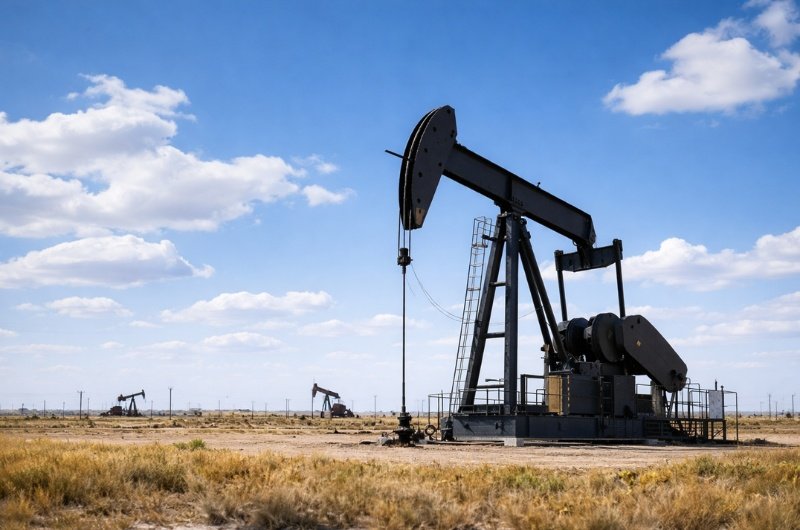
_____________________________________________________ Update — April 8, 2026, 9:56 AM ET:Oil stocks reversed sharply after their recent surge, with shares pulling back significantly as market sentiment shifted. The sudden decline underscores how quickly energy markets can turn, particularly as geopolitical tensions show signs of easing. _____________________________________________________ As oil prices continue to climb amid escalating tensions between the United States and Iran, one investment vehicle is drawing increased attention: the United States Oil Fund. Designed to track the movement of crude oil through futures contracts, the fund has risen sharply in recent weeks as global energy markets react to growing uncertainty. Concerns around supply routes, production stability, and regional conflict have pushed oil prices higher, creating momentum across oil-linked assets. USO price by TradingView That movement is showing up clearly in the fund’s performance. As oil prices climb, instruments tied to those prices tend to follow, and the United States Oil Fund has reflected that trend with notable gains. The surge highlights how quickly financial markets can respond when geopolitical events begin to affect critical resources. The relationship between global conflict and energy markets is not new, but the speed of the current shift has caught attention. When key supply channels appear vulnerable, pricing can adjust rapidly as markets factor in potential disruptions, even before those disruptions fully materialize. At the same time, volatility remains a key part of the equation. Oil markets often react sharply to uncertainty, but those movements can reverse just as quickly if conditions begin to stabilize. What appears to be a sustained rise can sometimes be driven by short-term pressure, speculation, or shifting expectations rather than long-term supply changes. The Readovia Lens This moment underscores how closely financial markets are tied to global events. For everyday investors, moves like this can feel sudden, but they often follow recognizable patterns. When uncertainty increases, certain sectors respond first, and energy is frequently at the center of that reaction. Understanding what’s driving the movement matters more than the movement itself. In this case, the surge is being shaped by risk, supply concerns, and the broader implications of geopolitical tension. And as those conditions evolve, so will the market’s response.
Sleep: The Overlooked Health Risk Hiding in Plain Sight

Sleep has always been a pillar of good health—but in today’s always-on environment, it’s becoming one of the most overlooked. Irregular sleep patterns and inconsistent routines are quietly affecting how people think, feel, and function throughout the day. While many focus on diet and exercise, sleep often gets pushed aside, treated as flexible rather than foundational. The effects add up quickly. Poor sleep can impact focus, mood, and energy levels, making even simple tasks feel more demanding. Health experts generally recommend around 7 to 9 hours of sleep per night for adults, yet many people consistently fall short of that range. Over time, inconsistent sleep can also influence broader health outcomes, including stress levels and overall well-being. Advertisement What’s changing is awareness. More people are beginning to treat sleep as something to manage intentionally—setting consistent bedtimes, limiting screen exposure at night, and creating environments that support rest. It’s a shift that reflects a broader understanding of health. Performance during the day often starts the night before, and small changes to sleep habits can have a measurable impact on how people move through their routines. The Readovia Lens Sleep is one of the few health factors that affects everything else. When it’s consistent, it supports focus, decision-making, and energy. When it’s not, the effects tend to show up across multiple areas at once. As more people look for ways to improve how they feel day to day, sleep is becoming less of an afterthought and more of a priority.
Intel’s Quiet Comeback May Hinge on One Overlooked Piece of the AI Boom
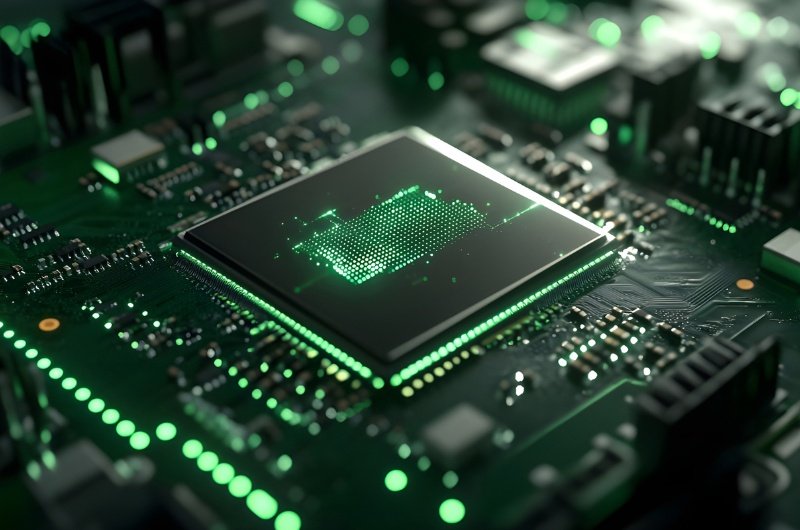
While the AI race has largely been defined by chipmakers like Nvidia and manufacturing giants like Taiwan Semiconductor Manufacturing Company (TSMC), a quieter shift is beginning to take shape behind the scenes — and it could determine who controls the next phase of the industry. Intel, long seen as a company trying to reclaim its footing, is now positioning itself in a less obvious but increasingly critical part of the AI supply chain: advanced chip packaging. And according to multiple reports, that strategy may already be gaining traction with some of the biggest names in tech. The company is said to be in ongoing discussions with major players like Google and Amazon — both of which design their own custom AI chips but rely on external partners for key stages of production. If those conversations turn into formal agreements, it would mark a meaningful shift not just for Intel, but for how AI infrastructure is built moving forward. Unlike traditional chip manufacturing, advanced packaging focuses on how multiple chip components are combined into a single high-performance system. As AI workloads grow more complex, this layer has become increasingly important, enabling greater power and efficiency without relying solely on smaller, more expensive transistor designs. For Intel, this represents strategic pivot. After years of falling behind in mobile and high-performance chips, the company has been working to reestablish its position in the semiconductor space, backed in part by efforts to strengthen domestic chip production. Securing packaging deals with companies like Google and Amazon could accelerate that effort, creating new revenue streams while placing Intel at a critical junction in the AI ecosystem. But the real story is about where the AI battle is moving next. As more companies design their own silicon, control is shifting away from who manufactures the chips to who can integrate them into powerful, scalable systems. That’s where packaging — once considered a backend step — is emerging as a front-line differentiator. The Readovia Lens The next phase of the AI race may not be decided by who builds the fastest chip — but by who can assemble the smartest system. If Intel can position itself as the bridge between custom chip design and real-world deployment, its comeback will take on real strategic weight. And in an era where AI infrastructure is becoming the backbone of everything from search to cloud computing, the companies that control the “in-between” layers may end up controlling far more than expected.
Italy’s Most Romantic Escapes: The Amalfi Coast & Venice in Summer

Italy in summer is an experience shaped by beauty, atmosphere, and unforgettable moments. Nowhere is that more evident than along the Amalfi Coast and in Venice, two destinations that continue to define romance at its highest level. The Amalfi Coast: Cliffside Beauty and Coastal Elegance Stretching along southern Italy’s coastline, the Amalfi Coast delivers a visual experience that feels almost unreal. Towns like Positano cascade down dramatic cliffs, with pastel buildings overlooking the Mediterranean in a way that feels both cinematic and serene. At the center of this experience is Il San Pietro di Positano, one of the most iconic luxury hotels in the region. Built into the cliffs, the property offers sweeping sea views, private beach access via a carved elevator through the rock, and terraces that feel suspended above the water. It’s not just a place to stay — it’s part of the destination itself. Days here are best spent slowly — lounging by the water, taking a boat along the coast, or enjoying long lunches overlooking the sea. The pace is intentional, the setting unforgettable. Venice: A City That Moves to Its Own Rhythm If the Amalfi Coast is about open views and sunlit escape, Venice offers something entirely different — intimacy, mystery, and quiet romance. Built on water, the city replaces roads with canals and cars with boats. Gondola rides at sunset, walks across centuries-old bridges, and evenings in softly lit piazzas create an atmosphere that feels almost suspended in time. Landmarks like St. Mark’s Square and the Grand Canal provide iconic backdrops, but it’s often the quieter moments — a hidden café, a narrow alley, a view that appears unexpectedly — that leave the strongest impression. The Experience Together, the Amalfi Coast and Venice offer two sides of Italy’s summer appeal: one expansive and sun-drenched, the other intimate and reflective. Both invite travelers to slow down, to be present, and to experience something that goes beyond sightseeing. The Readovia Lens Luxury travel is about where you go — but also how a place makes you feel. On the Amalfi Coast, that feeling comes from openness and light. In Venice, it comes from stillness and atmosphere. Experiencing both creates something rare: contrast, balance, and a deeper sense of escape.
The Notification Economy: Why Your Attention Is Always in Demand

It looks like a quiet moment. A break between movement. A pause in the day. But even here, the phone is part of the experience—offering updates, messages, and a steady stream of information that keeps us connected. That’s not chance. It’s design. The modern digital ecosystem runs on what could be called the notification economy—a system where apps, platforms, and services are built to keep us engaged. Every alert, vibration, and badge serves a purpose: to bring us back in, to keep us informed, and to make sure we don’t miss what matters. At the center of it all is a simple reality: attention has become one of the most valuable assets in the digital world. And in many ways, it’s working exactly as intended. What once required intention—checking the news, responding to messages, browsing content—now happens seamlessly throughout the day. The result isn’t necessarily disruption, but integration. Our devices are no longer separate from our routines—they’re woven into them. The impact isn’t always obvious. It doesn’t feel like disruption. It feels normal. But over time, constant interruptions can fragment focus, shorten attention spans, and make it harder to fully engage with the task—or the moment—right in front of you. Reclaiming attention doesn’t require disconnecting from everything. But it does begin with awareness. Because in a world designed to capture your focus, the simple act of choosing where it goes has become one of the most valuable daily decisions you can make. ——————– Related: The Quiet Disappearance of Boredom
OpenAI Shuts Down Sora — Signaling a Shift From AI Hype to Hard Decisions

OpenAI has shut down Sora, its high-profile AI video tool, in a move that signals a major shift in how the company is prioritizing the future of artificial intelligence. Sora made headlines for its ability to generate realistic, cinematic video from simple text prompts. But behind the scenes, the technology came with serious challenges. Video generation requires enormous computing power, making it expensive to run at scale — especially for a consumer-facing product. At the same time, the platform raised growing concerns around content. From deepfakes to copyright issues, AI-generated video proved difficult to control, adding legal and reputational risks to an already complex product. Rather than continue down that path, OpenAI is choosing to focus its resources on areas it sees as more critical to long-term growth. That includes productivity tools, enterprise applications, and advanced research tied to real-world systems like robotics. The move reflects a broader shift across the AI industry. Companies are beginning to move beyond flashy experiments and focus on what actually works at scale. Not every breakthrough product will survive — even the ones that capture global attention. In that sense, Sora’s shutdown isn’t just about one tool. It’s a sign that the AI race is entering a new phase — where focus, efficiency, and real-world impact matter more than hype.
The New American Tension: Calm on the Surface, Pressure Underneath

Across America, the markets are steady, businesses are operating, and the economy appears to be holding — but beneath the surface, pressure is building in ways that are becoming harder to ignore. But beneath that surface, something else is happening — and more people are starting to feel it in very real ways. Gas prices begin to inch higher. Grocery bills refuse to come down. Insurance premiums rise quietly, almost without explanation. At the same time, global tensions continue to build, policy decisions are accelerating, and companies are being pushed into the center of political and cultural debates — whether they want to be or not. None of it looks like a crisis. But none of it feels entirely stable either. That’s where the tension lives. It’s the gap between what appears steady and what feels uncertain. Markets can rise sharply — even as household budgets feel tighter. A fund tied to oil can surge more than 50% in a month, while consumers brace for higher prices at the pump. A major retailer can gain ground in the market, even as it faces growing pressure from multiple sides of the public conversation. The signals don’t contradict each other. They reveal something deeper. This moment is defined by compression. Everything is still functioning — but with less room to absorb shock. Costs are higher. Reactions are faster. Decisions carry more weight, whether it’s a business responding to public pressure or a household adjusting spending in real time. That creates a different kind of environment — one where small shifts matter more. A policy change doesn’t just stay in Washington. It moves through contracts, companies, and communities. A global conflict doesn’t stay overseas. It shows up in energy markets, supply chains, and eventually, everyday expenses. A single stock move can reflect a broader trend that hasn’t fully reached the public yet. These are signals. And they’re becoming harder to ignore. The challenge is that this kind of shift doesn’t announce itself all at once. There’s no single headline that captures it. Instead, it builds gradually — across markets, across industries, and across everyday life. That’s why it can feel so difficult to explain. Everything looks calm. But it doesn’t feel calm. And that feeling isn’t random. It’s what happens when the system is still moving forward — but under a new kind of pressure. One that is quieter, more constant, and more personal. The most important changes don’t always arrive with disruption. Sometimes, they arrive as tension — just beneath the surface. Navigating a Moment Like This For individuals, the response doesn’t have to be dramatic — but it does need to be intentional. Pay attention to the signals, not just the headlines. Understand where pressure is building, and adjust early where you can. That might mean being more deliberate with spending, more thoughtful about risk, or simply more aware of how quickly conditions can shift. It’s also a moment to stay grounded. Not every change requires a reaction, but ignoring everything isn’t a strategy either. The goal is not to predict every move — it’s to remain steady while everything else is adjusting. Because while the environment may feel uncertain, clarity still creates an advantage. And in times like this, the people who stay aware, adaptable, and measured are often the ones who navigate change the best.
Hot Stocks to Watch Right Now — and Why They May Surprise You
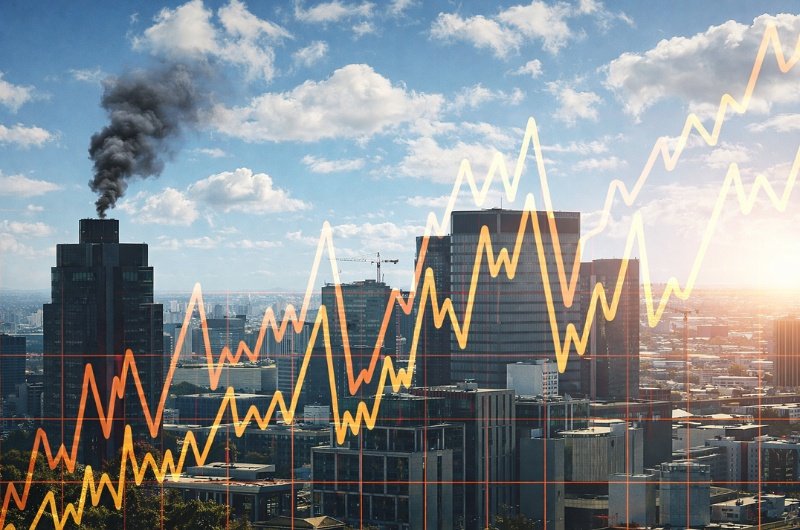
Markets don’t always react the way headlines suggest — and right now is a perfect example. While global tensions and corporate controversies dominate the news cycle, some stocks are quietly moving in the opposite direction. One of the clearest signals is in energy. The United States Oil Fund (USO) has surged sharply in recent weeks — up more than 50% over the past month. If you got in before the run, this is the part where you nod quietly. The move reflects how quickly markets respond when global supply risks come into focus. As tensions in the Middle East continue, investors are pricing in the possibility of tighter oil supply and higher energy costs. Advertisement At the same time, retail is telling a very different story. Target has been at the center of public debate, facing boycott pressure tied to both DEI decisions and its response to immigration enforcement activity. Yet despite the noise, the company’s stock has continued to rise, gaining ground over the past year and even moving higher in recent trading. It’s a reminder that markets often look beyond headlines and focus on long-term performance and fundamentals. Taken together, these moves highlight a broader truth: markets are forward-looking. They react to expectations — not just current events. Oil rises on the possibility of disruption, while established companies can remain stable even in the face of public controversy. For everyday investors, the takeaway is simple. Pay attention to what’s moving — but also ask why. The biggest opportunities often come from understanding the gap between what people are saying and what the market is actually doing. Because more often than not, the real story isn’t in the headlines — it’s in the numbers.
How This Middle East Conflict Could Hit Your Wallet Next

As tensions rise in the Middle East, the financial impact may not stay overseas for long. While the conflict is unfolding thousands of miles away, the effects could begin showing up in everyday expenses across the United States — especially at the gas pump. Let’s start with oil, because that’s usually where things move first. The region plays a major role in global energy supply, and even the threat of disruption can push prices higher. Markets don’t wait for certainty — they react to risk. And when oil prices climb, gas prices tend to follow. Not instantly, but fast enough that you might notice it the next time you fill up at the pump. Advertisement President Trump has suggested that the United States has little to worry about when it comes to energy, pointing to strong domestic oil and gas production. But global oil markets are still deeply connected. Even with high U.S. output, prices are influenced by worldwide supply and demand — and ultimately, what Americans see at the pump tends to tell the real story. Shipping is another piece of the puzzle. Key routes in the region are critical for moving oil and goods around the world. If those routes become more expensive or less stable, the cost of transporting products rises. And those costs don’t just stay with companies — they eventually show up in the price of everyday items, from groceries to household essentials. Then there’s the ripple effect. Higher energy costs can push up the price of just about everything — transportation, manufacturing, even food. It’s one of the more frustrating realities of the economy: when energy gets expensive, everything else tends to follow. Not dramatically all at once, but steadily enough that you start to feel it over time. For consumers, the takeaway is simple. Global events have a way of showing up locally, often when you least expect it. A conflict overseas can turn into higher gas prices, more expensive goods, or a tighter monthly budget. It may not happen overnight, but if tensions continue, it’s something worth watching — right alongside your receipt at the pump. Because when the world shifts, your wallet usually notices first.