


Nervous System Wellness Is Trending as Stress and Burnout Reshape Health Habits

A growing number of people are focusing on “neurowellness” in 2026 as stress, burnout, and digital overload continue to shape daily life. What was once a niche wellness concept is moving into the mainstream, with more attention on habits designed to help the body shift out of constant fight-or-flight mode, including naps, breathwork, walking, and calmer daily routines. The trend includes both simple routines and higher-tech tools. Breathwork, walking, yoga, better sleep habits, and mindfulness practices remain popular, while interest is also rising in wearables and recovery devices aimed at relaxation and resilience. Advertisement Health experts increasingly point to chronic stress as more than a mental burden. It can affect sleep, focus, mood, energy, and long-term physical health. That has helped make nervous system regulation one of the more practical wellness conversations of the moment. The Takeaway For readers, the takeaway may be refreshingly simple: wellness does not always have to mean extreme routines or expensive upgrades. Sometimes it starts with calmer mornings, less screen time, deeper breathing, and giving the body a chance to decompress and recover.
Millions on Medicaid Could Face New Work Rules as States Await Federal Guidance
A major Medicaid policy shift is moving closer to reality, with states across the country waiting for federal instructions on how to implement new work requirements that could affect millions of Americans who rely on the program for health coverage. The changes are scheduled to begin in 2027, but many of the most important details are still unresolved. Under the new framework, some adults may need to document a set number of monthly hours through employment, job training, volunteer service, or other qualifying activities in order to remain eligible. Exemptions are expected for certain groups, but states and insurers say they still need clearer rules on who qualifies and how verification should work. The challenge may go beyond policy. State agencies are expected to update computer systems, train staff, launch outreach campaigns, and process additional paperwork on tight timelines. Health policy experts warn that when systems become more complex, eligible people can lose coverage over reporting errors, missed notices, or confusion rather than true ineligibility. For families, the biggest question may be simple: what happens next? Because Medicaid is administered jointly by states and the federal government, the experience could look different depending on where someone lives. Some states may move quickly, while others may seek delays or phased rollouts. The Readovia Lens When healthcare rules change, uncertainty often arrives before the policy itself. For millions of households, the real issue may be whether they can keep the coverage they already depend on.
Sleep: The Overlooked Health Risk Hiding in Plain Sight
Sleep has always been a pillar of good health—but in today’s always-on environment, it’s becoming one of the most overlooked. Irregular sleep patterns and inconsistent routines are quietly affecting how people think, feel, and function throughout the day. While many focus on diet and exercise, sleep often gets pushed aside, treated as flexible rather than foundational. The effects add up quickly. Poor sleep can impact focus, mood, and energy levels, making even simple tasks feel more demanding. Health experts generally recommend around 7 to 9 hours of sleep per night for adults, yet many people consistently fall short of that range. Over time, inconsistent sleep can also influence broader health outcomes, including stress levels and overall well-being. Advertisement What’s changing is awareness. More people are beginning to treat sleep as something to manage intentionally—setting consistent bedtimes, limiting screen exposure at night, and creating environments that support rest. It’s a shift that reflects a broader understanding of health. Performance during the day often starts the night before, and small changes to sleep habits can have a measurable impact on how people move through their routines. The Readovia Lens Sleep is one of the few health factors that affects everything else. When it’s consistent, it supports focus, decision-making, and energy. When it’s not, the effects tend to show up across multiple areas at once. As more people look for ways to improve how they feel day to day, sleep is becoming less of an afterthought and more of a priority.
Colon Cancer Is Rising in Younger Americans — And Doctors Don’t Fully Know Why

A growing number of younger Americans are being diagnosed with colorectal cancer, a disease once largely associated with older adults — and the shift is raising new concerns across the medical community. In recent years, doctors have reported a noticeable increase in cases among people in their 20s, 30s, and 40s. While colorectal cancer remains more common in older populations, the rise among younger adults has been steady enough to change how the disease is being understood. What makes the trend more concerning is how often it goes undetected early. Many younger patients don’t expect to be at risk, and early symptoms — such as persistent stomach pain, changes in bowel habits, or rectal bleeding — are sometimes overlooked or dismissed. That delay can allow the disease to progress before it is caught. At the same time, the underlying cause is still not fully clear. Researchers are examining possible links to modern lifestyle factors, including diet, processed foods, and environmental exposures. But so far, no single explanation has emerged, leaving doctors to track a pattern they don’t yet fully understand. Screening guidelines have begun to adjust in response, with recommendations now starting earlier than in the past. Still, awareness remains a critical gap, particularly among younger adults who may not see themselves as at risk. The rise in cases is a shift that challenges long-held assumptions about age and health. And as the data continues to evolve, one thing is becoming clear: early attention to symptoms and increased awareness may be just as important as advances in treatment.
Walking vs. Running: Which One Is Actually Better for Your Health?

If you’re trying to get in shape, one of the most common questions is also one of the simplest: should you walk or run? The answer depends on your goals — but research makes one thing clear: both can improve your health in meaningful ways. The difference comes down to time, intensity, and impact on the body. Running is the more time-efficient option. Studies show it can burn roughly 43% more calories per minute than walking, making it a stronger choice for weight loss and cardiovascular improvement. In fact, a short run can deliver similar benefits to a much longer walk — meaning if your schedule is tight, running gives you more return in less time. Advertisement Long-term research also shows that runners tend to see greater reductions in body mass index (BMI) and waist circumference, along with a lower risk of conditions like high blood pressure, high cholesterol, and diabetes. In simple terms, running pushes the body harder — and often produces faster results. But walking holds its own, especially when it comes to accessibility and sustainability. As a low-impact exercise, it’s easier on the joints and better suited for beginners, older adults, or anyone recovering from injury. And while it may take longer to achieve the same calorie burn as running, walking still delivers strong, evidence-based benefits for heart health, blood pressure, and blood sugar control. The trade-off is time. A brisk walk may need to last longer to match the effects of a shorter run — but for many people, that trade-off is worth it if it means staying consistent and avoiding injury. That’s really the deciding factor. The best workout isn’t just about intensity — it’s about what you can maintain. A daily walk you stick with will outperform an ambitious running plan that fades after a few weeks. For those who want the best of both worlds, combining the two can be highly effective. Walking on recovery days and running on others allows you to build endurance while reducing strain on the body.
A Simple Blood Test Could Detect Alzheimer’s Years Earlier — And It’s Getting Closer to Reality

Detecting Alzheimer’s disease has long required expensive brain scans or invasive procedures, often after symptoms have already begun to appear. But new research suggests that may soon change, with scientists developing blood tests capable of identifying early signs of the disease years in advance. These tests focus on specific biomarkers in the blood, including proteins linked to the buildup of amyloid plaques and tau tangles in the brain — hallmarks of Alzheimer’s. In recent studies, some of these tests have shown promising accuracy, raising the possibility of earlier and more accessible diagnosis. Advertisement The potential impact is significant. Earlier detection could allow patients to begin treatments sooner, participate in clinical trials, and make more informed decisions about their long-term care. It may also give researchers a better opportunity to study the disease before it progresses. While the science is advancing quickly, experts caution that these tests are still being refined and are not yet widely available for routine use. Questions remain around standardization, accessibility, and how results should be interpreted in clinical settings. Even so, momentum is building. As research continues, a simple blood test could become one of the most important tools in the fight against Alzheimer’s — shifting the focus from late-stage diagnosis to early detection and prevention.
Could a Shingles Shot Lower Dementia Risk?
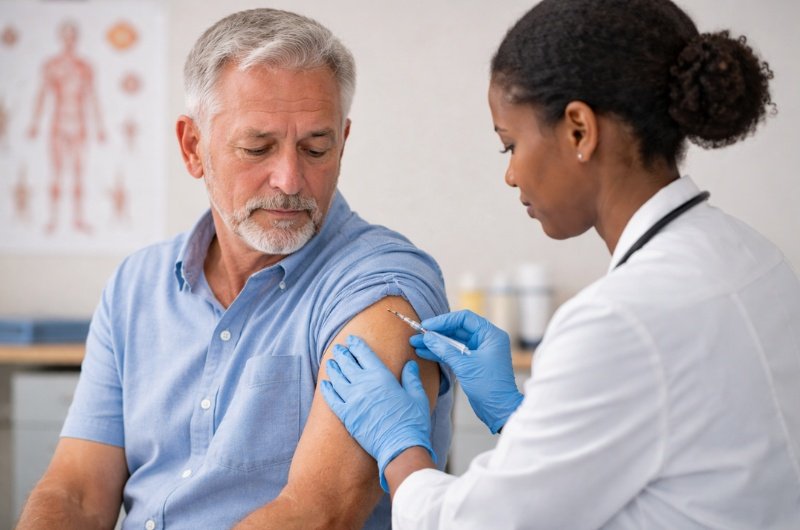
Can a routine vaccine do more than prevent illness—and actually help protect the brain? Emerging research suggests that the shingles vaccine may be linked to a significantly lower risk of dementia, adding to a growing body of evidence connecting immune health to long-term cognitive function. In one recent study, individuals who received the latest Shingrix vaccine showed a notably lower risk of developing dementia compared to those who were not vaccinated. The findings held even after accounting for differences in lifestyle, income, and overall health, pointing to a potentially meaningful connection between vaccination and brain health. Researchers believe there are a couple of possible explanations. One theory is that certain viruses, including the one responsible for shingles, may quietly contribute to long-term inflammation in the body—a process that has been linked to cognitive decline. By preventing reactivation of the virus, the vaccine may reduce that underlying stress on the immune system. Another possibility is that vaccines may have broader effects beyond their primary purpose, helping the immune system function more efficiently in ways that extend to other areas of health, including the brain. While scientists caution that more research is needed to fully understand the relationship, the implications are notable. At a time when effective strategies for preventing dementia remain limited, even the possibility that a widely available vaccine could play a role is drawing increased attention.
More Families Are Choosing Home Births — and Rethinking How Care Should Feel

A growing number of American families are choosing home births, signaling a broader shift in how people think about healthcare, autonomy, and trust in medical systems. While hospital births remain the standard for most families, the quiet rise in home deliveries reflects changing expectations around comfort, control, and personalized care. For many parents, the decision is not about rejecting modern medicine but about seeking an experience that feels less clinical and more personal. Advocates of home birth often point to continuity of care, fewer medical interventions, and a calmer environment during labor and delivery. Certified midwives and home-birth providers emphasize close monitoring, individualized birth plans, and long-term relationships built throughout prenatal care. The trend also mirrors wider dissatisfaction with parts of the healthcare system. Rising costs, rushed appointments, and concerns about unnecessary procedures have led some families to explore alternatives that offer greater involvement in decision-making. In this context, home birth is increasingly viewed not as a fringe option, but as part of a broader move toward patient-directed care. Medical professionals remain divided. Many obstetricians stress that hospitals provide essential resources during emergencies, while others acknowledge that properly screened, low-risk pregnancies can result in safe outcomes outside traditional settings. The discussion highlights a larger tension in modern healthcare — balancing safety, cost, and patient choice. The Readovia Lens The growing interest in home births reflects more than changing preferences around childbirth. It points to a wider desire for care that feels personal, respectful, and aligned with individual values. As families rethink where and how they receive care, conversations about choice, comfort, and trust are shaping healthcare decisions well beyond the delivery room.
How Prolonged Stress Is Quietly Affecting Physical Health

Doctors across a range of specialties say more patients are showing up with physical symptoms that trace back to prolonged stress — even when anxiety is not the primary complaint. From disrupted sleep to digestive problems and rising blood pressure, clinicians describe a pattern that reflects how sustained strain on the body is increasingly showing up in everyday medical visits. Sleep issues are among the most common concerns. Many patients report difficulty falling asleep, staying asleep, or feeling rested, even without obvious lifestyle changes. Physicians note that chronic stress can interfere with the body’s ability to fully power down, keeping stress hormones elevated well into the night and disrupting natural sleep cycles. Cardiovascular and digestive symptoms are also frequently reported. Elevated blood pressure, persistent fatigue, acid reflux, and inflammation-related discomfort are often discussed in connection with ongoing stress rather than a single underlying illness. In many cases, patients are surprised to learn how strongly stress can affect systems far beyond mood or mental health. Doctors say what makes these cases challenging is that symptoms often appear gradually. Rather than a sudden health event, patients experience a slow accumulation of physical strain — shaped by work pressures, financial uncertainty, environmental stressors, and constant digital engagement. Over time, the body adapts in ways that can quietly undermine overall well-being. Clinicians emphasize that recognizing stress as a contributing factor is not about assigning blame or oversimplifying health concerns. Instead, it reflects a broader understanding of how interconnected physical and mental health truly are. As doctors continue to observe these patterns in 2026, many say awareness — both among patients and providers — is becoming an essential first step toward prevention and care.
What Doctors Are Noticing About Patients in 2026

Doctors across the U.S. say many patients are arriving at appointments more informed and more thoughtful about their health than in the past, prompting a growing conversation about whether patients are, in fact, becoming smarter in how they approach care. Rather than focusing solely on symptoms or prescriptions, patients are increasingly asking deeper questions about prevention, long-term outcomes, and lifestyle choices. Many reference insights from wearable devices, health apps, or prior research, using that information to guide more meaningful conversations with their providers. Health professionals say this shift reflects broader changes in access to information and personal accountability. For many clinicians, the result has been more collaborative visits, with clearer expectations and shared decision-making around treatment plans. At the same time, doctors emphasize the importance of context. While better questions can lead to better care, not all health information found online is accurate or relevant. Providers increasingly see part of their role as helping patients interpret data and separate helpful insights from misinformation. The Readovia Lens The evolving dynamic between doctors and patients points to a broader shift toward proactive wellness rather than reactive care. As health tools and information become more accessible, the patient-provider relationship is increasingly built on partnership, trust, and informed dialogue.