


Senate Narrowly Passes Trump’s “One Big Beautiful Bill” — Trump Pushes for House Approval by the 4th
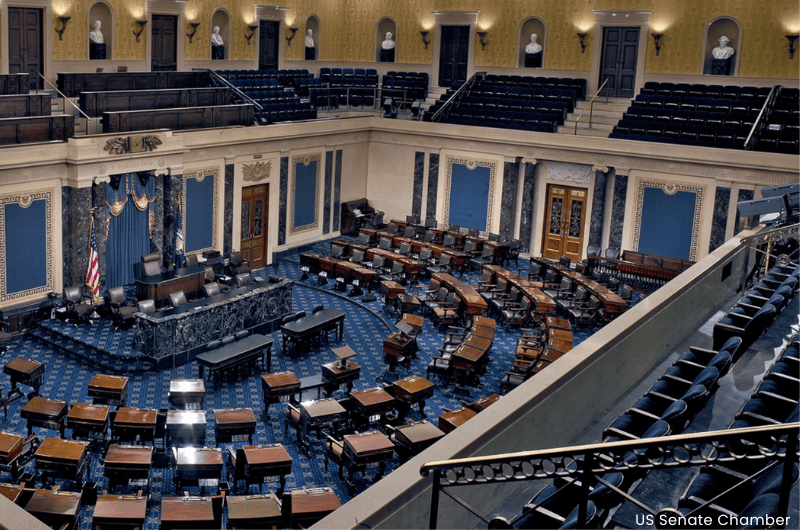
In a dramatic midnight session, the U.S. Senate narrowly passed President Donald Trump’s sweeping legislative package—dubbed the “One Big Beautiful Bill”—after weeks of internal division, fierce public debate, and mounting pressure from the White House. Vice President J.D. Vance cast the tie-breaking vote, pushing the bill through a 50–50 split in the Senate. It now heads to the House for a fast-tracked vote, with Trump reportedly urging GOP leadership to deliver final approval by July 4. The bill combines tax cuts, a $150 billion boost in military spending, major immigration crackdowns, and the elimination of federal funding for programs like Medicaid expansion, SNAP benefits, and Planned Parenthood. Supporters say the bill strengthens the economy and border security. Detractors call it a direct assault on the social safety net—and a potential trigger for long-term economic instability. A last-minute change saw the removal of a controversial provision that would have prevented individual states from regulating artificial intelligence. That reversal is being celebrated as a win for tech oversight advocates and state sovereignty. Despite the bill’s passage, deep fractures have formed within the GOP. Fiscal conservatives warned about the skyrocketing federal deficit, while populist hardliners praised the bill’s stance on immigration and its unapologetic re-centering of “America First” values. As the House prepares to vote, Democrats are expected to oppose the measure in full, while moderate Republicans remain on edge. Trump, meanwhile, has already declared victory online—calling the bill “a new American revolution.” The Author
The Price of Beautiful: What Trump’s Big Bill Could Really Mean for Everyday Americans
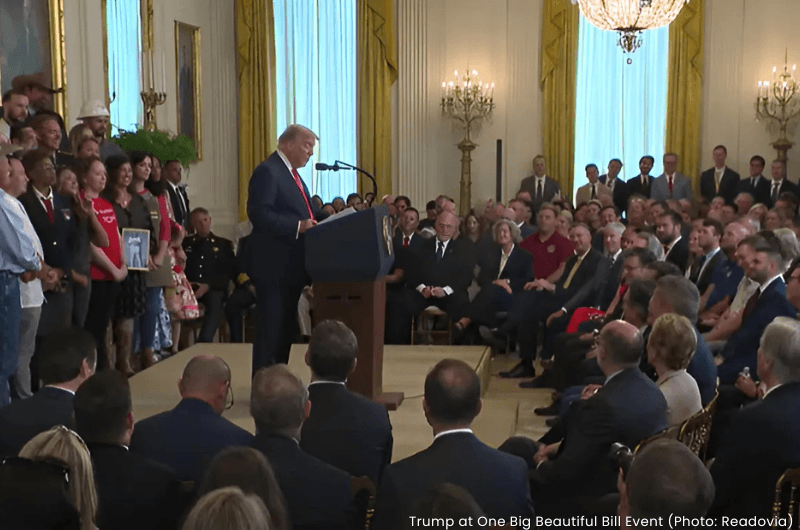
President Trump calls it the “One Big Beautiful Bill.” His administration says it’s the most pro-worker, pro-growth, and pro-America legislation in history. But for millions of Americans, especially those relying on public health care or food assistance, the beauty may come at a brutal cost. Proposed Work Requirements The bill proposes new work requirements for Medicaid and SNAP (food stamps), aimed at what Republicans call “able-bodied adults without dependents.” The White House frames this as common sense—“If you can work, you should”—but critics warn the reality isn’t so tidy. According to projections from the nonpartisan Congressional Budget Office (CBO), over 10.9 million people could lose Medicaid coverage under the new rules. Many of them are low-income workers juggling part-time jobs without benefits. Others are caregivers, people with undiagnosed disabilities, or those living in states without the infrastructure to verify employment quickly. And for some, losing coverage won’t just mean skipping a doctor’s visit—it could mean dying. The CBO estimates the bill could lead to over 51,000 avoidable deaths within a decade. “This isn’t fiscal policy—it’s a slow-motion public health crisis,” said Dr. Lila Fenwick, a rural hospital administrator in Georgia. “We’re already at the edge. These cuts could push us over.” A Gut Punch to Rural Health Care The bill touts protections for “rural hospitals,” but that’s cold comfort to health systems that rely on Medicaid reimbursements to stay afloat. Without them, many rural hospitals—especially in red states—face the risk of closure. For residents in these areas, that could mean driving hours for basic care. In emergencies, it could mean no care at all. “The same communities that cheered for Trump may be the ones hit hardest by this bill,” said policy analyst Tanya Ruiz. “It’s poetic, but not in a good way.” Food on the Line The bill’s new SNAP rules are likely to leave hundreds of thousands without access to food assistance. And while the White House says “jobs, not handouts” is the goal, employment doesn’t always guarantee food security—especially in low-wage sectors. For families living paycheck to paycheck, even a temporary loss of benefits could be catastrophic. And with no added funding for job training or placement services, critics say the bill sets people up to fail. A Tale of Two Narratives President Trump has taken to social media, calling the bill “a win for workers, a loss for waste, and a BEAUTIFUL day for America.” The White House insists the bill will increase take-home pay by $10,000 for the average worker, unleash $11 trillion in economic growth, and prevent the “largest tax hike in American history.” But none of those talking points erase the sobering truth: for millions of Americans, this bill isn’t about prosperity—it’s about survival. Why It Matters The debate over the One Big Beautiful Bill isn’t just about policy. It’s about priorities. Tax relief for some, hardship for others—and a country still reckoning with who gets left behind. As the Senate races to vote before the July 4th deadline, one thing is clear: this bill may be beautiful to some, but for others, it’s shaping up to be devastating. The Author
Declared, Denied, Derailed: Trump’s Fake Ceasefire Claim
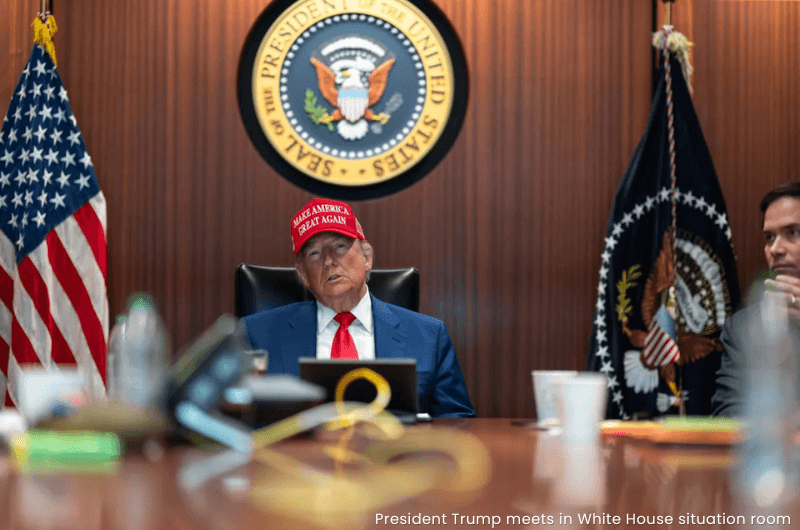
On Monday, June 23, President Trump took to his social media platform, Truth Social, to make a bold announcement: Israel and Iran, he claimed, had agreed to a “complete and total ceasefire.” The post quickly gained traction, sparking a mix of surprise, skepticism, and confusion. But within hours, it was clear the claim had no basis in fact. Neither Israel nor Iran confirmed any such agreement—and both countries continued military operations despite Trump’s statement. In the hours that followed the post, Israeli officials said they had briefly paused strikes at Trump’s request—but then accused Iran of firing missiles shortly after the so-called ceasefire began. Iran, for its part, denied launching any attacks and made it clear there was no deal—only a willingness to hold fire if Israel did the same. Iranian diplomat Abbas Araghchi stated unequivocally: “There is NO ‘agreement’ on any ceasefire.” Instead, the situation appeared to be a one-sided Israeli pause, not a mutual de-escalation. By early Tuesday, that temporary pause had ended with a bang—literally. Explosions were reported in Tehran as Israeli missiles targeted what they described as “high-value assets.” Iran condemned the strikes and again denied any aggression on their part. No formal negotiations, ceasefire documents, or international acknowledgments backed up Trump’s claims. Pressed about the contradiction while aboard Air Force One, Trump doubled down. He insisted both sides had violated the ceasefire, possibly “unintentionally,” before going on a tirade: “They don’t know what the **** they’re doing,” he said of Israeli and Iranian officials. Trump blamed both nations for undermining what he continued to describe as “his” agreement—even though neither side ever publicly agreed to anything. In truth, there was no ceasefire. There was no peace deal. Just a claim from the U.S. president and a few hours of murky restraint followed by renewed violence. Ultimately, Trump seized the moment to cast himself as peacemaker—positioning a temporary lull as the result of his diplomacy. But the facts on the ground told a different story: one where both nations were still very much at war, and Trump’s declaration didn’t just jump the gun—it ignored the battlefield entirely. The Author
Cybersecurity Jobs Surge as AI Threats and Talent Gaps Collide

The cybersecurity industry is in hiring overdrive. With global threats mounting and AI-driven attacks on the rise, U.S. companies posted over 514,000 cybersecurity job openings in the past year alone—a 12% increase compared to the year prior. From Silicon Valley startups to federal contractors, organizations are urgently hunting for talent that can defend the digital frontier. This spike is especially visible in the IT channel, where companies like Abnormal, GoTo, Verkada, Infosys, SEI, and MGT are all recruiting for a range of roles—from cloud security engineers to threat intelligence analysts and AI-focused penetration testers. Cybersecurity is no longer a niche IT specialty—it’s one of the hottest areas of tech hiring. The demand is being driven by three key trends: 1. The talent gap isn’t going away.While vacancy growth has slowed slightly from its pandemic-era peak, there are still millions of unfilled cybersecurity roles worldwide. In the U.S., there simply aren’t enough qualified professionals to meet the volume and complexity of today’s digital threats. 2. AI is reshaping the threat landscape.Cybercrime is getting faster and more automated. Companies are now seeking cybersecurity experts who understand AI—not just how to defend against it, but how to use it in offense and defense. Think red team AI engineers, SOC automation analysts, and even “AI evangelists” for internal security teams. 3. The degree barrier is finally cracking.According to a recent report from ISC², more than half of entry-level cybersecurity roles are now being filled through internships and apprenticeships, not four-year degrees. Employers are prioritizing certifications, hands-on experience, and soft skills like adaptability and curiosity over diplomas. This isn’t just a temporary hiring spree—it’s a structural shift. With cybercrime estimated to cost the global economy over $10 trillion annually by 2025, companies are doubling down on defense. The smartest firms are widening their hiring pipelines and rethinking what a cybersecurity hire looks like—casting a much broader net for talent. For anyone with tech experience—or even curiosity—this may be the best time in a generation to break into the field of cybersecurity. The Author
Sunday Thunderstorm: Oklahoma City Captures First-Ever NBA Championship

Oklahoma City erupted in celebration Sunday night as the Thunder delivered the franchise’s first NBA championship since relocating from Seattle in 2008. In a decisive Game 7 performance, the Thunder defeated the Indiana Pacers 103–91, completing a historic playoff run and bringing the Larry O’Brien Trophy to Oklahoma for the first time in city history. Led by MVP Shai Gilgeous-Alexander, who poured in 29 points and steered the team with his signature poise, the Thunder showcased the kind of control and maturity that defined their 2024–25 season. Gilgeous-Alexander’s Finals performance—including a record-setting 72 points over Games 1 and 2—set the tone for a team that refused to blink under pressure. Jalen Williams emerged as another star in the making, dropping 40 points in a pivotal Game 5 win that put OKC within striking distance of the title. The Finals weren’t a walkover. Indiana, led by Tyrese Haliburton and Pascal Siakam, pushed the series to the limit. Haliburton’s Game 1 buzzer-beater stunned Oklahoma City and gave the Pacers early momentum. But injuries and OKC’s swarming defense eventually tilted the series. The Thunder’s dominance in the paint and ability to close out games silenced doubters and proved this team wasn’t just talented—they were ready. The title caps off a record-setting season for Oklahoma City, who finished with a league-best 68–14 record and the highest point differential in franchise history. It also adds their name to a growing list of champions in what has become one of the most competitively diverse eras in NBA history—seven different franchises have won the title in the last seven seasons. For Oklahoma City fans, the win is more than a championship—it’s validation. More than a decade removed from losing the Seattle SuperSonics, and years removed from the Durant-Westbrook-Harden era that nearly was, the Thunder have finally completed the journey. This isn’t just the franchise’s first title since 1979 (as the Sonics). It’s the first time Oklahoma City itself can claim basketball’s biggest prize. And in the heart of the Great Plains, the thunder has never sounded sweeter.
Oil Prices Surge After U.S. Strikes Iran — What It Means for You

The markets didn’t waste a second. After U.S. bombers hit three of Iran’s major nuclear sites overnight, oil prices jumped fast. Brent crude literally surged overnight past $95 a barrel, and West Texas Intermediate followed right behind. Traders call it a “risk premium”—but let’s be real: this is what happens when a superpower steps directly into a regional war. And this isn’t just oil. Defense stocks made an early climb too. Lockheed Martin, Raytheon, and Northrop Grumman (maker of the B-2 bomber used in the strike) all saw gains. It’s a reminder that war moves money—sometimes quickly, sometimes quietly, but always in big ways. What This Means for You Here’s the part that hits closer to home: if things escalate further, gas prices are going up. Iran has a habit of using the Strait of Hormuz as a pressure point—and about 1 in every 5 barrels of oil in the world passes through there. If they disrupt traffic or threaten tankers, supply tightens, and prices spike. We’ve seen it before. With summer travel in full swing, that could mean higher prices at the pump, just as people are hitting the road. Keep Your Eye On It Markets are still sorting through it all, but here’s what to watch: Whether Iran retaliates by hitting oil infrastructure or shipping lanes How global inventories hold up Whether energy traders start betting on $100 oil (again) Uncertainty Rising For now, energy and defense stocks are up, and uncertainty is on the rise. Whether you’re watching the markets or just filling up your tank, this one’s going to hit close to home. The Author
Nearly 600 Killed in Israeli Strikes on Iran, as Regional Crisis Deepens

Iranian officials report massive casualties as Israeli airstrikes hit military and nuclear facilities. Civilian toll mounts. Global powers urge restraint—but escalation continues. Israel’s military campaign inside Iranian territory has taken a devastating human toll, with nearly 600 people killed in a wave of airstrikes targeting Tehran and other major cities. Iranian officials say at least 585 people are dead, including 239 civilians, and more than 1,300 others wounded, making it the deadliest assault between the two countries in decades. The strikes, which reportedly targeted Iran’s nuclear and military infrastructure, mark a major escalation in the long-simmering hostility between the two nations. Explosions rocked key sites across Tehran, prompting mass evacuations and emergency blackouts across multiple provinces. In response, Iran has launched ballistic and hypersonic missiles at Israeli military installations, raising alarm in the region and drawing international condemnation. Meanwhile, in Gaza, humanitarian agencies report that at least 59 people were killed and hundreds more injured when Israeli tanks opened fire on a crowd waiting for food aid in Khan Younis. Similar incidents in Rafah and other parts of southern Gaza point to a deepening crisis there, even as global attention shifts to the Israel–Iran front. International leaders—including members of the G7 and the European Union—have called for immediate de-escalation. Yet, former President Donald Trump, who remains a dominant voice in U.S. foreign policy circles, stirred controversy Tuesday by demanding Iran’s “unconditional surrender.” Israel has defended its actions as “necessary preemptive defense” against Iranian aggression and its support for Hamas. Tehran, meanwhile, accused Israel of war crimes and vowed continued retaliation. As the conflict expands across borders and draws in regional powers, the death toll rises—not only on military targets, but in civilian neighborhoods and aid lines. With no ceasefire in sight, the risk of a full-blown regional war grows by the day.
Gunman Targets Minnesota Politicians: Lawmaker and Spouse Killed, Senator Wounded in Separate Assault

In a devastating act of political violence, former Minnesota House Speaker Melissa Hortman and her husband, Mark, were fatally shot in their Brooklyn Park home early Saturday morning. State Senator John Hoffman and his wife, Yvette, were also targeted and seriously wounded in a separate attack at their Champlin residence. The assailant, 57-year-old Vance Luther Boelter, was arrested Sunday evening in Sibley County, concluding a two-day statewide manhunt described by authorities as the largest in Minnesota’s history. Details of the Attacks Boelter allegedly posed as a police officer, wearing a full uniform and latex mask to gain access to the victims’ homes. At the Hoffmans’ residence, he shot John nine times and Yvette eight times; their daughter, who called 911, is credited with saving their lives. Approximately an hour later, Boelter arrived at the Hortman home, where he shot Mark through the front door before entering and killing Melissa. Security footage captured him in a police-style SUV, further indicating the premeditated nature of the attacks. Investigation and Arrest Following the shootings, law enforcement launched an extensive search for Boelter. He was found hiding in the woods near his Green Isle property and taken into custody without incident. Authorities discovered a manifesto and a list of approximately 70 potential targets, including abortion rights activists and Democratic lawmakers, in his vehicle. Boelter faces two counts of second-degree murder and two counts of attempted second-degree murder. Prosecutors are considering additional charges, including first-degree murder, which carries a life sentence without parole. Motive and Background Boelter, a former political appointee who served on a state workforce development board alongside Senator Hoffman, has expressed anti-abortion and far-right views. He previously operated a private security firm and has been linked to evangelical ministries. A manifesto found in his vehicle suggests the attacks were politically motivated, though authorities are continuing to investigate the full extent of his intentions. Community and Political Reactions Governor Tim Walz condemned the attacks as “political assassinations” and ordered flags to fly at half-staff in honor of the victims. He expressed hope for Senator Hoffman’s recovery, describing him as “closer every hour to being out of the woods.” The shootings have prompted national concern over political violence, with officials across the country expressing solidarity and calling for a recommitment to peaceful political discourse. As investigations continue, authorities are urging the public to remain vigilant and report any information that may assist in understanding the full scope of Boelter’s actions and affiliations.
Trump Wins Appeal, Temporarily Keeps National Guard in L.A. After Legal Showdown with Gov. Newsom

In a dramatic legal twist, former President Donald Trump scored a temporary victory Friday morning when a federal appeals court ruled in his favor, allowing National Guard troops to remain deployed in Los Angeles despite a prior court order mandating their removal. The ruling comes just days after California Governor Gavin Newsom successfully sued the Trump administration, arguing the deployment was unconstitutional and escalated tensions during ongoing protests. Newsom’s win in federal court on Thursday was seen as a swift and significant check on federal authority, with U.S. District Judge Carla Henley ordering the immediate withdrawal of all National Guard units from Los Angeles by midnight. The ruling was hailed by civil rights groups and state officials, who argued that the presence of troops was inflaming unrest and undermining local leadership. But the victory was short-lived. Early Friday, a three-judge panel on the 9th Circuit Court of Appeals issued an emergency stay, effectively pausing the lower court’s order and permitting the continued presence of National Guard troops—at least for now. The panel scheduled a hearing for Tuesday, signaling that a more permanent ruling is forthcoming. The legal tug-of-war sets up a high-stakes confrontation between state and federal authority as tensions mount across Southern California. With protests still underway and political tempers flaring, Tuesday’s hearing could shape the limits of federal deployment powers during moments of domestic unrest.
Too Real? AI-Generated TV Ads Are Fooling Viewers — and Threatening the Ad Industry

AI-generated TV commercials are becoming so realistic, viewers can’t tell they’re synthetic. Discover how this tech is reshaping advertising — and why the industry is on edge. AI-generated commercials are no longer just test runs buried on YouTube — they’re hitting the airwaves, and most viewers can’t even tell. From voiceovers to video production, advertisers are quietly rolling out fully AI-generated TV ads using tools like Runway, Synthesia, ElevenLabs, and Sora. The results? Slick, cost-effective spots that blur the line between human creativity and machine output — and send shivers through the traditional ad world. Some of these commercials are shockingly convincing. AI avatars speak with emotional nuance. Virtual actors blink, gesture, and smile naturally. Entire 30-second spots — voice, video, and copy — can now be generated in a matter of hours. What once required full production crews, set rentals, casting calls, and costly edits can now be executed from a laptop. The advertising industry is watching all of this with a mix of awe and dread. Agencies worry they’ll lose major contracts. Voice actors and video editors see automation closing in on their livelihoods. SAG-AFTRA has already raised concerns about the unauthorized use of performers’ voices and likenesses — particularly as deepfake realism improves. There’s also growing fear that synthetic ads could be used to manipulate, mislead, or simply saturate audiences with low-effort, high-volume content. Brands, of course, are thrilled. AI lets them churn out dozens of ad variations for regional audiences, languages, or demographics — all without reshoots. In a competitive landscape where speed and personalization are king, AI offers a seductive edge. A marketing exec at one consumer goods company recently told AdWeek off the record: “If we can make six ad spots in a day for the cost of one? That’s a no-brainer.” But as synthetic ads flood digital and broadcast media, questions loom. Should viewers be told when an ad is AI-generated? Should regulations step in to label synthetic content? And how far can this technology go before it erodes trust in what we see and hear? For now, the industry is racing ahead. One thing is clear: the era of the fully human-made TV commercial is officially over. The Author