


The U.S. Gives Russia Only 10 to 12 Days to Stop the War—or Else
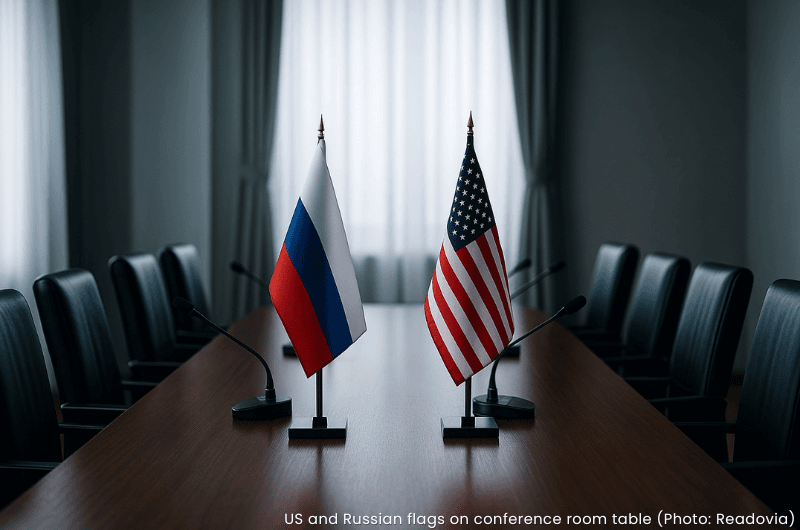
Trump swapped his 50‑day grace period for a sharp, new deadline—Russia now has just 10 to 12 days to accept a ceasefire with Ukraine or face sweeping economic punishment. What Trump Said (and Why It’s a Big Deal) While visiting Scotland, President Trump doubled down on his earlier threats, saying “there’s no reason in waiting.” He gave Vladimir Putin a narrow window to agree to peace—or stock up against full-scale secondary sanctions and export tariffs. This tightening timeline sharply escalates U.S. leverage in the conflict. Ukraine Loves It; Russia Just Shrugs President Zelenskyy applauded the move, calling it a “clear stance” and commending Trump for acting “precisely in time” while urging global collaboration. Meanwhile, the Kremlin issued a low-key response. Spokesman Dmitry Peskov “took note” of the deadline and reiterated that Russia’s “special military operation” will carry on, with peace negotiations only when they align with Russian interests. What’s Actually Happening on the Ground Russian missile strikes are continuing unabated. Recent attacks hit a prison in Zaporizhzhia—killing at least 27 inmates—and struck a maternity hospital near Kharkiv. Ukrainian officials labeled the strikes war crimes, even as Trump’s new ultimatum ramped up diplomatic pressure. Why This Ultimatum Matters Diplomacy meets the clock. Trump’s tighter deadline signals impatience with what he sees as protracted talks and attempts to force real progress. Economic pressure ramped up. Beyond just Russian sanctions, the U.S. is threatening tariffs on any country trading with Russia—especially oil imports. Testing international cohesion. European leaders like UK Prime Minister Starmer and French President Macron remain supportive of Ukraine, with Starmer helping build a broader “coalition of the willing” to enforce peace guarantees. Readovia Rundown: What to Take Home Theme Why It Matters Major shift in tone U.S. goes from diplomacy to direct ultimatum. Ukraine backs U.S. resolve Zelenskyy sees it as leverage for real ceasefire. Russia keeps fighting Kremlin avoids direct rejection but shows no concession. High stakes for allies Third countries face economic pressure if they’re seen enabling Russia. Bottom Line Trump’s timeline is a calculated escalation in the U.S. strategy toward Russia. With civilians still dying and global patience thin, Trump’s ticking clock adds real urgency—but whether it brings peace or pushes things toward escalation remains anyone’s guess. The Author
AI Just Passed the Bar Exam Again—Should We Be Impressed or Alarmed?

It’s official: AI can pass the bar exam. Again. And not just barely. In the latest round of standardized testing, large language models like GPT-4 and Claude 3.5 aced legal licensing exams with scores rivaling top-tier law school grads. So… do we clap, panic, or lawyer up? The Scorecard (and the Shivers) AI models aren’t just squeaking by—they’re crushing the Multistate Bar Exam, outperforming the majority of human test-takers. One benchmark showed GPT-4 scoring in the 90th percentile. Claude 3.5 followed closely behind, breezing through questions on torts, contracts, and criminal law like it had office hours with Scalia. These systems aren’t “understanding” law in the traditional sense—but they are pattern-matching and reasoning at levels once thought impossible for machines. Impressive? Absolutely. But Useful? On paper, this is mind-blowing. In practice? Mixed. AI can write a brief—but would you let it argue in court? It can draft a contract—but who’s checking for nuance, ethics, or creative strategy? It can spot errors faster than a paralegal—but still needs human judgment to decide what matters. In other words: AI is a terrifyingly brilliant assistant—not a lawyer. Yet. Who Should Be Paying Attention (Hint: Not Just Lawyers) Law firms are already experimenting with hybrid teams—partner + AI = faster filings, cheaper billing, and fewer late nights. Legal tech startups are racing to productize this—creating AI-powered tools for everything from tenant rights to trademark filings. Everyday users may soon have access to AI-driven legal help on demand. (Imagine asking a chatbot if your landlord can legally raise rent mid-lease.) Why It’s Also a Little Scary If AI can pass the bar today, how long until we let it practice? Or worse, when do we start trusting it more than people? Bias baked in? AI can regurgitate legal precedent with perfect memory—but it can also amplify historical biases and injustices. False confidence. Legal-sounding text isn’t always correct. Lawyers are trained to argue both sides. AI? Not so much. Job disruption. First it came for the paralegals. Now it’s eyeing junior associates. Soon it might reshape the entire legal services economy. Readovia Rundown: What It All Means Insight Why It Matters AI passed the bar It can mimic legal reasoning at elite levels Not a licensed attorney It’s still a tool—not a person Changing legal workflows Faster drafts, fewer entry-level jobs Access to justice may grow AI could democratize basic legal guidance Regulation is still lagging No formal guardrails on AI “practicing law” yet Bottom Line AI passing the bar exam is both a flex and a warning. It proves just how far these models have come—and how close we are to rethinking what it even means to be an expert. For now, you still need a human lawyer to stand in court. But if AI keeps leveling up, the legal profession might be heading for its own kind of cross-examination. The Author
White House Unveils New AI Strategy with Executive Orders Ahead
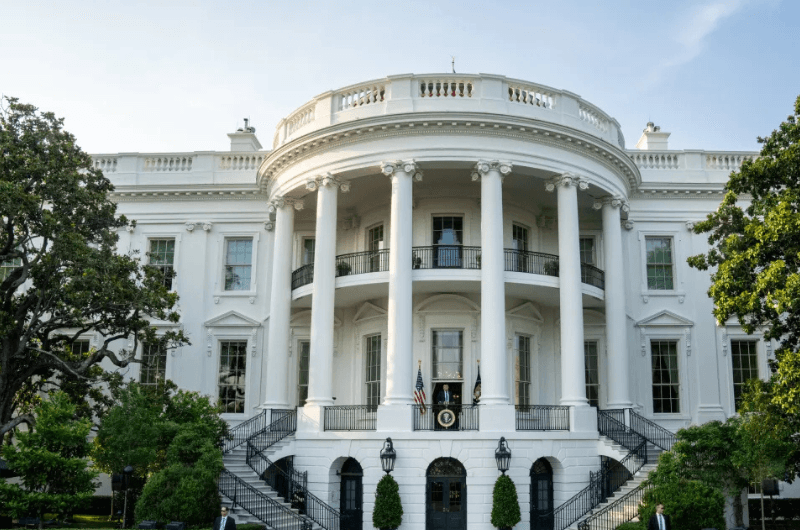
The White House has released a sweeping new AI action plan that outlines the federal government’s vision for artificial intelligence development, infrastructure, and national competitiveness. The 26-page strategy includes more than 90 policy actions designed to accelerate innovation while signaling a major shift in regulatory posture under President Trump. This federal AI playbook arrives amid intensifying global competition, with the administration pushing hard to position the U.S. as the clear leader in the next era of technological dominance. Executive Orders Coming Next According to senior officials, President Trump is preparing a series of executive orders that will accompany the strategy rollout. These directives are expected to ease federal permitting for AI-related construction projects, encourage private-sector partnerships, and establish new agency-wide benchmarks for deploying AI responsibly. “This is a statement of intent,” one administration insider said. “The White House is ready to build — data centers, talent pipelines, and public-private alliances — and to do it at speed.” What’s in the Plan? Key elements of the national AI strategy include: Streamlined permitting for AI infrastructure like chip fabs, cloud servers, and edge computing hubs. Expanded workforce development, including university partnerships and reskilling initiatives for federal employees. Federal AI ethics guidance focused on transparency, fairness, and human oversight. Interagency coordination across defense, health, energy, and intelligence sectors. Cybersecurity protocols to prepare for and defend against AI-powered threats. Responsible Acceleration The administration’s lead AI advisor, David Sacks, emphasized that the plan balances urgency with accountability. “This isn’t deregulation for its own sake,” he said. “It’s responsible acceleration.” Politics Meets Progress The plan is already drawing praise from some corners of the tech world — and criticism from watchdogs concerned about transparency and oversight. Supporters argue that the government has lagged behind private industry for too long and that this roadmap provides long-overdue direction. Critics question whether the strategy sufficiently addresses concerns around bias, surveillance, and concentration of power. One D.C.-based analyst noted, “This plan is about more than innovation — it’s about who controls the future of information, infrastructure, and intelligence.” What It Means for the 2025 Landscape As the 2025 campaign season ramps up, the strategy gives Trump a policy win to tout in both tech and economic circles. It also puts pressure on lawmakers, state officials, and federal agencies to get on board with an accelerated AI agenda — one that will require massive coordination and, potentially, public-private tensions. But one thing is certain: with this move, the U.S. government is no longer a spectator in the AI race. It’s building a launchpad. The Author
Tyrann Mathieu Retires: NFL Star Leaves Behind a Fearless Legacy

After more than a decade of electrifying football, Tyrann Mathieu — known to fans as the “Honey Badger” — has officially retired from the NFL. The 32-year-old safety announced his decision this week, closing the chapter on a storied career defined by heart, hustle, and redemption. Mathieu leaves the game as a three-time Pro Bowler, Super Bowl champion, and one of the most respected voices in professional football — not just for what he did on the field, but for the journey it took to get there. From Hard Knocks to Hard Hits A native of New Orleans, Mathieu’s rise to fame began at LSU, where his speed and instincts earned him national attention. But his early college career was also marked by adversity, including a high-profile dismissal from the LSU program in 2012. That setback could have ended his dreams. Instead, it fueled his comeback. Drafted in the third round by the Arizona Cardinals in 2013, Mathieu quickly silenced critics. He became known for his ball-hawking instincts, explosive tackles, and ability to read the game like a veteran. Whether in coverage or blitzing off the edge, he made quarterbacks uneasy and fans stand to their feet. A Champion on and off the Field Mathieu’s resume includes 29 career interceptions, nearly 700 tackles, and a Super Bowl ring earned with the Kansas City Chiefs during their 2019 championship run. His time with the Houston Texans and later the New Orleans Saints solidified his reputation as a leader in the locker room and mentor to younger players. But perhaps his greatest contribution came off the field. Through the Tyrann Mathieu Foundation, he has poured time and resources into underserved communities, focusing on youth development, disaster relief, and educational outreach — especially in his hometown of New Orleans. He’s spoken openly about his past struggles, using his platform to advocate for second chances, mental wellness, and staying grounded in faith and family. A Voice That Won’t Be Silenced Though he’s hanging up his cleats, don’t expect Mathieu to fade from the spotlight. Sources close to the athlete say he’s exploring opportunities in broadcasting, advocacy, and mentoring the next generation of athletes through his foundation work. NFL stars, former teammates, and fans have flooded social media with tributes. Patrick Mahomes called him “one of the fiercest competitors and best teammates I’ve ever had.” Saints head coach Dennis Allen described him as “the kind of guy who changes the culture of a franchise the moment he walks in.” And maybe that’s the point: Tyrann Mathieu didn’t just change games — he changed perceptions. Of what perseverance looks like. Of how athletes can lead. Of how legacy is written. As he steps off the field for good, one thing is certain: Tyrann Mathieu played the game his way — full speed, full heart, no apologies.
Malcolm-Jamal Warner: A Life Well Lived, A Career Revered, & A Legacy to Remember

Malcolm-Jamal Warner, beloved actor, musician, director, and cultural icon, has died at the age of 54. He passed away on July 20, 2025, while vacationing with his family in Costa Rica. Caught in a rip current off Playa Cocles, Warner drowned while trying to protect his young daughter, who was rescued and is safe. His death sent shockwaves through the entertainment world, marking the loss of a talent who grew up on screen and left a lasting impression across generations. Becoming Theo Born August 18, 1970, in Jersey City, New Jersey, Malcolm-Jamal Warner was named after Malcolm X and jazz pianist Ahmad Jamal. He began acting at just nine years old, studying at The Professional Children’s School and paving the way for a breakout role that would make television history. At 14, Warner was cast as Theo Huxtable on The Cosby Show, a role that instantly cemented him in American culture. As the charming, relatable middle child in the Huxtable household, Warner brought humor, heart, and depth to the series. In 1986, he received an Emmy nomination for Outstanding Supporting Actor — a rare feat for a teenager at the time. His performance helped redefine the image of Black families on television. More than just a character, Theo Huxtable became a symbol of possibility, aspiration, and authentic teenage experience. Beyond the Sitcom While many actors might fade after a childhood breakout, Warner’s career only deepened. He headlined several series, including Here and Now, Malcolm & Eddie, and Reed Between the Lines. As a dramatic actor, he found a home in shows like Sons of Anarchy, American Crime Story, Suits, Sneaky Pete, and The Resident — where he portrayed Dr. AJ Austin with gripping nuance. Behind the camera, Warner proved just as capable. He directed episodes of The Cosby Show, Malcolm & Eddie, All That, Keenan & Kel, and The Fresh Prince of Bel-Air. His directing work spanned multiple genres and networks, showcasing his creative range. He also appeared in stage productions, including August Wilson’s Fences, and lent his voice to animated series and educational programming. His acting credits extended to TV movies, indie films, and even audiobooks. The Musician, the Poet, the Voice Warner was also a gifted musician and poet. A skilled bass guitarist, he performed live with his band Miles Long and collaborated with artists in the worlds of jazz, R&B, and soul. His spoken word performances were deeply personal and politically resonant — drawing praise for both content and delivery. In 2015, he earned a Grammy for Best Traditional R&B Performance alongside Robert Glasper and Lalah Hathaway for “Jesus Children.” His 2022 poetry album, Hiding In Plain View, earned a Grammy nomination and further confirmed his voice as one that mattered beyond television. He hosted and performed at venues nationwide, including poetry slams, jazz festivals, and Black arts conferences. His performances blended storytelling, music, and commentary — always delivered with honesty and intention. A Cultural Commentator In 2024, Warner launched Not All Hood, a podcast that aimed to dismantle monolithic perceptions of the Black community. With warmth and depth, he tackled complex issues, shared interviews with artists and thinkers, and gave space to often-ignored narratives within Black culture. The show became a favorite for its authenticity and nuance — much like Warner himself. A Nation Reflects Tributes poured in from across the entertainment world. Former castmates, collaborators, and fans alike mourned his passing. Raven-Symoné, who played Olivia on The Cosby Show, described him as a guiding light and big brother figure. Stars like Beyoncé, Tracee Ellis Ross, Jamie Foxx, and Morris Chestnut shared memories of Warner’s kindness, brilliance, and enduring spirit. Colleagues from The Resident spoke of his generosity on and off set. Friends remembered him as a quiet powerhouse — never loud, but always unforgettable. A Final Word Malcolm-Jamal Warner was more than a famous face from a legendary sitcom. He was a creator, a thinker, a father, and an artist who wore many hats with grace. His legacy is not just in reruns or awards, but in the millions of people he inspired to dream, express, and embrace who they are. He reminded the world that success doesn’t have to mean compromise, and that growing up on screen can lead to growing into your purpose. His light will be missed, but never forgotten. Rest in power, Malcolm.
The Bromance. The Breakup. The Fallout: Inside the Trump–Musk Feud
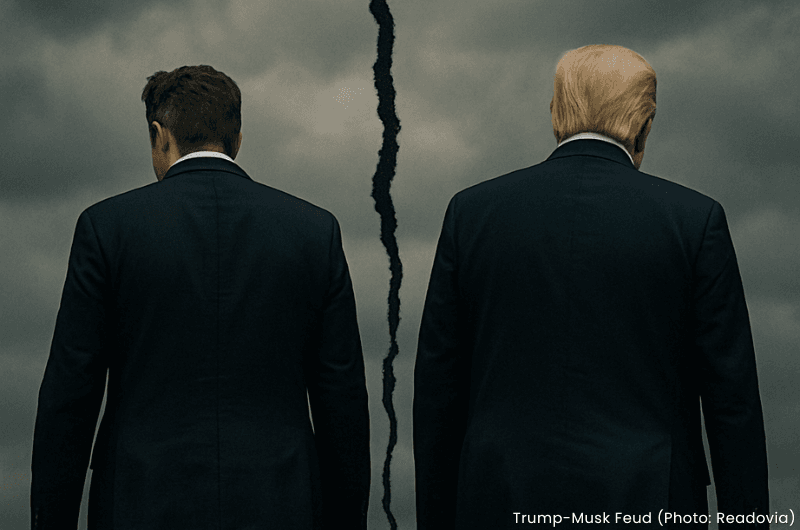
“Power rarely fractures quietly. What began as a headline-grabbing alliance between Elon Musk and Donald Trump has turned into a full-scale political rupture—with real consequences. This exclusive Readovia feature unpacks how two of the most powerful men in America went from partners to public enemies—and what it means for the future of the GOP.” – Ellis Grant, Staff WriterReadovia It started as a billionaire bromance. Now it’s a full-blown political divorce—with the future of the Republican Party hanging in the balance. Elon Musk changed his phone number. Speaker of the House Mike Johnson says no one in the Trump administration can reach him. And just weeks ago, Musk was co-leading a White House task force and publicly praising President Trump’s “visionary leadership.” Now? He’s calling Trump a fraud, threatening to gut Republican midterms with a new third party, and implying the president’s name appears in Jeffrey Epstein’s files. This isn’t just a falling out between two powerful men—it’s a rapidly escalating political rift that could split the Republican base in half ahead of the 2026 midterms. Welcome to America’s most dramatic breakup of the year. The Power Couple Phase The Trump-Musk relationship began with power and money. During Trump’s 2024 campaign, Musk quietly funneled over $277 million into conservative super PACs backing the Republican ticket. He also used his vast social media reach and behind-the-scenes lobbying to boost Trump’s narrative on everything from AI to anti-regulation. In January 2025, Musk took a formal role in the new administration, co-chairing the White House’s freshly formed Department of Government Efficiency—unironically abbreviated as DOGE. His mission? Slash spending, shake up legacy departments, and make good on Trump’s promise to “drain the swamp 2.0.” Trump called him “one of the smartest men alive.” The Big Blowup On June 5, everything changed. That morning, Musk went scorched-earth on the president’s much-hyped tax-and-spending plan—what Trump dubbed the “Big, Beautiful Bill.” Musk called it a “disgusting abomination,” slamming the budget for bloating the deficit and funneling funds to what he called “zombie departments.” Then he did what he does best: opened up the floodgates on X. “Should we start a new party? One that puts you in charge? Yes or no.”— Elon Musk, June 5, 10:47 AM The poll racked up more than 1.2 million votes in 24 hours. Over 65% said yes. And then came the nuclear tweet: a vague but unmistakable suggestion that Trump’s name appears in sealed Epstein court documents. Musk didn’t elaborate—but he didn’t walk it back either. By the end of the day, Trump’s response was furious and immediate. He called Musk “off the rails,” accused him of betrayal, and suggested revoking federal subsidies for Tesla and SpaceX. Insiders say Musk’s companies could lose billions if contracts are pulled. Fallout in Real Time Since the initial blast, the feud has only escalated. Musk began calling Trump’s bill the “Big Ugly,” a deliberate taunt. Trump called Musk a “train wreck.” And in a final act of digital defiance, Musk changed his phone number—cutting off all direct contact with Trump, according to House Speaker Mike Johnson. Meanwhile, Musk officially launched what he’s now calling the “America Party”, pledging to fund a slate of anti-establishment candidates for 2026. He’s already hired staff and claims thousands have signed up to help. Why This Matters: Impact & Consequences This isn’t just another tech mogul tantrum. The stakes are real—and rising. Tesla & SpaceX on thin ice Consequences: Trump could revoke EV credits and federal contracts. Stock volatility has already begun. Republican unity fractured Consequences: America Party could siphon off 7–10% of GOP votes, tipping control of Congress. Third-party spoiler effect Consequences: Musk’s new “America Party” movement could energize younger, libertarian-leaning voters—but at a cost to existing party margins. Conspiracy optics Consequences: Musk’s Epstein allegation, whether substantiated or not, has fueled new MAGA infighting and media scrutiny The Author
The AI Job Market is Exploding—and You May Not Need a Degree to Get In

AI careers are having a moment—and it’s not just hype. From six-figure salaries to flexible roles, the opportunities are real and multiplying fast—and paying handsomely. In fact, some AI positions are commanding salaries well into the six figures, with remote options and stock bonuses baked in. For now, it’s a boom. But how long will it last? That’s the question many quietly ask while refreshing their LinkedIn alerts. Where the Real Jobs Are If you think the AI boom is only for coders, think again. Sure, there’s massive demand for AI engineers, and data scientists (yes, that’s a real title now). But companies also need: Prompt engineers who fine-tune how AI models respond to language and queries AI trainers and data annotators (often contract-based but crucial) Technical writers who can document complex models in plain English AI product managers to shape tools for everyday users, and Legal and compliance pros who understand AI risk and regulation Who’s Hiring? Industries hiring most aggressively? Think finance, healthcare, retail, cybersecurity, and—you guessed it—Big Tech. But smaller firms and startups are quickly catching up, especially those trying to integrate AI without building from scratch. Who’s Actually Landing These Jobs You don’t need a fancy degree to break into AI. These days, skills speak louder than diplomas. More and more companies are hiring based on what you can do—not where you went to school. If you’ve got a solid portfolio, hands-on experience, or even just a track record of figuring things out fast, you’re in the game. Some of the best hires right now are self-taught, fresh out of a bootcamp, or coming from totally different careers. What matters most? Knowing how to use AI tools in the real world—and being able to show it. Also: don’t sleep on soft skills. If you can explain complex ideas clearly, work well with non-tech teams, or just write a decent email, you’ve got an edge. What They’re Paying Entry-level roles like AI support analysts or model testers can start around $60,000–$80,000, depending on location and industry. But mid-level machine learning engineers, AI consultants, and AI product leads often hit $150,000–$250,000. At well-funded companies, even higher. The job titles may sound made-up, but the money is very real. Why the Boom Might Bust (Or At Least Slow Down) Here’s the truth: AI isn’t immune to market cycles. A sudden glut of applicants, overhiring by hype-chasing firms, or stricter regulation could cool demand. And then there’s the kicker—AI could eventually automate some of the very jobs it creates. Especially in areas like data labeling, testing, and even some programming tasks. That’s why smart professionals are hedging their bets—getting into AI now, but staying adaptable for the long game. The Author
Texas Flash Flood: At Least 134 Dead, Many Still Missing

Last updated July 16 – 12:30 PM (EST) A catastrophic flash flood tore through Central Texas over the Fourth of July weekend, claiming the lives of more than 134 people—including at least 27 campers and counselors from Camp Mystic, a private girls’ summer camp along the Guadalupe River. Fueled by lingering moisture from Tropical Storm Barry, intense rainfall pounded the Texas Hill Country in the early hours of Friday, causing the Guadalupe River to rise 26 feet in just 45 minutes. Some areas saw up to 20 inches of rain within hours, overwhelming the region and unleashing catastrophic flooding. By July 8, officials confirmed at least 111 deaths, with over 170 people still missing. The tragedy hit Camp Mystic especially hard. Families are mourning the loss of daughters, sisters, and young friends who had just arrived at camp days earlier. Rescue workers discovered debris from the camp more than 15 miles downstream. Hundreds of volunteers, National Guard troops, and first responders continue recovery efforts across Kerr, Kendall, Travis, Burnet, and surrounding counties. As the water recedes, the scope of the devastation is becoming painfully clear. Texas Governor Greg Abbott has issued a statewide disaster declaration, and President Trump approved federal emergency assistance. The response has sparked criticism over delayed alerts and outdated infrastructure in flood-prone areas long known as “Flash Flood Alley.” Climate experts warn that extreme weather events like this are becoming more frequent due to warmer, wetter air patterns. Meanwhile, local officials are calling for major investments in early-warning systems and better public education around flash flood risks. With entire families grieving, the Texas flood is already being called the deadliest inland flood in U.S. history since 1977—and the final toll may not yet be known.
Elon Musk Launches New Political Party, Tesla Shares Tank

Elon Musk has officially launched the America Party, positioning it as a centrist alternative to Republicans and Democrats. In a flurry of posts, Musk framed the new political movement as a way to “restore freedom,” pledging to back candidates in key House and Senate races during the 2026 midterms. The party’s early platform focuses on fiscal conservatism, AI-driven national defense, and what Musk calls a “pro-family, pro-future” agenda. The move sent shockwaves through financial markets. Tesla shares plunged nearly 8%, erasing an estimated $68 billion in value within days. Investors and analysts quickly voiced concern that Musk’s growing political ambitions are distracting him from Tesla’s core business at a critical time—especially with the company’s robotaxi rollout on the horizon and sales performance under pressure. Some financial institutions have already downgraded Tesla’s outlook, citing leadership uncertainty. One analyst warned that if Musk splits his focus between running a political operation and leading Tesla, the company’s ability to execute could falter. The reaction from Washington has been equally dramatic. Musk’s decision to launch his own political party reportedly stems from his disillusionment with former allies in the GOP—particularly after recent legislative developments. In response, Trump dismissed the party as “a train wreck waiting to happen.” Critics say Musk may underestimate the logistical and legal barriers to building a viable third party, especially in states with tough ballot access laws. But supporters argue that with Musk’s brand, influence, and billions in funding, even a limited America Party showing could shake up key races. The bigger question: can Elon Musk realistically run a car company, a space company, and now, a political party—without breaking something along the way? The Author
Build an AI App for iOS? Not Without Apple’s Blessing

Building AI apps for iOS just got trickier. Apple’s infamous walled garden just got a little taller — especially if you’re building with AI. In a move catching developers off guard, Apple has begun cracking down on AI-powered apps that mimic native iOS features. Several app makers have reported rejections during the App Store review process, citing vague rules about “confusing user experience” and “duplicating iOS functionality.” What does that mean in plain English? If your app looks or behaves too much like Siri, Spotlight search, or even Apple’s own Notes or Calendar tools — and it’s powered by AI — it’s likely getting the boot. This pushback comes just weeks after Apple unveiled its own AI platform, Apple Intelligence, powered in part by OpenAI. The company is clearly tightening control over how third-party AI tools appear and behave inside its ecosystem — especially as it prepares for a fall launch of AI features in iOS 18. Developers say the new enforcement feels sudden and inconsistent. Some were told to “revise core functionality” without clear guidance. Others point out that Apple’s own upcoming features borrow heavily from existing third-party ideas — including AI writing assistants and summarizers. This isn’t the first time Apple has flexed its muscles against innovation that threatens to blur the line between its software and others’. But the timing — right as Apple stakes its claim in the generative AI space — is raising eyebrows. The Author