


Hurricane Erin Batters Outer Banks, Forcing Mass Evacuations
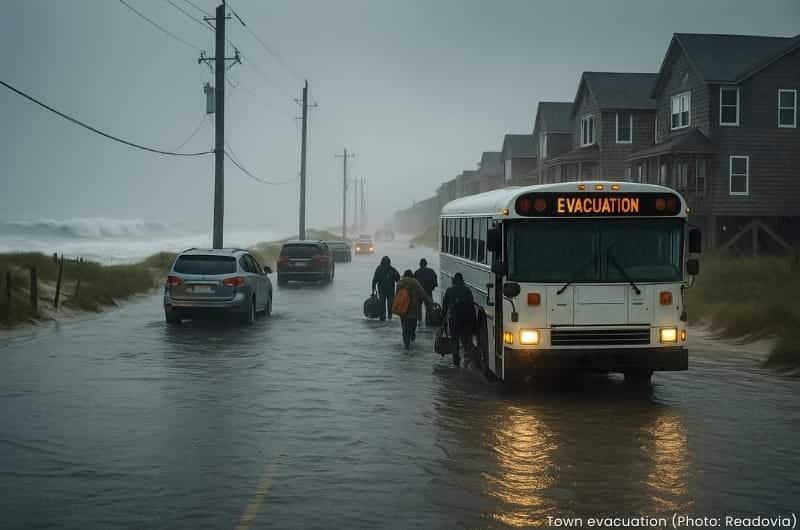
Hurricane Erin made landfall overnight along North Carolina’s Outer Banks, unleashing fierce winds, torrential rain, and dangerous storm surges that have left thousands without power. Local officials ordered mandatory evacuations in some areas, with emergency shelters now at capacity. Rising floodwaters and battered infrastructure are already complicating rescue operations as the storm churns northward. Airports have canceled hundreds of flights, and the state’s governor has activated the National Guard to assist with response efforts. Residents across the mid-Atlantic are bracing for what could be days of widespread disruption as Erin continues inland. Early reports confirm significant damage to homes, businesses, and coastal roads, with rebuilding expected to stretch long past the storm’s departure. The Readovia Cut: Hurricanes like Erin don’t just test weather defenses — they test the resilience of entire communities. How quickly local and federal aid arrives, and whether coastal infrastructure can withstand repeat storms, will shape not just recovery, but the future viability of living along America’s fragile coastlines
Apple Under Fire: DOJ Antitrust Case Targets the App Store

Apple’s iron grip on its App Store is officially on trial. The U.S. Department of Justice is pressing forward with an antitrust case, alleging the company’s policies stifle competition and lock developers—and consumers—into a tightly controlled ecosystem. The stakes extend far beyond iPhone users. A ruling against Apple could reshape the economics of the mobile app market, potentially opening doors for rival app stores, alternative payment systems, and a new era of competition. Tech giants from Google to Meta are watching closely, knowing the ripple effects could hit their own platforms. For consumers, the fight is less about legal nuance and more about money and choice. Will this case lower app prices? Will it loosen Apple’s gatekeeping on what makes it into your phone? Those are the questions Washington is betting the courts will help answer. This is Apple’s most consequential courtroom battle since the iTunes era—and it comes at a moment when regulators worldwide are increasingly willing to take on Big Tech’s biggest players. The Author
Zelenskyy and Trump Signal Openness to Putin Talks After Alaska Summit

The Alaska summit wasn’t just about Donald Trump and Vladimir Putin. In a separate meeting, Trump also sat down with Ukrainian President Volodymyr Zelenskyy—an encounter that added new intrigue to an otherwise inconclusive round of diplomacy. Putin left Alaska without budging on a ceasefire. But Zelenskyy, careful with his words, signaled that he remains open to expanded discussions that could eventually bring all three leaders to the table. For Ukraine, battered and weary after more than three years of war, even a hint of trilateral talks is a lifeline worth entertaining. For Trump, the optics are powerful. One meeting with Putin, another with Zelenskyy—and suddenly he looks less like a former president and more like a self-styled dealmaker still capable of commanding global attention. For Zelenskyy, the calculus is pragmatic: keep Washington engaged, keep options alive, and keep Ukraine’s fight from slipping off the world’s radar. The Alaska sessions didn’t deliver a breakthrough—but they reshaped the narrative. Trump positioned himself as the hinge between Kyiv and Moscow, while Zelenskyy cracked open the door to talks that could one day decide the war’s fate. The Author
U.S. Layoffs Spike 140% in July, Highest Since Pandemic

Layoffs surged 140% in July, marking the steepest increase since the early days of the COVID-19 pandemic. The rise signals growing instability in the labor market, with tech and white-collar jobs among the hardest hit. The number of job cuts announced in July reached 62,075, a substantial increase from the 25,885 cuts announced in July 2024. Analysts point to automation and AI disruption as key drivers, alongside broader economic headwinds. The sudden jump has rattled economists who warn that unemployment numbers could rise further in the months ahead. Key Drivers Government DownsizingThe federal government, particularly due to initiatives like the Department of Government Efficiency (DOGE), has been a major contributor to job cuts, announcing 292,294 cuts so far in 2025. Artificial Intelligence (AI)The adoption of AI and other technological updates has been a significant factor, with over 10,000 job cuts in July directly attributed to AI and 20,219 tied to technological updates this year. Tariffs and Economic ConditionsTariffs and broader market and economic uncertainties have also contributed to layoffs, particularly affecting sectors like retail and automotive. Between the Lines — The Readovia Cut This spike underscores a deeper shift: layoffs are no longer just cyclical. They are structural. As automation, downsizing and tariffs accelerate, traditional job protections are lagging behind, leaving workers vulnerable in ways policymakers have yet to address. The Author
Trump Seizes Control of D.C. Police, Deploys National Guard in Sweeping Security Move
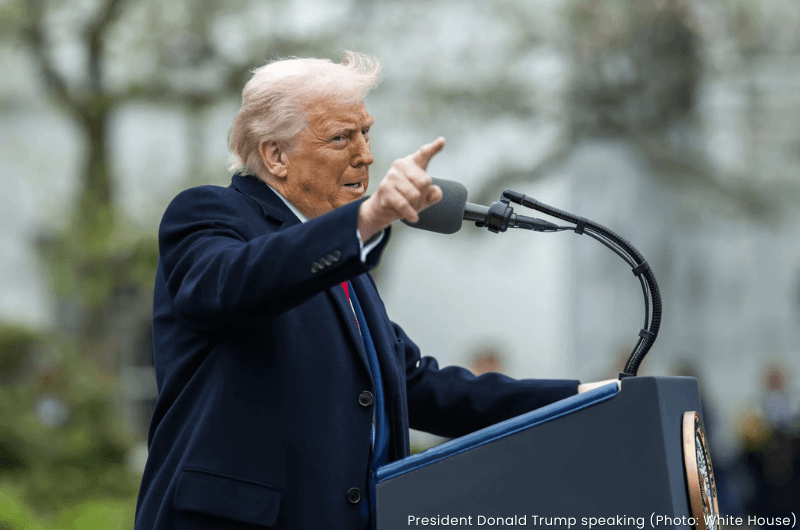
In a stunning escalation of federal authority, President Donald Trump has declared a public safety emergency in the nation’s capital, temporarily taking command of the Metropolitan Police Department and activating the D.C. National Guard. The move, which Trump says is aimed at restoring order, has placed hundreds of troops and federal agents on the city’s streets. A Federal Show of Force Roughly 800 National Guard members began deploying across Washington on Tuesday, many taking up posts near major landmarks and high-traffic areas. They are joined by an estimated 850 federal law enforcement officers from agencies including the FBI, DEA, ATF, and U.S. Marshals Service. The combined forces are carrying out arrests, seizing firearms, and increasing patrols in targeted neighborhoods. Trump’s Narrative vs. City Crime Data From the White House, Trump portrayed D.C. as being “out of control,” citing rising crime, homelessness, and a failure of local leadership. His actions echo a promise he made months earlier, on January 19, 2025: “We will rebuild our once-great cities, including our capital in Washington, D.C., making them safe, clean, and beautiful again — and we want to make this city again safe. We don’t want people coming to Washington and getting mugged, shot, killed. We’re going to stop it. Law enforcement — and they have very good police here, but they have to be allowed to do their job. We’re going to stop it. We’re going to beautify it. We’re going to make it the most beautiful capital in the world.” But official statistics tell a different story: violent crime in the District has dropped sharply in the past year and remains near three-decade lows. City officials accuse the president of manufacturing a crisis for political gain. Pushback from Local Leaders Mayor Muriel Bowser called the intervention “unsettling and unprecedented,” warning that it undermines the city’s home-rule authority. Critics argue that while D.C.’s unique legal status allows a president to take such steps, similar actions in other cities would face major constitutional challenges. What Comes Next Under current law, Trump can maintain federal control over the Metropolitan Police for up to 30 days without congressional approval. Whether the deployment will be extended — and whether the president will attempt similar moves in other Democratic-led cities — is now a central question in the unfolding political and legal battle. The Author
NASA Confirms Giant Asteroid Flyby Today — No Impact Risk

Don’t panic — but look up. A massive asteroid is set to fly past Earth today, and while it’s not close enough to trigger a sci-fi disaster scenario, NASA is tracking it closely. Measuring over 300 feet in diameter — taller than a 30-story building — the asteroid will pass by at a safe distance of more than 3 million miles. A second, slightly smaller asteroid is also expected to pass Earth today, making this a rare double flyby event — both objects are being closely tracked by NASA. NASA’s Center for Near Earth Object Studies (CNEOS) has confirmed there is no threat of impact. Still, the event has captured global attention. “These are routine flybys, but they serve as a good reminder of the importance of planetary defense,” a NASA spokesperson noted. The agency continues to monitor thousands of space rocks and refine strategies for future impact prevention. While the asteroid won’t be visible to the naked eye, seasoned skywatchers with powerful backyard telescopes may catch a glimpse — depending on sky conditions. So no, the sky isn’t falling. But it’s definitely moving.
AI Is Reshaping the World — Are You Ready for It?

The age of artificial intelligence is rewriting the blueprint of human potential. Powered by the collective intelligence of humanity, AI is changing how we live, work, think, and create. What once felt like sci-fi is now real-time reality. A New Age of Opportunity For go-getters and entrepreneurs, this moment is golden. Content creators are using AI to generate full marketing campaigns in seconds. Solo founders are automating customer service, email follow-ups, and product development using no-code AI tools. Developers are building entire apps with simple prompts. But the AI boom isn’t just for the tech elite anymore — it’s for the doers who are willing to dive in head first, refusing to miss what could be the biggest opportunity of our lifetime. The Job Market: Obsolete Roles, Emerging Giants Yes, some jobs are on the chopping block. Routine-heavy roles that rely on repetition and pattern-following are the first to go. But AI isn’t just replacing — it’s also creating. Entirely new job categories are forming, from prompt engineers to AI product managers to synthetic content designers. Many of these roles are already commanding six-figure salaries, with some predicted to be among the highest-paying jobs of the next decade. AI will replace some jobs, and completely redefine others. For many, learning to work AI into existing skills and expertise will be key. Why Learning AI Now Is Critical Waiting to “see how it all shakes out” could be the biggest mistake of the decade. This tech isn’t slowing down. It’s scaling up, and evolving by the second. Whether you’re a creative, a cook, a coder, learning AI — even at a basic level — isn’t just smart. It’s survival. Knowing how to use AI tools will put you ahead of the curve. This is the new digital literacy. The winners in this new era won’t be the ones who fear the shift — they’ll be the ones who leverage it. Between the Lines — The Readovia Cut AI is here. It’s not perfect, but it’s powerful. It’s not magic, but it feels like it. Whether it liberates your time, scales your business, or lands you a role that didn’t exist last year, it’s the lever of our era. The only real risk is ignoring it. The Author
Trump Forms White House Task Force to Supercharge 2028 Olympics Prep
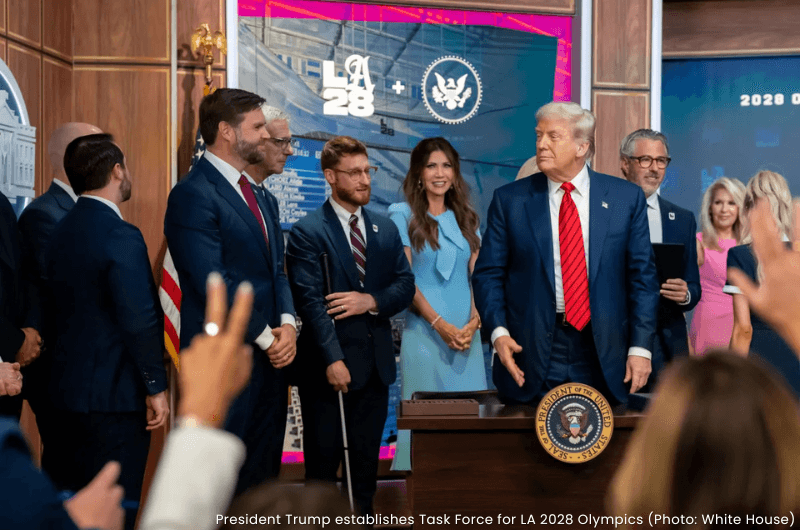
President Trump has signed an executive order to establish a formal White House Task Force to ensure America is Olympics-ready for the 2028 Summer Games in Los Angeles. Trump plans to chair the Task Force himself, with VP J.D. Vance serving as vice chair, while a designated executive director will handle day-to-day operations. According to the official White House fact sheet on the new task force: The 2028 Summer Olympics are expected to generate $18 billion in national economic activity, Support approximately 90,000 full-time equivalent jobs, Provide about $6 billion in labor income, and Contribute around $700 million in state and local tax revenue What It Means The above numbers reflect the tangible economic impact and help reinforce the strategic importance of the task force. Bottom Line This isn’t about gymnasts and gold medals—at least not yet. It’s an economic engine, a global soft power flex, and a savvy political showpiece rolled into one. And yes, it comes with stadium-sized photo ops. The Author
Storm Slams East Coast With Dangerous Flash-Flooding From D.C. to NYC

A slow-moving storm front is stirring up serious flash‑flood danger from D.C. to New York City, and no, this isn’t some light drizzle—risk levels are elevated for up to 23 million people. What You Need to Know Widespread Flood WatchesFlood watches are in effect across Connecticut, New York, New Jersey, eastern Pennsylvania, Maryland, Washington D.C., and northern Virginia through Friday. This is the real deal—not your average passing shower. Rainfall That France Would EnvyExpect rainfall up to 2 inches per hour, with some totals reaching 4–6 inches locally. Easily fast enough to swamp roads, subways, and even cars. States of Emergency & Travel AdvisoriesNew Jersey has declared a state of emergency, and NYC’s mayor warned residents to skip basement dwellings and avoid commuting Thursday afternoon. Impact Window = Afternoon & EveningDangerous downpours are expected during and after rush hour, especially between 2 PM and midnight—exactly when most people are on the roads. The Climate AngleThe humid air feeding this storm is linked to rising sea surface temperatures. Experts warn these types of heavy rain outbreaks are becoming more common—and more extreme. Readovia Rundown Focus Why It Matters Multiple metro areas affected D.C., Baltimore, Philly, NYC all at risk Urban flooding—not just roads Streams, subways, basements vulnerable Travel over highways? Beware Highways could become dangerous quickly Wall-to-wall alerts Watches and warnings now active region-wide Weekend rebound ahead Sunshine and cooler air return Friday into the weekend Bottom Line This isn’t a random flash in the pan. It’s a significant weather event along the I‑95 corridor with potential for serious disruption and damage. If you’re in the region: check flood alerts, skip unnecessary travel, and have a backup plan for evening plans.
Think You Can’t Afford to Save? Maybe It’s Time to Stop Spending

Meet No‑Buy 2025—the budget challenge people are calling part detox, part personality test. The idea? Stop buying stuff you don’t need. Sounds easy enough—until you realize how often you confuse boredom with a checkout button. From skipping $18 oat lattes to finally ignoring your 13th Sephora cart of the month, the movement is gaining traction among Gen Zers, millennials, and even a few brave boomers who’ve had enough. Why It’s Catching On It’s not just inflation fatigue. People are tired of consuming on autopilot. Between rising prices, credit card guilt, and TikTok brain, shoppers are realizing that not buying might actually be the upgrade they’ve been searching for. Online, it’s everywhere: no-spend challenges, closet cleanouts, “look what I didn’t buy” bragging rights, and screenshots of canceled carts. It’s minimalist rebellion—served with a filter. Real-World Wins (With Receipts) Debt goes down. Fast. One woman paid off nearly $50,000 in credit card debt by ghosting impulse buys and skipping dinners that started with “just one drink.” Sanity returns. Others say they feel less overwhelmed, more grounded, and—get this—actually like their closet for once. Style levels up. Fashion insiders argue you don’t really know your style until you stop chasing sales. Real confidence doesn’t come with a tracking number. Who’s Doing It—and Why Gen Z is leading the way. Despite being great savers on paper, many can’t cover a month’s expenses. That makes a no-buy reset feel less like punishment and more like protection. Millennials are shedding the shopping shell. Tired of fast fashion, fast scrolling, and faster debt, they’re slowing things down—and finding that less actually feels like more. Side hustlers are tagging in. Some are using no-buy months to boost savings from resale apps and freelance gigs. One woman cut her shopping, then flipped half her closet for cash. Not All Zen and Savings You’ll feel itchy. The urge to spend doesn’t vanish just because you made a rule. Social plans still cost money. And no one wants to be the “I’m on a no-buy” person at brunch. It can backfire. Go too hard, and you risk binge spending the moment it ends. Think of this more like meal prep than a crash diet. Retail therapy has feelings too. Small businesses, especially local ones, can feel the squeeze if too many customers go dark. Consider swapping mindless buying for mindful support. How to Try It Without Losing Your Mind Tip Why It Works Start small One no-buy weekend is easier than a whole year. Pick a category Say no to tech for a month. Or beauty. Or those TikTok gadgets. Have a goal Debt? Vacation? Emergency fund? Make it your reason to pause. Don’t make it punishment No-buy doesn’t mean no joy. Find free swaps that feel good. Bottom Line No‑Buy 2025 isn’t just about saving money—it’s about reclaiming focus. In a world of targeted ads and instant dopamine hits, choosing to not spend is a quiet flex. And if you do it right, you might come out with more clarity, less clutter, and a bank account that doesn’t ghost you every Friday night. The Author