


FEATURE: TikTok’s ‘Digital Sabbath’ Trend Has Gen Z Powering Down for Peace of Mind

On TikTok, a wellness trend that’s been brewing is taking hold: the “Digital Sabbath.” It’s a modern spin on an ancient idea—a full day of rest and reflection—only now reimagined for the smartphone era. Instead of scrolling, Gen Z is experimenting with shutting down. The practice is simple: pick one day, often a “screen-free Sunday,” and intentionally disconnect from digital devices. Phones go off, tablets get tucked away, and laptops stay closed. In their place come slower, more intentional activities—reading, journaling, cooking, spending time outdoors, or simply catching up with loved ones. How the Trend Works A full-day disconnection: Participants commit to 24 hours offline, turning off notifications and setting boundaries with their devices. Offline activities: Instead of TikTok feeds or endless scrolling, the focus shifts to restorative, analog pursuits—walking, writing, or even embracing boredom. Restoring presence: The goal is to reclaim attention from the constant tug of screens and be more fully present in daily life. Documenting before & after: While the sabbath itself is tech-free, users often post reflections before starting and after completing their detox, sharing how it changed their mood, focus, and perspective. Why It’s Catching On The trend’s popularity highlights the complicated relationship Gen Z has with social media. As true “digital natives,” many are acutely aware of the toll nonstop connectivity takes on mental health. Combatting tech overload: For users whose screen time stretches into double-digit hours, unplugging feels like a reset button. Mental health relief: Studies consistently link excessive social media use to anxiety, depression, and sleep issues. The Digital Sabbath offers a break from those pressures. Beyond the scroll: TikTok’s algorithm thrives on endless consumption; this trend flips the script, encouraging people to find joy and meaning offline. A “dopamine detox”: Related to a broader movement, it aims to break reliance on quick digital hits, making everyday offline activities feel more rewarding. Reported Benefits Participants often share that their Digital Sabbath delivers more than just a day off from screens. Common outcomes include: Reduced anxiety and improved mood — relief from the pressure to stay online. Better sleep and sharper focus — especially when phones are put away before bedtime. Deeper connections — more meaningful conversations and time with friends and family. Creativity and self-awareness — downtime fosters reflection, new ideas, and even a sense of groundedness. Why It Matters The rise of the Digital Sabbath shows that even on TikTok—the app designed for maximum engagement—there’s a counterculture forming. For a generation raised online, taking 24 hours offline is less about rejection and more about balance. It’s a statement that life doesn’t have to be lived entirely through a screen. The Author
Trump Signs Executive Order Renaming DoD the “Department of War”
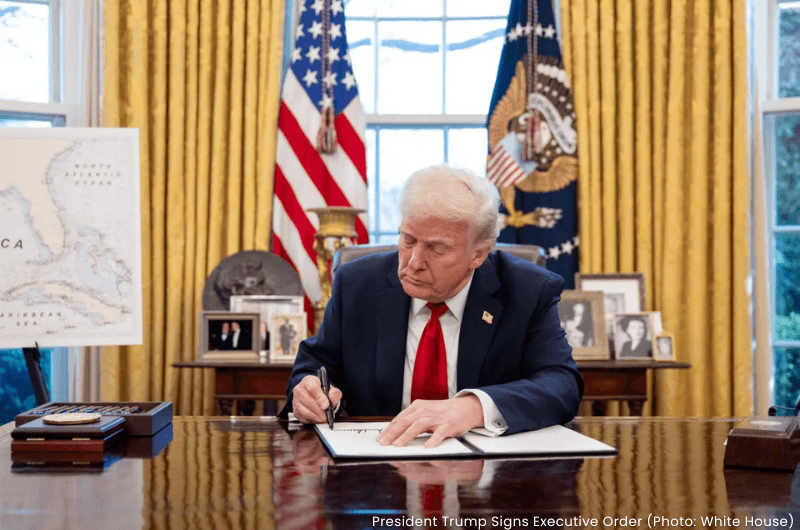
In a sweeping symbolic move, President Trump signed an executive order renaming the Department of Defense to the Department of War. The White House said the change reflects “a return to clarity and strength,” reviving terminology not used since World War II. The order itself underscores the intent behind the change: “The name ‘Department of War,’ more than the current ‘Department of Defense,’ ensures peace through strength, as it demonstrates our ability and willingness to fight and win wars on behalf of our Nation at a moment’s notice, not just to defend. This name sharpens the Department’s focus on our own national interest and our adversaries’ focus on our willingness and availability to wage war to secure what is ours. I have therefore determined that this Department should once again be known as the Department of War and the Secretary should be known as the Secretary of War.” Critics argue the shift signals a more aggressive posture that could alter how allies and adversaries interpret U.S. policy. Defense officials privately expressed concern about the optics, though the order does not yet mandate structural or operational changes. Supporters claim the renaming strips away “political correctness” and brings the Pentagon’s mission into sharper focus. Others worry it could unsettle global markets and complicate diplomatic relations. Either way, the rebranding cements Trump’s willingness to rewrite norms as he heads into a contentious election year. The Author
Powerball Jackpot Soars to $1.7 Billion After No Winner Last Night

Updated September 7, 2025 In a rare twist, winning tickets in Missouri and Texas matched all the numbers in last night’s Powerball drawing, splitting the massive jackpot between two winners. Each winner will claim half the prize — still an astronomical payout that places them among the wealthiest lottery winners in U.S. history. — The Powerball jackpot has skyrocketed to $1.7 billion, making it the third-largest lottery prize in U.S. history after no ticket matched all numbers in the latest drawing. The winning numbers were 3, 16, 29, 61, 69, and the Powerball 22, with a 2× PowerPlay multiplier. While the grand prize went unclaimed, millions of players still scored winnings: 11 tickets matched five numbers for $1 million, 4 tickets with PowerPlay doubled that to $2 million, and more than 6 million other tickets took home smaller prizes. The cash value of the jackpot is estimated at $770.3 million before taxes, setting a frenzy for the next drawing scheduled for Saturday at 10:59 p.m. ET. With stakes this high, excitement and ticket sales are expected to soar nationwide. This new milestone follows a record-breaking moment in lottery history. On November 7, 2022, a single ticket purchased at Joe’s Service Center in Altadena, California claimed the largest Powerball jackpot ever recorded—$2.04 billion. The winner, Edwin Castro, chose the lump-sum payment and walked away with $997.6 million before taxes, cementing his place in lottery history. With the current jackpot now within striking distance of that historic prize, all eyes are on the next drawing to see if another record will fall. A single play starts at $2. That’s pretty darn cheap for a shot at $1.7 billion. Now, if you’ll excuse me, I’ve got an errand to run. The Author
Netflix & Apple TV+ Eye Live Sports Deal

Reports indicate that Netflix and Apple TV+ are intensifying efforts to secure live sports rights, a move that could redefine the future of streaming. Netflix is poised to exclusively stream the MLB Home Run Derby through 2028, marking one of its boldest pushes yet into live content. This builds on its growing presence in sports after experimenting with high-profile events, including NFL holiday broadcasts that drew massive viewership. Apple, meanwhile, is doubling down on its sports portfolio. Already holding a decade-long deal for MLS Season Pass and streaming select MLB games, Apple is now reportedly eyeing Formula 1 U.S. rights, in addition to exploring playoff baseball and Sunday Night Baseball opportunities. Together, these moves signal a turning point. As traditional streaming competition slows, live sports may emerge as the next great battleground—one that could determine which platforms dominate in the years ahead. The Author
Trump Targets Mail-In Voting & Voter ID in Sweeping Executive Order

President Donald Trump has announced plans for an executive order mandating voter ID for all U.S. elections, with no exceptions. The plan also proposes to eliminate mail-in voting—except for the seriously ill and military personnel—continuing his push for tighter voting restrictions. Critics warn this move could face legal challenges and disenfranchise marginalized communities, including low-income voters, seniors, and minorities. In addition to voter policy, the administration is halting visa approvals for nearly all Palestinian passport holders, expanding restrictions that had previously applied only to Gaza residents. Meanwhile, a federal judge has temporarily blocked the deportation of nearly 700 unaccompanied Guatemalan children, highlighting ongoing tensions around immigration enforcement. These sweeping proposals and regulatory shifts are dominating the U.S. political landscape today, sparking debate over election integrity, immigration policy, and the balance between security and civil rights. The Author
Judge Temporarily Blocks Deportation Flights of Guatemalan Minors

A federal judge has halted deportation flights carrying Guatemalan children, issuing a temporary order that immediately suspends the program. The ruling came late Friday night following a wave of legal challenges from advocacy groups arguing the flights posed humanitarian risks and violated protections for minors. The program, which sought to expedite removal of children who had recently crossed the southern border, has been under scrutiny from immigration lawyers and human rights organizations. Critics contend the process lacked sufficient safeguards, leaving children vulnerable to unsafe conditions upon return. Federal officials, however, had defended the flights as a necessary enforcement tool amid record border crossings. By blocking the deportations, the court has placed a spotlight on the fragile balance between immigration enforcement and child welfare. The decision now forces federal agencies to reevaluate protocols for handling minors in custody, even as broader immigration policies remain a flashpoint in Washington’s political battles. For families and communities on both sides of the border, the ruling offers temporary relief—but it also signals a protracted legal fight ahead over how the U.S. treats its youngest migrants. The Author
Health Insurance Premiums Likely to Rise in 2026

Analysts warn U.S. health insurance premiums are set to increase again in 2026, driven by higher care utilization, new drug costs, and broader system inflation. Employers may respond with narrower networks and higher deductibles, putting more strain on households already squeezed by everyday expenses. The rising costs are also expected to complicate negotiations during open enrollment season, with many families weighing whether employer-sponsored coverage still feels affordable. Between the Lines Even with headline inflation easing, the real cost of health care is heading up. GLP-1 drugs and pent-up demand are reshaping risk pools, meaning families could see slimmer coverage even if wages inch higher.
NEW RELEASE: ChatGPT for Everyday Life

Now Available: 50+ Prompts That Save Time, Energy & Brainpower The AI era isn’t coming — it’s here. And the real power of tools like ChatGPT? It’s knowing what to ask. We’ve created something practical, personal, and ready to use: ChatGPT for Everyday Life A downloadable guide packed with 50+ intelligent prompts that help you simplify, organize, and get more done. Inside the eBook, you’ll find AI prompts for: Health & Wellness Home & Life Money & Budgeting Relationships & Parenting Time Management Travel & Fun Are these basic, generic prompts? No. These are curated, intelligent prompts designed to give everyday users an instant sense of control, clarity, and “Where has this been all my life?” Ready to see what AI can really do? Get the eBook
Showdown in Chicago: Trump’s Troop Threat Sparks Fierce Resistance

President Trump escalated tensions with Illinois late Saturday, openly threatening to deploy National Guard troops — or even federal military forces — into Chicago under the banner of “restoring law and order.” His remarks, delivered while signing new executive orders on crime, drew immediate and blistering pushback from Chicago Governor JB Pritzker, Mayor Brandon Johnson, and a coalition of civic and faith leaders who called the plan unconstitutional and politically reckless. A Manufactured Crisis? Trump argued that rising violence in Chicago justifies federal intervention. But Chicago Police Department data tells a different story: major crime categories are down this year, with homicide and shootings trending below 2023 levels. Critics say the President is inflating statistics to create a sense of crisis — one that positions him as the strongman savior. Governor Pritzker slammed the proposal as a “federal power grab,” vowing to block any troop deployment not requested by the state. “Illinois is not a war zone. We don’t need occupation, we need investment,” he said. Mayor Johnson, flanked by clergy and community leaders, echoed the sentiment: “This city belongs to the people of Chicago, not to a president playing politics with our neighborhoods.” The Legal Flashpoint The standoff centers on the Posse Comitatus Act, which bars the use of the U.S. military in domestic law enforcement absent extreme exceptions. Trump could invoke the Insurrection Act, but that law historically applies to rebellions or state governments refusing to uphold federal law — neither of which exists in Chicago today. Legal scholars warn that attempting to override the state’s wishes would ignite a constitutional crisis and almost certainly end up in court. Communities Brace for Impact Faith leaders gathered at Trinity United Church of Christ late Saturday, urging calm but warning congregants to prepare for protests if federal troops are ordered in. “We will not allow our streets to become a backdrop for political theater,” said Reverend Otis Moss III. Business leaders, already concerned about consumer confidence amid ongoing economic jitters, fear the optics of armed patrols could further harm the city’s fragile tourism rebound. The Political Playbook Trump’s push is less about Chicago crime and more about shaping a national narrative. By sending troops over the objections of Illinois leaders, he casts himself as the uncompromising defender of “order” — but at the cost of trampling American norms. If successful, the move could set a precedent for military deployments against any city leadership that crosses the White House. What’s Next The White House has not yet announced a timeline for potential troop movements, but Illinois officials are already preparing legal challenges. Federal agencies have reportedly begun logistical planning, while activists in Chicago are mobilizing for demonstrations. This is a developing story. Readovia will provide live updates as more details emerge. ____________ Related Story:Trump Seizes Control of D.C. Police, Deploys National Guard in Sweeping Security Move
McDonald’s Launches a Stimulus: $5 Meals Return After Steepest Sales Drop Since 2020

McDonald’s is dusting off its most reliable crowd-pleaser — the $5 value meal — and rolling it out nationwide once again. But this isn’t just about nostalgia or customer love. After reporting its steepest sales decline since 2020, the Golden Arches is effectively issuing its own “stimulus package” to lure budget-minded diners back into restaurants. The deal includes a choice of main item (Big Mac, Quarter Pounder with Cheese, 10-piece McNuggets, or Filet-O-Fish), paired with fries and a drink — all for $5. The bundle arrives as inflation, high grocery costs, and stiff competition from rivals like Wendy’s and Taco Bell continue to reshape where consumers spend their fast-food dollars. McDonald’s executives have quietly acknowledged what customers have been saying for months: everyday menu prices crept too high. In many cities, a combo meal now pushes $10 or more, eroding the chain’s long-standing image as the affordable go-to. Bringing back a price point that feels like a throwback is meant to reset that perception. Industry watchers say the move echoes stimulus tactics used by governments in tough times — pump money back into the system, in this case through customer wallets. The difference: instead of checks in the mail, it’s burgers in a bag. Between the Lines — The Readovia Cut This isn’t just about fries and nuggets. McDonald’s is fighting for relevance in a world where fast-casual competitors are eating into market share, and Gen Z is gravitating toward fresher, “better for you” options. By dialing back to its $5 bundles, McDonald’s is trying to remind customers what made it iconic in the first place: dependable, affordable comfort food. The gamble? It’s a short-term fix that boosts traffic, but unless the brand can balance affordability with quality and modern dining habits, this stimulus may not be enough to carry it into the next decade of growth. The Author