


Trump’s Military Parade Sparks Nationwide “No Kings” Protests
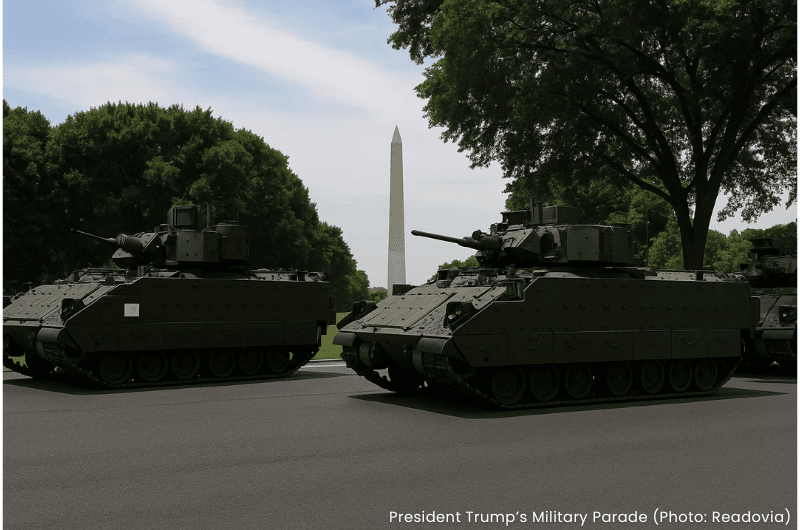
With a $25–45 million military parade scheduled for Saturday in Washington, D.C., President Trump is facing a wave of backlash — not just from lawmakers, but from the streets. The event, originally pitched as a patriotic celebration, is now fueling what organizers call “No Kings Day,” a massive nationwide protest movement expected to span over 1,500 cities. Critics of the parade call it a dangerous spectacle that glorifies authoritarianism and wastes public funds. Protesters are planning marches, rallies, and counter-events from coast to coast — turning June 14, which also marks Trump’s birthday, into a day of national dissent. Civil rights groups, veterans, artists, and students have joined forces, framing the protest as a stand for democracy and a rejection of what they see as militarized showboating. Organizers say the goal is to remind America that no leader is above the people — and certainly not above the Constitution. The parade is scheduled for Saturday, June 14, in Washington, D.C., and will begin at 10 a.m. on Pennsylvania Avenue, according to the official event notice. With tanks, flyovers, and active-duty units participating, federal officials have ramped up security preparations around the National Mall. With tensions high and public sentiment sharply divided, the weekend could mark a defining moment in the country’s ongoing clash over power, protest, and presidential spectacle. The Author
New ‘Touch Law’ Cracks Down on Phone Use in 31 States — Even at Red Lights

You might want to think twice before picking up your phone at a red light. A sweeping new hands-free driving regulation — dubbed the “Touch Law” — is now in effect across 31 U.S. states, including Pennsylvania, which officially adopted the rule on June 5, 2025. The law makes it illegal to physically touch any electronic device while driving, including while stopped at intersections or in traffic. That means no swiping, no holding, and no tapping — unless you’re using voice commands or a mounted hands-free system. What the Law Covers Holding or touching phones, tablets, or smart devices while driving — including at stop signs and red lights Manual texting, scrolling, GPS input, or app use Taking or making calls without a hands-free device What Is Allowed Voice-activated commands and Bluetooth systems Emergency calls Device use while legally parked off the road The 31 States Now Enforcing “No-Touch” Driving Laws Arizona California Connecticut Delaware Georgia Hawaii Idaho Illinois Indiana Iowa Louisiana Maine Maryland Massachusetts Michigan Minnesota Missouri Nevada New Hampshire New Jersey New York North Carolina Oregon Pennsylvania Rhode Island Tennessee Vermont Virginia Washington West Virginia Wisconsin Plus District of Columbia Puerto Rico Guam Northern Mariana Islands U.S. Virgin Islands What Happens If You Break this Law? In Pennsylvania, drivers will receive only warnings for the first year. But starting June 5, 2026, violators will be fined $50 plus court costs for using a handheld device behind the wheel — even if the car is stopped. In other states, fines vary but can reach up to $450, especially for repeat offenders. And here’s the serious part: if distracted driving results in a death, criminal charges could follow — including up to five years in prison in Pennsylvania. Bottom Line No phone is worth the ticket — or the risk. With hands-free tech more accessible than ever, the message is simple: mount it, mute it, or park it.
Tragedy in Graz: Ten Killed in Austria’s Worst School Shooting

Austria is in mourning today after a horrific school shooting in the city of Graz left ten people dead and at least twelve others injured. The incident occurred early Tuesday morning at a local secondary school, marking the deadliest school attack in the country’s modern history. Authorities say the gunman was a 21-year-old former student who entered the school premises heavily armed before opening fire. The shooter reportedly took his own life before police could intervene. Witnesses described scenes of chaos and terror as students fled classrooms and teachers scrambled to secure doors. “It was like a war zone,” said one parent waiting outside the school. “We never imagined something like this could happen here.” The Austrian government has declared a national day of mourning, and Chancellor Anna Eisenberg delivered an emotional address, vowing to strengthen gun control laws and school safety measures. “This is a dark day for our country,” she said. “We stand with the victims, their families, and the entire Graz community.”
Trump Sends 700 Marines, Thousands More Guard Troops to L.A.—State Leaders Push Back

Los Angeles is now the flashpoint in a deepening political and legal battle after President Trump ordered the deployment of more than 700 active-duty Marines and 4,000 National Guard troops to the city. The move, intended to support ICE operations and protect federal sites amid mounting immigration protests, has been met with swift and vocal backlash from California officials. The Pentagon has stated that the troops are operating under Title 10 authority, with strict orders to protect federal personnel and property only. Rules of engagement reportedly require unloaded weapons unless absolutely necessary, with an emphasis on de-escalation. California Governor Gavin Newsom has condemned the deployment as “illegal” and “politically motivated,” filing a formal lawsuit challenging the federal action. Los Angeles Mayor Karen Bass echoed the criticism, stating the city had not requested military assistance and warning the presence of troops could do more harm than good. LAPD leadership also voiced concern, noting that the uncoordinated arrival of federal forces could disrupt local security strategies and create confusion during ongoing protests, which have remained largely peaceful. Trump Speaks Out President Trump defended his decision to deploy federal troops in Los Angeles with a fiery message on Truth Social. In the post, he claimed the military presence prevented widespread destruction and took aim at California’s state and city leaders over permitting delays and alleged mismanagement. Behind the scenes, frustration is growing among law enforcement and community organizers alike. Many of the National Guard units deployed have yet to be given clear operational roles, and some remain stationed at armories without active assignments. As legal challenges take shape, the political fallout is already underway. California lawmakers argue the president is abusing military authority for political gain, while the White House maintains it is acting to preserve public order and federal jurisdiction. For now, the streets of Los Angeles remain tense but calm, as thousands of troops stand by in a city still grappling with the balance between public safety, immigration enforcement, and civil liberties.
Trump Shuts U.S. Borders to 12 Countries in Sweeping New Travel Ban
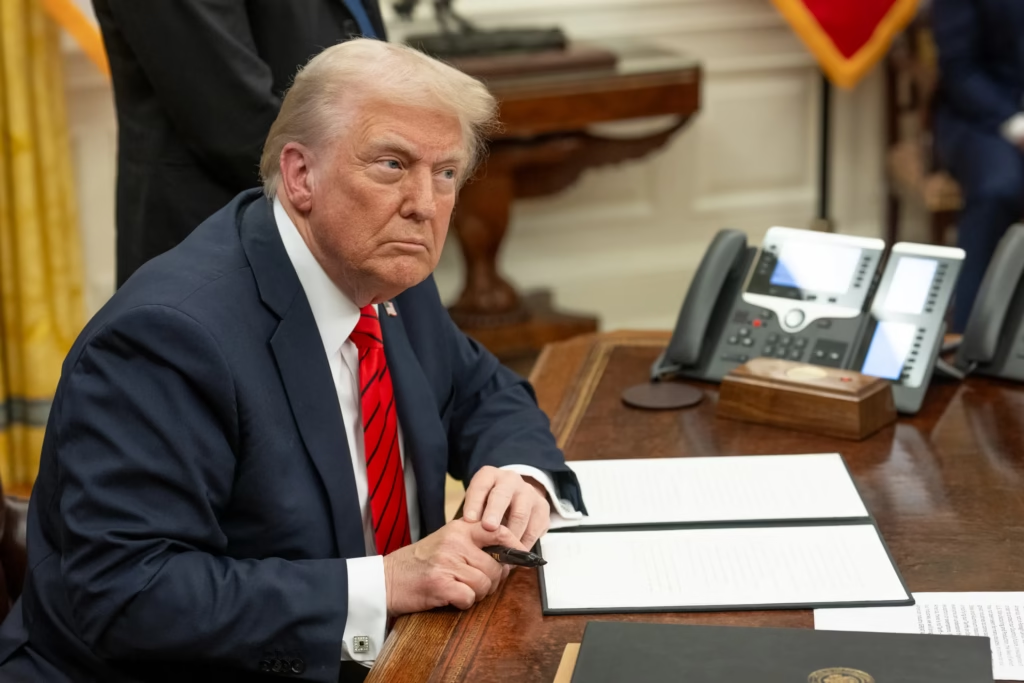
In a move that’s already sending shockwaves across the globe, President Donald Trump has reinstated and expanded the U.S. travel ban, blocking entry to nationals from 12 countries and imposing partial restrictions on several more. The new policy, announced Wednesday, is set to take effect Monday, June 9, at 12:01 a.m. EDT. The executive action revives the legal framework of Trump’s earlier travel bans but expands it dramatically—marking one of the most aggressive immigration orders of his second term so far. FULL BANS IMPOSED ON 12 NATIONS Effective next week, citizens of the following countries will be fully barred from entering the United States under both immigrant and non-immigrant visas: Afghanistan Myanmar (Burma) Chad Republic of the Congo Equatorial Guinea Eritrea Haiti Iran Libya Somalia Sudan Yemen Zooming In Trump officials argue that these countries either lack proper security screening infrastructure, fail to cooperate with deportations, or have unacceptably high visa overstay rates. Critics say the list includes nations already facing economic hardship and conflict, raising questions about humanitarian consequences and foreign policy fallout. Partial Restriction on Seven Others An additional seven countries will face targeted restrictions on specific visa types such as student, tourist, or business travel: Burundi Cuba Laos Sierra Leone Togo Turkmenistan Venezuela Why These Countries? In these cases, the U.S. government cited issues such as forged documentation, noncompliance with international identity standards, or irregularities in cooperation with U.S. immigration authorities. Exemptions and Special Cases Despite the sweeping nature of the ban, several groups will remain exempt: Lawful permanent residents (green card holders) Dual nationals traveling on a passport from an unaffected country Foreign diplomats Athletes participating in international competitions Special immigrant visa holders, such as Afghan allies Immediate family members with verified relationships to U.S. citizens or residents The administration stated that the exemptions are designed to “preserve humanitarian values and key strategic partnerships,” though critics argue they fall short of protecting vulnerable populations. Political Fallout and Global Reaction This latest proclamation follows closely on the heels of a high-profile criminal incident involving an Egyptian national who overstayed his U.S. visa—though Egypt itself was not included in the ban. The administration has used the event to reignite national security debates, positioning the travel ban as a preemptive safety measure. Global reactions have ranged from outrage to diplomatic caution. Officials in Somalia, one of the banned nations, issued a public statement expressing willingness to “work cooperatively” with the U.S. to resolve concerns. Civil rights groups and immigration advocates are already mobilizing to challenge the policy in court. The move resurrects memories of the original 2017 travel ban that drew nationwide protests and eventually reached the Supreme Court. That ban was rescinded under President Biden, but Trump’s return to office has made clear that immigration control remains central to his political strategy. With the policy set to go live in less than a week, a new chapter in U.S. immigration politics is already underway—and the world is watching. The Author
Senate Moves on Landmark Data Privacy Bill as Public Distrust Grows
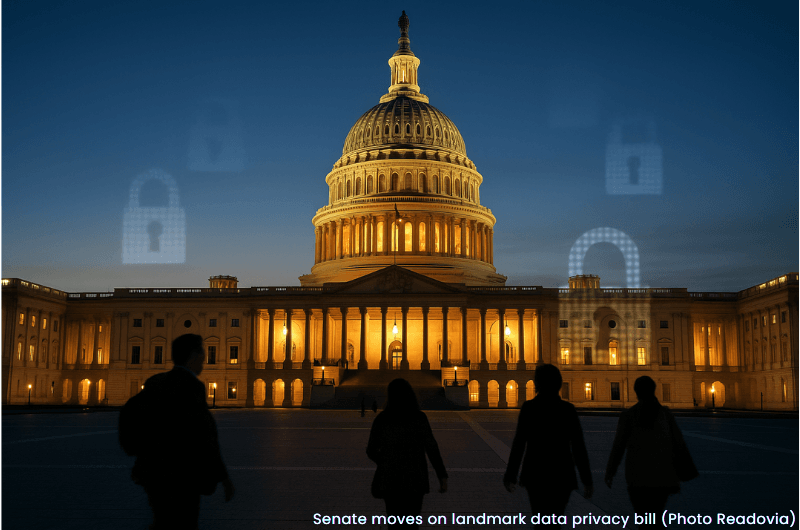
A bipartisan group of lawmakers is fast-tracking a sweeping new data privacy bill, aiming to rein in how federal agencies and private companies collect, share, and store personal information. The move comes on the heels of growing backlash over federal efforts to expand surveillance under the banner of fraud prevention — including recent controversy around the USDA’s attempt to gather detailed data from SNAP recipients. With public trust eroding and legal challenges mounting, Congress is under pressure to act. Dubbed the American Data Dignity Act, the proposed legislation would establish clear limitations on data access, require stronger encryption standards, and give Americans the right to know — and challenge — what information the government holds on them. Supporters say the bill is long overdue. Critics argue it could hinder data-driven fraud detection and federal efficiency. Either way, the debate marks a rare show of bipartisan urgency in a deeply divided Senate — and a signal that the privacy pendulum may be swinging back toward the people. The Author [IT_EPOLL_POLL id=”3758″][/IT_EPOLL_POLL]
Ukraine and Russia Exchange Peace Proposals Amid Escalating Conflict

In a pivotal yet tense meeting in Istanbul on June 2, 2025, Ukrainian and Russian delegations convened for a second round of peace talks aimed at ending the ongoing war. Despite the exchange of peace memorandums, the discussions concluded after just over an hour, highlighting the deep divisions that persist between the two nations. Starkly Contrasting Proposals Ukraine’s delegation, led by Defense Minister Rustem Umerov, presented a comprehensive plan advocating for: A full and unconditional 30-day ceasefire The release of all prisoners of war The return of Ukrainian children taken to Russia A high-level summit involving Presidents Zelenskyy, Putin, and potentially U.S. President Donald Trump Russia, represented by former culture minister Vladimir Medinsky, withheld its memorandum until the talks began and maintained demands including: Ukraine’s withdrawal from four contested regions A pledge to abstain from joining NATO Recognition of Russia’s annexation of Crimea These conditions were deemed unacceptable by Ukraine, which views them as undermining its sovereignty and territorial integrity. Escalation on the Battlefield The talks were overshadowed by recent military escalations. On the eve of the meeting, Ukraine launched a significant drone operation targeting Russian airbases, reportedly damaging over 40 aircraft. In response, Russia conducted its largest drone assault since 2022, deploying hundreds of drones across Ukrainian cities including Kyiv and Kharkiv. Limited Progress and Continued Tensions While the talks did result in an agreement on a new prisoner exchange, substantial progress toward a broader peace deal remains elusive. Ukrainian officials expressed frustration over Russia’s firm demands, and the U.S., which has been supporting the discussions, signaled potential disengagement due to the lack of movement. As both sides prepare for what may be another round of negotiations, the world watches closely — hopeful for a breakthrough, but wary of another stalemate. The Author
Tesla Smashes Q2 Delivery Records With Over 466,000 Vehicles Shipped

Tesla just blew past Wall Street’s expectations, posting its strongest delivery numbers to date. In a performance that signals renewed momentum for the EV giant, the company reported 466,140 vehicles delivered in Q2, setting an all-time quarterly record. But that’s not all. Tesla’s production also hit new highs, with 479,700 vehicles rolling off assembly lines — a figure that reaffirms the brand’s supply chain strength and global demand. Here’s how the numbers break down: Model 3 and Model Y dominated, as expected, accounting for 446,915 of the deliveries. The Model S and Model X pulled in a combined 19,225 units — a modest but steady showing in the luxury tier. Tesla credits a portion of this growth to recent strategic price cuts, which have made their EVs more accessible — and more attractive — in an increasingly competitive market. This Q2 surge comes at a time when rivals are ramping up their own electric ambitions, making Tesla’s record even more significant. With rising production, aggressive pricing, and continued consumer interest, all eyes are now on how Q3 will shape up — and whether Tesla can sustain this electric momentum. The Author
Journal Prompts to Start Your Week with Clarity and Focus

Mondays often come with a mix of anticipation and overwhelm. To navigate the week with intention, journaling can be a powerful tool. Here are curated prompts to help you reflect, set goals, and align your mindset for the days ahead. Setting Intentions What is one word that will define my week?Choose a word that encapsulates your desired focus or energy. How do I want to feel by Friday?Visualize your desired emotional state at the week’s end. What is a personal goal I want to achieve this week?Identify a specific, attainable objective to work towards. Prioritizing Tasks What is my top priority for this week?Determine the most important task that requires your attention. What is one small action I can take today to ease the week ahead?Identify a simple step to set a positive tone for the week. What task have I been postponing that I can start now?Confront procrastination by initiating a delayed task. Self-Care and Mindfulness How can I incorporate self-care into my routine this week?Plan activities that nurture your well-being. What boundaries do I need to set to protect my energy?Recognize limits to maintain balance and prevent burnout. What is one thing I can let go of to reduce stress?Identify and release a source of unnecessary tension. Gratitude and Positivity What am I grateful for this Monday morning?Acknowledge positive aspects to cultivate a thankful mindset. What is something I’m looking forward to this week?Anticipate events or moments that bring joy. What positive affirmation can guide me today?Select a phrase that reinforces confidence and optimism. Integrating some or all of these prompts into your Monday routine can provide clarity and direction, setting a constructive tone for the week. Whether you journal daily or weekly, these reflections can enhance focus, productivity, and well-being. Give it a try. The Author
Trump’s Legal Losing Streak: Five Federal Defeats in a Week
President Donald Trump is no stranger to legal drama, but this past week delivered a fresh string of defeats — five, to be exact — all from federal judges, all in under seven days. From tariffs to immigration to political retaliation, the courts have been busy issuing firm reminders that executive power has its limits, even when wielded from the Oval Office. A Flurry of Federal Smackdowns It began with a ruling that struck down Trump’s attempt to reinstate sweeping “Liberation Day” tariffs — a move the court called an overreach of executive authority. The U.S. Court of International Trade said the tariffs, imposed under the International Emergency Economic Powers Act, lacked sufficient legal foundation and violated the separation of powers. On the same day, another federal court rejected Trump’s executive order that targeted the powerhouse law firm WilmerHale. The administration had accused the firm of “undermining American interests” — a charge the court dismissed as unconstitutional political retribution. And in yet another case, a judge blocked Trump’s suspension of key Biden-era immigration parole programs. The court ruled that the administration lacked the legal authority to make such sweeping changes to immigration policy without due process or a clear congressional mandate. By week’s end, the tally of courtroom losses stood at five — each handed down by a federal judge. The cumulative effect? A growing legal wall around some of Trump’s most aggressive policy efforts. What It All Means While Trump’s supporters are likely to brush off the decisions as partisan overreach, the rulings signal a broader pattern: the judiciary is pushing back — hard — on executive actions that blur the lines of legality. For legal analysts, the message is clear. Trump’s second term may be defined not only by his political ambitions but by the courts’ increasing willingness to draw sharp boundaries around presidential authority. Whether the President views this losing streak as temporary turbulence or something more serious remains to be seen. But one thing is certain: it’s been a week of legal whiplash — and the gavel isn’t done dropping. The Author Related stories:Harvard Wins Round One: Judge Blocks Trump Crackdown on International Student Enrollment Back to Class: Federal Judge Blocks Trump’s Attempt to Dismantle Department of Education, Orders Reinstatement of Fired Employees