


Beloved Actress Diane Keaton Dies at 79

Oscar-winning actress Diane Keaton, whose quick wit, timeless charm, and singular sense of style made her one of Hollywood’s most enduring icons, has died at the age of 79. Her family confirmed the news, saying she passed away in California on Saturday, October 11. Keaton’s career spanned more than five decades, beginning with her breakout performance as Kay Adams in The Godfather (1972) and soaring with her Oscar-winning role in Annie Hall (1977). With her trademark turtlenecks, bowler hats, and offbeat humor, she became synonymous with authenticity — a rare blend of vulnerability and confidence that defined an era of American cinema. Across films like Manhattan, Reds, Something’s Gotta Give, and Father of the Bride, Keaton embodied complex women navigating love, ambition, and self-discovery. She worked with nearly every major director of her generation — including Woody Allen, Francis Ford Coppola, and Nancy Meyers — and inspired generations of actresses to embrace individuality over image. In addition to acting, Keaton was an accomplished author, photographer, and preservationist. She championed architectural restoration in Los Angeles and shared her passion for design and storytelling in several acclaimed memoirs. Her death marks the end of an extraordinary chapter in film history. Tributes from across Hollywood have poured in, celebrating Keaton not only as a cinematic legend but as a cultural touchstone whose humor, grace, and fearless originality left an indelible mark on audiences worldwide.
BREAKING NEWS: Powerful Storm to Bring Damaging Winds and Flooding to East Coast This Weekend

A sprawling coastal storm is strengthening off the Atlantic, and forecasters warn it will lash the Eastern Seaboard with dangerous winds, coastal flooding, and heavy rain through the weekend. From the Carolinas to New York, millions are now under weather alerts as the system moves north, threatening communities already saturated by weeks of unsettled weather. The storm’s wide reach could bring wind gusts topping 60 miles per hour along exposed coastlines, with isolated bursts approaching hurricane force. Low-lying areas from the Outer Banks to Long Island are expected to face storm surges of one to three feet, and forecasters say localized flooding could reach higher in vulnerable zones. Air travel delays, power outages, and beach erosion are likely as the system intensifies. Officials are urging residents to secure property, avoid coastal roads, and prepare for possible evacuations if water levels rise faster than expected. Emergency crews in multiple states have pre-positioned high-water vehicles and response teams in anticipation of flash flooding and downed power lines. The timing of the storm — hitting during high tides in several regions — increases the risk of severe inundation. While the storm is not expected to reach hurricane status, meteorologists emphasize that its slow movement and broad structure make it especially dangerous. Heavy rainfall totals could exceed six inches in some areas, overwhelming storm drains and swelling rivers already running high. Residents are advised to monitor local forecasts closely and heed any evacuation orders issued through the weekend. As the storm tracks northward, it will test the readiness of coastal infrastructure once again — and remind East Coast communities that in an era of warming seas and stronger systems, preparation remains the best defense against the next round of wind and water.
Shifting Focus Series (Part 1): How AI Is Rewriting Digital Discovery and Why Search Traffic Is Vanishing

A new era of digital discovery: where AI answers before we click. (Photo: Readovia) The familiar hum of online search is getting quieter. For years, the digital economy has relied on a steady rhythm — people search, they click, and publishers measure success in traffic and conversions. But that rhythm is breaking. AI agents are now answering questions before users ever reach a website, shaking the foundation of search engine visibility. Industry data shows that many publishers have already lost between 30% and 70% of their referral traffic from traditional search over the past year. As users embrace AI chat interfaces and intelligent assistants that summarize the web in real time, the once-straightforward funnel of “search → click → site visit” has morphed into something new — and far less predictable. The Era of Answer-Based Discovery In this new ecosystem, discoverability isn’t just about who ranks highest — it’s about who answers best. AI agents are designed to respond to intent, not just identify relevance. They scan vast networks of content and select fragments that appear to satisfy a query directly. The result? People are getting the information they want without ever leaving the interface that provided it. For publishers, this means visibility is no longer measured by clicks alone. The next wave of success belongs to content that’s answerable — clear, contextual, and structured in a way that makes sense to machines as well as humans. It’s not just about keywords anymore; it’s about completeness. Keywords still matter, but they’re no longer the star of the show. AI systems prioritize language that answers questions and responds conversationally. Articles that weave insight, intent, and structure are now more likely to surface in AI-driven discovery — even if they don’t top a search results page. The Great Traffic Recalibration Across the publishing world, analytics dashboards tell the same story: fewer visits, shorter sessions, and declining ad impressions. For brands that built entire revenue models on inbound traffic, this is an identity crisis. But it’s also an inflection point. The agentic web — a term increasingly used to describe the AI-powered layer between humans and information — is changing the very mechanics of attention. Instead of optimizing for visibility alone, digital strategists now face a deeper challenge: optimizing for interpretation. If your content can’t be understood by AI, it might as well be invisible. Businesses that once poured budgets into search rankings are now experimenting with new approaches: question-based content design, multi-format storytelling, and structured data frameworks that make their material more accessible to machine readers. In short, they’re learning to speak agentic. From Clicks to Context This shift isn’t just technical — it’s philosophical. The old metrics of success were transactional; now they’re relational. Brands must focus less on chasing traffic and more on building context around their expertise. Some are already adapting: creating mini-hubs of educational content, rewriting headlines as direct answers, and embedding subtle cues like “why it matters” sections that guide both readers and AI toward clarity. The smartest publishers are rediscovering something that predates algorithms entirely — the human instinct to ask and answer questions. The irony is poetic: the more advanced our technology becomes, the more value it places on timeless clarity. Shifting Focus, Forward There’s no going back to the web we knew. AI has changed not just how information is found, but why it’s found. As discoverability becomes increasingly agent-driven, success will belong to those who adapt early — structuring their content to serve the next generation of intelligent intermediaries while still nurturing real human connection. Publishers, creators, and businesses are entering a new era where visibility will depend on more than metadata. It will depend on meaning. The Shifting Focus Series Shifting Focus is a multi-part feature examining the pivot from search engine dependence to strategic discoverability in the age of AI. More to come…
The Next Wave of Federal Job Cuts Has Moved from Rumor to Reality

As the government shutdown stretches into its tenth day, layoff notices are being issued across Washington. Agencies once considered permanent fixtures are now facing reductions in force, and federal workers who were furloughed are learning their positions may not return. The administration has framed the cuts as part of a broader restructuring of government operations. But behind the measured language, the move has taken on an unmistakably political edge. President Trump has repeatedly vowed to dismiss federal workers during the shutdown standoff — now entering its tenth day — and has suggested his team will target what he’s described as “Democrat agencies”. That claim, whether rhetorical or real, is expected to fuel multiple legal challenges in the weeks ahead. For thousands of federal employees, this week’s notices have deepened an already anxious period. Many were first furloughed when the government closed, then told their positions may not return when it reopens. Agency leaders are said to be reviewing staffing rosters under new directives from the Office of Management and Budget, accelerating decisions that might otherwise have taken months. The process is fast, opaque, and deeply personal for those affected. Labor unions and employee groups have already begun preparing lawsuits, arguing that reductions in force during an active shutdown may violate federal employment statutes requiring advance notice and due process. Legal experts say the cases could test the boundaries of executive power — and the protections that have long insulated the civil service from political retaliation. Between the Lines The country’s largest employer is cutting staff without a clear end date or plan for recovery, adding new meaning to “willy-nilly”. As Washington’s workforce braces for what could be a drawn-out fight in court, the rest of the nation watches a simple but profound question unfold: what happens when politics turns employment itself into a weapon?
Shutdown Turbulence: Flight Delays and Cancellations Leave Travelers Grounded

As the federal government shutdown stretches on, America’s skies are showing the strain. Across major airports, travelers are canceling flights, rerouting itineraries, and questioning whether it’s worth the risk. What was supposed to be a long weekend getaway for some travelers has turned into a logistical gamble — one that’s eroding confidence in the nation’s air travel system. The ripple effects are immediate. With federal employees unpaid and staffing stretched thin, flight delays and cancellations are climbing. Air traffic controllers and TSA workers, already working under high stress, are reporting burnout and absenteeism. Airlines are bracing for more turbulence if the shutdown extends into next week, a scenario that could deepen operational disruptions and dent public trust further. For travelers, the uncertainty is creating a new kind of fatigue. Business flyers are pushing meetings to virtual platforms. Families are shelving vacation plans. International tourists, already wary of long security lines, are choosing alternate destinations. This is beyond inconvenience. It’s an erosion of reliability in an industry built on precision and predictability. The economic toll is building as well. The U.S. travel sector, one of the country’s most resilient post-pandemic industries, is facing another confidence test. Analysts estimate billions in potential losses if air travel continues to slow through October. Each delayed flight represents not only stranded passengers but missed hotel bookings, idle rental cars, and lost tourism revenue. Final Word If the shutdown persists, the damage could linger well beyond the runways. The longer travelers remain uncertain, the harder it becomes to restore the sense of stability that underpins the entire system. For now, the message from weary passengers and overstretched crews is the same: America’s airways can’t afford a prolonged political standoff.
Amazon Pharmacy Brings Prescription Kiosks to One Medical

Amazon will begin filling select prescriptions at electronic kiosks inside One Medical primary-care clinics, starting in Los Angeles this December. The pilot focuses on common, non-refrigerated medications—think antibiotics, asthma inhalers, and blood-pressure treatments—and includes a virtual pharmacist consult at the kiosk. It’s the company’s first in-person pickup option for pharmacy, which until now has leaned on delivery. By placing inventory closer to patients, Amazon aims to cut shipping costs and speed up urgent fills, while keeping the footprint small enough to slot into existing clinics. Access isn’t limited to members: while One Medical runs a membership model, non-members can still book appointments and use the kiosk. Amazon says it plans to expand outside California in 2026, and is also talking with external health systems about partnerships. The kiosks won’t handle refrigerated drugs—such as popular GLP-1 weight-loss medications—or tightly controlled pain medicines. Inventory will be tailored to each clinic. Why it matters If the pilot works, expect these pharmacy kiosks to show up wherever Amazon already sees patients—tightening the loop between clinic visit → prescription → pickup and giving the company a new lever on convenience and cost in healthcare.
Trump Confirms Diddy’s Team Asked for a Pardon — But He’s Leaning Toward A “No”

President Trump confirmed that members of Sean “Diddy” Combs’ circle reached out to request a presidential pardon — but said he’s “not inclined” to grant one. Speaking to reporters outside Mar-a-Lago, Trump said he would “take a look” and consult with the Department of Justice, but hinted that Combs’ high-profile legal troubles and previous criticism of him could weigh heavily against approval. “I don’t know. We’ll see. He’s said some things — not so nice things — but I’ll look at it,” Trump told reporters. Combs, who is currently serving time following a conviction on prostitution-related charges, has denied personally requesting clemency. His legal team told People that “neither Mr. Combs nor his attorneys have made any formal request for a pardon,” though others “close to him” reportedly made inquiries on his behalf. The conflicting accounts have fueled another media storm around the embattled music mogul, who has been under intense scrutiny since his conviction. Trump, meanwhile, has been fielding multiple high-profile pardon questions — including one related to Ghislaine Maxwell — reigniting debate over his controversial clemency record. If granted, a pardon for Diddy would mark one of Trump’s most contentious moves yet. Critics argue that such a decision would signal favoritism toward celebrity figures, while allies say it shows the former president’s willingness to entertain requests from all corners. For now, Trump appears to be signaling hesitation. “He’s asked. People have asked,” he said. “But I’m leaning toward no.” Between the Lines Trump’s response hits two familiar notes: tease the possibility, then retreat to plausible distance. It’s a move that keeps him at the center of the story — and forces Diddy’s camp to keep reacting. Whether this was a serious request or simply a signal flare from Diddy’s inner circle, one thing’s certain: the intersection of fame, politics, and power isn’t cooling off anytime soon.
X Settles Severance Lawsuit Brought by Former Twitter Executives

X Corp. has reached a settlement with four former Twitter leaders — ex-CEO Parag Agrawal, former CFO Ned Segal, former chief legal officer Vijaya Gadde, and former general counsel Sean Edgett — resolving their lawsuit over unpaid severance tied to Elon Musk’s acquisition. Terms of the settlement were not disclosed. The executives alleged they were collectively owed $128 million under change-in-control provisions, including one year of salary and stock-based compensation. A recent filing in San Francisco federal court noted the settlement and pushed back case deadlines to allow it to be finalized. The companies did not disclose financial terms. In court papers, the former executives said Musk falsely accused them of misconduct and forced them out after they sought to hold him to the $44 billion purchase agreement. X has denied wrongdoing, saying they were terminated for performance reasons. The deal closes one of several legal aftershocks from the 2022 takeover and mass layoffs that followed, including a separate settlement X reached with rank-and-file employees over severance claims. It also removes a high-profile dispute as the company continues to operate under its new brand and leadership.
Silent Tower: How Burbank Went Dark During a Critical Shutdown Crisis

For nearly five hours Monday, Burbank’s air traffic control tower stood empty—yet planes still flew. The event exposed a fragile system, shifting control to remote operators and underscoring a latent danger in America’s airspace. The autumn sun dipped low over the San Fernando Valley on Monday, casting long shadows across Hollywood Burbank Airport. Inside the glassed control tower—normally the pulsing heart of flight coordination—no one was watching. From roughly 4:15 p.m. to 10:00 p.m., the tower sat empty. Staffing shortages tied to the ongoing federal government shutdown forced controllers to stay home, leaving one of the nation’s busiest regional airports without local oversight. During that time, the Southern California TRACON facility in San Diego took over remotely, guiding aircraft by radio while ground crews relied on “non-towered” procedures more common to rural airfields. Despite the absence of on-site control, flights continued—though not without disruption. Many departures faced delays exceeding two hours, and several were canceled altogether. For travelers, it was another ripple effect of a shutdown that has turned the nation’s most vital systems into endurance tests. For aviation experts, it was something more alarming: proof of how fragile America’s air network becomes when a single node goes silent. The Human Cost of “Essential” Work Air traffic controllers are classified as essential workers, required to report for duty even when government funding halts. But essential doesn’t mean exempt from financial hardship. With paychecks now delayed, many are facing mounting bills, emotional strain, and burnout. Insiders say morale is deteriorating as the shutdown stretches on. Some controllers have begun calling out sick, others are working double shifts, and training programs have been paused indefinitely. The result is a thinning workforce operating under increasing stress—and fewer layers of protection in a system that depends on redundancy. In Burbank’s case, no safety incidents occurred. Still, the image of an unmanned tower in a major metropolitan area sent shockwaves through the industry, reigniting debates about whether contingency plans are sufficient when politics stops the paychecks that keep essential infrastructure running. A Ripple Across the Nation The Burbank episode is not isolated. Airports in Denver, Phoenix, Las Vegas, and Newark have all reported heightened delays amid staffing shortages, some operating with as much as fifty percent fewer controllers. Industry officials warn that if the shutdown persists, more “ATC Zero” events—when a facility cannot safely provide air traffic services—could occur. For airlines, that means more ground holds and diversions. For passengers, more missed connections and overnight waits. Behind it all are the human hands that make America’s skies safe. When those hands are forced to stop working—or to keep working unpaid—the entire system starts to wobble. After the Lights Returned At 10 p.m., the Burbank tower lights flickered back on, controllers returned, and local operations resumed. The incident passed without tragedy. But for aviation veterans, it left a lasting unease. A silent control tower is a symptom of systemic vulnerability. In the air, as in government, the margin for error is small. And when the people who keep planes safely separated can’t afford to show up, the nation’s confidence in its own flight path begins to shake.
US Federal Power on the Edge: Trump’s National Guard Deployments Ignite Legal Firestorm
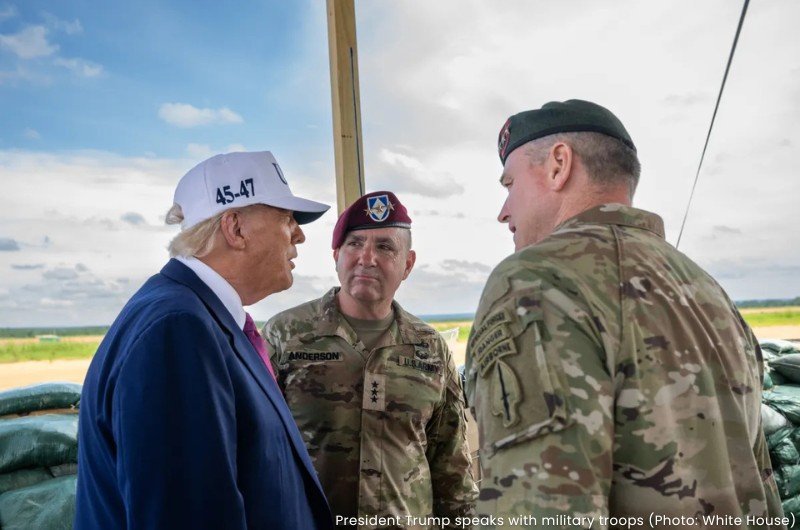
As the Trump administration moves to deploy National Guard troops in major Democratic-led cities, federal judges in Oregon and Illinois have issued conflicting rulings. The standoff raises constitutional questions about the limits of presidential power, the Insurrection Act, and state authority. The Legal Flashpoint The Trump administration’s decision to deploy federally controlled National Guard troops to select Democratic-led cities has ignited a constitutional clash that’s already dividing the courts. In Oregon, a federal judge issued a temporary restraining order halting the deployment, ruling that the administration’s justification failed to meet constitutional standards and encroached on the state’s right to self-governance. In Illinois, however, a different federal judge declined to immediately block the administration’s plan, allowing troop movements into Chicago to proceed while the state’s lawsuit continues. The contradictory rulings now set up a potential Supreme Court battle over how far executive authority can go. The Administration’s Argument The White House argues it has both the legal and constitutional authority to protect federal assets and enforce national law, pointing to provisions within Title 10 of the U.S. Code that allow limited federal intervention when the enforcement of federal law becomes “impracticable.” Officials say deployments are necessary to reinforce federal personnel and safeguard property amid what they describe as escalating threats to public order. Critics, however, call the move a political overreach — one that blurs the line between national defense and domestic law enforcement. The Legal and Constitutional Divide Oregon’s ruling emphasized state sovereignty and warned of executive overreach, while the Illinois case focused on the federal government’s right to act when national interests are at stake. The key legal questions hinge on three foundational statutes: 10 U.S.C. § 12406 — which allows the president to federalize state National Guard units only in extreme circumstances such as rebellion or obstruction of federal law. The Posse Comitatus Act — which restricts the use of military forces in domestic law enforcement. The Insurrection Act of 1807 — a long-standing measure permitting the president to deploy troops during insurrections or violent disruptions that prevent federal law from being executed. Threat of Insurrection Act Looms President Trump has publicly suggested invoking the Insurrection Act if court challenges continue to stall deployments — a move that would immediately escalate the confrontation. When Federal Troop Deployments Are — and Aren’t — Legal When They Can Be Deployed Insurrection or Rebellion — when a state faces a rebellion or uprising that prevents enforcement of federal law. Obstruction of Federal Law — if ordinary policing becomes impracticable and national law enforcement is unable to function. Protection of Federal Property or Personnel — to defend federal buildings or employees facing imminent threats. State Request or Consent — when governors voluntarily request federal assistance during natural disasters or large-scale unrest. When They Can’t Be Deployed Routine Crime or Protest Response — ordinary law enforcement issues and peaceful protests remain state responsibilities. Without Legal Basis or State Consent — deploying troops without proper statutory authority or consent violates constitutional limits on federal power. Direct Law Enforcement by Troops — even when deployed, soldiers cannot arrest civilians or enforce local laws without a formal suspension of Posse Comitatus. Political Intimidation or Retaliation — using military force to target political opponents or dissenting jurisdictions would constitute an abuse of power. The Stakes The restraining order in Oregon remains temporary, while Illinois continues its legal challenge. Both cases are expected to advance quickly, as courts grapple with defining the limits of federal control over state-based military forces. If the president invokes the Insurrection Act, it would mark one of the most significant tests of executive power in modern American history — and could set a precedent that reshapes the relationship between the federal government and the states for decades to come. Legal observers warn that while presidents have broad authority to act in emergencies, such powers were never meant to become tools of political will. The coming weeks will determine whether this deployment stands — or whether the courts draw a hard line on domestic military power. The Author