


Trump Presses Zelenskyy to Accept Putin’s Demands in Heated Meeting, Tossing Maps and Warnings
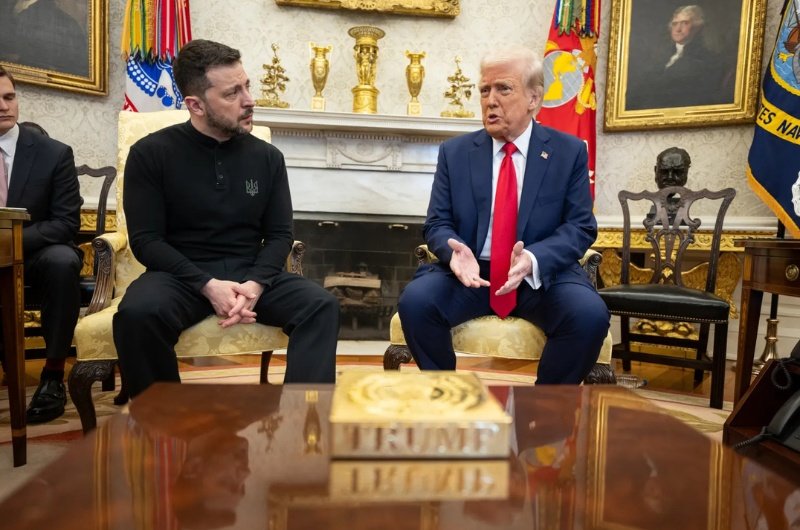
In a tense Oval Office meeting on Sunday, President Donald Trump reportedly urged Ukrainian President Volodymyr Zelenskyy to accept Russian territorial terms to end the war — warning that President Putin would “destroy” Kyiv otherwise. According to multiple accounts, Trump’s tone was explosive, at one point shouting, cursing, and tossing maps across the room as he outlined areas he claimed Ukraine should concede. The confrontation — first reported by The Times of India — underscores how sharply Trump’s diplomatic approach departs from Washington’s previous bipartisan backing of Ukraine’s resistance. Witnesses said Trump appeared fixated on “ending the war fast,” even if that meant forcing Kyiv to surrender portions of the Donbas region to Moscow. European officials reacted with alarm. EU foreign policy chief Kaja Kallas called any move to pressure Ukraine “deeply inappropriate,” warning it would reward aggression and destabilize Europe further. The EU, France, and Germany have reiterated their support for Kyiv’s sovereignty, with several diplomats privately expressing fears that U.S. policy may be shifting toward appeasement. Adding to the tension, Hungary has proposed hosting a Trump-Putin summit that could include Ukraine “if invited.” The prospect of such a meeting — and who might attend — has raised eyebrows across NATO capitals. “It’s one thing to pursue peace,” said one European envoy, “it’s another to dictate it.” For Zelenskyy, who has vowed not to trade territory for peace, the moment marks one of his most precarious diplomatic crossroads since the invasion began. For Trump, it represents an attempt to reassert his image as the ultimate deal-maker — one who believes he alone can end the war. Between the Lines Trump’s outburst may play well with voters who crave decisive action, but it risks alienating allies and emboldening Putin. The larger question now is whether peace will come at the cost of Ukraine’s independence.
The Quiet Takeover: AI Steps In to Manage Email, Meeting Scheduling, and More

It started with “smart replies.” Then came calendar assistants. Now, AI agents are quietly running entire chunks of office life — answering emails, accepting meetings, and sending follow-ups — often without the employee lifting a finger. Across major corporations and startups alike, autonomous AI agents are becoming the invisible middle managers of modern productivity. Tools like OpenAI’s o1-series assistants, Anthropic’s Claude Workflows, and Microsoft’s Copilot Teams integrations are being trained to anticipate next steps and act on them. Analysts say what used to be “assistive AI” is fast evolving into delegated decision-making. Recent studies show a sharp rise in the use of AI for workplace automation, with some professionals now allowing intelligent systems to sort and prioritize their inboxes. The shift is raising fresh ethical questions about data privacy and accountability — especially as these bots begin responding on behalf of human managers. Experts warn that while AI delegation boosts output, it also risks blurring authorship and responsibility. “We’re entering an age where an email that looks human may not be,” notes tech ethicist Leah Ortiz. “The bigger concern isn’t that AI’s doing the work — it’s that no one notices.” Between the Lines For employees embracing email automation, the trade-off feels worth it — less inbox stress, fewer scheduling conflicts, and more focus on meaningful work. As companies chase higher productivity targets, invisible AI labor is quickly shifting from novelty to necessity.
Trump Plans to Shift Billions in Anti-Terror Funds from Democratic to Republican States
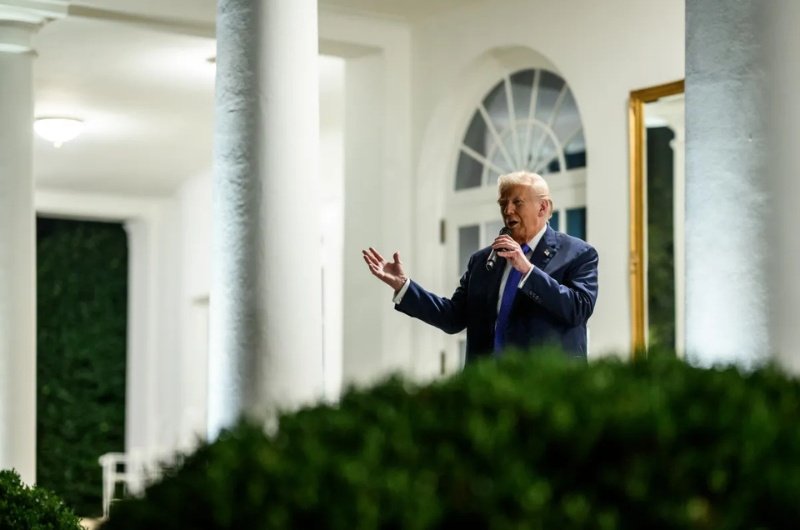
The Trump administration’s new homeland security plan would cut anti-terror grants to Democratic states by up to 70%, redirecting funds to Trump-voting states. The plan is igniting political and legal controversy, with Democratic-led states accusing the White House of using national security dollars as a political weapon. A Radical Funding Shift The administration has unveiled a plan to restructure the federal anti-terrorism grant program, which was created after the September 11 attacks to strengthen homeland security at the state and local levels. The new formula would divert billions away from Democratic-controlled states — including California, Illinois, New Jersey, and Washington, D.C. — and funnel much of that funding toward Republican-led states that supported Trump in the 2024 election. Some states could lose as much as 70 percent of their current allocations under the revised framework, according to federal budget documents reviewed by The Guardian. The Department of Homeland Security has defended the overhaul as a “risk-informed adjustment” aimed at addressing modern threats such as border violence and transnational crime. Critics Say It’s Political Retaliation Democratic officials and national security experts have blasted the move as partisan punishment masquerading as reform. “This isn’t about risk,” one state security director said. “It’s about retribution.” Twelve Democratic-led states have already filed a joint lawsuit seeking to block the rule, arguing it violates both the Constitution and long-standing federal statutes governing the use of national security funds. A federal judge in Rhode Island has temporarily halted the redistribution while the case moves forward. The Bigger Picture The proposal comes at a time when federal-state tensions are already high over shutdown politics, immigration enforcement, and federal law enforcement priorities. Analysts warn that this funding shift could deepen partisan divides within America’s security apparatus — and set a dangerous precedent where **“who you vote for” determines **how much federal protection you get.
Brown University Rejects Trumps Proposed “Compact for Academic Excellence”

Brown University has declined the Trump administration’s offer to sign onto a highly controversial “Compact for Academic Excellence in Higher Education,” becoming the second Ivy League institution to reject it. What the Compact Would Require Issued to nine leading universities, the compact would tie preferential access to federal funding to sweeping conditions. Among the terms: Capping international undergraduate enrollment at 15% Prohibiting consideration of race or sex in hiring and admissions Defining gender strictly on a biological basis Applying new “merits” criteria for research funding beyond traditional scientific merit Rights & Ramifications Our course, institutions have the right to refuse the compact. But the administration has warned that institutions that refuse could lose access to certain federal benefits, while those that comply would be prioritized for new programs and grants. Brown’s Rejection and Its Reasoning In a letter to Education Secretary Linda McMahon, Brown University President Christina Paxson stated that accepting the compact’s terms would “restrict academic freedom and undermine the autonomy of Brown’s governance” — values she described as central to the university’s mission. She noted that Brown already has a prior agreement with the administration that reaffirms the federal government’s lack of authority to dictate academic content or governance, and said the new compact fails to include those same protections. Broader Context & Reactions MIT recently became the first institution to publicly reject the compact, citing similar concerns about independence and free inquiry. Brown’s decision follows that example, signaling growing resistance among top-tier universities. The proposed compact has drawn criticism from higher-education advocates and constitutional scholars, who argue it represents ideological coercion packaged as reform. They warn that linking academic funding to compliance with political mandates could redefine the boundaries between education and government influence for decades to come.
OpenAI’s Trillion-Dollar Gamble: Inside the Plan to Redefine AI’s Future

OpenAI is no longer just building chatbots — it’s building an empire. According to recent reports, the company has drafted a five-year plan to position itself within the more than $1 trillion in AI investment expected worldwide by the end of the decade. The scale is staggering. This blueprint touches everything from new infrastructure and enterprise tools to video creation, AI agents, and even consumer hardware. At the heart of this strategy lies Project Stargate, OpenAI’s next-generation compute infrastructure designed to support the explosion of AI model training and deployment. Partnered closely with Microsoft, the company is pursuing a vertically integrated future where it doesn’t just run AI models — it helps define how those models are powered, distributed, and monetized. The Business Shift: Beyond ChatGPT For now, roughly 70% of OpenAI’s revenue still flows from ChatGPT, its flagship product that has become synonymous with generative AI. But that dependence also represents a vulnerability — one the company is moving fast to correct. The new roadmap includes a suite of AI-driven ventures: video generation through Sora, task-handling agents that operate autonomously across devices, and a potential hardware collaboration with Jony Ive, the designer behind Apple’s most iconic products. Together, these moves suggest a clear intention: to evolve from a product-based company into an AI ecosystem that touches every layer of digital life — software, hardware, and infrastructure alike. This diversification is more than expansion. It’s insurance — a way to future-proof the company as competitors like Anthropic, Google DeepMind, and xAI push their own frontiers. The Risk Factor: Scaling at the Edge of Reality But even with Microsoft’s backing, OpenAI’s plan borders on audacious. The cost of compute, data acquisition, and engineering talent required to sustain its roadmap is enormous. Industry analysts warn that maintaining this pace of innovation could challenge even the deepest corporate partnerships. And yet, that’s precisely what makes the gamble so significant. OpenAI is betting that its early leadership in generative AI will translate into lasting dominance — that by owning the infrastructure layer through Stargate and continuing to innovate at the application layer, it can control both the foundation and the future of the AI economy. It’s a strategy reminiscent of tech’s great inflection points — when a company stops reacting to disruption and starts defining it. The Mission Paradox: Profit vs. Purpose For a company that began as a nonprofit devoted to “ensuring that artificial general intelligence benefits all of humanity,” the shift toward trillion-dollar ambition raises existential questions. Can OpenAI continue to balance safety and transparency with the pressure of private investors and billion-dollar revenue targets? That tension between idealism and profitability has followed the company since its restructuring in 2019. And as it grows into a global infrastructure powerhouse, the stakes of that paradox only deepen. The mission hasn’t vanished — but it now coexists with a commercial drive that could easily overshadow it. The Stakes: Building the Future or Betting It All? If OpenAI succeeds, it will become the blueprint for how the next digital era is built. If it fails, the fallout could reshape how the world views AI investment altogether. Either way, the next five years will define the balance between human ambition, technological power, and the responsibility that binds them together.
Judge Blocks Trump Administration’s Mass Layoff Plan Amid Shutdown

A federal judge has temporarily blocked the Trump administration’s move to lay off thousands of federal employees during the ongoing government shutdown — a sweeping plan that had already cost roughly 4,000 workers their jobs. The emergency order, issued today, pauses additional terminations while the court reviews whether the layoffs violate federal labor and employment laws. The case stems from a lawsuit filed by multiple unions, arguing that the administration overstepped its authority by firing workers while government operations remain unfunded. The unions claim the move not only breaks existing labor protections but also undermines public safety by thinning the federal workforce in critical agencies. White House officials, led by acting chief of staff Kash Patel, have defended the layoffs as part of the president’s broader push to “cut waste and streamline Washington,” projecting up to 10,000 job losses if the shutdown continues. The administration says the reductions are necessary to offset costs tied to what it calls “Democrat-run programs” that would otherwise remain unfunded. The court’s decision injects fresh urgency into the three-week shutdown standoff, deepening tensions between Congress and the White House as hundreds of thousands of unpaid workers brace for uncertainty — and Washington faces its most volatile political and economic moment in years.
Erebor: The Billionaire-Backed Bank with Trump Ties and a Fast-Track Approval

A New Kind of Bank — and a Familiar Cast The U.S. Office of the Comptroller of the Currency has conditionally approved Erebor, a new national bank backed by a network of powerful tech investors including Peter Thiel, Palmer Luckey, and Joe Lonsdale. The bank’s focus: financing firms in AI, defense, digital assets, and what its founders call the “innovation economy.” Erebor has raised roughly $275 million in capital and plans to serve high-growth companies that traditional banks often avoid. The name itself — pulled from Tolkien’s The Hobbit — hints at ambition: the mountain where gold is hoarded and guarded. The Speed — and the Scrutiny What’s drawing attention isn’t just the bank’s investors, but how fast it got approved. The OCC signed off on Erebor’s application in just four months, a remarkably short timeline compared with the years similar charters often take. That speed has ignited political concern. Senator Elizabeth Warren, the ranking Democrat on the Senate Banking Committee, condemned the decision in a sharply worded statement released Wednesday. “President Trump’s billionaire buddies Peter Thiel and Palmer Luckey just received approval from the OCC to launch a new bank that will cater to the financial whims of Silicon Valley billionaires,” Warren said. “Trump’s financial regulators just fast-tracked an approval of this risky venture that could set up another bailout funded by American taxpayers and destabilize our banking system.” Her remarks frame Erebor as not just a banking experiment — but a potential flashpoint in the ongoing debate over political influence and financial deregulation under Trump’s leadership. Innovation or Cronyism? Erebor’s founders describe the venture as a solution to what they see as outdated financial infrastructure — a way to “bank the builders” fueling AI, defense tech, and next-generation industries. Supporters argue that traditional institutions have become overly risk-averse since the collapses of Silicon Valley Bank and Signature Bank, leaving innovators stranded. Erebor, they say, fills that gap. But Warren and other critics see something else: a system tilted toward the elite, where proximity to political power accelerates approvals and concentrates financial control. The bank’s backers have close ties to the Trump orbit — from Thiel’s early campaign support to Luckey’s defense contracting firm Anduril, which has won major government contracts. That proximity is what has turned Erebor’s charter into more than a business story — it’s now a litmus test for how influence moves through Washington’s financial corridors. The Bigger Picture Erebor’s conditional approval signals a broader shift in the U.S. financial landscape — one where politically connected capital and technologically ambitious banking models are colliding. Whether Erebor becomes a model of innovation or a cautionary tale may depend on what happens next. Will it expand opportunity for next-generation companies — or deepen public skepticism about who America’s banking system truly serves? Either way, it marks another unmistakable moment in the Trump-era fusion of politics, money, and Silicon Valley power.
Supreme Court Rejects Alex Jones’ Appeal in $1.4 Billion Defamation Case
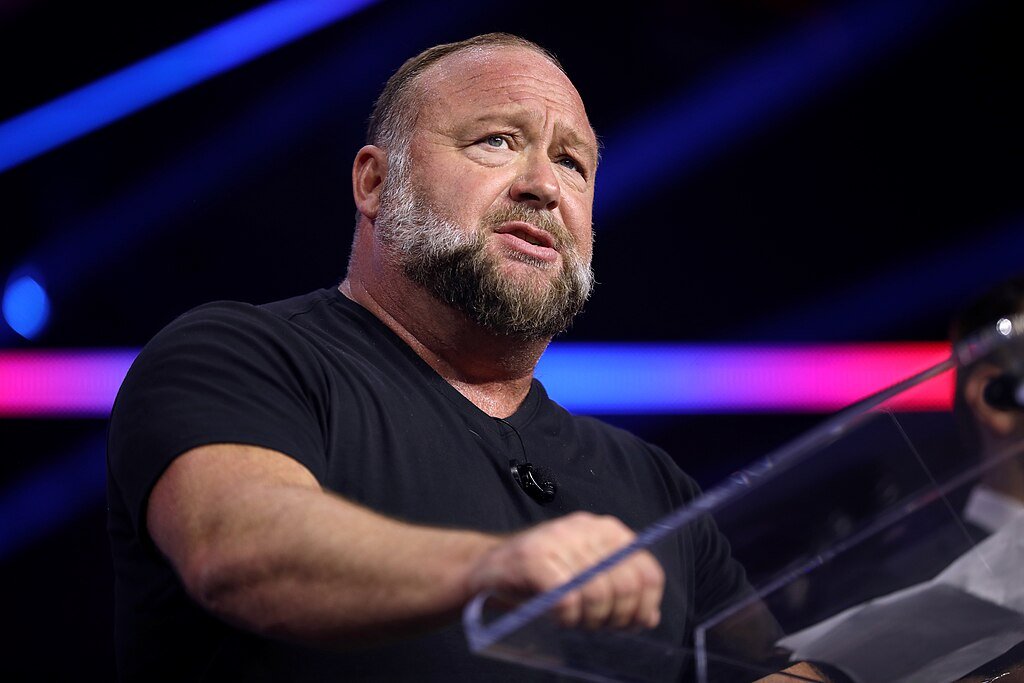
The U.S. Supreme Court has refused to hear Alex Jones’ challenge to the staggering $1.4 billion defamation judgment against him — effectively ending his years-long legal battle over false claims that the 2012 Sandy Hook Elementary School shooting was a hoax. The decision leaves intact prior court rulings that found Jones and his media company, Infowars, liable for spreading deliberate misinformation about one of the nation’s deadliest school shootings. Families of the victims argued that his repeated false statements caused them relentless emotional harm and threats from conspiracy followers. The massive award, issued by courts in Connecticut and Texas, includes compensatory and punitive damages to multiple families of Sandy Hook victims, as well as an FBI agent who responded to the scene. Jurors found that Jones profited from years of spreading lies, using his media platform to amplify conspiracy theories while increasing traffic and sales for his supplements and merchandise business. Jones’ attorneys had asked the high court to review the case on First Amendment grounds, but the justices declined without comment. The move cements one of the largest defamation awards in U.S. history and underscores the growing legal accountability for those who profit from disinformation.
Reunions and Uncertainty: Gaza Ceasefire Brings Joy—and Fragile Peace

The Israel–Hamas ceasefire has entered a fragile new phase following the near-completion of a historic prisoner and hostage exchange. As of October 13, 2025, officials confirm that all 20 living Israeli hostages have been released, alongside more than 1,900 Palestinian detainees, under a deal brokered by the United States, Egypt, and Qatar. The carefully orchestrated handover has brought relief to families on both sides — but concern is growing that the calm may not last. In recent days, Hamas fighters have been seen deploying across parts of Gaza in what officials described as a “show of strength,” even as humanitarian convoys began delivering long-delayed aid. Israeli defense officials have warned of possible ceasefire violations, citing sporadic drone activity and unverified reports of rocket launches, though no renewed combat has been confirmed. The uneasy atmosphere underscores how precarious the truce remains despite the successful exchange. President Trump, whose administration played a central role in mediating the agreement, called the outcome “an important step toward lasting peace,” while acknowledging that “more work lies ahead.” Diplomats involved in the talks say negotiations will now shift to the next phase — including border access, reconstruction aid, and long-term security arrangements for Gaza. Human rights observers have praised the exchange as a humanitarian breakthrough but cautioned that underlying issues — including governance of the Strip, displaced civilian return, and international oversight — remain unresolved. “This is a pause, not a peace,” said one regional analyst in Amman. “Unless the deeper grievances are addressed, this truce will live on borrowed time.” For now, families across Israel and Gaza are trying to rebuild a sense of normalcy. Outside Tel Aviv, relatives of freed hostages described an emotional reunion after two years of anguish. In Gaza, released prisoners returned to cheers and celebration, even as aid groups warned that food, fuel, and medical supplies remain critically low. Whether this tenuous calm can hold will depend on restraint — and trust — on both sides.
Court Says No to Trump’s National Guard Deployment in Chicago

A federal appeals court has rejected President Trump’s request to deploy National Guard troops to the Chicago area, dealing a major setback to his latest effort to exert federal control over local unrest. The 7th U.S. Circuit Court of Appeals upheld an earlier ruling that temporarily blocks the administration from sending troops into Illinois, reinforcing limits on presidential authority in domestic deployments. The ruling leaves intact a decision by U.S. District Judge April Perry, who challenged the notion that federal agents faced an imminent threat warranting a National Guard deployment. The judge’s order remains in effect until at least October 23, unless extended, while the legal fight continues. For now, Guard members from other states who were already stationed in Illinois will not be forced to leave, but no new deployments can proceed. The case highlights ongoing friction between the White House and Democratic-led states over who controls the National Guard in times of civil tension. Under U.S. law, the Guard typically answers to state governors unless federalized under specific circumstances — a process that requires clear justification and oversight. Trump’s team argued that the move was necessary to protect federal property and agents from what they called “coordinated violent threats,” but the courts were unconvinced. Legal experts say the decision marks an important test of executive power at a time when law-and-order issues dominate national debate. Similar disputes are playing out in other cities, including Portland, where federal courts have also intervened to block troop deployments. For now, the appeals court ruling signals that even amid heightened political tension, checks and balances remain firmly in place. As the administration weighs its next legal move, Illinois officials have praised the court’s decision as a victory for state sovereignty. “This is about upholding the Constitution and the rights of local government to manage their own communities,” one state lawmaker said Sunday. Whether Trump will appeal to the Supreme Court remains to be seen — but for now, Chicago’s streets will stay in local hands.