


Amazon to Cut 14,000 Corporate Jobs in AI-Driven Restructure

Amazon has confirmed plans to eliminate approximately 14,000 corporate roles as part of a sweeping restructuring effort tied to its growing focus on artificial intelligence and automation. The cuts mark one of the company’s largest workforce reductions since the pandemic era and reflect a broader push to streamline operations and accelerate AI-powered efficiencies across its business units. While the layoffs represent a fraction of Amazon’s global headcount, the decision underscores a deeper shift taking hold across the corporate world. Major technology and service companies are re-aligning their talent models around automation, data-driven decision-making, and productivity systems powered by generative AI. The affected roles are expected to span multiple divisions, including corporate services, advertising, human resources, and elements of Amazon Web Services — the company’s most profitable arm. The restructuring comes amid rising investment in AI infrastructure, cloud computing, and next-generation logistics systems designed to cut costs and improve output. The Strategic Underpinnings Leadership has framed the move not as a retreat, but as a reconfiguration — aimed at flattening hierarchies, reducing duplication, and redeploying resources into high-growth areas. Amazon’s leadership has publicly stated that AI will increasingly shape how the company manages its workforce and delivers value, and this round of changes signals that vision becoming operational. The Wider Lense Beyond Amazon, the announcement reflects an inflection point in how corporations are approaching efficiency. The next wave of workforce evolution is about redesigning entire organizational structures for an AI-first world. As automation absorbs repetitive tasks, the focus of human work shifts toward creativity, strategy, and oversight — roles where judgment and innovation still matter most. Readovia Insight This restructuring signals a new rule for the age of intelligent systems: adaptability is the new measure of progress – not workforce growth. Companies that learn to blend AI capability with human capital strategy will define the next generation of competitive advantage. The challenge ahead is how to redeploy talent into a future where technology changes faster than tradition.
President Trump Suggests He “Would Love” a Third Term as Shutdown Drags On
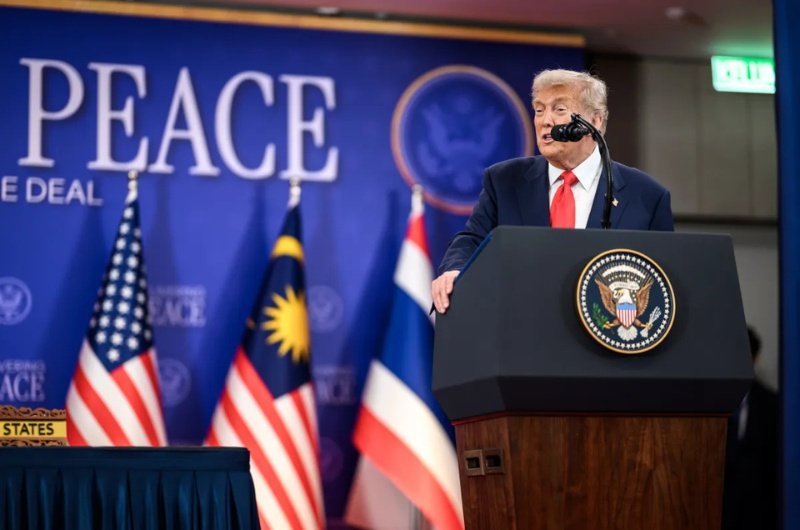
With the government shutdown entering its fourth week, President Donald Trump reignited controversy overseas by suggesting he would “love” to seek a third term in office — a remark that instantly sparked debate over presidential limits and political norms already under strain. A Remark That Hit a Nerve Speaking to reporters during his Asia trip, Trump dismissed questions about when the shutdown might end, instead pivoting to what he described as his “long future ahead.” When pressed on whether that future could include a third campaign, he smiled and replied, “I would love to do it.” The comment landed sharply in Washington, where lawmakers remain deadlocked over a federal funding bill. For many, it underscored how Trump’s rhetoric continues to blur the line between humor and constitutional challenge — and how political fatigue is deepening after nearly a month of gridlock. A Government at a Standstill The shutdown, now stretching past 27 days, has furloughed thousands of federal workers and shuttered key operations. Negotiations have faltered over competing spending priorities and immigration funding, with the Senate failing to pass multiple procedural votes. Public frustration is mounting, and pollsters say confidence in Congress has dipped to its lowest level in two years. Yet on social media, Trump’s remarks about a potential third term quickly overtook coverage of the stalled talks, highlighting how personality politics continues to eclipse governance. A Test of Boundaries Under the 22nd Amendment, presidents are limited to two elected terms — a cornerstone of modern American democracy. But in an era when political conventions are often treated as flexible, Trump’s offhand suggestion struck many observers as a deliberate provocation. Analysts say the comment may serve a dual purpose: energizing his base by projecting longevity while baiting critics into outrage that keeps him dominating the news cycle. Either way, it reflects a reality reshaping Washington — one where political theater increasingly defines the agenda itself. Between the Lines For a country still emerging from years of polarization, the combination of governing paralysis and performative power is testing the resilience of American institutions. Each shutdown, each boundary-pushing remark, becomes less an exception and more a pattern — proof that the structure of U.S. governance now depends as much on restraint as on law.
Oracle Says AI’s Value Is Real — And Demand Is Surging Beyond Supply

At the annual Future Investment Initiative summit in Riyadh, the Oracle Corporation CEO, Mike Sicilia, declared that the company is seeing real, tangible value in artificial intelligence — rejecting the notion of an AI bubble — and emphasized that demand for AI capabilities is already exceeding supply. Infrastructure Strain Becomes Reality Behind the rhetoric lies a significant infrastructure challenge. Oracle and its peers are racing to build vast data-centres, secure GPU capacity, and scale cloud offerings capable of training and running frontier AI models. For instance, analysts now expect the AI infrastructure build-out to hit nearly $490 billion in the coming year. The Business Pivot: From Hype to Execution For years, many in tech debated whether AI was more hype than substance. Oracle’s comments signal a shift: the question now is no longer “Will AI scale?” but “How do we operationalize, monetize and regulate it at scale?”. That means corporate strategists, CIOs and tech-leaders should focus less on the existence of AI and more on the mechanics of its deployment: Are your data infrastructure and architecture ready for frontier models? Do you have talent, governance and risk frameworks that match your ambition? Can your business pivot from experimentation to production-grade AI? Resilience, Risk & the Growth Inflection However, this transition is not without its risks: Capital-intensive infrastructure build-outs carry long-tail pay-off risk — heavy upfront investment with uncertain returns. Supply bottlenecks — from advanced chips to data-centre real estate — mean high demand may yet encounter structural friction. The window between promise and performance is narrowing: organisations must translate AI capability into measurable business outcomes or risk investor fatigue. Readovia Insight For readers of the AI channel, here’s what matters: the era of asking “Should we do AI?” is effectively over. The question now is “How fast, how effectively, and how responsibly can we scale AI?”. Success in AI now depends on operational readiness, execution, and measurable impact — a divide that increasingly separates forward-thinking leaders from those still chasing the trend.
The Integrity Equation: How Ethical AI Builds Lasting Trust

As businesses rush to deploy AI tools and agents, one thing often gets overlooked: ethics. Responsible AI is not a nice-to-have. It is the foundation for trust. The way your systems make decisions can directly affect your customers, employees, and reputation. Fairness AI learns from data — and that data often carries the same biases found in society. If a hiring algorithm is trained on years of company data that reflect biased human choices, it can unfairly favor certain candidates. The same risk exists in lending, healthcare, or even customer service chatbots. Ensuring fairness means actively checking how your AI behaves. That includes reviewing training data, monitoring live decisions, and making sure no group of people is consistently disadvantaged. Regular audits and built-in bias-detection tools help identify and correct these blind spots before they turn into public problems. Transparency AI doesn’t have to be a mystery. People deserve to know when and how AI is influencing decisions — especially in sensitive areas like hiring, approvals, or pricing. Transparency means being open about what your systems do and giving users clear ways to ask questions or challenge a result. It also means documenting how your AI models work — what data they use, how they process information, and what steps are taken to verify outcomes. When customers understand the process, they’re far more likely to trust the result. Accountability No matter how advanced the system, accountability always stays with people. When an AI makes a mistake, someone must be responsible for reviewing, explaining, and correcting it. Businesses should define clear roles for oversight, ensure human review of high-impact decisions, and make it easy for individuals to appeal or report errors. Accountability isn’t about blame — it’s about integrity. By creating a structure for oversight, organizations show that they take the consequences of AI decisions seriously. Final Word Ignoring AI ethics can do more damage than a technical failure ever could. Biased or opaque systems can alienate customers, attract regulatory attention, and erode public confidence. On the other hand, companies that build fairness, transparency, and accountability into their AI practices will stand out for the right reasons. Ethical AI is a competitive advantage. It tells your audience that your innovation is built on trust. And in the age of automation, trust is the most valuable asset a brand can own.
Inside the NBA Gambling Scandal: FBI Arrests Coach and Players in Mafia-Linked Probe

Federal investigators charge more than 30 people — including Portland coach Chauncey Billups and Miami’s Terry Rozier — in a sprawling insider-betting and rigged-poker operation that threatens the integrity of professional sports. What Happened A joint investigation by the FBI and U.S. Attorney’s Office for the Eastern District of New York has led to more than 30 arrests tied to two intertwined schemes: an insider-sports-betting network and a Mafia-backed high-stakes poker ring. Among those charged are Chauncey Billups, head coach of the Portland Trail Blazers, and Terry Rozier, guard for the Miami Heat. Prosecutors allege that insiders leaked non-public information on injuries and playing time to help gamblers profit on “under” bets — while others participated in poker games secretly rigged with x-ray tables, hidden lenses, and digital card readers. The indictment also cites connections to New York’s Bonanno, Genovese, Gambino, and Lucchese crime families, who allegedly provided muscle and money-laundering support. Inside the Operation Authorities say the schemes spanned multiple states — including New York, Nevada, and Florida — and moved “tens of millions” of dollars through offshore accounts and crypto wallets. In one example, Rozier allegedly informed associates he would exit a March 2023 game early, triggering a surge of bets against his performance line. In the poker ring, former athletes dubbed “face cards” helped lure wealthy amateurs to rigged games that ensured near-certain losses. The investigation began after federal agents intercepted communications linking organized-crime figures to private games involving active NBA staff. Fallout Across the League The NBA placed both Billups and Rozier on immediate leave. League officials said they are cooperating fully with federal authorities and reviewing internal betting-education programs. Legal experts say the arrests mark one of the most serious integrity crises since the 2007 NBA referee scandal. Sponsors, sportsbooks, and compliance teams are bracing for ripple effects that could extend well beyond basketball. The Bigger Picture The scandal lands at a time when legal sports betting in America has exploded into a $149 billion industry — up from $7 billion in 2018, the year the Supreme Court lifted the federal ban on sports wagering. What began as a niche market has become a national pastime, woven into broadcasts, fantasy leagues, and even in-arena promotions. That meteoric rise has also exposed the industry’s weakest link: access. As players, coaches, and insiders navigate a landscape where betting is legal but deeply conflicted with their roles, regulators are struggling to keep pace. For organized-crime networks, the stakes are higher than ever — and so are the incentives to exploit the cracks. The NBA’s current crisis is a stress test for an industry that went from fringe to mainstream almost overnight. With $149 billion on the table, the question is when and if more scandals emerge, how prepared the leagues, sportsbooks, and law enforcement will be when they do. And perhaps the biggest question of all: how will this scandal impact fans’ trust in professional sports?
White House Demolition: East Wing Torn Down for $300 Million Ballroom Project
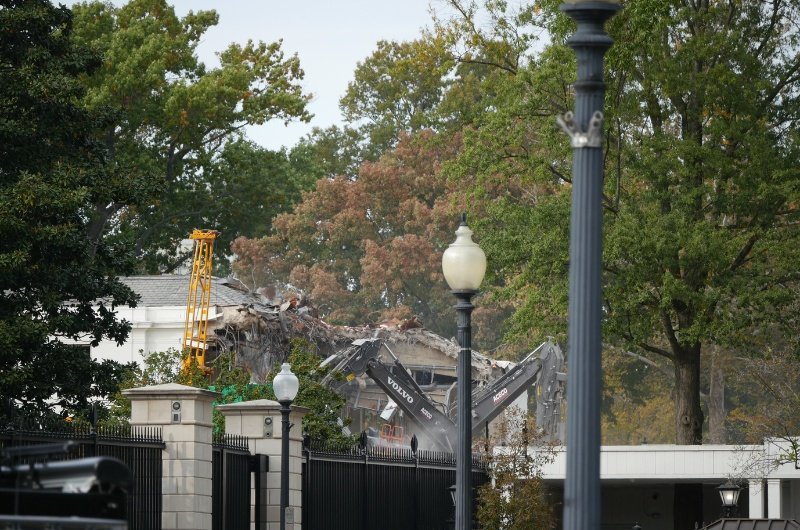
The historic East Wing of the White House — long the domain of first ladies and state receptions — has been demolished to make way for a new 90,000-square-foot ballroom. The project is privately funded, politically charged, and raising questions about transparency, preservation, and the true cost of the “People’s House.” What’s Going On Demolition crews have completed the teardown of the White House East Wing, clearing the site for construction of a massive new ballroom. The structure, which had stood in various forms since 1902, once housed the First Lady’s offices, the Social Office, and the public tour entrance. The new ballroom — projected at roughly 90,000 square feet and costing about $300 million — is being described by the administration as a “privately funded modernization.” Officials claim the East Wing needed upgrades to meet current functional and security demands. Critics argue that the process bypassed traditional preservation and review standards that usually apply to changes on federal historic sites. Donors and the Private Dinner at the White House President Trump recently released a list of prominent guests invited to a White House dinner celebrating the ballroom project. The event reportedly included around 130 attendees, among them executives from Apple, Amazon, Google, Meta, Lockheed Martin, and several major cryptocurrency firms. According to press briefings, the dinner was not purely ceremonial — it served as an opportunity to thank contributors and showcase early architectural renderings of the ballroom. A partial donor list has also been shared with reporters, revealing that a mix of corporate sponsors and wealthy individuals are financing the build. Some of the larger contributors are said to include major tech and defense companies, with Alphabet’s (Google’s) contribution estimated at $22 million toward design and infrastructure technology. While the administration emphasizes that no taxpayer funds are being used, watchdog groups have called for full transparency about the donation amounts, terms, and any potential access or influence tied to participation. Timeline and Construction The ballroom plan was announced in late summer with an estimated $200 million cost. Within weeks, that number rose to roughly $300 million as the scope expanded to include new security systems and digital infrastructure. By early autumn, demolition was underway, and satellite images taken this week confirm that the East Wing is now gone — replaced by construction staging at one of the most secure addresses in the world. Officials say the funding is being managed through an intermediary trust, but preservation advocates continue to press for more detail about oversight, project governance, and how donor recognition will be handled once the new structure is complete. President Trump has publicly championed the ballroom as a “necessary modernization.” According to a July 31 press release posted on WhiteHouse.gov: “The White House State Ballroom will be a much-needed and exquisite addition of approximately 90,000 total square feet of ornately designed and carefully crafted space, with a seated capacity of 650 people — a significant increase from the 200-person seated capacity in the East Room of the White House.” What’s at Stake For over a century, the East Wing symbolized the public-facing side of the White House — where diplomacy, ceremony, and national traditions intersected. Its demolition marks one of the most significant changes to the presidential complex since the Truman-era reconstruction. To supporters, the new ballroom represents modernization and capacity for large-scale state events. To critics, it is a rebranding of America’s most iconic residence — one funded and influenced by private interests, not the public it represents. The debate now extends far beyond architecture to include governance, ethics, and ownership of national heritage. Who Are We Serving? The East Wing’s removal highlights a broader tension between modernization and preservation — between what serves the presidency and what serves the public. The unprecedented corporate involvement in a federal landmark’s redesign is already prompting calls for stricter transparency laws governing privately funded government projects. It’s a reminder that in the modern era, even the most symbolic institutions can be reshaped by those with the means to pay for access — and by those willing to allow it. The Bigger Picture At its core, the ballroom project underscores how symbolism, power, and private influence now intersect at America’s most recognized address. The White House is a working residence — but it is also a public institution, built to serve and represent the nation, not the individual who occupies it. When major transformations are financed by private donors and carried out with limited public oversight, the line between preservation and personalization begins to blur. The question is whether the public will still see the completed project as their own.
BREAKING: U.S. Targets Russia’s Oil Giants After Trump–Putin Summit Is Cancelled

Washington’s latest sanctions strike at the heart of Moscow’s war funding machine. The United States has imposed sweeping sanctions on Russia’s two largest oil producers, Rosneft and Lukoil, in a fresh effort to undermine Moscow’s ability to finance its war in Ukraine. The move comes just one day after plans for a high-profile summit between President Donald Trump and Russian President Vladimir Putin fell apart. Trump told reporters that he canceled the meeting because “it didn’t feel right” and signaled uncertainty about when the leaders might meet next. According to the U.S. Treasury Department, the sanctions target entities and financial channels believed to be funneling oil revenues toward Russia’s ongoing military campaign. By striking the country’s main energy companies, Washington aims to tighten the economic pressure on the Kremlin and isolate its access to global markets. “The message is clear,” a senior Treasury official said in a statement. “If Russia continues to wage war, it will face escalating consequences that hit its core sources of funding.” The Kremlin condemned the sanctions, calling them “an act of economic aggression,” and vowed to explore countermeasures. Energy analysts noted that while Russia may reroute some exports to friendly nations, restrictions on financing and equipment could significantly hamper production in the long run. The Bigger Picture This latest escalation marks a new phase in U.S.–Russia relations — one defined by strategic disengagement and mounting economic warfare. With the diplomatic door now temporarily closed, both nations appear to be doubling down on pressure tactics rather than peace talks.
Food Benefit Alert: SNAP & WIC May Be Unavailable in November Amid Shutdown

Millions of Americans who rely on federal food assistance programs may go without critical benefits in November if the government shutdown continues. Several states — including Colorado, Oklahoma, Texas, and others — have already issued warnings that November benefits will not be available unless funding is restored. The Readovia News Desk reports that recipients in Maryland have begun receiving in-app alerts on their state benefit portals notifying them that their Food Supplement (SNAP) and WIC benefits “may not be available in November.” Those alerts, verified through user screenshots, mark one of the first direct notices to beneficiaries at the state level — signaling that the risk of interruption is now immediate, not hypothetical. The U.S. Department of Agriculture has advised state agencies that, should the shutdown persist, there may be insufficient funds to cover full November payments for both the Supplemental Nutrition Assistance Program (SNAP) and the Special Supplemental Nutrition Program for Women, Infants, and Children (WIC). Together, these programs serve more than 45 million Americans. Growing Impact Across States From the Midwest to the Gulf Coast, states are bracing for an unprecedented disruption. Officials have warned that federal allocations for November cannot be guaranteed without a new funding agreement. Some states have confirmed that unless the shutdown ends soon, payments will simply not be issued. For many low-income households, groceries and infant formula benefits are lifelines. A missed monthly deposit can mean skipped meals, postponed rent, or complete reliance on local food banks already stretched thin by demand. The combination of inflation, high grocery prices, and a lapse in federal support has created what advocates are calling a “perfect storm” of hardship. WIC is especially vulnerable because it is not an entitlement program; once federal funds run out, state agencies have limited ability to continue disbursements. Several state offices have indicated that funding could expire within days, forcing them to suspend new enrollments or pause benefits altogether. What Beneficiaries Should Know Check your state benefit app or online portal for new alerts regarding your November benefits. Consider stocking up now on essentials if you rely on SNAP or WIC and live in a state that has issued warnings. Local food banks and community organizations are preparing emergency distributions; contact your local social-services office for updates. Congress could fix the problem quickly if it reaches a deal, but right now, there’s no agreement in sight — so benefits remain at risk. The Bigger Picture This growing crisis highlights how deeply political gridlock in Washington affects day-to-day life for families nationwide. When federal programs are disrupted, states must scramble to fill the gap, often without resources to do so. Even a brief interruption in benefits can have lasting effects — from lost nutrition for children to reduced sales for small retailers in low-income communities. As the shutdown stretches on, uncertainty remains the only constant. For millions of families, November may mark the first time in years that grocery benefits simply don’t arrive. Readovia Continuing Coverage The Readovia News Desk will continue to monitor benefit alerts, state updates, and federal negotiations as they develop. Readers who have received similar “not available in November” notices through their state or local benefits portals are invited to contact the Readovia newsroom with the alert information, their state, county, and the date of the alert.
Trump Seeks $230 Million From DOJ Over Russia Probe and Mar-a-Lago Raid
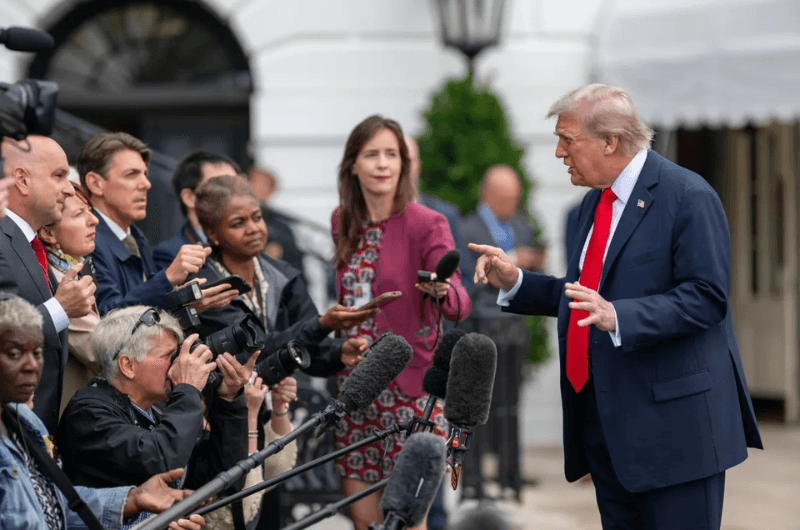
President Donald Trump has filed claims seeking up to $230 million from the U.S. Department of Justice (DOJ), accusing the agency of political retaliation in two of the most high-profile federal actions ever taken against him. According to reports first confirmed Tuesday, the filings — administrative claims known as Form 95s — seek compensation for alleged violations of Trump’s rights during the 2016 Russia investigation and the 2022 FBI search of Mar-a-Lago. Both actions, his lawyers argue, caused “immeasurable reputational and financial harm.” The claims, submitted in 2023 and 2024, precede any formal lawsuit but are required under the Federal Tort Claims Act before suing the government. They accuse the DOJ and FBI of “malicious prosecution” and “abuse of process,” echoing Trump’s long-standing claim that the justice system has been “weaponized” against him. A DOJ spokesperson declined to discuss specifics but said all department officials “follow the guidance of career ethics professionals.” If the claims are approved, any settlement above $4 million would require sign-off by the Deputy Attorney General — a role now held by Todd Blanche, a former Trump defense attorney, raising potential conflict-of-interest questions. Legal experts note that while administrative claims are routine in federal litigation, one of this magnitude is unprecedented for a president. The filings underscore Trump’s effort to recast years of investigation as an injury rather than a liability — and to turn his defense into a financial counteroffensive against the federal government itself. Between the Lines If the DOJ entertains the claim, even briefly, it could open a new political front: one where former presidents pursue damages from their own government. But if it’s dismissed outright, Trump could still transform the rejection into campaign fuel — proof, he’d argue, that the system remains rigged against him. Either outcome keeps the spotlight exactly where he wants it: on Trump versus Washington.
Family’s Quick Action Stops Planned Airport Shooting in Atlanta

A Georgia family’s courage to speak up prevented what could have been a mass tragedy at one of the world’s busiest airports. Police arrested 49-year-old Billy Joe Cagle at Hartsfield-Jackson Atlanta International Airport after relatives reported he was livestreaming threats to “shoot it up.” Officers found an AR-15 rifle and 27 rounds of ammunition in his truck parked just outside the terminal. Atlanta’s police chief credited the family’s intervention for saving lives, calling the incident “a success, not a tragedy.” Cagle faces multiple felony charges, including making terroristic threats and illegal firearm possession. Authorities confirmed he had a prior felony record and was not legally permitted to own a gun. The case underscores a crucial truth: when families and communities speak up, lives can be saved. Atlanta’s mayor praised both vigilance and divine grace, saying, “We’re thankful to God and to good people for this crisis being averted.” Cagle’s longtime friend said he suffered from schizophrenia and had been taking medication, raising broader questions about mental health and firearm access. Final Thoughts Security technology is vital, but human awareness remains the strongest defense. One family’s quick decision to “say something” transformed a potential national tragedy into a case study in prevention — proof that when people speak up, danger can be stopped before it starts.