


Major Retailers Slated to Close Hundreds of Locations in 2026 as Consumer Habits Continue to Shift
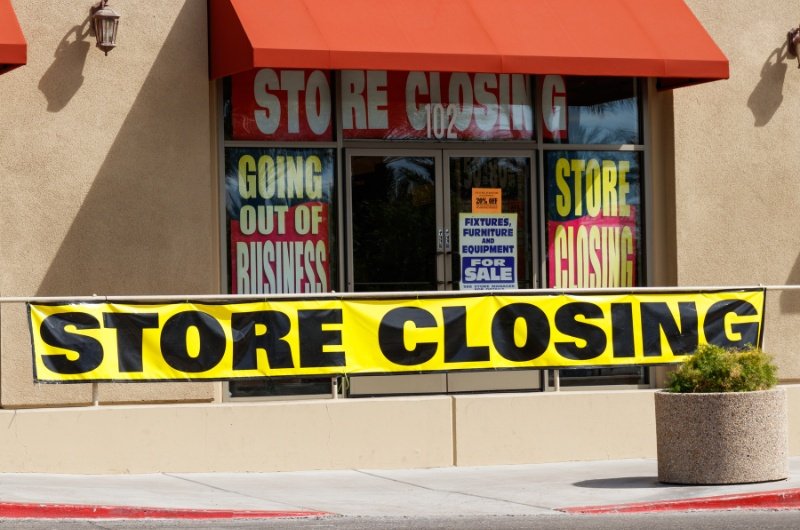
Across the United States, a wave of store and restaurant closures is shaping the early retail landscape of 2026, underscoring enduring changes in consumer habits, economic pressures and corporate strategies. In recent months, a growing number of well-known chains have announced plans to shutter locations, restructure operations or pivot away from traditional brick-and-mortar footprints in favor of digital and experience-driven models. Industry tracking shows that hundreds of stores and restaurants are slated to close their doors this year as companies seek to improve profitability and respond to declining foot traffic. The closures span a wide range of sectors, from clothing and department stores to pharmacies and eateries, reflecting broader shifts in how Americans shop and dine. Some major grocery and drugstore chains have confirmed plans to reduce underperforming locations, a move aligned with long-term efforts to streamline operations and focus resources on stronger markets. Meanwhile, fast-casual and sit-down restaurant brands are also adjusting their portfolios in response to rising costs and changes in consumer spending patterns. Experts say the trend is driven by a confluence of economic forces: continued expansion of e-commerce, tightening consumer budgets, and the increasing importance of omnichannel retail strategies that blend online and physical experiences. For many retailers, this moment is less about retreat and more about rebalancing where and how they connect with customers. As 2026 unfolds, the closures highlight a fundamental transition in the U.S. retail and service sectors. Companies that adapt — by rethinking store formats, enhancing digital offerings or curating unique in-person experiences — are more likely to navigate this period of realignment successfully. Readovia will continue tracking this evolving retail landscape as more companies outline their plans for 2026. ——————– Related: Banner’s Hallmark Files for Bankruptcy
Sara Carter Confirmed as Nation’s Drug Czar, Becoming First Woman to Lead U.S. Drug Policy
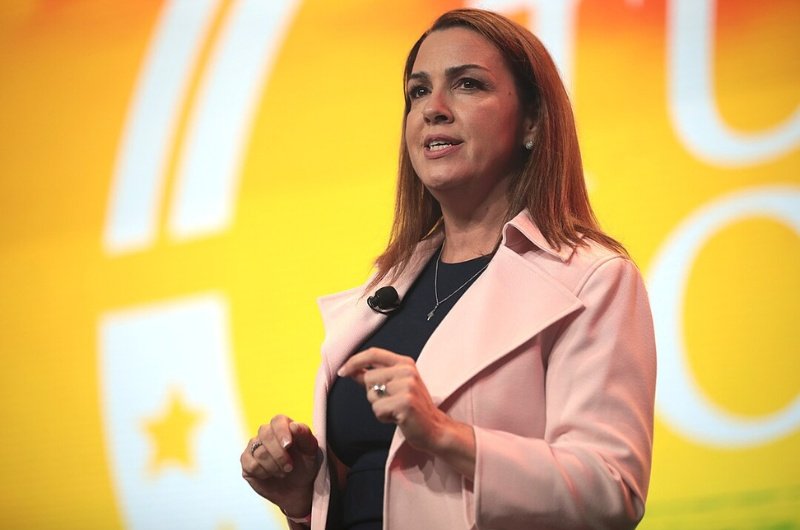
Sara Carter has been confirmed by the U.S. Senate as Director of the Office of National Drug Control Policy, placing her at the helm of the federal government’s efforts to combat drug trafficking, addiction, and overdose nationwide. Her confirmation marks a historic milestone, as Carter becomes the first woman to lead the nation’s drug control policy. The Senate vote was closely divided, underscoring the political sensitivities surrounding drug enforcement, public health strategy, and border security. Carter was nominated by President Trump and now assumes responsibility for coordinating federal drug policy across multiple agencies, including prevention, treatment, law enforcement, and international cooperation. In remarks following her confirmation, Carter emphasized a commitment to protecting American families and communities from the harms of illicit drugs. She signaled a dual focus on holding traffickers accountable while also supporting prevention and recovery efforts aimed at reducing addiction and overdose deaths. Carter brings a nontraditional background to the role, having built her career as an investigative journalist covering cartel activity, drug trafficking routes, and organized crime, particularly along the U.S.–Mexico border. Supporters argue that her field experience provides firsthand insight into the networks driving the drug trade, while critics have questioned how that background will translate into managing a large federal policy operation. The Office of National Drug Control Policy plays a central role in shaping the federal government’s response to drug-related challenges, including coordination between domestic agencies and international partners. The director’s influence can extend across public health initiatives, criminal enforcement priorities, and diplomatic efforts aimed at disrupting trafficking organizations. Carter takes office at a time when the United States continues to grapple with fentanyl-related overdoses, cartel-driven drug flows, and ongoing debates over how best to balance enforcement with treatment. Her leadership will be closely watched as the administration moves to define its approach to one of the country’s most persistent and complex policy challenges.
How U.S. Oil Companies Are Navigating the Venezuelan Upheaval

The sudden upheaval in Venezuela has forced U.S. oil companies to reassess a country long viewed as both a strategic opportunity and a high-risk investment. While markets reacted quickly, corporate responses have been far more cautious — signaling that any shift in U.S. energy involvement will unfold gradually, not overnight. Energy stocks climbed in the immediate aftermath of the crisis as investors speculated about Venezuela’s vast oil reserves potentially re-entering global markets. With the largest proven reserves in the world, the country represents an enormous long-term prize. But for U.S. producers, enthusiasm in the markets has not translated into public commitments. Most companies are signaling restraint as they evaluate political stability, legal protections, and the condition of Venezuela’s long-neglected infrastructure. Chevron remains the only major U.S. oil company with ongoing operations in Venezuela under existing approvals, and its posture has been notably conservative. Rather than outlining expansion plans, the company has emphasized regulatory compliance and operational safety. Other U.S. oil majors are taking a wait-and-see approach, monitoring developments while avoiding speculation about renewed investments until clearer governance and commercial frameworks emerge. Where interest appears more immediate is among U.S. refiners, particularly along the Gulf Coast. Several facilities are equipped to process Venezuela’s heavy crude, and expanded access could offer a geographically close supply option without requiring direct upstream investment. For refiners, the opportunity lies less in rebuilding Venezuela’s oil fields and more in selectively integrating supply if conditions allow. The broader challenge remains Venezuela’s oil infrastructure itself. Years of underinvestment have left production facilities degraded, meaning any meaningful recovery would require substantial capital and time. Even under improved political conditions, restoring output to prior levels would be a complex, multi-year effort — one that few companies appear eager to rush into. For now, U.S. oil companies are balancing opportunity against uncertainty. Investors may be pricing in future possibilities, but corporate strategy remains grounded in caution. The next phase will depend not on headlines, but on whether Venezuela can offer the stability and legal clarity required for long-term energy investment. Until then, U.S. firms appear content to watch closely — and move slowly.
Why the U.S. Has Pursued Nicolás Maduro for Years — And What Comes Next
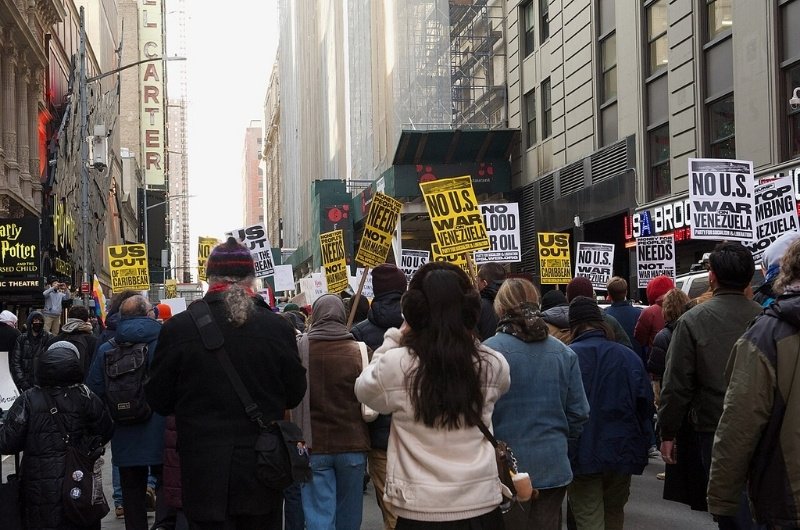
For more than half a decade, U.S. authorities have pursued Nicolás Maduro, accusing Venezuela’s long-time leader of using the power of the state to facilitate drug trafficking, corruption, and violence. What once appeared to be a distant standoff between Washington and Caracas has now moved squarely into the U.S. legal system, marking a rare and consequential escalation in international accountability. At the center of the case are allegations that Maduro oversaw and protected a sprawling drug-trafficking operation while in office. U.S. prosecutors say he relied on elements of the Venezuelan government and military to enable cocaine shipments bound for the United States, while using intimidation and corruption to maintain control at home. The charges include conspiracy to commit narco-terrorism, large-scale drug trafficking, and weapons-related offenses tied to organized criminal groups. The U.S. pursuit of Maduro became public in 2020, when federal authorities unsealed an indictment and announced a reward of up to $50 million for information leading to his arrest. Prosecutors accused him of leading the so-called Cartel of the Suns, a network allegedly embedded within Venezuela’s military structure and designed to shield drug shipments from interception. Now in U.S. custody, Maduro has rejected the accusations and challenged the legitimacy of the case itself. He told the court that he was taken by force and brought to the United States, calling the operation a violation of international law. He has also insisted that he remains Venezuela’s legitimate president, a position his legal team is expected to use in challenging U.S. jurisdiction and the circumstances of his detention. What comes next will test both legal precedent and geopolitical boundaries. The case moves into pretrial proceedings as courts weigh claims of sovereignty against allegations of transnational crime, all under intense international scrutiny. However the legal process unfolds, the prosecution of a former foreign leader inside a U.S. courtroom signals a clear message: allegations of state-backed criminal activity may no longer remain beyond the reach of American courts. ——————– Related: Maduro Pleads Not Guilty in New York Court to Narco-Terrorism and Drug Trafficking Charges
Maduro Pleads Not Guilty in New York Court to Narco-Terrorism and Drug Trafficking Charges
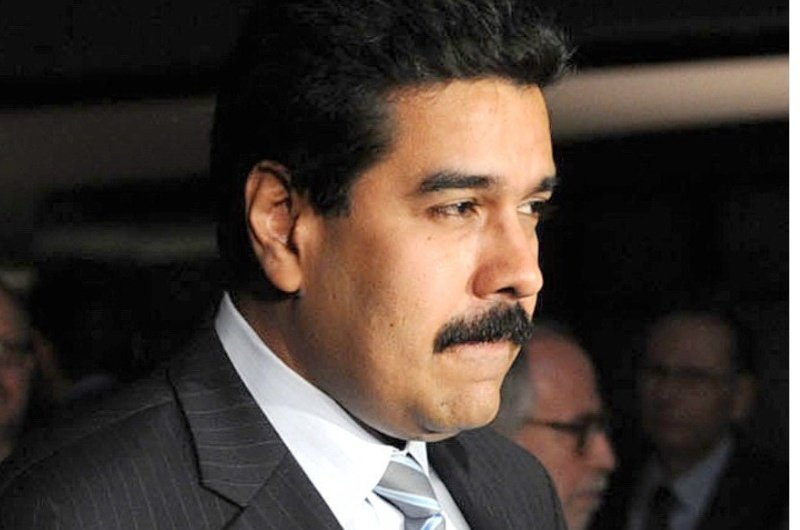
Deposed Venezuelan leader Nicolás Maduro appeared in a New York federal courtroom Monday and pleaded not guilty to a sweeping set of U.S. criminal charges, marking one of the most significant prosecutions of a former head of state in modern history. Maduro, brought into court under heavy security, denied all allegations and challenged the legitimacy of the proceedings, asserting that he remains Venezuela’s rightful president. Speaking through an interpreter, he rejected U.S. jurisdiction and maintained that his arrest and transfer to the United States were unlawful. U.S. prosecutors accuse Maduro of leading a long-running criminal enterprise centered on narco-terrorism — a charge that combines drug trafficking with acts intended to support or advance terrorist activity. According to the indictment, Maduro and his associates allegedly worked with armed groups to traffic large quantities of cocaine into the United States while using the proceeds to maintain power and destabilize the region. The charges to which Maduro pleaded not guilty include: Narco-terrorism Conspiracy to traffic cocaine into the United States Drug trafficking conspiracy involving international distribution Conspiracy to use and carry firearms in furtherance of drug trafficking Conspiracy to provide material support to a designated terrorist organization Potential Consequences if Convicted If convicted on all counts, Maduro could face life imprisonment under U.S. federal law. Maduro’s wife, Cilia Flores, who was detained during the same operation, also entered a not-guilty plea. Both are currently being held at the Metropolitan Detention Center and did not request bail during the brief court appearance. A future hearing has been scheduled for later this spring. The case follows a dramatic U.S. operation earlier this month that resulted in Maduro’s capture and removal from Venezuela, a move that has triggered global reaction and raised sharp questions about sovereignty, international law, and precedent. Demonstrators gathered outside the courthouse Monday, reflecting deep divisions over the U.S. action and Maduro’s legacy. International fallout continues, with the United Nations Security Council holding emergency discussions on the implications of prosecuting a former head of state in a U.S. court — a development that could reshape how future cases involving foreign leaders are handled. ——————– What do you say? Send us your comments. We may post them here.
Tax Season 2026: What’s Changing for Your 2025 Return
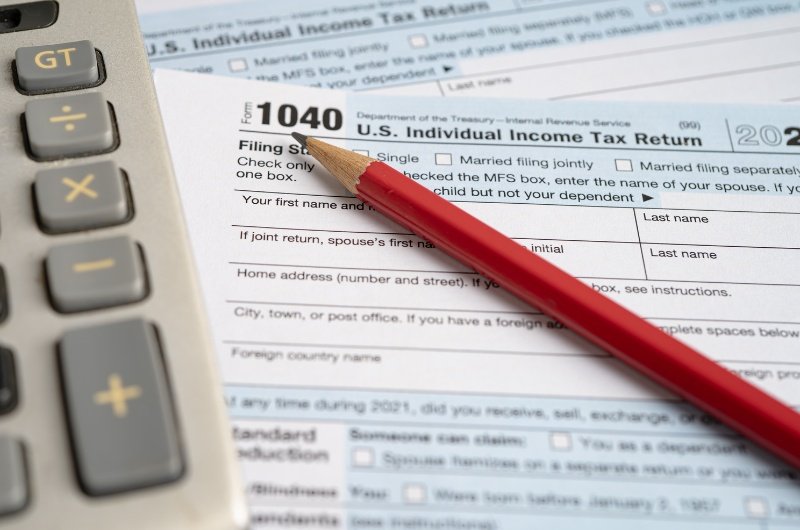
Tax season is arriving with a clear message from Washington: the government wants refunds and payments moving faster, safer, and more digitally than ever. For Americans filing 2025 tax returns in 2026, several updates stand out—not because they’re complicated, but because they change what “normal” looks like when you’re expecting a refund or planning deductions. The biggest operational shift is how refunds are delivered—and it’s coming straight from the top. An Executive Order signed by Donald Trump directs federal agencies to modernize payments to and from Americans by moving away from paper-based systems. In line with that order, the IRS is phasing out paper refund checks for individual taxpayers, steering filers toward direct deposit and other electronic payment methods designed to reduce fraud, delays, and administrative costs. Advertisement Policy changes are also landing just as millions of households file. One of the most notable is a new deduction for car loan interest introduced under the One Big Beautiful Bill (OB3). Treasury and IRS guidance outlines a deduction that may apply even if you take the standard deduction, potentially benefiting taxpayers who purchased eligible new, made-in-America vehicles in 2025—subject to income limits and other qualifications. Even the basics have shifted. For the 2025 tax year, the standard deduction is higher across all filing statuses, and eligible seniors may qualify for an additional deduction under new rules. These changes mean taxable income calculations could look different for many filers before credits and other deductions are even factored in. The practical takeaway is simple: if you expect a refund, now is the time to ensure your electronic payment information is up to date. And if you made major financial decisions in 2025—such as buying a vehicle or transitioning into retirement—it’s worth taking a closer look at what you may newly qualify for. This tax season isn’t just about filing—it’s about adapting to a system that’s rapidly going digital.
Trump Withdraws National Guard From Major Cities — for Now
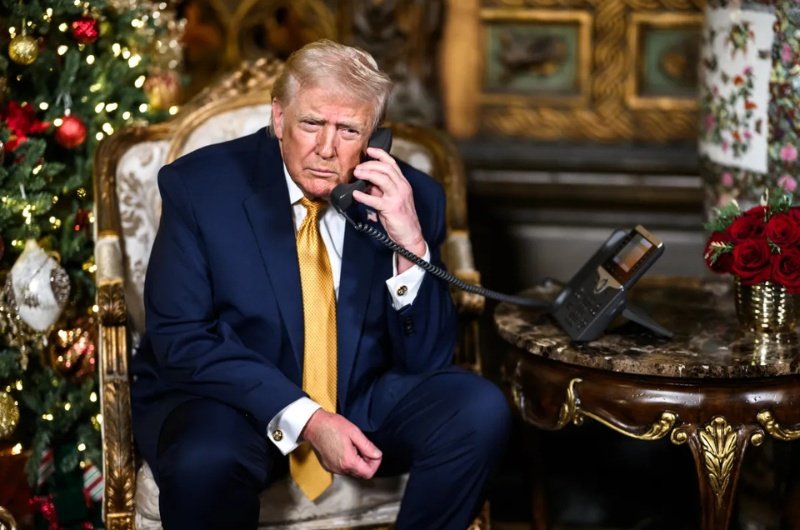
President Donald Trump has announced the withdrawal of National Guard troops from three major U.S. cities — Chicago, Los Angeles, and Portland — marking a notable shift in his administration’s approach to domestic security and crime policy. The Guard had been deployed in mid-2025 amid heightened political debate over crime, protests, and immigration enforcement. In announcing the withdrawal, Trump said the decision does not permanently end the deployments, adding that federal forces could return if crime rates rise again. The move reframes the presence of the Guard as conditional rather than ongoing. Local leaders in all three cities had strongly criticized the deployments, arguing they represented federal overreach into matters traditionally handled by state and local authorities. Governors and city officials maintained that public safety was being addressed through local law enforcement and community-based strategies, without the need for federal military involvement. The withdrawals also follow a series of legal challenges that narrowed the scope of presidential authority to deploy National Guard units without state consent. Court rulings reinforced constitutional limits on federal power, emphasizing that the Guard remains under state control except in narrowly defined circumstances. In Chicago, officials pointed to declining violent crime levels over the past year as evidence that large-scale federal deployments were unnecessary. Governors in California, Oregon, and Illinois welcomed the return of their Guard units, framing the decision as a restoration of constitutional balance and local control. The removal of National Guard troops from these cities highlights ongoing tensions between federal authority and local governance on public safety issues. As crime, immigration, and executive power continue to shape national debate heading into 2026, the episode underscores broader questions about how — and when — the federal government should intervene in domestic policing matters.
Rewiring Goal-Setting for 2026

Every new year begins with ambition. It also tends to begin with pressure — long lists of resolutions, carefully written goals, and the quiet belief that this is the year everything must change. But by February, many of those goals fade, not because people lack discipline, but because they took on too much at once. The problem isn’t motivation. It’s overload. When multiple goals compete for attention, focus becomes fragmented and progress slows. Instead of building momentum, people often find themselves managing expectations, juggling priorities, and feeling behind before the year truly gets started. Focus, it turns out, isn’t a personality trait — it’s a strategy. Goal-setting needs a reset. Rather than aiming for ten major changes, the smarter approach for 2026 is choosing just one primary goal — or at most two. The real shift happens when a goal moves beyond intention and into action. Instead of asking what you want by December, ask what progress should look like by March — and what can realistically be done each week to move closer to the goal. Big goals don’t fail because they’re unrealistic; they fail because they aren’t supported by simple action steps that carry them forward until they are achieved. Success in 2026 isn’t about urgency or reinvention. It’s about clarity. Fewer goals create more room for follow-through, more confidence in decision-making, and a calmer relationship with time. This year doesn’t need to be bigger. It needs to be intentional. The Takeaway If you’re setting goals for 2026, consider focusing on one or two goals that truly matter — and commit just as seriously to the action steps required to achieve them. Goals without action remain intentions. Write down the steps, make them specific, and build them into your weekly to-do lists. Clarity sets direction. Action carries goals across the finish line.
FBI Prevents Alleged ISIS-Inspired New Year’s Eve Attack in North Carolina

U.S. authorities say they prevented a potential ISIS-inspired attack planned for New Year’s Eve in North Carolina, charging an 18-year-old with plotting violence against civilians and responding law enforcement officers. According to federal officials, the suspect was arrested before the attack could be carried out following an investigation led by the Federal Bureau of Investigation and the U.S. Department of Justice. Authorities allege the teen had discussed plans to target up to 20 people and had expressed allegiance to ISIS, though officials emphasized the suspect acted alone and was not directed by any foreign terrorist organization. Investigators say the case highlights the continued threat of online radicalization, particularly among young people. Law enforcement officials noted that digital platforms remain a key pathway for extremist content and recruitment efforts, even as traditional terror networks face increased pressure abroad. The thwarted plot underscores ongoing concerns about domestic security as the United States enters 2026. While officials credit proactive monitoring and investigative work with preventing violence, the case raises broader questions about how extremist ideologies circulate online and how law enforcement can intervene before plans escalate into action. Federal authorities said the suspect will face charges related to terrorism-inspired threats and weapons offenses. No injuries were reported, and officials stressed that there was no broader, coordinated threat tied to the alleged plot. The incident serves as a reminder that domestic terrorism threats continue to evolve, often emerging from decentralized, online environments rather than organized cells. As policymakers debate the balance between civil liberties, digital surveillance, and public safety, cases like this one are likely to shape security discussions throughout the year.
Readovia Celebrates A Successful First Year & Pauses for Winter Break

As we head into the Christmas and New Year’s holiday week, the Readovia team is stepping away from the newsroom to enjoy time with loved ones, celebrate meaningful traditions, and embrace the rest and reflection this season invites. This pause comes at the close of Readovia’s first full year in publication. After officially launching in December 2024, 2025 marked our inaugural year of consistent reporting, editorial refinement, and audience growth. Over the past twelve months, Readovia established its voice, expanded coverage across the topics shaping modern life, and built a growing community of readers who value clarity, context, and thoughtful journalism. With deep gratitude for you — our loyal readers and supporters from the very beginning — we’re pausing publication from Christmas Eve through New Year’s Day. We’ll return on January 2 with fresh stories, insightful coverage, and a renewed commitment to meaningful reporting in the year ahead. Of course, should a major breaking story arise, we’ll be here to cover it — pajamas and all. Until then, all of us at Readovia wish you peace, warmth, safe travels, and memorable moments that matter most. Happy Holidays, — Jewel Perry, Editor-in-Chief and The Readovia Team