


ICE Officer Shoots Venezuelan Man During Enforcement Action in Minneapolis
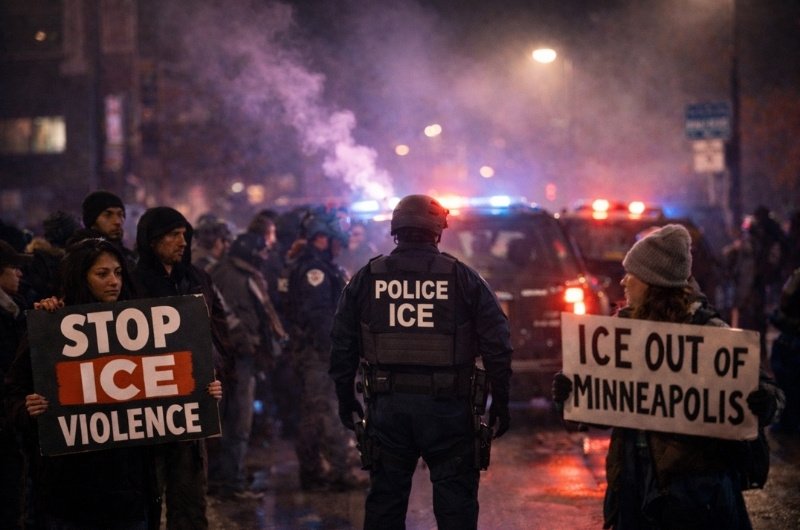
A federal immigration officer shot a Venezuelan man in the leg during an enforcement operation in Minneapolis late Wednesday, intensifying tensions over immigration enforcement tactics and sparking protests across the city. According to federal officials, the incident began with a traffic stop connected to an immigration enforcement effort. Authorities say the man attempted to flee, crashed into a parked vehicle, and ran on foot. During a subsequent confrontation, a physical struggle occurred between the man and the officer. Federal officials allege that two additional individuals joined the altercation, striking the officer with household items. The officer then discharged his weapon, hitting the man in the leg. Both the injured man and the officer were transported to a hospital. Officials say the man’s injuries are not life-threatening, and the officer was treated and released. The two individuals accused of intervening were taken into custody. The shooting has reignited protests in Minneapolis, where community groups and local leaders have expressed concern over the presence and tactics of federal immigration agents operating independently of local law enforcement. Demonstrations have called for greater transparency, accountability, and limits on federal enforcement actions within city neighborhoods. Officials with U.S. Immigration and Customs Enforcement have stated the shooting is under internal review, while city leaders have urged calm as investigations continue. The incident adds to a broader national debate over immigration policy, enforcement authority, and public safety in American cities. ——————– Related: Minnesota Seeks Answers After Fatal ICE Shooting in Minneapolis Vice President Vance Says ICE Agent Has “Absolute Immunity” in Deadly Minneapolis Shooting Senior DOJ Leaders Resign After Refusal to Investigate Minnesota ICE Shooting
Iran Protest Crackdown Nears 2,600 Dead Amid Warnings of Strikes on U.S. Bases

Iran’s internal unrest has reached a grim new milestone as a U.S.-based human rights organization reports that the death toll from nationwide protests is approaching 2,600, marking one of the deadliest crackdowns in the country in years. The escalating violence is now colliding with heightened geopolitical tensions, raising concerns well beyond Iran’s borders. According to the Human Rights Activists News Agency (HRANA), at least 2,571 people have been killed since demonstrations erupted across Iran, with thousands more arrested or injured as security forces intensified their response. The protests, driven by widespread anger over political repression, economic hardship, and social restrictions, have spread to dozens of cities, posing one of the most sustained challenges to Iran’s ruling establishment in years. As the unrest deepens, Iranian officials have issued stark warnings to neighboring countries, saying Tehran could target U.S. military bases in the region if Washington intervenes directly in the crisis. The remarks underscore growing fears that a domestic uprising could spill into a broader regional confrontation, particularly given the heavy U.S. military presence across the Middle East. U.S. officials have condemned Iran’s crackdown and signaled that options remain on the table, while stopping short of confirming any imminent military action. Meanwhile, reports indicate that some American personnel in the region have adjusted their security posture as a precaution, though no large-scale redeployments have been announced. Iranian authorities continue to frame the protests as acts of terrorism orchestrated by foreign powers, including the United States and Israel. Rights groups and international observers, however, describe a rapidly unfolding humanitarian crisis that now sits at the intersection of internal repression and rising global instability — with consequences that could reverberate far beyond Iran’s borders.
Saks Global Files for Bankruptcy Amid Shifting Luxury Shopping Habits
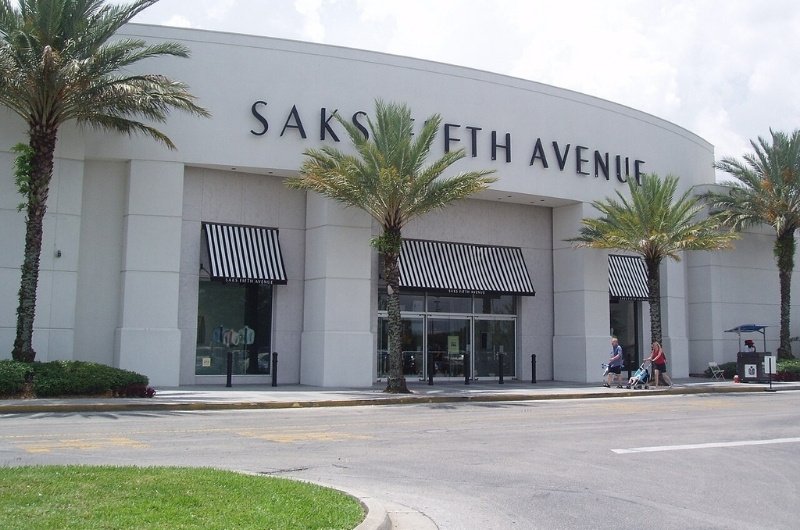
Saks Global filed for Chapter 11 bankruptcy protection on Tuesday, underscoring the growing challenges facing traditional luxury retailers in a post-pandemic economy shaped by higher costs and changing consumer habits. The company, which owns Saks Fifth Avenue, Neiman Marcus, and Bergdorf Goodman, said it plans to keep stores open while restructuring its finances. Customer loyalty programs and normal operations are expected to continue during the bankruptcy process. Saks Global expanded aggressively after the pandemic, using mergers and low-interest borrowing to scale its business. That approach worked briefly during the luxury spending rebound, but rising interest rates and mounting debt quickly narrowed the company’s margin for error. As costs climbed, the balance sheet became increasingly difficult to sustain. At the same time, the company experimented with new distribution strategies. Saks recently launched a storefront on Amazon, signaling an effort to meet luxury shoppers where they already spend time online. While the move reflected changing consumer behavior, it also highlighted how far legacy luxury retailers have been pushed to adapt outside traditional department-store models. Luxury retail itself has been undergoing a broader shift. Shoppers who once relied on department stores are increasingly buying directly from brands, shopping online, or prioritizing experiences over high-end purchases. While some luxury brands have successfully leaned into direct-to-consumer models, department-store-style operators continue to face structural challenges. Industry observers say Saks Global’s restructuring will serve as a key test for whether large luxury retail groups can adapt to today’s environment. The outcome may shape how other legacy retailers approach growth, debt, and long-term sustainability in a sector that no longer operates by pre-pandemic rules.
AI Gives Businesses a Chance to Rethink the Workday in 2026

Editor’s Journal The future of work may be shorter — if businesses are willing to embrace AI and use it wisely. For decades, productivity gains have followed the same frustrating pattern: new tools make work faster, but employees rarely see the benefit. Instead of gaining time, workers are asked to do more. In 2026, artificial intelligence presents an opportunity to finally change that dynamic — not by pushing people harder, but by using technology to make work life genuinely easier. As businesses race to adopt AI, the conversation has focused heavily on efficiency, cost savings, and output. Those goals are understandable. But they are also incomplete. AI is already capable of reducing or eliminating many of the tasks that quietly consume the modern workday — writing, scheduling, data analysis, strategic planning, and more. For a growing number of jobs, the eight-hour workday has become a habit rather than a necessity. This opens the door to a long-overdue question: if AI can significantly reduce the time it takes to complete core responsibilities, why are we still organizing work around rigid, full-day schedules? A four-day workweek, or six-hour workdays at full pay, are no longer radical ideas. They are increasingly practical outcomes of smarter systems doing the repetitive work humans no longer have to spend hours on. There is also a compelling business case for this shift. Burnout has become one of the most expensive hidden costs in the modern workplace, driving turnover, disengagement, and declining creativity. Shorter workweeks and more flexible schedules have already shown improvements in focus, morale, and retention where they’ve been tested. Employees who feel trusted with their time tend to bring more clarity and energy to the hours that truly matter. Not every job can immediately move to a four-day week or six-hour workday. But leadership teams should begin thinking less about hours logged and more about outcomes achieved. AI makes that shift possible by separating productivity from presence — a distinction long overdue in knowledge work. The promise of artificial intelligence was never just about speed. It was about giving people back something they have been steadily losing: time. In 2026, forward-thinking businesses have a chance to prove that progress does not have to come at the expense of well-being. Used wisely, AI could mark the moment work finally begins to fit life — not the other way around.
Senior DOJ Leaders Resign After Refusal to Investigate Minnesota ICE Shooting
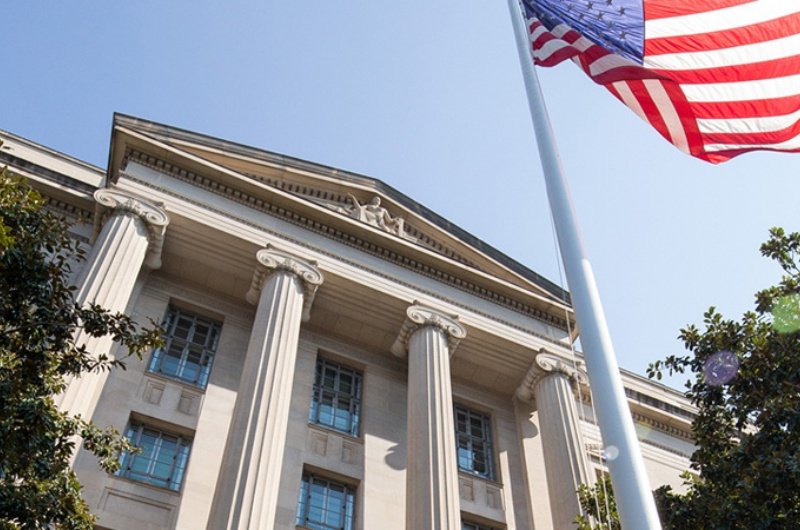
At least four senior leaders within the U.S. Department of Justice have resigned after their division declined to investigate the fatal shooting of a Minnesota woman during a recent U.S. Immigration and Customs Enforcement operation, according to multiple officials familiar with the departures. The resignations came from top officials within the DOJ’s Civil Rights Division, who reportedly concluded they could no longer carry out their mission of impartial public service under the current administration. Internal discussions indicate the officials objected to being sidelined from reviewing the use of force in the Minnesota case, a role the division has traditionally played in incidents involving potential civil rights violations. The shooting occurred during a large-scale ICE enforcement action in Minneapolis, prompting widespread public concern and protests. While the federal government has said the matter is being reviewed by other authorities, the decision not to involve the Civil Rights Division has drawn criticism from current and former Justice Department officials who view the move as a significant departure from long-standing oversight practices. In private conversations, departing officials reportedly expressed alarm over what they described as increasing political influence over enforcement priorities and investigative decisions. The DOJ has not disputed the resignations but has characterized them as unrelated to any single case, a claim questioned by the timing and clustering of the departures. The fallout adds to mounting tension surrounding federal immigration enforcement efforts in Minnesota, where state and local leaders have raised concerns about transparency, accountability, and civil liberties. As protests continue and legal challenges unfold, the resignations mark one of the most visible internal fractures within the Justice Department since the start of the administration. Developing story. Readovia will continue to follow this as more details emerge. ——————– Related: Minnesota Seeks Answers After Fatal ICE Shooting in Minneapolis Vice President Vance Says ICE Agent Has “Absolute Immunity” in Deadly Minneapolis Shooting ICE Officer Shoots Venezuelan Man During Enforcement Action in Minneapolis
Minnesota Sues Trump Administration Over Immigration Operations in Twin Cities

The state of Minnesota, joined by the cities of Minneapolis and St. Paul, has filed a federal lawsuit against the Trump administration, challenging a sweeping immigration enforcement operation underway across the Twin Cities. State officials argue the expanded presence of federal immigration agents exceeds lawful authority and undermines state and local governance. The lawsuit seeks to halt what leaders describe as an aggressive and disruptive operation that has fueled public unrest and raised concerns about civil liberties, due process, and public safety. According to the filing, Minnesota contends the federal action was launched without meaningful coordination with state or municipal authorities and has resulted in heightened fear within immigrant communities. Local leaders say the operation has strained public resources, disrupted daily life, and escalated tensions following a recent fatal shooting involving an immigration officer. The administration has defended the enforcement effort as a lawful exercise of federal power, maintaining that immigration enforcement falls squarely under national jurisdiction. Federal officials argue the operation is necessary to uphold immigration law and ensure public safety, rejecting claims that the actions are politically motivated or unconstitutional. The legal challenge places Minnesota at the center of a growing national conflict over the limits of federal authority, states’ rights, and immigration enforcement tactics. Legal experts note the case could have far-reaching implications for how future federal operations are conducted in states that oppose aggressive immigration crackdowns. As protests continue and court proceedings begin, the lawsuit signals a deepening standoff between Minnesota leaders and the White House—one that is likely to shape immigration policy debates well beyond the Twin Cities. ——————– Related: Minnesota Seeks Answers After Fatal ICE Shooting in Minneapolis Senior DOJ Leaders Resign After Refusal to Investigate Minnesota ICE Shooting Vice President Vance Says ICE Agent Has “Absolute Immunity” in Deadly Minneapolis Shooting
Real Wages Rising as Inflation Remains in Check, White House Says
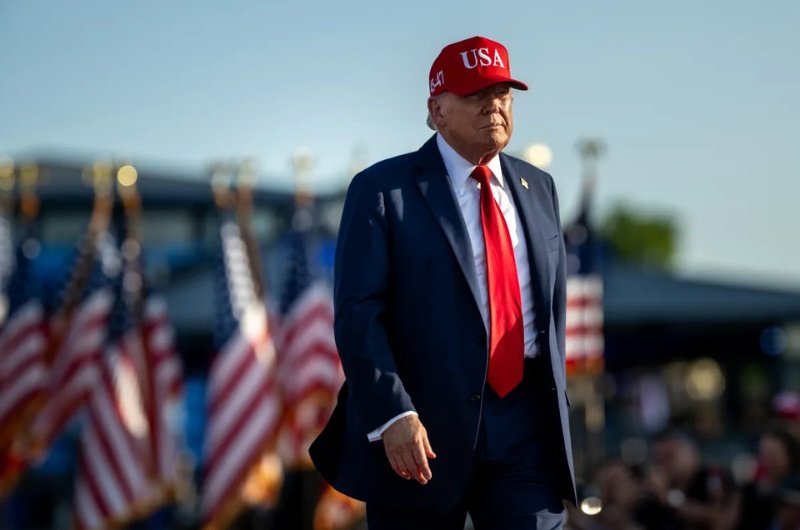
The White House today emphasized that American workers are seeing real wage gains at a time when inflation remains relatively low, painting the latest economic data as a sign of renewed purchasing power for households and blue-collar earners. According to the administration’s economic assessment, inflation has stabilized at levels below those inherited from the prior year, while real private-sector earnings are projected to grow faster than price increases. That dynamic suggests many workers could regain some of the purchasing power lost amid high cost pressures in recent years. The advance in real wages is notable across several sectors of the economy, particularly among goods-producing and construction workers. These gains are being framed as evidence that middle- and working-class Americans are beginning to benefit from broader economic shifts, including changes in pricing dynamics for key goods such as automobiles. Administration officials have tied these developments to a series of fiscal and regulatory actions aimed at easing cost pressures while stimulating private-sector growth. They argue that, with inflation under control, wage growth becomes a more meaningful contributor to household financial health — a contrast to periods when price increases outpaced earnings. At the same time, the broader labor market shows mixed signals. While real earnings are climbing in several industries, overall job growth has been modest and uneven, leaving questions about the durability and inclusiveness of the current recovery. For many Americans, the interplay between stable prices and rising wages could ease budget strains and translate into tangible improvements in day-to-day living costs. However, economists caution that while headline numbers are positive, underlying factors such as labor force participation and sectoral job trends will be key to sustaining broader gains.
Senate Advances War Powers Resolution to Curb Trump’s Authority on Venezuela
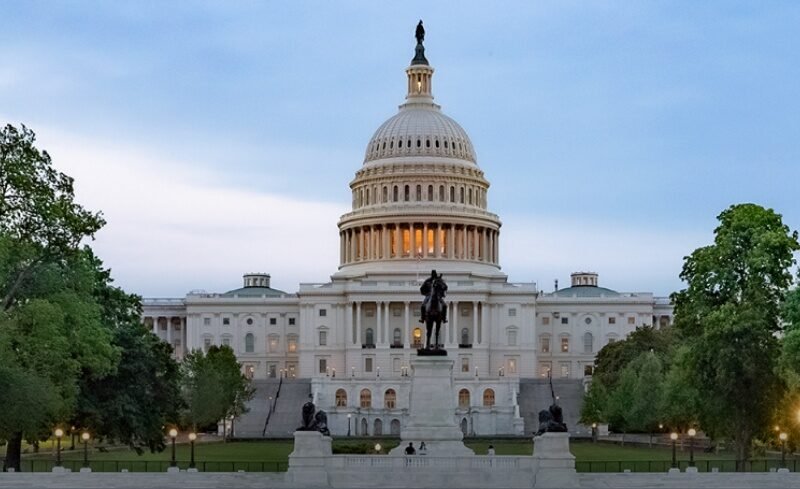
In a rare bipartisan move, the U.S. Senate voted Thursday to advance a war powers resolution aimed at limiting Donald Trump’s ability to take military action against Venezuela without explicit congressional approval. Five Republican senators broke with party leadership to join Democrats in allowing the measure to move forward, signaling growing unease on Capitol Hill over executive authority in matters of war. The resolution would require the president to seek authorization from Congress before engaging U.S. forces in hostilities involving Venezuela, except in cases of imminent threat. Supporters of the measure argue that the Constitution clearly assigns Congress the power to declare war, and that recent actions toward Venezuela risk drawing the United States into a broader conflict without sufficient debate or oversight. They say the vote reflects concern not only about Venezuela specifically, but about preserving the balance of power between the legislative and executive branches. The White House has pushed back forcefully, warning that the resolution could weaken the president’s ability to respond quickly to international threats and undermine U.S. credibility abroad. Administration allies argue that flexibility is essential when dealing with unstable regimes and rapidly evolving security situations. While the resolution faces an uncertain path ahead — including the likelihood of a presidential veto — Thursday’s vote marks a notable moment of bipartisan resistance. It underscores rising tension between Congress and the executive branch as lawmakers reassert their role in shaping U.S. military engagement and foreign policy decisions.
Vice President Vance Says ICE Agent Has “Absolute Immunity” in Deadly Minneapolis Shooting
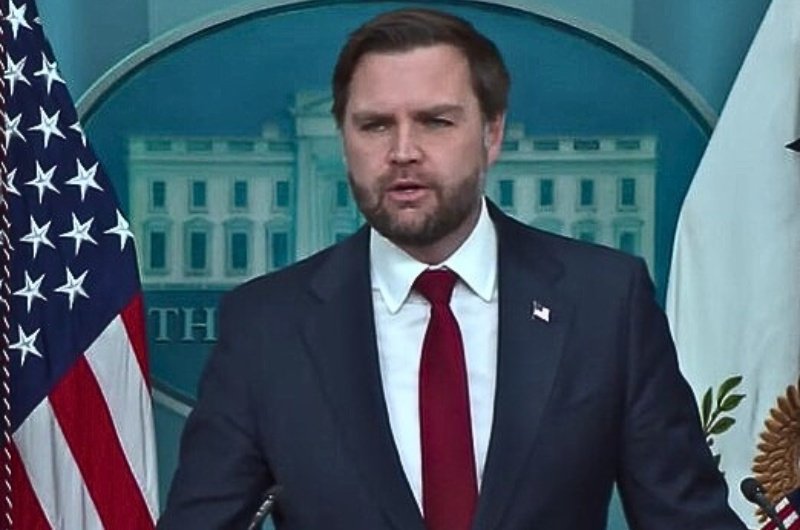
Vice President JD Vance said Thursday that the federal immigration officer involved in a deadly shooting in Minneapolis is protected by what he described as “absolute immunity,” igniting immediate backlash from civil rights groups, legal scholars, and local officials. The shooting occurred during a federal immigration operation in south Minneapolis, where an agent with U.S. Immigration and Customs Enforcement fatally shot a woman after stopping a vehicle. The incident sparked protests across the city, with demonstrators demanding transparency, accountability, and an independent investigation into the agent’s actions. Speaking to reporters, Vance argued that because the officer was acting in an official federal capacity, he is shielded from criminal or civil liability. The vice president’s use of the term “absolute immunity,” however, has drawn scrutiny, as legal experts note that federal officers typically receive qualified protections that depend on the circumstances surrounding the use of force. Tensions escalated further after state officials confirmed that Minnesota authorities were removed from the investigation, leaving the case solely in federal hands. Local leaders have criticized the move, saying it undermines public trust and limits oversight in a case involving a civilian death. The shooting has intensified a broader national debate over the role of federal immigration enforcement in local communities, the limits of executive authority, and whether existing accountability mechanisms are sufficient when federal agents use deadly force. Protests in Minneapolis continued into the evening as officials called for calm while demanding answers. ——————– Related: Minnesota Seeks Answers After Fatal ICE Shooting in Minneapolis
Minnesota Seeks Answers After Fatal ICE Shooting in Minneapolis
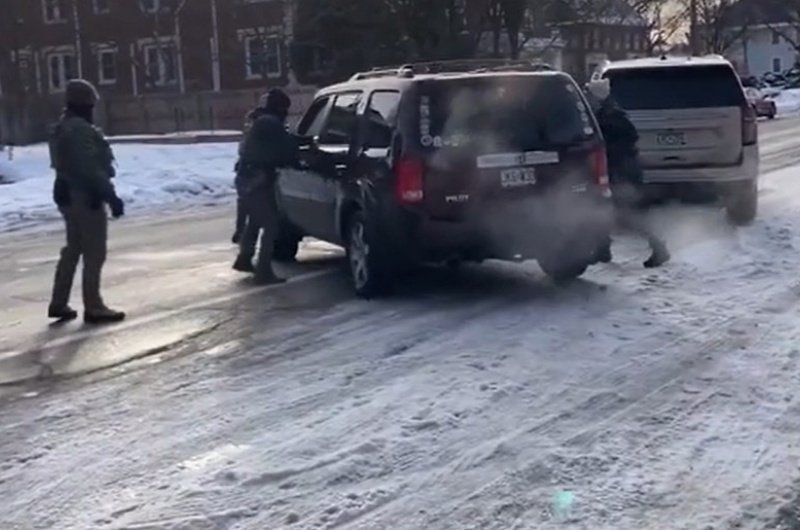
Minneapolis has become the center of national attention after a woman was fatally shot by a federal immigration officer during an enforcement operation, triggering days of protests, political fallout, and growing demands for accountability. The woman, Renee Nicole Good, was killed during a U.S. Immigration and Customs Enforcement action conducted in the city earlier this week. Federal officials say the ICE agent fired in self-defense after Good allegedly attempted to strike officers with her vehicle during the operation. According to the Department of Homeland Security, agents perceived an immediate threat and responded with lethal force. That account has been sharply questioned by local leaders and the community, particularly after video footage circulated online appeared to contradict claims of an imminent danger. The shooting has sparked widespread demonstrations across Minneapolis, with protesters gathering downtown and near government buildings to demand transparency and an independent investigation. Many demonstrators have also called for changes to how federal immigration enforcement is carried out in local communities, arguing that the operation escalated unnecessarily and resulted in the death of a civilian. Tensions between state and federal authorities escalated after Minnesota’s investigative agency disclosed that it has been blocked from taking part in the case, saying the U.S. attorney’s office has asserted control over the investigation. State and local leaders have raised concerns that limiting Minnesota’s role reduces transparency at a moment of intense public scrutiny, emphasizing that any use of deadly force must meet a high threshold and be supported by clear evidence. The incident comes amid a broader federal immigration enforcement push in the Twin Cities region, which had already heightened anxiety in immigrant communities. As protests continue and political pressure mounts, the case is expected to remain under intense scrutiny, with questions lingering over the use of force, federal authority, and the balance between enforcement and public safety.