


Congress Approves $70 Billion Immigration Enforcement Package
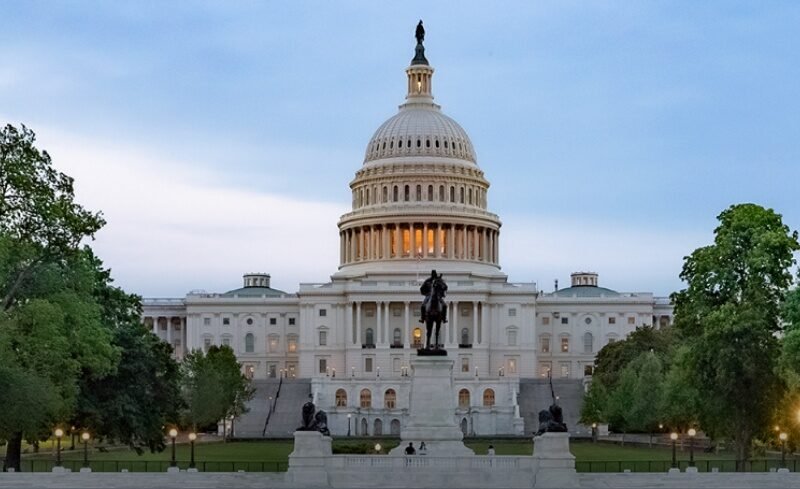
Congress has approved a sweeping immigration enforcement package that would provide nearly $70 billion in funding for border security and federal immigration operations over the next several years, marking one of the largest investments of its kind in recent history. The legislation now heads to President Trump, who is expected to sign the measure into law. Supporters say the funding will strengthen border security, expand enforcement capabilities, and provide long-term operational certainty for federal agencies. Critics, meanwhile, have raised concerns about oversight, detention capacity, and the broader direction of immigration policy. At the center of the package is a significant increase in resources for federal agencies responsible for immigration enforcement and border security. The legislation allocates tens of billions of dollars to Immigration and Customs Enforcement (ICE) and U.S. Border Patrol operations, while also setting aside funding for additional enforcement-related expenses that may arise in the coming years. The measure is designed to fund operations through 2029, reducing the need for repeated congressional battles over immigration enforcement budgets and giving agencies greater flexibility to plan long-term initiatives. What the Funding Covers The package supports a wide range of immigration enforcement activities, including the hiring and training of additional personnel, transportation and logistical operations, equipment purchases, and infrastructure improvements tied to border security efforts. Funding is also expected to support expanded detention capacity, increased deportation and removal operations, upgraded technology systems, and resources intended to improve coordination among federal agencies involved in immigration enforcement. Supporters of the legislation argue that the investment will help address ongoing challenges at the southern border while providing federal agencies with the tools needed to carry out existing immigration laws more effectively. A Major Policy Victory The vote represents a significant legislative win for the Trump administration, which has made immigration enforcement and border security central priorities during the president’s second term. Republican lawmakers largely backed the measure, arguing that stronger enforcement resources are necessary to secure the border and manage growing operational demands. Opponents countered that the legislation focuses heavily on enforcement while doing little to address broader immigration reform issues. The measure advanced through Congress following months of debate and negotiations, reflecting the continued prominence of immigration as one of the nation’s most closely watched policy issues. Looking Ahead Once signed into law, the funding package is expected to shape federal immigration operations for years to come. With billions of dollars now poised to flow into enforcement agencies, attention will likely turn to how the resources are deployed and whether the investment delivers the results supporters have promised. Regardless of where Americans stand on immigration policy, the legislation represents a major federal commitment to immigration enforcement and border security — one that could influence the national conversation well beyond the current administration.
Violent Crime Fell Sharply Across America in 2025, FBI Data Shows

Americans may be living in safer communities than they were just a year ago. New preliminary data released by the FBI shows violent crime across the United States fell an estimated 9.3% in 2025, marking one of the most significant year-over-year declines in decades. The report points to broad reductions across nearly every major category of violent crime, offering encouraging signs for communities, businesses, and local governments nationwide. Among the most notable findings, murders declined an estimated 18.1% compared with the previous year. Robberies fell 18.5%, aggravated assaults dropped 7.2%, and reported rapes decreased 7.6%. Property crime also moved sharply lower, declining an estimated 12.4% overall. The FBI’s early analysis draws from crime data submitted by more than 17,000 law enforcement agencies covering approximately 96% of the U.S. population, providing one of the most comprehensive snapshots available of nationwide crime trends. While public attention often focuses on individual high-profile incidents, the broader national picture suggests many communities experienced measurable improvements in public safety during the past year. The decline could have implications that extend well beyond crime statistics. Safer neighborhoods often contribute to stronger local economies, increased business investment, more active downtown districts, and improved quality of life for residents. Communities experiencing lower crime rates frequently see greater confidence among consumers, visitors, and employers alike. The latest figures also continue a trend that has emerged in many parts of the country since crime rates surged during the pandemic era. Although challenges remain and conditions vary significantly from city to city, the overall direction of the national data points toward continued improvement. Law enforcement leaders, policymakers, and community organizations have offered differing explanations for the decline, ranging from targeted policing strategies and community partnerships to broader social and economic factors. Whatever the causes, the numbers suggest that violent crime moved substantially lower across the United States in 2025. As additional data becomes available in the months ahead, analysts will be watching closely to see whether the trend continues. For now, the FBI’s preliminary report offers a rare piece of positive national news: violent crime, property crime, murders, robberies, and assaults all moved in the same direction — down.
Trump Signs Directive Expanding AI’s Role in National Security
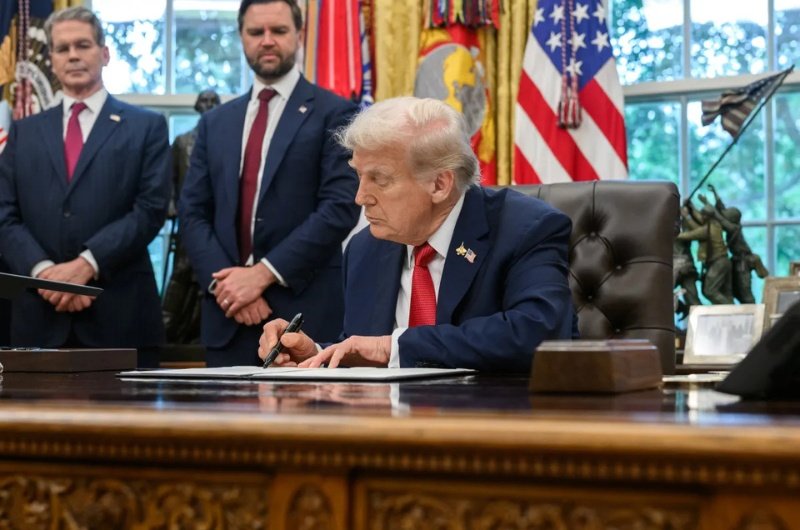
President Donald Trump has signed a new directive aimed at accelerating the adoption of artificial intelligence across the U.S. national security enterprise. The action underscores the growing role AI is expected to play in defense, intelligence, and cybersecurity operations in the years ahead. According to the White House, the directive establishes a framework designed to place cutting-edge AI capabilities into the hands of military and intelligence personnel while maintaining oversight, accountability, and security safeguards. The administration says the initiative is intended to help ensure the United States remains at the forefront of a rapidly evolving technological landscape that is increasingly shaping global competition. Among its key provisions, the directive calls for faster deployment of advanced AI systems across national security agencies, expanded access to leading AI models from multiple vendors, and the development of secure computing infrastructure capable of supporting next-generation AI technologies. The memorandum also creates an AI National Security Strategic Reserve, a network of outside experts who could be called upon to support national security efforts when needed. In addition, the Department of Defense has been directed to update policies related to autonomous systems as artificial intelligence capabilities continue to advance. While artificial intelligence has already transformed industries ranging from healthcare and finance to manufacturing and education, governments around the world are increasingly viewing the technology through a national security lens. AI systems are expected to play growing roles in intelligence analysis, cybersecurity operations, logistics planning, decision support, and other mission-critical functions. As a result, many policymakers now see AI leadership as an important component of both economic competitiveness and national defense. The latest directive reflects a broader shift underway in Washington and other global capitals. Artificial intelligence is no longer being viewed solely as a commercial technology developed by private companies. Increasingly, it is being treated as a strategic asset with implications for military readiness, intelligence gathering, and geopolitical influence. The move comes amid intensifying global competition in artificial intelligence, with the United States, China, and other nations investing heavily in AI research, infrastructure, and talent development. As governments race to harness the technology’s potential, the role of artificial intelligence in national security is expected to expand significantly in the years ahead. The Readovia Lens For years, artificial intelligence was primarily discussed as a business tool capable of boosting productivity, automating tasks, and generating new products and services. That conversation is now evolving. The growing focus on AI within defense and intelligence circles suggests that governments increasingly view the technology as a strategic capability rather than simply a commercial innovation. Much as previous generations competed for leadership in aerospace, computing, and telecommunications, the next chapter of global competition may be shaped by which nations can most effectively develop, deploy, and secure advanced AI systems. The implications could extend far beyond technology companies. Future investments in data centers, cybersecurity, energy infrastructure, advanced semiconductors, and AI talent may become increasingly intertwined with national security priorities. ——————– Related: Pentagon Turns to Google as AI Expands Into National Security
AI Stock Selloff Shakes Wall Street as Investors Reassess the Next Phase of the Boom
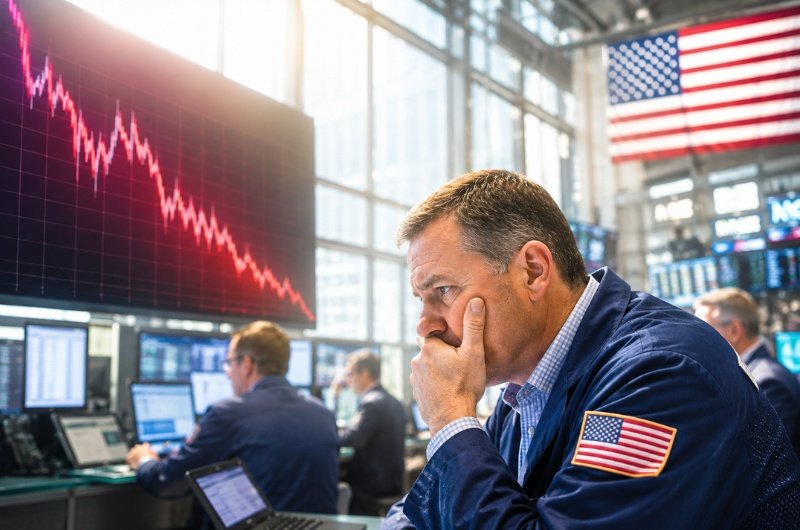
After one of the most powerful rallies in modern market history, investors began taking profits in some of Wall Street’s hottest AI-linked stocks last week, triggering a sharp pullback across the technology sector and reminding traders that even the market’s biggest winners rarely move higher forever. Semiconductor stocks, data center companies, and other AI-related firms led a broad market decline as investors sold shares in some of the market’s strongest performers. Several closely watched companies — including Nvidia, Micron, AMD, and Broadcom — experienced significant declines as traders locked in gains following months of extraordinary growth. Advertisement While economic data and interest-rate expectations may have contributed to market volatility, many investors viewed the pullback as a natural pause following an exceptional rally. Over the past year, numerous AI-related companies delivered returns that far outpaced the broader market, creating conditions where some traders chose to secure profits and reduce risk. Yet despite the sharp decline, many analysts do not view the pullback as the end of the AI boom. Instead, market observers describe the move as a reset following an extraordinary run that pushed many AI-linked companies to historic valuations. Even after the recent selloff, the semiconductor sector remains one of the strongest-performing areas of the market over the past year. Early Monday trading suggested investors may already be returning to some of the sector’s biggest names. Several technology stocks showed signs of stabilization as traders looked for opportunities following Friday’s losses. The Bigger Picture The recent pullback highlights an important reality of investing: markets rarely move in a straight line. Even during powerful long-term trends, periods of profit-taking and investor caution are common. Companies tied to artificial intelligence have attracted enormous amounts of capital over the past two years, helping drive one of the strongest technology rallies in decades. At the same time, investors are becoming increasingly selective about where they place their bets. As the AI economy matures, Wall Street is beginning to place greater emphasis on earnings, execution, and long-term business fundamentals rather than excitement alone. The shift does not necessarily signal the end of the AI era. Instead, it may represent the beginning of a new phase in which investors demand stronger performance and clearer paths to sustained growth. The Readovia Lens The most important takeaway from last week’s selloff may be that the underlying AI story remains largely unchanged. Data centers are still being built. Semiconductor demand remains strong. Technology companies continue investing billions of dollars into artificial intelligence infrastructure, cloud computing, networking systems, and the computing power required to support the next generation of AI applications. What changed last week was not the technology — it was investor behavior. After an historic rally, many investors simply decided to take some money off the table. Whether the recent pullback proves temporary or marks the beginning of a broader correction remains to be seen, but the long-term forces driving AI investment continue to shape the market. For investors, the recent volatility may serve as a reminder that transformative technologies often experience periods of turbulence along the way. The AI revolution may still be moving forward, even if the stocks powering it occasionally take a step back.
America’s Job Market Continues to Defy Expectations

For years, economists, business leaders, and market analysts have warned that a significant economic slowdown could be just around the corner. Yet the U.S. job market continues to tell a different story. A stronger-than-expected employment report released last week showed that American employers are still hiring, adding new jobs even as higher interest rates, inflation concerns, and economic uncertainty continue to dominate headlines. The latest figures suggest that the labor market remains more resilient than many experts anticipated. The report arrives after several years of repeated recession predictions that have largely failed to materialize. While economic growth has cooled from the rapid pace seen following the pandemic recovery, businesses across many sectors continue searching for workers and expanding payrolls. For millions of Americans, the strength of the job market remains one of the clearest signs that the broader economy continues to move forward. Hiring has remained particularly steady in industries such as healthcare, professional services, education, and government, while many employers continue reporting difficulty filling certain positions. Wage growth has also remained relatively healthy, helping many workers keep pace with higher living costs. The continued strength of the labor market has surprised some economists who expected higher interest rates to have a greater impact on hiring and business activity. Instead, employers have largely continued to add workers while consumers have maintained spending levels that support economic growth. The Bigger Picture Employment remains one of the most important indicators of economic health. When people are working, they are more likely to spend money, purchase homes, travel, dine out, and support local businesses. Strong employment can create a ripple effect throughout the economy, benefiting industries far beyond the workplace itself. That does not mean challenges have disappeared. Many households continue to face higher prices for housing, insurance, healthcare, and everyday necessities. Businesses also continue navigating rising costs and an increasingly competitive labor market. Still, the latest employment data suggests that the foundation of the U.S. economy remains remarkably durable. The Readovia Lens One of the most surprising economic stories of the past several years may be how often the American economy has exceeded expectations. Despite persistent warnings of recession, consumers have continued spending, businesses have continued hiring, and workers have continued finding opportunities across a wide range of industries. Economic challenges undoubtedly remain. But the latest jobs report serves as a reminder that headlines do not always tell the full story. While economists debate what comes next, millions of Americans continue doing what they have always done — going to work, building careers, supporting families, and helping drive the world’s largest economy forward.
Arizona Lake Closes After Entire Fish Population Dies in Environmental Crisis

One of Arizona’s best-known fishing destinations has been closed indefinitely after officials reported the near-total loss of fish in the lake, a stunning environmental event that has drawn attention to ongoing water challenges across the American West. San Carlos Lake, located on the San Carlos Apache Reservation in eastern Arizona, was shut down after authorities determined that virtually all fish in the reservoir had died. Officials cited a combination of drought conditions, declining water levels, and water management decisions that dramatically altered conditions within the lake. According to local officials, the fish kill was so extensive that visitors began reporting large numbers of dead fish washing ashore. As decomposition accelerated, concerns grew about water quality, odors, and potential health risks, prompting the lake’s closure to recreational activities. The lake has long been known as a popular destination for anglers and outdoor enthusiasts, attracting visitors from across Arizona and neighboring states. The closure represents a significant blow not only to local recreation but also to the ecosystem that depended on the reservoir. Environmental experts note that fish populations can become especially vulnerable when water levels fall and temperatures rise. Reduced water volumes can lead to lower oxygen levels, making it difficult for fish and other aquatic life to survive. Prolonged drought conditions can further stress ecosystems already struggling to adapt to changing environmental conditions. While San Carlos Lake has experienced fluctuations in water levels throughout its history, officials say the latest event is among the most severe environmental setbacks the reservoir has faced in recent years. Communities throughout the region continue grappling with persistent drought conditions, increasing demand for water, and the complex challenges of managing reservoirs, rivers, and other critical resources. As water supplies fluctuate, ecosystems that depend on stable conditions often become vulnerable to sudden disruptions. Lakes, rivers, and reservoirs serve many purposes beyond recreation. They provide habitat for wildlife, support local economies, and play an important role in maintaining environmental balance. When those systems are placed under stress, the impacts can extend far beyond a single location. Scientists and resource managers have increasingly warned that prolonged drought and extreme weather patterns may create additional challenges for aquatic ecosystems in the years ahead. For now, the empty waters of San Carlos Lake stand as a stark illustration of how quickly environmental stress can reshape an ecosystem that once supported thriving recreational and wildlife activity.
Trump Signs Executive Order Raising Accountability Standards for Federal Executives
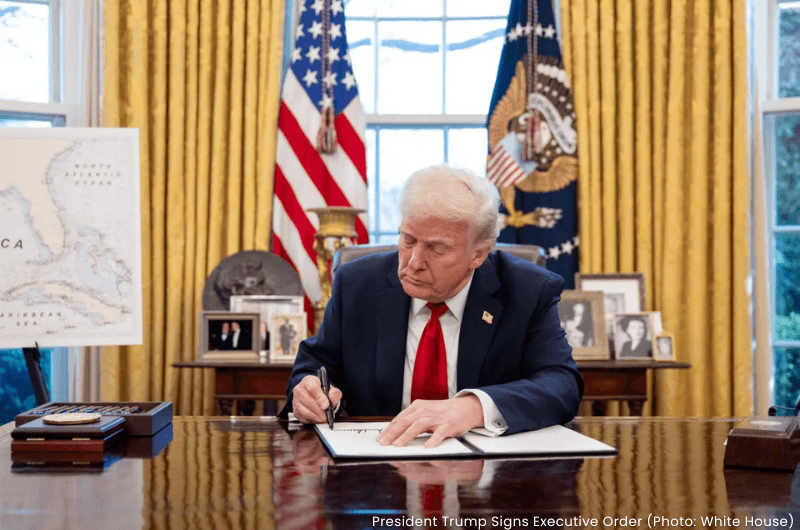
President Donald Trump signed a new executive order Wednesday aimed at increasing accountability among senior federal executives and policy-making officials, marking the latest effort by the administration to reshape how parts of the federal government are managed. According to the White House, the order is designed to ensure that senior government officials remain accountable to elected leadership and faithfully implement the policies chosen by American voters. Administration officials argue that individuals serving in influential policy-making roles should be held to higher performance and accountability standards than traditional career civil-service positions. The order focuses on a relatively small segment of the federal workforce that occupies senior executive and policy-influencing positions across government agencies. The White House says these officials play a significant role in developing, interpreting, and carrying out federal policy, making accountability especially important when administrations change and new priorities are established. Supporters of the move describe it as a long-overdue reform that will make government more responsive to elected leadership. They argue that voters ultimately expect presidents and their administrations to have greater authority over the officials responsible for implementing major policy initiatives. Critics, however, warn that the order could weaken longstanding civil-service protections that were designed to preserve continuity and political independence within the federal government. Opponents argue that career officials provide institutional expertise that extends beyond any single administration and help ensure stability across changing political leadership. The action is likely to reignite a broader debate that has been building in Washington for years: how much authority elected leaders should have over senior government officials who help shape and implement public policy. While supporters see the order as a necessary accountability measure, critics view it as a significant shift in the balance between political leadership and the career federal workforce. The Readovia Lens The larger significance of the order may extend well beyond the positions immediately affected. At its core, the debate centers on who should ultimately drive the direction of the federal government: career officials who provide continuity across administrations, or elected leaders who argue they have a mandate from voters to carry out their agenda. As administrations from both parties continue searching for ways to make government more effective, challenges surrounding accountability, expertise, and executive authority are likely to remain at the center of the national conversation.
UN Warns El Niño Could Return This Year, Raising Risk of Extreme Weather

The United Nations is warning that El Niño conditions could return later this year, increasing the likelihood of extreme weather events around the world, adding fresh uncertainty to an already volatile climate picture. According to the World Meteorological Organization, there is a strong chance that El Niño will develop during the second half of 2026. The climate pattern, which originates in the Pacific Ocean, is known for influencing weather conditions across large portions of the globe, often bringing heavier rainfall to some regions while contributing to drought, heat, and wildfire risk in others. Scientists say a return of El Niño could further elevate global temperatures that have already reached record or near-record levels in recent years. While forecasters are still monitoring the strength of any potential event, officials warn that even a moderate El Niño can have significant effects on agriculture, water supplies, energy demand, and disaster preparedness efforts. In the United States, El Niño’s impacts can vary by region, but the phenomenon has historically been linked to shifts in rainfall patterns, increased flooding risks in some areas, and disruptions to normal weather cycles. Communities vulnerable to drought, severe storms, or extreme heat may be watching forecasts particularly closely in the months ahead. While weather experts caution that it is too early to predict specific local impacts, the warning serves as an early reminder that conditions in the Pacific Ocean can influence weather patterns thousands of miles away. As governments, businesses, and emergency planners prepare for the possibility of a new El Niño cycle, scientists will continue monitoring developments throughout the summer. The Readovia Lens El Niño is often discussed as a climate event, but its effects can extend far beyond weather forecasts. From food prices and energy demand to insurance costs and disaster recovery efforts, major weather patterns can ripple through the broader economy. If El Niño returns later this year, its impact may be felt in places far removed from the Pacific Ocean itself.
Bomb Threat and Hostage Standoff Bring Downtown Bakersfield to a Standstill

A bomb threat and hostage standoff that began Tuesday at a Chase Bank in downtown Bakersfield, California, continued into Wednesday morning after authorities confirmed that at least two hostages had been released during negotiations with the suspect. Officials said two hostages were released during the standoff, but law enforcement continued negotiations overnight as the incident stretched into Wednesday. Authorities have not publicly disclosed how many people may still be inside the building or provided details about the suspect’s demands. The ongoing crisis has effectively brought portions of downtown Bakersfield to a standstill, disrupting businesses, government operations, and normal traffic throughout the area. FBI agents joined local police in responding to the scene as officials urged residents to avoid the downtown district. Events like this highlight the enormous challenges facing law enforcement during hostage situations, where every decision must balance public safety with the goal of bringing people home safely. While two hostages have been released, the situation remains active, and authorities continue working toward a peaceful resolution.
Why the NBA’s 2026 Playoffs Became Must-Watch Television

For years, conventional wisdom suggested that younger audiences no longer watch live television the way previous generations once did. Streaming, social media, podcasts, gaming, and endless digital distractions have transformed how people consume entertainment. Then the NBA Western Conference Finals happened. The seven-game series between the San Antonio Spurs and the Oklahoma City Thunder averaged 10.8 million viewers per game, making it the most-watched conference finals in 24 years. The decisive Game 7, which saw the Spurs eliminate the defending champion Thunder, averaged 15.9 million viewers and peaked at 17.7 million viewers. Advertisement Those numbers are remarkable in any era. They are even more remarkable in 2026. Because when nearly 16 million people tune into a single game in an era of TikTok, Netflix, YouTube, podcasts, and infinite entertainment choices, that’s saying something. The ratings did not happen by accident. The 2026 NBA Playoffs have delivered a steady stream of memorable moments, breakout performances, dramatic finishes, and compelling storylines that have transformed this postseason into one of the league’s most captivating in years. Much of the attention has centered on Victor Wembanyama and the San Antonio Spurs. Widely viewed as one of basketball’s brightest young stars, Wembanyama has continued his rapid rise while helping guide the Spurs through a grueling playoff run that culminated in a Game 7 victory over the defending champion Thunder. But the Spurs are only part of the story. The playoffs have also produced a series of unforgettable moments across both conferences. Fans have witnessed dramatic comebacks, clutch performances, rising stars, and the kind of unpredictability that often defines the most memorable championship runs. Every round seemed to produce another must-see moment, giving fans a reason to keep coming back. The New York Knicks added another chapter of their own. After decades of frustration, the franchise reached the NBA Finals for the first time since 1999, reigniting one of basketball’s most passionate fan bases and giving the league one of its most recognizable brands a long-awaited return to the spotlight. The Knicks advanced to the NBA Finals after sweeping the Philadelphia 76ers in the second round and defeating the Cleveland Cavaliers in the Eastern Conference Finals, completing one of the franchise’s most memorable postseason runs in decades. Perhaps most importantly, the playoffs have felt meaningful. Every series has carried genuine stakes. Every elimination game has mattered. And every round has offered the possibility that something unforgettable might happen. In the Age of Endless Content, the NBA Found a Way to Break Through The success of the 2026 playoffs may signal something larger than basketball. Audiences today have more entertainment choices than any generation in history. Streaming services, social media feeds, podcasts, gaming platforms, and countless digital distractions compete for attention every hour of every day. Yet the NBA managed to cut through the noise. Why? Because people still respond to stories that feel authentic, unscripted, and consequential. The Spurs-Thunder series had all the ingredients. A young superstar. A defending champion. A winner-take-all Game 7. The outcome was uncertain until the very end. The Knicks’ playoff run offered something equally powerful: hope, history, and the possibility of ending a championship drought that has lasted more than a quarter-century. In an era where nearly everything can be watched later, skipped, replayed, or summarized, live sports remain one of the few forms of entertainment that demand attention in the moment. The Finals Have Arrived The timing could not be better for the NBA. Tonight’s Finals opener features the New York Knicks making their first Finals appearance since 1999 against a young Spurs team led by Wembanyama. It is a matchup that blends history and future, tradition and transformation, offering the league a showcase of both an iconic franchise seeking its first championship in decades and a rising superstar who may define the next era of professional basketball. Whether the Finals ultimately match the excitement of the earlier rounds remains to be seen. But one thing is already clear. The NBA has reminded the sports world that when the stakes are real and the story is compelling, millions of people are still willing to stop what they’re doing and watch. The Readovia Lens Technology has changed how we consume content. It has not changed our desire to witness something meaningful unfold in real time. The lesson from the NBA’s remarkable postseason run extends far beyond basketball. In a fragmented media landscape where attention is constantly pulled in a hundred directions, people still gather around moments that matter. The platforms may change. The devices may change. The habits may change. But the human desire to share a story, celebrate a victory, and experience a moment together remains remarkably powerful. The 2026 NBA Playoffs may be remembered not only for who won, but for proving that some experiences are still best enjoyed live.