


Senate Narrowly Rejects Effort to Limit Trump’s Iran War Powers
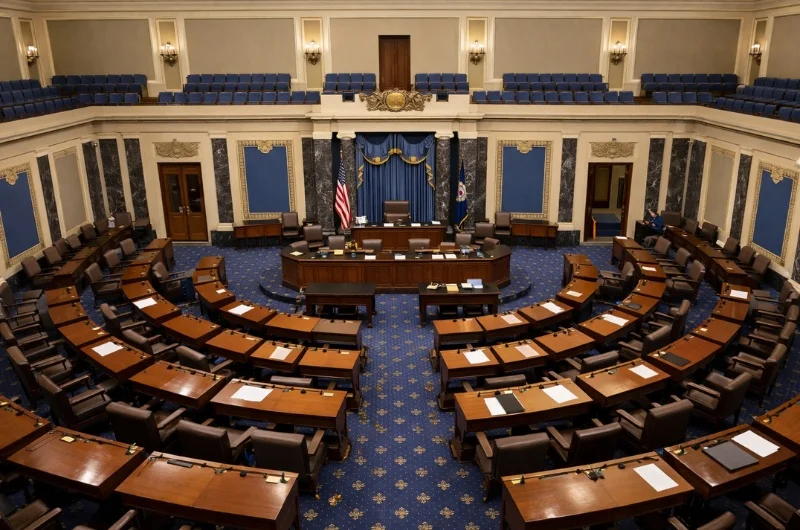
The U.S. Senate narrowly rejected an effort Thursday to limit President Donald Trump’s authority to continue military operations against Iran. The vote leaves the administration’s war powers unchanged despite growing bipartisan concern over the expanding conflict. The proposal sought to require congressional authorization before U.S. military involvement in Iran could continue, reviving a long-running constitutional debate over the balance of power between Congress and the presidency during armed conflicts. Supporters argued lawmakers should play a larger role in decisions that could deepen U.S. involvement overseas, while opponents said the president must retain flexibility to respond quickly to national security threats. Although the resolution failed, the close vote underscored growing unease on Capitol Hill as the conflict has stretched on for months and military costs have climbed. Several Republican senators broke with party leadership to support the measure, highlighting divisions over the administration’s handling of the war. The vote does not alter current U.S. military operations, but it signals that congressional scrutiny of the conflict is likely to intensify if fighting continues. Additional efforts to revisit presidential war powers could emerge as lawmakers debate future military funding and America’s role in the region. The Readovia Lens The Senate’s vote wasn’t just about Iran—it was about who decides when America goes to war. While presidents have long exercised broad military authority, the narrow margin shows Congress remains deeply divided over where executive power should end and legislative oversight should begin. As the conflict evolves, that constitutional debate may become just as consequential as events on the battlefield. ——————– Related: Iran War Spills Across Borders as Strikes Hit Two Iraq Crossings Pentagon Requests Additional $80 Billion to Cover Iran Conflict Costs U.S. Issues Worldwide Security Alert as Iran Conflict Escalates Trump Reinstates Blockade of Iranian Ports, Imposes 20% Strait of Hormuz Security Fee Iran Strikes Back After Latest U.S. Military Attack
Heat Wave Pushes Power Grid Toward Its Limits Across 17 States
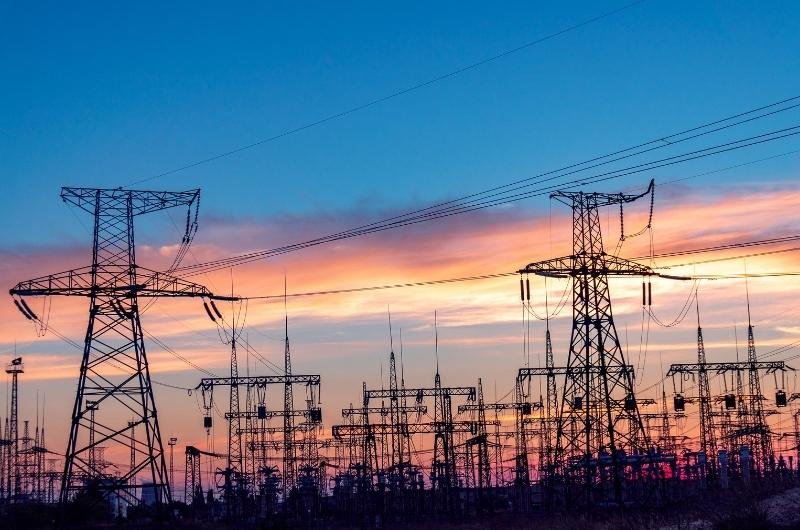
The federal government has taken emergency steps to help protect the nation’s power grid as extreme summer heat drives electricity demand to unusually high levels across parts of the central United States. The temporary order allows grid operators to tap backup power resources in an effort to reduce the risk of blackouts. The emergency action applies to the Southwest Power Pool, a regional transmission organization that manages electricity across all or parts of 17 states. The order gives operators greater flexibility to dispatch reserve generation and other backup resources if demand continues climbing during the heat wave. Officials say the move is intended as a precaution rather than a response to widespread outages. High temperatures increase electricity use as homes and businesses rely more heavily on air conditioning, placing additional strain on generating stations and transmission systems. The emergency order is scheduled to remain in effect through early next week, when forecasters expect temperatures to begin moderating in some affected areas. Until then, grid operators will continue monitoring demand and stand ready to activate additional resources if needed to maintain reliable electric service. The Readovia Lens Extreme weather is becoming a bigger test for America’s electric grid because electricity demand is climbing from multiple directions at once. As air conditioning, data centers, and AI infrastructure consume more power, keeping the lights on increasingly depends on a grid built for a very different era.
The Fed Held Rates Steady Again — But Mortgage Rates Didn’t Get the Memo

The Federal Reserve left its benchmark interest rate unchanged Wednesday for the fifth consecutive meeting. But for anyone shopping for a home, that wasn’t the biggest financial development of the day. Long-term Treasury yields climbed to their highest levels in nearly two decades after the Fed’s announcement, pushing mortgage rates higher—even though the central bank itself never touched its benchmark rate. A Split Decision The Federal Open Market Committee voted 9-3 to keep the federal funds rate in its current range of 3.50% to 3.75%. Three regional Federal Reserve Bank presidents—Cleveland’s Beth Hammack, Minneapolis’s Neel Kashkari, and Dallas’s Lorie Logan—dissented, arguing that inflation, which remains above the Fed’s 2% target, warranted another quarter-point increase. Fed Chair Kevin Warsh described the disagreement as a sign of healthy debate rather than division, emphasizing that policymakers are weighing competing economic signals as they work toward restoring price stability. The committee pointed to an economy that remains resilient. Hiring has generally kept pace with workforce growth, unemployment has remained relatively stable, and productivity has stayed strong, even as ongoing conflict in the Middle East continues to add uncertainty to energy prices and inflation. Why Your Mortgage Rate Moved Anyway Here’s the part that surprises many borrowers: the Fed didn’t raise interest rates, but the bond market reacted as if financial conditions had become tighter. The 30-year Treasury yield climbed above 5.2%, its highest level in nearly two decades, while the benchmark 10-year Treasury yield also moved higher. Stocks sold off following the Fed’s announcement as investors reassessed the outlook for inflation and future interest-rate policy. That distinction matters because fixed mortgage rates are driven primarily by long-term Treasury yields and investor expectations for inflation—not directly by the Fed’s benchmark rate. As bond yields rose, the average 30-year fixed mortgage rate also edged higher, illustrating why mortgage costs don’t always move in lockstep with the Federal Reserve. What This Means for Your Wallet Mortgage shoppers: If you’re buying a home or refinancing, remember that mortgage rates often respond more to movements in the bond market than to the Fed’s headline decision. If you’re comfortable with today’s rate, it may be worth discussing a rate lock with your lender. Credit card and auto loan borrowers: Most variable-rate credit cards and many short-term loans are tied more closely to the Fed’s benchmark rate. Since the Fed left rates unchanged, those borrowing costs are generally unaffected for now. Savers: High-yield savings accounts and certificates of deposit also tend to track the Fed’s policy rate. With rates unchanged, most banks are unlikely to make immediate changes, although future Fed decisions could influence where savings rates go later this year. What Happens Next Financial markets have shifted toward expecting at least one additional interest-rate increase before the end of 2026 if inflation remains stubbornly high. Investors will now focus on upcoming inflation and employment reports, along with Fed Chair Kevin Warsh’s remarks at the Jackson Hole Economic Policy Symposium in late August, for clues about the central bank’s next move. The Readovia Lens The Fed’s headline decision was “no change.” But the bigger story for many Americans was what happened after the announcement. Mortgage rates rose because bond yields climbed—not because the Federal Reserve increased its benchmark rate. It’s a reminder that while the Fed has enormous influence over the economy, your mortgage rate often follows Wall Street’s expectations just as much as Washington’s decisions.
Iran, US and Saudi Arabia Trade Strikes as the Strait of Hormuz Chokes Again

The Middle East war that began in February widened again this week, as the United States, Saudi Arabia, and Iran traded direct strikes across three countries in under 48 hours — and Iran’s grip on the Strait of Hormuz tightened once more. Iran Targets a US Base in Jordan Iran’s Revolutionary Guard said it fired ballistic missiles at the Muwaffaq Salti Air Base and the U.S. military’s Central Command headquarters in Jordan on Wednesday, calling it a response to what it described as aggressive U.S. actions. Jordan’s military said five of the missiles were intercepted and destroyed before reaching their targets. President Trump responded by threatening to hit Iran “hard,” framing the strike as Iran’s attempt to test the U.S. after a brief pause in hostilities. US and Saudi Arabia Strike Back in Iraq Hours earlier, the U.S. military and Saudi Arabian forces had carried out joint strikes against Iran-backed militias in Iraq, in response to earlier attacks on U.S. forces and Saudi oil facilities. The Popular Mobilization Forces, the Iran-aligned umbrella militia group targeted in the strikes, said at least 20 people were killed and 32 others injured. Saudi Arabia’s direct participation marks a shift for a kingdom that had largely avoided being pulled into the conflict. The strikes triggered immediate political fallout in Baghdad. Former Iraqi Prime Minister Mohammed Shia al-Sudani warned against what he called a dangerous overstep of the principle of Islamic brotherhood, while the Iraqi prime minister directed the Foreign Ministry to pursue legal action against both the United States and Saudi Arabia. Oil Markets Feel It Immediately Brent crude, the global benchmark, jumped more than 7% to $90.66 a barrel as the strikes and Iran’s attempted attack on U.S. forces rattled traders. Analysts pointed to both the renewed strikes and Iran’s continued insistence on controlling shipping through the Strait of Hormuz as the driver behind the price jump. The Strait Tightens Again The pressure showed up on the water almost immediately. Iran’s Revolutionary Guard said Thursday that two oil tankers, described as moving with U.S. encouragement, attempted to leave through what Iran considers an unsafe southern route through the Strait — and turned back after one of the vessels caught fire. The Guard reiterated that it has controlled the Strait since the conflict began on February 28, requiring vessels to follow designated routes and pay fees, and that the waterway remains closed over what it calls continued U.S. interference. The Readovia Lens Three fronts, one war. Every time a ceasefire looks close, a strike, a missile, or a tanker resets the clock — and the Strait of Hormuz remains the fastest way for Tehran to make the rest of the world feel it.
Trump Meets Separately With Zelenskyy and Netanyahu at a Pivotal Moment for Both Wars
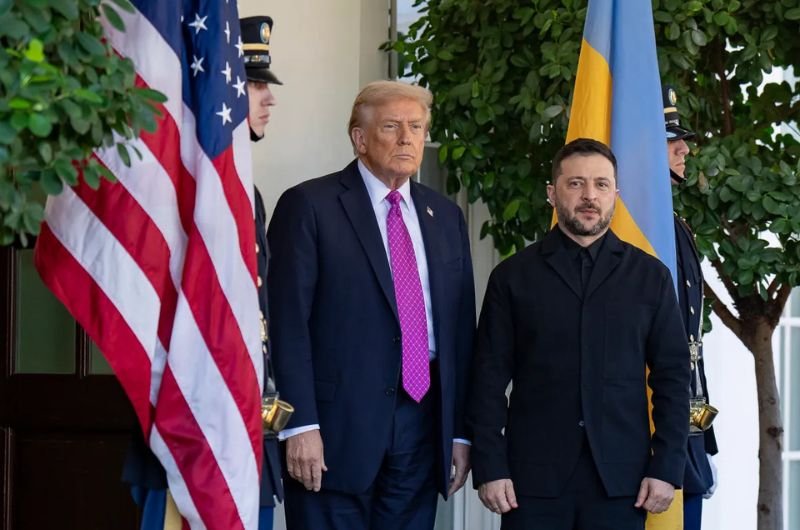
President Donald Trump held separate White House meetings Tuesday with Ukrainian President Volodymyr Zelenskyy and Israeli Prime Minister Benjamin Netanyahu, using a single day to advance two of the administration’s most pressing conflicts: the war in Ukraine and the aftermath of Israel’s joint campaign against Iran. A Ukraine Meeting Focused on Air Defense Zelenskyy’s Oval Office sit-down, his second with Trump this month, centered on expanding Ukraine’s supply of Patriot air defense systems. Zelenskyy said afterward that he and Trump discussed licenses for Patriot interceptor production and other measures, and that both sides agreed the diplomatic process needs to be reinvigorated. The conversation carried added weight given reports that top national security officials have also been weighing how a broader U.S.-Iran escalation could strain the Pentagon’s own stockpiles of air defense interceptors. Trump pushed back on suggestions that American interceptor supplies are running low, telling reporters the U.S. has ample ammunition and blaming the previous administration for depleting stocks sent to Ukraine. Zelenskyy’s visit coincided with a bigger legislative moment: following Senator Lindsey Graham’s funeral, he spent time with senators ahead of a Senate vote on a bipartisan Russia sanctions package that Graham had championed before his death. Senate Minority Leader Chuck Schumer said the vote was meant to show Russian President Vladimir Putin that Ukraine cannot be bullied. Netanyahu’s First In-Person Visit Since the Iran Campaign Netanyahu’s meeting was his first face-to-face with Trump since the two leaders launched their joint military campaign against Iran, and it arrived amid visible strain in the relationship. Trump has reportedly called the Israeli leader “crazy” in recent weeks while also declaring that Israel would not exist without him. Despite the friction, a White House official said the two were expected to cover the war with Iran, progress on Lebanon negotiations, and efforts to expand the Abraham Accords. Sources also said Saudi Arabia’s potential inclusion in the Accords came up directly. The backdrop remains volatile. Iran’s top military command warned this week that its forces would block any vessel transit through the Strait of Hormuz tied to countries backing Trump’s proposal involving Iran’s frozen assets. The Readovia Lens Two allies, two wars, one day at the White House — and both conversations kept circling back to missile defense. Whether that turns into faster Patriot deliveries or just another headline will depend on what the Pentagon can actually spare.
ICE Has Made Over 12,000 Arrests Using Tips From the Agency That Houses Migrant Children
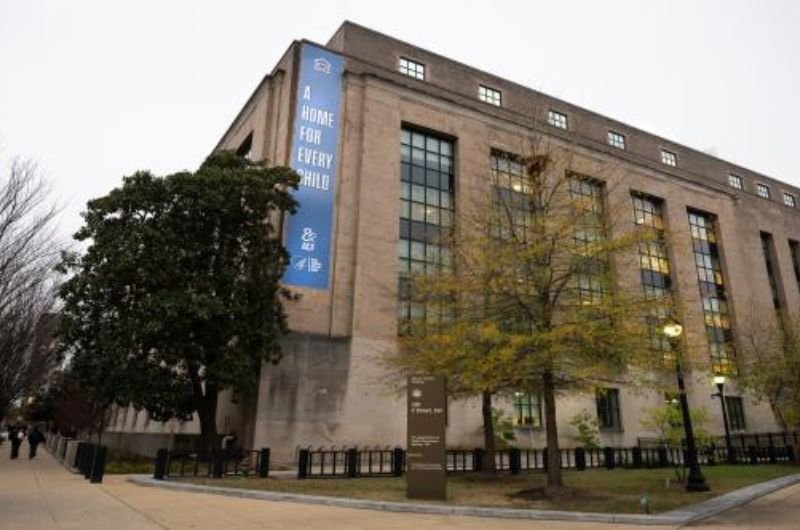
The Office of Refugee Resettlement (ORR), the federal agency responsible for caring for unaccompanied migrant children, has passed more than 460,000 pieces of information to immigration enforcement since the start of 2025 — data that has been linked to over 12,000 arrests, according to an internal-records review published this week. How the Data Moves ORR sits inside the Department of Health and Human Services and exists to care for unaccompanied minors until a vetted sponsor, usually a parent or relative, can take custody. The shared information includes details on the children themselves, the relatives seeking to claim them, and other adults living in those households. Those records aren’t all tied to distinct arrests — they represent leads and entries that ICE has used to pursue enforcement action, with more than 12,000 arrests traced back to the referrals so far. Two Accounts of Why ORR has said it plays no role in apprehending children and directs enforcement questions to the Department of Homeland Security (DHS). DHS, in turn, says the leads are meant to locate children placed with sponsors who were never properly vetted, including some it says have criminal histories — citing roughly a dozen cases involving offenses ranging from fraud to homicide to child pornography possession. Critics describe a different picture. Jen Smyers, who served as ORR’s deputy director during the Biden administration, said the safeguards that once walled sponsor data off from ICE have been completely reversed, calling it the use of a child welfare program for deportation purposes. A Legal Wall Built, Then Eroded A 2008 law was designed to keep unaccompanied children in the least restrictive setting possible and release them quickly, regardless of a sponsor’s immigration status — a protection meant to let families reunite without sponsors fearing their screening information would end up with ICE. That wall first eroded during Trump’s first administration, when ORR began sharing identifying information on children and potential sponsors with ICE, leading to roughly 300 arrests before Congress limited the practice and the Biden administration ended it outright. The Human Toll One mother and her six-year-old daughter were detained by ICE and sent to a family detention center in Texas after she came forward as a sponsor. Attorneys representing similarly affected families describe a recurring pattern of relatives being picked up shortly after coming forward. The Readovia Lens The ORR program exists to reunite children with family. Whether the same data can also serve immigration enforcement without undermining that original purpose is the question now sitting between two federal agencies — and the families caught in between.
FAA Moves to Fast-Track America’s Commercial Space Boom

The Federal Aviation Administration (FAA) is proposing a major overhaul of commercial space licensing that could make it faster and less expensive for companies to launch rockets, return spacecraft to Earth and operate launch or reentry sites. Under the proposal, the transportation secretary could waive requirements from 13 federal laws when they are deemed unnecessary to protect public health, property, national security or U.S. foreign-policy interests. The list includes the National Environmental Policy Act, Endangered Species Act, Clean Air Act, Clean Water Act and National Historic Preservation Act. The FAA says commercial space activity is expanding too rapidly for the current approval system. The agency authorized a record 204 commercial space operations during fiscal 2025 and projects as many as 4,288 operations over the next decade, with annual activity potentially climbing from 214 this year to 507 by 2036. Launch companies have long argued that overlapping federal reviews add time and expense to projects without always improving safety. The FAA expects the proposed changes to significantly shorten licensing timelines and reduce the cost of preparing environmental assessments and more extensive environmental impact statements. The plan could help companies increase launch frequency and move new vehicles and spaceports into operation more quickly. It could also become contentious because the laws identified for possible waivers protect wildlife, waterways, air quality, historic sites, coastal areas and marine environments—many of the resources located near major launch facilities. The proposal is not yet final. It will undergo a 30-day public comment period before the FAA reviews the feedback and determines whether to adopt, revise or withdraw the rule. If approved, the change would mark one of the most significant attempts yet to reshape federal oversight for America’s rapidly growing commercial space industry.
Amazon Plans 5,105-Satellite Network to Connect Phones From Space

Amazon is seeking federal approval to launch a new network of as many as 5,105 satellites designed to connect mobile phones directly from space, sharply expanding the company’s ambitions in the growing satellite communications market. The proposed Amazon Leo Direct-to-Device system would deliver voice calls, text messaging, mobile data and emergency communications in areas beyond the reach of conventional cell towers. Amazon has filed an application with the Federal Communications Commission and plans to begin deploying the low Earth orbit satellites in 2028. The network would operate through partnerships with mobile carriers, allowing compatible phones and other cellular devices to connect by satellite when terrestrial coverage is unavailable. That could extend service across rural communities, remote travel areas and regions where hurricanes, wildfires or other disasters have damaged ground-based networks. Amazon’s plan is closely tied to its pending acquisition of satellite communications company Globalstar. Under a definitive merger agreement announced in April, Amazon would acquire Globalstar’s satellite operations, infrastructure and globally authorized mobile-satellite spectrum licenses, giving the company an established foundation for its direct-to-device expansion. Amazon and Apple have also reached an agreement for Amazon Leo to power satellite services on supported iPhone and Apple Watch models, including emergency messaging and roadside assistance. That agreement signals that Amazon’s planned network is already being positioned for use by mainstream consumer devices. The direct-to-device satellites would operate alongside Amazon Leo’s broader broadband network, which is being developed to connect homes, businesses, government customers and transportation systems through dedicated satellite antennas. The Readovia Lens The Amazon Leo proposal places Amazon in more direct competition with SpaceX’s Starlink and AST SpaceMobile as satellite operators race to make voice, messaging and mobile data available beyond the reach of cell towers. Amazon says the combined network could eventually support hundreds of millions of connected devices worldwide. The plan still requires regulatory approval, and deploying thousands of additional satellites would require an extensive series of launches. But the scale of Amazon’s filing—and the Globalstar and Apple agreements behind it—suggests that direct-to-phone satellite service is rapidly moving from emergency backup technology toward a much larger global communications business. ——————– Related: Could Your Next Cell Signal Come From Space? New Satellites Bring That Future Closer
Four Events That Could Move Markets This Week

Wall Street is heading into one of the most consequential stretches of the summer, with a Federal Reserve decision and earnings from four of the world’s largest technology companies arriving within roughly 30 hours. Together, Microsoft, Meta, Apple and Amazon account for an enormous share of the major stock indexes. Their results could influence not only technology stocks, but also retirement accounts, interest-rate expectations and investor confidence across the broader market. 1. Microsoft and Meta Put AI Spending to the Test Microsoft and Meta report their latest results after the market closes Wednesday, placing the financial returns from artificial intelligence spending at the center of attention. Investors will be watching Microsoft’s cloud business and demand for its AI products, while Meta is likely to face questions about whether its expanding investment in data centers and computing infrastructure is strengthening its advertising business quickly enough to justify the cost. The issue is becoming increasingly important across Wall Street. Technology companies are committing enormous sums to chips, power, data centers and other AI infrastructure, but investors are beginning to demand clearer evidence that those expenditures will generate lasting profits. 2. The Federal Reserve Decides What Comes Next for Interest Rates The Federal Reserve will announce its latest interest-rate decision Wednesday following a two-day policy meeting. The immediate decision matters, but the Fed’s language about inflation and future rate moves may be even more influential. Higher rates can increase borrowing costs for households and businesses while placing pressure on stock valuations, particularly for fast-growing technology companies. Any unexpected shift in the Fed’s outlook could move stocks, Treasury yields and mortgage-rate expectations within minutes. 3. Apple Faces Questions About Its Next Growth Engine Apple reports Thursday as investors assess the strength of iPhone demand, services revenue and the company’s developing artificial intelligence strategy. Because Apple’s products reach deeply into consumer spending, its results can provide clues about whether households are still willing to pay for premium devices and subscriptions. Investors will also look for signs that Apple can turn its enormous installed base of devices into a stronger position in the AI market. 4. Amazon Reveals the Cost of Its Expanding Ambitions Amazon joins Apple in reporting Thursday, with attention likely to center on its cloud business, retail operations and aggressive investment in AI infrastructure. Amazon Web Services remains a major profit engine, but the company is spending heavily to expand computing capacity and support rising demand for artificial intelligence. Investors will want to know whether that demand is growing fast enough to support the scale of the company’s investment. Amazon’s outlook could also provide a broader reading on consumer spending, online commerce and corporate technology budgets. The Readovia Lens By the end of Thursday, investors should have a much clearer picture of whether the economy and the AI boom remain strong enough to support today’s market expectations. With so much of the stock market tied to a small group of powerful companies, even modest surprises could ripple through retirement accounts, index funds and everyday investor portfolios. ——————– Related: Wall Street Braces for Critical Week as Earnings and Inflation Take Center Stage
Thune Pushes Back as Trump Demands Senate Stay Until Voting Bill Passes
Senate Majority Leader John Thune is resisting President Trump’s demand that Republicans cancel their August recess until they pass sweeping election legislation, saying the chamber still lacks a workable path to move the bill forward. Trump called on Thune to keep senators in Washington until they approve the SAVE America Act or eliminate the legislative filibuster blocking it. Republicans hold a 53–47 Senate majority but generally need 60 votes to advance the legislation over Democratic opposition. Thune said he would support postponing the recess if supporters could demonstrate how the bill would pass, but noted that senators have already voted on it several times without producing the necessary support. He has also rejected calls to eliminate the filibuster, while several Republican senators continue pressing leadership to keep the chamber in session. The legislation would require people registering to vote in federal elections to provide documentary proof of U.S. citizenship and require voters to present photo identification at the polls. Supporters describe the provisions as election safeguards, while opponents warn that eligible voters who lack passports, birth certificates or other readily available documents could face new barriers. The Readovia Lens Trump said Monday that his relationship with Thune remains “fine” and that he has not considered replacing him. But the confrontation is widening into a larger test of Republican unity, Senate rules, and the party’s election strategy as lawmakers approach an August recess scheduled to begin August 7.