

SpaceX Is Coming to Wall Street—and Could Become the Largest IPO in History

For years, SpaceX has occupied a unique place in the business world: one of the most influential companies on Earth that ordinary investors could not buy. That may soon change. SpaceX is reportedly preparing for a blockbuster initial public offering that could value the company at approximately $1.75 trillion, potentially making it the largest IPO in Wall Street history. The company is expected to list on Nasdaq under the ticker symbol SPCX as early as June 12, though final timing, valuation, and offering terms could still change before shares begin trading. Advertisement Advertisement The company has transformed the global launch industry, dramatically reducing the cost of sending payloads into space while building a growing portfolio of businesses that includes Starlink, one of the world’s largest satellite internet networks. Together, those operations have helped position SpaceX at the center of several powerful trends, including commercial spaceflight, global communications, national security, and next-generation infrastructure. But the most interesting story may not be SpaceX itself. A company approaching a $1.75 trillion valuation has the potential to influence the broader market long before its first day of trading. Institutional investors, pension funds, mutual funds, and eventually major index funds could face pressure to allocate capital toward one of the world’s largest newly public companies. Billions of dollars could be repositioned across portfolios as investors make room for a company of unprecedented scale. The timing is also notable. Artificial intelligence has dominated business and technology headlines for much of the past two years, capturing investor attention and driving conversations about the future of innovation. A successful SpaceX debut could help elevate another emerging theme: the rapidly expanding space economy. Not everyone agrees on the company’s reported valuation. While SpaceX is reportedly targeting a valuation near $1.75 trillion, some analysts have assigned substantially lower estimates, highlighting the challenge of valuing one of the world’s largest private companies. As with any IPO, the market will ultimately decide what investors are willing to pay. The Readovia Lens For decades, investors have heard that space represented the next great economic frontier. The challenge was finding companies with the scale, technology, and financial resources to turn that vision into reality. If SpaceX reaches public markets at anything close to its reported valuation, investors may finally gain access to a company that has already proven it can build rockets, launch satellites, create communications networks, and generate meaningful revenue at scale. The biggest question is whether investors are willing to pay one of the highest valuations ever attached to a newly public stock. If they are, Wall Street may be entering a new era where the space economy becomes a mainstream investment theme rather than a speculative niche.
Virgin Galactic Stock Soars 36% as Investors Double Down on the Space Economy

——————– UPDATE (June 2, 2026 — 10:15 a.m. ET): Shares of Virgin Galactic fell sharply Tuesday morning after soaring more than 36% during the previous trading session. The stock was down more than 30% in early trading as investors appeared to take profits following one of the company’s strongest single-day rallies in recent years. While the pullback surprised some traders, rapid reversals are not uncommon among highly speculative stocks that experience sudden price spikes. ——————– Last week, Readovia examined the renewed interest in commercial space companies. Just days later, Virgin Galactic is providing one of the clearest examples yet that investor enthusiasm for the sector may be accelerating. Shares of Virgin Galactic surged 36.42% Friday after climbing more than 43% during afternoon trading before pulling back slightly into the close. The momentum carried into Monday morning, with the stock jumping another 26% shortly after the opening bell. Combined, the gains pushed the stock dramatically higher in less than two trading sessions and placed the company firmly back on Wall Street’s radar. The rally comes as investors increasingly focus on what many view as the next frontier of long-term growth. Renewed attention surrounding commercial launch systems, satellite networks, private spaceflight, and next-generation spacecraft has helped bring the space economy back into the spotlight. Excitement surrounding SpaceX’s ongoing Starship development program and broader commercial space ambitions has also contributed to growing interest across the sector. Advertisement For Virgin Galactic, the rally represents a dramatic shift in sentiment. The company has spent years working to advance its commercial space tourism business while navigating delays, funding concerns, and investor skepticism. At times, the stock seemed to spend more time falling back to Earth than reaching for the stars. Today, investors appear increasingly willing to revisit companies positioned to benefit from future growth in the commercial space industry. Whether the latest surge continues remains to be seen. What appears increasingly clear, however, is that investors are paying attention to the commercial space sector again. After years of turbulence, companies tied to the emerging space economy are once again attracting significant interest from Wall Street. The commercial space industry may still be years away from reaching its full potential, but investors do not appear interested in waiting for the launch countdown to hit zero. ——————– Related: Space Stocks Are Surging Again as Investors Chase the Next Big Boom
Space Stocks Are Surging Again as Investors Chase the Next Big Boom

Space-related stocks jumped sharply Wednesday as renewed excitement surrounding SpaceX and the broader commercial space industry fueled another wave of investor momentum across the sector. Much of the enthusiasm followed SpaceX’s latest Starship test activity and growing speculation surrounding a future IPO, which many investors believe could become one of the largest public offerings in modern market history. Even though SpaceX remains privately held, its growing influence is increasingly lifting publicly traded companies connected to satellite communications, launch systems, and orbital infrastructure. Advertisement Among the biggest gainers was AST SpaceMobile, (ASTS) whose stock surged as investors poured back into companies tied to the future of space-based communications networks. The company has attracted growing attention for its satellite-to-cellphone technology and partnerships tied to major telecom providers, positioning it as one of the most closely watched names in the emerging space communications race. The rally reflects a broader shift happening on Wall Street, where investors are increasingly viewing space not simply as exploration, but as a potential long-term infrastructure economy involving internet connectivity, defense systems, satellite data networks, and global communications. In many ways, the sector is beginning to resemble the early excitement surrounding artificial intelligence infrastructure stocks. Still, analysts caution that many space-related companies remain highly volatile and speculative, with sharp swings often driven by headlines, launch milestones, and investor sentiment rather than consistent profitability. But for now, momentum is clearly returning to the sector — and investors appear eager to position themselves early if the commercial space economy continues expanding. The Readovia Lens Wall Street is constantly searching for the next transformational growth story. For years, that narrative centered around artificial intelligence. Now, investors are increasingly beginning to wonder whether the next massive infrastructure race could be unfolding above Earth — powered by satellites, communications networks, defense technology, and the growing commercialization of space.
America’s Electricity Grid Is Stepping Into the AI Economy
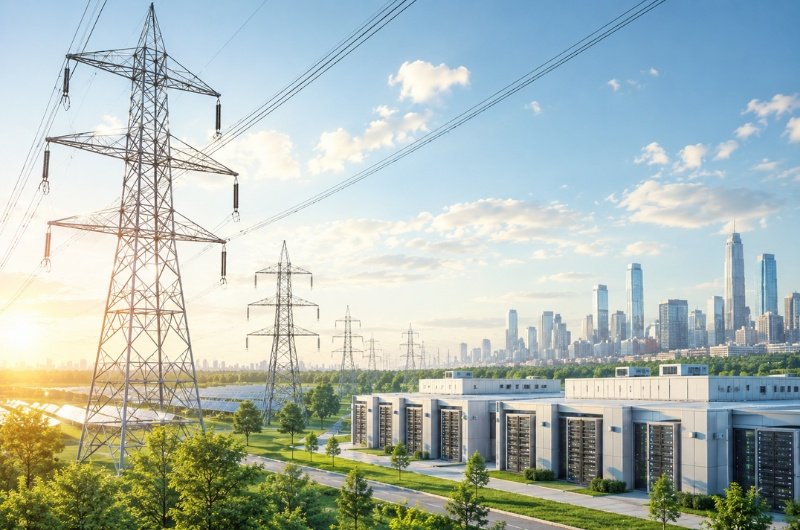
The artificial intelligence boom is beginning to reshape a part of the economy few investors expected: America’s power industry. A massive proposed merger involving two of the nation’s largest energy companies is drawing new attention to how quickly electricity demand is becoming one of the defining forces behind the next phase of the AI economy. The deal would create one of the most powerful utility operators in the United States at a time when artificial intelligence is driving an unprecedented expansion of data centers across the country. Advertisement For years, AI was largely viewed as a software revolution unfolding through chatbots, algorithms, and digital platforms. But behind the scenes, the technology depends on something far more physical: enormous amounts of electricity. Training and operating advanced AI systems now requires sprawling data centers filled with high-performance chips running around the clock. Those facilities consume massive amounts of energy for computing, cooling, and infrastructure support — and demand is rising rapidly as AI adoption accelerates across business, government, healthcare, finance, and consumer technology. The shift is beginning to change how Wall Street views utility companies and energy infrastructure. Investors who once treated power companies as slow-moving defensive plays are increasingly recognizing them as critical participants in the AI economy itself. In some regions, utility providers are already racing to expand grid capacity to support a growing wave of AI-related construction projects. Virginia has emerged as one of the clearest examples of the transformation underway. Already home to one of the world’s largest concentrations of data centers, the state has become a major hub for the infrastructure powering artificial intelligence. Similar expansions are beginning to spread into other parts of the country as technology firms compete to secure long-term energy access for future AI growth. The implications could stretch well beyond the technology sector. As AI infrastructure expands, energy demand is expected to fuel new investment in grid modernization, transmission systems, battery storage, renewable energy, and nuclear power. Some analysts now believe electricity availability itself could become one of the most important competitive factors in the global AI race. At the same time, the rapid growth of AI infrastructure is raising broader economic questions. Building and powering massive data centers requires billions of dollars in long-term investment, and some experts believe the growing strain on regional grids could eventually place upward pressure on electricity costs in heavily concentrated markets. The emerging reality is becoming harder to ignore: artificial intelligence may be digital, but the economy supporting it is deeply physical. For investors, the shift is becoming increasingly difficult to ignore. As artificial intelligence expands beyond software into full-scale infrastructure, utilities, grid operators, energy producers, and data center companies are beginning to attract renewed attention from Wall Street. The AI economy may ultimately create winners far beyond traditional technology firms. The Readovia Lens We’ve said it before – the next phase of the AI boom may depend less on apps and more on infrastructure. Behind every intelligent system is a growing network of power plants, transmission lines, cooling systems, and data centers consuming extraordinary amounts of electricity. In the years ahead, the companies supplying that energy may quietly become some of the most important players in the modern economy.
Nvidia Surges Again as AI Boom Pushes Company Beyond $5.5 Trillion Valuation
Nvidia stock surged Thursday as the company crossed a $5.5 trillion market valuation following a Reuters report that the U.S. Commerce Department approved advanced H200 chip sales to several Chinese technology companies. The surge adds to what has already become one of the most extraordinary runs in modern stock market history. Nvidia has transformed from a semiconductor company primarily known for graphics processing into the central infrastructure provider powering the AI economy, with its chips now driving everything from large language models to massive data centers and enterprise AI systems. Analysts across Wall Street have continued raising price targets as demand for AI computing power accelerates globally. Much of Thursday’s momentum appeared tied to growing optimism surrounding Nvidia’s position in China. Reports indicated that major Chinese technology companies were among those cleared to purchase the H200 chips under U.S. export restrictions. Although shipments have reportedly not yet begun, investors viewed the approvals as another sign that Nvidia could regain access to a critical market that had become increasingly uncertain amid rising U.S.-China tensions. Advertisement The rally also reflects a broader reality now reshaping Wall Street: artificial intelligence is no longer being treated as a speculative technology trend. Increasingly, investors are viewing AI infrastructure as the foundation of the next major era of economic growth, with Nvidia positioned at the center of that transformation. As markets opened Thursday morning, Nvidia shares continued moving higher, extending a run that has helped lift the broader technology sector and fuel record highs across major indexes. For investors who entered the stock earlier in the AI cycle, the gains have been staggering — and for Wall Street, Nvidia has become one of the clearest symbols yet of how aggressively capital is flowing into the future of artificial intelligence.
The AI Rally Hits Pause as Traders Lock In Gains
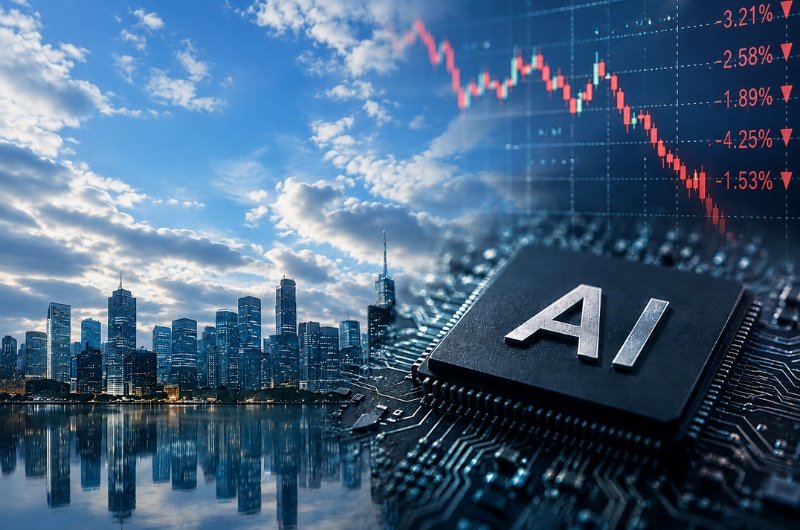
After one of the most explosive runs in modern stock market history, some of Wall Street’s hottest AI-linked stocks began to lose momentum late Wednesday morning as investors locked in profits and reassessed the next phase of the rally. Several artificial intelligence infrastructure companies traded lower Wednesday despite continued long-term optimism surrounding AI demand. The pullback comes after extraordinary gains across the sector over the past year, with some companies tied to semiconductors, storage, networking, and AI compute systems surging hundreds — and in some cases more than 1,500% — as the global AI race accelerated. Advertisement The shift does not necessarily signal fading confidence in artificial intelligence itself. Instead, investors appear to be navigating a more complicated market environment as rising oil prices, inflation concerns, and uncertainty around future interest rates begin weighing on broader sentiment. Many of the companies powering the AI economy remain central to Wall Street’s long-term growth narrative. Demand for advanced chips, memory systems, data-center infrastructure, and high-speed networking equipment continues rising as businesses, governments, and technology firms race to expand their AI capabilities. By Wednesday afternoon, several AI-linked stocks had begun climbing back from earlier losses, signaling that investor confidence in the long-term AI infrastructure boom remains largely intact despite short-term profit-taking. For now, the broader AI story remains intact. Yet Wednesday’s volatility offered a reminder that even the market’s biggest winners are not immune to periods of hesitation — especially after historic gains.
Can AI Trading Bots Really Turn Small Accounts Into Fortunes?

A new kind of digital gold rush is spreading across the internet — and this time, it is powered by artificial intelligence. Across YouTube, TikTok, Discord, Telegram, and X, AI trading bots are being marketed as automated systems capable of turning small trading accounts into surprisingly large profits. Some advertisements claim users can start with just a few hundred dollars and generate thousands within weeks using AI-powered crypto, forex, or stock trading strategies that operate around the clock. The excitement is real. So is the skepticism. The Promise of Automated Wealth Automated trading itself is not new. Hedge funds, banks, and institutional firms have relied on algorithmic trading systems for years. What has changed is accessibility. A growing number of retail investors now have access to AI-assisted trading tools that promise to analyze market conditions, execute trades automatically, and remove human emotion from the decision-making process. Advertisement That combination has fueled enormous curiosity online. But the reality behind the headlines is far more complicated than many viral videos suggest. The Risk Behind the Hype While some traders report legitimate gains using automated systems, many experts warn that the internet is now flooded with exaggerated profit claims, unrealistic expectations, and high-risk trading strategies disguised as “easy passive income.” Regulators, including the Commodity Futures Trading Commission, have also issued warnings about AI-related trading scams and misleading investment promises targeting inexperienced investors. One major issue is leverage. Many of the dramatic “small account to massive fortune” success stories circulating online involve highly leveraged trades tied to crypto markets, forex trading, or extremely volatile assets. Leverage can magnify gains very quickly — but it can also wipe out an account just as fast. In some cases, traders risk losing far more money than they originally deposited. That risk is often downplayed in social media marketing. What Professional Traders Actually Focus On Another reality is that many AI trading bots are not truly autonomous “money machines.” Some rely heavily on pre-programmed technical indicators, while others require constant human oversight, ongoing adjustments, and careful risk management. Experienced algorithmic traders often spend months testing strategies, monitoring market behavior, and refining systems before risking significant capital. The language used by professional traders also sounds very different from the marketing seen online. That contrast says a lot about the current AI trading boom. Instead of promising guaranteed profits, experienced traders tend to focus on: probability risk control consistency drawdowns position sizing and long-term performance Why AI Trading Bots Are Exploding in Popularity The popularity of AI trading bots continues to grow because they tap into something deeper happening in modern finance: the desire for automation, speed, and financial independence in an economy where many people feel financially stretched. For some users, AI-assisted trading tools represent curiosity and experimentation. For others, they represent hope — the possibility that technology might finally create new paths to wealth outside traditional careers or investing strategies. And in fairness, there are legitimate developments happening in the space. For instance, some platforms are building hybrid systems where AI helps traders identify opportunities while humans retain final control over execution decisions. AI is increasingly being used successfully across financial markets for: pattern recognition market analysis sentiment tracking trade execution portfolio optimization and risk modeling The Business Behind the Bots The rapid growth of the industry has created a modern online ecosystem where hype often travels faster than reality. Luxury cars, screenshots of profitable trades, rented mansions, countdown timers, and promises of “financial freedom” now dominate many AI trading advertisements online. In some cases, the people making the most money may not be using the bots themselves — but selling subscriptions, memberships, courses, affiliate links, and access to private trading communities. That does not mean all AI trading systems are scams. It does mean the space requires caution, skepticism, and a clear understanding of risk. A Glimpse Into the Future of Finance The larger story may be about the growing role automation will play in the future of personal finance itself. As artificial intelligence becomes more deeply integrated into investing, trading, and financial decision-making, the line between human strategy and machine-assisted finance will likely continue to blur. The technology is advancing quickly. But so are the marketing tactics surrounding it. For now, one thing is certain: AI trading bots have become one of the hottest — and most controversial — money conversations on the modern internet.
The Trump IRA $1,000 Retirement Match — Explained

The new “Trump IRA” initiative promises a federal retirement match of up to $1,000, but the question most people have is: who actually qualifies, and how much money are we really talking about? The program, known as the Saver’s Match under the SECURE 2.0 Act, is designed primarily for lower- and moderate-income workers. Starting in 2027, eligible individuals who contribute to a qualifying retirement account can receive a government match worth up to half of what they put in, capped at $1,000 per year. Advertisement Here’s what that looks like in real terms. If you contribute $2,000 over the course of the year, you could receive the full $1,000 match. Put in $1,000, and the match would be $500. Even smaller contributions count, which means the program is structured to reward consistency more than large, one-time deposits. One of the biggest changes is how the benefit is delivered. Instead of a tax credit that shows up later, the Saver’s Match is expected to be deposited directly into a retirement account, making it more visible and easier to understand as part of your actual savings. The new Trump IRA platform, tied to an executive order from Donald Trump, is designed to make that process easier by helping workers find and compare retirement accounts based on cost, quality, and investment options. For millions of Americans without access to employer-sponsored plans, that could remove one of the biggest barriers to getting started. For most people, this won’t feel like a windfall. But over time, a consistent annual match can quietly build momentum — and for anyone who hasn’t started saving yet, it creates a reason to begin. ——————– Related: New ‘Trump IRA’ Platform Aims to Connect Workers to $1,000 Federal Retirement Match
The AI Boom Has a Quiet Winner — And Its Stock Is Exploding

You ever notice how the biggest moves in the market don’t always come from the names everyone is talking about? Bandwidth Inc. stock has surged more than 100% in the past month, including a sharp jump in just the last week. It’s the kind of move that makes people stop and ask: what exactly is this company, and what does it do? Bandwidth isn’t building flashy AI tools or consumer apps. Instead, it operates in the background — powering voice, messaging, and communication systems that businesses rely on every day. Think customer service lines, automated calls, verification texts. The infrastructure most people never think about, but interact with constantly. Advertisement That quiet positioning is exactly why the stock is moving. The company recently delivered a strong earnings report, with revenue growth and profitability coming in ahead of expectations. More importantly, it leaned into something investors are paying very close attention to right now: AI. Bandwidth is increasingly tied to the systems enabling AI-driven communication, including voice automation and next-generation contact centers. Partnerships in this space are reinforcing that narrative. Here’s the shift. For the past couple of years, most of the attention has been on AI applications — chatbots, tools, platforms. But behind all of that is a layer of infrastructure that has to handle the actual communication. Voice, messaging, connectivity. It’s a point we’ve been highlighting for months now, and the market appears to be catching up. At the same time, it’s worth keeping perspective. Moves like this don’t happen in a straight line forever. Some of the surge is driven by momentum, renewed attention, and a reset in expectations after the company flew under the radar for a while. That doesn’t invalidate the opportunity — it just means investors are no longer the only ones noticing. The bigger takeaway is less about one stock and more about where the market is looking next. If the first wave of AI winners was about what people can see, the next wave may be about what makes it all work behind the scenes. Even with it’s recent run, Bandwidth’s stock (BAND) is still trading around $40 per share as of today — a level that remains relatively affordable compared to many of the headline AI stocks. For some investors, that adds to the appeal, especially if the shift toward infrastructure continues to gain momentum. I expect it will. ——————– Related: Up 1,000% in One Year: The Stock That’s Turning Heads on Wall Street Why AI Infrastructure Stocks Are Surging
Powerball Drawing Produces Rare Surge of Million-Dollar Winners Across the U.S.

Two winning tickets from Kansas and Indiana split a $143 million Powerball jackpot in the April 29 drawing—but the real surprise was how many other players walked away with life-changing money. The same drawing produced more than 90 high-tier winners across the country, including 62 tickets worth $1 million and 27 tickets worth $2 million with the Power Play option. That’s an unusually large number of big winners for a single drawing, turning what might have been a typical jackpot story into something far more notable. Advertisement When multiple players match all six numbers, the jackpot is split evenly. In this case, the two winning tickets will divide the top prize, while dozens of others came within one number of claiming it all. It’s a reminder of how the game works—and how rare these outcomes still are. The odds of winning any Powerball prize sit at about 1 in 24.87, but the chance of hitting the jackpot remains steep at roughly 1 in 292 million. For most players, it’s about the possibility. For a select group this week, that possibility turned into a seven-figure reality.