


House Democrats Release Epstein Emails Saying Trump ‘Knew About the Girls’

House Democrats on Wednesday released a batch of emails drawn from the Jeffrey Epstein/Ghislaine Maxwell case that they say raise fresh questions about how much Donald Trump knew about Epstein’s trafficking of under-age girls. One 2019 email from Epstein to author Michael Wolff states that Trump “knew about the girls,” prompting renewed scrutiny of Trump’s ties to Epstein and Maxwell. In other correspondence, Epstein wrote that Trump “came to my house many times” and “never got a massage,” while another exchange alleged that Epstein had “given” Trump a 20-year-old girlfriend in 1993 and mentioned photos of “girls in bikinis” in his kitchen. Trump, who has repeatedly denied any knowledge of Epstein’s trafficking, said the document release was a partisan diversion aimed at shifting attention away from the recent government shutdown. Epstein Emails Release by House of Representatives: The release coincides with the swearing-in of a new Democrat whose arrival gives party leaders the numbers needed to force a full House vote next week on releasing all unclassified Epstein-related records. Republicans have criticized the move, saying the documents do not contain definitive proof of wrongdoing by Trump and that victims’ names were redacted in ways that obscure context. Analysts say the timing could be politically calculated—with 2026 mid-term elections ahead and rising public weariness over the Epstein affair playing into broader narratives about elite impunity. The disclosures reinforce the challenge facing prosecutors, legislators and media alike when allegations hang in the balance of proof, redactions and unresolved investigations. The Takeaway The key takeaway is this: the record-release gamble has opened a distinct new front in the long-running Epstein saga, potentially reshaping perceptions of power, privilege and accountability in Washington.
Congress Braces for Critical Vote to End Shutdown

After the longest federal shutdown in U.S. history, the U.S. House of Representatives returns to session today for a pivotal vote that could reopen the government. The Republican-controlled chamber is expected to approve a stopgap funding bill later this afternoon following the Senate’s passage of the same measure. The legislation would fund federal agencies through January 30, restoring critical programs such as food assistance and air-traffic control that have been disrupted since the shutdown began on October 1. House Speaker Mike Johnson, under pressure to act, has urged members to return to Washington and support the plan. The proposal faces resistance from several House Democrats who argue that it fails to extend Affordable Care Act subsidies and other social-spending priorities sidelined in the negotiations. Meanwhile, the measure adds roughly $1.8 trillion in federal spending at a time when the national debt is approaching $38 trillion. Today’s vote will test whether the GOP can maintain unity and whether moderate Democrats will break ranks to end the stalemate. If the measure passes, it will go to President Donald Trump for his signature, bringing relief to hundreds of thousands of furloughed workers and restoring normal government operations. The Readovia Lens The shutdown may soon end, but its shadow will linger. What follows will test how Washington manages accountability after seven weeks of paralysis — whether this moment becomes a turning point for governance or another chapter in political fatigue.
Power, Oil, and Leverage: Inside Equatorial Guinea’s Quiet Real Estate Deals

The $7.5 million payment at the center of Washington’s latest controversy is part of a much larger picture. For two decades, the small Central African nation of Malabo, Equatorial Guinea — rich in oil, gas, and ambition — has drawn the attention of governments and corporations seeking both access and advantage. What unfolds here often says more about global strategy than aid or migration policy alone. Equatorial Guinea’s story is one of contrasts. Fueled by offshore oil wealth, the nation has built gleaming highways, new government complexes, and luxury properties that rise from its volcanic landscape like symbols of prosperity. Yet beyond the manicured developments and modern airports, much of the population still lives in poverty. Transparency monitors have long warned that the country’s rapid development has also created fertile ground for opaque deals that blend business, politics, and personal influence. The United States has maintained a cautious relationship with Malabo, largely defined by energy interests and regional security. But as attention turns to the recent $7.5 million transfer — framed by the Trump administration as part of a migration and enforcement strategy — questions have resurfaced about how far diplomatic cooperation can go before it begins to resemble economic leverage. In recent years, foreign investors from China, Spain, and the Gulf states have entered the same space once dominated by U.S. oil companies. Real estate has emerged as a strategic frontier — where private projects often mirror government priorities and where the line between public asset and political favor can blur. Each new development deal, port expansion, or urban renewal project quietly shifts the balance of influence in one of Africa’s most resource-rich yet politically complex nations. The Readovia Lens The debate now unfolding in Washington reaches beyond one transaction. It reflects a broader test of transparency in the modern age of diplomacy — when aid, investment, and power often travel together. In places like Equatorial Guinea, the true measure of any deal lies not just in the money exchanged but in how clearly the world can see its purpose. ———— More on this topic: The Trump Administration Transferred $7.5 Million to Equatorial Guinea for Deportations— Congress Wants Answers
The Trump Administration Transferred $7.5 Million to Equatorial Guinea for Deportations— Congress Wants Answers

A senior Senate Democrat is pressing for answers after the Trump administration approved a $7.5 million transfer to Equatorial Guinea, one of Africa’s most authoritarian nations. The funds, drawn from a U.S. account reserved for migration and refugee assistance, were reportedly tied to efforts to expand deportation partnerships abroad. Senator Jeanne Shaheen, the top Democrat on the Senate Foreign Relations Committee, called the payment “highly unusual,” noting that it exceeds the total U.S. aid the country has received over the past eight years. In a letter to Secretary of State Marco Rubio, she questioned whether the transfer bypassed oversight safeguards and whether Congress had been properly informed. Administration officials defended the payment as part of a broader strategy to secure third-country agreements for deportations. Critics counter that redirecting humanitarian funds for enforcement purposes risks violating statutory limits and may endanger deportees sent to nations with poor human-rights records. Equatorial Guinea, ruled for decades by President Teodoro Obiang Nguema Mbasogo, faces international scrutiny for corruption and rights abuses. Humanitarian organizations warn that using the country as a relocation partner undermines the credibility of U.S. migration policy. The Readovia Lens The controversy underscores a broader challenge for the Trump administration — ensuring that evolving policy goals align with established procedures. As funding priorities shift and enforcement strategies expand, maintaining clear oversight remains an ongoing test of administrative balance. ———— More on this topic: Power, Oil, and Leverage: Inside Equatorial Guinea’s Quiet Real Estate Deals
Nancy Pelosi Announces She Will Retire from Congress in 2026

Nancy Pelosi, the first woman ever to serve as Speaker of the U.S. House of Representatives, has announced she will retire from Congress at the end of her current term, closing a remarkable 38-year career that shaped the modern Democratic Party and redefined the boundaries of political leadership in Washington. Pelosi, 85, made the announcement Thursday from San Francisco, telling supporters that the time had come to “pass the torch to a new generation.” She will not seek re-election in 2026, formally ending a tenure that spanned multiple presidencies, political upheavals, and some of the most consequential legislative battles in recent memory. A Career That Redefined Power First elected in 1987, Pelosi rose to prominence as a shrewd strategist and tireless negotiator, earning a reputation for her discipline, message control, and mastery of vote-counting. In 2007, she broke a 218-year precedent by becoming the first woman to wield the Speaker’s gavel — a milestone that reverberated far beyond Capitol Hill. She would go on to serve two separate terms as Speaker, leading the House through the 2008 financial crisis, the passage of the Affordable Care Act, two Trump impeachments, and the pandemic-era relief bills that reshaped the federal response to public health emergencies. Her tenure was not without controversy. Critics — including many within her own party — sometimes bristled at her top-down leadership style and iron-fisted approach to floor discipline. But even her detractors concede her unmatched ability to deliver votes when it mattered most. As former President Barack Obama once remarked, “She’s one of the most effective Speakers in history — period.” From Baltimore Roots to National Leadership Born into a prominent Baltimore political family, Pelosi learned the rhythms of power early. Her father, Thomas D’Alesandro Jr., served as mayor and as a Democratic congressman, instilling in her both Catholic faith and political realism. She brought those instincts to Congress, quickly rising through the ranks of Democratic leadership — first as whip, then minority leader, and finally as Speaker. Throughout her career, she framed herself as a consensus-builder grounded in pragmatism but unafraid of confrontation. Her command of caucus politics became legendary: allies often credited her with “counting every vote before walking into the room,” while opponents noted her uncanny sense of timing — knowing precisely when to push, and when to wait. A Symbol of Generational Change Pelosi’s retirement underscores a broader generational shift inside the Democratic Party. In recent years, a younger cohort of lawmakers — many inspired by the policies and activism of the Obama and Biden eras — have pressed for fresh leadership and a more progressive economic vision. With President Biden out of office and new figures emerging in the 2026 cycle, Pelosi’s departure could accelerate the transition toward that next generation of party leadership. Her San Francisco seat, one of the safest Democratic districts in the nation, is expected to draw intense competition among rising California Democrats. Political observers note that Pelosi’s decision is as symbolic as it is strategic. “Her exit marks the end of an era,” said political historian Julian Zelizer. “But it also signals a moment of renewal — she’s clearing space for what comes next.” Legacy and Reflection Pelosi’s impact on national politics extends far beyond her legislative record. She redefined how female leadership is perceived in the halls of power, becoming both a trailblazer and a lightning rod. From her confrontations with Presidents George W. Bush and Donald Trump to her steadfast defense of democratic norms, Pelosi often stood at the center of American political storms — and seemed to thrive there. In her statement, Pelosi thanked her constituents for “nearly four decades of trust,” and reflected on her journey from a new mother advocating for children and working families to Speaker of the House. “I leave Congress with gratitude,” she said, “for the privilege of serving our country and the hope that future generations will serve with the same purpose.” The Takeaway Nancy Pelosi’s retirement marks the conclusion of a political chapter that stretched across six presidencies and reshaped the modern legislative landscape. Her departure is both a historical bookend and a reminder that political power — even at its height — is a relay, not a throne. As Washington braces for another election cycle and another wave of change, the woman who became synonymous with the Democratic establishment steps aside, leaving behind a legacy of mastery, endurance, and history written in real time.
2025 Election Results: The People Have Spoken – America’s Blue Wave Sends a Message Beyond the Ballot Box

Across the country, voters turned out in force and handed Democrats decisive victories — a powerful signal of public sentiment less than a year before the 2026 midterms. From New York to New Jersey, Virginia, and beyond, the night was defined not just by who won, but by what voters demanded: stability, progress, and change that feels tangible. The sweep reflected a broad coalition — urban progressives, suburban moderates, and even swing voters in traditionally conservative pockets — coalescing around candidates who promised to lower costs, defend rights, and deliver competence over chaos. A Mandate for Change — or a Warning for What’s Next? Democrats’ strong showing is already prompting questions: is this a preview of the political mood heading into next year’s midterms? Historically, off-year elections serve as bellwethers. With 364 days until Americans vote again, last night’s results show both parties what’s at stake — and who’s listening. For President Trump, whose shadow loomed over several high-profile races, the results marked a public rebuke of divisive politics. For Democrats, they were proof that ground-level organizing, local engagement, and social media fluency are reshaping the political map. Key Victories Across the States In Virginia, former congresswoman Abigail Spanberger made history as the state’s first female governor, flipping the office from Republican control and reinforcing Democrats’ growing suburban strength. In New Jersey, Mikie Sherrill held the governorship for Democrats, winning decisively and extending the party’s dominance in the Garden State. In New York City, Zohran Mamdani captured the mayor’s office after an energetic, youth-driven campaign that merged digital engagement with grassroots appeal — a victory already being studied as a model for modern political organizing. And in California, voters approved Proposition 50, a redistricting measure that will allow the state legislature — rather than an independent commission — to draw new congressional maps beginning in 2026. The change is expected to strengthen Democratic representation by as many as five seats in the U.S. House. Together, these wins painted a clear picture of voter momentum that cuts across regions, demographics, and political factions — uniting around a demand for results over rhetoric. Voters as the Voice of Accountability What defined Election Night 2025 was participation. From crowded polling stations to record early voting, the message was unmistakable: Americans are paying attention, and they’re using their vote as their voice to demand accountability. For American citizens, this race was not only about politics — it reached further, into the everyday issues that shape people’s lives. From the price of groceries to access to healthcare, from community safety to the right to be heard, voters made it clear that “this is personal”. The Readovia Perspective Yesterday, voters shifted the balance of power and redrew the map of trust. This year’s elections re-affirmed that American democracy remains dynamic — driven by citizens who expect performance, not promises. Last night’s results were a wake-up call for Congress — a reminder that voters expect their elected officials to do their jobs, or face the consequences. With the 2026 midterms just 364 days away, the real question now is how this election’s results will shape next year’s.
A Blueprint for the Next Generation: What Zohran Mamdani’s Victory Reveals

How a grassroots movement, social media mastery, and unapologetic perseverance carried a young progressive to City Hall — and reshaped New York politics in the process. A New Kind of Campaign Zohran Mamdani’s path to the New York City mayor’s office wasn’t paved with establishment backing or old-school political machinery. At 34, the former state assemblyman built a following that looked less like a campaign and more like a cultural movement. His rallies were live-streamed, his social content was strategic, and his message was unmistakable: that New York’s next era of leadership should look and sound like its people. He cultivated energy across boroughs through community meet-ups, neighborhood drives, and social-media organizing that reached younger and first-time voters. What traditional candidates viewed as distractions — TikTok, grassroots parties, community DJ events — Mamdani used as voter outreach. From Assembly to City Hall Born to Ugandan-Indian parents and raised in Queens, Mamdani entered politics as a housing-rights advocate and quickly earned recognition for his activism. His tenure in the New York State Assembly marked him as a sharp, articulate voice for working-class New Yorkers. When he announced his mayoral bid against former governor Andrew Cuomo, few believed he could win. Even President Trump reportedly pressured party leaders to push him out of the race — a move that only galvanized his base. Mamdani’s persistence became a symbol of generational defiance against establishment politics. The Digital Blueprint Mamdani’s campaign functioned like a start-up — agile, data-driven, and community-sourced. His team used analytics to identify under-represented precincts and micro-target them with localized messaging. His live Q&A streams routinely drew tens of thousands of viewers, translating online momentum into physical turnout. He turned nightlife into networking, appearing at community clubs and cultural spaces to meet voters where they were. What began as a niche strategy evolved into a viral playbook for modern campaigning — one that blended digital authenticity with on-the-ground connection. A Symbol Beyond New York For Democrats nationally, Mamdani’s win is more than a mayoral victory — it’s proof that charisma, relatability, and cultural fluency can mobilize the next generation of voters. His rise reflects a shift in how political power is built: less through money and legacy, and more through trust and accessibility. He now stands as one of the youngest mayors in New York City’s history, embodying a new progressive wave that favors empathy over elitism, connection over calculation. The Takeaway Zohran Mamdani has rewritten the rules of political engagement. His victory revealed that political influence today is earned in conversations, not corridors. As parties across the nation study his campaign, the question is whether others can replicate his authenticity.
Trump Defends ICE Raids, Says They ‘Haven’t Gone Far Enough’

On Friday, President Trump sat down with Norah O’Donnell for a primetime 60 Minutes interview that quickly drew national attention. The wide-ranging conversation covered immigration enforcement, the government shutdown, and foreign affairs — but it was Trump’s remarks about the use of force in recent ICE raids that became the most talked-about moment. According to 60 Minutes, the interview took place exactly one year to the day since Trump sued Paramount, alleging that 60 Minutes had deceptively edited an interview with his former opponent, Kamala Harris. Paramount settled the lawsuit, though the agreement did not include an apology or any admission of wrongdoing. During the interview, Trump defended the recent series of aggressive Immigration and Customs Enforcement (ICE) operations, saying the raids “haven’t gone far enough.” His comments came after O’Donnell cited viral videos showing ICE agents tackling a young mother, deploying tear gas in a Chicago neighborhood, and smashing car windows during arrests. When asked whether those tactics had gone too far, Trump replied, “No, I think they haven’t gone far enough because we’ve been held back by the liberal judges that were put in by Biden and by Obama.” Pressed again on whether he approved of the methods seen in those videos, he said, “Yeah, because you have to get the people out.” The remarks quickly drew sharp reactions online, with immigrant-rights advocates condemning the statement as an endorsement of excessive force, while supporters argued it reflected a tougher stance on border enforcement long promised by his administration. Legal experts say the President’s comments could deepen tension between the executive branch and the judiciary, which has already issued multiple rulings limiting federal enforcement actions. As footage of the raids continues circulating nationwide, Trump’s defense underscores the administration’s determination to escalate immigration operations — even at the risk of renewed constitutional and moral debate.
Federal Judge Blocks Trump Administration from Proceeding with Shutdown Layoffs

A federal judge has indefinitely blocked the Trump administration from carrying out planned layoffs of federal employees during the ongoing government shutdown, delivering another major setback to the administration’s approach to the crisis. The ruling, issued late Thursday by U.S. District Judge Susan Illston in California, stops the administration from executing or issuing new “reduction in force” notices — effectively freezing the layoff process while the shutdown continues. The decision came in response to lawsuits from federal employee unions arguing that the White House was using the shutdown to sidestep labor protections and reorganize agencies without congressional approval. Judge Illston first intervened on October 15, issuing a temporary order to halt the administration’s planned layoffs while the court reviewed the case. Nearly two weeks later, on October 28, she expanded that order into a preliminary injunction, indefinitely barring the White House from carrying out permanent terminations or issuing new layoff notices while the broader lawsuit moves forward. The back-to-back rulings ensure that no federal employee can be fired under the administration’s shutdown plan until the courts make a final determination. Judge Illston said the government could not treat a lapse in funding as permission to rewrite the law. In her words, the administration had acted as if “the laws don’t apply anymore” and that it could reshape the government at will — a view she firmly rejected. A Major Restraint on Executive Power The injunction applies across key federal departments and agencies that were preparing to furlough or lay off employees amid the funding freeze. It also halts layoffs already in progress, preventing what could have been one of the largest coordinated reductions in the federal workforce in decades. The decision reinforces a simple principle: even in a shutdown, the executive branch must follow established laws and due-process protections for government workers. Union Challenge Sparks Broader Legal Showdown Labor unions had already taken the administration to court before the shutdown began, warning that its plan to replace temporary furloughs with permanent terminations was both unprecedented and illegal. Under standard practice, furloughed employees are later reinstated with back pay once federal funding resumes. But the administration’s proposal sought to eliminate that safety net entirely — a move unions argued would amount to mass firing without due process. Attorneys representing federal workers said the effort was designed to bypass Congress and reshape the civil service through the back door. By preemptively suing, they positioned Friday’s ruling as part of a larger fight over worker protections, executive overreach, and the future of the federal workforce itself. Relief for Thousands of Workers For tens of thousands of federal employees facing uncertainty, the ruling offers a temporary reprieve. Many workers have now gone more than a month without pay, while agencies have struggled to maintain basic operations. By barring the layoffs, the court has given agencies time — and Congress additional pressure — to resolve the funding stalemate. “This restores a sense of order in a time of chaos,” said one federal workers’ representative following the ruling. The Takeaway The injunction is the latest in a growing series of legal challenges constraining the Trump administration’s shutdown strategy. Coming just hours after federal courts ordered the continuation of SNAP food benefits, it highlights a deepening pattern of judicial intervention as the shutdown drags into its 31st day. While the order prevents mass terminations for now, it does not solve the broader problem. Without a budget deal, the government remains paralyzed — and workers remain in limbo, waiting for Washington to act.
Trump Urges End to Filibuster as Shutdown Standoff Threatens Food Aid and Public Trust
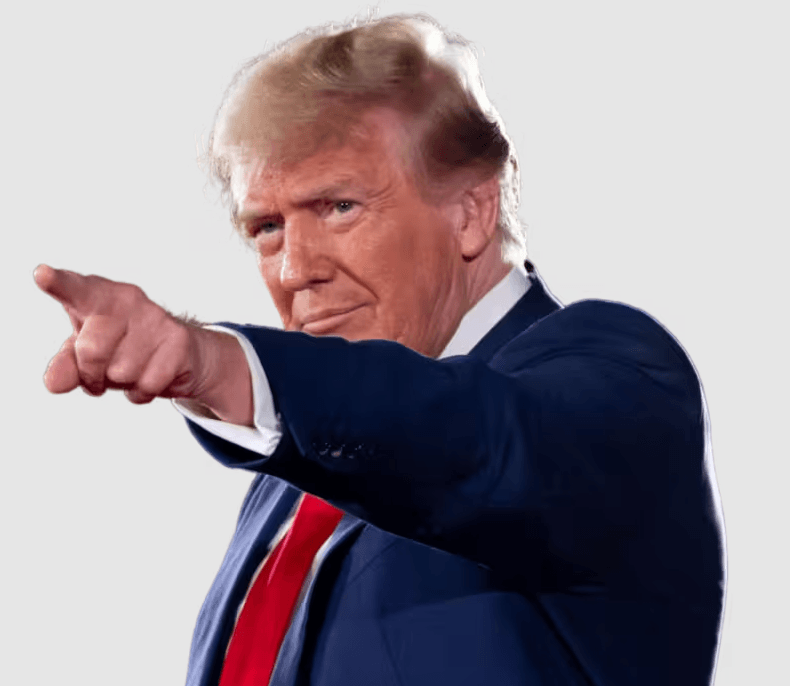
As the federal shutdown drags into its second month, President Trump is pressing Republicans to eliminate the Senate filibuster — while millions risk losing access to food assistance. His push aims to give Republicans a path to end the impasse without Democratic votes, but critics warn it would dissolve one of the few remaining checks on majority rule. The shutdown’s toll is mounting. Federal workers remain without pay, and states are preparing for widespread disruptions to the Supplemental Nutrition Assistance Program (SNAP). Nearly 42 million Americans could see benefits lapse after November 1, dealing a blow to households already strained by higher prices and rising debt. The Senate, meanwhile, narrowly voted to reject the administration’s latest round of global tariffs — an unusual bipartisan rebuke that underscores deep unease over the White House’s trade strategy. Political and Economic Undercurrents Trump’s demand to remove the filibuster highlights the broader erosion of congressional norms that once required compromise. What was once viewed as a stabilizing rule has now become the next partisan battleground — and its elimination could accelerate future policy swings between administrations. Economically, the risks are tangible. SNAP benefits support billions in monthly grocery purchases; without them, the ripple effects would hit food suppliers, retailers, and local economies alike. Combined with the market anxiety surrounding trade volatility and stalled federal operations, the broader cost of gridlock is beginning to show. The Bigger Picture The standoff has evolved from a policy dispute into a test of governance itself. Calls to abandon the filibuster reveal how polarized Washington has become — and how little room remains for negotiation. For everyday Americans, the consequences are already concrete: missed paychecks, suspended benefits, and deepening uncertainty about whether their government can still function for them.