


U.S. Military Strikes Three Suspected Drug Boats in Eastern Pacific, Killing Eight

The U.S. military has carried out targeted strikes on three vessels in the eastern Pacific Ocean linked to narcotics trafficking, killing eight people on board, according to defense officials. The operation marks the latest escalation in a campaign aimed at disrupting maritime smuggling routes used by transnational drug networks. According to U.S. military officials, the operation was not a seizure mission but a targeted military action. On December 15, Joint Task Force Southern Spear carried out “lethal kinetic strikes” against three vessels operated by designated terrorist organizations along known narco-trafficking routes in the Eastern Pacific. Intelligence officials said the ships were actively engaged in narcotics trafficking, and all three vessels were destroyed during the operation. Eight suspected narco-terrorists were killed across the three vessels. The Pentagon said it has not released additional operational details publicly due to the sensitive nature of the intelligence involved. The operation is part of a broader strategy that has intensified since early fall, as the administration expands the role of the U.S. military in combating the flow of illicit narcotics into the United States. Officials have framed the campaign as a necessary response to the fentanyl crisis, increasingly characterizing major drug trafficking organizations as national security threats rather than purely criminal enterprises. That framing has drawn growing scrutiny from lawmakers and legal experts, who are questioning the legal basis for using military force in operations traditionally handled through law enforcement and interdiction. Concerns have centered on whether such strikes comply with international humanitarian law, particularly when conducted far from declared combat zones and against individuals not formally designated as combatants. Pentagon leaders and senior administration officials are expected to brief members of Congress in the coming days, addressing questions about rules of engagement, oversight, and the scope of authority underpinning the campaign. Lawmakers from both parties have signaled a desire for clearer boundaries as the operations expand in frequency and geographic reach. While officials argue the strikes are weakening smuggling networks, the campaign has raised broader questions about precedent and long-term consequences. As military force becomes a more prominent tool in the fight against drug trafficking, the debate is shifting beyond tactical success to whether the approach reshapes U.S. policy in ways that could carry lasting legal and geopolitical implications.
Supreme Court Weighs Case That Could Redefine Presidential Power
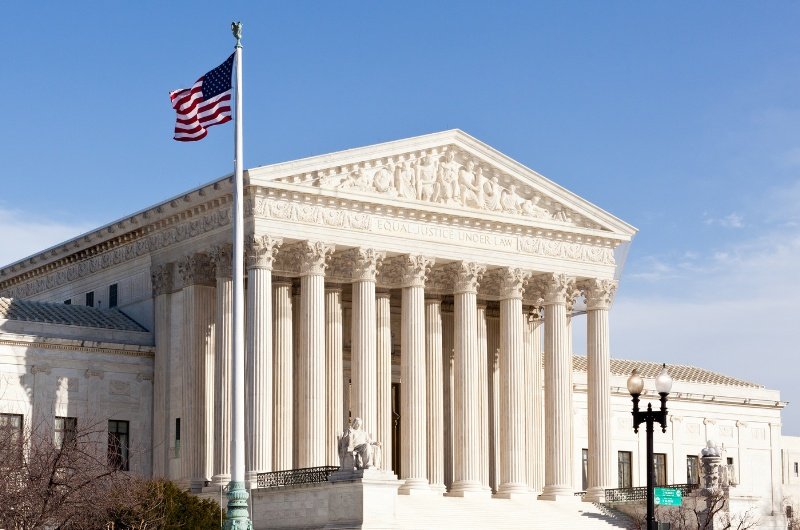
The U.S. Supreme Court is reviewing a major case that could reshape how much authority future presidents have. The case, Trump v. Slaughter, was argued on Monday, December 8, and has drawn national attention as the Court considers how far federal agencies can go when carrying out presidential directives. The dispute began when several states and private groups challenged agency actions they say stretched beyond what the law allows. They argue that presidents have leaned too heavily on executive agencies to push policies without clear approval from Congress. Supporters of the current system say presidents need flexibility, especially during emergencies when the government must act quickly. They warned that tightening agency powers too much could slow the country’s ability to respond to crises ranging from natural disasters to national-security threats. During Monday’s arguments, the justices questioned both sides on how a ruling might affect future administrations. While the Court has recently shown interest in narrowing agency authority, the tone of the questioning offered no clear indication of the final outcome. A decision is expected sometime next year. Legal experts say the ruling could have a long-lasting impact on how presidents govern and how federal agencies carry out national policy in the years ahead.
President Trump Unveils $1 Million “Gold Card” Visa Program
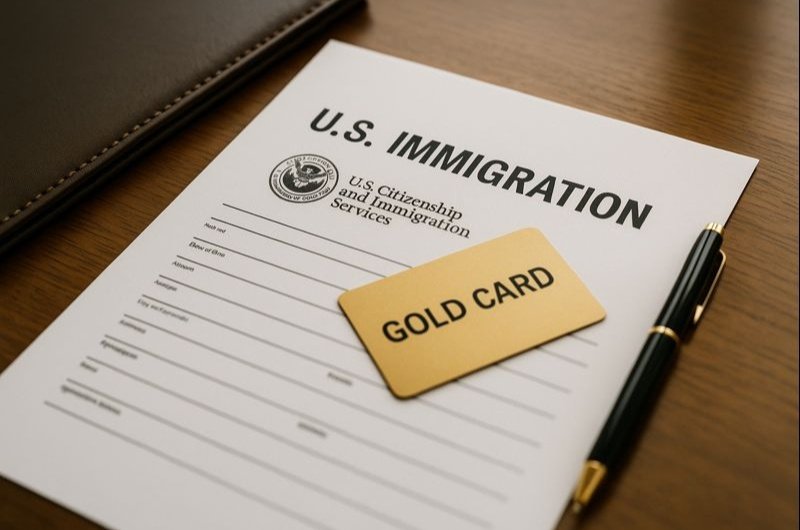
President Donald Trump’s administration has launched a new immigration pathway designed to fast-track U.S. residency for wealthy foreign applicants willing to make a seven-figure financial contribution. The initiative, known as the Gold Card, went live this week through a dedicated federal website where applicants can begin the process. Under the program, individuals seeking the Gold Card must first submit a non-refundable processing fee and undergo a background check. Once cleared, they can obtain the visa by making a $1 million contribution. A corporate variant allows companies to secure cards for key employees at a higher price per applicant. Officials describe the initiative as a strategy to bring capital and high-value talent into the U.S. economy. Administration leaders say early interest has been strong, suggesting the program could generate significant revenue. They argue that the Gold Card will help the United States compete for global investors and entrepreneurs, especially at a time when economic growth and innovation remain central policy priorities. Critics, however, warn that the new pathway effectively creates an immigration track available only to the wealthy, with some legal analysts noting that the structure may face judicial scrutiny. Questions have also been raised about whether executive action alone is sufficient to establish a new visa classification without additional authority from Congress. The Gold Card bears similarities to the long-standing EB-5 investor program but removes many of its job-creation requirements, shifting the focus toward direct financial contributions. As the rollout progresses, the program is expected to spark intense debate over fairness, legality, and the future of U.S. immigration policy.
Homeland Security to Beef Up Deportation Flights with Purchase of Boeing 737 Fleet

The U.S. Department of Homeland Security (DHS) plans to spend nearly $140 million to purchase a fleet of Boeing 737 aircraft to be used for deportation operations, according to officials familiar with the matter. The aircraft would be owned and operated by the federal government, marking a shift from the current practice of relying heavily on private charter companies for removal flights. The move is intended to expand capacity and increase government control over deportation logistics. Records reviewed show the planes would primarily support Immigration and Customs Enforcement operations, allowing for more frequent and longer-distance removals, including international deportation flights. Officials cited operational efficiency and cost predictability as key reasons for the purchase. The plan comes as the administration ramps up immigration enforcement and seeks to streamline deportation procedures amid political pressure over border security and immigration policy. Civil liberties groups have previously urged greater transparency around deportation practices, particularly regarding oversight and conditions during transport. DHS has not announced a timeline for delivery of the aircraft or detailed how the new fleet would integrate with existing transportation contracts. Congressional scrutiny of the purchase is expected as lawmakers review funding priorities and oversight measures.
The Strategy Behind the Media Bias Portal: Why the White House Is Formalizing Its Fight With the Press
When the White House quietly unveiled its new Media Bias Portal, the first wave of attention focused on the surface-level function: a publicly accessible list of news stories the administration believes are biased, misleading, or deliberately false. But the creation of a searchable, expanding database of alleged media offenses signals something larger. The administration has moved beyond rhetorical criticism of the press and formalized a system for tracking, labeling, and publicly calling out journalists and outlets by name. The structure of the portal is intentionally direct. Each flagged article includes a “claim,” a category such as misrepresentation or omission, and an administration-issued “truth” explanation. Weekly spotlights, like “Media Offender of the Week,” place specific journalists in the crosshairs, while an expansive “Hall of Shame” highlights outlets the White House views as repeat offenders. With search filters for reporters, publications, and alleged offenses, the database positions itself as a corrective tool — but its design suggests something more tactical. Embedded within the portal is a public tipline — a submission channel where Americans can report articles they believe are biased or factually wrong. This crowdsourced approach broadens the administration’s reach, allowing the public to identify and send in examples that may not have appeared on the White House’s radar. As the database grows, the line between government review and public participation becomes strategically blurred. The system is no longer just a communications tool; it is an ecosystem of reinforcement, creating a loop between the administration’s messaging and its supporters’ perceptions of the press. To critics, this represents a turning point in how a presidential administration engages with the media. While past presidents have clashed with journalists, few have created a formalized government website explicitly dedicated to ranking, categorizing, and correcting the press. Press-freedom advocates warn that such a system could have a chilling effect, particularly on reporters covering sensitive or politically charged topics. The question is not only how the administration uses the portal today, but how a future administration — or any political actor — might expand or weaponize the model. Supporters, meanwhile, see the initiative as overdue. They argue that major outlets have long operated without sufficient accountability and that the portal provides a structured way to surface inaccuracies, challenge misrepresentations, and elevate alternative narratives. By pairing digital tools with civic participation, the administration has created a feedback mechanism that resonates with a base that distrusts traditional media institutions. This combination — official government oversight of reporting, public participation in identifying bias, and the political framing of the portal itself — makes the Media Bias Portal more than a website. It is a signal of how the administration intends to shape information, challenge gatekeepers, and redefine its relationship with the press. In an era when battles over narrative move as quickly as the news cycle, the White House has made clear that media scrutiny is not an accessory to its strategy — it is the strategy.
New Orleans Becomes Latest Target in Trump’s Immigration Crackdown

The Department of Homeland Security announced Tuesday that it has deployed additional federal agents to New Orleans, marking the latest expansion of the Trump administration’s nationwide immigration enforcement operations. Officials said the effort, known as Operation Catahoula Crunch, will focus on individuals living in the U.S. without legal status who have criminal convictions or outstanding removal orders. In its statement, DHS said the mission specifically targets “criminal illegal aliens roaming free thanks to sanctuary policies,” a reference to the city’s local enforcement rules that limit cooperation with federal immigration authorities. New Orleans, like several other large cities, does not allow police to detain individuals solely for immigration violations unless required by a judicial warrant. New Orleans is the latest Democratic-led city to receive a surge of federal agents under the administration’s mass deportation initiative. Similar operations have taken place in Los Angeles, Chicago, Washington, D.C., and Charlotte, North Carolina, reflecting a broader strategy of concentrating resources in metropolitan areas with higher populations of undocumented immigrants. Federal officials said the expanded presence in New Orleans is part of a sustained nationwide effort driven by recent policy shifts that prioritize large-scale removals. The department has not disclosed how many individuals may be targeted in the latest operation but described it as an “intensified phase” of an ongoing campaign. Local officials and community groups have urged residents to stay informed about their rights and have expressed concern about the long-term impact of stepped-up enforcement. DHS said operations will continue “for as long as necessary” as the department carries out the administration’s directives on immigration.
Trump Expands U.S. Military Presence in the Caribbean as Regional Tensions Build

The United States has sharply escalated its military presence in the Caribbean, with President Trump authorizing a major expansion of naval, air, and special-operations forces across the region. The buildup — linked to Trump’s sweeping mandate to target drug traffickers “anywhere they operate” — comes as neighboring nations express growing alarm that the Caribbean could be drawn into a larger geopolitical crisis. At the center of the escalation is Operation Southern Spear, a Defense Department mission launched earlier this year that has already included more than 20 U.S. airstrikes on vessels Washington claims were operated by “narco-terrorists.” The operations have resulted in dozens of deaths. Trump said this week that “any country” found trafficking drugs into the United States could face military action, a statement that widened the mission’s scope and raised new questions about the administration’s strategy in the region. The increased deployments follow the unexpected appearance of a radar signature off Trinidad and Tobago that U.S. officials claim was linked to Venezuelan military activity — a claim regional leaders have disputed. Caribbean governments, already uneasy over the pace and secrecy of U.S. operations, warned that unchecked American military activity could destabilize the area and heighten tensions with Venezuela’s Nicolás Maduro. Defense Secretary Pete Hegseth has defended the operations, calling them a necessary response to “well-known trafficking corridors” and invoking the “fog of war” after a controversial follow-on strike earlier this year. But human-rights groups and international legal experts argue the United States is engaging in targeted killings without due process, with little transparency about who is being targeted and why. For now, the region is watching closely as the United States moves additional ships, aircraft, and personnel into strategic positions throughout the Caribbean. With Trump signaling a willingness to strike even beyond traditional conflict zones, Washington’s widening mission could reshape U.S. relations with Latin America — and turn a long-standing anti-trafficking agenda into one of the most consequential foreign-policy flashpoints of his presidency.
Oval Office Showdown: Trump and NYC Mayor-Elect Mamdani to Meet at 3 PM Today
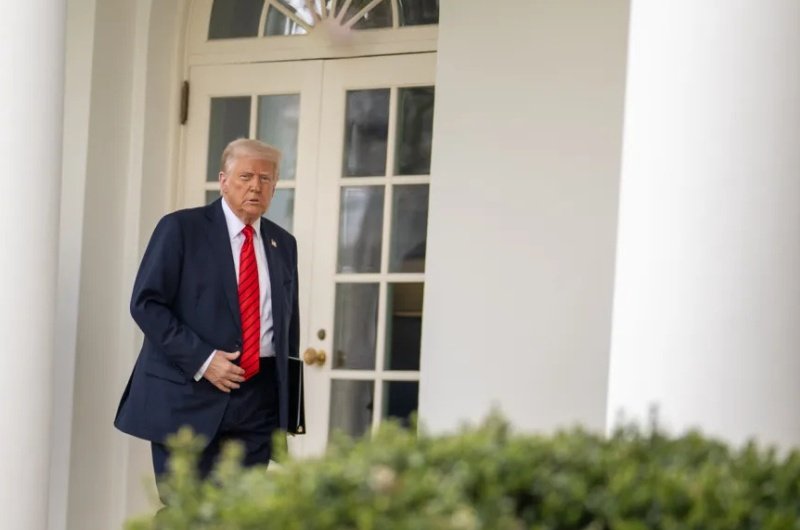
President Donald Trump will meet New York City mayor-elect Zohran Mamdani at 3:00 PM ET today in the Oval Office, a highly anticipated conversation between two political figures who have sharply opposed one another for months. The meeting marks the first face-to-face between the Republican president and the 34-year-old democratic-socialist who will take office on January 1, 2026. Mamdani requested the meeting to discuss priorities including public safety, economic security, and the affordability crisis affecting millions of New Yorkers. His incoming administration has framed the discussion as an opportunity for federal cooperation on issues that directly impact everyday families. Trump, however, has repeatedly threatened to withhold billions in federal funding from New York City and used combative public rhetoric against Mamdani, labeling him a “radical left lunatic,” a “communist,” and a “Jew hater,” claims delivered without evidence. With tensions already heightened, today’s meeting carries outsized symbolic and political weight. Mamdani’s election represents a generational and ideological pivot for New York. Born in Uganda before immigrating to the United States, he rose to prominence as a state lawmaker and progressive organizer, campaigning on aggressive plans to address soaring housing costs, freeze rents in subsidized properties, and ease the financial burden on working-class residents. The outcome of today’s 3:00 PM meeting may signal the future of federal-city relations on issues ranging from immigration enforcement to public safety budgets and fiscal transfers. What emerges from the Oval Office could set the tone ahead of the 2028 political landscape and define how much leverage large cities will wield in Washington over the next several years.
Trump Signs Order Releasing Epstein Files After Years of Secrecy
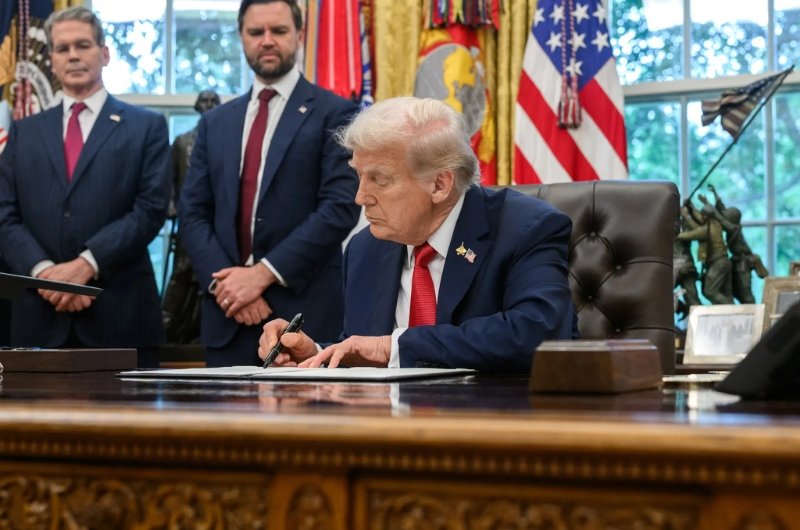
President Trump on Wednesday signed legislation ordering the release of long-sealed records connected to the Jeffrey Epstein case, directing the Justice Department to make the documents publicly accessible and remove barriers that have kept them restricted for years. The signing establishes a 30-day deadline for the first wave of records to be released, marking a major turning point in a case long defined by secrecy and unanswered questions. Administration officials said the release is expected to include investigative materials, depositions, travel and flight details, financial records, and communications that formed part of various inquiries connected to Epstein and his network of associates. The scope of what will be revealed remains uncertain, but the signing immediately triggered preparations inside federal agencies to coordinate the rollout. The decision has drawn swift reaction in Washington, with lawmakers from both parties expressing support and calling the development a needed measure of accountability. Victims’ advocacy groups also praised the move, describing the release as a long-overdue step toward transparency and closure for survivors who have waited years for answers. The legislation allows for limited redactions to protect victim identities and to avoid interference with any open investigations. How extensively those redactions are applied is expected to be closely watched once the records begin to emerge. Officials have not yet confirmed the exact date when the first installment will be made public, but early release windows are reportedly being discussed. Congressional committees are already preparing hearings to examine the disclosures and assess what information may still be missing. —————— Related: What Happens Now That the Epstein Files Are Being Released Congress Forces Release of Epstein Files in Overwhelming Bipartisan Vote
Trump Reverses Course, Urges House Vote to Release Epstein Files

President Donald Trump has abruptly reversed his stance on the potential release of files connected to the late financier Jeffrey Epstein, publicly calling on House Republicans to support a vote that would make the records public. In a post on his Truth Social account, Trump wrote that lawmakers should “vote to release the Epstein files, because we have nothing to hide,” signalling a clear shift from his earlier position. The call for disclosure comes amid rising pressure inside the Republican Party and a growing bipartisan push to unlock long-sealed Justice Department records. Trump’s move appears aimed at taking control of a politically charged issue while attempting to unify Republicans who have been divided over how to handle the matter. For months, GOP leadership and prominent allies of the president resisted releasing the documents, portraying efforts to do so as a distraction from legislative priorities. The sudden reversal — ahead of a scheduled House vote — has exposed fractures within the party and prompted renewed debate about transparency and political risk. Strategists warn that the decision could influence public trust and shape voter perception heading into the next election cycle, particularly for incumbents who have struggled to define their stance. The pivot also highlights the challenge of maintaining party cohesion around an issue that has continued to draw intense public scrutiny. The upcoming vote will test Trump’s ability to shape legislative direction and determine whether his influence is enough to shift outcomes in a closely divided chamber. Lawmakers now face heightened pressure to pick a side as the debate over transparency, accountability, and political consequence reaches a pivotal moment.