

Robert Redford, Hollywood legend, Sundance Founder, and Oscar-winning actor, dies at 89

Charles Robert Redford Jr., the beloved actor, director, and founder of the Sundance Film Festival, passed away today at his home in Sundance, Utah. He was 89. According to his family, he died peacefully in his sleep, surrounded by loved ones. A Star Who Redefined American Cinema Born in Santa Monica in 1936, Redford rose to stardom in the late 1960s and 1970s with unforgettable performances in Butch Cassidy and the Sundance Kid, The Sting, and All the President’s Men. Known for his sharp intelligence and easy charisma, he embodied a new kind of American leading man—handsome, but also thoughtful, layered, and often skeptical of power. As a director, Redford proved just as influential. His 1980 directorial debut, Ordinary People, won him an Academy Award and set the tone for a career that valued storytelling depth over spectacle. The Sundance Legacy Perhaps Redford’s most enduring contribution was building a home for independent voices in film. By establishing the Sundance Institute and Film Festival, he transformed the landscape for rising filmmakers. What began as a small gathering in Utah grew into one of the most important showcases for fresh talent, changing how audiences discover stories outside of Hollywood’s mainstream. Beyond film, Redford devoted himself to environmental and social causes. He was a vocal advocate for climate action, conservation, and indigenous rights, using his influence to shine light on issues too often ignored. Remembered With Love Tributes have poured in from across Hollywood. Longtime collaborators recalled his wit, warmth, and artistic courage. Fellow actors described him as a steady presence both on and off the screen—someone who treated his colleagues as partners rather than props. Redford also shared deep connections with audiences, not only as a performer but as a cultural figure who believed movies could make a difference. A Life of Triumph and Loss Redford’s journey was marked by both great triumphs and personal heartbreak. He endured the devastating loss of two of his children but found strength in family, art, and advocacy. In his later years, he stepped away from the spotlight to live quietly in Utah with his wife, artist Sibylle Szaggars, while continuing to mentor filmmakers and support conservation projects. An Enduring Impact Robert Redford leaves behind an extraordinary body of work—both in front of the camera and behind it—and a festival that continues to shape the future of film. His influence will live on in every independent filmmaker who finds their voice, every audience moved by an unexpected story, and every artist inspired to take a risk. He is survived by his wife, children, and grandchildren, along with the countless storytellers who walk the path he helped to clear.
Kirk Assassination Probe: Suspect Not Cooperating with Authorities
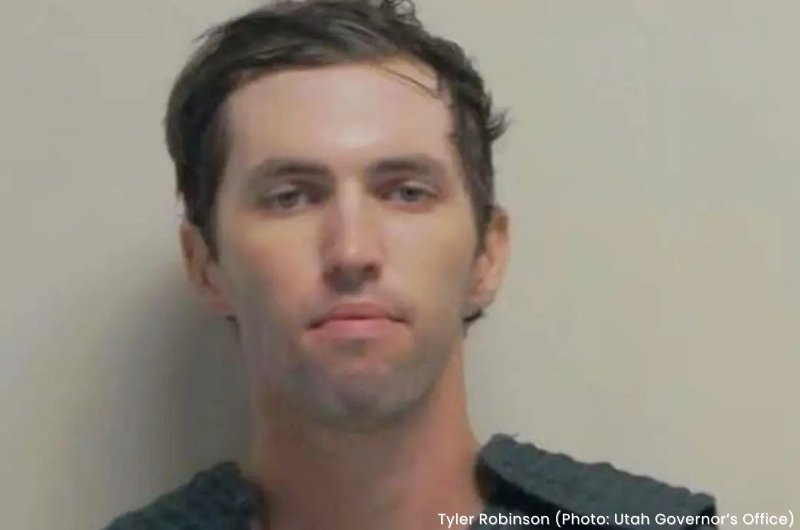
Utah Governor Spencer Cox says the accused shooter in the Charlie Kirk killing is refusing to assist investigators, even as those close to him share information. The investigation into the shocking assassination of conservative activist Charlie Kirk has hit a wall. Utah Governor Spencer Cox confirmed Sunday that the alleged shooter, 22-year-old Tyler Robinson, is not cooperating with authorities. Despite facing formal charges including aggravated murder and obstruction of justice, Robinson has reportedly withheld all input since being taken into custody. While the suspect remains silent, investigators are drawing on testimony from Robinson’s friends, family members, and his roommate — all of whom are cooperating — to piece together his movements and potential motives. Cox pointed to Robinson’s ideological leanings and recent political shifts as possible context, but officials stress that no clear motive has been established. Robinson is being held without bail and is expected in court this week. Until then, the investigation is likely to rely on circumstantial evidence and outside testimony, leaving the central question of motive unanswered.
Free Speech Under Fire: The Assassination of Charlie Kirk

Charlie Kirk, the conservative activist and founder of Turning Point USA, was assassinated onstage at Utah Valley University Wednesday — shot by a sniper in front of a stunned campus audience. The killing unfolded in real time during his American Comeback Tour appearance, and within minutes the footage was ricocheting across social media. What might have been just another charged campus event instantly transformed into a national crisis, igniting urgent questions about political violence, free speech, and the fragility of civic life in America. A Shot Heard on Campus Kirk’s visit to Utah Valley University (UVU) was designed to energize young conservatives with a message of political revival. But security was minimal: no metal detectors, no bag checks, and little to prevent a rooftop sniper from targeting the event from 200 yards away. The alleged gunman remains at large. Two men detained in the aftermath were later released, underscoring how elusive accountability can be when violence strikes from the shadows. For UVU students, the memory of Kirk collapsing mid-sentence will not fade soon. The assassination pierced the idea of the campus as a safe haven for debate — a chilling reminder that America’s broader cultural battles now spill freely into lecture halls. President Trump Responds Free Speech on the Line Kirk’s killing isn’t just about one man. It speaks to the future of open debate in a democracy on edge. Universities — already caught between accusations of “cancel culture” and criticisms of enabling hate speech — now confront a more terrifying calculus: can controversial speakers ever be truly safe? If dissenting voices are silenced by bullets rather than arguments, the loss to civic life is immeasurable. America’s public square depends on citizens clashing over ideas, not fearing for their lives. Yet Kirk’s assassination signals that we may be sliding into what some scholars call an “assassination culture” — a climate where violence is seen as a permissible response to political disagreement. The Law Enforcement Challenge Law enforcement scrambled in the aftermath: campus police, local authorities, and federal agents launched a joint investigation. But as with recent attacks on political figures and their families, the randomness of lone-actor violence makes prevention nearly impossible. Investigators face the technical nightmare of a rooftop sniper strike: limited evidence, fragmented surveillance, and a flood of online speculation muddying the search for truth. The case illustrates how modern political violence spreads twice — first through the bullet, then through the viral video. The Political Fallout Reaction was swift and bipartisan. Republican leaders denounced the killing as “despicable,” while Democrats condemned the act as an assault on democracy itself. Former President Obama called it “a betrayal of democracy.” But almost immediately, partisan commentators weaponized the tragedy. Some blamed inflammatory rhetoric; others saw it as proof that campus protests had spiraled out of control. The risk is clear: instead of forging consensus against political violence, the assassination could become yet another wedge in an already fractured public discourse. Democracy’s Breaking Point Political assassinations are not new to America. The 1960s claimed Martin Luther King Jr. and Robert F. Kennedy. But Kirk’s murder feels different. It comes not in an era of sweeping movements, but amid social-media-fueled polarization, crumbling trust in institutions, and the unsettling sense that even the most ordinary civic events are vulnerable. If violence continues to escalate, public life itself could contract. Politicians may retreat from live rallies. Universities may cancel high-risk speakers. Citizens may avoid public debate altogether. With every withdrawal, democracy shrinks, leaving space for fear and extremism to thrive. What Comes Next The Kirk assassination is both a tragedy and a test. It forces America to confront uncomfortable questions: Can universities safeguard free speech without inviting mortal danger? Will political leaders cool their rhetoric or exploit the moment? And most urgently, can the nation stop its slide into a future where assassinations punctuate civic debate? For now, the image lingers: a stage, a sudden shot, and a democracy shaken once more by the violence of its own divisions. Whether this moment proves to be an aberration or a grim harbinger depends on how leaders — and citizens — respond. Between the Lines The Kirk assassination is more than a campus tragedy. It’s a warning flare: if America chooses violence over argument, democracy itself becomes the casualty.
White House Urges Temporary Funding Measure to Prevent Shutdown

On September 9, 2025, the White House sent Congress a list of funding “anomalies,” a procedural step that signals support for a short-term continuing resolution. The measure would extend government funding at current levels and prevent a shutdown when the fiscal year ends on September 30. The stopgap bill is designed to buy lawmakers time to work through stalled budget negotiations. While the exact end date of the temporary funding has not been finalized, congressional leaders have floated January 31 as a likely cutoff. With just weeks left before the deadline, both parties face rising pressure to avoid a disruptive lapse in funding. Agencies have already begun drafting contingency plans in case talks break down.
Two Players Split $1.8 Billion Powerball Jackpot

Two winning Powerball tickets have transformed ordinary lives overnight — one sold in Missouri and the other in Texas — with each holder set to claim half of the nearly $1.8 billion jackpot. The prize ranks as the second-largest lottery payout in U.S. history, ending a remarkable streak of 41 consecutive drawings without a winner. Lottery officials confirmed the winners can choose between a 30-year annuity valued at $893.5 million each, with 5% annual increases, or a lump-sum cash payout of about $410.3 million apiece before taxes. Both options are life-changing, but financial advisers warn that sudden wealth often comes with as many challenges as opportunities. Saturday’s record-breaking drawing sparked a surge in ticket sales across the country, with millions lining up at gas stations and convenience stores for a shot at fortune. Beyond the two jackpot winners, nearly 10 million other players won smaller prizes, including several tickets worth $1 million or more. Experts say lottery fever reflects both the allure of instant wealth and the anxiety of uncertain economic times. In an era of rising costs and financial unease, a shot at unimaginable riches offers a rare moment of collective excitement — even if the odds of winning remain astronomically slim. For the Missouri and Texas winners, the dream has suddenly become reality. The next step will be claiming their prizes and deciding how to handle newfound wealth that has the power to alter not just their futures, but the lives of generations to come.
Netflix & Apple TV+ Eye Live Sports Deal

Reports indicate that Netflix and Apple TV+ are intensifying efforts to secure live sports rights, a move that could redefine the future of streaming. Netflix is poised to exclusively stream the MLB Home Run Derby through 2028, marking one of its boldest pushes yet into live content. This builds on its growing presence in sports after experimenting with high-profile events, including NFL holiday broadcasts that drew massive viewership. Apple, meanwhile, is doubling down on its sports portfolio. Already holding a decade-long deal for MLS Season Pass and streaming select MLB games, Apple is now reportedly eyeing Formula 1 U.S. rights, in addition to exploring playoff baseball and Sunday Night Baseball opportunities. Together, these moves signal a turning point. As traditional streaming competition slows, live sports may emerge as the next great battleground—one that could determine which platforms dominate in the years ahead. The Author
Judge Temporarily Blocks Deportation Flights of Guatemalan Minors

A federal judge has halted deportation flights carrying Guatemalan children, issuing a temporary order that immediately suspends the program. The ruling came late Friday night following a wave of legal challenges from advocacy groups arguing the flights posed humanitarian risks and violated protections for minors. The program, which sought to expedite removal of children who had recently crossed the southern border, has been under scrutiny from immigration lawyers and human rights organizations. Critics contend the process lacked sufficient safeguards, leaving children vulnerable to unsafe conditions upon return. Federal officials, however, had defended the flights as a necessary enforcement tool amid record border crossings. By blocking the deportations, the court has placed a spotlight on the fragile balance between immigration enforcement and child welfare. The decision now forces federal agencies to reevaluate protocols for handling minors in custody, even as broader immigration policies remain a flashpoint in Washington’s political battles. For families and communities on both sides of the border, the ruling offers temporary relief—but it also signals a protracted legal fight ahead over how the U.S. treats its youngest migrants. The Author
“They Saved Lives”: Teachers and Children Praised as Heroes in Minneapolis Mass Shooting

The horror that tore through a Minneapolis Catholic church Wednesday morning during a Mass was met with extraordinary courage. As a gunman sprayed bullets through the stained-glass windows of Annunciation Church, teachers and older students scrambled to shield the youngest worshippers. Two children—described by the school principal as “two angels”—were killed, and 17 others wounded in the attack. Annunciation Catholic School Principal Matthew DeBoer’s voice shook as he recounted how staff and students reacted in the chaos. “Within seconds, our heroic staff moved students under the pews,” he said. “Adults were protecting children. Older children were protecting younger children. It could have been significantly worse without their action.” Minneapolis Mayor Jacob Frey echoed the tribute, calling the split-second bravery “nothing short of heroic.” He noted that by shielding others—often at risk to themselves—faculty and students likely prevented a death toll that could have been far higher. Police officers who arrived within minutes evacuated the church, escorting frightened children and teachers to safety. For families, the grief is overwhelming. Parents reunited outside police barricades, clinging to loved ones while absorbing the devastating news. DeBoer urged the community to surround the victims’ families with love and prayer, adding: “Please lift up these families and these children in prayer during this difficult time.”
Powerball Jackpot Surges Toward $1B: Frenzy Builds Ahead of Weekend

The Powerball jackpot climbed to $950 million after no winning ticket was drawn Wednesday night. It’s now one of the largest prizes in U.S. lottery history, and ticket sales are expected to soar through the weekend as Americans chase the dream of a life-changing windfall. The staggering prize comes with odds of just 1 in 292 million, yet history shows jackpots of this size ignite coast-to-coast buying sprees—often boosting state revenues earmarked for schools and infrastructure. That’s all for now. Now, if you’ll excuse me, I’ve got an errand to run. The Author
Showdown in Chicago: Trump’s Troop Threat Sparks Fierce Resistance

President Trump escalated tensions with Illinois late Saturday, openly threatening to deploy National Guard troops — or even federal military forces — into Chicago under the banner of “restoring law and order.” His remarks, delivered while signing new executive orders on crime, drew immediate and blistering pushback from Chicago Governor JB Pritzker, Mayor Brandon Johnson, and a coalition of civic and faith leaders who called the plan unconstitutional and politically reckless. A Manufactured Crisis? Trump argued that rising violence in Chicago justifies federal intervention. But Chicago Police Department data tells a different story: major crime categories are down this year, with homicide and shootings trending below 2023 levels. Critics say the President is inflating statistics to create a sense of crisis — one that positions him as the strongman savior. Governor Pritzker slammed the proposal as a “federal power grab,” vowing to block any troop deployment not requested by the state. “Illinois is not a war zone. We don’t need occupation, we need investment,” he said. Mayor Johnson, flanked by clergy and community leaders, echoed the sentiment: “This city belongs to the people of Chicago, not to a president playing politics with our neighborhoods.” The Legal Flashpoint The standoff centers on the Posse Comitatus Act, which bars the use of the U.S. military in domestic law enforcement absent extreme exceptions. Trump could invoke the Insurrection Act, but that law historically applies to rebellions or state governments refusing to uphold federal law — neither of which exists in Chicago today. Legal scholars warn that attempting to override the state’s wishes would ignite a constitutional crisis and almost certainly end up in court. Communities Brace for Impact Faith leaders gathered at Trinity United Church of Christ late Saturday, urging calm but warning congregants to prepare for protests if federal troops are ordered in. “We will not allow our streets to become a backdrop for political theater,” said Reverend Otis Moss III. Business leaders, already concerned about consumer confidence amid ongoing economic jitters, fear the optics of armed patrols could further harm the city’s fragile tourism rebound. The Political Playbook Trump’s push is less about Chicago crime and more about shaping a national narrative. By sending troops over the objections of Illinois leaders, he casts himself as the uncompromising defender of “order” — but at the cost of trampling American norms. If successful, the move could set a precedent for military deployments against any city leadership that crosses the White House. What’s Next The White House has not yet announced a timeline for potential troop movements, but Illinois officials are already preparing legal challenges. Federal agencies have reportedly begun logistical planning, while activists in Chicago are mobilizing for demonstrations. This is a developing story. Readovia will provide live updates as more details emerge. ____________ Related Story:Trump Seizes Control of D.C. Police, Deploys National Guard in Sweeping Security Move