


Trump Confirms Diddy’s Team Asked for a Pardon — But He’s Leaning Toward A “No”

President Trump confirmed that members of Sean “Diddy” Combs’ circle reached out to request a presidential pardon — but said he’s “not inclined” to grant one. Speaking to reporters outside Mar-a-Lago, Trump said he would “take a look” and consult with the Department of Justice, but hinted that Combs’ high-profile legal troubles and previous criticism of him could weigh heavily against approval. “I don’t know. We’ll see. He’s said some things — not so nice things — but I’ll look at it,” Trump told reporters. Combs, who is currently serving time following a conviction on prostitution-related charges, has denied personally requesting clemency. His legal team told People that “neither Mr. Combs nor his attorneys have made any formal request for a pardon,” though others “close to him” reportedly made inquiries on his behalf. The conflicting accounts have fueled another media storm around the embattled music mogul, who has been under intense scrutiny since his conviction. Trump, meanwhile, has been fielding multiple high-profile pardon questions — including one related to Ghislaine Maxwell — reigniting debate over his controversial clemency record. If granted, a pardon for Diddy would mark one of Trump’s most contentious moves yet. Critics argue that such a decision would signal favoritism toward celebrity figures, while allies say it shows the former president’s willingness to entertain requests from all corners. For now, Trump appears to be signaling hesitation. “He’s asked. People have asked,” he said. “But I’m leaning toward no.” Between the Lines Trump’s response hits two familiar notes: tease the possibility, then retreat to plausible distance. It’s a move that keeps him at the center of the story — and forces Diddy’s camp to keep reacting. Whether this was a serious request or simply a signal flare from Diddy’s inner circle, one thing’s certain: the intersection of fame, politics, and power isn’t cooling off anytime soon.
Silent Tower: How Burbank Went Dark During a Critical Shutdown Crisis

For nearly five hours Monday, Burbank’s air traffic control tower stood empty—yet planes still flew. The event exposed a fragile system, shifting control to remote operators and underscoring a latent danger in America’s airspace. The autumn sun dipped low over the San Fernando Valley on Monday, casting long shadows across Hollywood Burbank Airport. Inside the glassed control tower—normally the pulsing heart of flight coordination—no one was watching. From roughly 4:15 p.m. to 10:00 p.m., the tower sat empty. Staffing shortages tied to the ongoing federal government shutdown forced controllers to stay home, leaving one of the nation’s busiest regional airports without local oversight. During that time, the Southern California TRACON facility in San Diego took over remotely, guiding aircraft by radio while ground crews relied on “non-towered” procedures more common to rural airfields. Despite the absence of on-site control, flights continued—though not without disruption. Many departures faced delays exceeding two hours, and several were canceled altogether. For travelers, it was another ripple effect of a shutdown that has turned the nation’s most vital systems into endurance tests. For aviation experts, it was something more alarming: proof of how fragile America’s air network becomes when a single node goes silent. The Human Cost of “Essential” Work Air traffic controllers are classified as essential workers, required to report for duty even when government funding halts. But essential doesn’t mean exempt from financial hardship. With paychecks now delayed, many are facing mounting bills, emotional strain, and burnout. Insiders say morale is deteriorating as the shutdown stretches on. Some controllers have begun calling out sick, others are working double shifts, and training programs have been paused indefinitely. The result is a thinning workforce operating under increasing stress—and fewer layers of protection in a system that depends on redundancy. In Burbank’s case, no safety incidents occurred. Still, the image of an unmanned tower in a major metropolitan area sent shockwaves through the industry, reigniting debates about whether contingency plans are sufficient when politics stops the paychecks that keep essential infrastructure running. A Ripple Across the Nation The Burbank episode is not isolated. Airports in Denver, Phoenix, Las Vegas, and Newark have all reported heightened delays amid staffing shortages, some operating with as much as fifty percent fewer controllers. Industry officials warn that if the shutdown persists, more “ATC Zero” events—when a facility cannot safely provide air traffic services—could occur. For airlines, that means more ground holds and diversions. For passengers, more missed connections and overnight waits. Behind it all are the human hands that make America’s skies safe. When those hands are forced to stop working—or to keep working unpaid—the entire system starts to wobble. After the Lights Returned At 10 p.m., the Burbank tower lights flickered back on, controllers returned, and local operations resumed. The incident passed without tragedy. But for aviation veterans, it left a lasting unease. A silent control tower is a symptom of systemic vulnerability. In the air, as in government, the margin for error is small. And when the people who keep planes safely separated can’t afford to show up, the nation’s confidence in its own flight path begins to shake.
Day 6: U.S. Shutdown Escalates — Markets, Jobs, and Data on Hold

The U.S. government shutdown is freezing vital economic data — leaving markets, analysts, and policymakers flying blind. The federal government’s shutdown entered its sixth day on Monday, paralyzing key agencies that release the nation’s most-watched economic data. Reports from the Bureau of Labor Statistics, Census Bureau, and Bureau of Economic Analysis — including the jobs report and inflation data — are all on hold until a funding agreement is reached. This unprecedented blackout of economic data is unsettling markets and businesses alike. Without regular updates on inflation, employment, and GDP, investors are operating without visibility into real-time trends — an issue that could distort everything from stock valuations to rate forecasts. Federal Reserve officials are also facing uncertainty. Economists warn that without reliable data, the Fed’s next policy decision could be based on incomplete information — potentially prolonging volatility. Meanwhile, hundreds of thousands of federal employees remain furloughed, amplifying political pressure in Washington. But negotiations remain stalled, with both parties blaming each other for the impasse. The political fallout is also growing. On Sunday night, President Trump confirmed that layoffs of federal workers were already underway, describing the action as part of the ongoing budget standoff. He again placed blame on Democrats for the impasse but offered no details about the scale or scope of the dismissals. According to the White House, thousands of federal employees could be permanently let go if the shutdown continues — an escalation that transforms a temporary funding lapse into a long-term employment crisis. In a separate move, Budget Director Russell Vought has frozen roughly $28 billion in infrastructure funding earmarked for New York, California, and Illinois — states with large Democratic constituencies and vocal critics of the president. The move effectively halts dozens of ongoing and planned projects, adding economic pressure to the regions most affected by the freeze. The Takeaway The shutdown is no longer just about delayed paychecks. It’s triggering layoffs, halted infrastructure projects, and widening the political divide over who bears the blame.
Government Shutdown Deepens as Senate Gridlocks
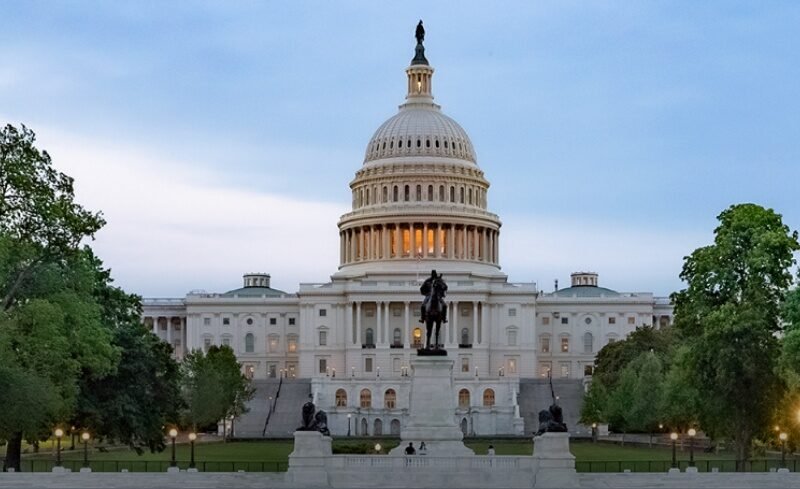
The federal government has entered its third day of shutdown, and the Senate remains locked in stalemate. Lawmakers are preparing votes on dueling proposals, but neither side expects passage. The impasse leaves hundreds of thousands of federal employees furloughed, with ripple effects across agencies and communities nationwide. Democrats are pushing a stopgap bill to extend funding temporarily, arguing it would protect essential services while negotiations continue. Republicans, meanwhile, are demanding steep spending cuts and changes to health subsidies, framing the fight as a test of fiscal discipline. The standoff has already shuttered national parks, slowed small business grants, and strained immigration processing. For federal workers, the shutdown has immediate consequences. Many are working without pay or facing delayed checks, while contractors and local businesses that depend on government activity are also feeling the strain. Economists warn that if the shutdown drags on, the damage will expand to consumer confidence, credit ratings, and markets. With neither party showing signs of compromise, Washington’s shutdown is less about governance than political leverage. Each side appears to be waiting for the other to break — while millions of Americans bear the cost of the deadlock.
It’s Official — America Has Entered a Government Shutdown
What just happened As of midnight, the U.S. federal government has officially entered a shutdown. Congress failed to pass a continuing resolution or full appropriations to keep agencies funded. Some services are deemed “essential” and will continue, though employees may work without immediate pay. Key consequences & impacts Furloughs & pay: hundreds of thousands of federal workers are being furloughed or left working without pay. Air travel disruption: the FAA will furlough about 11,000 employees, while roughly 13,000 air-traffic controllers must keep working despite not being paid. Suspended data & services: federal reporting, including labor statistics, and many agency operations will stall. National parks: many will remain open using recreation fees to fund skeleton operations, though visitor centers and full services may close. Longer-term risk: the White House has directed agencies to prepare for possible permanent cuts, not just temporary furloughs. Why this happened Policy standoff & demands: democrats insisted that any funding bill include health care provisions and reversal of certain cuts. Republicans pushed for a “clean” continuing resolution without additional measures. Senate blockage: the Republican CR failed to get the 60 votes needed to advance. New tactics: the administration has signaled a willingness to use the shutdown to reshape federal operations, urging agencies to plan beyond temporary furloughs. What to watch & what it means Duration matters: the costs — both human and economic — scale sharply with how long this lasts. Back pay guaranteed: by law, furloughed and “excepted” employees will receive retroactive pay once the shutdown ends. Next moves in Congress: any deal must clear both chambers and the president; negotiations will likely center on health care demands, spending levels, and program rescissions. Consequences for the public: expect delays in services, disruptions in travel, and ripple effects across sectors reliant on federal contracts or support. Political risks: public sentiment may turn sharply negative if the shutdown drags on, putting pressure on both parties. Between the Lines This shutdown goes beyond a routine budget standoff. The administration is openly floating the idea of permanent cuts to federal agencies, not just temporary furloughs. That marks a significant shift from shutdowns of the past, where the expectation was always a “pause, then reset.” If that strategy sticks, this could reshape the size and scope of government long after the funding fight ends. In short: the longer this goes, the more lasting the damage could be.
US Heads Toward First Shutdown in Six Years as Talks Collapse in Washington

For the first time in six years, the U.S. government is on the brink of shutting down. President Trump and his Democratic opponents left late-night talks with no deal in sight, despite Republicans pushing a stopgap plan to fund the government through late November. Democrats flatly refused, demanding healthcare protections and subsidy extensions as part of any agreement. Currently, Republicans and Democrats are advancing competing versions of a stopgap funding bill, also known as a continuing resolution (CR). Each side insists their version is the responsible path forward, while trading blame for the looming shutdown. The Republican plan focuses narrowly on extending funding into November, while Democrats argue no CR can move forward without concessions tied to healthcare and social safety nets. Standoff Over Funding & Healthcare Central to the impasse: Republicans insist any short-term spending bill stick to “clean” funding, separate from expanding or restoring health benefits. Democrats counter that any extension must include protections for expiring Affordable Care Act subsidies and rollback of cuts to Medicaid. Without compromise, hundreds of thousands of civil servants, national parks, federal courts, and countless agency functions could be suspended. Blame Game Unfolds Each side walked away pointing fingers. Vice President J.D. Vance predicted bluntly, “I think we’re headed to a shutdown.” Senate Democratic Leader Chuck Schumer summed up the situation: “We have very large differences.” Republican leaders earlier urged Democrats to accept a stopgap measure through November 21 to buy more time — but the Senate, where bipartisan support is required, rejected the GOP-led plan. Escalating Threats & Unusual Tactics In a bold gambit, Trump warned that a shutdown would allow his administration to carry out “irreversible” actions — cuts and program shifts that could not easily be undone. Congressional Democrats sharply protested. Some observers view it as signaling a willingness to use the shutdown itself as leverage. Meanwhile, Trump canceled an earlier scheduled meeting with Democrats, citing “unserious and ridiculous” demands. That move added tension and uncertainty to last-minute negotiations. The Stakes A shutdown has real consequences: Non-essential federal workers could face furloughs or worse if funding is not extended. Essential services like air traffic control and emergency response may still operate, but many public services would stop. Monthly economic data releases, small business loans, and federal grant programs may be delayed or suspended. Politically, the blame will be heavy. With midterms approaching, both Republicans and Democrats are vowing to pin responsibility on the other side. Final Word With Q4 beginning under the shadow of collapse, everything from federal paychecks to regulatory enforcement hangs in the balance. For millions of Americans, the shutdown threat isn’t just some random news headline — it’s a paycheck, a service, or a benefit put on hold.
Gunman Attacks Michigan Church, Killing 4 and Wounding 8
National Guard, FBI Join Response as Communities Demand Answers A Sunday morning worship service in Hartland, Michigan, turned into horror when a former U.S. Marine crashed a vehicle into a local Church of Jesus Christ of Latter-day Saints building, opened fire on congregants, and then set the sanctuary ablaze. Authorities confirmed four dead and eight wounded, some critically, in what is being called one of the worst mass attacks on a house of worship in recent years. Law enforcement identified the attacker as Thomas Jacob Sanford, 38, who was killed at the scene after an exchange of gunfire. Officials have not released a motive, though investigators say he acted alone. The FBI has joined the investigation, and the building remains under forensic examination. Witnesses described scenes of chaos and courage as smoke filled the church. “People were carrying children through windows, trying to break glass to get outside,” one survivor said. Local hospitals remain on high alert as the wounded receive treatment. This attack comes amid rising concern over the security of U.S. houses of worship. Faith leaders across the country are now re-evaluating safety plans, with renewed calls for federal support in protecting religious institutions. The Takeaway Sunday’s tragedy in Michigan highlights the growing vulnerability of faith communities in America. While details about the attacker’s motive remain unclear, the incident underscores an urgent reality: sanctuaries are no longer immune from the nation’s epidemic of mass violence.
ICE Detains Superintendent of Iowa’s Largest School District

Ian Roberts, the superintendent of Des Moines Public Schools — the largest district in Iowa — was detained Friday morning by U.S. Immigration and Customs Enforcement. The school district confirmed it had no immediate explanation for the detention and named an interim superintendent to step in. Roberts is reportedly being held in a county jail approximately two hours west of Des Moines. According to ICE’s detainee database, Roberts is listed as being born in Guyana. The Department of Homeland Security says he had a final order of removal and lacked work authorization. DHS also alleges that Roberts fled from officers during an enforcement operation, abandoning his vehicle before being taken into custody. Previous charges — including a weapon possession charge from 2020 — are also noted in the department’s statement. Roberts entered the U.S. in 1999 on a student visa, and an immigration judge issued a final removal order in May 2024. In interviews and public biographies, Roberts has said he was raised in Brooklyn by immigrant parents from Guyana. He made history in 2023 when he became the first person of color to serve as superintendent of Iowa’s largest school district.
BREAKING NEWS: FBI Investigates Dallas Immigration Facility Shooting, Finds Anti-ICE Messages
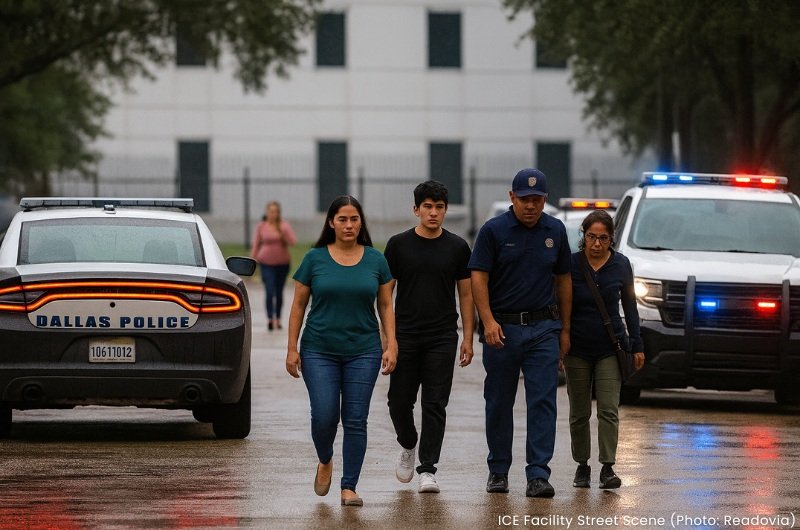
Three people, including detainees, were shot Wednesday morning at a U.S. Immigration and Customs Enforcement (ICE) facility in Dallas before the suspected gunman died from a self-inflicted wound, according to federal authorities. Acting ICE Director Todd Lyons confirmed the attack during an interview on CNN, while Homeland Security spokesperson Tricia McLaughlin later told Fox News that no ICE agents were injured. “We believe he was shooting at law enforcement and detainees from an apartment building,” McLaughlin said. “Detainees were among the victims of the shooting.” The Attack Gunfire erupted around 6:40 a.m. outside an ICE field office near a detention center. Witnesses described chaos as staff and detainees scrambled for safety, with police converging on the scene within minutes. One detainee was killed and two others were injured. Latest Update Dallas Police Chief Eddie Garcia said investigators discovered anti-ICE messages etched onto shell casings found near the shooter. The FBI confirmed it is treating the case as “an act of targeted violence.” Homeland Security Secretary Kristi Noem condemned the shooting as “unprecedented violence” against immigration enforcement. Texas Senators Ted Cruz and John Cornyn denounced the act as politically motivated, while Vice President JD Vance called it “an obsessive attack on law enforcement.” The FBI is now leading the probe, examining the shooter’s communications and possible links to extremist groups.
Censoring Late Night — Kimmel’s Firing and the Free Speech Debate
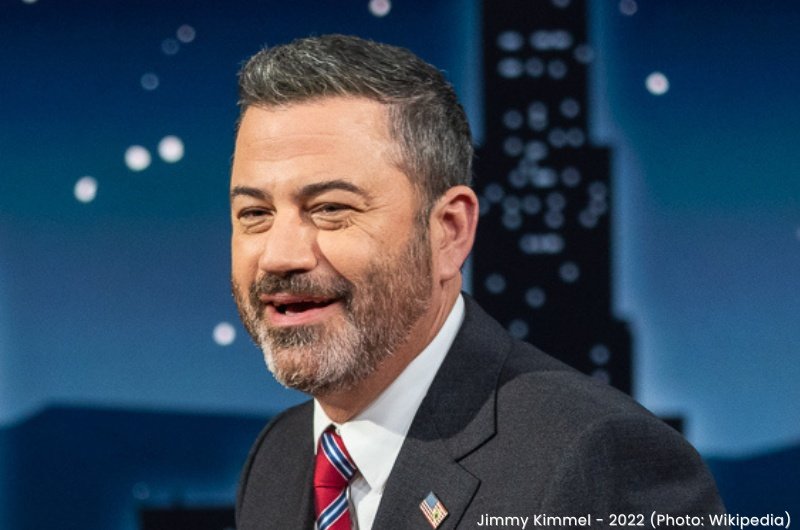
ABC pulled Jimmy Kimmel Live! off the air this week after remarks on Charlie Kirk’s death, fueling a national debate over free speech, censorship, and the boundaries of comedy. What Happened The network suspended the show indefinitely after Kimmel’s monologues referencing the assassination of Charlie Kirk drew criticism. Pressure mounted when FCC Chair Brendan Carr suggested regulatory consequences for affiliates that continued airing the program, and Nexstar Media Group — which controls a large number of ABC affiliates — quickly announced it would stop carrying it. The Backlash Other late-night hosts, entertainment figures, and free-speech advocates blasted the decision as censorship. Stephen Colbert and Seth Meyers used their own platforms to defend Kimmel, warning that political pressure shaping broadcast decisions could set a troubling precedent. On social media, hashtags like #StandWithKimmel and #CensorshipInAmerica trended within hours. The Case for Removal Supporters of the suspension argue Kimmel’s remarks crossed a line, calling them insensitive and out of step with public sentiment following Kirk’s killing. For affiliates and advertisers, the calculus was less about free expression and more about brand protection in a deeply divided media climate. The Bigger Picture The Kimmel case underscores the uneasy balance between editorial freedom, regulatory oversight, and corporate interests. Networks are under pressure from multiple directions: political figures, advertisers wary of backlash, and viewers who expect accountability. In this environment, even a late-night monologue can carry national stakes. The Takeaway What happened this week isn’t just about one comedian or one show. It’s about the boundaries of public commentary in an era where political polarization, media economics, and regulatory oversight collide. If late-night comedy — historically one of television’s safest spaces for satire — is now fair game for suspension, the ripple effects on other media voices could be profound.