

BREAKING: U.S. Targets Russia’s Oil Giants After Trump–Putin Summit Is Cancelled
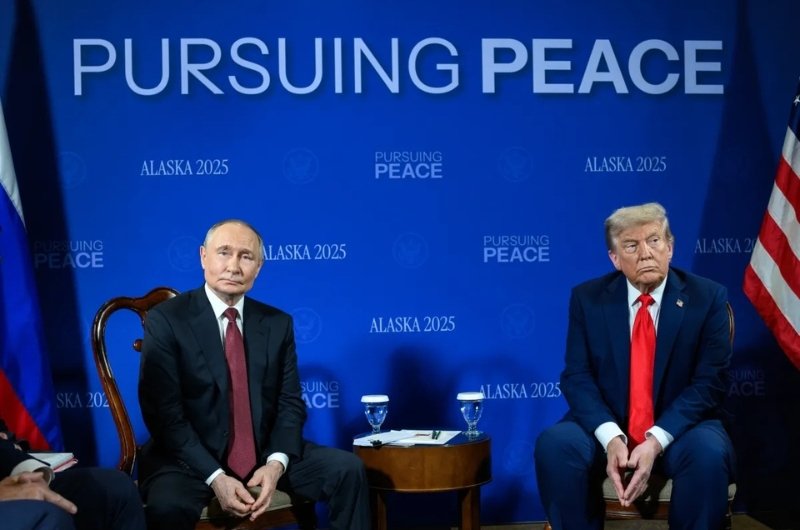
Washington’s latest sanctions strike at the heart of Moscow’s war funding machine. The United States has imposed sweeping sanctions on Russia’s two largest oil producers, Rosneft and Lukoil, in a fresh effort to undermine Moscow’s ability to finance its war in Ukraine. The move comes just one day after plans for a high-profile summit between President Donald Trump and Russian President Vladimir Putin fell apart. Trump told reporters that he canceled the meeting because “it didn’t feel right” and signaled uncertainty about when the leaders might meet next. According to the U.S. Treasury Department, the sanctions target entities and financial channels believed to be funneling oil revenues toward Russia’s ongoing military campaign. By striking the country’s main energy companies, Washington aims to tighten the economic pressure on the Kremlin and isolate its access to global markets. “The message is clear,” a senior Treasury official said in a statement. “If Russia continues to wage war, it will face escalating consequences that hit its core sources of funding.” The Kremlin condemned the sanctions, calling them “an act of economic aggression,” and vowed to explore countermeasures. Energy analysts noted that while Russia may reroute some exports to friendly nations, restrictions on financing and equipment could significantly hamper production in the long run. The Bigger Picture This latest escalation marks a new phase in U.S.–Russia relations — one defined by strategic disengagement and mounting economic warfare. With the diplomatic door now temporarily closed, both nations appear to be doubling down on pressure tactics rather than peace talks.
Food Benefit Alert: SNAP & WIC May Be Unavailable in November Amid Shutdown

Millions of Americans who rely on federal food assistance programs may go without critical benefits in November if the government shutdown continues. Several states — including Colorado, Oklahoma, Texas, and others — have already issued warnings that November benefits will not be available unless funding is restored. The Readovia News Desk reports that recipients in Maryland have begun receiving in-app alerts on their state benefit portals notifying them that their Food Supplement (SNAP) and WIC benefits “may not be available in November.” Those alerts, verified through user screenshots, mark one of the first direct notices to beneficiaries at the state level — signaling that the risk of interruption is now immediate, not hypothetical. The U.S. Department of Agriculture has advised state agencies that, should the shutdown persist, there may be insufficient funds to cover full November payments for both the Supplemental Nutrition Assistance Program (SNAP) and the Special Supplemental Nutrition Program for Women, Infants, and Children (WIC). Together, these programs serve more than 45 million Americans. Growing Impact Across States From the Midwest to the Gulf Coast, states are bracing for an unprecedented disruption. Officials have warned that federal allocations for November cannot be guaranteed without a new funding agreement. Some states have confirmed that unless the shutdown ends soon, payments will simply not be issued. For many low-income households, groceries and infant formula benefits are lifelines. A missed monthly deposit can mean skipped meals, postponed rent, or complete reliance on local food banks already stretched thin by demand. The combination of inflation, high grocery prices, and a lapse in federal support has created what advocates are calling a “perfect storm” of hardship. WIC is especially vulnerable because it is not an entitlement program; once federal funds run out, state agencies have limited ability to continue disbursements. Several state offices have indicated that funding could expire within days, forcing them to suspend new enrollments or pause benefits altogether. What Beneficiaries Should Know Check your state benefit app or online portal for new alerts regarding your November benefits. Consider stocking up now on essentials if you rely on SNAP or WIC and live in a state that has issued warnings. Local food banks and community organizations are preparing emergency distributions; contact your local social-services office for updates. Congress could fix the problem quickly if it reaches a deal, but right now, there’s no agreement in sight — so benefits remain at risk. The Bigger Picture This growing crisis highlights how deeply political gridlock in Washington affects day-to-day life for families nationwide. When federal programs are disrupted, states must scramble to fill the gap, often without resources to do so. Even a brief interruption in benefits can have lasting effects — from lost nutrition for children to reduced sales for small retailers in low-income communities. As the shutdown stretches on, uncertainty remains the only constant. For millions of families, November may mark the first time in years that grocery benefits simply don’t arrive. Readovia Continuing Coverage The Readovia News Desk will continue to monitor benefit alerts, state updates, and federal negotiations as they develop. Readers who have received similar “not available in November” notices through their state or local benefits portals are invited to contact the Readovia newsroom with the alert information, their state, county, and the date of the alert.
Trump Seeks $230 Million From DOJ Over Russia Probe and Mar-a-Lago Raid
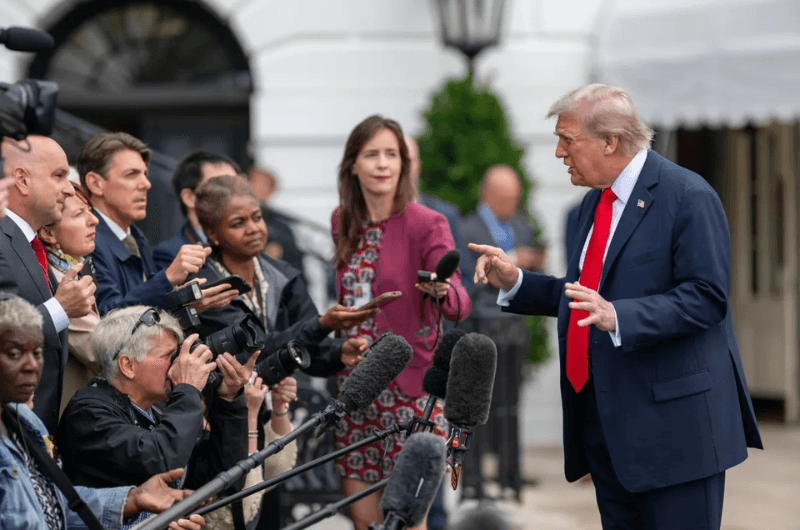
President Donald Trump has filed claims seeking up to $230 million from the U.S. Department of Justice (DOJ), accusing the agency of political retaliation in two of the most high-profile federal actions ever taken against him. According to reports first confirmed Tuesday, the filings — administrative claims known as Form 95s — seek compensation for alleged violations of Trump’s rights during the 2016 Russia investigation and the 2022 FBI search of Mar-a-Lago. Both actions, his lawyers argue, caused “immeasurable reputational and financial harm.” The claims, submitted in 2023 and 2024, precede any formal lawsuit but are required under the Federal Tort Claims Act before suing the government. They accuse the DOJ and FBI of “malicious prosecution” and “abuse of process,” echoing Trump’s long-standing claim that the justice system has been “weaponized” against him. A DOJ spokesperson declined to discuss specifics but said all department officials “follow the guidance of career ethics professionals.” If the claims are approved, any settlement above $4 million would require sign-off by the Deputy Attorney General — a role now held by Todd Blanche, a former Trump defense attorney, raising potential conflict-of-interest questions. Legal experts note that while administrative claims are routine in federal litigation, one of this magnitude is unprecedented for a president. The filings underscore Trump’s effort to recast years of investigation as an injury rather than a liability — and to turn his defense into a financial counteroffensive against the federal government itself. Between the Lines If the DOJ entertains the claim, even briefly, it could open a new political front: one where former presidents pursue damages from their own government. But if it’s dismissed outright, Trump could still transform the rejection into campaign fuel — proof, he’d argue, that the system remains rigged against him. Either outcome keeps the spotlight exactly where he wants it: on Trump versus Washington.
Family’s Quick Action Stops Planned Airport Shooting in Atlanta
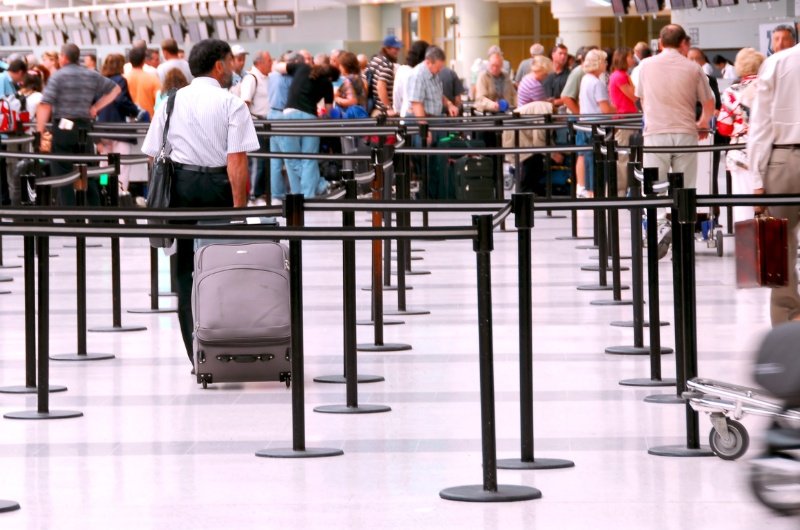
A Georgia family’s courage to speak up prevented what could have been a mass tragedy at one of the world’s busiest airports. Police arrested 49-year-old Billy Joe Cagle at Hartsfield-Jackson Atlanta International Airport after relatives reported he was livestreaming threats to “shoot it up.” Officers found an AR-15 rifle and 27 rounds of ammunition in his truck parked just outside the terminal. Atlanta’s police chief credited the family’s intervention for saving lives, calling the incident “a success, not a tragedy.” Cagle faces multiple felony charges, including making terroristic threats and illegal firearm possession. Authorities confirmed he had a prior felony record and was not legally permitted to own a gun. The case underscores a crucial truth: when families and communities speak up, lives can be saved. Atlanta’s mayor praised both vigilance and divine grace, saying, “We’re thankful to God and to good people for this crisis being averted.” Cagle’s longtime friend said he suffered from schizophrenia and had been taking medication, raising broader questions about mental health and firearm access. Final Thoughts Security technology is vital, but human awareness remains the strongest defense. One family’s quick decision to “say something” transformed a potential national tragedy into a case study in prevention — proof that when people speak up, danger can be stopped before it starts.
Brown University Rejects Trumps Proposed “Compact for Academic Excellence”

Brown University has declined the Trump administration’s offer to sign onto a highly controversial “Compact for Academic Excellence in Higher Education,” becoming the second Ivy League institution to reject it. What the Compact Would Require Issued to nine leading universities, the compact would tie preferential access to federal funding to sweeping conditions. Among the terms: Capping international undergraduate enrollment at 15% Prohibiting consideration of race or sex in hiring and admissions Defining gender strictly on a biological basis Applying new “merits” criteria for research funding beyond traditional scientific merit Rights & Ramifications Our course, institutions have the right to refuse the compact. But the administration has warned that institutions that refuse could lose access to certain federal benefits, while those that comply would be prioritized for new programs and grants. Brown’s Rejection and Its Reasoning In a letter to Education Secretary Linda McMahon, Brown University President Christina Paxson stated that accepting the compact’s terms would “restrict academic freedom and undermine the autonomy of Brown’s governance” — values she described as central to the university’s mission. She noted that Brown already has a prior agreement with the administration that reaffirms the federal government’s lack of authority to dictate academic content or governance, and said the new compact fails to include those same protections. Broader Context & Reactions MIT recently became the first institution to publicly reject the compact, citing similar concerns about independence and free inquiry. Brown’s decision follows that example, signaling growing resistance among top-tier universities. The proposed compact has drawn criticism from higher-education advocates and constitutional scholars, who argue it represents ideological coercion packaged as reform. They warn that linking academic funding to compliance with political mandates could redefine the boundaries between education and government influence for decades to come.
Judge Blocks Trump Administration’s Mass Layoff Plan Amid Shutdown

A federal judge has temporarily blocked the Trump administration’s move to lay off thousands of federal employees during the ongoing government shutdown — a sweeping plan that had already cost roughly 4,000 workers their jobs. The emergency order, issued today, pauses additional terminations while the court reviews whether the layoffs violate federal labor and employment laws. The case stems from a lawsuit filed by multiple unions, arguing that the administration overstepped its authority by firing workers while government operations remain unfunded. The unions claim the move not only breaks existing labor protections but also undermines public safety by thinning the federal workforce in critical agencies. White House officials, led by acting chief of staff Kash Patel, have defended the layoffs as part of the president’s broader push to “cut waste and streamline Washington,” projecting up to 10,000 job losses if the shutdown continues. The administration says the reductions are necessary to offset costs tied to what it calls “Democrat-run programs” that would otherwise remain unfunded. The court’s decision injects fresh urgency into the three-week shutdown standoff, deepening tensions between Congress and the White House as hundreds of thousands of unpaid workers brace for uncertainty — and Washington faces its most volatile political and economic moment in years.
Supreme Court Rejects Alex Jones’ Appeal in $1.4 Billion Defamation Case
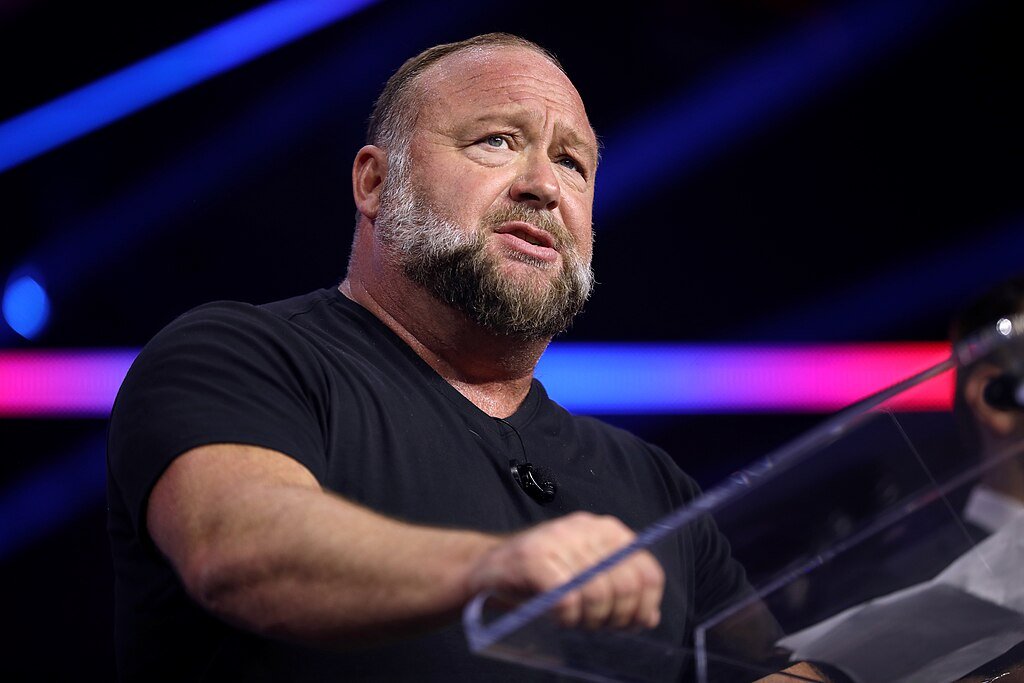
The U.S. Supreme Court has refused to hear Alex Jones’ challenge to the staggering $1.4 billion defamation judgment against him — effectively ending his years-long legal battle over false claims that the 2012 Sandy Hook Elementary School shooting was a hoax. The decision leaves intact prior court rulings that found Jones and his media company, Infowars, liable for spreading deliberate misinformation about one of the nation’s deadliest school shootings. Families of the victims argued that his repeated false statements caused them relentless emotional harm and threats from conspiracy followers. The massive award, issued by courts in Connecticut and Texas, includes compensatory and punitive damages to multiple families of Sandy Hook victims, as well as an FBI agent who responded to the scene. Jurors found that Jones profited from years of spreading lies, using his media platform to amplify conspiracy theories while increasing traffic and sales for his supplements and merchandise business. Jones’ attorneys had asked the high court to review the case on First Amendment grounds, but the justices declined without comment. The move cements one of the largest defamation awards in U.S. history and underscores the growing legal accountability for those who profit from disinformation.
Beloved Actress Diane Keaton Dies at 79

Oscar-winning actress Diane Keaton, whose quick wit, timeless charm, and singular sense of style made her one of Hollywood’s most enduring icons, has died at the age of 79. Her family confirmed the news, saying she passed away in California on Saturday, October 11. Keaton’s career spanned more than five decades, beginning with her breakout performance as Kay Adams in The Godfather (1972) and soaring with her Oscar-winning role in Annie Hall (1977). With her trademark turtlenecks, bowler hats, and offbeat humor, she became synonymous with authenticity — a rare blend of vulnerability and confidence that defined an era of American cinema. Across films like Manhattan, Reds, Something’s Gotta Give, and Father of the Bride, Keaton embodied complex women navigating love, ambition, and self-discovery. She worked with nearly every major director of her generation — including Woody Allen, Francis Ford Coppola, and Nancy Meyers — and inspired generations of actresses to embrace individuality over image. In addition to acting, Keaton was an accomplished author, photographer, and preservationist. She championed architectural restoration in Los Angeles and shared her passion for design and storytelling in several acclaimed memoirs. Her death marks the end of an extraordinary chapter in film history. Tributes from across Hollywood have poured in, celebrating Keaton not only as a cinematic legend but as a cultural touchstone whose humor, grace, and fearless originality left an indelible mark on audiences worldwide.
BREAKING NEWS: Powerful Storm to Bring Damaging Winds and Flooding to East Coast This Weekend
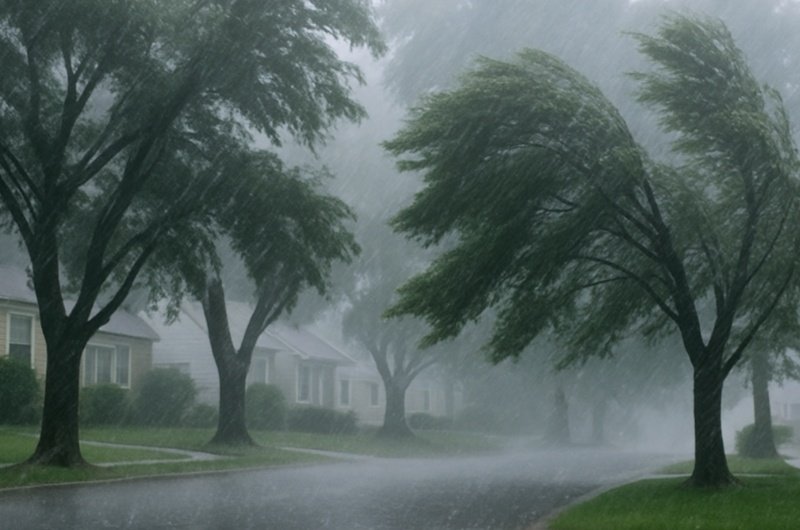
A sprawling coastal storm is strengthening off the Atlantic, and forecasters warn it will lash the Eastern Seaboard with dangerous winds, coastal flooding, and heavy rain through the weekend. From the Carolinas to New York, millions are now under weather alerts as the system moves north, threatening communities already saturated by weeks of unsettled weather. The storm’s wide reach could bring wind gusts topping 60 miles per hour along exposed coastlines, with isolated bursts approaching hurricane force. Low-lying areas from the Outer Banks to Long Island are expected to face storm surges of one to three feet, and forecasters say localized flooding could reach higher in vulnerable zones. Air travel delays, power outages, and beach erosion are likely as the system intensifies. Officials are urging residents to secure property, avoid coastal roads, and prepare for possible evacuations if water levels rise faster than expected. Emergency crews in multiple states have pre-positioned high-water vehicles and response teams in anticipation of flash flooding and downed power lines. The timing of the storm — hitting during high tides in several regions — increases the risk of severe inundation. While the storm is not expected to reach hurricane status, meteorologists emphasize that its slow movement and broad structure make it especially dangerous. Heavy rainfall totals could exceed six inches in some areas, overwhelming storm drains and swelling rivers already running high. Residents are advised to monitor local forecasts closely and heed any evacuation orders issued through the weekend. As the storm tracks northward, it will test the readiness of coastal infrastructure once again — and remind East Coast communities that in an era of warming seas and stronger systems, preparation remains the best defense against the next round of wind and water.
Shutdown Turbulence: Flight Delays and Cancellations Leave Travelers Grounded

As the federal government shutdown stretches on, America’s skies are showing the strain. Across major airports, travelers are canceling flights, rerouting itineraries, and questioning whether it’s worth the risk. What was supposed to be a long weekend getaway for some travelers has turned into a logistical gamble — one that’s eroding confidence in the nation’s air travel system. The ripple effects are immediate. With federal employees unpaid and staffing stretched thin, flight delays and cancellations are climbing. Air traffic controllers and TSA workers, already working under high stress, are reporting burnout and absenteeism. Airlines are bracing for more turbulence if the shutdown extends into next week, a scenario that could deepen operational disruptions and dent public trust further. For travelers, the uncertainty is creating a new kind of fatigue. Business flyers are pushing meetings to virtual platforms. Families are shelving vacation plans. International tourists, already wary of long security lines, are choosing alternate destinations. This is beyond inconvenience. It’s an erosion of reliability in an industry built on precision and predictability. The economic toll is building as well. The U.S. travel sector, one of the country’s most resilient post-pandemic industries, is facing another confidence test. Analysts estimate billions in potential losses if air travel continues to slow through October. Each delayed flight represents not only stranded passengers but missed hotel bookings, idle rental cars, and lost tourism revenue. Final Word If the shutdown persists, the damage could linger well beyond the runways. The longer travelers remain uncertain, the harder it becomes to restore the sense of stability that underpins the entire system. For now, the message from weary passengers and overstretched crews is the same: America’s airways can’t afford a prolonged political standoff.