


TrumpRx: Inside the Landmark Deal That Could Finally Make Obesity Drugs Affordable

In a move the White House calls historic, President Donald Trump has announced a sweeping deal with pharmaceutical giants Eli Lilly and Novo Nordisk to slash the cost of America’s most expensive weight-loss and diabetes medications. Under the agreement, the list prices of Ozempic, Wegovy, Zepbound, and related GLP-1 drugs will fall by as much as 75 percent, marking one of the largest negotiated drug-price reductions in U.S. history. An Historic Price Drop For years, the cost of GLP-1 medications has hovered between $1,000 and $1,350 per month, putting them out of reach for millions who struggle with obesity, diabetes, or cardiovascular disease. Through the new program—called TrumpRx—those same treatments will now be available for $350 per month, with even deeper discounts on future oral versions priced at $150 per month once approved by the FDA. The deal also locks in lower government reimbursement rates. Under the new framework, the Medicare price for Ozempic, Wegovy, Mounjaro, and Zepbound is $245 per month, with beneficiaries paying a $50 co-pay. State Medicaid programs will have access to these same prices, and Medicare will cover Wegovy and Zepbound for patients with obesity and related comorbidities for the first time. What Exactly Is TrumpRx? TrumpRx is the administration’s new direct-purchase program announced by the White House. It allows Americans to buy select medications at capped, negotiated prices — for GLP-1 drugs, that’s $350 per month for injectables and $150 per month for oral versions if later approved by the FDA — without relying on list prices that can exceed $1,000. The initiative is built in partnership with participating manufacturers and is intended to bypass insurance markups, providing transparent pricing that mirrors international “Most Favored Nation” standards. Consumers will also be able to purchase other discounted medicines through the same channel, including Emgality at $299 per pen, Trulicity at $389 per month, and insulin brands NovoLog and Tresiba at $35 per month of supply. A quote from the TrumpRx.gov website homepage reads: “For many years, Americans have paid the highest prices anywhere in the world for prescription drugs — much more than other countries for the exact same product. That ends today.” – President Donald Trump Beyond Obesity: A Broader Price Reset Both Eli Lilly and Novo Nordisk have agreed to guarantee Most Favored Nation (MFN) pricing on all new medicines, repatriate increased foreign revenue from existing products, and extend those prices to every state Medicaid program. In effect, the framework resets how U.S. drug prices are negotiated—tethering domestic prices to international parity. Economic and Public-Health Implications The immediate beneficiaries are the tens of millions of adults managing obesity or Type 2 diabetes, but the ripple effects reach much further. Lower list prices could ease national healthcare spending, expand access to preventive care, and reduce long-term risks associated with chronic disease. Analysts say that if TrumpRx enrollment reaches critical mass, annual savings to Medicare and Medicaid could reach tens of billions of dollars, while private insurers may face pressure to match government pricing. At the same time, industry observers warn that pharmaceutical companies may need to rebalance R&D budgets and international pricing models as they adapt to mandatory price alignment. Investors are watching closely as markets weigh the consumer benefit against potential pressure on profits. A Turning Point in the Weight-Loss Revolution Obesity drugs have become the defining blockbuster of the decade—transforming public conversation around health, self-image, and longevity. But they’ve also highlighted a stark divide in access: effective for those who can afford them, unattainable for many who can’t. TrumpRx aims to change that equation. By collapsing layers of cost and introducing transparent, capped pricing, it offers a blueprint for how high-demand medications can be democratized without fully socializing the system that delivers them. Still, the plan’s success will hinge on supply stability, FDA approvals for oral formulations, and insurer integration. If those pieces align, TrumpRx could become a case study in how pricing reform—once thought politically impossible—reshapes both markets and lives. From The Readovia Lens For the first time, America’s most expensive lifestyle-health drugs are being treated as essential, not elite. Whether TrumpRx marks the start of true transparency in drug pricing—or simply a high-profile exception—will depend on how the rest of the pharmaceutical industry responds. But for millions of Americans battling chronic disease, this moment feels less like politics and more like progress.
FAA Slashes Flight Capacity by 10% at Major U.S. Airports as Staffing Shortages Deepen

The Federal Aviation Administration has announced sweeping flight-capacity reductions at more than 40 major U.S. airports, citing safety concerns and mounting strain from the ongoing government shutdown. The move, effective this week, will reduce scheduled flights by about 10%, impacting major hubs including Atlanta, Boston, Chicago O’Hare, and the New York-area airports. With thousands of federal workers furloughed and air-traffic controllers stretched thin, the FAA said the cuts are a necessary step to maintain operational safety and prevent fatigue among critical personnel. Airlines are being asked to voluntarily trim schedules and coordinate with control centers to avoid congestion during peak hours. Industry experts warn the reductions could ripple through the travel system — leading to delays, cancellations, and mounting pressure on regional carriers during the busy holiday season. The Air Line Pilots Association noted that the crisis underscores long-standing staffing shortages that pre-date the shutdown but are now reaching a breaking point. For travelers, the immediate impact will likely be felt in longer connection times and reduced seat availability on high-demand routes. The ripple effects may also reach the business and logistics sectors, from freight delivery to tourism-related commerce, as airports adjust to lower capacity. While the FAA describes the measure as temporary, no timeline has been set for restoring full operations. The cuts highlight both the vulnerability of the nation’s aviation infrastructure and the cascading costs of a prolonged shutdown.
2025 Election Results: The People Have Spoken – America’s Blue Wave Sends a Message Beyond the Ballot Box

Across the country, voters turned out in force and handed Democrats decisive victories — a powerful signal of public sentiment less than a year before the 2026 midterms. From New York to New Jersey, Virginia, and beyond, the night was defined not just by who won, but by what voters demanded: stability, progress, and change that feels tangible. The sweep reflected a broad coalition — urban progressives, suburban moderates, and even swing voters in traditionally conservative pockets — coalescing around candidates who promised to lower costs, defend rights, and deliver competence over chaos. A Mandate for Change — or a Warning for What’s Next? Democrats’ strong showing is already prompting questions: is this a preview of the political mood heading into next year’s midterms? Historically, off-year elections serve as bellwethers. With 364 days until Americans vote again, last night’s results show both parties what’s at stake — and who’s listening. For President Trump, whose shadow loomed over several high-profile races, the results marked a public rebuke of divisive politics. For Democrats, they were proof that ground-level organizing, local engagement, and social media fluency are reshaping the political map. Key Victories Across the States In Virginia, former congresswoman Abigail Spanberger made history as the state’s first female governor, flipping the office from Republican control and reinforcing Democrats’ growing suburban strength. In New Jersey, Mikie Sherrill held the governorship for Democrats, winning decisively and extending the party’s dominance in the Garden State. In New York City, Zohran Mamdani captured the mayor’s office after an energetic, youth-driven campaign that merged digital engagement with grassroots appeal — a victory already being studied as a model for modern political organizing. And in California, voters approved Proposition 50, a redistricting measure that will allow the state legislature — rather than an independent commission — to draw new congressional maps beginning in 2026. The change is expected to strengthen Democratic representation by as many as five seats in the U.S. House. Together, these wins painted a clear picture of voter momentum that cuts across regions, demographics, and political factions — uniting around a demand for results over rhetoric. Voters as the Voice of Accountability What defined Election Night 2025 was participation. From crowded polling stations to record early voting, the message was unmistakable: Americans are paying attention, and they’re using their vote as their voice to demand accountability. For American citizens, this race was not only about politics — it reached further, into the everyday issues that shape people’s lives. From the price of groceries to access to healthcare, from community safety to the right to be heard, voters made it clear that “this is personal”. The Readovia Perspective Yesterday, voters shifted the balance of power and redrew the map of trust. This year’s elections re-affirmed that American democracy remains dynamic — driven by citizens who expect performance, not promises. Last night’s results were a wake-up call for Congress — a reminder that voters expect their elected officials to do their jobs, or face the consequences. With the 2026 midterms just 364 days away, the real question now is how this election’s results will shape next year’s.
Weakness in the Real Economy: Fewer Shoppers, Fewer Hours, Growing Concern

As economic pressures rise, fewer shoppers and shorter shifts reveal growing weakness in the real economy — from local retail stores to household budgets across America. At a suburban grocery store outside Washington, D.C., a cashier told Readovia Saturday that her hours had been cut back. When asked why, she shrugged: “There aren’t as many people buying groceries right now. On a day like today, our store would usually be packed. But there’s only a few people here shopping.” Her story mirrors a broader national shift that’s beginning to show up in economic data — and in checkout lines across the country. The U.S. economy enters a fragile phase as rising costs and uncertainty begin to pinch lower- and middle-income households, threatening what has until now been a durable engine of growth. A report by Reuters highlights that families are absorbing heavier burdens from health-care expenses, reduced food-benefit certainty, and inconsistent job-market signals — just as the holiday-spending season looms. Traditionally, November marks the kickoff of consumer spending on travel, gifts, and dining — but this year many households appear less able to ramp up. The ongoing federal government shutdown, which has halted processing of certain assistance programs, adds to the strain. Financial cushions are thinner, and the buffer for unexpected job loss or medical costs is shrinking. For business leaders and strategists, the implications are significant. A slowdown in discretionary spending by lower-income consumers could ripple into sectors like retail, dining, and travel — areas that depend on broad-based consumer resilience rather than affluent spending alone. The question now is how broadly the economic weakness will spread.
Federal Judges Order Trump Administration to Keep SNAP Benefits Flowing Amid Shutdown

In a major legal rebuke to the Trump administration, two federal judges have ordered the Agriculture Department to continue funding the Supplemental Nutrition Assistance Program (SNAP) despite the ongoing government shutdown — a ruling that spares millions of families from an abrupt loss of food aid. Regular SNAP funding was set to expire November 1, with the U.S. Department of Agriculture warning that “the well has run dry.” But back-to-back rulings Friday by U.S. District Judge John McConnell Jr. in Rhode Island and U.S. District Judge Indira Talwani in Massachusetts require the department to draw on $5.25 billion in contingency funds to keep benefits flowing. “There is no doubt, and it is beyond argument, that irreparable harm will begin to occur if it hasn’t already occurred in the terror it has caused some people about the availability of funding for food, for their family,” McConnell said during a virtual hearing. The orders came after a coalition of 25 Democratic-led states, joined by nonprofit organizations and faith groups, sued to prevent the Trump administration from halting food assistance to the 42 million low-income Americans who depend on SNAP each month. Talwani’s ruling goes further, directing the government to decide by November 3 whether to issue reduced benefits using the contingency fund or reallocate other discretionary funds to close the gap. Shutdown at Day 31 The 31-day shutdown, now the longest in decades, continues to ripple across the country. Flight disruptions are mounting, even affecting senators trying to leave Washington. Families have spent the week fearing their SNAP and WIC (Women, Infants and Children) benefits would lapse. Food banks and pantries warned they could not meet the surge in demand if federal benefits stopped. “For now, these families can continue putting food on their tables, and thousands of nonprofit food banks, pantries, and other organizations across the country can avoid the impossible burden that would have resulted if SNAP benefits had been halted,” said Diane Yentel, CEO of the National Council of Nonprofits. The Justice Department had argued that it was “not possible” to issue partial benefits because the contingency fund covers only about half of SNAP’s roughly $9 billion in monthly costs. Judges rejected that argument, saying the administration must use the money already authorized by Congress. Follow Up Orders Both courts have ordered federal officials to submit written updates on funding plans by noon Monday. The Trump administration has not yet commented on the rulings. Between the Lines The dual rulings underscore the limits of executive power during a funding lapse and highlight how federal courts can act as a backstop when core safety-net programs are threatened. While Friday’s decisions avert a humanitarian crisis for now, they do not resolve the central issue: without a congressional deal, contingency funds may soon be exhausted, leaving millions of Americans once again uncertain about where their next meal will come from.
Prince Andrew Evicted as King Charles Ends His Royal Life at Windsor

In an historic royal decision, King Charles III has stripped Prince Andrew of all titles and privileges and ordered him to vacate the Royal Lodge at Windsor. Buckingham Palace confirmed that the Duke of York will now be known simply as Andrew Mountbatten-Windsor, marking a decisive end to his official royal life. The late Queen Elizabeth II had granted Andrew long-term residence at the Royal Lodge under a private lease arrangement with the Crown Estate. In 2003, he reportedly paid £1 million to secure the 75-year lease, which was set to run until 2078 and required him to personally fund renovations and maintain the surrounding grounds. Once viewed as a lasting symbol of royal privilege, that agreement has now been rescinded. The eviction follows years of scandal and public backlash over Andrew’s association with convicted financier Jeffrey Epstein. Palace insiders describe the move as “final and necessary,” reflecting King Charles’s effort to modernize the monarchy and reinforce accountability. The message is clear: even among royals, legacy no longer shields from consequence.
Hurricane Melissa Slams Cuba After Devastating Jamaica

Hurricane Melissa made landfall in eastern Cuba early Wednesday, striking the island’s southern coast with maximum sustained winds of about 120 mph (195 kph), just hours after devastating Jamaica with record-breaking intensity. Cuban authorities said more than 735,000 people were evacuated from coastal towns and flood-prone areas before the storm came ashore near Guamá in Santiago de Cuba province. State media reported widespread flooding, power outages, and landslides across eastern provinces, while communications were disrupted in several areas. On Tuesday, Melissa pummeled Jamaica with winds up to 185 mph, flattening homes, uprooting trees, and cutting power to more than half a million residents. Officials described the hurricane as the strongest ever to hit the island, and rescue teams are still searching for people missing in the aftermath. In Cuba, early images showed flooded streets, damaged roofs, and debris strewn across neighborhoods already coping with chronic shortages of fuel, food, and electricity. Emergency crews worked through the morning to clear blocked roads and restore communication lines as torrential rain continued to fall. The U.S. National Hurricane Center warned that Melissa will continue moving north across the Caribbean Sea on Wednesday, bringing life-threatening storm surge, flash flooding, and landslides to parts of Cuba and the Bahamas before gradually weakening later in the week. Meteorologists say unusually warm ocean temperatures helped intensify the storm, making it one of the most powerful late-season hurricanes on record in the region. Readovia Insights Hurricane Melissa’s back-to-back strike on Jamaica and Cuba highlights the escalating force of tropical systems fueled by warming seas. The twin disasters have left tens of thousands displaced and both nations facing a long recovery, as the wider Caribbean braces for what could become one of its costliest hurricane seasons in recent years.
Category 5 Hurricane Melissa Nears Jamaica’s Shores — Officials Warn of Catastrophic Impact
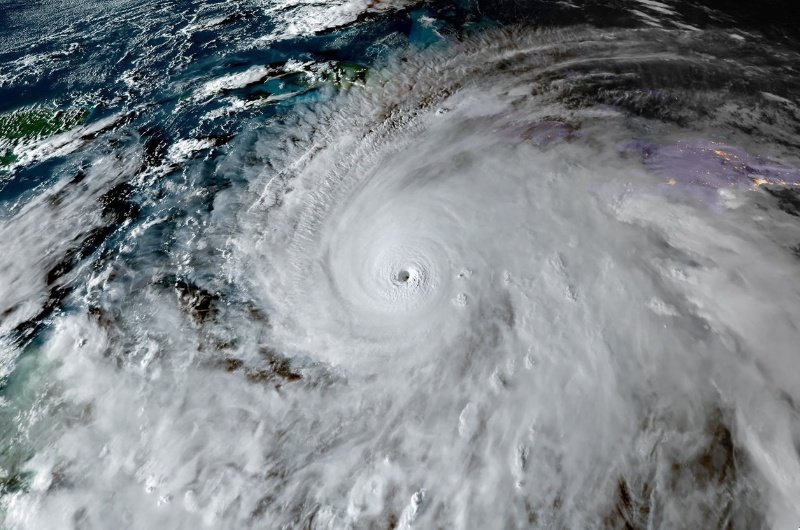
Hurricane Melissa has maintained Category 5 intensity as it approaches Jamaican shores, driving sustained winds near 175 mph and threatening catastrophic, life-threatening flooding and storm surge, according to the National Hurricane Center. Forecasters expect the storm to make landfall around 11:30 am ET today, potentially as the strongest hurricane ever to strike the island. A Slow-Moving Monster Melissa is crawling northwest at just 7 mph, giving the storm more time to unleash torrential rain and destructive winds. Surge levels could reach 13 feet along the southern coast, with rainfall totals exceeding 40 inches in higher elevations — conditions likely to trigger widespread flooding and landslides. ‘The Worst in a Century’ Prime Minister Andrew Holness has ordered mandatory evacuations in vulnerable coastal and low-lying regions, stressing that residents must secure property, move to designated shelters and heed all directives without delay. Officials warn that Melissa could be the most devastating hurricane to hit Jamaica in more than a century. Neighboring nations, including Cuba and the Bahamas, are now preparing for potential impacts later this week. Though the U.S. mainland is outside the direct path, forecasters say the storm will still generate dangerous surf, rip currents, and coastal flooding along parts of the Florida and East Coast shorelines. Human Toll and Infrastructure Risks Even before landfall, power outages have swept through coastal towns, and communication lines are beginning to fail. Shelters are at capacity, with tens of thousands of residents waiting out the storm. Early assessments suggest more than a million people may be directly affected once the eye crosses the coast. The Bigger Picture Melissa’s sheer strength and endurance highlight how warming oceans are fueling more powerful, slower, and wetter storms. Its combination of sustained winds, extreme rainfall, and prolonged movement makes it uniquely destructive — prolonging danger long after the center moves inland. Readovia Insight Hurricane Melissa is a wake-up call. As climate-driven storms intensify, the economic and operational risks to entire regions are becoming impossible to ignore. From supply chains and agriculture to tourism and insurance, the storm’s ripple effects will reach far beyond Jamaica, testing both resilience and recovery in an era defined by extremes.
Readovia Reaches 50,000 Views — and the Journey Is Just Beginning

Fifty thousand views. It’s more than a number. It’s a milestone that reflects a growing community of readers who seek something different. Intelligent news. Thoughtful insight. Elegant storytelling. A Milestone Worth Marking This month, Readovia officially reached 50,000 views, a remarkable achievement for a modern publication still in its first year of growth. Even more meaningful, a large percentage of those views are from returning readers, signaling that Readovia is not just being discovered — it’s being valued. The momentum didn’t happen by chance. In October alone, Readovia doubled its total visits, a surge that underscores the power of quality content in an age of distraction. Every headline, every image, every detail is part of a deliberate effort to elevate the reader’s experience — and audiences are responding. What Makes Readovia Different Readovia was never built to chase clicks or flood the internet with content. It was created to deliver top-tier news and insight that frontlines modern life. It was designed to combine clarity, intelligence, and design into one seamless, uncluttered reading experience — making it easier for people short on time to stay informed. Across channels like AI, Technology, American Wallet, Politics & Power, and Fashion & Beauty, every story reflects three guiding principles: seek truth, inform with insight, and operate with independence and integrity. From breaking headlines to deep-dive analysis, Readovia’s voice remains steady — calm amid the chaos, elegant amid the overload. The Readers Behind the Growth Behind every metric are real readers — thinkers, travelers, professionals, and everyday people who crave substance. The rise in returning visitors shows that this audience isn’t just passing through; they’re making Readovia part of their daily rhythm. That loyalty speaks volumes about what readers want most today: information they can trust, presented with intention and style. Looking Ahead As Readovia continues to expand, the next chapter will focus on more than growth — it will be about depth. Upcoming projects include the Readovia Digital Library, new original features across all categories, and exclusive digital products designed to educate, inform, and inspire. This milestone is proof that when a publication leads with purpose, readers follow. A Message from the Editor “Fifty thousand views — and many more to come. This milestone belongs to every reader who clicked, shared, and returned. You’ve helped prove that thoughtful journalism still has a place — and a future. Thank you for being the best part of the journey.” – Jewel A. Perry Readovia Founder & Editor-in-Chief
Inside the NBA Gambling Scandal: FBI Arrests Coach and Players in Mafia-Linked Probe

Federal investigators charge more than 30 people — including Portland coach Chauncey Billups and Miami’s Terry Rozier — in a sprawling insider-betting and rigged-poker operation that threatens the integrity of professional sports. What Happened A joint investigation by the FBI and U.S. Attorney’s Office for the Eastern District of New York has led to more than 30 arrests tied to two intertwined schemes: an insider-sports-betting network and a Mafia-backed high-stakes poker ring. Among those charged are Chauncey Billups, head coach of the Portland Trail Blazers, and Terry Rozier, guard for the Miami Heat. Prosecutors allege that insiders leaked non-public information on injuries and playing time to help gamblers profit on “under” bets — while others participated in poker games secretly rigged with x-ray tables, hidden lenses, and digital card readers. The indictment also cites connections to New York’s Bonanno, Genovese, Gambino, and Lucchese crime families, who allegedly provided muscle and money-laundering support. Inside the Operation Authorities say the schemes spanned multiple states — including New York, Nevada, and Florida — and moved “tens of millions” of dollars through offshore accounts and crypto wallets. In one example, Rozier allegedly informed associates he would exit a March 2023 game early, triggering a surge of bets against his performance line. In the poker ring, former athletes dubbed “face cards” helped lure wealthy amateurs to rigged games that ensured near-certain losses. The investigation began after federal agents intercepted communications linking organized-crime figures to private games involving active NBA staff. Fallout Across the League The NBA placed both Billups and Rozier on immediate leave. League officials said they are cooperating fully with federal authorities and reviewing internal betting-education programs. Legal experts say the arrests mark one of the most serious integrity crises since the 2007 NBA referee scandal. Sponsors, sportsbooks, and compliance teams are bracing for ripple effects that could extend well beyond basketball. The Bigger Picture The scandal lands at a time when legal sports betting in America has exploded into a $149 billion industry — up from $7 billion in 2018, the year the Supreme Court lifted the federal ban on sports wagering. What began as a niche market has become a national pastime, woven into broadcasts, fantasy leagues, and even in-arena promotions. That meteoric rise has also exposed the industry’s weakest link: access. As players, coaches, and insiders navigate a landscape where betting is legal but deeply conflicted with their roles, regulators are struggling to keep pace. For organized-crime networks, the stakes are higher than ever — and so are the incentives to exploit the cracks. The NBA’s current crisis is a stress test for an industry that went from fringe to mainstream almost overnight. With $149 billion on the table, the question is when and if more scandals emerge, how prepared the leagues, sportsbooks, and law enforcement will be when they do. And perhaps the biggest question of all: how will this scandal impact fans’ trust in professional sports?