


What the End of the Penny Says About Inflation and Everyday Value

The penny may be vanishing from circulation, but its disappearance tells a bigger story about what a dollar — and value itself — means in modern America. For generations, the penny symbolized thrift, patience, and everyday exchange. Yet, its end arrives at a moment when the smallest denominations of value — both monetary and moral — are being quietly redefined. What once felt meaningful now often feels negligible. Inflation has eroded the penny’s worth so thoroughly that its purchasing power is virtually nonexistent. The price of coffee can fluctuate by fifty cents overnight, while entire industries debate whether physical cash is even necessary. The penny’s departure, in that sense, is less about cost efficiency and more about a collective recalibration of what we consider worth keeping. For consumers, the change is psychological as much as practical. Rounding purchases to the nearest five cents will go largely unnoticed, but it reinforces a deeper shift — away from tangible currency and toward abstract value, managed through screens, apps, and digital accounts. Money has become weightless, frictionless, and for many, detached from the everyday human sense of exchange. The Wallet Perspective The penny’s phase-out marks another step toward a frictionless economy. It’s a small loss that hints at something bigger: the slow disappearance of tangible money from everyday life — and perhaps a quiet farewell to the childhood habit of saving pennies, when a hundred small coins still felt like a big victory. ———– More on this topic: U.S. Mint to Produce Final Penny as Costs Outweigh Its Value
Trump Hints at Shutdown Breakthrough — and Wall Street Responds

President Trump says an end to the historic federal shutdown may finally be near — and investors are taking notice. Speaking Sunday evening, the president told reporters, “It looks like we’re getting very close on the shutdown.” Markets surged in early trading Monday on growing optimism that a deal could soon reopen the government and restore confidence across the economy. Global markets followed suit. The S&P 500 and Nasdaq Composite both climbed at the opening bell, while European and Asian indices echoed the gains. Analysts say the rally reflects relief that an end to the record-long shutdown may unlock frozen data releases, delayed contracts, and federal spending that feeds into multiple sectors. For everyday investors, the connection is simple: a functioning government means renewed clarity in markets, restored consumer confidence, and fewer unknowns hanging over retirement accounts and household budgets. Still, the final outcome hinges on congressional approval. While the Senate advanced a funding measure over the weekend, the House must still pass it before the president can sign. Until then, the political impasse remains — though markets clearly expect the logjam to break soon. For now, the message from Wall Street is clear: confidence is climbing again, and the “shutdown risk premium” that’s lingered over U.S. markets may finally be fading.
Gold Surges Toward $4,000 as Stock Markets Waver

Gold prices surged Friday, edging closer to the $4,000 per ounce mark as investors shifted from equities to safer assets following a week of stock market volatility. The metal’s rally underscores renewed caution across global markets as concerns over interest rates, inflation, and economic uncertainty persist. Analysts attribute the rise to a combination of falling stock prices and growing demand for stability. The move signals that investors are once again viewing gold as a hedge against both inflation and market turbulence. According to analysts cited by Yahoo Finance, gold’s upward momentum could continue if economic pressures deepen. Meanwhile, some market strategists note that the surge reflects a broader shift in investor sentiment — from aggressive growth to preservation of wealth. “We’re seeing renewed appetite for safe-haven assets as confidence in equities wavers,” said one senior commodities analyst. Still, experts caution that gold’s ascent may face resistance if the U.S. dollar strengthens or the Federal Reserve tightens policy sooner than expected. Despite that, several major forecasts see gold remaining strong through early 2026, with potential highs between $4,200 and $5,000 per ounce if inflation remains sticky. For everyday investors, the takeaway is simple: gold’s momentum reflects broader unease in the markets — and a reminder that diversification, not speculation, remains the best hedge against uncertainty.
Beyond the Threshold: OpenAI’s Path to a Trillion-Dollar IPO

OpenAI — the powerhouse behind ChatGPT — is setting the stage for what could become the most consequential initial public offering (IPO) of the decade. Reports indicate the company is preparing to go public with a target valuation of up to $1 trillion (USD), a figure that would place it among the most valuable firms ever to debut on a stock exchange. Setting the Stage OpenAI’s potential IPO would mark a new era — not only for artificial intelligence but for the modern technology market itself. Sources familiar with the company’s plans told Reuters that OpenAI is quietly assembling the financial and structural framework for a listing as early as 2027, following a likely filing period in late 2026. If executed as envisioned, the offering could raise at least $60 billion, providing OpenAI with the capital to expand its computing infrastructure and accelerate development toward artificial general intelligence (AGI). Why Now? This move comes as OpenAI transitions from a capped-profit hybrid into a more conventional corporate structure — one designed to invite public investors while maintaining its original mission under a redefined governance model. Microsoft remains OpenAI’s largest strategic backer, holding roughly 27 percent after several funding rounds. Yet the company has worked to lessen its dependency on the tech giant, both to preserve autonomy and to position itself as an independent leader ready for Wall Street scrutiny. At the same time, the artificial intelligence sector is maturing. Capital requirements are skyrocketing as model training costs soar into the billions, data-center construction becomes mission-critical, and global competition from Anthropic, Google DeepMind, and Meta intensifies. Going public could be the most direct path for OpenAI to sustain its ambitions without relying solely on private funding. The Pillars of the Deal Valuation target: Up to $1 trillion. Estimated raise: At least $60 billion. Expected filing: Second half of 2026. Possible listing: 2027. Corporate model: Transitioned from capped-profit to open for-profit structure. While no specific exchange has been named, the New York Stock Exchange (NYSE) and NASDAQ are both reportedly contenders. Insiders expect a dual-class share structure, giving OpenAI’s leadership — including CEO Sam Altman — greater long-term control. Implications for the Market A successful OpenAI IPO could reshape how the world values artificial intelligence. Beyond its staggering valuation, it would symbolize AI’s transition from private innovation to a publicly traded industrial force. For investors, the move provides a direct route to participate in AI’s long-term growth rather than relying on indirect exposure through Microsoft. For markets, it would set a new precedent — likely drawing comparisons to the historic public debuts of Apple, Google, and Meta, each of which defined a generation of technology investing. For competitors, it may trigger a race to revalue, merge, or go public themselves as the industry realigns around scale, data, and computational capacity. The Broader View While the valuation headlines capture attention, the real story lies in what this means for accountability, governance, and long-term direction. Once public, OpenAI will face quarterly reporting, regulatory oversight, and institutional investor expectations — conditions that can test even the strongest corporate missions. Will OpenAI balance its lofty AGI vision with the demands of shareholders? Will transparency and profit expectations alter its trajectory? Those are the questions defining this next chapter. What to Watch Filing confirmation: when OpenAI submits its S-1 filing to the U.S. Securities and Exchange Commission (SEC) Lead underwriters: which investment banks take the deal Revenue transparency: what financial disclosures reveal about real monetization of ChatGPT and enterprise licensing Governance balance: how OpenAI aligns investor returns with its original “benefit of humanity” clause Regulatory climate: how evolving AI legislation in the U.S. and Europe may affect market appetite The Wallet Perspective For entrepreneurs, executives, and investors alike, this IPO represents the market’s declaration that artificial intelligence has become a core industry shaping global economics. When OpenAI rings the opening bell, it will officially mark the dawn of a new economic era powered by intelligence itself.
Unemployment Shock: How the U.S. Is Facing a Perfect Storm of Layoffs, Shutdowns, and Stalled Hiring

The convergence of a prolonged government shutdown, sweeping corporate layoffs, and an AI-driven labor shift is redefining America’s economic stability. 1. The Perfect Labor Storm Three converging forces are reshaping the U.S. job market into a crisis unlike any in recent memory. The federal government shutdown, now stretching through October, has left hundreds of thousands of federal employees furloughed or working without pay. In the private sector, major corporations are cutting deep—especially in technology, retail, and logistics—while hiring has largely frozen. Although the national unemployment rate remains just above 4%, the broader picture tells a different story: slower hiring, longer job searches, and shrinking opportunities for mid-level professionals displaced by automation. Many economists warn that even as companies tout “efficiency,” the human cost of this recalibration is becoming harder to ignore. 2. Unpaid Federal Workers and the Strain on Savings As the shutdown lingers, more federal workers are now missing entire pay cycles. Some are tapping emergency savings, while others are resorting to hardship withdrawals from retirement accounts such as 401(k) plans. Unlike past shutdowns, the current one coincides with higher consumer costs and interest rates, leaving even those with modest savings unable to stretch their pay gaps for long. Federal contractors, many of whom are not eligible for back pay, face even greater uncertainty about how long their jobs—and their benefits—will remain intact. 3. Low-Income Families and Food Bank Demand Low-income families are among the first to feel the strain of economic shocks. With layoffs mounting and the shutdown halting public assistance programs in some areas, demand at food banks is climbing. Organizations across the country are reporting longer lines, reduced inventories, and increased reliance on donations that can’t keep pace with need. The combination of job losses, rising rents, and stalled benefits has pushed more working families into food insecurity than at any point since the pandemic. 4. The Economic Ripple Effect The ripple effects of this crisis reach far beyond the unemployment line. Each additional week of the government shutdown is expected to cost the United States economy roughly 15 billion dollars in lost Gross Domestic Product (GDP), with a month-long impasse potentially adding tens of thousands of new unemployed workers. Corporate hiring freezes and AI-driven job consolidation compound the problem. Businesses that once relied on human labor for operations, logistics, and administration are increasingly replacing those roles with automation and generative AI systems. The result is an economy that looks stable on paper but feels increasingly brittle on the ground—one where growth depends less on people and more on productivity algorithms. 5. The Human Equation What’s unfolding is more than a fiscal issue—it’s a human one. Families juggling missed paychecks, rising food costs, and uncertain futures are confronting a form of economic fatigue that defies statistics. Workers who once viewed their jobs as secure are now reevaluating their place in a shifting labor landscape that values automation over longevity. The Wallet Perspective For millions of Americans, this moment feels less like an economic cycle and more like a reckoning. Paychecks have stopped, jobs are vanishing, and savings accounts are shrinking at the very moment people need them most. The numbers may read like policy statistics, but behind every data point is a grocery bill, a mortgage payment, or a family standing in a food-bank line. The question now is how many Americans will be financially standing when the economy recovers.
“A Tale of Two Wallets” — U.S. Card Spending Rises While Savings Shrink

Spending Up, Resilience Down Across the U.S., consumer card spending continues to rise even as household savings decline. The average family’s financial cushion has thinned noticeably over the past year, and the national saving rate now sits near record lows. The surface strength in spending masks a deeper fragility — one that hints at growing financial strain beneath the numbers. Growing Divide Between Income Tiers Higher-income households remain active in travel, dining, and discretionary purchases, while lower- and middle-income consumers are pulling back. Economists expect overall consumer-spending growth to slow through 2025, with inflationary pressure quietly reshaping everyday habits. The Hidden Fragility Many households are increasingly relying on credit to maintain their lifestyles. Non-essential purchases are being reconsidered, and monthly subscriptions are being cancelled as saving patterns continue to erode. The result is a slow shift from confidence to caution — a quiet tightening of the wallet that could ripple through key sectors by year’s end. Brand & Strategic Implications For consumer brands and financial institutions, the message is clear: sustained spending doesn’t necessarily mean stability. The emerging “two-wallet” economy — one resilient, one stretched — demands segmentation, empathy, and precision in how companies engage, price, and communicate with their audiences. Readovia Insight In a landscape where spending persists but savings fade, the most forward-looking enterprises will pivot from velocity and volume to value, loyalty, and resilience. The question is which consumers will spend, and on what terms.
Erebor: The Billionaire-Backed Bank with Trump Ties and a Fast-Track Approval

A New Kind of Bank — and a Familiar Cast The U.S. Office of the Comptroller of the Currency has conditionally approved Erebor, a new national bank backed by a network of powerful tech investors including Peter Thiel, Palmer Luckey, and Joe Lonsdale. The bank’s focus: financing firms in AI, defense, digital assets, and what its founders call the “innovation economy.” Erebor has raised roughly $275 million in capital and plans to serve high-growth companies that traditional banks often avoid. The name itself — pulled from Tolkien’s The Hobbit — hints at ambition: the mountain where gold is hoarded and guarded. The Speed — and the Scrutiny What’s drawing attention isn’t just the bank’s investors, but how fast it got approved. The OCC signed off on Erebor’s application in just four months, a remarkably short timeline compared with the years similar charters often take. That speed has ignited political concern. Senator Elizabeth Warren, the ranking Democrat on the Senate Banking Committee, condemned the decision in a sharply worded statement released Wednesday. “President Trump’s billionaire buddies Peter Thiel and Palmer Luckey just received approval from the OCC to launch a new bank that will cater to the financial whims of Silicon Valley billionaires,” Warren said. “Trump’s financial regulators just fast-tracked an approval of this risky venture that could set up another bailout funded by American taxpayers and destabilize our banking system.” Her remarks frame Erebor as not just a banking experiment — but a potential flashpoint in the ongoing debate over political influence and financial deregulation under Trump’s leadership. Innovation or Cronyism? Erebor’s founders describe the venture as a solution to what they see as outdated financial infrastructure — a way to “bank the builders” fueling AI, defense tech, and next-generation industries. Supporters argue that traditional institutions have become overly risk-averse since the collapses of Silicon Valley Bank and Signature Bank, leaving innovators stranded. Erebor, they say, fills that gap. But Warren and other critics see something else: a system tilted toward the elite, where proximity to political power accelerates approvals and concentrates financial control. The bank’s backers have close ties to the Trump orbit — from Thiel’s early campaign support to Luckey’s defense contracting firm Anduril, which has won major government contracts. That proximity is what has turned Erebor’s charter into more than a business story — it’s now a litmus test for how influence moves through Washington’s financial corridors. The Bigger Picture Erebor’s conditional approval signals a broader shift in the U.S. financial landscape — one where politically connected capital and technologically ambitious banking models are colliding. Whether Erebor becomes a model of innovation or a cautionary tale may depend on what happens next. Will it expand opportunity for next-generation companies — or deepen public skepticism about who America’s banking system truly serves? Either way, it marks another unmistakable moment in the Trump-era fusion of politics, money, and Silicon Valley power.
Fuel Prices Dip — A Quiet Win for Drivers

The national average price for regular gasoline is $3.115 as of Oct. 8, 2025. That’s 4.5 cents lower than a week ago and 8.4 cents lower than a month ago. The spread remains wide by state. On the high end, Hawaii: $4.485; on the low end, Delaware: $2.903. Most Gulf and South states cluster below the national average, while West Coast states remain higher due to taxes and supply dynamics. Why the drop Seasonal demand: After Labor Day, driving tapers off, easing pressure on prices. Winter-blend switch: Most markets moved to cheaper winter formulations in mid-September, which typically lowers costs in September–October. Crude and supply: Softer crude prices and ample supply filter through to pump prices with a lag. Between the lines The federal shutdown has fewer government employees commuting—especially around D.C. and other federal hubs—nudging weekday demand lower at the margins. It will be interesting to see whether the shutdown drives fuel prices lower. We’ll keep an eye on it through the week.
Wall Street Rallies on AI Buzz — AMD Jumps on OpenAI Deal
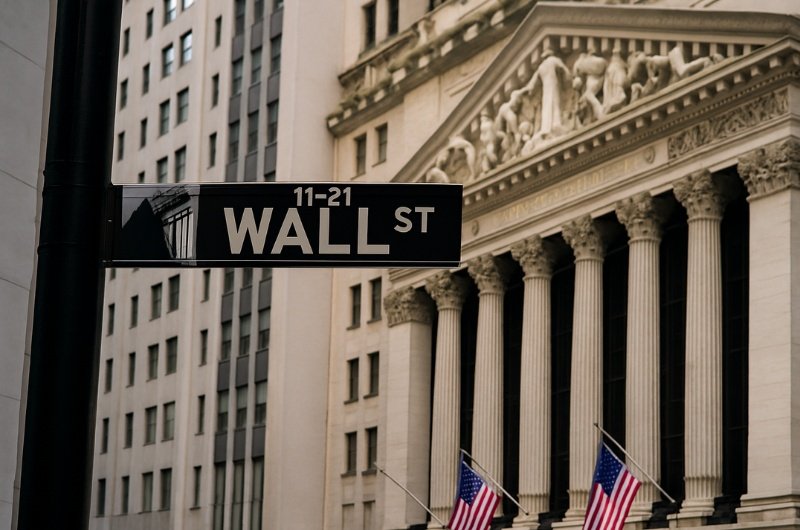
Investors double down on artificial intelligence optimism as AMD’s new partnership with OpenAI sparks a tech-led surge on Wall Street. Wall Street kicked off the week with renewed momentum, as optimism around artificial intelligence once again lit up the trading floor. Shares of Advanced Micro Devices (AMD) soared more than 30% in early trading after news of a major partnership with OpenAI, positioning AMD as a critical supplier of advanced chips powering the next generation of AI infrastructure. The deal signals a deepening collaboration between hardware and AI software leaders — and offers investors a glimpse of where the real growth may lie: not only in applications like ChatGPT, but in the high-performance chips that make them possible. AMD’s rally also lifted the broader semiconductor sector, with Nvidia, Broadcom, and Micron posting gains in sympathy. Even amid uncertainty from the ongoing federal government shutdown, tech remains Wall Street’s anchor of confidence. Traders appear willing to overlook short-term political noise in favor of long-term innovation plays. “AI isn’t a bubble,” one strategist noted. “It’s a race for infrastructure dominance — and every new deal confirms that.” Still, analysts caution that the pace of enthusiasm may outstrip fundamentals. With no major economic data releases during the shutdown, price momentum is being driven more by sentiment than by measurable growth indicators. Between the Lines Wall Street’s appetite for AI shows no sign of cooling — and AMD’s leap into OpenAI’s supply chain cements the chipmaker as one of the market’s most closely watched power players.
American Wallet Report: Gold’s Record Run and Why Prices Are Soaring in 2025

Gold surged past $3,800 per ounce in late September 2025, posting one of its strongest years on record. Fueled by shutdown fears, a weakening dollar, and expectations of Fed rate cuts, the rally raises a simple question for American wallets: is it too late to join the party, or is there still more upside? The Surge: From steady climb to record highs Gold has been on a relentless run in 2025, but Q3 sealed its status as the standout asset of the year. By September 29, spot gold crossed $3,800/oz, a new all-time high and more than 40% higher year-to-date. For an asset often dismissed as “dead money” in boom times, the move was seismic. Traders point to both momentum and conviction. Flows into gold ETFs surged, central banks added to reserves, and retail investors piled in as headlines about a looming government shutdown rattled confidence. What’s fueling the rush Several factors converged to light gold’s fire: Shutdown jitters: the possibility of a federal funding lapse amplified safe-haven demand. Dollar weakness: a softer greenback made dollar-denominated gold more attractive worldwide. Rate cut bets: markets now expect the Fed to resume cutting rates in Q4, lowering yields on competing assets and boosting the appeal of non-yielding gold. Geopolitics: from tariffs to troop deployments, political tension added another layer of uncertainty, further bolstering gold’s defensive glow. What it means for American wallets For everyday investors, the surge is a test of strategy. Diversification: Gold can balance equity and bond portfolios, offering a hedge in downturns. Timing risk: Buying at all-time highs can be perilous; corrections happen even in bull markets. Allocation strategy: Financial planners often suggest a 5–10% gold exposure, but the right number depends on risk tolerance. Accessibility: Investors can buy physical bullion, gold ETFs, or mining stocks. Each has tradeoffs in liquidity, storage, and fees. Tempting, isn’t it? The rally makes gold look irresistible, but the smartest wallets avoid all-in bets. Controlled, measured exposure is key. Looking ahead: forecasts & scenarios Analysts are divided, but consensus is that prices will stay elevated: Base case: Gold holds in the $3,800–$4,200/oz range through year-end. Bull case: A weak dollar and sustained Fed easing propel it beyond $4,000 in 2026 Bear case: A surprise economic rebound or stronger-than-expected dollar sparks a sharp correction. Takeaway for investors Gold’s blistering run is both a warning and an opportunity. For investors worried about volatility, inflation, or political dysfunction, a touch of gold is a timeless insurance policy. For those chasing momentum, caution is in order: history shows that parabolic runs can reverse just as quickly. In Q3 2025, gold roared. The question for Q4: will it get louder and shine brighter, or will this safe-haven trade scorch those who came late to the rush? Only time will tell.