


White House Prepares AI Rulebook to Replace State Laws

The White House is preparing to issue a sweeping executive order that would create a single national framework for artificial intelligence regulation — a move aimed at replacing the growing patchwork of state-level AI laws with one unified federal standard. Administration officials argue that the rapid growth of AI requires consistent rules that give developers and businesses clarity across all 50 states. President Trump has recently emphasized this point in a social media post, saying the United States continues to lead global AI development but warning that progress could slow if individual states begin imposing their own approval processes. He argued that fragmented oversight would complicate innovation and signaled that a national standard is needed to keep the U.S. competitive. He also announced that he plans to sign a “One Rule” executive order later this week to establish a single federal system. The forthcoming order is expected to override many existing or proposed state regulations in favor of centralized federal authority. Supporters say this shift will help companies scale AI technologies nationwide without navigating a maze of conflicting local rules, strengthening America’s position in the global technological race. Opponents argue that the move could diminish state autonomy and weaken protections that local governments have created around privacy, algorithmic fairness, and consumer safety. Some legal analysts also question whether such a substantial regulatory overhaul can be achieved through executive action alone, rather than through Congress. Reactions within the industry remain mixed. Many companies welcome the idea of predictable, uniform standards, while civil liberties groups worry that preemption could roll back safeguards developed at the state level. The administration has suggested that the rulebook will balance innovation with responsible development, though the specific provisions have not yet been released. The final text of the executive order is expected soon. If enacted, it would mark one of the most consequential shifts in U.S. AI governance to date — redefining the boundary between federal oversight and state authority while shaping the future of American innovation.
President Trump Plans Sweeping Executive Order to Establish Single National AI Rule
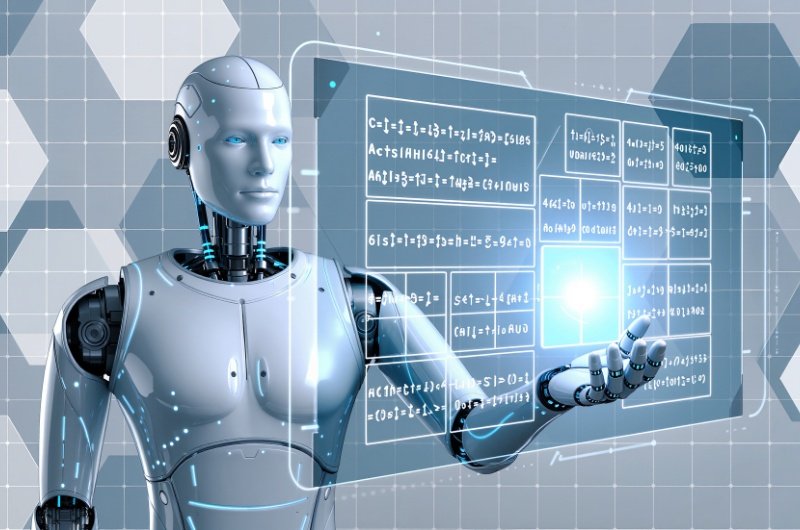
President Trump said Monday he will sign an executive order this week aimed at creating a single national rule governing artificial intelligence, a move designed to override the growing patchwork of state-level AI laws. The announcement signals a major federal push to centralize oversight of rapidly advancing AI technologies. Tech companies have long argued that inconsistent state regulations create costly complexity and slow innovation. By replacing multiple state frameworks with one national standard, the executive order would give companies a clearer path to developing and deploying AI systems across the country without navigating dozens of separate approval processes. The move is widely seen as a win for large technology firms, many of which have strengthened ties with the White House amid the escalating global race to lead in artificial intelligence. A unified rule could accelerate product rollouts in areas such as automation, data analysis, and advanced decision-making tools. However, the plan is expected to face resistance from both Democratic and Republican state leaders. Several governors and attorneys general have previously argued that states must retain the authority to regulate AI in order to protect residents from risks such as biased algorithms, data misuse, and consumer harm. With AI deployment accelerating faster than traditional regulation, the executive order sets the stage for a broader debate over who should control AI oversight in the United States — Washington or the states — and how innovation can be balanced with accountability as artificial intelligence becomes embedded in everyday life.
AI Is Getting Its Own App Store — And It’s About to Explode

A new wave of “AI app stores” is emerging across the tech landscape, and it’s reshaping how people will discover, build, and monetize artificial intelligence. The idea is no longer theoretical — both mainstream app stores and dedicated AI marketplaces are rapidly evolving into distribution hubs for intelligent apps, custom agents, and full-scale automation tools. Analysts say this shift mirrors the early days of the mobile app boom, but the stakes — and earning potential — are even higher. Traditional app stores are already seeing the first surge. AI-native apps like Perplexity, DeepSeek, and a growing ecosystem of personal assistants, image generators, and automation tools are topping download charts on Apple’s App Store and Google Play. What used to be niche experimental tools are now polished consumer-ready products, signaling that AI is transitioning from novelty to mainstream utility. At the same time, entirely new marketplaces are being built for the AI economy. Platforms like the H2O AI App Store allow organizations to create, deploy, and manage their own machine-learning applications without assembling complex infrastructure. OpenAI is rolling out its own GPT Store, where creators will be able to publish custom AI agents — everything from writing assistants to travel concierges — and earn revenue from their use. A wave of emerging “agent marketplaces” is going even further, offering AI workers designed to perform tightly scoped tasks like scheduling, inbox management, trip planning, or data analysis with almost no human oversight. The implications are enormous. These platforms lower the barrier to entry for building AI-powered tools, enabling both individuals and businesses to participate in what many expect to be the next trillion-dollar creator economy. Instead of writing full applications from scratch, developers can assemble agents like modular building blocks, dramatically speeding up development cycles and reducing costs. And for consumers, the marketplaces make advanced AI more accessible than ever, putting sophisticated capabilities just one click — or one command — away. If the momentum continues, the AI app store could become the central hub of the next digital era, shaping how software is created, distributed, and monetized. The winners will not just be the companies building the platforms, but the creators who learn to harness them — much like the early pioneers who built the first wave of mobile apps. The difference this time is that the apps won’t just respond to users. They’ll increasingly think, act, and build on their behalf.
AI Assistants Are Quietly Replacing Traditional Search
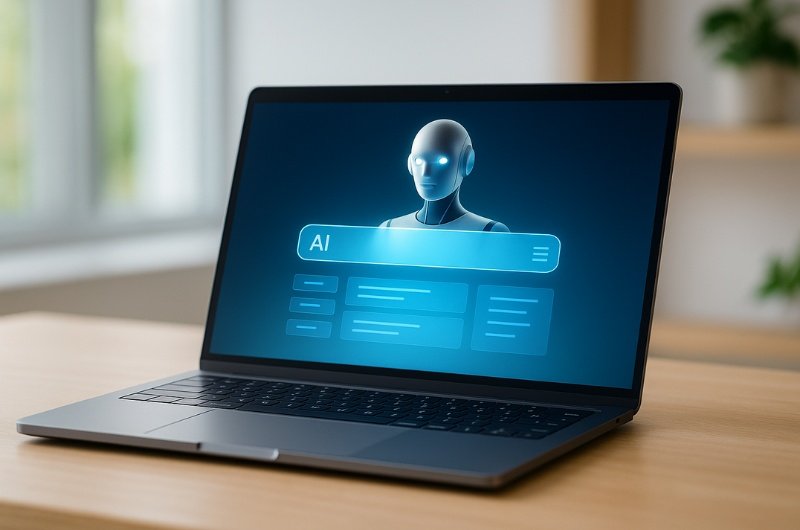
AI assistants are rapidly becoming the first stop for millions of people seeking answers online. Tools like ChatGPT, Gemini, Claude, and Perplexity now deliver streamlined summaries, personalized context, and direct instructions that sidestep the need to sift through search results. Traffic data across the web shows a quiet but unmistakable decline in traditional search activity, particularly for informational queries where AI responses are faster and more convenient. Tech analysts say the shift began in early 2024 and accelerated sharply in 2025 as AI tools became integrated into operating systems, mobile keyboards, browsers, and productivity suites. Instead of “searching,” users increasingly ask AI assistants to find, generate, or decide things for them. Google itself has acknowledged the trend by rolling out more AI-first features and experimenting with reduced-link answer panels — a move that has drawn mixed reactions from publishers. For consumers, the upside is obvious: instant answers and less noise. For platforms dependent on search traffic, the change has been disruptive. Multiple analytics firms have reported year-over-year declines in organic search referrals, particularly for how-to content, factual lookups, and news summaries. Some publishers are already restructuring their content strategies around AI visibility rather than search visibility. AI companies also see opportunity. Perplexity, for example, has positioned itself as an “answer engine,” combining AI reasoning with curated citations from verified sources — a hybrid model gaining traction with younger users. Other platforms are leaning on personalization, enabling assistants to remember preferences, previous queries, and long-term tasks. The shift isn’t sudden, but it is structural. As AI assistants absorb more of the informational workload, traditional search engines are becoming less central to everyday online navigation. For publishers, marketers, and platform operators, the next phase of the internet will belong not to who ranks highest — but to who earns visibility inside AI-driven answers.
AI Goes All-In: Corporate Adoption Accelerates with OpenAI–Accenture Deal

The age of “nice-to-have AI pilot projects” may be ending. A newly announced enterprise partnership between OpenAI and global consulting giant Accenture will deploy advanced AI tools, including ChatGPT Enterprise, to tens of thousands of employees — signaling a turning point in how major firms integrate artificial intelligence into daily operations. Rather than experimenting at the edges, companies are beginning to embed AI directly into the core infrastructure of work. Under the deal, Accenture consultants will use AI across everyday functions, from internal productivity and research assistance to client-facing deliverables and large-scale transformation projects. The message is clear: AI is no longer being framed as a supplement or an innovation showcase — it is evolving into operational infrastructure and competitive necessity. That shift is expected to ripple across industries. For businesses, enterprise-scale AI offers efficiency gains, faster execution, and the potential for new strategic advantages among early adopters. For employees, it represents both opportunity and disruption: workers who learn to partner with AI may accelerate their careers, while others risk displacement as routine tasks become automated. But the move comes with significant challenges. As AI moves from experimentation into mission-critical systems, companies must confront questions around governance, accuracy, bias, and compliance. Overreliance on automated systems or failure to manage risk could have real consequences — especially as regulatory scrutiny increases globally. For business and operations leaders, the moment marks a sharp pivot. The question is no longer whether AI will transform work — but how fast organizations can adapt, balance innovation with accountability, and build strategies that scale without losing the human core of enterprise performance.
The Age of the AI Agent Is Here — Rapidly Transforming Everyday Life

Artificial intelligence has entered a new phase — one defined not by theoretical breakthroughs, but by real, everyday usefulness. AI agents, the next generation of intelligent digital assistants, are rapidly moving from early prototypes to practical tools that manage appointments, summarize information, automate daily tasks, and serve almost as personal coordinators. Analysts say this shift marks the beginning of a new era in how people interact with technology in their homes and workplaces. Unlike traditional voice assistants, today’s AI agents can understand context, make decisions, and complete multi-step tasks without constant instructions. Early adopters are using them for everything from travel planning and budgeting to nutrition tracking, fitness routines, and real-time research. Many major U.S. companies are already experimenting with agents to streamline scheduling, reduce administrative workloads, and support customer service — unlocking productivity previously out of reach. Investors and technology leaders are betting heavily on the agent future, calling it one of the most transformative shifts since the smartphone. Billions of dollars in development are accelerating tools designed to operate independently inside apps, browsers, and home devices — and soon, across the physical world through robotics and automation. Meanwhile, regulation is beginning to catch up. Congress is currently in discussions over whether to establish a federal regulatory framework for artificial intelligence, including legislation that would govern transparency, safety standards, and whether states may continue passing their own AI laws. Some proposals would create a “sandbox” environment for AI developers to test systems under federal oversight; others are focused on curbing state legislation in favour of a unified federal approach. The outcome of these discussions will significantly influence how broadly and quickly AI-agents can be deployed. Still, rapid adoption raises new questions. Some industry experts warn that workplace transformation could reshape job structures faster than expected, particularly for roles built around coordination and repetitive tasks. Others point to concerns around data privacy, reliability and oversight — pushing for ethical frameworks and transparent standards before agents become fully embedded in society. For everyday Americans, the promise is a more organized and efficient life: less time spent on routine tasks, more time for creativity, connection and rest. Whether agents ultimately become partners or competitors in the workplace remains to be seen — but one thing is clear: the agent era has begun, and the pace of change is accelerating. Readovia analysts say this transformation is unfolding even faster than the rise of the World Wide Web, reshaping everyday life.
Google Launches Gemini 3 — A New Phase in AI Reasoning

Google Tuesday unveiled Gemini 3, its most advanced AI model yet, marking a major escalation in the agentic-AI race. The model introduces deeper reasoning, enhanced multimodal understanding, and brings coding and agent workflows into sharper focus. Gemini 3 is now available in the Gemini mobile app and via “AI Mode” in Google Search for general users. For developers and enterprises, access opens through the Gemini API, Google AI Studio and Vertex AI. A special “Deep Think” version is set to roll out to ultra-tier subscribers in the near term. From a capabilities standpoint, Google says Gemini 3 delivers “PhD-level” reasoning, out-performing previous models on benchmarks and enabling richer code generation, image and video analysis, and long-context memory. Under the hood, the release signals that AI is shifting from pure text assistants to full-scale agent ecosystems — agents that plan, act and iterate. For business leaders, the implications are substantial. The model’s emergence forces a rethink of tool stacks, talent needs and compute infrastructure. The race is no longer just about the model; it’s now about agent design, workflow orchestration and integration across modalities. Enterprises that move first may gain a competitive edge in turning AI from novelty into productivity. Key questions remain: will the elite features of Gemini 3 reach broad adoption? Can developers and organizations polish the “agent instinct” into reliable business workflows, rather than prototypes? As Gemini 3 rolls out, the next 6 – 12 months will test how much of the frontier AI hype becomes operational reality.
The Rise of Agentic AI: Why Business Is Only Beginning to Catch Up

While generative AI grabbed the early headlines, a new evolution is taking shape — agentic AI, systems that can plan, reason, and act independently to accomplish goals. Instead of waiting for human prompts, these intelligent agents can take initiative, manage workflows, and adapt as conditions change. For businesses, this shift represents both promise and pressure. According to McKinsey, nearly 90 percent of organizations now use AI in some capacity, yet fewer than a quarter have begun to scale agentic systems. The challenge isn’t enthusiasm — it’s readiness. Agentic AI demands better data pipelines, security layers, and reimagined processes to handle decisions once reserved for people. Early adopters are already seeing results. In cybersecurity, agentic AI can autonomously detect and contain threats before teams even notice. In operations, it’s handling scheduling, inventory, and customer engagement across multiple channels. What once required departments now happens in real time — invisible, fast, and increasingly autonomous. Still, businesses are just scratching the surface. For every company deploying these systems, dozens are still experimenting, unsure how to integrate AI that doesn’t just assist — but acts. The next wave of competitive advantage won’t come from using AI, but from partnering with it. Agentic AI is the future of automation, and the dawn of self-managing systems that redefine what it means to work.
AI: A Compilation of the Collective Mind — Moving Faster Than Thought

Artificial intelligence is a reflection of human intelligence. Every model, dataset, and output draws from the vast library of human knowledge, experience, and creativity. In a sense, AI is the collective mind of humanity — compressed, connected, and capable of producing insight and results faster than thought itself. What makes this moment extraordinary isn’t just the scale of data AI can process, but the speed at which it can deliver results. In a fraction of a second, it can analyze millions of possibilities, synthesize patterns, and generate outcomes that once required teams, time, and trial. From science and medicine to art and communication, AI is collapsing the distance between question and answer — and between imagination and execution. For modern life, that speed changes everything. Businesses can now model global markets in real time. Writers and designers can create full concepts in minutes. Researchers can simulate years of testing in hours. The advantage is not just efficiency — it’s acceleration: the ability to turn ideas into outcomes almost instantly. Still, beneath that speed lies something deeply human. AI is built from our collective input — the words we’ve written, the art we’ve made, the discoveries we’ve shared. It doesn’t replace intelligence; it reflects it, magnified. What we’re seeing is not the rise of machine thought, but the amplification of human thought at unprecedented scale. Yes, AI is transforming technology. But it’s also transforming time. The future no longer unfolds slowly; it literally updates in real time. The Readovia Lens The future of AI will belong to those who learn how to work with it, build on it, and monetize its momentum. The next wave of innovation will rise from collaboration — humans and machines building innovation and solving problems together — at unimaginable speed. Those who understand how to channel AI’s collective intelligence into products, insights, and scalable systems will define the next era of wealth creation.
AI-Driven Layoffs Hit Two-Decade High: 150,000 Jobs Cut in October

The U.S. job market is showing fresh signs of strain as companies accelerate their adoption of artificial intelligence. According to new data released by Challenger, Gray & Christmas, employers announced 153,074 job cuts in October 2025 — the highest for any October since 2001. Roughly 31,000 of those cuts were tied directly to AI-related automation and restructuring, marking one of the sharpest technology-driven shifts in the modern labor market. The firm’s report points to a new reality: while AI is boosting productivity and profits in certain sectors, it’s simultaneously displacing traditional roles in operations, customer service, logistics, and data processing. Manufacturing, media, and financial services saw the heaviest AI-linked reductions, with several major corporations citing “efficiency gains through automation” as the reason for workforce downsizing. “Employers are clearly recalibrating their headcounts for an AI-assisted future,” said Challenger CEO Andrew Challenger in a statement. “Many roles are being redefined, and some are disappearing altogether.” Rewriting the Workforce Map October’s total layoffs pushed year-to-date job cuts to more than 1.2 million, up nearly 40 percent compared with the same period in 2024. Analysts say the trend reflects a deeper structural adjustment: companies are using generative and predictive AI tools not just to automate repetitive tasks, but to streamline decision-making layers. In parallel, job openings have narrowed in sectors once considered immune — including HR, marketing, and legal — as firms integrate machine-learning models into everyday workflows. Yet demand for AI-literate professionals remains strong, particularly in data science, cybersecurity, and model-governance roles. A Cautious Outlook Economists warn that the combination of sustained layoffs and uneven rehiring could test consumer confidence heading into the holiday season. At the same time, businesses face growing pressure to retrain or redeploy affected employees rather than rely solely on downsizing. The Bureau of Labor Statistics has already begun monitoring “AI displacement” as a standalone metric in its quarterly employment outlook. For now, the data underscores a defining paradox of the AI era: technology designed to enhance human productivity is also rewriting what “human work” means in the first place.