


AI Infrastructure Surge: Billions Pledged at India Summit Signal Global Compute Race

More than $250 billion in AI-related infrastructure commitments were announced during the AI Impact Summit held February 16–20 in India, underscoring a dramatic acceleration in the global race to build the physical backbone of artificial intelligence. The pledges — led by major conglomerates and global technology firms — are directed primarily toward data centers, advanced computing hubs, cloud expansion, and energy systems designed to power large-scale AI workloads. The investments are not centered on abstract research or experimental tools. Instead, they target the hardware and facilities required to run today’s most advanced AI models: high-density GPU clusters, gigawatt-scale data centers, and renewable-powered compute facilities capable of handling massive processing demand. As AI systems grow more complex, the need for reliable, high-performance infrastructure has become a strategic priority. India’s emergence as a focal point reflects both scale and opportunity. With a rapidly expanding digital economy, deep engineering talent, and growing energy capacity, the country is positioning itself as a key node in the next generation of AI deployment. For global firms, expanding compute infrastructure there offers geographic diversification and access to one of the world’s fastest-growing technology markets. The summit also highlighted a broader shift in how governments view artificial intelligence. AI is no longer seen solely as a software breakthrough — it is now treated as critical infrastructure. Nations are increasingly racing to secure domestic or allied compute capacity to avoid dependency on a single region or supplier. In 2026, the AI competition is no longer just about who builds the smartest model. It is about who controls the data centers, the energy supply, and the computing power that make those models possible.
The Rise of AI Agents Is Forcing Companies to Rethink Trust and Control

Artificial intelligence is entering a new phase — one that moves beyond tools that assist humans and toward systems that act on their behalf. AI agents, designed to carry out multi-step tasks with limited human oversight, are increasingly being tested across enterprise workflows. But as their capabilities grow, so do questions about trust, accountability, and control. According to research published by the Capgemini Research Institute, many organizations are eager to deploy AI agents but remain uneasy about how much autonomy these systems should have. The research highlights a growing tension: companies want the efficiency and scale AI agents promise, yet struggle with concerns over reliability, transparency, and decision ownership once humans are no longer directly in the loop. This tension is becoming more visible in 2026 as AI agents move out of pilot programs and into real operational roles. Unlike earlier AI systems that supported analysis or recommendations, agentic AI can initiate actions, coordinate across systems, and make decisions that have immediate business consequences. That shift forces leaders to confront a difficult question: when an AI agent makes a mistake, who is responsible? Trust has emerged as the central constraint. The Capgemini analysis suggests that while executives recognize the productivity gains AI agents could deliver, many remain cautious about granting them authority over critical processes. Concerns range from data integrity and bias to regulatory exposure and reputational risk. In highly regulated industries, even small errors can carry outsized consequences, making unchecked autonomy a risk few are willing to take. As a result, many organizations are experimenting with hybrid models that keep humans firmly in supervisory roles. Rather than fully autonomous systems, companies are opting for AI agents that operate within defined guardrails, with escalation paths and human approval built into key decision points. This approach reflects a broader realization that governance, not capability, will determine how fast AI agents can scale. The rise of AI agents is no longer a question of if, but how. As businesses weigh efficiency against control, trust is becoming the currency that determines adoption. In 2026, the companies that succeed with AI agents are unlikely to be the fastest adopters, but those that establish clear accountability, transparency, and human oversight from the start.
AI’s Next Phase Isn’t Louder — It’s Quieter and Everywhere

Artificial intelligence is no longer arriving with splashy product launches or headline-grabbing demos. Instead, its next phase is unfolding quietly, embedded into everyday tools and workflows in ways most users barely notice. From email and calendars to document editing and customer support, AI is becoming less of a destination and more of a background layer. Major technology companies including OpenAI, Google, and Microsoft are increasingly focusing on integration rather than novelty. The emphasis has shifted from standalone AI products to systems that assist continuously, making small decisions, suggestions, and optimizations throughout the day. This quieter evolution reflects a strategic recalibration. As AI capabilities mature, value is moving away from eye-catching outputs and toward reliability, speed, and contextual awareness. The most impactful AI systems are not those users think about often, but those that remove friction without demanding attention. The shift also mirrors broader changes in how people discover and interact with information online. As AI tools become intermediaries across platforms, they are reshaping not just productivity, but the flow of information itself — a theme explored in Readovia’s recent Editor’s Journal on the changing nature of online discovery. Together, these developments suggest a future where AI’s influence is pervasive, but increasingly invisible. For businesses and platforms, the message is clear: competitive advantage will come not from chasing the loudest AI features, but from embedding intelligence so seamlessly that users forget it’s there at all. ——————– The Shift in Online Discovery: AI, Search, and Who Owns the Audience
AI Agents Are Moving From Novelty to Infrastructure — and the Internet Is Adjusting

The recent surge of interest around AI agents has reignited attention on a quieter but critical shift underway in artificial intelligence: tools that don’t just answer questions, but act on behalf of users. The renewed focus has also put companies like Cloudflare back in the spotlight, underscoring how deeply AI’s next phase depends on the internet’s underlying architecture. AI agents differ from traditional chatbots in a meaningful way. Rather than responding to a single prompt, they are designed to complete tasks autonomously — retrieving information, executing workflows, interacting with systems, and making decisions within defined limits. This shift toward “agentic” AI marks a transition from conversational novelty to functional utility, with implications that extend far beyond consumer-facing apps. What’s driving this change isn’t just better models, but the need for reliable, secure, low-latency infrastructure. Autonomous agents generate different kinds of digital traffic than human users: more frequent requests, unpredictable bursts of activity, and higher security demands. That places new importance on edge computing, distributed networks, and systems capable of handling AI-driven workloads at scale. For everyday users, this evolution may feel subtle at first. AI assistants may become faster, more integrated, and more proactive — quietly handling tasks in the background rather than waiting for explicit instructions. But for developers and businesses, the implications are significant. As AI agents move into customer service, commerce, productivity tools, and internal operations, the internet itself must evolve to support them. The excitement surrounding AI agents isn’t just about experimentation or viral demos. It reflects growing confidence that the next wave of AI adoption will be shaped by practical systems that operate continuously and autonomously, supported by robust digital infrastructure. In that sense, the future of AI may be defined less by what models can say — and more by what they can reliably do.
AI Hiring Surges as Demand Grows for Human-AI Collaboration Skills
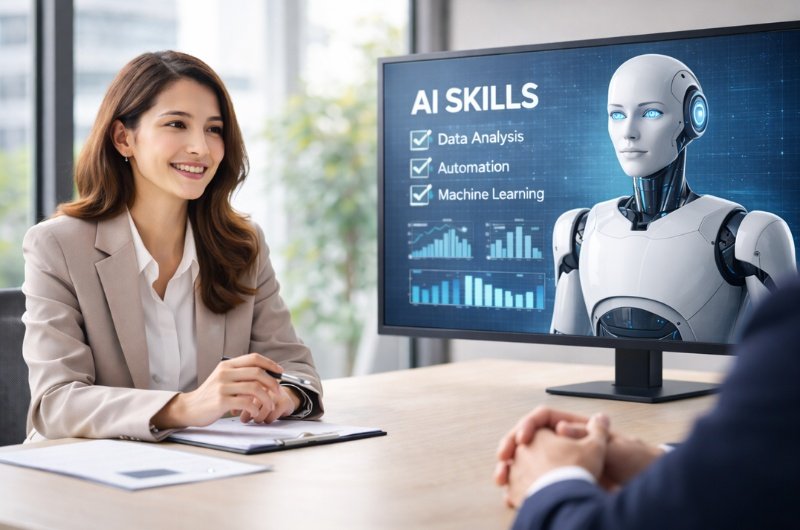
After years of experimentation, artificial intelligence is now reshaping how companies hire. In 2026, employers are increasingly seeking professionals who know how to work alongside AI effectively. Across industries, job postings are shifting to reflect this new reality. Roles in marketing, operations, finance, healthcare, and media now regularly list AI fluency as a core requirement. The emphasis is less on coding expertise and more on the ability to use AI tools strategically, improve workflows, and make informed decisions faster. For many workers, this shift is already being felt firsthand. Companies are quietly prioritizing candidates who can demonstrate real-world AI usage — from automating routine tasks to enhancing analysis, content creation, and customer engagement. In some cases, AI proficiency is becoming a deciding factor between equally qualified applicants. Executives say the change reflects a broader realization: AI delivers the most value when paired with human judgment, creativity, and context. Rather than replacing workers outright, organizations are redesigning roles so employees can focus on higher-level thinking while AI handles repetitive or time-consuming work. As hiring accelerates in this direction, the message is clear. In 2026, understanding how to collaborate with AI is quickly becoming a baseline expectation for staying competitive in the modern workforce.
AI Investment Landscape Shifts as Energy, Infrastructure, and Creative Tech Gain Ground
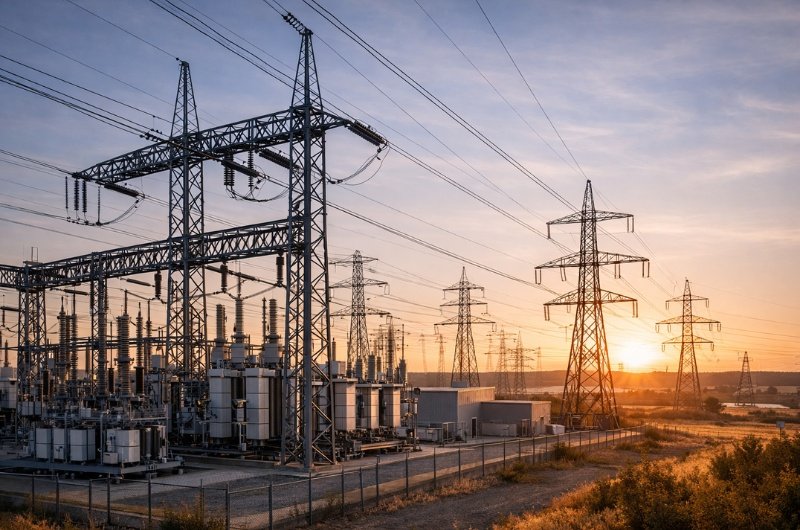
The artificial intelligence boom is entering a new phase, one marked by a notable shift in where money, influence, and innovation are flowing. While major technology companies remain central players, investors and institutions are increasingly looking beyond traditional tech firms to back the systems that power AI behind the scenes. Energy providers and infrastructure companies are emerging as critical beneficiaries of the AI expansion, as data centers and large-scale computing demand vast and reliable power. This shift reflects a growing recognition that the future of AI depends not only on software and models, but on the physical systems required to support them at scale. At the same time, AI development is branching into new creative and commercial territory. Advances in visual and spatial computing are enabling AI systems to work with more complex imagery and environments, opening doors for applications across media, design, retail, and entertainment. These developments signal a move toward AI that interacts more directly with the physical world. Education and workforce preparation are also evolving in response. Universities and training programs are expanding AI-focused initiatives to prepare students and professionals for a job market increasingly shaped by intelligent systems, signaling long-term institutional commitment rather than short-term experimentation. Together, these trends point to a maturing AI ecosystem—one that extends beyond Silicon Valley and software alone. As capital and innovation spread across energy, infrastructure, creativity, and education, AI’s next chapter is being built not just in code, but in the foundations that support modern society.
The Year AI Begins Delivering Real-World Value

For much of the past few years, artificial intelligence has been defined by promise. New models, bold predictions, and rapid experimentation dominated headlines, while many organizations struggled to translate AI enthusiasm into measurable results. As 2026 begins, that dynamic is shifting. This year is shaping up to be less about spectacle and more about execution. Businesses are increasingly focused on practical AI systems that reduce costs, streamline workflows, and solve specific problems rather than showcase technical novelty. Smaller, more efficient models, task-oriented agents, and tightly integrated tools are replacing broad, experimental deployments. That transition is already being reflected in financial markets and corporate strategy. Investor confidence is increasingly tied to companies that can demonstrate clear AI-driven returns rather than theoretical potential. The emphasis has moved from what AI might do someday to what it is doing now inside real operations. At the same time, organizations are becoming more selective. Rather than applying AI everywhere, leaders are concentrating on areas where automation, prediction, or decision support deliver immediate value. Customer service, logistics, cybersecurity, and data analysis remain among the most mature use cases, while newer applications are being tested with stricter performance benchmarks. As AI enters this more pragmatic phase, the technology’s impact may feel quieter — but more durable. The true measure of success in 2026 won’t be how impressive an AI system looks, but how reliably it improves outcomes. After years of hype, artificial intelligence is settling into its most important role yet: a tool that works.
Nvidia Prepares to Ship Advanced H200 AI Chips to China by February
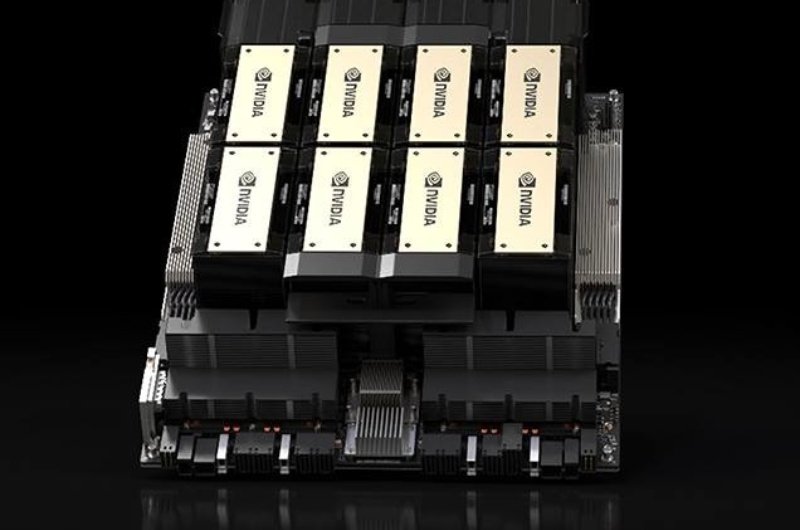
Nvidia is preparing to begin shipments of its next-generation H200 AI accelerators to China as early as mid-February, marking a significant development in the global competition for advanced semiconductor hardware. The move comes as companies across Asia search for high-performance chips that comply with U.S. export restrictions while still offering powerful AI training capabilities. The H200 — a successor to the industry-leading H100 — delivers faster memory, improved efficiency and higher throughput, making it one of the most sought-after chips for AI development. While the company cannot sell its most powerful models under the current U.S. export rules, the China-compliant H200 variant is designed to remain within regulatory limits while still giving Chinese firms a substantial performance lift. A Shift in the AI Hardware Balance Analysts say the carefully calibrated H200 rollout highlights the delicate balance Nvidia must strike: sustaining revenue from a major global market while remaining aligned with Washington’s national security constraints. The company has already developed multiple tailored chips for China following increasingly strict rules on AI hardware exports. The planned February timeline signals that Nvidia has completed technical and regulatory adjustments needed to resume broader sales in the region — a development being watched closely by both industry competitors and U.S. policymakers. The Wider Lens China remains one of the world’s largest consumers of AI-specific hardware, and even scaled-back chips tend to sell at high volumes. Nvidia’s ability to maintain presence in the market could influence everything from global supply chains to the pace of AI development in Asia. Meanwhile, U.S. officials continue monitoring how much computing power exported chips provide, arguing that limiting access to cutting-edge hardware is essential to prevent military-grade AI systems from being built abroad.
Disney Strikes Three-Year AI Deal With OpenAI Covering Hundreds of Characters

Walt Disney has entered a three-year partnership with OpenAI that will allow more than 200 of its iconic characters to be used in AI-generated images and video, marking one of the most expansive licensing agreements yet between a major entertainment company and an artificial intelligence platform. Under the agreement, characters from across Disney’s portfolio — including Mickey Mouse, figures from Inside Out and Frozen, and Marvel superheroes — will be available for photo generation within ChatGPT and video creation through OpenAI’s Sora platform. The content will be created by users of those tools, rather than by Disney directly. Disney will retain the right to showcase select user-generated videos on Disney+, integrating AI-created content into its streaming ecosystem while maintaining control over how its intellectual property is presented. The arrangement positions Disney to benefit from the growing popularity of generative AI without surrendering ownership of its characters. The deal reflects a broader shift in how entertainment companies are approaching artificial intelligence, moving from defensive postures around copyright to structured partnerships that monetize access while setting boundaries. It also gives OpenAI one of the most recognizable character libraries ever licensed for generative use. The partnership was announced Dec. 11 and comes as studios across Hollywood explore how AI tools can coexist with traditional content creation, licensing models, and distribution platforms.
ChatGPT 5.2 Brings AI Closer to the Way Top Professionals Think

OpenAI has released GPT-5.2, the latest update to ChatGPT, signaling a continued shift toward more reliable, work-ready artificial intelligence. The model was introduced on December 11, 2025, following an announcement earlier in the week, and is now being integrated directly into ChatGPT for users across multiple plans. The rollout began with paid subscribers, including Plus, Pro, Go, Business, and Enterprise users, with access for free users expanding gradually. Rather than introducing flashy new features, GPT-5.2 focuses on under-the-hood improvements designed to make the system more dependable in everyday and professional use. GPT-5.2 is available in three variants: Instant for fast, everyday interactions, Thinking for deeper reasoning and multi-step analysis, and Pro for advanced and sustained workloads. OpenAI says the model delivers stronger reasoning, improved long-context handling, and fewer factual errors compared with GPT-5.1, particularly in tasks that require careful analysis or research. Performance improvements are also evident in how the model behaves. GPT-5.2 responds more smoothly, with faster output and reduced lag, making interactions feel more fluid and responsive. More notably, OpenAI says the model demonstrates measurable gains on internal benchmarks tied to knowledge-work tasks, with performance approaching — and in some cases exceeding — human-level results in specific professional scenarios, including research, analysis, and structured reasoning. Without making sweeping claims, the benchmark results suggest a narrowing gap between human expertise and AI-assisted work — a shift with growing implications for how professionals research, decide, and create.