


Could Your Next Cell Signal Come From Space? New Satellites Bring That Future Closer
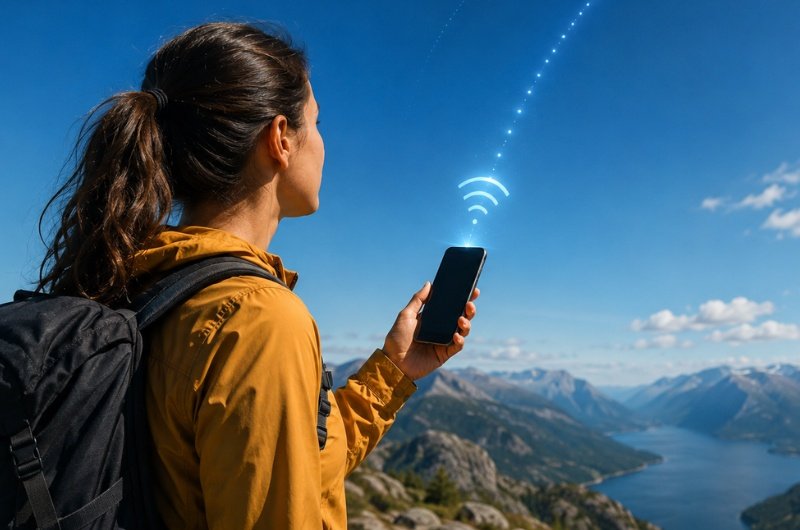
Dropped calls in remote areas and dead zones far from the nearest cell tower could one day become much less common. A new generation of satellites is bringing that possibility closer to reality, as companies race to build networks capable of connecting directly with everyday smartphones. Instead of relying entirely on ground-based towers, the technology aims to beam cellular service from low Earth orbit, extending coverage to places where traditional infrastructure is limited or unavailable. One of the companies leading that effort is AST SpaceMobile, which is developing a constellation of satellites designed to provide broadband connectivity directly to standard mobile phones. Unlike many satellite communication systems that require specialized equipment, AST SpaceMobile’s vision is to work with devices people already carry in their pockets. The latest milestone came with the successful deployment of additional BlueBird satellites, launched aboard a SpaceX Falcon 9 rocket. Each new satellite expands the company’s growing network and moves the project one step closer to offering broader direct-to-cell coverage. The potential applications extend well beyond convenience. Satellite-based cellular service could help people stay connected in rural communities, national parks, offshore locations, and disaster zones where ground infrastructure has been damaged or simply doesn’t exist. Emergency responders, travelers, and businesses operating in remote regions could all benefit from more reliable communications. For consumers, the biggest appeal may be simplicity. The long-term goal is to allow compatible smartphones to connect without bulky satellite accessories or dedicated terminals, making space-based connectivity feel much like using a traditional mobile network. The technology is still evolving, and widespread service will depend on additional satellite deployments, regulatory approvals, and partnerships with mobile carriers. Even so, recent progress suggests the idea of receiving a cell signal directly from space is moving from science fiction toward everyday reality. As more satellites enter orbit and companies continue to invest in next-generation communications, the line between terrestrial and space-based networks may become increasingly difficult to see. The next time your phone searches for a signal, it might not just be looking for the nearest tower—it could be reaching toward the sky.
SpaceX Goes Public in Record-Breaking Debut, Opening a New Era for the Space Economy
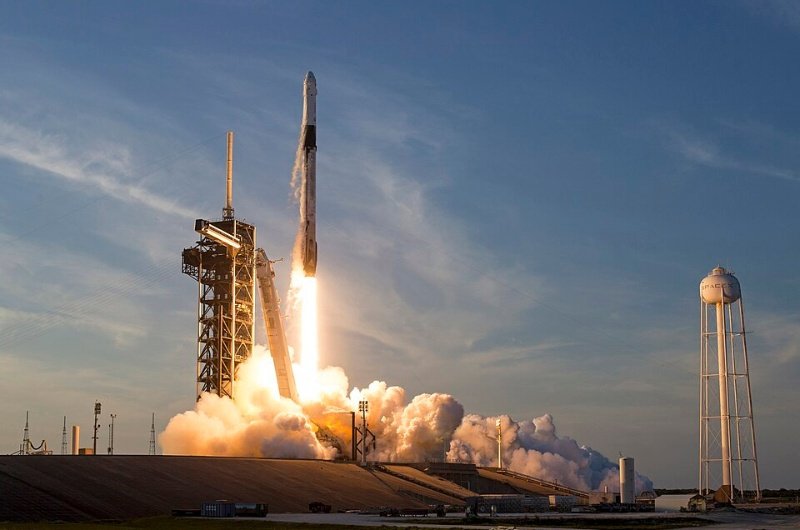
For years, SpaceX was one of the world’s most valuable private companies. On Friday, that changed as the aerospace and communications giant began trading on Nasdaq under the ticker symbol SPCX after completing the largest initial public offering in market history. The IPO priced at $135 per share, raised approximately $75 billion, and valued the company at roughly $1.77 trillion, instantly placing it among the most valuable publicly traded companies in the United States. Founded by Elon Musk in 2002, SpaceX transformed the commercial space industry through reusable rockets and a growing portfolio of launch services. Over the past two decades, the company has become synonymous with innovation, helping reshape how governments, businesses, and consumers think about access to space. Investor interest in the offering was exceptionally strong, reflecting enthusiasm for a company that now sits at the intersection of space, communications, artificial intelligence, and global connectivity. Many Americans still think of SpaceX primarily as a rocket company. While reusable rockets remain at the heart of its business, the company has steadily expanded into several other industries over the past decade. Today, SpaceX operates across multiple sectors, including commercial space launches, satellite internet, government and defense contracts, communications infrastructure, and advanced technology initiatives tied to the future of global connectivity. One of the company’s most important businesses may be one that many consumers already recognize: Starlink. The satellite internet service has become a major driver of SpaceX’s growth and is increasingly viewed as one of the key reasons investors are paying such close attention to the company. The satellite internet service has grown rapidly by providing broadband access to rural communities, travelers, businesses, and remote locations around the world. Starlink has also been used to restore connectivity during natural disasters and emergencies, highlighting the growing importance of satellite-based communications. For many investors, Starlink represents something especially valuable: recurring subscription revenue. Unlike rocket launches, which occur periodically, internet customers generate ongoing monthly revenue, helping diversify SpaceX’s business model and reduce its dependence on launch activity alone. The result is a company that increasingly resembles a broad technology and infrastructure platform rather than a traditional aerospace firm. That evolution helps explain why investors have been willing to assign such a massive valuation to the company as it enters public markets. Beyond rockets, SpaceX now sits at the center of several powerful trends shaping the modern economy, including communications networks, satellite technology, advanced manufacturing, artificial intelligence infrastructure, and global connectivity. The company’s public debut also represents a milestone for the broader commercial space industry. What was once considered a niche sector has evolved into a growing market attracting interest from governments, businesses, and investors around the world. Whether SpaceX can ultimately justify its enormous valuation remains a subject of debate on Wall Street. Even so, Friday’s debut marks an historic moment for both investors and the space economy, opening a new chapter for a company that spent nearly a quarter-century operating outside public markets. For many investors, the IPO is about more than a single stock. It is a bet on a future where space, communications, artificial intelligence, and global connectivity become increasingly intertwined — and where SpaceX hopes to play a leading role in all of them.
Life Beyond Earth? Inside SpaceX’s Mars Vision

For most of human history, the idea of living on another planet belonged to the realm of science fiction. Today, one of the world’s most ambitious companies is openly discussing a future in which millions of people could one day call Mars home. According to SpaceX, the company’s long-term goal is to help create a self-sustaining city on the Red Planet. The vision would require transporting enormous amounts of cargo, infrastructure, equipment, and eventually people to Mars over many years. SpaceX has suggested that a fully developed Martian settlement could one day support more than one million residents. While that goal remains decades away, the idea raises a fascinating question: what would life on Mars actually look like? Unlike Earth, Mars has no breathable atmosphere, experiences extreme temperature swings, and receives significantly less sunlight. Any permanent settlement would require advanced habitats, reliable energy systems, food production, water recycling, medical facilities, and transportation networks. Future residents would likely live inside protected structures designed to shield them from radiation and the harsh Martian environment. The challenges extend beyond engineering. A city on Mars would also require schools, workplaces, laws, governance, healthcare, and community life. Families would need places to live. Children would need opportunities to learn and grow. In many ways, building a city on Mars may be as much a social challenge as a technological one. Supporters argue that becoming a multi-planet species could help ensure humanity’s long-term survival by reducing the risk of civilization existing on a single world. Critics counter that the technological and financial obstacles remain enormous and that many problems on Earth deserve greater attention. Even among experts who support human exploration of Mars, there is significant debate about how quickly such a vision could become reality. The Readovia Lens Whether a city on Mars arrives in 20 years, 50 years, or much later, the concept forces us to think differently about humanity’s future. For thousands of years, every nation, city, culture, and civilization has existed on a single planet. SpaceX’s vision challenges that assumption. It asks us to imagine a future in which human beings are no longer confined to Earth, but instead begin expanding into the broader solar system. So, we know we can get to Mars. Perhaps the most interesting question is what kind of civilization we would choose to build once we get to there.
Virgin Galactic Says New Spacecraft Remains on Track for First Flight This Year
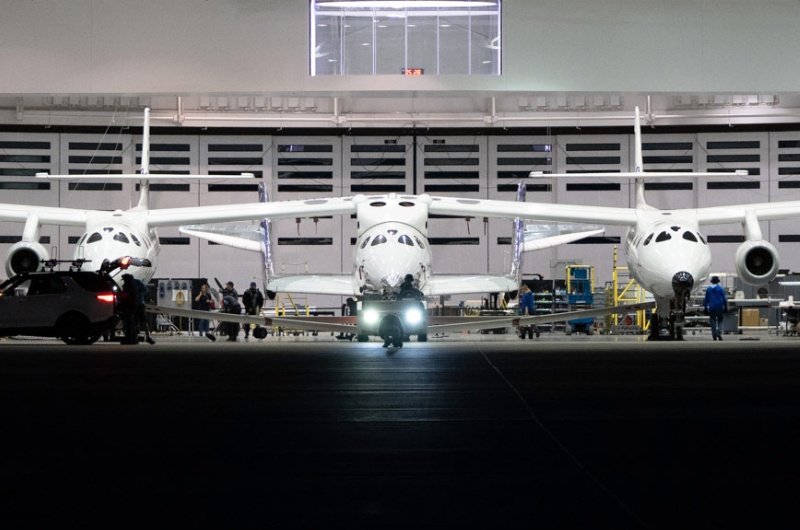
Virgin Galactic says its next-generation Delta-class spacecraft remains on track for its first flight later this year, marking a major milestone in the company’s effort to return to commercial space operations after pausing flights to focus on building a new fleet. The update came as part of the company’s first-quarter 2026 earnings report and arrives amid renewed attention on the commercial space industry. According to Virgin Galactic, its first Delta-class spacecraft has been delivered to Phoenix for ground testing, with glide-flight testing expected to begin in the third quarter and rocket-powered spaceflights targeted for the fourth quarter of 2026. A second Delta-class spacecraft is already under construction. The Delta program sits at the center of Virgin Galactic’s long-term strategy. Unlike previous spacecraft, the new vehicles are designed to fly more frequently, allowing the company to increase flight capacity and improve the economics of commercial spaceflight. Virgin Galactic also reported progress on infrastructure projects supporting future operations, including rocket motor production capabilities in Arizona. The company is also broadening its ambitions beyond space tourism. Recently, Virgin Galactic announced Operation Period-01 (OP-01), a dedicated research mission that will study menstruation in microgravity. The mission, expected to fly in 2027, highlights the growing role commercial spacecraft could play in scientific research and human spaceflight studies. While significant challenges remain before regular commercial operations resume, Virgin Galactic appears to be entering one of the most important phases in its history. After years of development, testing, and delays, the next several months could determine whether the company can transform its vision of private spaceflight into a sustainable commercial business. The Bigger Picture For years, commercial spaceflight has largely been viewed through the lens of tourism. Increasingly, however, companies such as Virgin Galactic are positioning themselves as platforms for research, technology development, and future commercial activity beyond Earth. If the Delta program remains on schedule, 2026 could mark a turning point not only for Virgin Galactic, but for the broader commercial space industry as well. ——————– Related: Virgin Galactic Stock Soars 36% as Investors Double Down on the Space Economy Space Stocks Are Surging Again as Investors Chase the Next Big Boom
NASA Sends Astronauts Back to Deep Space in Historic Artemis Moon Mission
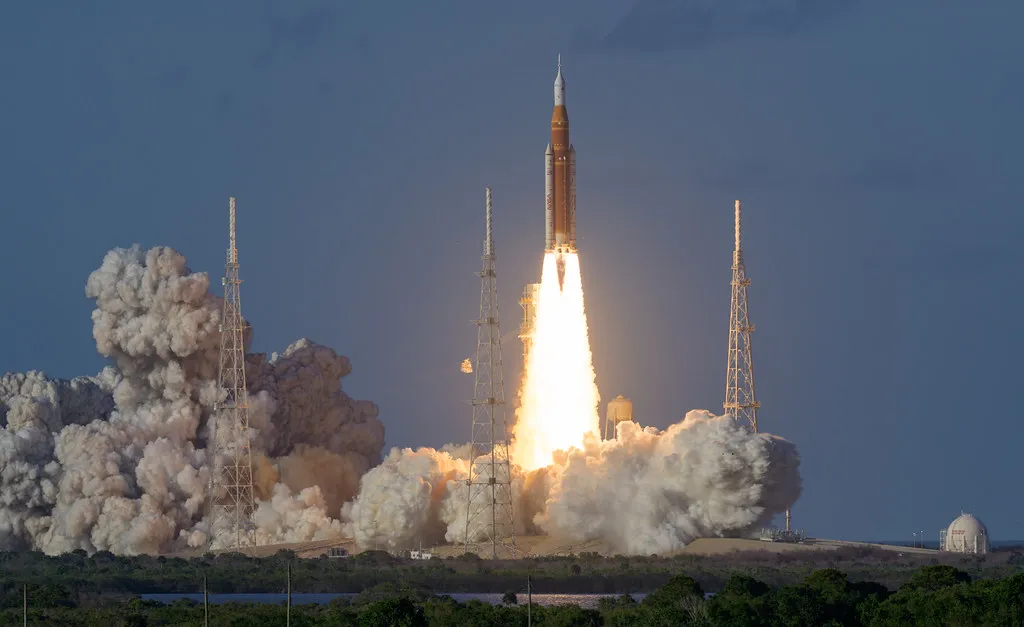
For the first time in more than 50 years, humans are heading back beyond Earth’s orbit—and this time, it’s not just about planting a flag. NASA’s Artemis II mission has officially launched, sending four astronauts on a journey around the Moon that signals a new phase of space exploration, one focused on staying power rather than symbolic return. NASA’s Artemis II mission has officially launched, sending four astronauts on a journey around the Moon and back aboard the Orion spacecraft. The roughly 10-day mission will carry Reid Wiseman, Victor Glover, Christina Koch, and Canadian astronaut Jeremy Hansen thousands of miles past the Moon before looping back to Earth, testing every critical system needed for deep space travel. From life support to navigation and communication, the mission is designed to answer one central question: are we truly ready to operate beyond Earth for longer, more complex missions? What makes this mission different isn’t just the destination—it’s the intent. Artemis II is not a standalone achievement. It is a proving ground for what comes next: human landings, lunar infrastructure, and eventually, missions that push even farther into the solar system. NASA is treating this flight as a systems check for an entirely new era of exploration. There is also a quiet but meaningful shift in who gets to go. This crew reflects a broader vision of space travel—one that includes international collaboration and a more representative group of astronauts stepping into deep space for the first time. It’s a signal that the future of exploration will look different from the past. The bigger story, though, is what Artemis represents on Earth. Governments and private companies are already positioning themselves for what many see as the next economic frontier—resources, technology, and strategic presence beyond our planet. This mission isn’t just about reaching the Moon again. It’s about laying the groundwork for humanity’s next chapter beyond Earth.
Blue Origin to Launch First Wheelchair User Into Space on Historic Flight
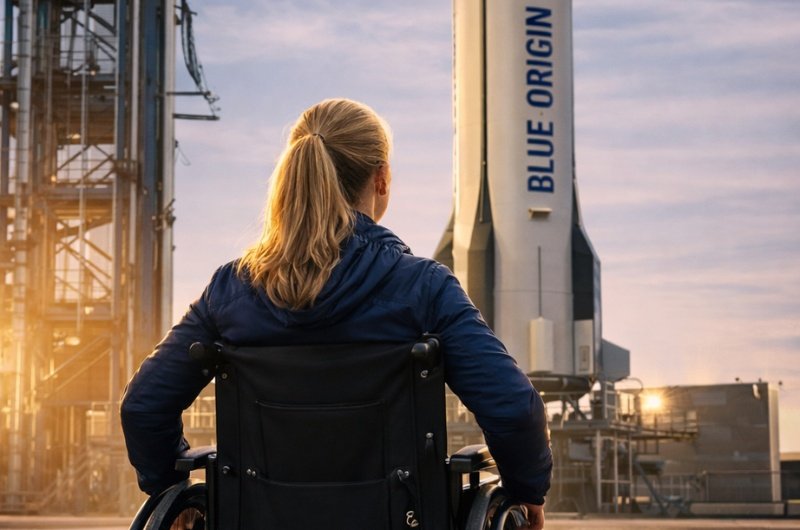
Blue Origin is preparing to make spaceflight history this week as aerospace engineer Michaela “Michi” Benthaus becomes the first person who uses a wheelchair to travel into space. The milestone mission is scheduled to lift off from West Texas aboard the company’s New Shepard vehicle, marking a major step toward accessible space tourism. Benthaus, an accomplished engineer with deep experience in spacecraft design, has used a wheelchair since a 2018 spinal cord injury. Despite the physical challenges that followed, she continued pushing forward in her field — and will now join a crew of six on a brief suborbital journey that lasts approximately ten minutes from launch to landing. To accommodate her needs, Blue Origin designed several modifications to the cabin environment, including specialized seating and additional assistive harnessing to ensure she can safely experience weightlessness. Engineers involved with the flight say the adjustments were minor compared to the symbolic impact of the mission itself. Blue Origin calls the launch a “breakthrough moment” for the future of civilian space travel. Advocates for accessibility say it represents a powerful shift in who gets to participate in humanity’s next era of exploration. For decades, spaceflight was reserved for elite, physically screened astronauts; now, commercial space companies are pushing to broaden the definition of who belongs among the stars. If successful, Benthaus’ journey could pave the way for more inclusive participation in future missions — and expand the possibilities of space travel far beyond traditional limits.