


AI Ghostwriting Is the New PR — And No One’s Disclosing It

Your Favorite Expert Might Not Be Writing Their Own Words. The next time you read a CEO’s op-ed, a professor’s blog post, or even a politician’s heartfelt social media thread, there’s a decent chance it wasn’t written by them — or even by a human at all. Welcome to the quiet rise of AI ghostwriting What used to be the domain of elite PR firms or freelance copywriters is now being quietly taken over by large language models like ChatGPT, Gemini, and Claude. The kicker? Most readers — and often even the people being quoted — have no idea. Polished, On-Brand, and 100% Machine-Made In industries where perception is everything, AI is being used to generate: Personal statements and interviews Corporate blog posts Thought leadership essays Internal communications Entire LinkedIn personas All it takes is a prompt — and maybe an intern to copy/paste. “Companies are realizing that AI can hit a word count and sound credible without needing a coffee break,” one anonymous agency insider told Readovia. “We used to have to scramble to get a quote approved by 5 PM. Now, it’s generated in seconds and sent for a quick yes/no.” The Ethics? Still Unwritten There are no clear disclosure rules for AI-generated content in journalism, marketing, or academia. And that’s part of the problem. Universities are grappling with AI-assisted admissions essays and research papers. Politicians are tweeting statements drafted by AI — sometimes even during live events. Corporate leaders are signing off on entire public-facing strategies without ever seeing the raw drafts. It’s not illegal — yet. But the growing lack of transparency has experts raising red flags about credibility, authorship, and manipulation. Why It’s So Tempting Speed, polish, and convenience. In an era of content overload, AI ghostwriting offers the perfect shortcut — and it’s cheaper than a retainer. Tools like ChatGPT can simulate tone, translate across platforms, and generate endless rewrites in seconds. And with memory or trained style files, they’re becoming shockingly accurate at mimicking real voices. So Who’s Really Speaking? That’s the question journalists, regulators, and readers are starting to ask. But for now, there are no guidelines requiring a disclaimer when AI has authored — or even entirely generated — a message. In a world where words carry reputational weight, authenticity is starting to blur. Final Thoughts AI ghostwriting is changing the rules of communication — not by replacing writers, but by accelerating the speed and polish of public messaging. Whether or not disclosure becomes the norm, the shift is already underway. The Author
Trump Signs ‘Take It Down Act’ into Law, Targeting Deepfakes and Revenge Porn
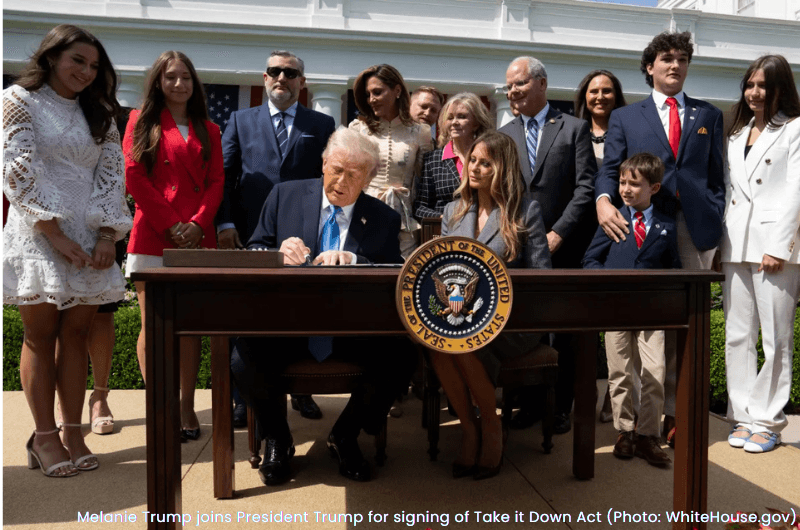
On May 19, 2025, President Donald Trump signed the “Take It Down Act” into law, marking a significant federal step against the distribution of non-consensual intimate imagery, including AI-generated deepfakes and revenge porn. The legislation, championed by First Lady Melania Trump as part of her revitalized Be Best campaign, received overwhelming bipartisan support—passing the House 409-2 after unanimous Senate approval. Key Provisions of the Law Criminalization of Non-Consensual Intimate Imagery: The law makes it a federal crime to knowingly publish or threaten to publish intimate images without a person’s consent, encompassing both real and AI-generated content. Mandatory Removal by Online Platforms: Social media companies and websites are required to remove such content within 48 hours of notification by the victim and take steps to prevent its reappearance. Enforcement by the Federal Trade Commission: The FTC is empowered to enforce compliance, ensuring that platforms adhere to the new regulations. Voices Behind the Legislation Senators Ted Cruz (R-Texas) and Amy Klobuchar (D-Minn.) co-sponsored the bill, highlighting its bipartisan nature. The act was inspired in part by the story of Elliston Berry, a teenager whose AI-generated explicit images circulated online, leading to a prolonged struggle to have them removed. First Lady Melania Trump emphasized the emotional toll on young victims, stating, “It is heartbreaking to see what teenagers, especially girls, go through after they are victimized by people who spread such content.” Support and Criticism While the law has been lauded by victim advocacy groups and industry stakeholders as a landmark protection against online abuse, some digital rights organizations have expressed concerns. Critics argue that the legislation’s broad language could lead to censorship and infringe upon free speech rights. A Step Forward in Digital Safety The Take It Down Act represents a significant move by the federal government to address the challenges posed by emerging technologies like AI in the realm of personal privacy and online exploitation. As the digital landscape continues to evolve, this legislation sets a precedent for how such issues might be tackled in the future. The Author
Backyard Boom: Why More Americans Are Growing Their Own Groceries

Faced with rising prices, food recalls, and a renewed desire for self-reliance, more Americans are turning to the one place they can control: their own backyard. In 2025, home gardening has become more than a weekend hobby — it’s a quiet revolution. From suburban lawns to urban balconies, people are planting everything from tomatoes and kale to herbs, squash, and even fruit trees. The goal? Fresh food, fewer bills, and a little peace of mind. Why the Sudden Growth? Grocery bills keep climbing Inflation may have cooled overall, but food prices have stayed stubbornly high — pushing shoppers to look for ways to supplement what they buy. Health and ingredient control More families want to know what’s going into their food — and what’s not. Gardening gives them that power. Mental wellness Studies show that time spent gardening reduces stress and boosts mood. In a chaotic world, tending to something living feels like taking back control. Social media inspiration From TikTok garden tours to YouTube homesteaders, digital creators are showing just how doable (and addictive) homegrown food can be. It’s Not Just for Retirees Anymore Younger generations are leading the charge. Gen Z and millennials are embracing container gardening, hydroponics, and vertical planters to grow fresh produce — even in apartments. Local garden centers and seed sellers report record demand, with starter kits and DIY garden beds flying off shelves. Seed swaps, compost tutorials, and “grow your own salad” challenges are popping up nationwide. The Takeaway In an age of delivery apps and digital everything, something old-fashioned is taking root: growing your own food. It may not replace the supermarket completely, but for many Americans, a few square feet of soil now hold a lot more meaning — and a lot more flavor. The Author
Beyond the Scale: Why Ozempic-Style Drugs May Reshape Modern Medicine

From Weight Loss to Whole-Body Health Originally created for diabetes, drugs like Ozempic, Wegovy, and Mounjaro have taken the health world by storm for their ability to help patients lose weight. But in 2025, scientists are discovering these medications could do far more than shrink waistlines. Doctors are now studying their effects on heart health, addiction, fertility, and even Alzheimer’s — signaling what may be the dawn of a new era in metabolic medicine. The Science Behind the Shift These medications belong to a class known as GLP-1 receptor agonists. They work by mimicking a hormone that helps regulate appetite, blood sugar, and digestion. The result? Less hunger More stable blood sugar Slower digestion, which leads to fewer cravings One woman who spoke to Readovia said she was prescribed Ozempic for her type 2 diabetes back in 2018. She wasn’t trying to lose weight — but year after year, the pounds fell off. “I just wasn’t very hungry,” she said. “I used to eat two or three slices of pizza. Now I’m lucky to finish one.” Treating More Than Obesity Clinical trials are now underway to explore these medications in treating: Heart disease and stroke prevention Polycystic ovary syndrome (PCOS) Alcohol and nicotine addiction Cognitive decline Sleep apnea and hormonal imbalances Some researchers are calling it a “metabolic reset button” — a way to address the root causes of multiple chronic conditions, not just the symptoms. But There’s a Catch These drugs are expensive, and insurance coverage remains uneven. One woman told Readovia she requested Ozempic — or a similar option — specifically for weight loss. While her doctor was supportive, the pharmacy later informed her that her insurance denied coverage for the prescription. Her experience isn’t uncommon, especially for patients seeking off-label use. There are reported side effects. Some users report nausea, fatigue, or muscle loss. And debate continues over who truly needs the medication — and who might be seeking a shortcut in a wellness-obsessed world. Still, the momentum is clear: Ozempic-style medications are no longer just about losing weight — they’re becoming a cornerstone of modern preventive medicine.
Factories, Funding, and the Future: Major Companies Pour Billions into American Industry

Investments Surge as U.S. Manufacturing Reawakens Big companies are pouring money into U.S. factories and research labs — a sign that American industry might be heading for a major comeback. These investments are expected to bring more jobs and new energy to the economy. Notable announcements in included: Sanofi committed $20 billion over five years to strengthen domestic manufacturing and research. Kraft Heinz unveiled a $3 billion plan to modernize U.S. factories — the company’s largest investment in decades. Carrier pledged $1 billion toward innovation and workforce expansion, with an estimated 4,000 new jobs on the way. Anheuser-Busch announced a $300 million upgrade to its nationwide production facilities. Siemens Healthineers invested $150 million to expand U.S. operations, including relocating manufacturing from Mexico to California. These moves reflect a larger trend: companies are responding to policy shifts, incentives, and a growing push to bring industrial capability back to American soil. Job Market Shows Resilience The labor market has stayed strong, defying some economic forecasts. In April, the U.S. added 177,000 jobs, outpacing expectations. Unemployment remained low at 4.2%, with notable gains in healthcare, transportation, warehousing, and hospitality. While inflation and interest rates continue to dominate headlines, job growth remains a bright spot — a signal that underlying momentum still exists in the broader economy. Looking Ahead This season’s wave of investment announcements suggests more than just optimism — it points to a strategic pivot back to domestic strength. The White House has emphasized these developments as evidence that its economic strategy is working. Skeptics warn that tariff tensions and regulatory uncertainty could complicate the outlook. Still, for workers and communities across the country, the signs of industrial revival offer something increasingly rare in today’s economy: hope for the future.
The Countdown to GPT-5: Power, Promise, and Pressure

As OpenAI Eyes GPT-5, the World Watches — and Worries. A new wave of artificial intelligence may be just months away — and it’s sparking equal parts excitement and anxiety. OpenAI, the company behind ChatGPT, is reportedly preparing to unveil its next-generation model, GPT-5, later this year. While official details are under wraps, insiders say it will be more powerful, more humanlike, and capable of multimodal reasoning that goes far beyond what we’ve seen so far. The timing couldn’t be more charged Tech leaders, startups, and global governments are all racing to harness — or regulate — the rapidly expanding capabilities of generative AI. From copywriting to code generation, legal briefs to therapy chats, AI’s influence is expanding by the day. And GPT-5? It may widen the gap between companies that can afford advanced models… and those left behind. What’s New About GPT-5? Smarter multimodal abilities (text, images, maybe even video) Improved memory and context handling More accurate and personalized responses Greater autonomy in executing complex tasks OpenAI has yet to confirm whether GPT-5 will be rolled out as a major public tool or integrated more discreetly into enterprise products. But one thing is clear: the next leap in AI could be the biggest yet. The Bigger Question: Are We Ready? With power comes pressure. As AI models grow smarter, the challenges around bias, misinformation, automation, and even identity blur faster than regulators can respond. Lawmakers are still debating how to govern GPT-4, let alone what comes next. For now, the world waits — watching OpenAI, and wondering where this intelligence race leads next. The Author
Readovia Recap April 2025: Trump’s Second Term Hits Its Stride — and Strikes Nerves
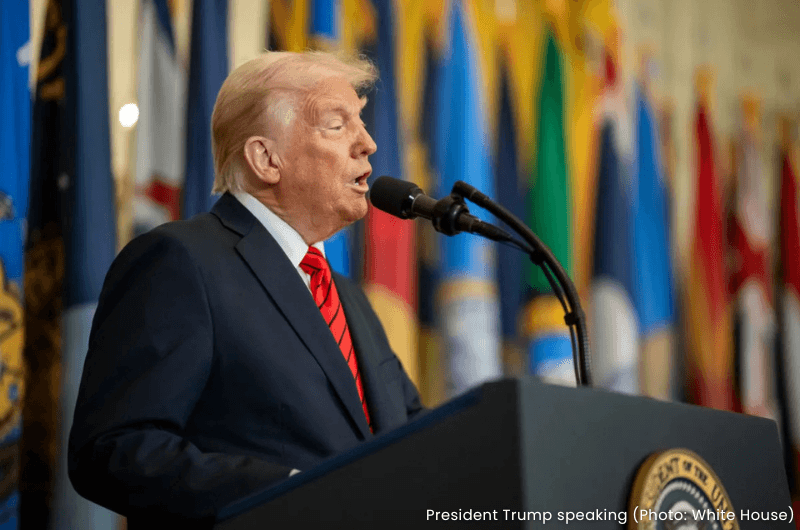
Power Moves with Global Consequences If March was about reclaiming power, April proved that President Donald Trump has no intention of easing into his second term. From global tariffs to sweeping immigration crackdowns, April 2025 was a month of bold, top-down directives with ripple effects across trade, education, and the border. Key Moves & Headlines A Trade War ReignitedTrump declared a national economic emergency, citing U.S. trade deficits as a threat to national security. He imposed a 10% tariff on all imports, with steeper penalties for countries with trade surpluses.The White House also floated a “reciprocal tariff” policy, initially pitched as a 10% blanket tax — then paused for 90 days after backlash from allies and markets. China Takes the HeatIn a targeted strike, the administration slapped a 145% tariff on Chinese imports, sparking outcry from U.S. retailers and tech manufacturers already navigating post-COVID supply chain instability. Tariff Chaos, RevisitedInterestingly, some tariffs from Trump’s first term were reversed or adjusted, suggesting internal tension between ideology and economic realities. Officials cited “policy refinement,” but critics called it “policy whiplash.” Immigration Crackdown DeepensTrump’s DHS expanded its targeting of sanctuary cities, ramped up deportations, and renewed agreements to detain migrants in El Salvador prisons — a controversial move echoing foreign outsourcing of incarceration. Border Wall Construction ResumesNew contracts were awarded in Arizona and Texas for continued construction of the U.S.-Mexico border wall, with an emphasis on “sealing gaps” and enhancing surveillance capabilities. Higher Ed Under the MicroscopeA new executive order directed the Department of Education to revise university accreditation standards and boost transparency on foreign funding, especially from China and Qatar. Critics say the move is less about reform and more about ideological purging. “Common Sense” Discipline in SchoolsAnother executive order focused on school discipline, instructing the Education Secretary to enforce Title VI rules with “clarity and consistency.” The language strongly hints at rolling back Obama-era protections related to race and student punishment. The Big Picture April made one thing clear: Trump’s second term is not coasting on campaign slogans — it’s rewriting the federal rulebook. With sweeping trade moves, intensified immigration enforcement, and a bullhorn aimed at higher education, the White House is betting on executive power to fast-track its vision. Some see strength. Others see overreach. But no one can say it’s subtle. Trump’s second term is no longer warming up. It’s fully unleashed. The Author
Trump Pushes Apple to Keep iPhone Production in the U.S.
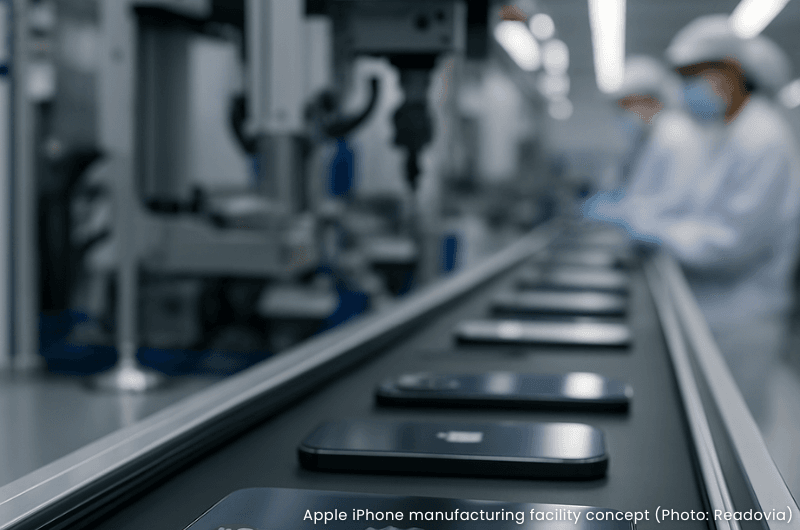
Donald Trump has a message for Apple: stop building iPhones in India. At a recent business summit, Trump told CEO Tim Cook he wants more of the company’s production to stay in the U.S. — not move overseas. Trump expressed his concerns directly to Cook, stating, “I had a little problem with Tim Cook yesterday. He is building all over India. I don’t want you building in India.” Apple’s Strategic Shift Apple has been progressively shifting its manufacturing operations to India, aiming to reduce dependence on Chinese factories amid escalating U.S.-China trade tensions. Reports indicate that Apple plans to move the assembly of all iPhones sold in the U.S. to India by the end of 2026. Economic Implications Trump’s remarks come at a time when India is emerging as a significant player in the global tech manufacturing sector. In 2024, iPhone exports from India reached a record $12.8 billion, marking a 42% year-on-year rise. Potential Impact on Apple’s Operations If Apple heeds Trump’s request, it could face challenges in meeting production targets and managing costs. The company’s diversification strategy aims to mitigate risks associated with geopolitical tensions and supply chain disruptions. Looking Ahead As Apple navigates this pressure from Washington, the tech world is watching closely. The company’s next move could influence how U.S. tech giants balance global operations with domestic expectations. The Author
From Smart to Scrap: Popular Gadgets Losing Updates and Support in 2025

If your smart home or phone setup feels just right, brace yourself — 2025 is turning into a graveyard for once-popular tech. From thermostats to game controllers, a long list of devices is hitting end-of-life status this year, leaving users with broken functionality, no updates, or total system lockouts. Here’s what’s headed for retirement: Nest Thermostats (certain models): Will lose smart home integration by fall, turning once-connected devices into expensive temperature dials. Stadia Controllers: The Bluetooth conversion tool is ending support this December, leaving unused gear stranded in drawers. Windows 10: Microsoft officially ends support this October — meaning no more security updates and rising vulnerability risks for millions of users. LG Smartphones: No more updates as of June. If you’re still hanging on to one, your Android version might already be past its prime. Skype: After decades of dial tones and chat pings, it’s done. Microsoft is migrating users to Teams. iPhone 6S: Added to Apple’s “vintage” list, which limits repairs and future iOS compatibility. Why does this matter? For everyday users, the implications go beyond inconvenience. Devices losing updates become potential security risks. Smart tech that no longer connects can interrupt routines and force unexpected upgrades. It’s also a reminder of the disposable pace of modern tech Even once-revolutionary products — like LG’s phones or Skype’s video calling — can fade quickly in a market that rewards the next big thing. As cloud services evolve and AI becomes more embedded, hardware must keep up… or be left behind. If you’re holding onto any of these devices, it might be time to consider an upgrade — or at least brace for a few frustrating error messages in the months ahead. The Author
Pentagon Begins Removing Transgender Troops as Trump Directive Takes Effect

The U.S. military has begun enforcing a controversial policy that will remove up to 1,000 transgender troops from active service. The directive follows a recent Supreme Court ruling and an executive order signed by President Donald Trump in January, which bans individuals from serving in the military if their gender identity differs from their biological sex at birth. According to an internal Pentagon memo, active-duty personnel have until June 6 to voluntarily identify for discharge, while reserve members face a deadline of July 7. After that, involuntary separations will begin. Critics say the move undermines the service of qualified individuals who have risked their lives for the country. LGBTQ+ advocacy groups have condemned the policy as discriminatory and dangerous, calling it a rollback of hard-won rights under prior administrations. Supporters of the policy argue that it is necessary to maintain unit cohesion and reduce medical costs. The new directive stems from Executive Order 14183, which Trump signed shortly after taking office in his second term. It revives and expands a similar ban issued during his first presidency — one that was later reversed under President Biden. Public opinion on the issue has shifted. A recent Gallup poll shows support for transgender military service has dropped from 71% in 2019 to 58% in 2025, highlighting growing polarization on social policy under the current administration. For the affected troops, however, the decision is more than political — it’s personal. Many now face abrupt career changes, loss of benefits, and the emotional toll of being pushed out of service simply for who they are. The Department of Defense has not indicated whether it will provide transition support or legal resources for those impacted. The Author